
Mogren Fortress, Budva: How to Visit the Ruins on Spas Hill

Mogren Fortress is a ruined Austrian fortification from 1860 on Spas Hill above Mogren Beach, west of Budva's Old Town, and there is no entrance fee. Allow around an hour for the climb and the wander, and treat it as a viewpoint with old walls rather than a museum.
This guide covers where the fort sits, the two ways up, the Austro-Hungarian stone and concrete supports you will see, and the structurally unstable zones the Budva Museum and Gallery director has flagged. It also pairs the ruin with the beach path, so you can decide whether to climb before or after a swim.
What Mogren Fortress is
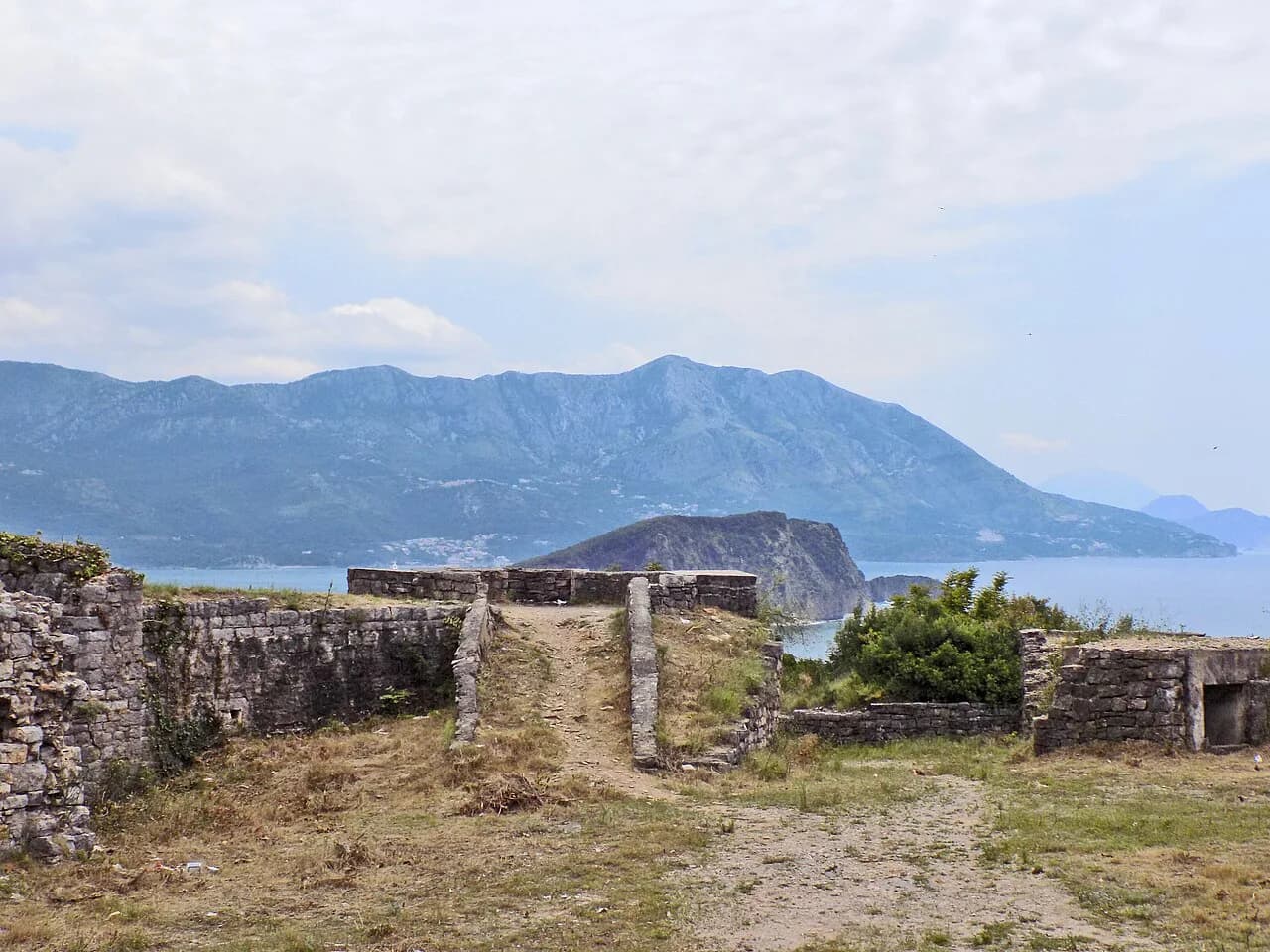
The fort was built in 1860 during the Austro-Hungarian period and was originally known as Fort Jaz. Above the beach, on Spas Hill, it stands as a ruin with preserved walls and World War II bunkers, with views of Sveti Nikola Island and the Old Town.
It was not a main stronghold. The museum director describes it as a kind of watchtower within an Austro-Hungarian triangle: the Citadela held ammunition, food and senior ranks, troops massed on Mogren, and the fort's position let defenders see where an attack was coming from.
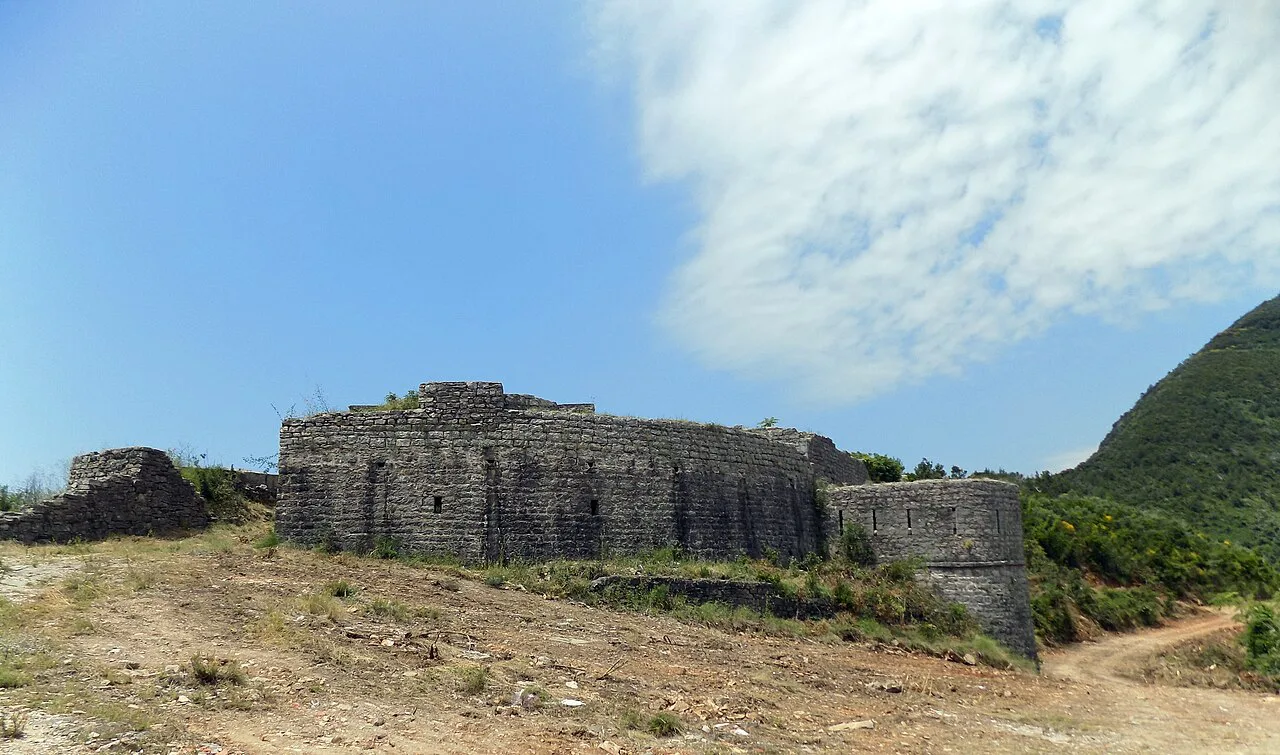
Expect a ruin, not an attraction with facilities. The director notes that it is not a protected cultural property today and is awaiting serious renovation, and that two or three zones are statically very unstable. There are no ticket desks or visitor centre to plan around.

Where it sits above the beach
The fort occupies Spas Hill immediately west of Budva's Old Town, directly above the two halves of Mogren Beach, Mogren I and Mogren II. From the beach the ground rises steeply through forest, which is why the approach matters more here than the distance suggests.
Its height is the point of going: roughly 110 m up, it gives a clear line over the sea, the Old Town rooftops and Sveti Nikola Island offshore. Bring water and wear shoes with grip, since the last stretch is on forest paths rather than pavement.

How to get there on foot
Start from the Avala Hotel beside the Old Town and follow the concrete coastal path, about 350 metres long, which runs along the cliffs past the bronze Ballerina statue to the beach. The cliff path is not safe during strong southerly winds and large waves, so check the sea before setting out. From Mogren II, forest paths lead up the hill to the fortress.
The alternative is the asphalt road that comes up from the main road, which avoids the cliff path entirely and suits anyone who would rather not combine a beach walk with a climb. Whichever route you take, keep to the marked line and stay off broken sections near the edge.
How long to allow and what the climb involves
Budget around an hour in total from the Old Town: the coastal path takes ten to fifteen minutes to the beach, then the forest ascent adds the real effort. Add time at the top for the views, and more if you are combining the visit with swimming.
The climb is short but steep and largely unsurfaced above the beach, so trainers or walking shoes are the sensible choice and sandals are not. Go early in the day or late in the afternoon for cooler air.
What you see inside the walls
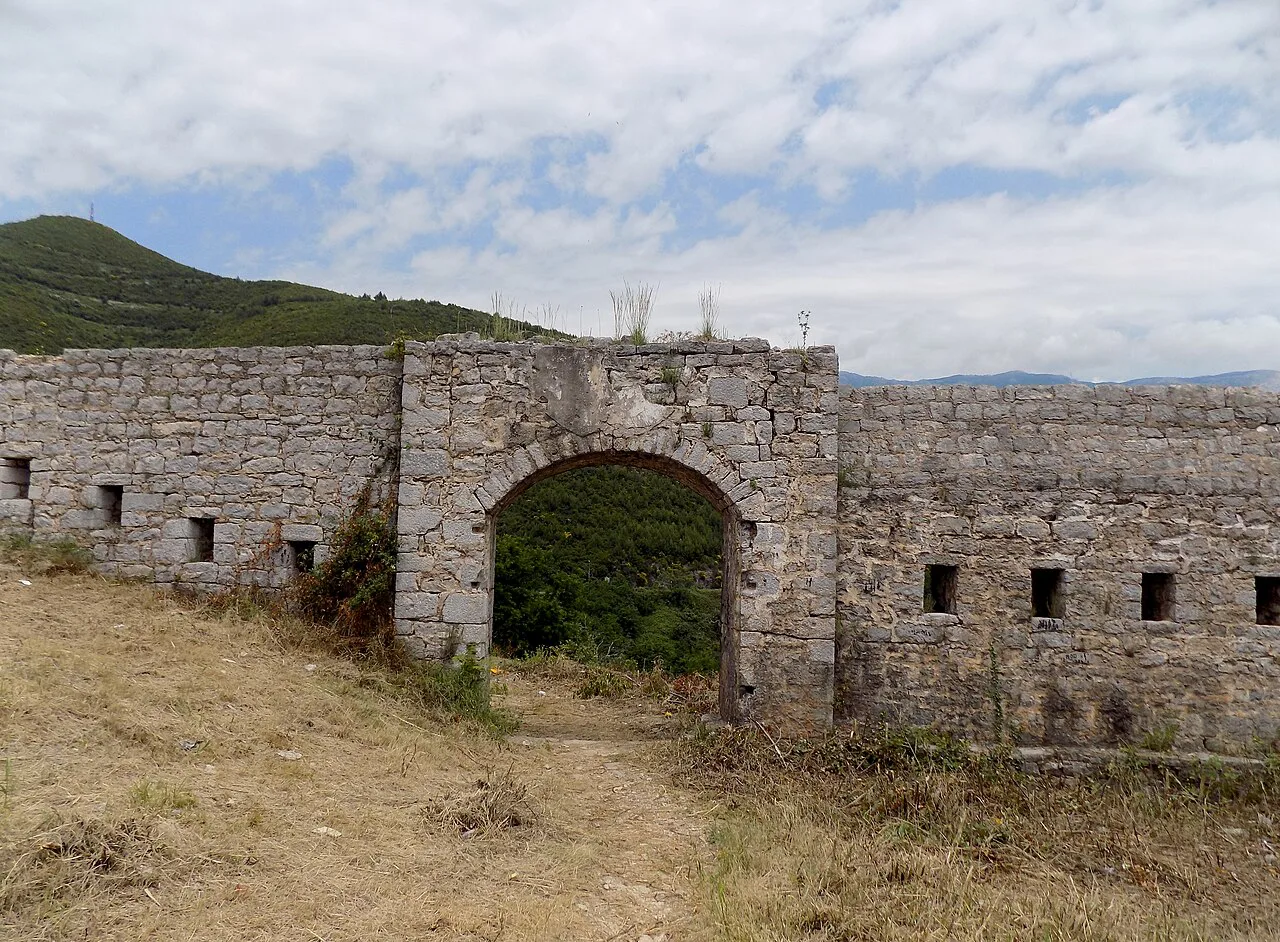
The surviving Austro-Hungarian work is easy to pick out: finely cut stone laid with good mortar, still readable between later additions. Everything concrete — supports, slabs and blocking walls — was poured in at various times out of necessity to stop the original structure collapsing.
The fort was used most heavily during the Second World War, and the bunkers from that period are among the most visible things on site. Walk the wall line for the sea and Old Town views, and look down on Mogren I and Mogren II from above before you commit to the descent.
Safety: the unstable zones
The Budva Museum and Gallery director, Biljana Brajović, has said there are two or three zones on the fortress that are statically very unstable, with a possibility that they could collapse at some point. Keep your distance from those sections and treat the ruin as an unmanaged site, not a surveyed monument.
Stay on solid ground, keep children close, and do not walk under cracked slabs or over rubble piles to reach a better photo angle. Ruins like this have no barriers doing the job for you, so your own judgement is the safety system.
Tickets and access
There is no entrance fee mentioned and no staffed entrance to pass through, so the climb costs only the effort. The site is a ruin awaiting renovation rather than a managed monument.
The fort is awaiting renovation rather than open as a managed site, so confirm locally in Budva before making the climb the purpose of a morning. If access to part of the hill has been restricted, the beach path and the Old Town remain open regardless.
Pairing the fort with Mogren Beach
The two halves of the beach are joined by a short tunnel carved through the rock; Mogren I is the larger and busier side, Mogren II the quieter one beneath the path up to the fort. Walking through the tunnel is the simplest way to link a swim with the climb.
Rocky platforms between the two beaches are used for jumps of 8 and 18 metres, which requires caution and knowledge of the seabed, so check depth and sea conditions first. The rocky seabed also makes the beach a good spot for snorkelling after you come down.
Nearby in Budva
The Old Town is a few minutes back along the cliff path, and its lanes hold several small churches worth a look, among them Santa Maria in Punta, Holy Trinity and Saint Sava, alongside the Citadela at the southern tip, first mentioned in 1425, with its museum and library. All of them sit within easy walking distance of the Avala start point.
Further round the bay, Slovenska Beach stretches about 1,600 metres with full beach amenities and Sveti Nikola Island lies about a kilometre offshore, both visible from the fort's walls. Inland, Podmaine Monastery makes a quieter half-day for anyone staying more than a night.
If you are shaping a couple of days around the town, the wider Budva attractions guide covers the walls, gates and churches that fill out an Old Town morning.
Should you climb up to Mogren Fortress?
Climb if you want the view over the Old Town and Sveti Nikola Island and don't mind a steep forest path and a roofless ruin with no facilities. It costs nothing and takes about an hour, which makes it an easy addition to a beach morning rather than a trip in its own right.
Skip it if you need guaranteed surfaces and clear safety signage, or if the wind is up and the cliff path is unsafe. Either way, confirm current access in Budva before you set off, since the fort is awaiting renovation rather than open as a managed site.