Things to Do in Podgorica: What to See and How Long You Need
Plan your time in Podgorica with the bridges, old town, parks, churches and Roman ruins worth seeing, plus honest estimates of how long each one takes.
On this page
Podgorica rewards a half-day on foot and a full day if you add the Roman ruins at Duklja, the cave monastery at Dajbabe or a boat trip on Lake Skadar. The city centre is compact enough to cross in an afternoon, while the sights that need a car or a booked tour sit 30 minutes to an hour and a half away, so the real decision is how far you want to range beyond the Morača and Ribnica rivers.
This guide groups the city by walking distance, gives honest time estimates for each stop and sets out the practical detail that shapes a day here: summer heat, winter rain and which stops suit each. It is a planner, not an exhaustive list, so it names the places worth your hours and says plainly when a stop is better folded into a route rather than treated as a destination.
Is Podgorica worth a stop, and how much time do you need?
For the city alone, a day is more than enough, and half a day gives a fair introduction; the Podgorica region, with its wineries and nature trips, is what justifies staying a couple of nights. Podgorica sits in the central part of Montenegro at the crossing of major road routes from the coast towards the interior, roughly 30 minutes from Skadar Lake, an hour from the seaside and an hour from the mountains. The seaside hour puts the coast within a day trip, so it is worth weighing these things to do in Budva against another afternoon here.
Treat the centre as a walking block and the outskirts as separate outings. Grouping Skaline, the old town, the bridges and the parks into one continuous loop removes most of the backtracking, and it leaves the afternoon free for a single trip out to Cijevna, Medun or Duklja rather than a rushed circuit of all three.
Two seasonal patterns shape the plan rather than any forecast: late June to early September brings heat the city is known for, and January and February bring long spells of rain. In summer, walk early or late and keep the middle of the day for shade, museums or a river stop; in winter, the bridges, old town and galleries hold up better than hilltop viewpoints.
How Podgorica is laid out: old town, centre, Morača and Ribnica rivers
Two rivers do most of the work of orienting you. The Morača runs through the city and the Ribnica joins it at the old town, so the Ribnica bridge and Skaline mark the seam between the historic quarter and the modern centre; the city name itself comes from the hill above, Gorica, with pod meaning under.
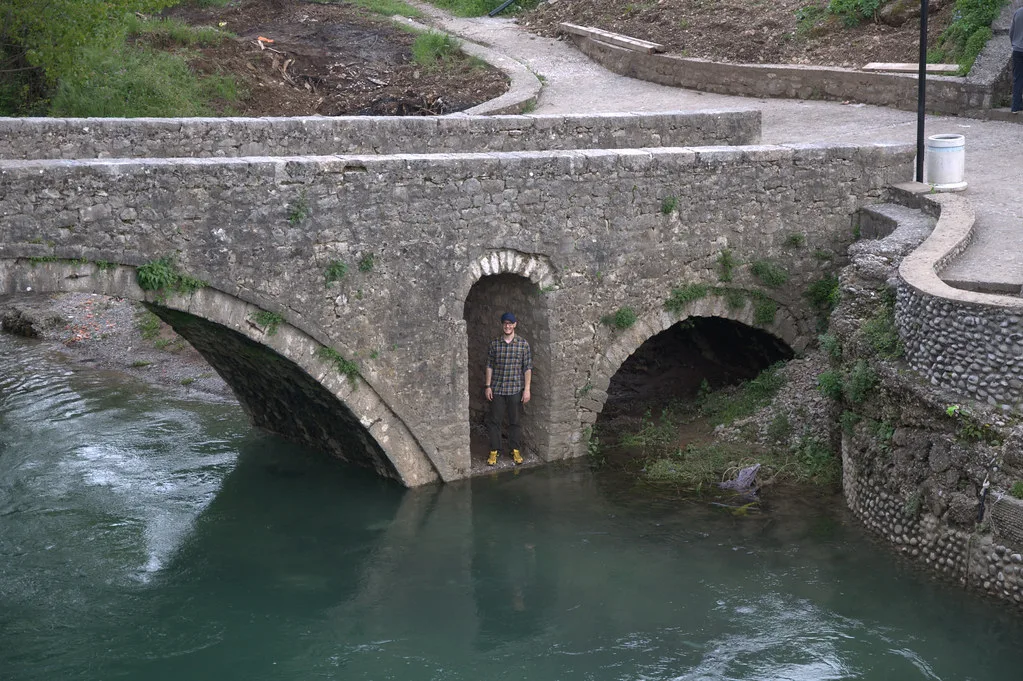
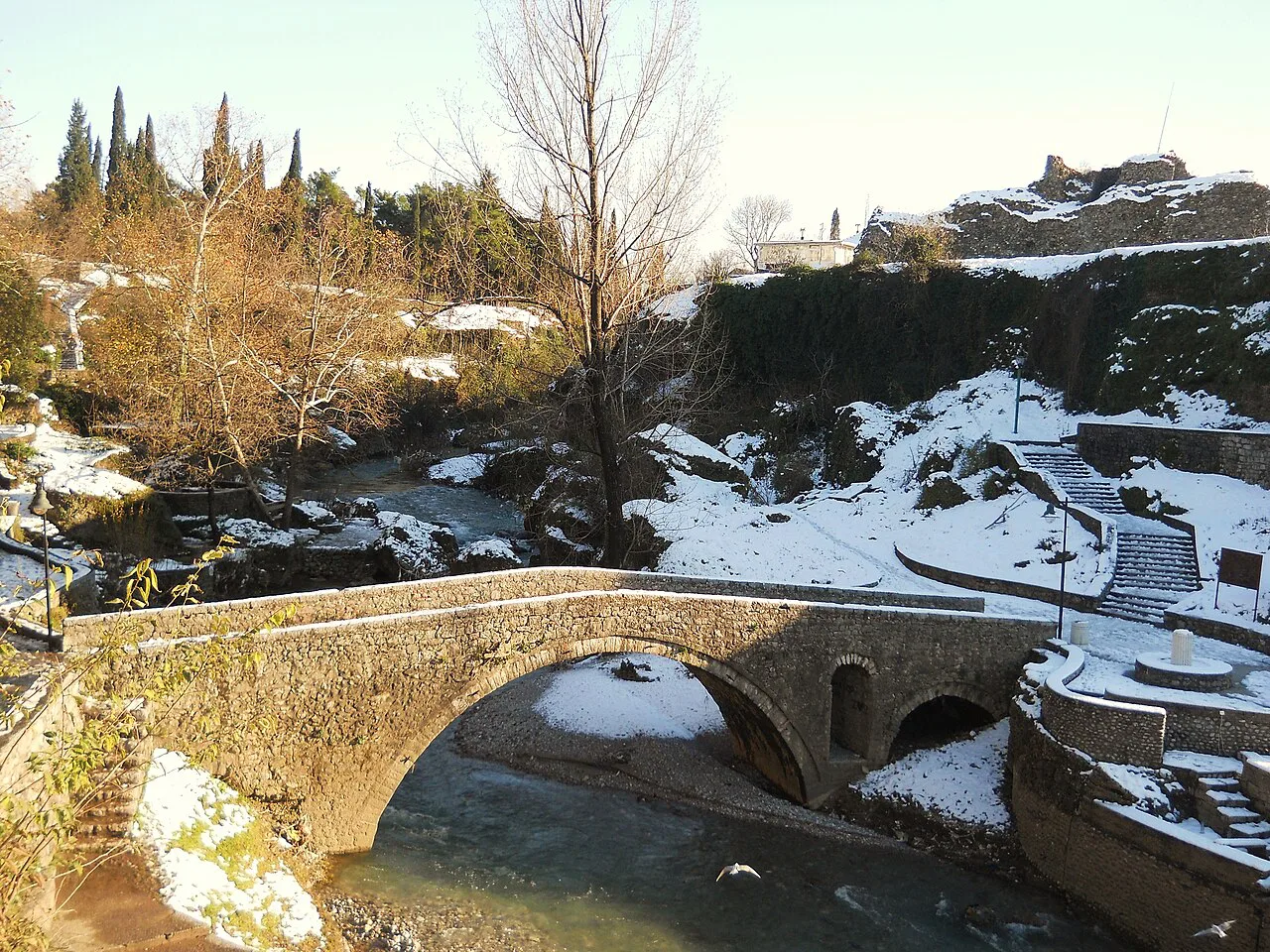
Skaline is an archaeological site that now serves as a city-centre gathering spot, and locals swim here on hot summer days. Some Ottoman-period monuments survive around it, including a bridge linking the old part of the city with the newer, contemporary side, which makes Skaline a natural starting point for a walk.
Keep a map open for the first hour: the centre is walkable, but the names of the quarters and the riverbanks recur in every route, and a quick look at a Podgorica map saves the usual wrong-bank detour.
The city centre on foot: Skaline, the Ribnica bridge and the old town
Start at Skaline, cross the Ribnica bridge into the old quarter and work through the Ottoman-era streets on foot. The clock tower and the old town lanes are the main sights of the historic core, and the whole block is small enough to cover without transport.
The Podgorica old town repays an unhurried hour, particularly if you want to see how the Ottoman layers sit beside the modern city. Read up on the Ottoman period before you go so the clock tower and surrounding streets are more than a photo stop.
If you would rather have the stories attached to the stones, a guided Podgorica walking tour covers the main sights in sequence and frees you from navigating. Independent travellers can follow the same order on their own, but the tour saves time on a short stop.
Podgorica's bridges: Millennium Bridge, Ribnica Bridge and the Morača crossings
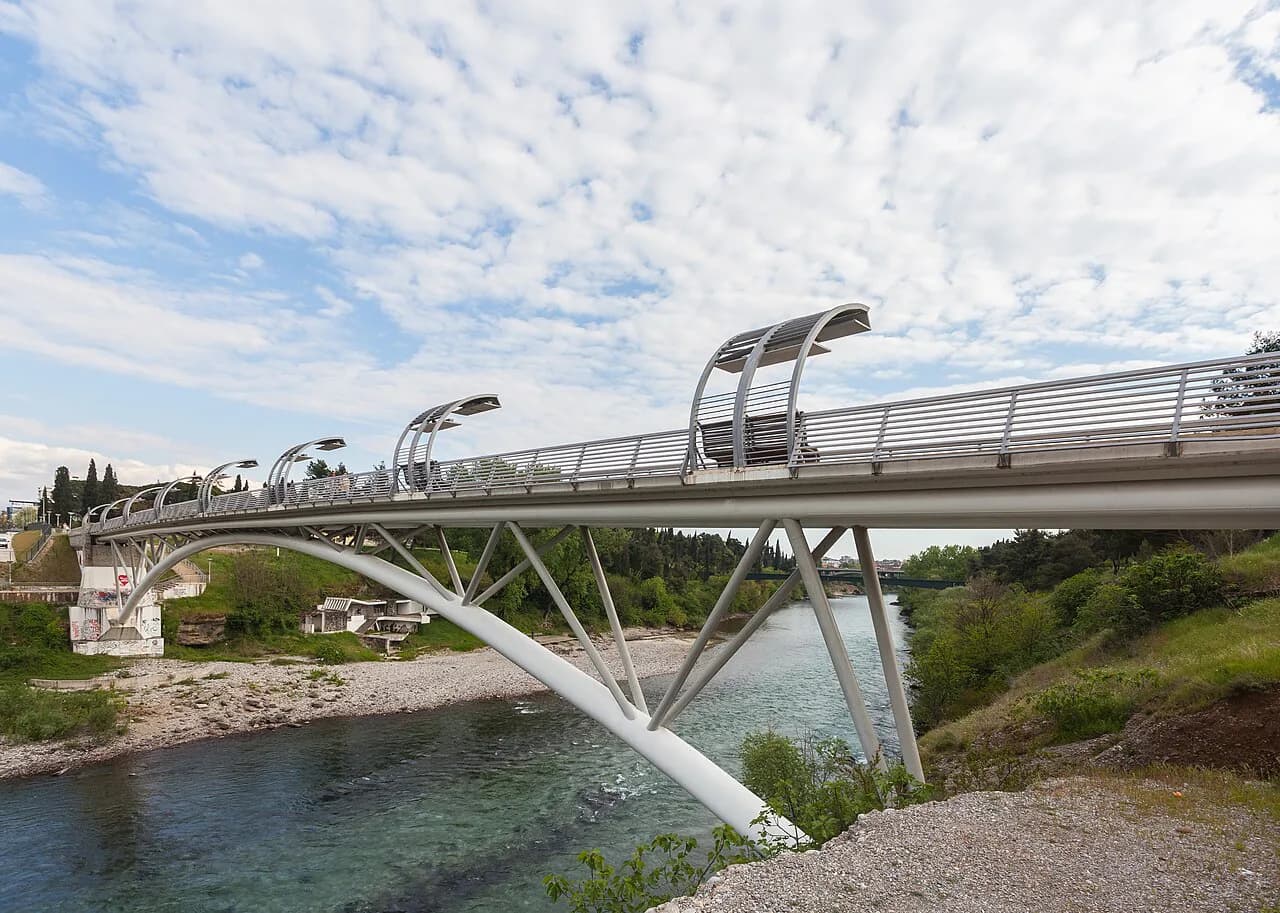
The city treats its bridges as landmarks, and walking across them gives the best free panorama of the Morača. The Millennium Bridge is the modern, cable-stayed crossing that appears on every postcard, while the Ribnica bridge anchors the old town and carries the weight of the Ottoman period. The Millennium Bridge, the Ribnica Bridge, the clock tower, St George's Church, the Galerija Centar and Gorica Forest Park all feature among the no-cost options in the city.
Allow 30 to 45 minutes to cross two or three bridges and take in the river views rather than ticking off each one. The crossings cluster tightly enough that a single loop links the old town, the centre and the park side without retracing your steps.
Parks and green space: Njegošev Park, King's Park and Gorica hill
Podgorica is laid out with plenty of green space, and Gorica hill is the largest park in the city, a few minutes' walk from the centre. The name is why the city is called Podgorica, and the top sits at roughly 150 metres, with trees, plants and flowers throughout and an adventure park on the slopes. Locals use it for runs, training and walks, and it has a viewpoint at the top.
A one-day route through the centre usually passes Njegošev Park on the way across the bridges, then continues to King's Park and the old Ottoman bridge over the Ribnica. Both parks are short detours rather than half-day stops, so budget 20 to 30 minutes each and use them to break up the walking.
Gorica is the better choice when you want an hour in shade and a view; the two central parks are better for a quick pause between sights. In summer heat, climb Gorica early, when the slopes still hold shade and the city below is quiet.
Churches and monasteries: the Temple of Christ's Resurrection, St George's Church and Dajbabe monastery
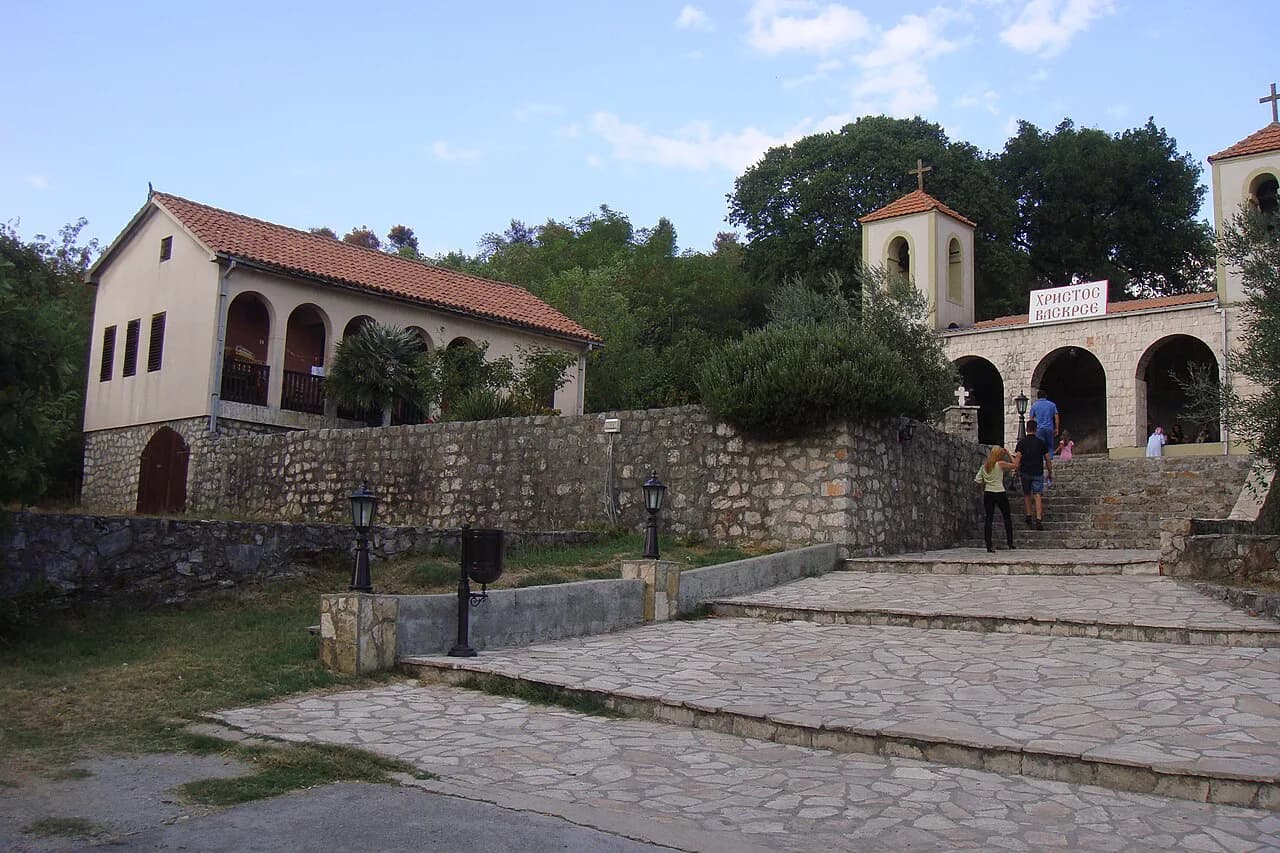
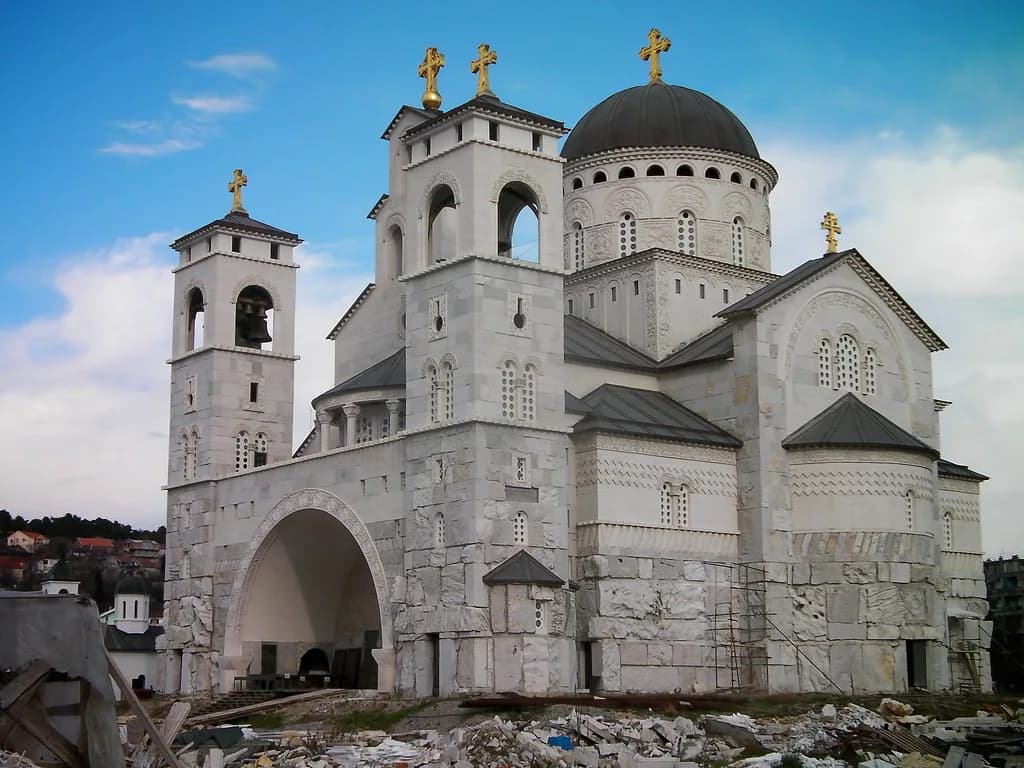
The Temple of Christ's Resurrection is the city's most conspicuous church, a landmark on the modern skyline and an easy final stop on a downtown walk. St George's Church sits among the free sights worth a visit in the centre, and both can be fitted around the old town and bridges without extra transport.
Dajbabe monastery is the one religious site that needs a decision: it is carved into a cave and lies outside the centre, so it takes a chunk out of the day. Dajbabe Monastery, Podgorica, rewards anyone willing to travel for it, but pair it with another stop on the same side of the city rather than making a lone trip.
Museums and galleries: Galerija Centar, King Nikola's Palace and the Podgorica Museum
Galerija Centar is the central gallery for exhibitions and curated collections, and it costs nothing to walk in from the main streets. King Nikola's Palace offers a park and exhibitions in one stop, which makes it a sensible pairing with a walk rather than a separate outing.
The Podgorica Museum belongs on any shortlist of city sights, and the museums in Podgorica range from national collections to small houses. Build a rainy afternoon around one or two of them rather than trying to cover the lot, since January and February bring persistent rain.
For the fuller set of collections, including the Marko Miljanov Museum, the museums in Podgorica are worth a look before you fix a route. Opening hours and any ticket prices change with the season and the exhibition, so check the museum's own page the week you travel.
Roman and Illyrian sites: Duklja (Doclea) and Medun
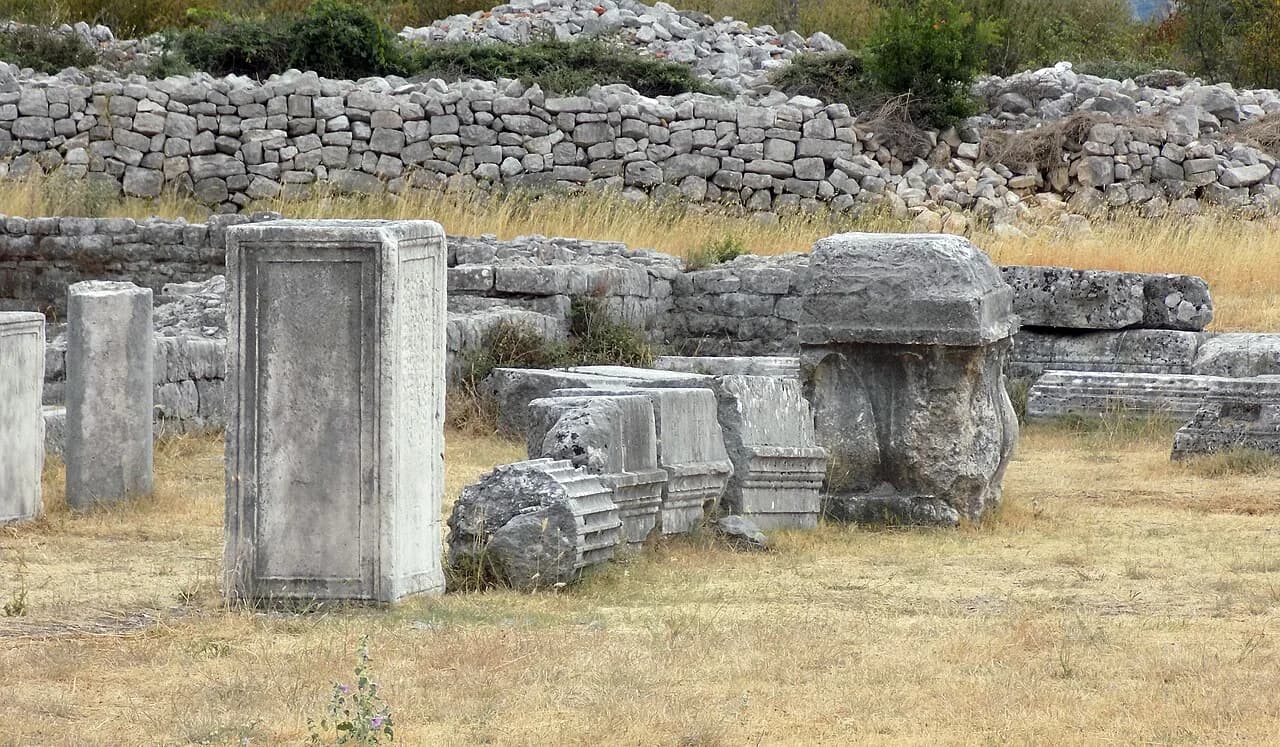
The archaeological site of Duklja, the Roman city also written Doclea, lies within reach of the city and makes a solid half-day outing. Doclea: The Roman City Ruins North of Podgorica suits anyone who would rather see real ruins than another square, and the site is often paired with a walk along the river.
Medun is the other out-of-centre archaeology stop, an Illyrian settlement within the 30-minute to one-hour driving band from the city. Both sites need transport, so choose one per half-day rather than attempting both, and leave Duklja for a morning when you want to walk the ruins before the heat.
Ottoman remains: the Clock Tower and the old town streets
The clock tower and the old town are the visible Ottoman layer in the city, and they sit together with the Ribnica bridge and Skaline in one walkable pocket. Stara Varoš is the name to look for when you read up on the quarter, and it helps to know the Ottoman period before you go so the streets read as layers rather than as a single old town.
Budget 45 to 60 minutes for the clock tower and the surrounding streets, including a pause at Skaline. The quarter is small; the value is in looking closely rather than in covering distance.
Food and drink: a Balkan breakfast, burek and what to order
Start the day with burek and yogurt, where the pastry comes with several fillings including potato, spinach, cheese and, in autumn, pumpkin, and homemade yogurt is the natural accompaniment. It is a filling meal rather than a snack, so plan the first walk for afterwards and keep lunch light.
If pastry is not your morning food, European-style breakfast and brunch are easy to find near the centre. Where to Eat in Podgorica covers the wider choice of Podgorica restaurants, and the cafes around the centre are the obvious place to pause mid-route.
The city's wine tradition is part of the eating plan too: the Plantaže winery lies close to Podgorica, and its cellar dates to the Cold War, when it was used to store aircraft. A visit works best as an organised stop rather than an unplanned detour.
Out of the centre: Niagara Falls on the Cijevna, Plantaže winery and Žabljak Crnojevića
The Cijevna canyon, about six kilometres from the city, holds the small waterfall locals call Niagara, with a restaurant by the river and the fall itself roughly 100 metres past it. It is most impressive in spring melt and after autumn rain, and locals swim here in summer, so it works as a short, cheap escape from the heat.
Beyond the city, the ancient Fortress of Žabljak Crnojevića and the Grlo Sokolovo viewpoint sit in the 30-minute to 90-minute driving band, with Grlo Sokolovo about an hour's drive away. Each needs a car or a tour, so pick one to anchor the afternoon rather than stringing several together.
The trade-off is time against variety: Niagara Waterfall near Podgorica and Plantaže fit into half a day, while Žabljak Crnojevića and Grlo Sokolovo eat the whole afternoon. With one day in the city, choose the waterfall; with two, add the fortress.
Lake Skadar day trips from Podgorica: Virpazar boat tours and kayaking
Virpazar is the launch point for Lake Skadar, and boat and kayak options can be booked in advance; a guided boat tour with drinks, sunset and group boat tours and a self-guided kayak tour all appear as bookable options from Virpazar. These are booking-platform listings for named operators rather than official park gate prices, so compare what each tour includes before you pay, and check the current price in euros when booking.
Skip-the-line national park tickets for Lake Skadar are listed as a separate purchase from the boat tours. Park entry and boat trips are different purchases, so budget for both and check the current listing in euros before you book.
With roughly 30 minutes' drive to the lake from the city, a morning boat trip and an afternoon back in the centre is a realistic combination. Book the earliest departure you can to avoid the middle-of-day heat, and keep the rest of the day for the old town and the bridges.
A one-day route through Podgorica in order
Begin with burek in the centre, walk across the Millennium Bridge and through Njegošev Park, continue to King's Park and the old Ottoman bridge over the Ribnica, then work through the old town to the clock tower. The route finishes at the Temple of Christ's Resurrection and, if energy allows, a walk up Gorica for the view.
The sequence matters more than the pace: the bridges and parks come first, the old town and its lanes second, the church and hill last. If the afternoon is still free, add Niagara Waterfall near Podgorica or a short Plantaže visit; if it is raining, swap the hill for a gallery.
For the wider set of individual sights, the Podgorica Attractions hub breaks the city down stop by stop. Use it to swap pieces of the route rather than to add more stops to a day that is already full.
How to get around Podgorica without a car
The centre is a walking city: Skaline, the Ribnica bridge, the old town, the parks and the bridges all sit within one continuous loop. Save the car or taxi for Dajbabe, Duklja, Medun, Cijevna and the lake, which fall into the 30-minute to 90-minute driving bands, and group those by direction so you make one trip out and back.
Buses and taxis handle the centre-to-outskirts legs, and a booked tour removes the need for a car altogether on lake and winery days. For a two- or three-night stay, one car day plus two walking days covers the city and one outlying site comfortably.
Which Podgorica day suits you?
Take the half-day walking route if Podgorica is a stop between the coast and the mountains: Skaline, the old town, the clock tower, the bridges and one park fit into a morning. Add the Temple of Christ's Resurrection and Gorica if you have the afternoon, and keep Dajbabe and Duklja for a separate trip.
Choose the lake if you want water and wildlife: a Virpazar boat tour, booked in advance, plus a return to the city by mid-afternoon makes a full but manageable day. Choose Cijevna and Plantaže if you would rather stay close, and combine Žabljak Crnojevića with Grlo Sokolovo only if you have a car and a whole afternoon.
Whichever plan you pick, confirm opening hours for the galleries and monasteries and recheck the boat listings for the dates you want. On a short trip, that five-minute check is what stops a carefully built route ending at a locked door.
Explore more Podgorica guides
- Dajbabe Monastery
- Doclea: The Roman City Ruins North of Podgorica
- Niagara Waterfall, Podgorica
- Podgorica Map
- Podgorica Old Town
- Restaurants in Podgorica
- A Podgorica Walking Tour
- Cafés in Podgorica
- Churches in Podgorica
- Free Things to Do in Podgorica
- Museums in Podgorica
- One Day in Podgorica
- Podgorica History
- Podgorica Itinerary
- Podgorica Market
- Podgorica Tours
- Podgorica Viewpoints
- Shopping in Podgorica
Frequently Asked Questions
Can you see Podgorica's main sights in half a day?
Yes. The old town, Skaline, the Ribnica bridge, the Millennium Bridge and one of the central parks fit into a continuous morning walk, with the Temple of Christ's Resurrection and a climb up Gorica if you have the afternoon. Sights outside the centre, such as Dajbabe monastery, Duklja and Medun, need transport and a separate half-day.
Which Podgorica sights cost nothing to visit?
Galerija Centar, the Millennium Bridge, the Ribnica Bridge, the clock tower, St George's Church, Doclea and Gorica Forest Park appear among the free options listed by Expedia's Podgorica activities page. Check individual museum and monastery pages for any charges before you set out, since these vary by season and exhibition.
Is Lake Skadar easy to reach from Podgorica without a car?
Virpazar, the main launch point for the lake, is roughly 30 minutes' drive from the city, which makes a booked tour the simplest option if you have no car. Boat tours, kayak trips and separate national park tickets are sold online, with per-adult listings for named operators and departure times to choose when booking.
Sources
Notes for your Montenegro trip
Optional updates to our Montenegro town guides.
You might also like
Continue reading
More guides you'll find useful