
Millennium Bridge (Most Milenijum), Podgorica

The Millennium Bridge is a quick stop rather than a sight you build a day around: a cable-stayed road bridge over the Morača in Podgorica, opened in 2005, with footways and cycle space on both sides. Walk across it, look up at the inclined pylon and the cable arrangement, and you have seen what there is to see. This guide covers where the bridge sits, how to reach it on foot, what to look at from the deck and which nearby sights fit around a short visit.
What the Millennium Bridge is
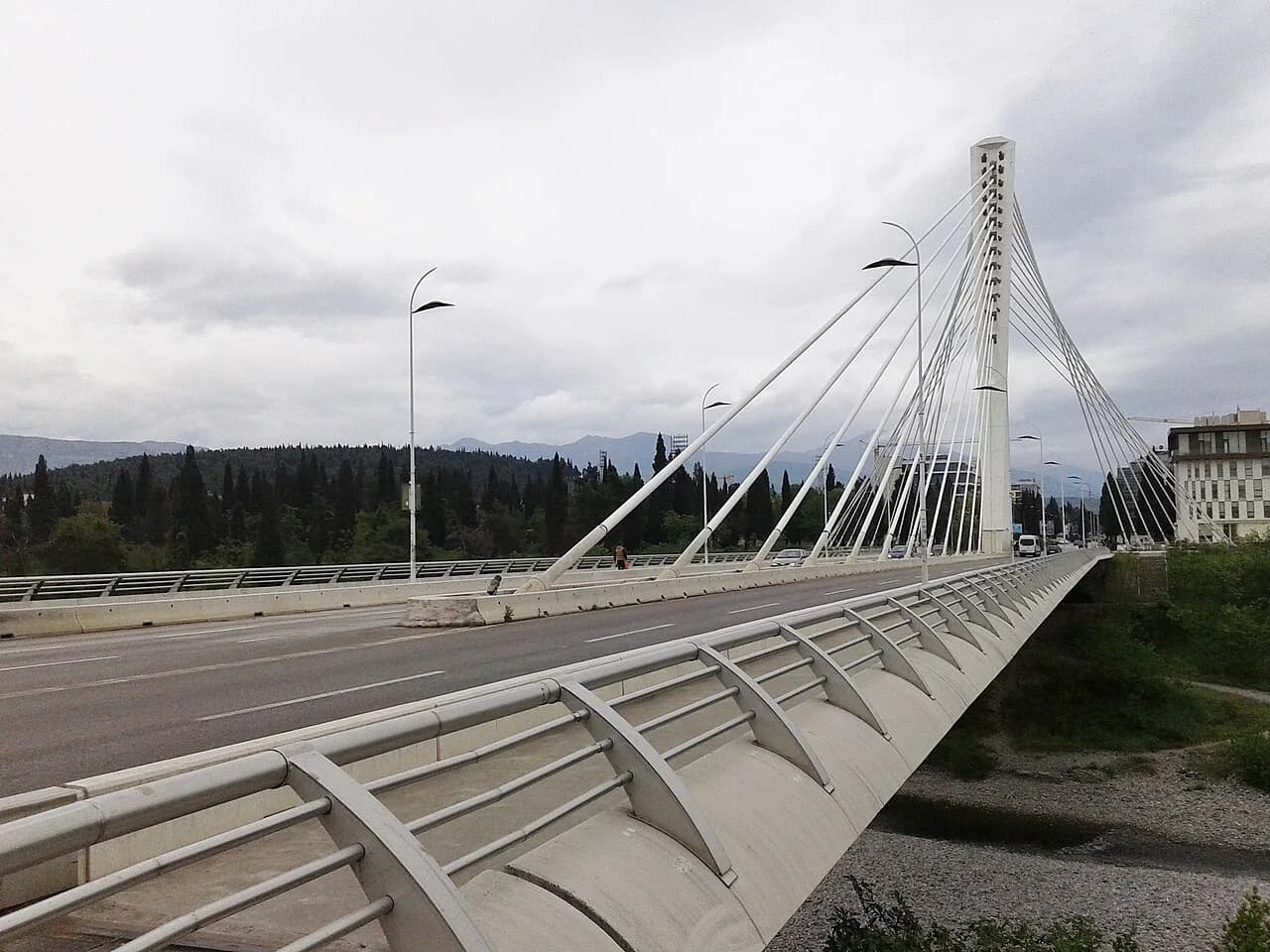
The bridge was built in 2005 over the Morača, the river running through Montenegro's capital, and connects the older part of Podgorica with the newer town. It is a cable-stayed bridge, not a suspension bridge, and its inclined pylon stands 57 metres above the road.
Ponting, the Slovenian engineering firm behind the design, describes it as an asymmetric single-span cable-stayed bridge with a uniquely shaped inclined pylon, where the back stays wrap around a plateau at the bridge entrance. The main-span stays sit in a single plane down the middle of the cross-section, carrying a four-lane city road with pedestrian and cyclist areas on both sides. Its structural figures include a 150-metre maximum span and a 25.4-metre width.
Two names appear in accounts of the design: Marjan Pipenbaher of Ponting Bridges and Mladen Ulićević of the Faculty of Civil Engineering in Podgorica. The bridge opened on 13 July 2005, built by the Slovenian contractor Primorje, and it has since become one of the city's recognisable landmarks.

Where the bridge sits in the city
The bridge links the Boulevard of Ivan Crnojević in the city centre with July 13 street in the new part of Podgorica, which is the detail that makes it useful on a walk: it is a through-route between two districts, not a monument on a plinth. Placing it on that line tells you whether it fits the direction you are already heading.
Treat the crossing as one segment of a city walk rather than a destination with an entrance. If you are working through the sights in the centre, our Podgorica attractions guide sets out the individual places in and around the middle of town so you can judge how the bridge slots into your route.

The design in plain terms
The pylon leans rather than standing upright, and the cables fan out from it to hold the deck, so the most interesting view is from the bank looking along the bridge rather than from directly beneath it. Because the stays run in a single central plane, the traffic lanes sit either side of the cable line and the walking and cycling space runs along the outer edges, which keeps you away from the cables themselves.
The 57-metre pylon gives you a reference point for the skyline as you approach, and the deck is broad enough that a slow walk with a camera does not block anyone. The structure is a piece of engineering to read with your eyes: the incline, the cable spread and the way the deck carries a full city road.
How to reach it and how long the crossing takes
The bridge is reached on foot from the centre by following the Boulevard of Ivan Crnojević towards the river, and it lands on July 13 street on the far side, so it works as a natural link between the two halves of the city. Walking from one end to the other is a matter of minutes; give the whole stop ten to fifteen minutes if you want to look at the pylon, read the cable arrangement and take photographs from both banks.
There is no ticket desk, and the bridge is a public city road you walk across rather than a ticketed attraction. That makes it a flexible filler between other stops, and it also means you should expect traffic alongside you on the deck.
What to look at from the deck
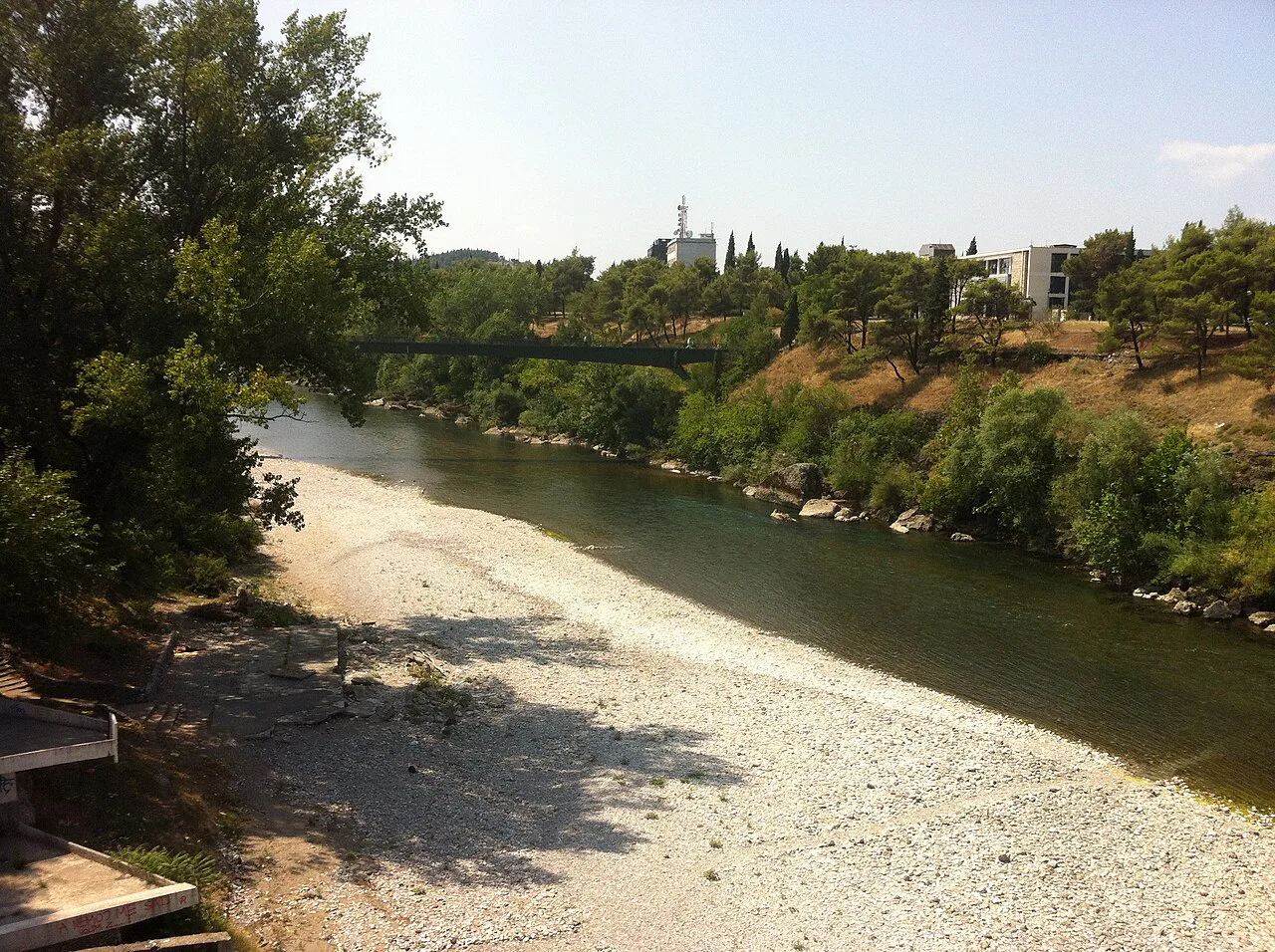
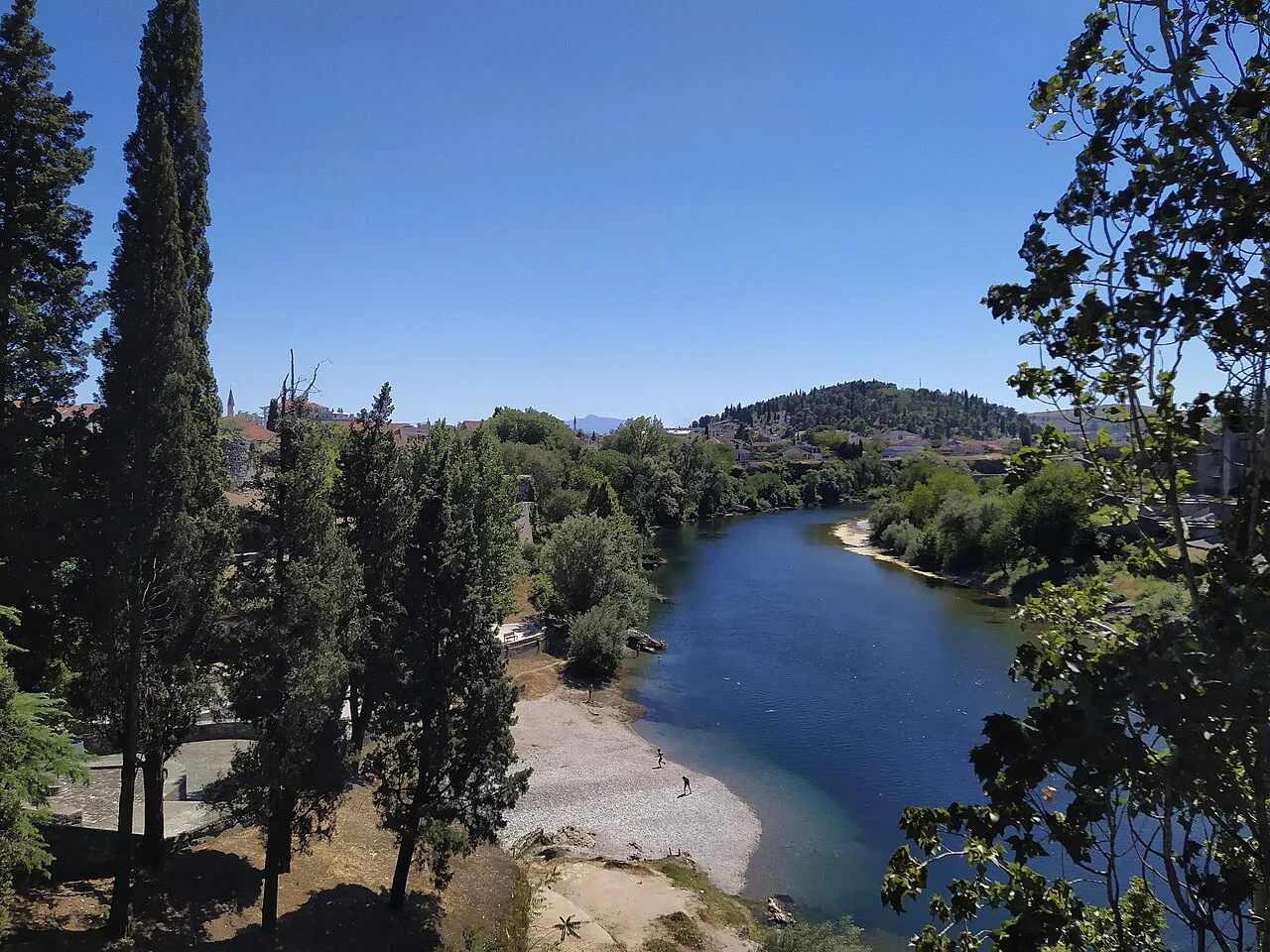
Look along the Morača in both directions for the view of the river and the cityscape, and look back at the inclined pylon once you are partway across so you can see how the cables meet the deck. The designer describes a scenic plateau formed by the back stays at the bridge entrance, which gives you a spot to step aside from the traffic before or after crossing.
The surrounding mountains frame the bridge in photographs from the banks, and the crossing itself is short enough that you can shoot from both ends without losing much time. Keep to the pedestrian and cyclist edges rather than the road lanes, since the middle of the deck carries moving vehicles.
Light and quiet times for photographs
Spring and autumn tend to be milder for walking the bridge than high summer. That is a general seasonal note rather than a promise about any particular day, so check the forecast before you set out with a camera.
The bridge is a public road, so the practical way to avoid busier periods is simply to go early in the morning or late in the day, when commuter traffic on a working road bridge is lighter. Morning and evening light also picks out the cables and the pylon better than flat midday sun.
Nearby sights within walking distance
The St George Church and the Natural History Museum of Montenegro are described as central sights easily paired with a bridge walk, along with the Parliament of Montenegro, the Temple of Christ's Resurrection and the Modern Art Gallery, so the crossing can anchor a short loop of central sights.
If you are assembling a day in the capital, the Clock Tower (Sahat Kula), Podgorica is a compact old-town landmark that pairs well with a river walk, and the Petrović Palace, Podgorica gives you a second central stop of a different kind. Both are close enough to the centre that you can fold them into the same outing as the bridge.
For a wider spread of options, our guide to things to do in Podgorica covers parks, museums and riverside spots, including the Podgorica museum if you want an indoor stop, the Osmanagić Mosque, Podgorica for a different quarter, and Independence Square, Podgorica as a central pause. Gorica Park, Podgorica and Kings Park, Podgorica give you green space to break up the walking, while Skaline, Podgorica and the Starodoganjska Mosque sit further along the river for a longer circuit.
Gorica Park and Kings Park are the easiest green stops to add on foot, and Skaline, where the Ribnica meets the Morača, makes a natural riverside extension if you have already walked the bridge.
Practical notes for a working road bridge
This is a piece of city infrastructure, not a ticketed attraction: it is a public road bridge with no admission charge, and the deck carries four lanes of city traffic with pedestrian and cyclist areas on both sides. Walk on the footways, keep an eye on turning vehicles at each end, and treat the crossing as part of the street network rather than a promenade.
If you want to confirm the design details before you go, the structural figures on the designer's project page and the description on the World Heart Federation landmark page are both useful references, and both give the pylon height as 57 metres.
Should you add the Millennium Bridge to your Podgorica walk?
Yes, if you are already crossing between the old centre and the new town: it takes minutes to walk and gives you a close look at a distinctive inclined pylon and its cables. Do not build a trip around it on its own; pair it with the Clock Tower (Sahat Kula) in Podgorica or the Petrović Palace, Podgorica and let the bridge be the link between them, or use the Podgorica attractions guide to plan the wider stop.
Go in the morning or late afternoon for lighter traffic and better light, walk the footway rather than the road, and check the weather if photography is the point of the detour.