Sveti Stefan History: From Paštrovići Village to Hotel Island
Sveti Stefan's history in brief: a 15th-century Paštrovići settlement, a village emptied by 1955, then a hotel. What the record says and what it leaves out.
On this page
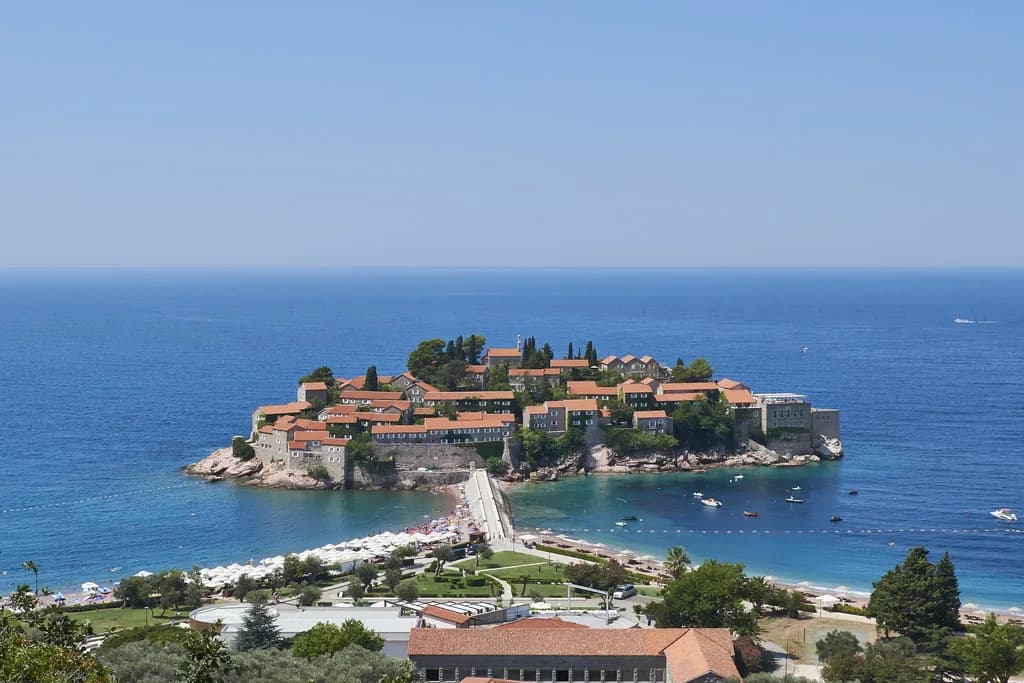
Sveti Stefan is a former Paštrovići settlement on a small island, now attached to the mainland by a narrow isthmus and occupied by a hotel complex. Its history runs in clear stages: a fortified village assumed to date from the 15th century, a church from the Nemanjić period, a community that had left by 1955, and a resort conversion in the 1950s and 1960s followed by a long lease to Aman Resorts in 2007. This guide sets those stages in order, separates the founding legend from what the record states, and explains what the geography means for anyone looking at the peninsula from the shore.
What Sveti Stefan is today
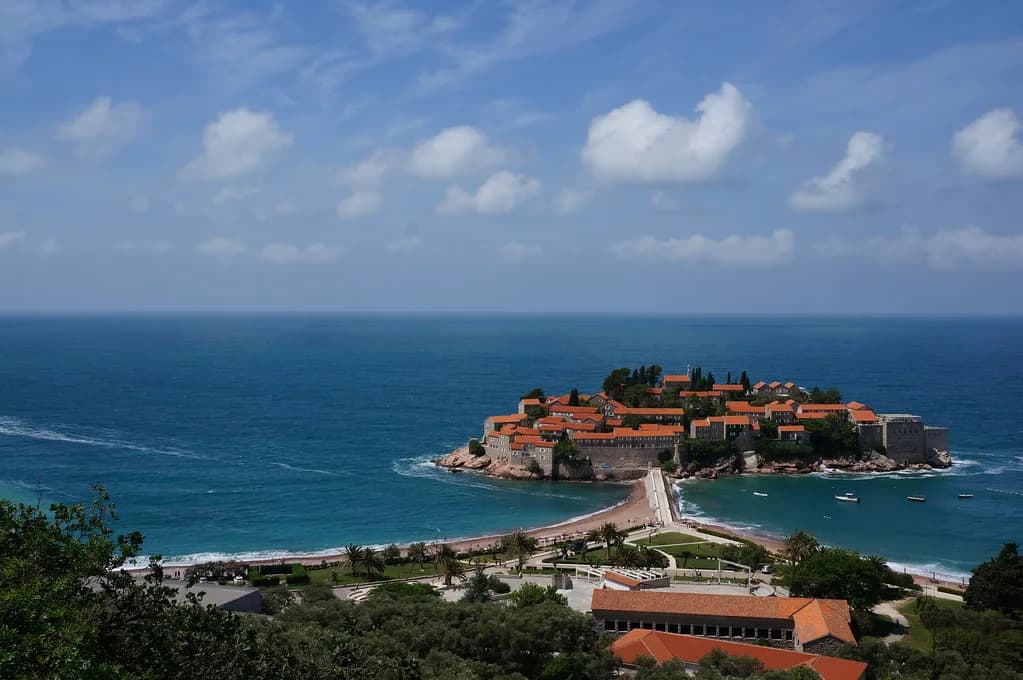
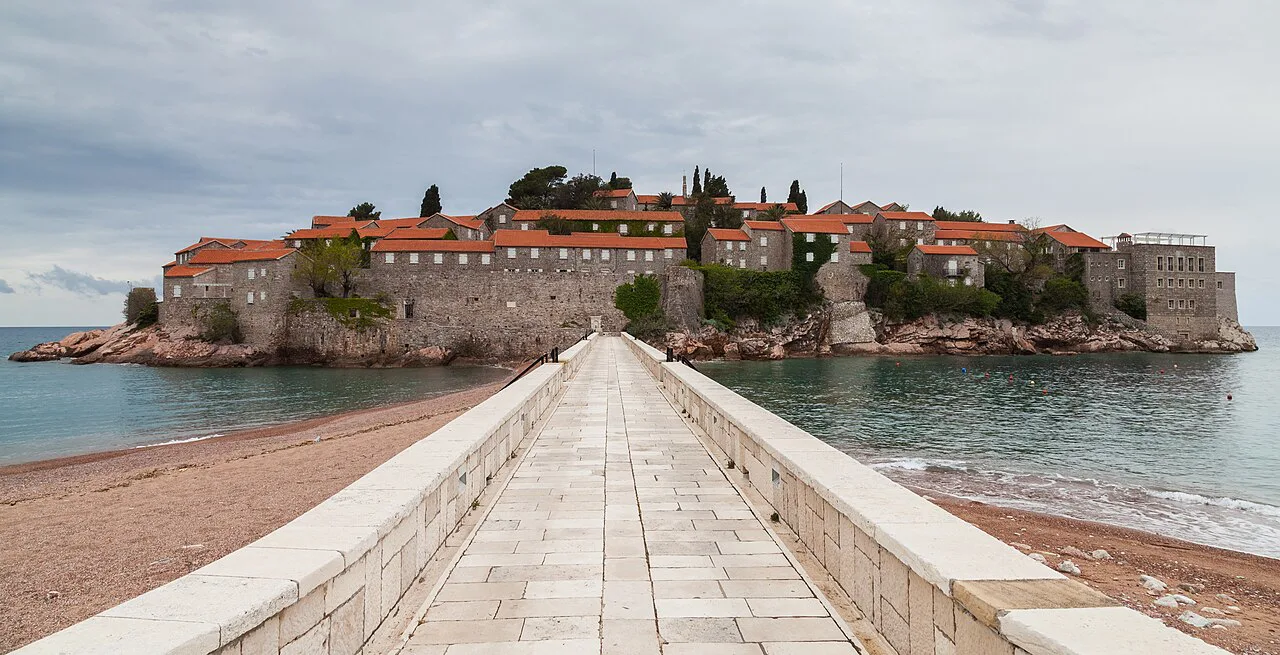
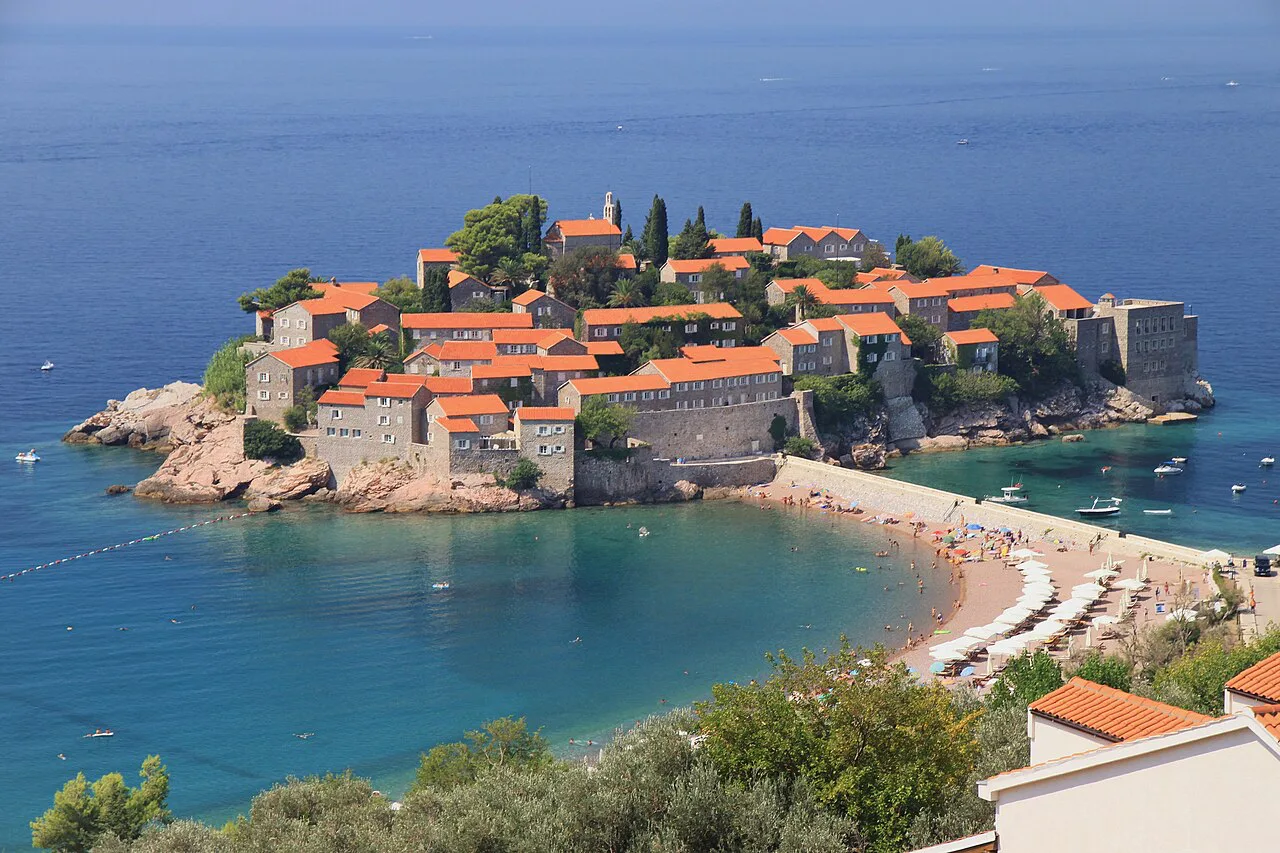
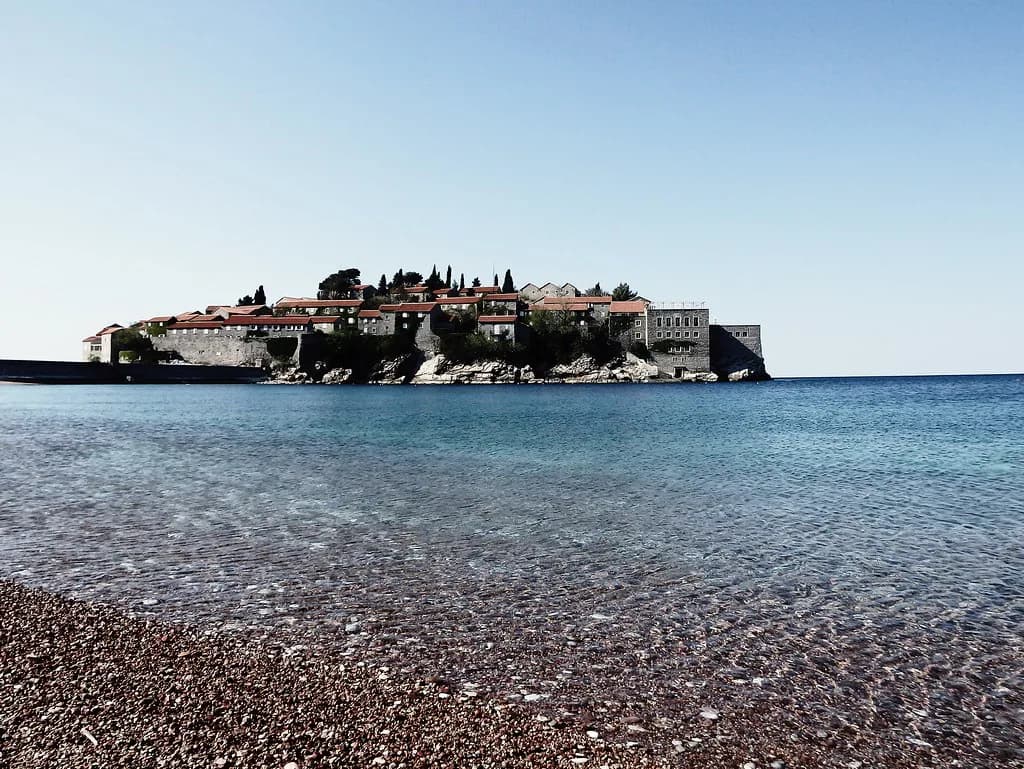
The settlement sits on a rocky islet now joined to the mainland by a narrow isthmus, so the whole complex reads as a peninsula. A Sveti Stefan map makes the approach road, the isthmus and the neighbouring beaches easier to picture before you go.
The walled cluster is a hotel, not a public village, which shapes what a non-resident can do. The lanes and houses inside belong to the resort, so the realistic plan is to view the island from the shore, the causeway approach and the road above rather than assume you can walk in. If you want the detail of the islet itself, the Sveti Stefan Island page covers the layout and the approach.
Who the Paštrovići were and why the settlement dates to the 15th century
Sveti Stefan is a Paštrovići settlement whose foundation is assumed to date from the 15th century, when it was built and fortified as a defensible place for those families. The tradition also ties the building to treasure seized from the Turks, and European Heritage Days frames that as legend. The Paštrovići story links the coast around here: the fishing village of Pržno lies a short distance from the islet, and the Pržno guide covers that neighbouring stop.
The founding legend: treasure, twelve tribes and a church
Tradition holds that the Paštrovići built Sveti Stefan from treasure seized from the Turks. In the story, roughly a thousand men answered Kotor's call for help during a Turkish siege, defeated the besiegers alongside the people of Kotor, then met Turkish galleys near Jaz beach on the way home and took their goods as well. On returning, each of twelve tribes is said to have built a house on the island.
The same story is mentioned in an 1845 text, Opštestvo Paštrovsko u Okružju Kotorskom, by Stefan Mitrov Ljubiša. That date matters: the treasure-and-twelve-tribes account is a tradition written down centuries after the event, not a contemporary record. Read it as the settlement's founding legend rather than as documented history.
The name comes from a church built in the Nemanjić period and dedicated to the Archduke Stefan Prvomučenik, the patron saint of that Serbian-born family. That church is the reason the place carries a saint's name rather than a clan or family name, and it is one of three churches inside the walls.
From island to peninsula
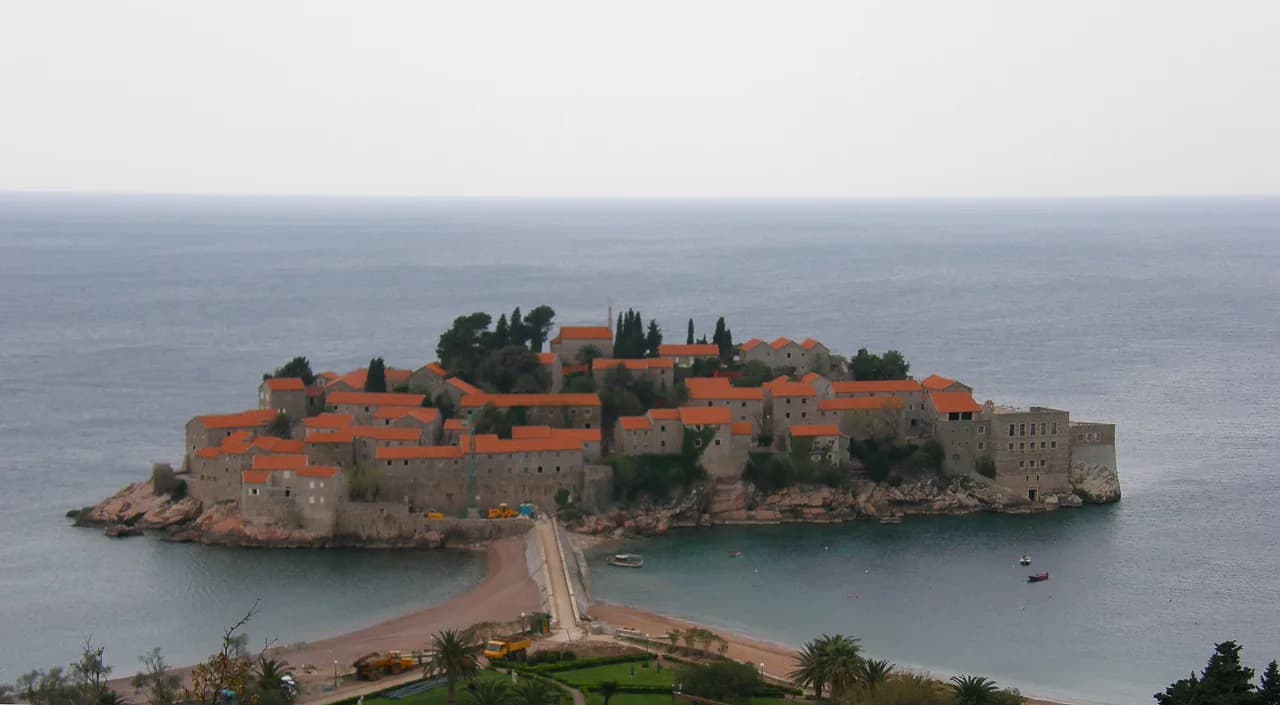
Sveti Stefan started as an island settled by fishermen and ordinary families, and families from nearby places moved onto it in the 15th century while resisting Turkish pressure on this part of the Balkans. To defend themselves they built walls and houses, and to keep the place supplied they connected the island to the mainland. The link they made was a narrow isthmus wide enough for a horse-drawn carriage to pass, which is why the island is a peninsula today.
Village life and the emptying by 1955
People lived on the peninsula until the 20th century, then left for larger cities as work dried up locally. By 1955 the village had been completely emptied, and the peninsula's next phase began. This is the turning point most retellings skip: the resort did not grow out of a living village but replaced one that had already gone.
The hotel years and the guests the record names
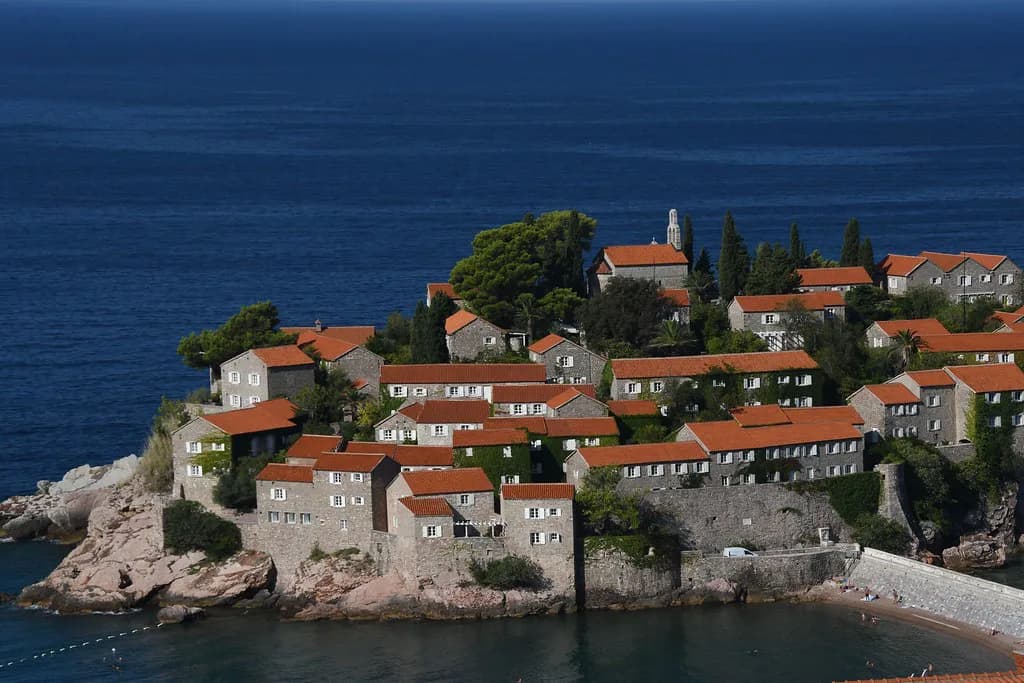
With the residents gone, the peninsula was turned into a resort, initially with a hotel and casino after the Second World War and developed as a luxury complex in the 1960s, combining traditional Montenegrin building with modern comforts. The village's own stone houses became the hotel's rooms, which is why the place still looks like a walled settlement rather than a purpose-built resort.
The resort's famous-guest stories are best treated as publicity history: they tell you why the island is known well beyond Montenegro. Confirm any specific claim about who stayed or married here against the operator or a heritage source rather than a marketing page.
Queen Marija Karađođević, Villa Miločer and the resort era
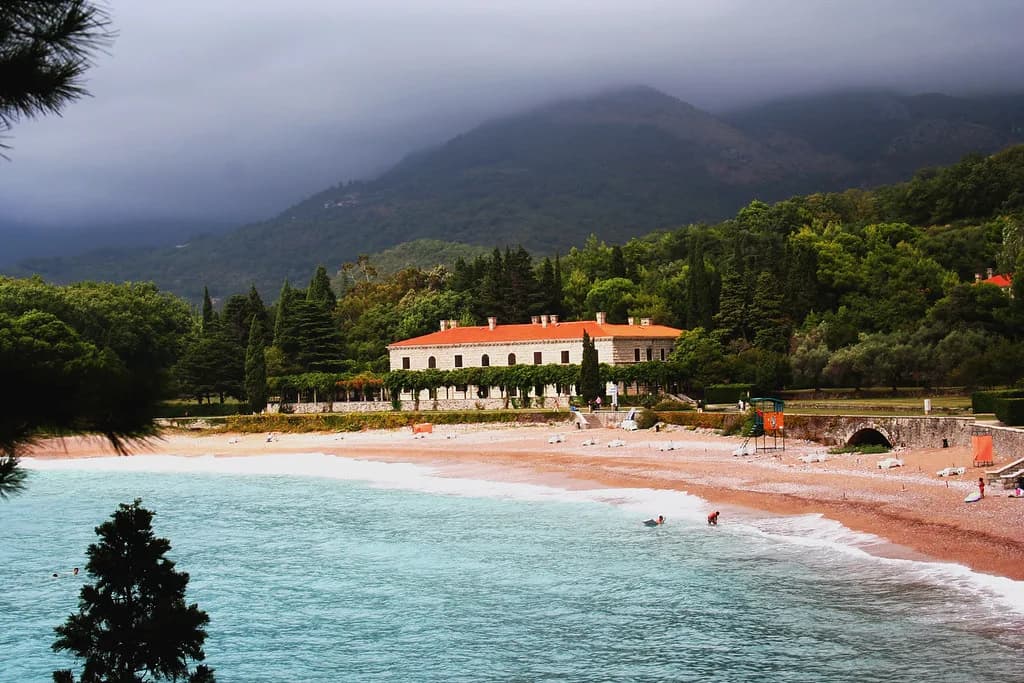
In the 1930s Queen Marija Karađođević of Yugoslavia bought land on the neighbouring beach and built Villa Miločer as a summer residence, so the royal connection predates the hotel conversion on the island itself. The Miločer Park page explains the grounds and the shoreline on that side.
After the Second World War the island became a hotel and casino and quickly drew a celebrity clientele. In 2007 Aman Resorts was awarded a thirty-year lease and took over operations of both Sveti Stefan and Miločer, which is why the peninsula operates as a resort rather than a monument.
The three churches on the peninsula
The peninsula carries three churches: Sveti Stefan, the Church of Alexander Nevsky and the Church of the Transfiguration. The first gave the settlement its name; the others sit within the same walled cluster. Looking at the rooflines from the shore, these are the buildings you are picking out among the houses.
What a visitor can actually see
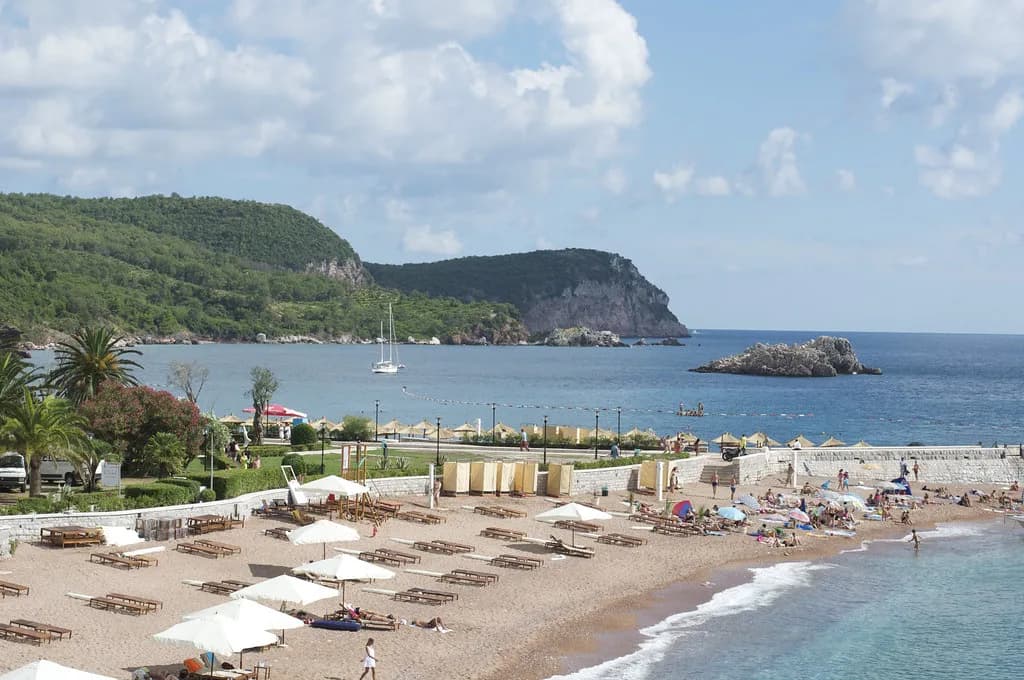
Because the peninsula is a hotel complex, the practical visit is from the outside: the view across the water from the road and the causeway, and the beaches on either side, Sveti Stefan beach and Miločer beach.
The viewpoint on the main road above is the classic angle, and a short stop there covers the whole shape of the isthmus and the walls in one look. If you plan to drive, check Sveti Stefan parking options before you set off in high season, as roadside spaces near the approach fill quickly.
Boat trips run past the island for a sea-level view, and the neighbouring village of Pržno is a short hop down the coast if you want to combine the two. Pržno, Montenegro keeps its fishing-village scale and sits within easy reach of the Sveti Stefan approach.
Is the island itself open to you?
Plan on seeing Sveti Stefan from the shore, the causeway and the viewpoint rather than walking its lanes, because the walled settlement operates as a hotel. The history is best read in sequence: a 15th-century fortified Paštrovići village, a church from the Nemanjić period, an emptying completed by 1955, a 1960s hotel conversion and the 2007 Aman lease.
For access rules, any guided arrangements and current visitor information, ask the hotel directly or check locally on arrival, since these are the details that change. Build the stop around the view point and one of the neighbouring beaches, and the visit works without needing to go inside the walls.
Explore more Sveti Stefan guides
Frequently Asked Questions
Can you visit Sveti Stefan without staying there?
The walled settlement is a hotel complex, so the realistic visit is from outside: the viewpoint on the main road above, the causeway approach and the neighbouring beaches. Whether any guided access into the lanes is offered is a matter for the hotel, so confirm with them rather than assuming entry.
How do you reach Sveti Stefan from Budva?
Sveti Stefan sits a short drive down the coast from Budva on the same coastal road, with the approach above the isthmus. Arriving by car means dealing with limited roadside parking in season, so set off early or plan to stop at the viewpoint and walk down.
What is the isthmus at Sveti Stefan?
It is the narrow strip of land the islanders built to connect their settlement to the mainland, made wide enough for a horse-drawn carriage to pass. That link is why Sveti Stefan is described as a peninsula today even though it began as an island.
Sources
Notes for your Montenegro trip
Optional updates to our Montenegro town guides.
You might also like
Continue reading
More guides you'll find useful