Sveti Stefan: What You Can See and How to Get There
Sveti Stefan is a walled islet village joined to the shore by a sandy isthmus. What you can see for free, how to get there and where to stop nearby.
On this page
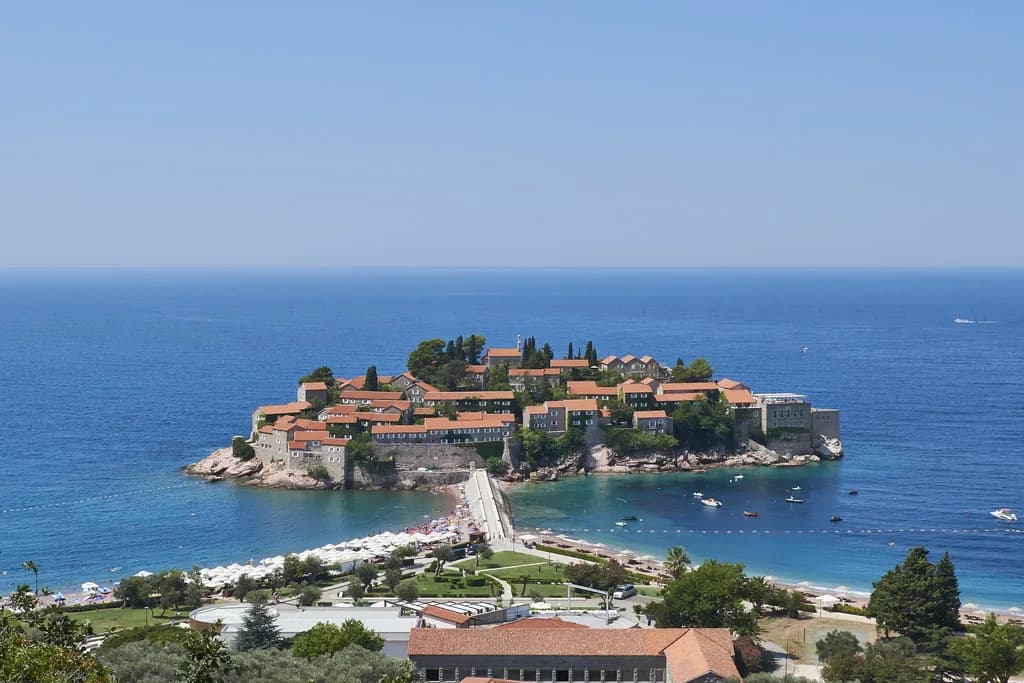
Sveti Stefan is best treated as a short stop rather than a day out: a walled village on a small islet, connected to the mainland by a sandy isthmus, with the best views free and the lanes behind the gate closed to anyone not staying or dining inside. The walk to the gates, the shore-level photograph and the climb to the Church of St. Sava above fill a half-day comfortably, and the resort beaches and Miločer villa sit within walking distance.
This guide separates what is public from what is not, gives the drive and bus trade-off from Budva, sets out the airport distances, and suggests how the stop fits a day between Budva and Petrovac. It does not rank beaches or recommend places to stay.
What Sveti Stefan is and how it is laid out
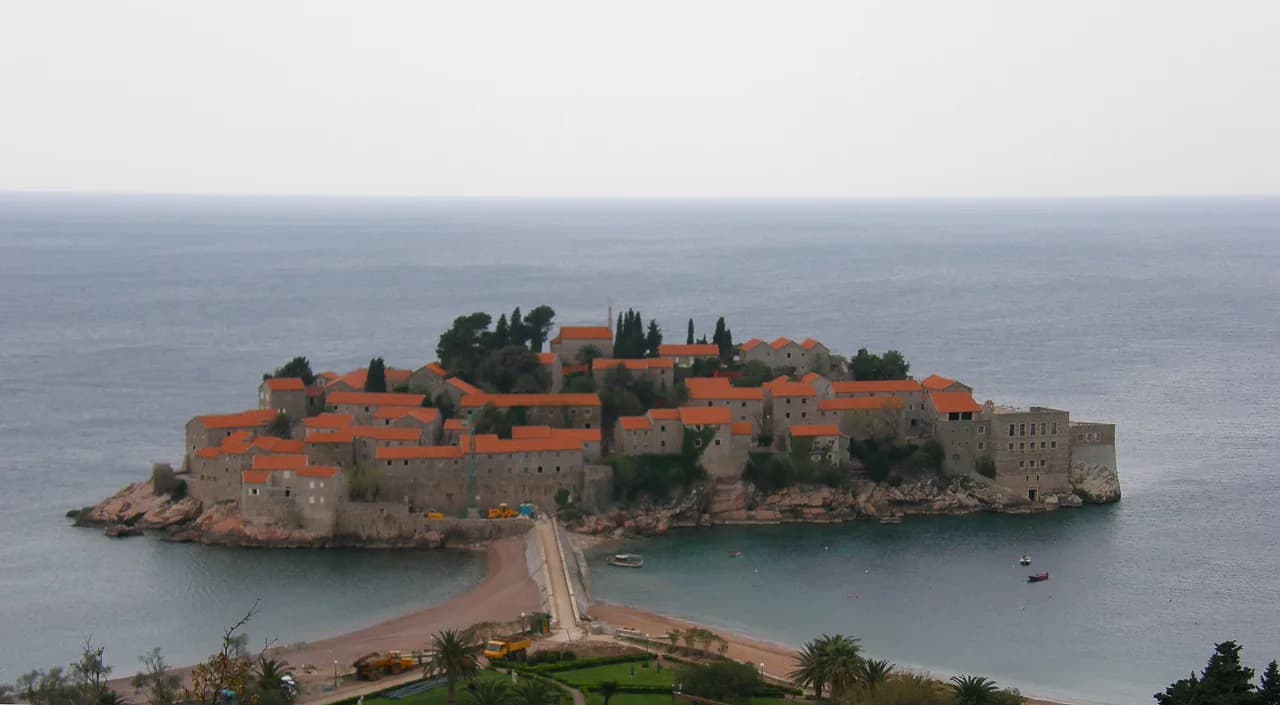
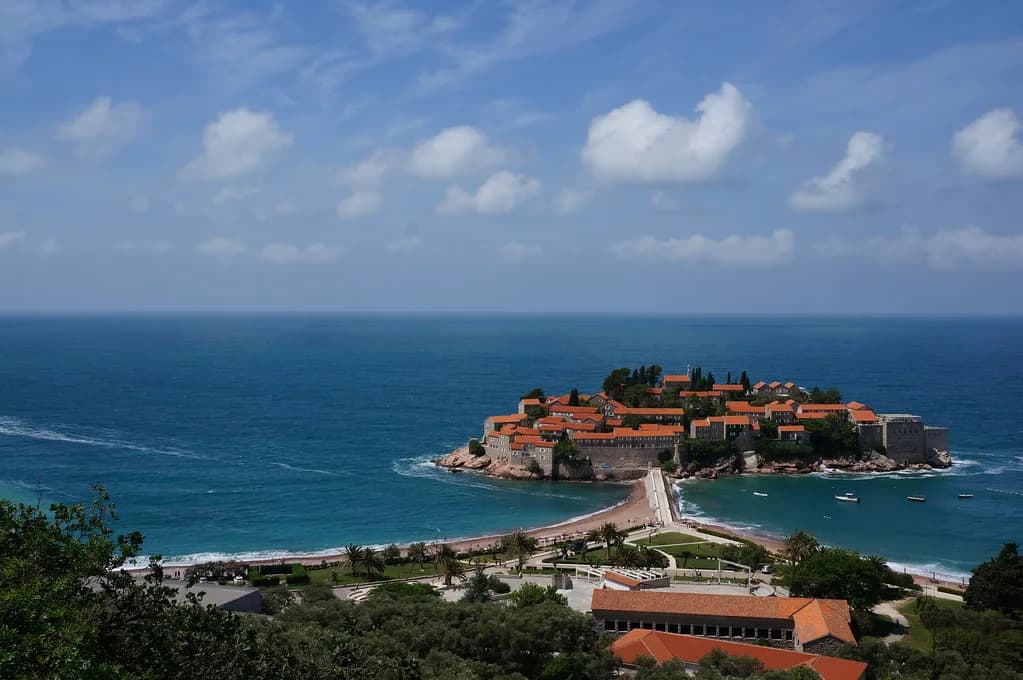
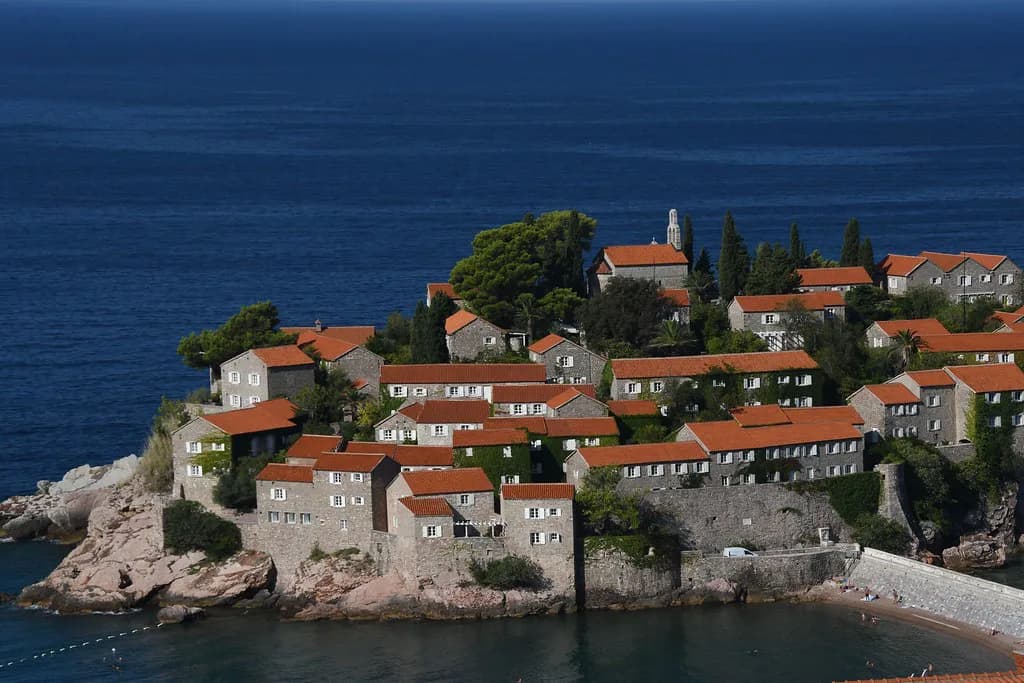
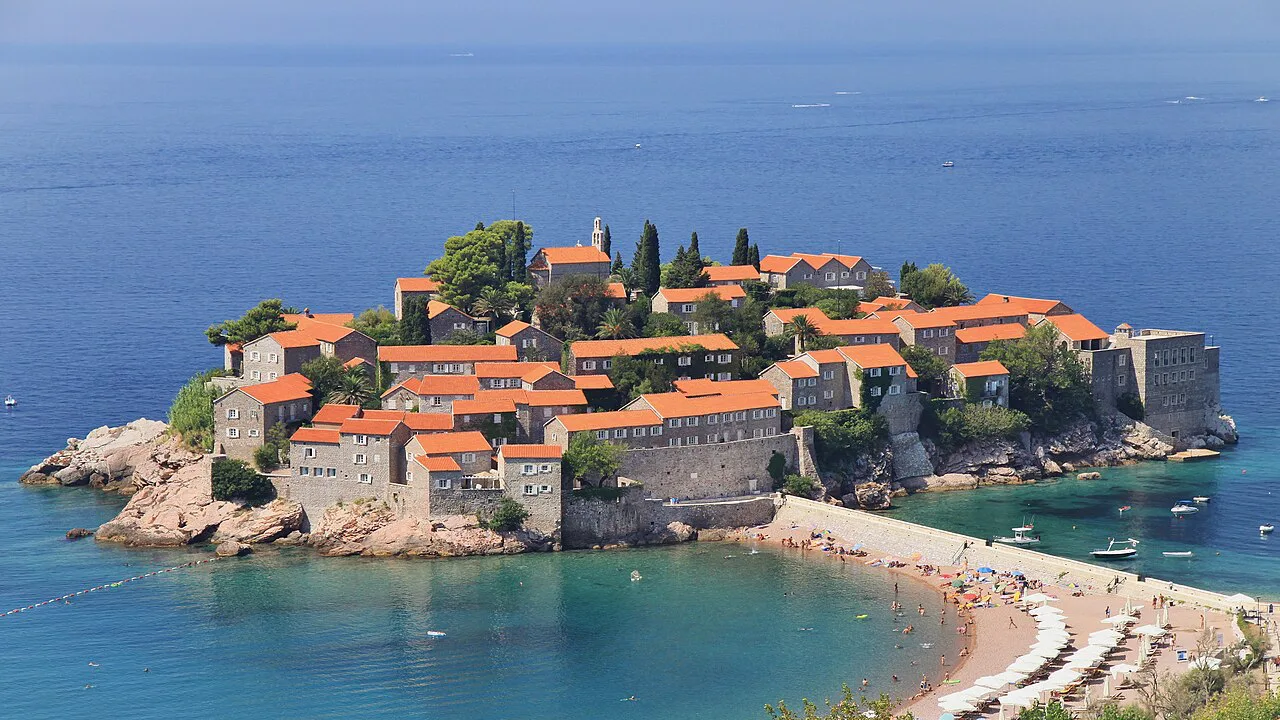
The settlement is split between a small islet and the mainland, joined by a sandy isthmus, with stone villas rising directly from the rock. The village on the islet began as a fortified fishing settlement in the 15th century and was turned into a luxury resort in the mid-1950s, when the resident population had dwindled.
Knowing that shape matters before you arrive: the mainland side holds the road, the public sections of beach and the cafés, while the islet itself is a compact maze of lanes and courtyards behind a single gate. Approach from the coast road and the islet reads first as a wall, then as a village once you reach the isthmus.
For the fuller story of the fishing village, the fortification and the resort conversion, the separate history article sets out what is documented and what is legend.
Can you go onto the islet?
The islet operates as a private resort, and access is limited to hotel guests, restaurant diners and people on a special guided tour. Walking the cobbled streets and courtyards is not open to casual visitors, so plan on seeing the village from the gate rather than from inside it.
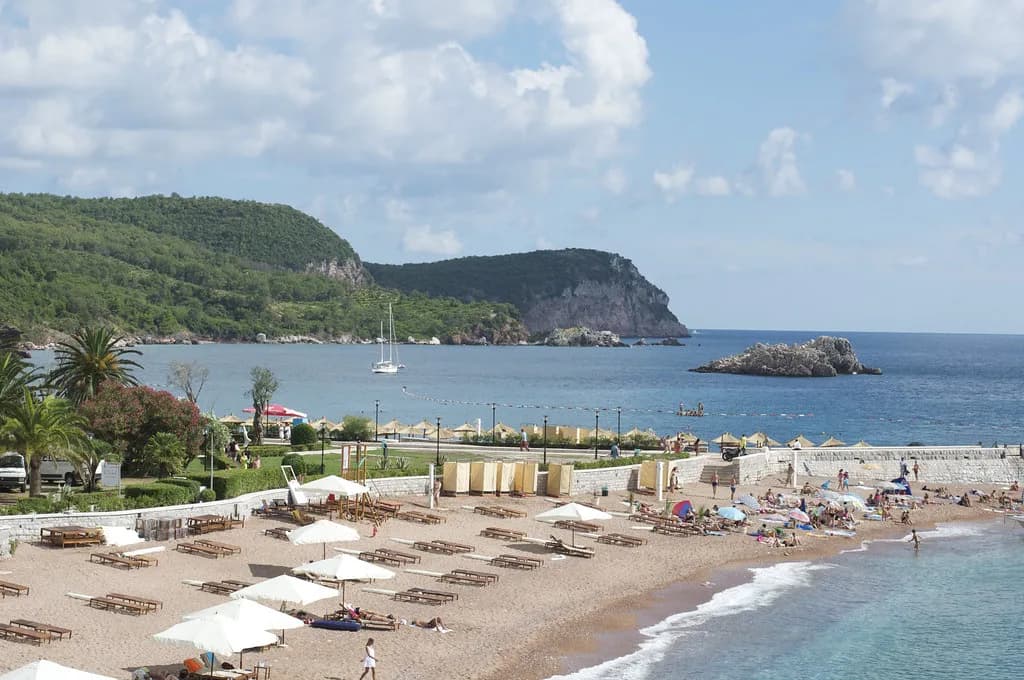
For anyone not staying on the islet, the practical options are the isthmus walk to the gate, the public south section of Sveti Stefan Beach in front of the islet, and the climb to the Church of St. Sava for the view back down. Treat any suggestion that a restaurant booking buys access as something to confirm directly with the resort before you rely on it.
Room rates and minimum spends change with the season and are not worth planning around; check the resort's own channels if you are considering a stay or a table.
The free view: the isthmus walk and the shot from the shore
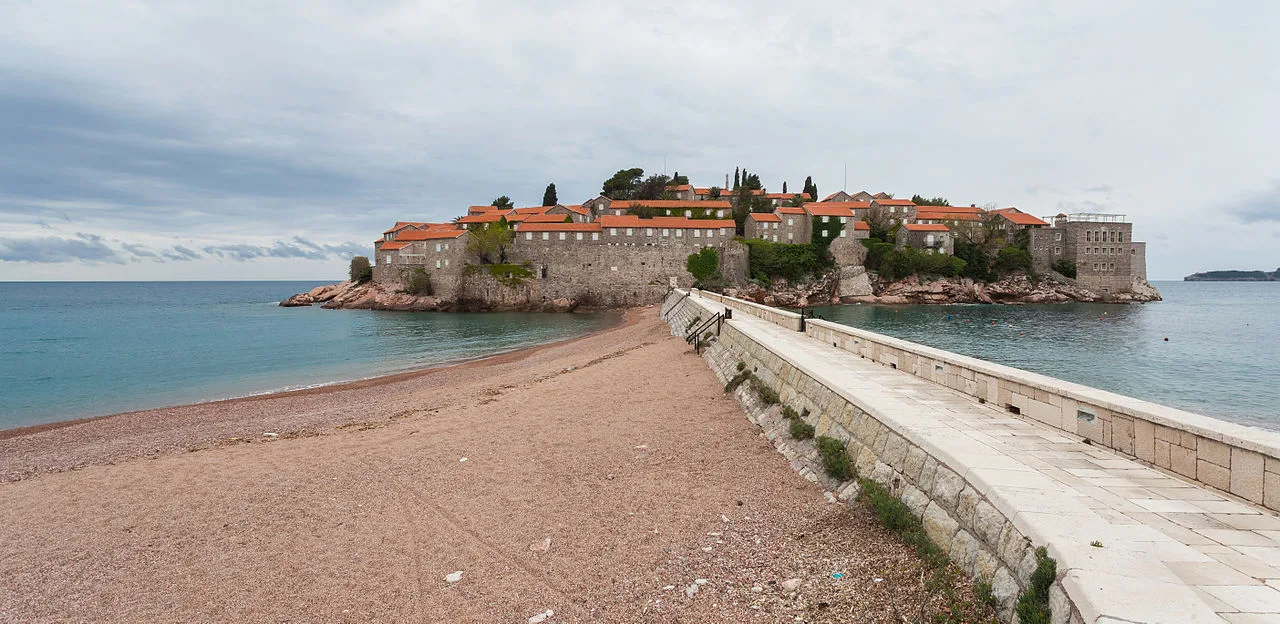
The isthmus itself is the main event for most visitors: a narrow sandy neck you can walk right up to the island gates, with the walls and the church tower filling the frame. The light is best early or late, when the stone turns warm and the beach in front is quieter.
From the shore, the classic composition puts the islet on one side and the pines and villa roofs of the mainland on the other. The Sveti Stefan view point article maps the elevated spots behind the town that give a third angle over the rooftops and out to sea.
Boat trips run from the Budva side of the coast and put you on the water for the view back at the islet and the cliffs; operators and departure points vary by season, so confirm before you set out, and the Sveti Stefan boat tour page sets out what the trips cover.
Church of St. Sava on the hill above
The Church of St. Sava sits on the hill above Sveti Stefan and gives the best elevated view of the islet and the bay, particularly towards sunset. It is a small Orthodox church, and the walk up is steep enough to warrant proper shoes and water in summer.
A 15th-century church also stands near the summit of the peak above the town, historically known for a bell rung in times of trouble, and the climb to the top takes around 40 minutes at a steady pace. No opening hours are published for either church, so treat them as landmarks on a walk rather than sights to schedule.
Miločer Beach and the villa behind it
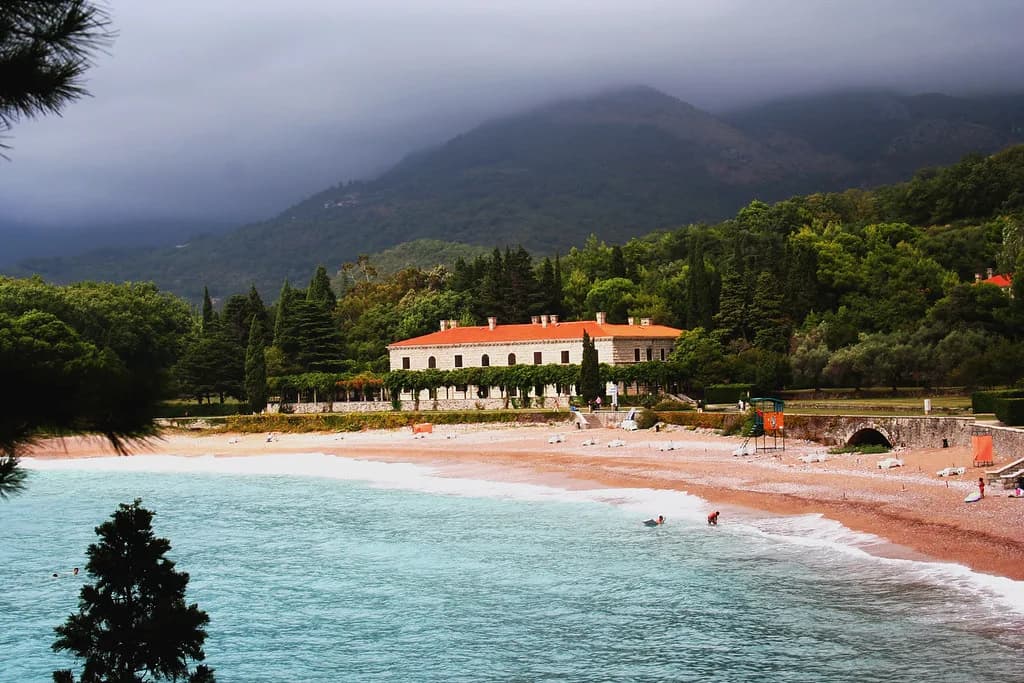
Miločer Beach is public, about a 10-minute walk north of Sveti Stefan Beach, and backed by a regal villa that now forms part of the resort. The setting is greener and more enclosed than the isthmus, with a mix of fine sand and small pebbles underfoot.
The parkland between Miločer and Sveti Stefan is the reason to walk rather than drive between the two, and the paths link up with the coast route towards Pržno.
Queen's Beach, once a favourite hideout of Queen Marija Karađorđević, sits among cypress and olive trees nearby and is the quietest of the three.
Getting there from Budva by car or bus
Sveti Stefan lies about 6 km southeast of Budva. By car the run takes around 15 minutes along the coast road, which gives you the flexibility to stop at Miločer or Pržno on the way and to leave when you want rather than when a bus comes.
Buses from Budva run to Sveti Stefan several times a day and take roughly 20 minutes. Schedules shift with the season, so check the timetable on the day you travel rather than relying on a printed one, and look at where the coach sets down relative to the isthmus before you commit.
Coming from further afield, such as Podgorica or Kotor, usually means changing buses in Budva, because there is no direct line to Sveti Stefan from most other towns. If you are driving yourself and want to leave the car before the isthmus, the Sveti Stefan parking guide covers where the road allows it.
Flying in: Tivat and Podgorica airports
Tivat Airport is the nearest, about 30 km from Sveti Stefan, while Podgorica Airport is around 55 km away and takes roughly an hour by road in good traffic. From either, the simplest approach is the coast road through Budva, which keeps the sea in view for the last stretch.
If you are arriving at Tivat and heading south, the coast between Herceg Novi and Budva is worth breaking for a swim or a coffee; the Herceg Novi Attractions guide covers the old town end of that run.
How long to allow and how it fits a day
Allow around two hours for the isthmus walk, the shore photograph and a coffee, and half a day if you add the climb to the Church of St. Sava and the walk north to Miločer. The islet gate itself is a five-minute look, so the time goes on the walking between the viewpoints rather than on the village.
The stop slots neatly between Budva and Petrovac on a coastal day: Budva in the morning, Sveti Stefan around midday, then the drive south through Pržno and Rezevići to Petrovac for the late afternoon. That sequence avoids backtracking and makes the most of the coast road's views, and the Budva Attractions guide helps you plan the morning half.
In high summer, arrive before mid-morning or after late afternoon to dodge the coach crowds at the isthmus.
Is the isthmus walk enough on its own?
Yes. If you are not staying or dining on the islet, the isthmus walk, the shore view and the climb to the Church of St. Sava give you the essence of Sveti Stefan without spending a euro, and the walk north to Miločer and Pržno adds a second half-day if you have the time.
Check bus times from Budva on the day, wear shoes you can climb in, and keep the islet gate as a viewpoint rather than a destination.
Explore more Sveti Stefan guides
Frequently Asked Questions
Is Sveti Stefan island open to the public?
Only in part. The islet is a private resort, and access is limited to hotel guests, restaurant diners and people on a special guided tour. The isthmus walk, the public south section of Sveti Stefan Beach and the climb to the Church of St. Sava are open to everyone.
How far is Sveti Stefan from Budva?
About 6 km southeast of Budva. By car the coast road takes roughly 15 minutes, and buses from Budva take around 20 minutes, with services running several times a day; check the timetable on the day you travel because it changes with the season.
What is there to do in Sveti Stefan if you are not staying on the island?
Walk the isthmus to the island gates for the classic view, spend time on the public section of Sveti Stefan Beach, walk north to Miločer Beach and its villa, and climb to the Church of St. Sava for the elevated view back over the islet.
Sources
Notes for your Montenegro trip
Optional updates to our Montenegro town guides.
You might also like
Continue reading
More guides you'll find useful