
Đenovići: A Quiet Bay of Kotor Village Near Herceg Novi

Đenovići is a quiet village for a slow seaside base rather than a sightseeing stop, set roughly halfway between Herceg Novi and the Verige Strait on the southern shore of the entrance to the Bay of Kotor. It suits travellers who want clear water, a short promenade and konoba meals within walking distance, and it does not suit anyone who wants shops, bars and an old town on the doorstep. This guide covers what there is to see, where to eat and stay, and how to reach the village.
What Đenovići is and where it sits in the bay
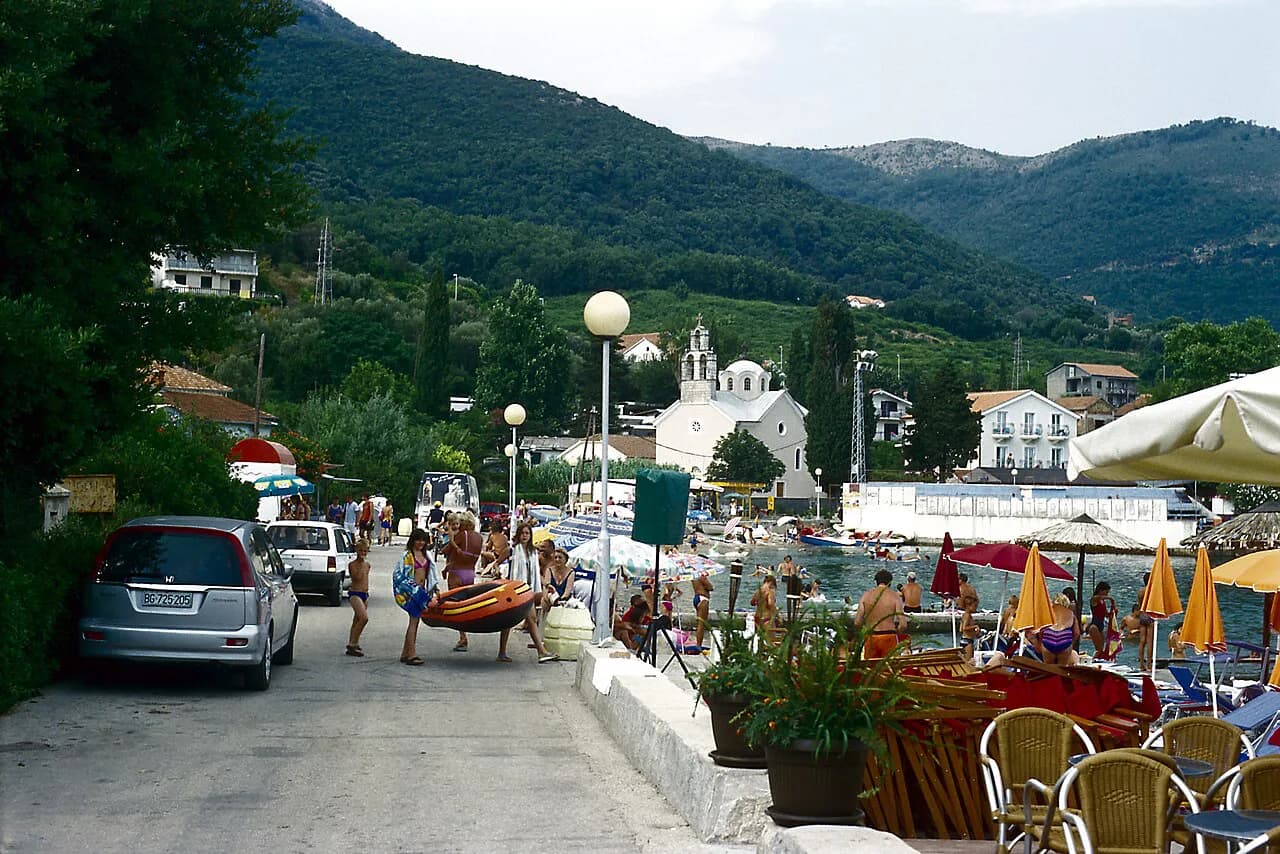
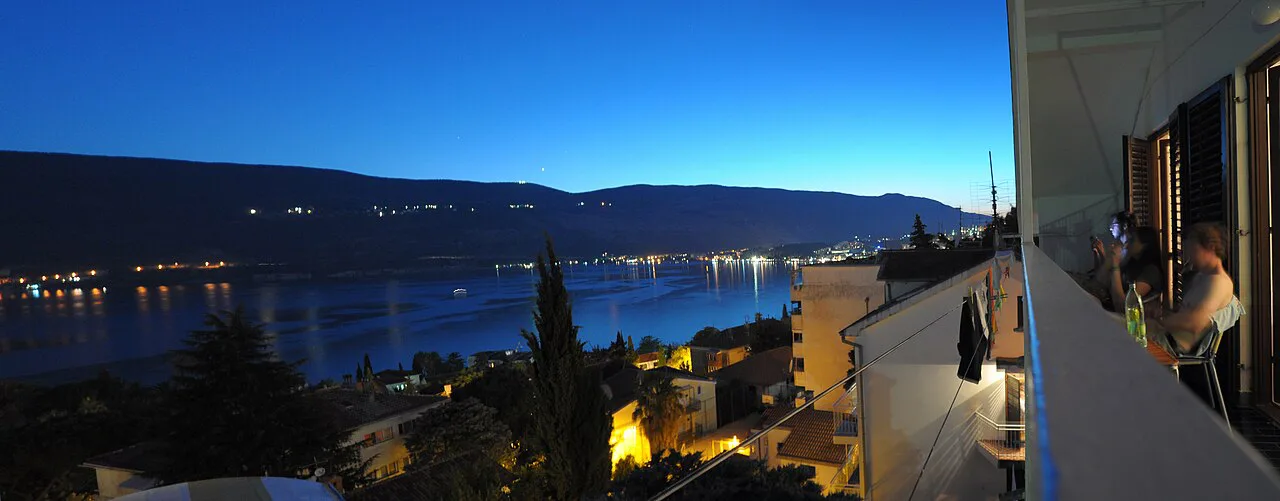
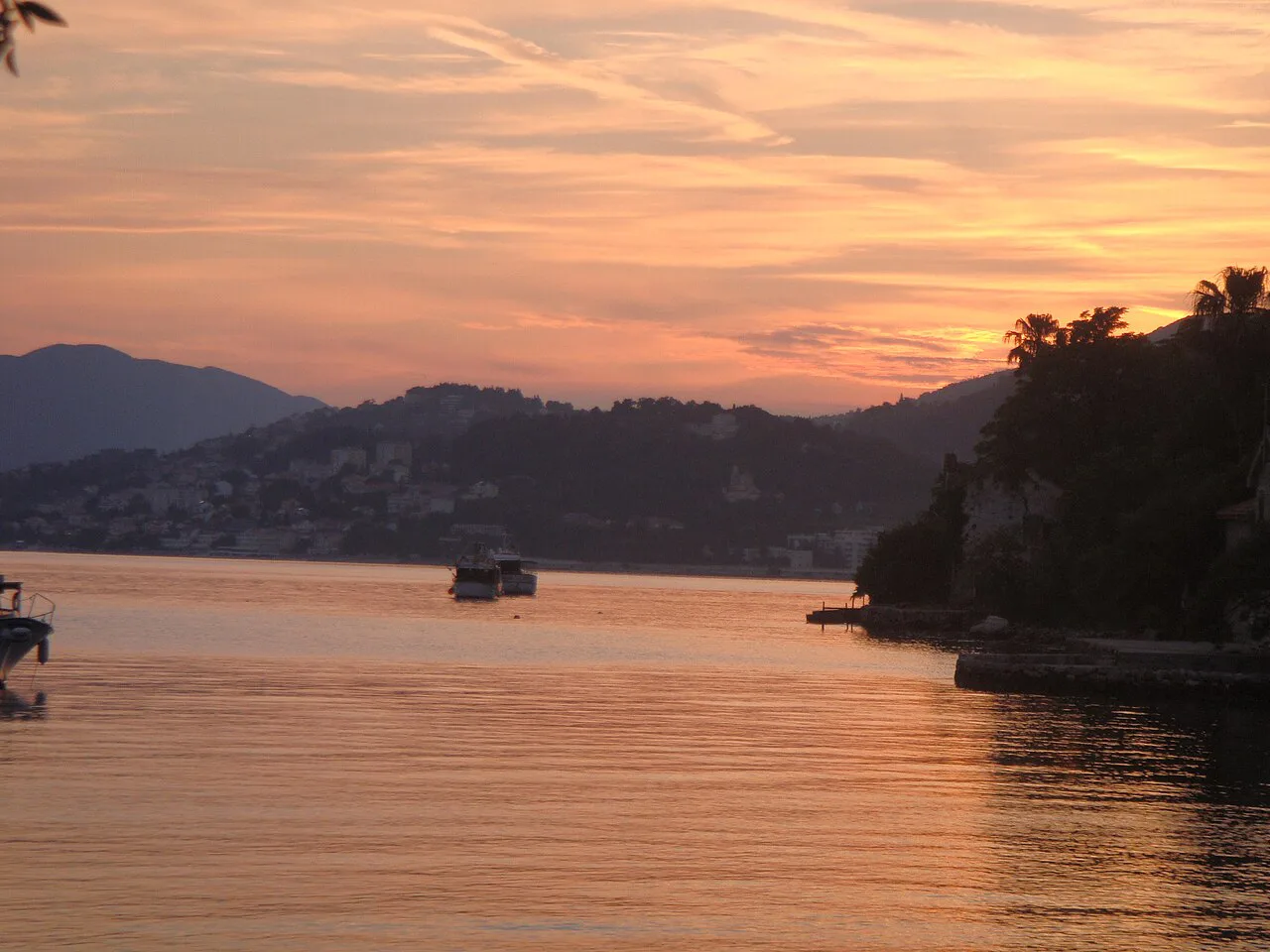
The village occupies a narrow strip of shoreline backed by steep, forested hills, looking across the water towards the Lustica peninsula and the open Adriatic beyond. It sits on the southern shore at the entrance to the Bay of Kotor, which keeps it close to Herceg Novi while leaving the inner bay to the east. The Verige Strait, the narrowest point of the bay, makes a useful orientation point when you are reading a map. For a short coastal walk, the Herceg Novi promenade and its Šetalište Pet Danica footpath are part of the wider picture.
Đenovići grew as a village of seafaring families who lived from fishing and maritime trade. Population figures vary: the Wikipedia entry for Đenovići gives a figure of 1,161, so treat any exact count as approximate rather than fixed. What matters for a visit is scale: the waterfront is short enough to walk end to end in a few minutes, and almost everything you need is along it.

Who Đenovići suits, and who should look elsewhere
Đenovići works best for couples, families and independent travellers who want to swim, walk the promenade and eat locally without driving far. If you are happy to spend days between the beach and a konoba table and to take a bus or short drive for bigger sights, the village covers it. For a quieter village on the same stretch, Baošići a short walk west has a similar feel.
Look elsewhere if your holiday depends on a compact old town, a wide choice of restaurants and evening entertainment. Herceg Novi's Old Town and its Šetalište Pet Danica promenade give you far more urban bustle, and Kotor adds day-trip crowds and city sightseeing. The trade-off is straightforward: Đenovići offers calm and views at the cost of convenience you will need to arrange yourself.

Getting there by road, air and bus
Đenovići lies about 5 km southeast of Herceg Novi's Old Town along the coastal road, marked as the M2, so a taxi or local bus from town is a short hop. From Tivat Airport, the closest international airport, the drive takes about 25 minutes via the Bay of Kotor coastal road, while Dubrovnik Airport in Croatia is roughly 45 minutes away including the Debeli Brijeg border crossing. From Podgorica, allow about two hours via the highway and the Sozina tunnel. These are drive-time estimates, so build in slack for traffic and border queues.
Local buses on the Herceg Novi–Kotor route stop in Đenovići, with departures roughly every 20 to 30 minutes during summer. Expect timetables to thin out outside summer. If you are arriving by air, a pre-booked transfer or taxi from Tivat is the simplest option, particularly with luggage.
Water taxis and small excursion boats leave from the Herceg Novi marina and sometimes call at Đenovići, mostly in the summer months. That is a scenic way to arrive, but it is a seasonal service rather than a scheduled link, so treat it as a bonus rather than a plan. Ask at the marina in Herceg Novi whether a boat is running while you are there.
Getting around on foot: the promenade to Baošići and Bijela
A waterfront promenade runs along the shore, connecting Đenovići with Baošići to the west and Bijela to the east. Each direction is a pleasant walk of about 2 km, which makes the neighbouring settlements easy to reach without a car. Bijela, Montenegro has its own waterfront and a maritime heritage worth a look, so the promenade is the practical way to string a few villages into one day. For a look at how the wider area fits together, see the Herceg Novi neighbourhoods guide.
Walking is the main way around the village itself, and the flat seafront suits anyone who finds steep old-town steps hard work. The hills above rise sharply, so plan any climbing with care and treat the shore as the default route. The nearby Kamenari–Lepetane ferry crossing, about 10 km east, is useful if you are heading on around the bay by car.
The village beaches and swimming
Swimming happens at a series of small pebble beaches along the shoreline, with clear water and views across the bay. The beaches are modest rather than resort-scale, so bring footwear for the stones and expect to share the water with residents in high summer. Sea kayaking is another way to see the bay from the water.
The shore here is a working waterfront of small piers and walls rather than a managed beach, so access points vary along the strip. Where you swim is largely a matter of following the locals to the next paved entry. Do not assume lifeguards, sunbeds or showers; check what your accommodation or a beachside café can offer.
Stone houses and the Church of St George
Several well-preserved stone houses dating to the 18th and 19th centuries still line the waterfront, built by the seafaring families who worked the bay. Their facades are weathered by the salt wind, and the former captain's houses are the closest thing the village has to a sightseeing core. For the broader story of the area's past, see the Herceg Novi history guide.
Above the shore stands the Church of St George, a modest Orthodox chapel on a small rise that serves as the village's spiritual centre. The chapel building is small and not set up as a formal visitor attraction, so treat it as something to see from the outside and ask locally if you want to look inside. Dress respectfully either way.
Where to eat: konoba dining in the village
Eating in Đenovići means a handful of genuine konoba restaurants rather than a restaurant strip. The offer is small and seasonal, so the practical approach is to walk the waterfront in the late afternoon, see which kitchens are open and book a table for the evening. Fish and grilled dishes are the natural order here, and the pace is unhurried.
For a wider restaurant scene, Herceg Novi is a short drive or bus ride away. Staying in the village and eating out in town is a reasonable compromise if you want quiet nights but a broader menu.
Bijela, a 2 km walk east along the promenade, is another option when you want to eat somewhere different without moving the car. It is close enough to combine with a beach afternoon.
Where to stay in Đenovići and around Portonovi
Expect a low-rise, residential feel rather than a resort strip. Staying within walking distance of the promenade puts the beaches, konobas and the walk to Baošići or Bijela on your doorstep. If you are travelling by car, plan where you will park before you drive into the seafront strip.
The Portonovi resort appears in property listings for the Đenovići area, so it is a useful reference point for the feeling of a more polished resort setting nearby. Further along the bay, Meljine, Herceg Novi is another village-scale alternative.
Practical points before you arrive
The Kamenari–Lepetane ferry, about 10 km east, saves you the drive around the inner bay and is the obvious link if you are continuing to Kotor or Tivat. Crossing times and queues vary with season and traffic, so build slack into any tight connection. For day trips a car gives you the most flexibility, while the bus and promenade cover everyday needs.
Herceg Novi has the nearest larger range of shops and services, and you may find basic groceries in Bijela. Opening days and boat schedules can change with the season.
Should you base yourself in Đenovići?
Choose Đenovići if you want a small, walkable village with pebble beaches, stone houses, a short promenade and konoba meals, and you are content to reach bigger sights by bus or car. Skip it if you want an old town, a wide restaurant choice and evening entertainment on your doorstep; Herceg Novi or Kotor serve that trip better. The village rewards travellers who plan around calm rather than convenience.