Herceg Novi History: What You Can Still See in the Old Town
Herceg Novi's history is written in its fortresses, clock tower and monastery. See how the town's layers survive in the Old Town you can walk today.
On this page
Herceg Novi was founded in 1382 to control sea trade, especially salt, and the buildings that carried that story stand close together in a compact old town you can read in a morning. Start at the Clock Tower, work down to Forte Mare, climb to Kanli Kula, then look up to Španjola, with Savina Monastery as the outlying stop. The dates here are the ones the town's own visitor listings and travel accounts give, and nothing in that packet covers ticket prices or opening hours, so check those at the door.
What Herceg Novi was founded for: 1382, sea trade and salt
Herceg Novi was founded in 1382, and the town's position at the mouth of the Bay of Kotor was chosen to control sea trade, salt above all. That commercial purpose explains why the waterfront and the port area, rather than a hilltop, hold the earliest layers of the town you walk today. The founder honoured at the port is the Bosnian king Tvrtko I Kotromanić, remembered by a monument where the main city staircase meets the promenade.
Who held the town: Ottomans, Venetians, Habsburgs, Russians and French
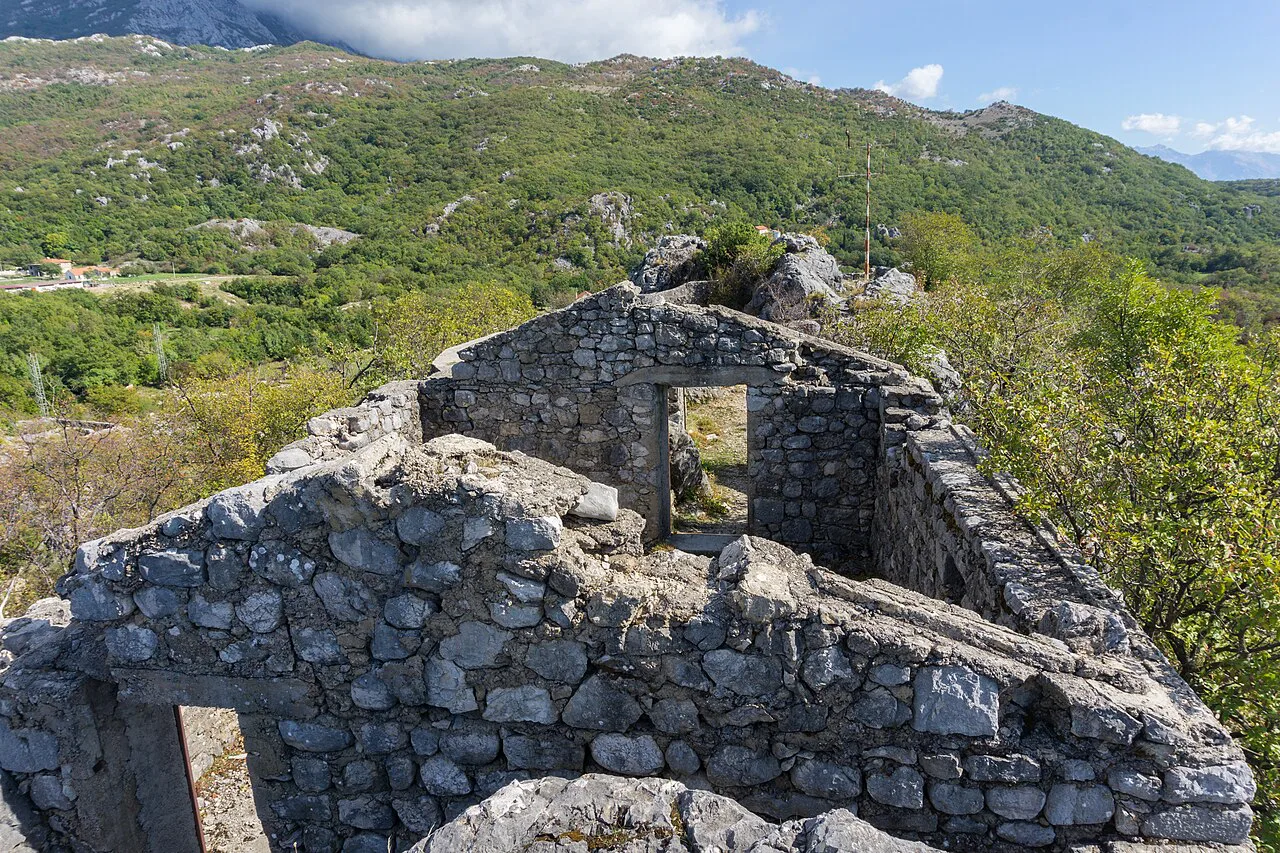
Over the five centuries after its founding, Herceg Novi changed hands repeatedly: the Ottomans held it for two centuries, the Spanish and Venetians ruled briefly, and the Habsburgs, Russians and French followed during the Napoleonic age. Each garrison left fortifications, towers, gates and churches, which is why the town reads as a sequence of layers rather than a single style. Treat the fortresses as evidence of those changes of guard, not as a legend to be recited.
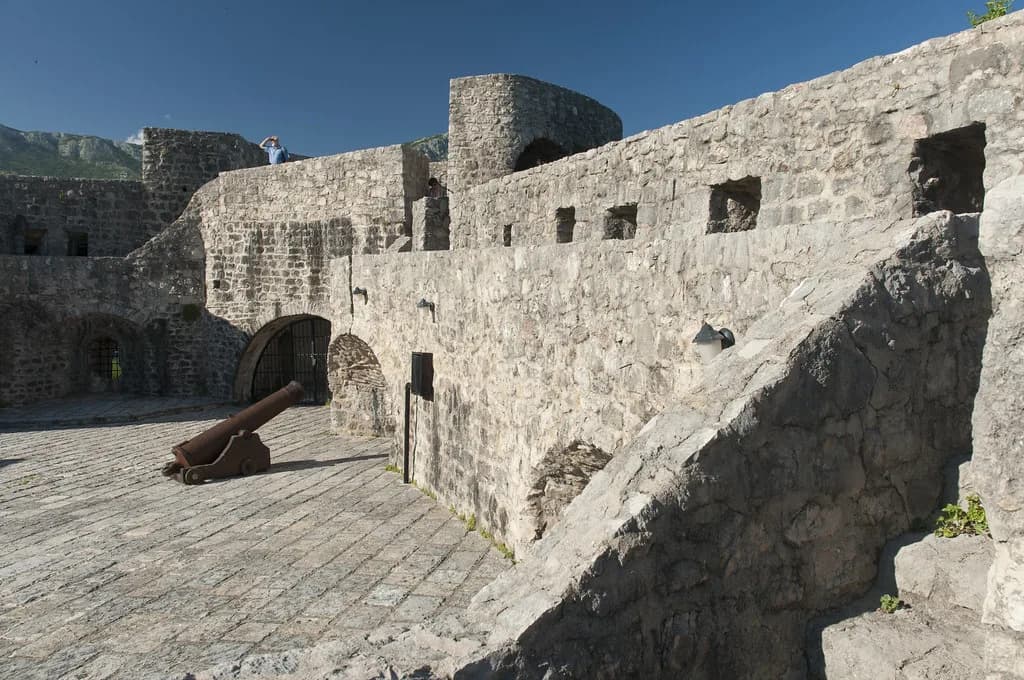
The Spanish footprint is the easiest to date. Španjola Fortress was built by the Spaniards in 1539, though the town's own listing notes doubt that a fortress could have been completed in under a year. Stand on the slope below it and the geometry of the old town becomes clear: a walled core dropping to the water, with upper works watching the approaches.
The Clock Tower and the entrance to the Old Town
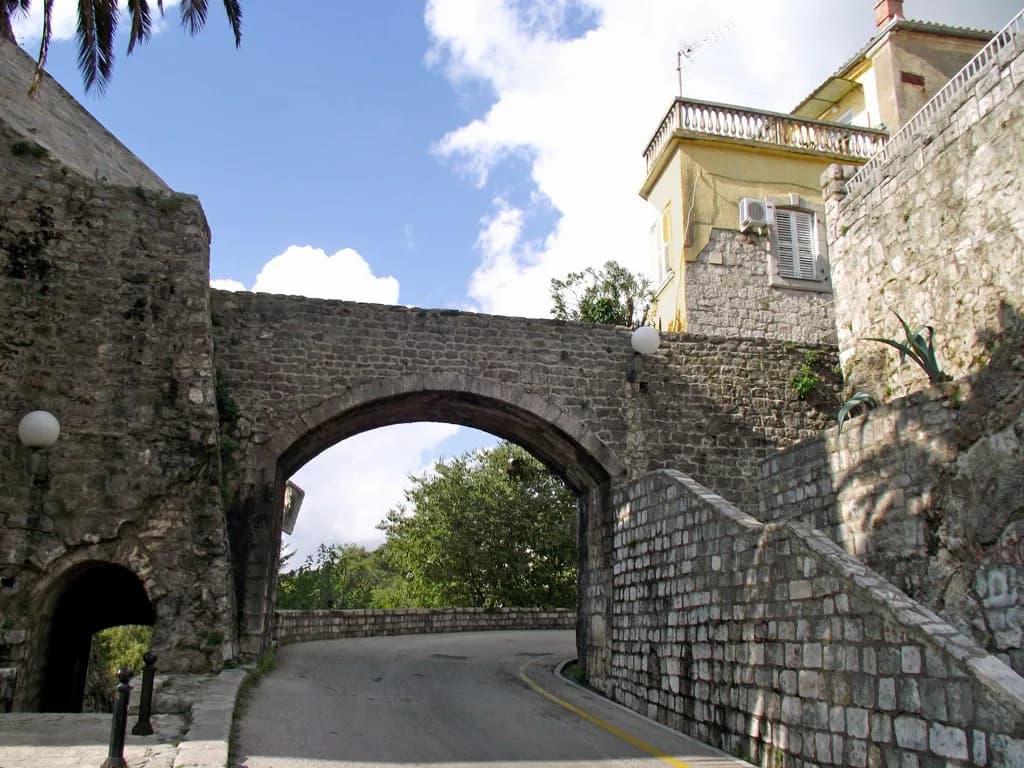
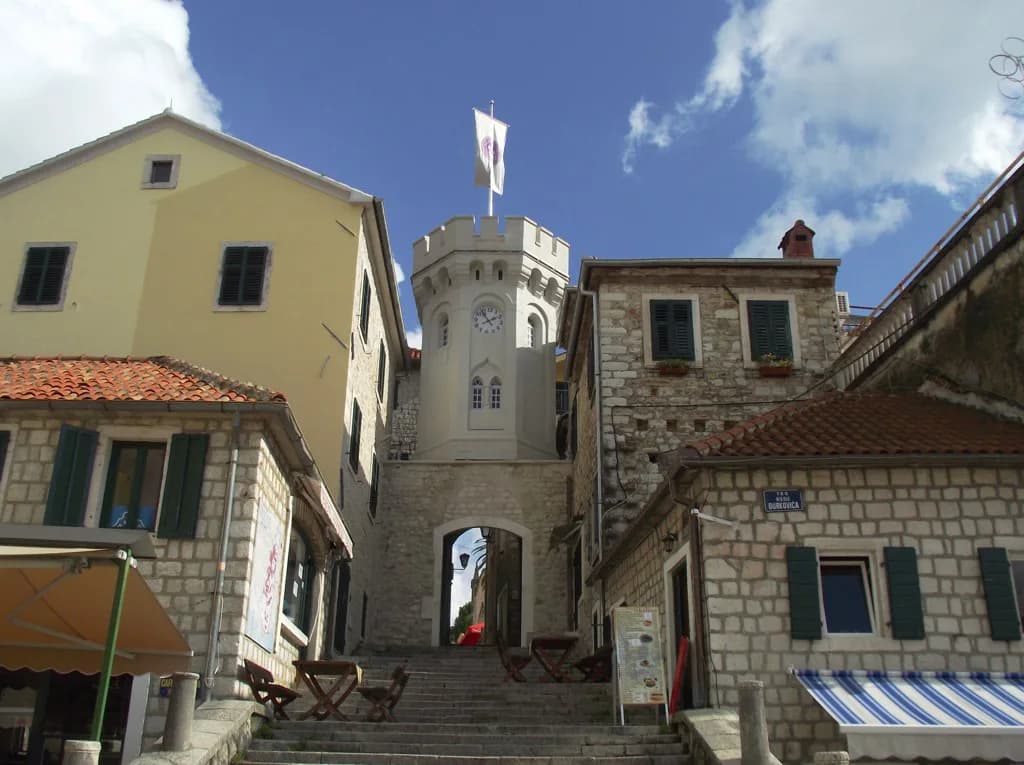
The Clock Tower was built in 1667 on the orders of Sultan Mahmud and serves as the entrance to the Old Town, which makes it the natural place to begin. Pass beneath it and the town's layout declares itself: narrow lanes and staircases climbing in layers above the bay, with the sea never far below. Allow for stairs throughout, because Herceg Novi is a town you go up and down rather than around.
Forte Mare: the sea fortress by the port
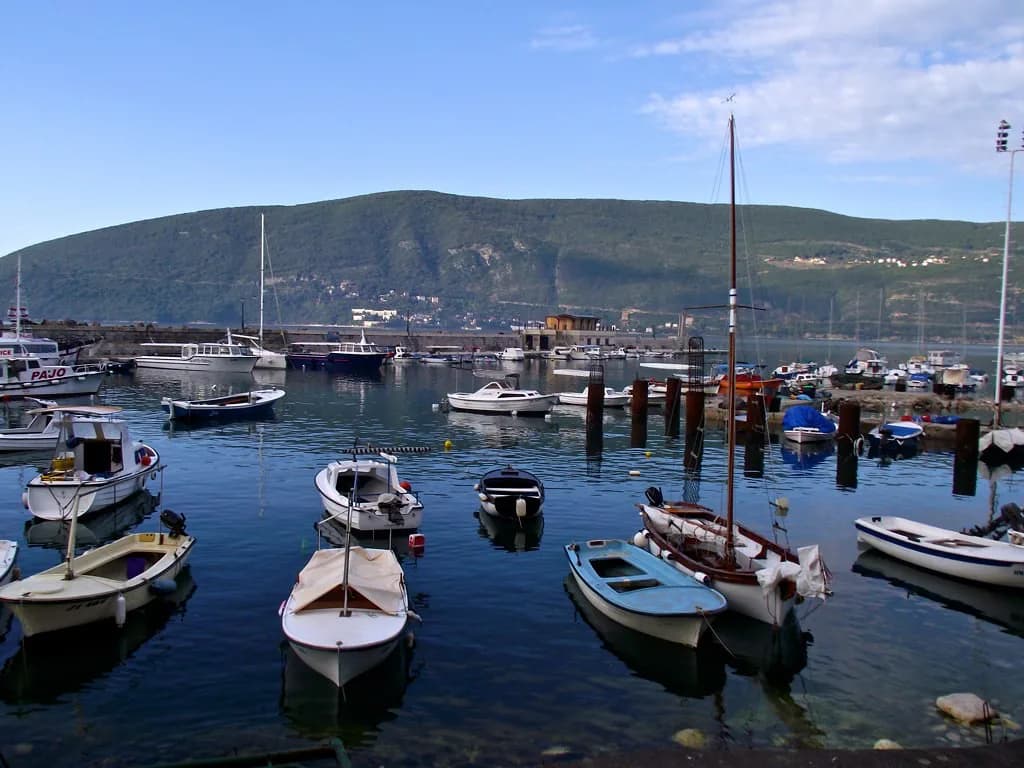
Forte Mare, the Sea Fortress, stands on the rocks at the southern edge of the Old Town beside the main port, guarding the water approach. It is the first fortress you meet coming from the harbour and the simplest to fit into a short walk, since it sits at the bottom of the staircase town rather than above it. Pair it with the Clock Tower and the port monument and you have covered the commercial and defensive story of the waterfront in one pass.
Kanli Kula: defence and prison on the northern edge
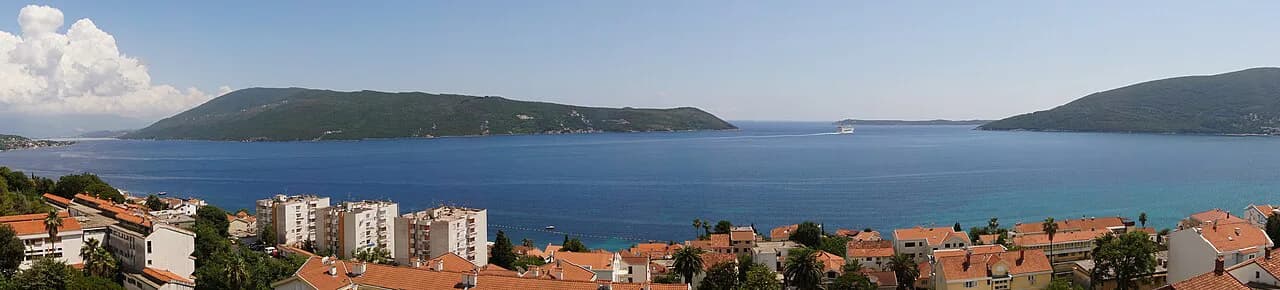
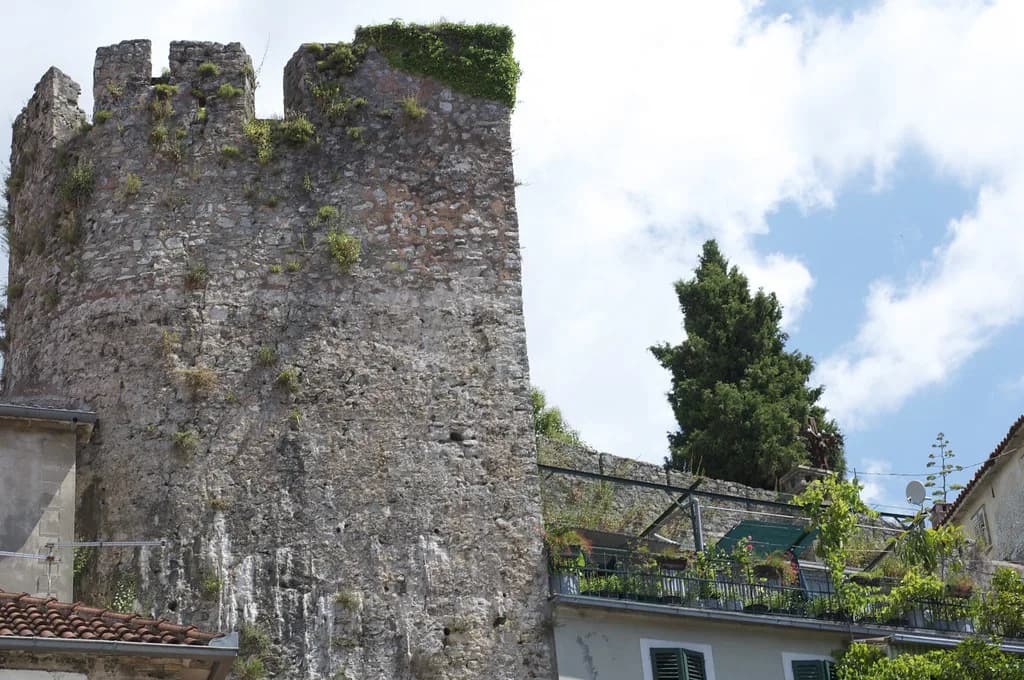
Kanli Kula, the Bloody Tower, occupies the northernmost point of the Old Town, was built in the 16th century and served as a prison as well as a defensive work. Its name and its second function are the reason to seek it out: this is the building that shows the town's garrison life rather than only its walls. The climb to it is steep, and the reward is the view back over the roofs and out to the bay entrance.
Španjola: the Spanish fortress above the town
Španjola sits above the Old Town, the upper counterpart to Forte Mare below, and its 1539 date places it among the town's dated fortifications. Because it stands higher than the rest, it is the best place to see how the old town was layered against the slope of Orjen rather than spread along flat ground. Approach it after Kanli Kula so the ascent is done once.
The Old Town's churches and the town museum
Churches sit among the fortifications as part of the same defensive fabric, and the town's listings group them with the towers and squares as the attractions worth walking between. For the period-by-period account that buildings alone cannot give, the city museum occupies a late-Baroque mansion and covers Herceg Novi from medieval times to the Second World War.
One house in the Old Town belongs to a more recent cultural layer: Ivo Andrić built his house here in 1963, and it is listed as a cultural property in its own right. It gives the twentieth century a specific address rather than a general period label.
Savina Monastery, just outside the town
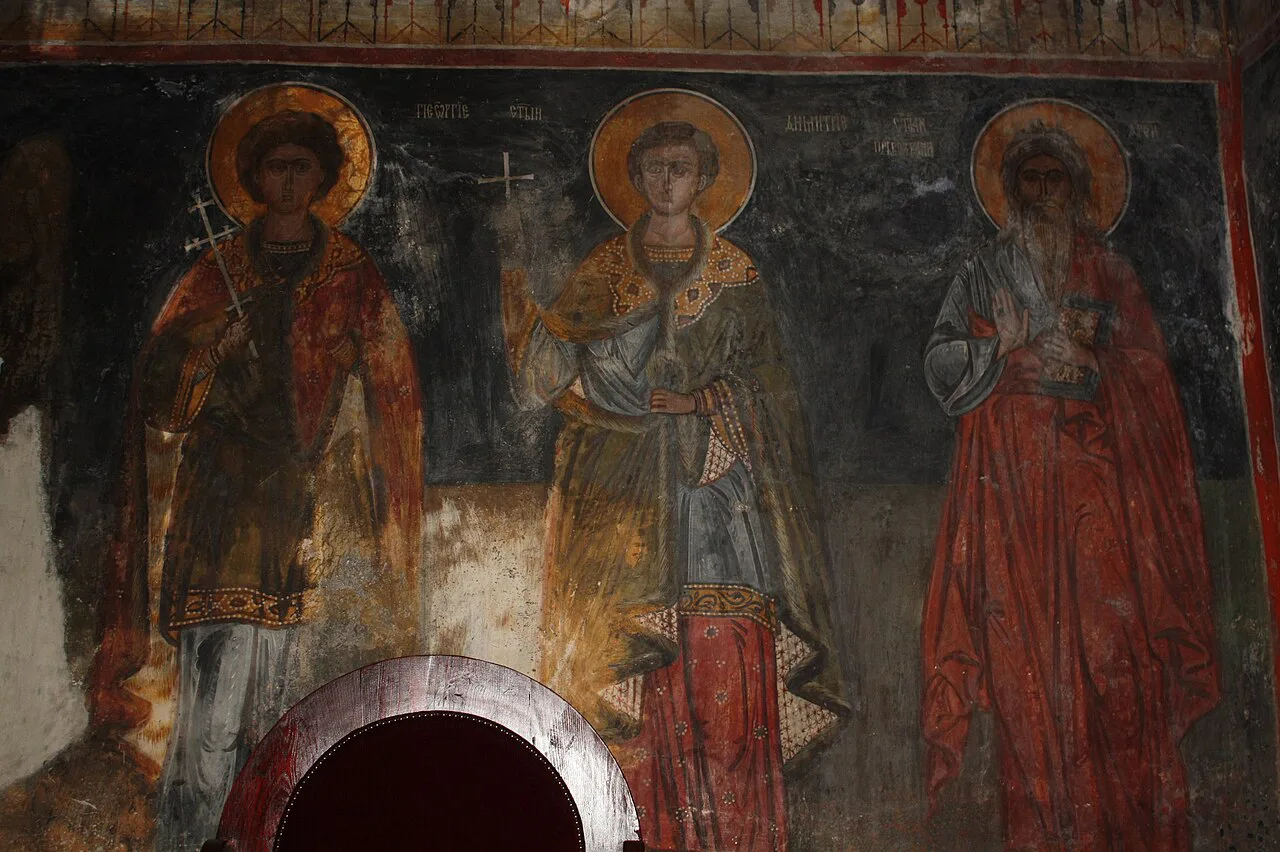
Savina Monastery stands next to Herceg Novi, built among Mediterranean vegetation on one of the more sheltered stretches of the northern Montenegrin coast. It is the outlying stop on this route, reached along the water rather than through the Old Town's lanes, so give it its own slot rather than folding it into a fortress walk.
Yugoslav-era Herceg Novi: the wellness retreat and Tito's summer base
In the Yugoslav era Herceg Novi was a wellness retreat known for its mineral mud and seawater therapies, and Tito built his summer retreat here. Those decades left visible traces alongside the older stone: Yugoslav-era blocks sit among the fortifications, Riviera-style facades and newer tourist buildings. Look for that mix on the walk between the Clock Tower and the promenade, where the town's twentieth-century layer is least disguised.
How the layers sit together today: stone, Yugoslav blocks and newer towers
Today the fortifications, towers, gates and churches intermingle with Yugoslav-era blocks, French Riviera facades and modern tourist tower blocks, an architectural mix that the town wears without much sorting out. That is precisely what makes Herceg Novi readable on foot: each era is a building you can point at, in a town that climbs and spreads in layers of stairs and old stone between the Adriatic and the slopes of Orjen.
Reading the town in an hour: which buildings to look for and in what order
Begin at the Clock Tower, drop to Forte Mare and the port, then climb through the lanes to Kanli Kula and continue up to Španjola, finishing at Savina Monastery if you have a second hour or a car. That order follows the town's own geography, waterfront to upper works, rather than the chronology of its rulers. A self-guided Herceg Novi walking tour keeps the sequence to a manageable loop if you would rather not navigate the staircases on instinct.
For the fortress detail in depth, the Herceg Novi attractions guide covers each site separately. Opening hours and any entry charges vary by site and season and are not fixed in the town's visitor listings, so confirm them locally before you set out.
Which building should you see first?
Start at the Clock Tower and finish at Španjola, because that route takes you from the gate that explains the town's purpose through to the height that explains its defences. Keep Savina Monastery for the end, when the Old Town's staircases are behind you. If you only have an hour, take the Clock Tower, Forte Mare and Kanli Kula, which give the founding, the port and the garrison story in the shortest distance.
Frequently Asked Questions
How do I get from Herceg Novi to Kotor?
Both towns sit on the Bay of Kotor, and the road runs around the water rather than across it. For current bus times and fares, check the operator or the station in Herceg Novi on the day, as timetables change with the season.
Is Herceg Novi safe for visitors?
Herceg Novi is a working town with a local holiday trade rather than a resort built around tourism, and its risks are the ordinary ones of steep staircases and uneven stone. Watch your footing in the Old Town lanes and on the fortifications, and treat the climb to Španjola as a walk that needs proper shoes.
Sources
Notes for your Montenegro trip
Optional updates to our Montenegro town guides.
You might also like
Continue reading
More guides you'll find useful