Perast History: Venetian Captains, Palaces and the Two Islands
Perast's history runs through Venetian rule, its captain families, the 1654 battle and the two bay islands. Here is what each landmark shows you on foot.
On this page
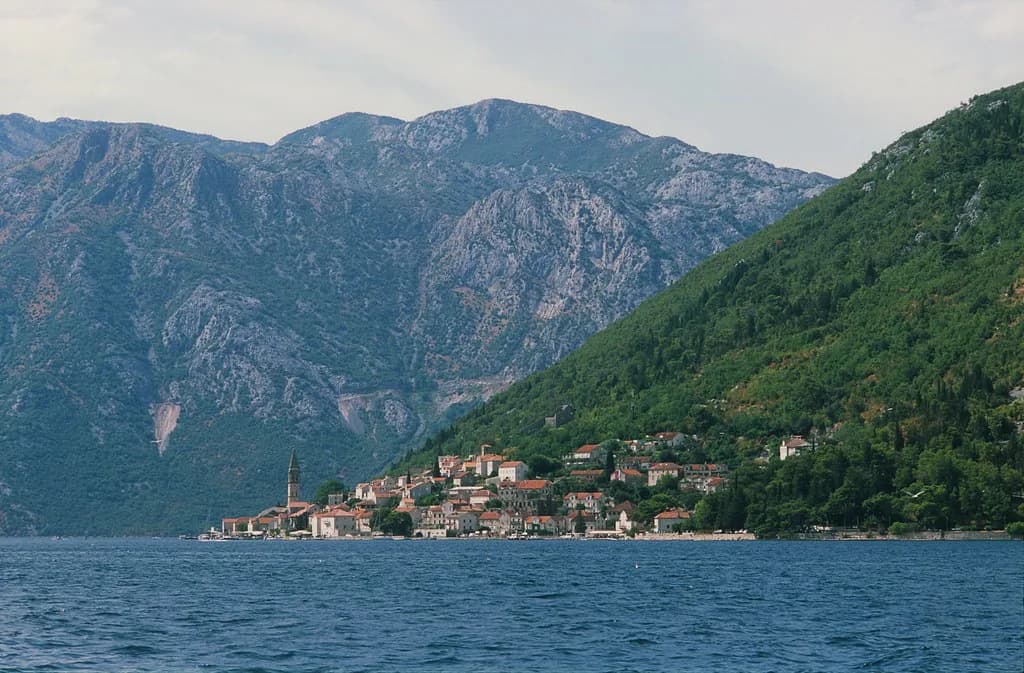
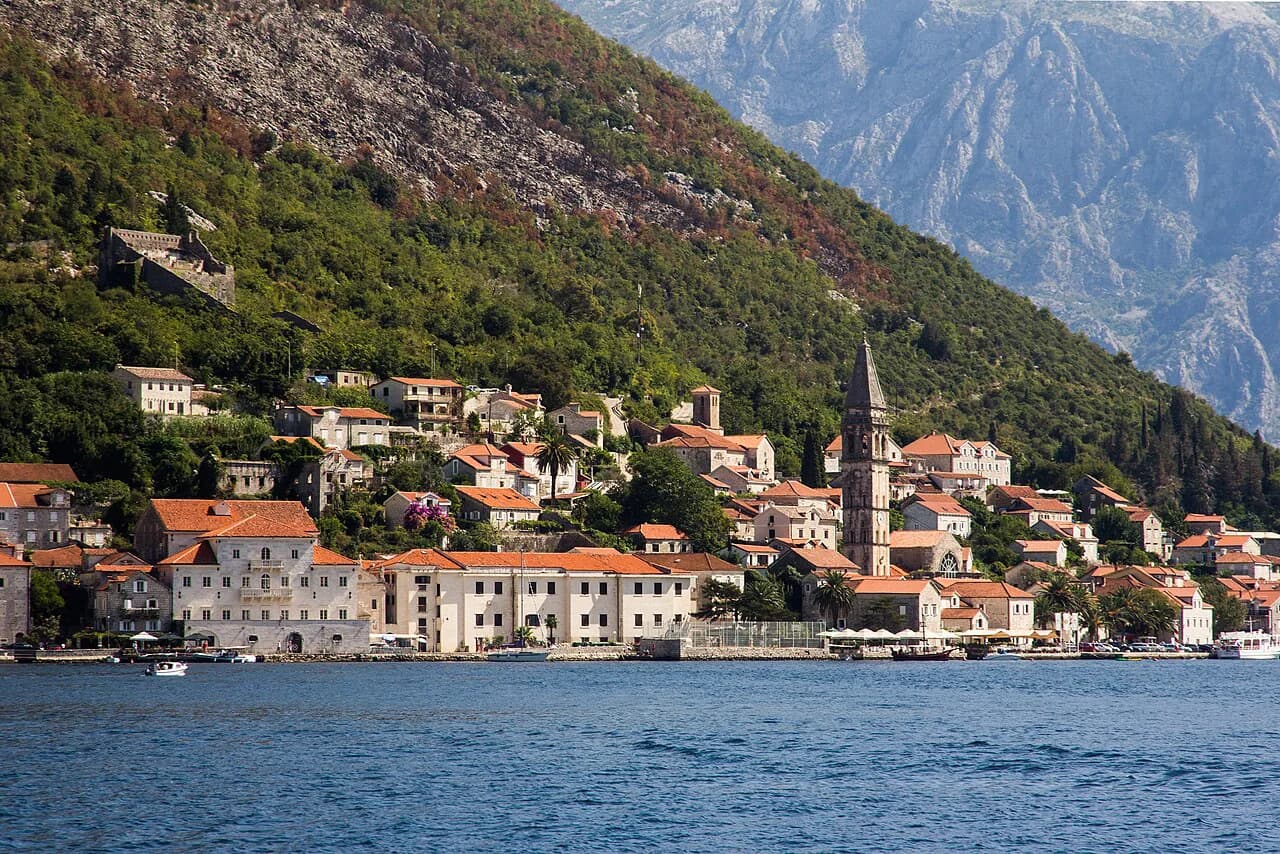
Perast history boils down to one thing: a small seafaring town on the Bay of Kotor, at the foot of St Elijah Hill, that grew rich under Venetian protection and left its wealth in stone along a single waterfront. You can read most of it on foot in about 20 minutes, or an hour or more once you stop. This guide takes the landmarks in order and explains what each one shows about the town's maritime past.
The central point to hold onto is that Perast had no fortress wall. Defence was built into the palaces themselves, and the ruins above the town are what remains of the one fortress that was attempted. Knowing that changes how the waterfront looks: the towers are a substitute for a city wall, not decoration.
Why Perast mattered to Venice
Venice annexed the bay and much of the Adriatic coast, and Perast's position made it the guardian of the sea route leading to Kotor, Venice's main outpost in the bay. The town was given the status of a border town, marking the boundary between Venetian territory and Ottoman lands, and it became keeper of the Venetian military flag. That combination of frontier duty and naval service is the engine behind everything else you see in the town.
Venetian rule lasted more than 350 years, a period in which Perast flourished as a centre of trade, shipbuilding and seafaring, and noble families from the region established homes there. Their money paid for the palaces and churches that still line the shore.
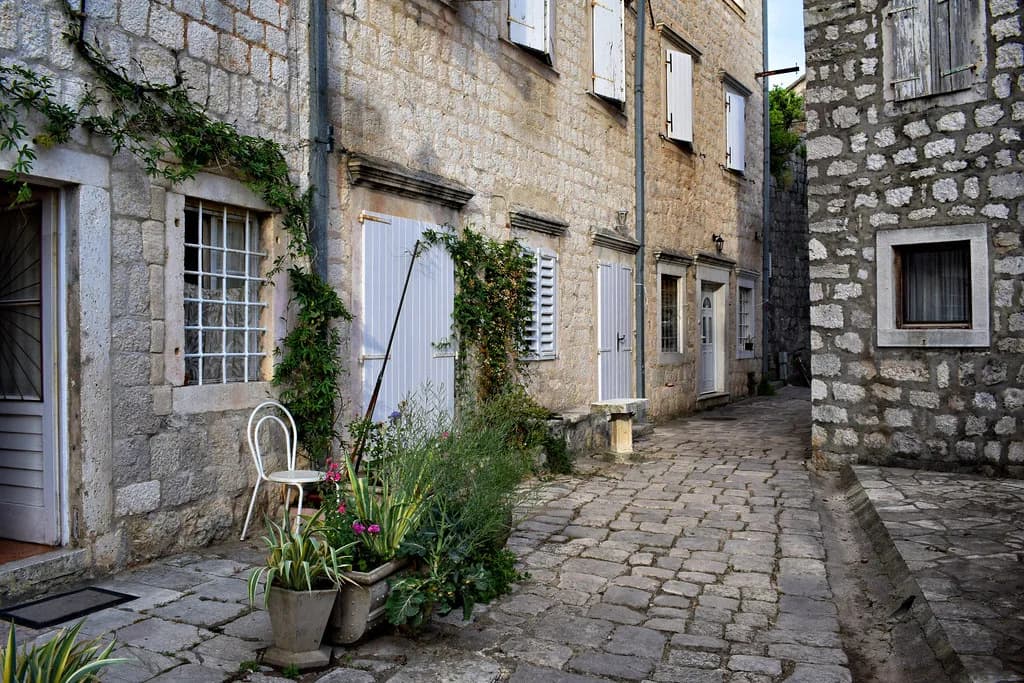
For the visitor, this is the reason to look past the postcard view and at the inscriptions, coats of arms and house names. Perast old town is best understood as a merchant marine settlement that happened to be exceptionally well built.
The captain families and their palaces
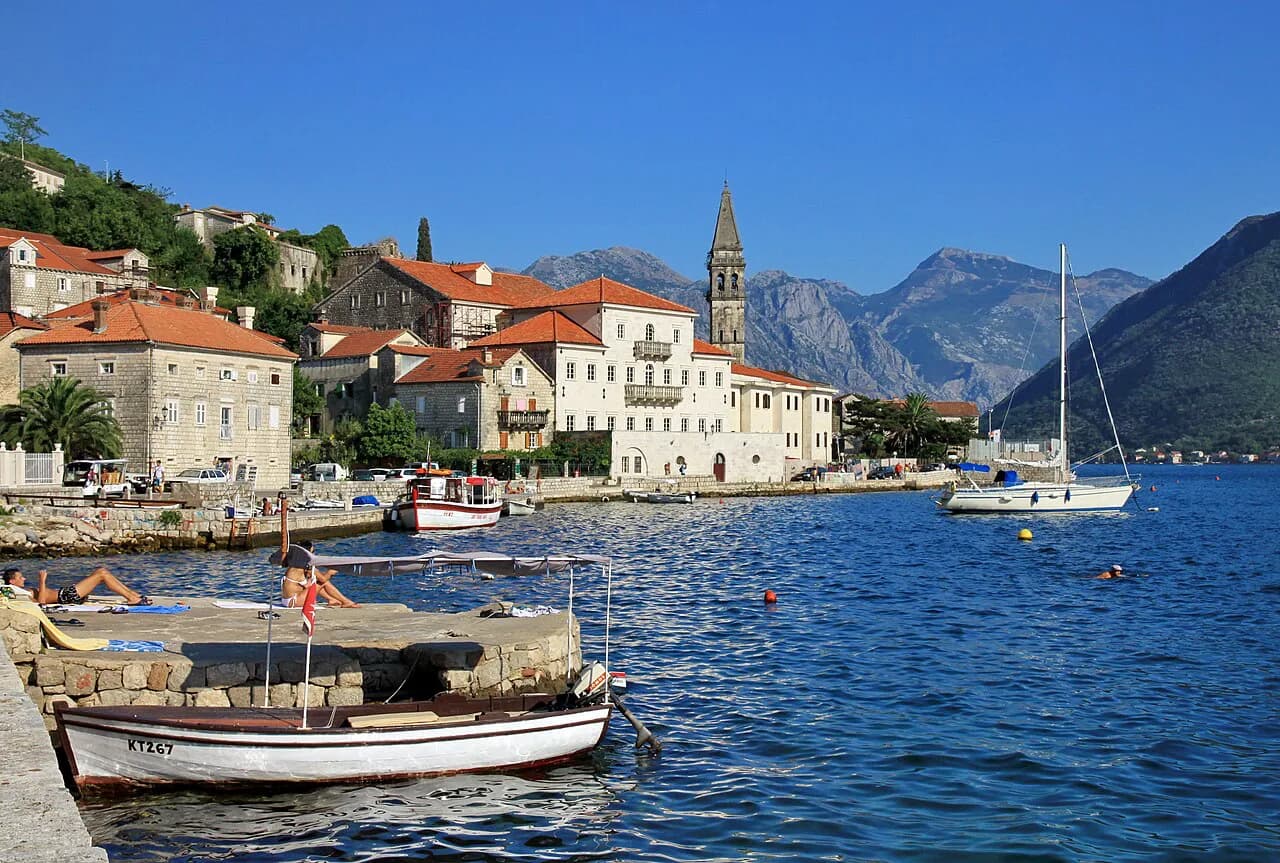
Perast's captains were known across the Mediterranean, and the palaces on the waterfront carry their names. Smekja Palace belonged to the seafaring Smekja family and still bears its coat of arms on the facade, while Bujović Palace now houses the Museum of Perast, the town's main collection of maritime material.
The most unusual thing about the palaces is what sits on top of them. Because Venice provided the knowledge but not the funds for a fortress wall, each captain who built a new palace added a watchtower, so that both the family and the town gained a lookout. That is why the skyline is a scattered set of small towers rather than a continuous rampart.
The naval school connection is worth knowing before you go in. Marko Martinović trained cadets sent by Peter the Great of Russia, and Matija Zmajević Rose from a Perast captain to admiral of the Russian Empire, with paintings and documents from that world held in the town's naval collections.
St Nicholas Church and the bell tower climb
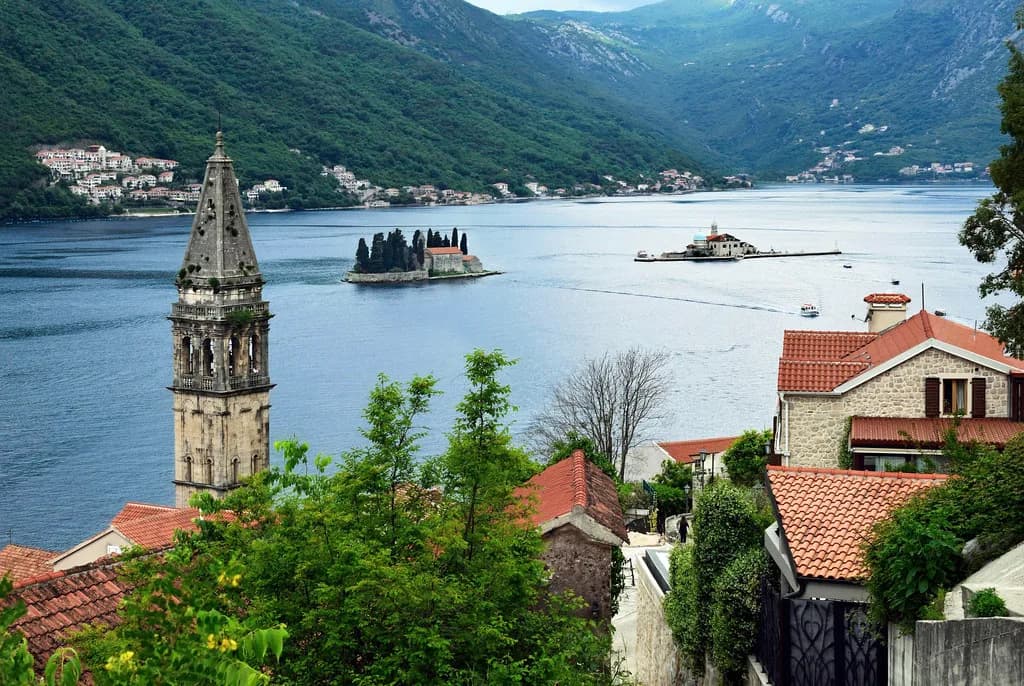
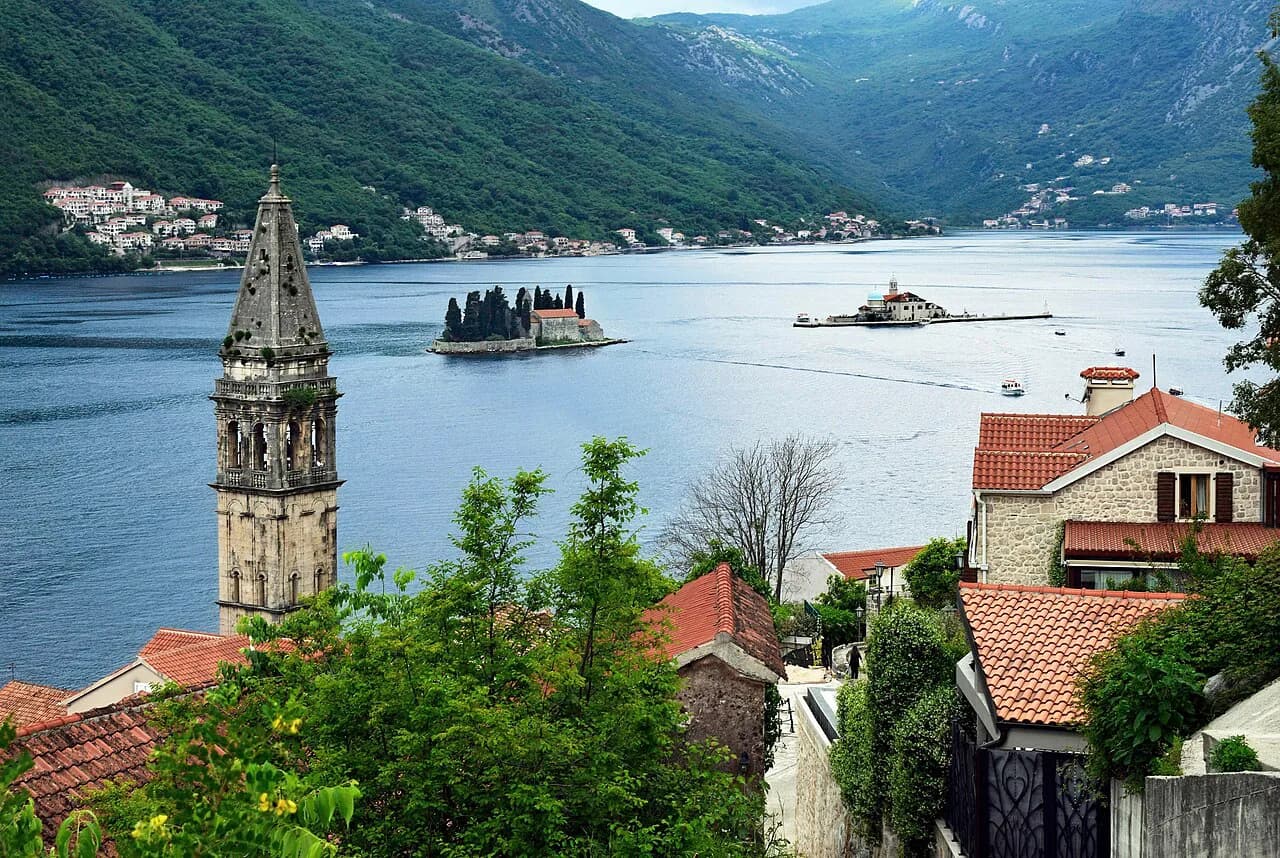
St Nicholas Church, also written St Nikola, is the town's main church and the one landmark with a defined paid experience: you can explore the small chapel downstairs and climb the bell tower for 1 EUR. The tower gives the best elevated view over the rooftops and the two islands, making it the obvious single stop if you only pay for one thing in town.
The church also closes a historical loop. After the fall of Venice, the people of Perast held a solemn ceremony and buried the Venetian flag beneath the altar of St Nicholas. Knowing that, the interior repays a slower look than the exterior usually gets.
One more church is worth a glance as you pass: the Church of St John the Baptist is closed to visitors but sits neatly sandwiched between two taller buildings. Treat it as part of the waterfront walk rather than a stop in its own right.
Gospa od Škrpjela (Our Lady of the Rocks)
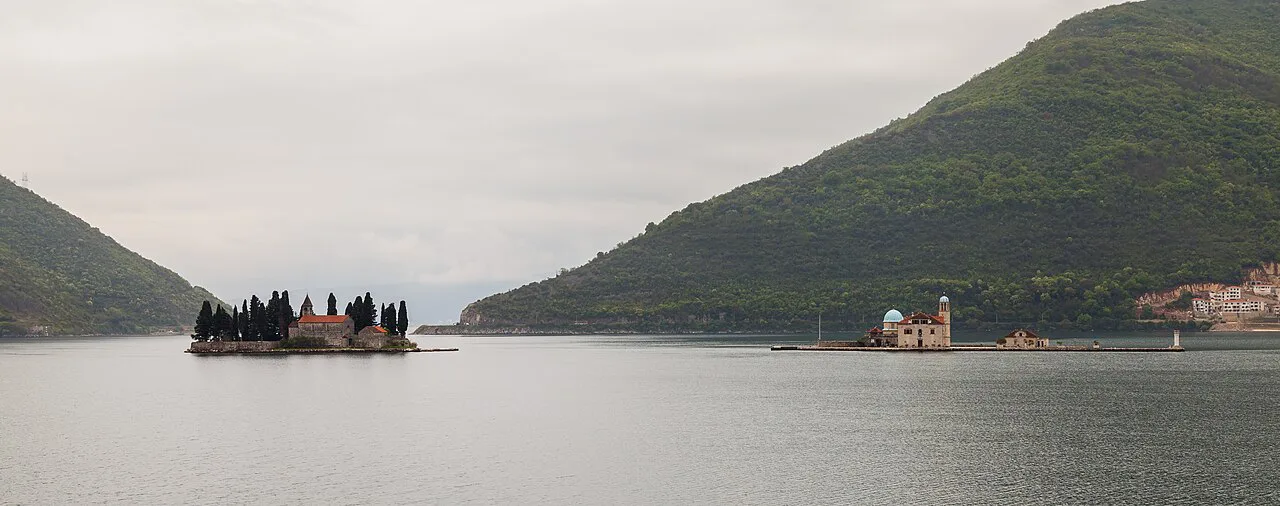
Of the two islands offshore, Gospa od Škrpjela, or Our Lady of the Rocks, is the one you can reach: small boats run from Perast to the island through the day. The island is artificial, built up by sinking rocks and ships at the site over the centuries, and it holds a church and a museum dedicated to the Virgin Mary. Plan the crossing as the main activity of a Perast morning rather than an add-on.
Inside the church, the collection includes Baroque-era paintings by the local artist Tripo Kokolja, which is the reason to go beyond the doorway. The museum adds artefacts from Perast's seafaring past, so the island visit doubles as a compact version of the town's maritime history.
The island's origin is told locally as legend rather than record: fishermen are said to have found an icon of the Madonna and child on a rock in the bay and returned to drop stones in its honour. Take it as the story that explains the island's shape, not as documented fact.
Sveti Đorđe (St George): the island you look at, not land on
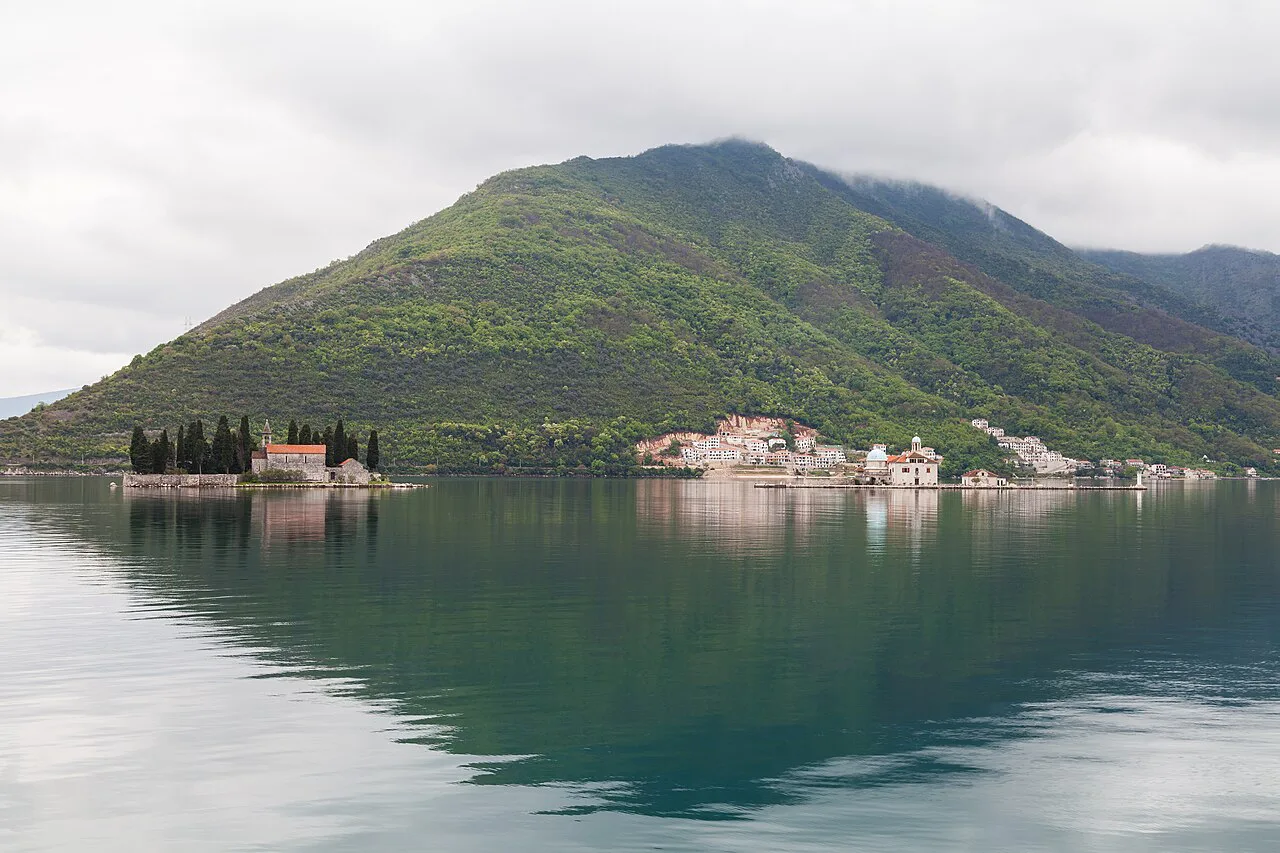
The second island, Sveti Đorđe or St George, is natural rather than built, and it is off-limits to visitors, so no boat will put you ashore. It carries the St George Monastery, and the wooded island is best appreciated as the darker shape behind Our Lady of the Rocks in every classic Perast photograph.
The practical consequence is simple. Budget your island time for Gospa od Škrpjela and use Sveti Đorđe as the framing element in photographs taken from the waterfront or the bell tower.
The Battle of Perast in 1654
In 1654 a small force of local sailors defended Perast against a much larger Ottoman fleet in what is known as the Battle of Perast. It is the moment that best explains why the town's maritime confidence carried into its buildings: the defence was mounted from the water and the shore by people whose livelihoods depended on both.
Use the battle as a way of reading the waterfront rather than as a set piece. The private watchtowers on the palaces, the stone moorings along the shore and the lookout point above the town were all part of a settlement that expected trouble from the sea.
1797 and the end of Venetian Perast
Venetian rule ended in 1797, when Perast was ceded to the Habsburg Monarchy under the Treaty of Campo Formio. The town then changed hands several times over the following century before becoming part of the Kingdom of Yugoslavia in 1918. That sequence explains why the surviving fabric reads as Venetian rather than Habsburg: the wealth was made and spent before the handover.
Building control now protects that fabric. Modern construction is prohibited in the town, and residents repairing a roof have to source old, faded tiles so a patch does not stand out against the rest. For a visitor, this is why the rooftops look continuous rather than patched.
What survives to see, and what does not
The Fortress of the Holy Cross was built at the highest point above the town, and only ruins remain today. The watchtowers fared worse: when a road was built around the Bay of Kotor in the early twentieth century, anything in its way was demolished, and only memories of the towers survive. The hilltop gives you ruins and a view, not a complete fortress.
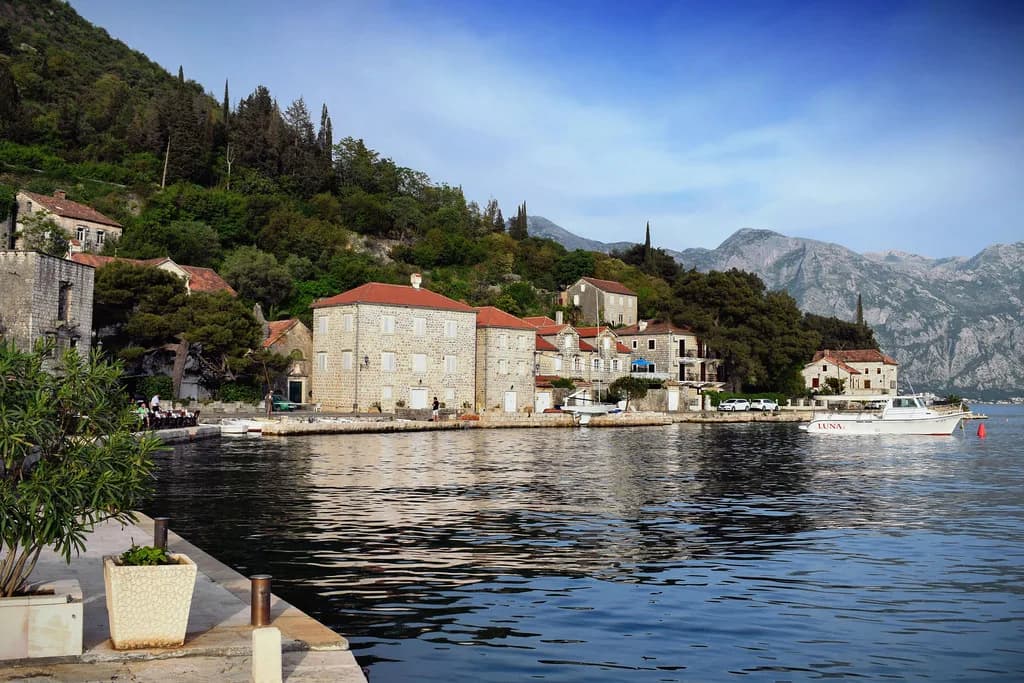
Along the water, the medieval private moorings survive as stone ledges, now used for restaurant tables and loungers rather than for docking boats. That reuse is the most honest illustration of Perast's shift from working port to visitor town, and the ledges are the oldest thing at eye level.
Reading the town on foot
The whole town runs about 1.5 km from end to end, a walk of roughly 20 minutes at a decent pace without stopping, and an hour or more once you pause for a drink, an ice cream or photographs. Give it at least half a day if you are coming from Kotor, and longer if you are adding the boat to Our Lady of the Rocks and the bell tower climb.
A sensible order is the waterfront first, palaces and churches in sequence, then the bell tower for the overview, then the boat to the island, so you see the layout before committing to the paid stops. Our Perast map sets out the waterfront line so you do not double back along the same stretch.
If you want the history narrated in order rather than pieced together from plaques, a guided walk is the efficient option. A Perast walking tour covers the same waterfront in a fixed time, which suits a short visit.
Which Perast landmark should you build your visit around?
Build the visit around the bell tower of St Nicholas Church and the boat to Gospa od Škrpjela. The climb costs 1 EUR and gives you the town's layout and both islands in one view; the crossing puts you inside the church and museum with Tripo Kokolja's paintings. Those two stops carry most of the history in the shortest time.
Then walk the waterfront end to end and read the palaces for what they are: captains' houses with private watchtowers standing in for a wall that Venice never paid for. Confirm boat times and church access in Perast on the day, since these vary through the year.
Frequently Asked Questions
Where is Perast in Montenegro?
Perast sits on the Bay of Kotor in Montenegro, at the foot of St Elijah Hill, with Kotor about 20 minutes away by road. The town is squeezed between the main road and the water and runs roughly 1.5 km from end to end.
Is Perast worth visiting for its history alone?
Yes, if you want Venetian-era seafaring architecture in a compact space. The waterfront holds captains' palaces with private watchtowers, St Nicholas Church with its climbable bell tower, and a museum in Bujović Palace. Offshore, Gospa od Škrpjela adds a church and museum reached by small boat.
Can you go inside the church on Our Lady of the Rocks?
The church on Gospa od Škrpjela is the point of the crossing, and it holds Baroque paintings by Tripo Kokolja along with a museum of the town's seafaring past. Access can vary through the day and season, so confirm with the boat operator in Perast before you set out.
Sources
Notes for your Montenegro trip
Optional updates to our Montenegro town guides.
You might also like
Continue reading
More guides you'll find useful