
Sailors' Mosque (Mornarska džamija), Ulcinj: A Visitor's Guide
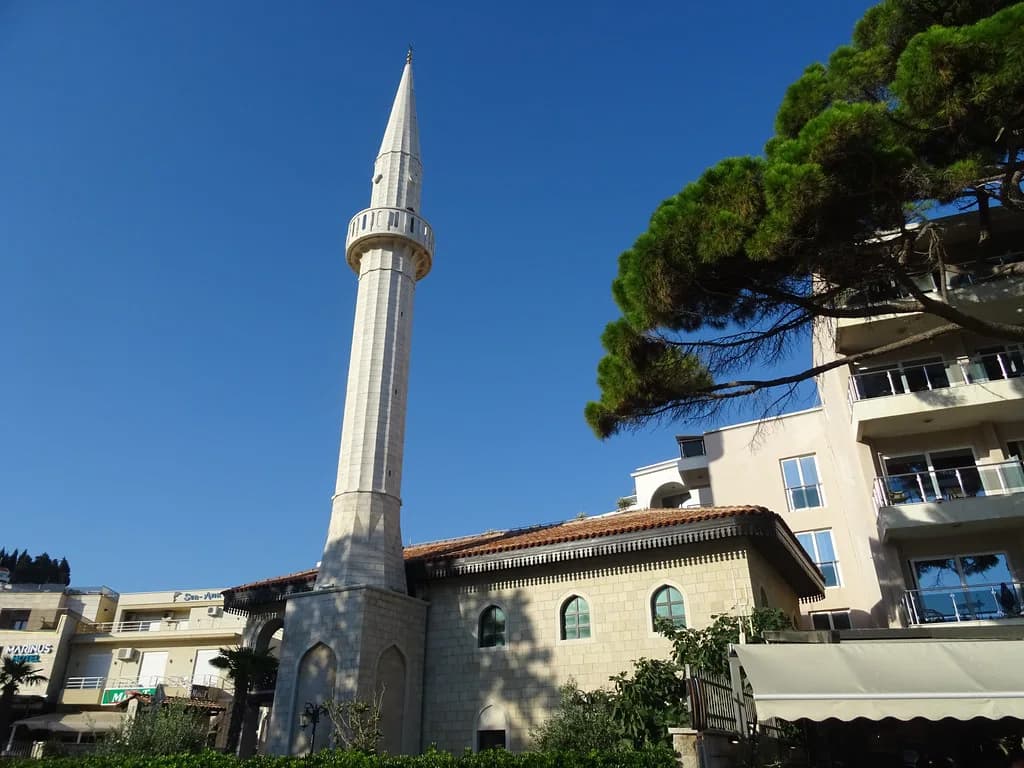
The Sailors' Mosque, Mornarska džamija, is a working mosque on Ulcinj's Pristan waterfront, directly below the fortified Old Town and beside Mala Plaža. Its white minaret is the marker you look for from the harbour or the small beach. This guide covers how to reach it, what the building you see actually is, which parts of its history are documented, and how to time a respectful stop at a place of worship rather than a monument.
What the Sailors' Mosque is and where it stands
The mosque sits on the Pristan waterfront strip that runs between the sea and the slope up to the Old Town, with Mala Plaža on its doorstep. Approaching from the harbour or marina side, the slender white minaret is visible along the shoreline and gives you a fixed point to walk towards. The setting matters more than an address: you find it by walking the waterfront below the walls, not by hunting a street number.
Allow about 20 minutes at the building itself, then treat the rest of the waterfront as part of the same stop. The mosque is a short walk from the Old Town, so it fits naturally between the Kalaja gates and the beach. If you are building a half-day in Ulcinj, the wider Ulcinj attractions guide helps you size that walk rather than doubling back.

How to reach it
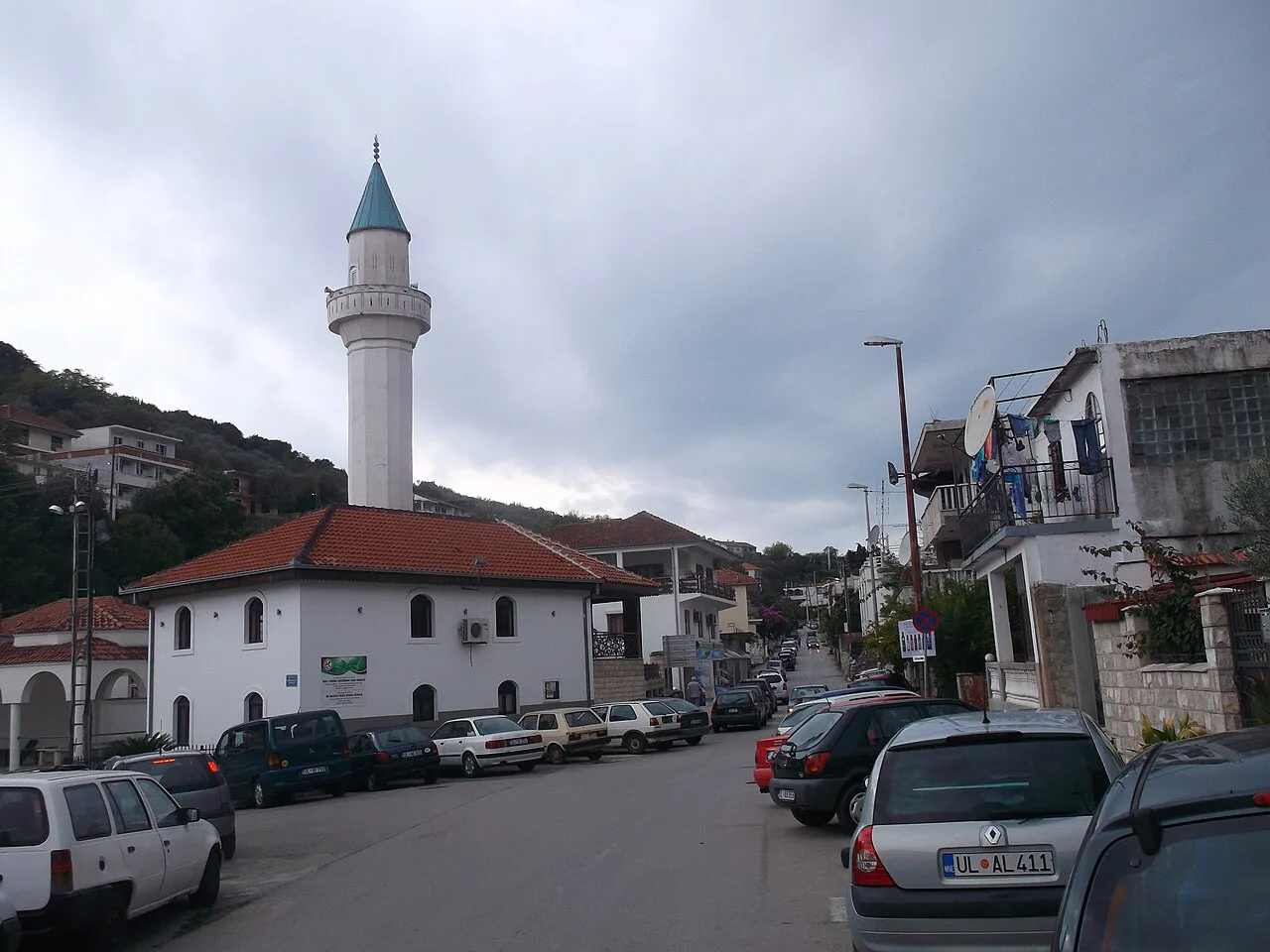
On foot is the sensible way. From the Old Town, come down through the walled lanes to the shoreline and turn along the waterfront; from the harbour and marina area, walk the promenade towards the minaret. The walk from the old town to the mosque is roughly ten minutes on the flat once you are down at sea level, though the descent through the old town adds time and steps.
If you arrive by bus, the town centre drop-off leaves you a straightforward walk down to the waterfront, and taxis will know the Pristan area by name. Because the mosque is an active place of worship rather than a ticketed site, check current visiting arrangements before a special trip.

What you see today
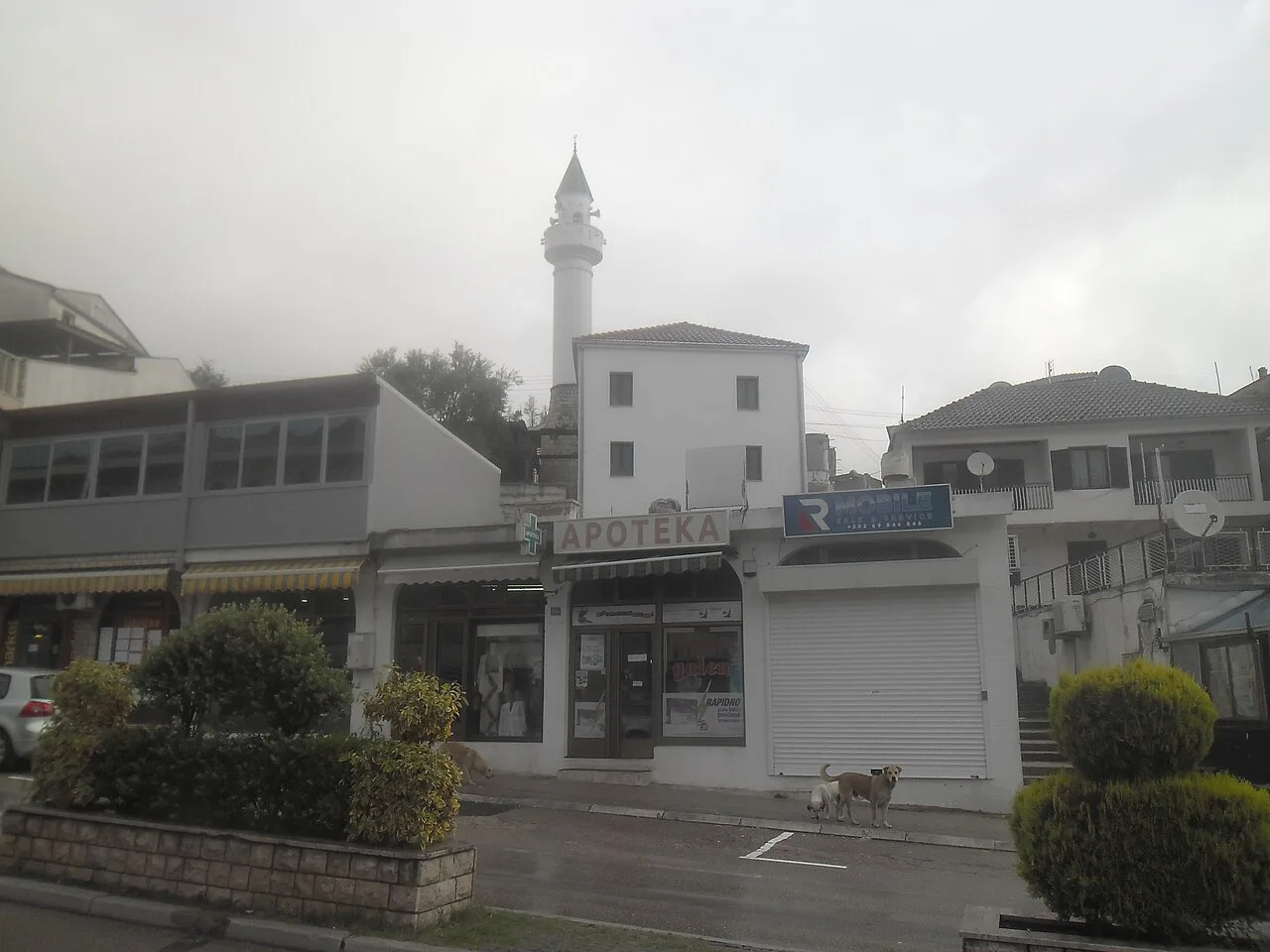
The building in front of you is a modern reconstruction, not medieval or eighteenth-century fabric. The present mosque was raised on the earlier site between 2008 and 2012 and reopened on 1 June 2012, with private investors from Alanya in Turkey, the Islamic Union of Montenegro and the Municipality of Ulcinj behind the work. Earlier foundations on the site were investigated in 2003.
Architecturally it reads as a stone-built Ottoman-style mosque with a spacious prayer hall and a distinctive minaret, and the interior carries fresco decoration. The courtyard and exterior are what a passing visitor can appreciate without interrupting worshippers. Photography inside a working prayer hall is a matter of courtesy and local custom rather than a posted rule, so ask if you are unsure.
The minaret also served as a landmark for sailors approaching the coast, which is part of why the building is tied to the sea rather than only to the town. Read the tower with that in mind: from the water, a tall white minaret on a low shoreline is a bearing point.
Why it is called the Sailors' Mosque
The name comes from the mosque's dedication to Ulcinj's seafarers. Tourism and community accounts say Ibrahim Pasha dedicated the waterfront mosque to the town's sailors in recognition of their contribution to his family's fortunes, which is why the maritime association stuck even as the building was lost and rebuilt.
That dedication explains the building's double life: a place of prayer for the local Muslim community and a recognisable mark on the shoreline for people working from boats. It is worth knowing before you arrive, because the mosque you photograph is not the structure those sailors knew.
The 1798 attribution to Ibrahim Pasha Bushatlija
Ulcinj's tourism organisation attributes the mosque on Pristan to Ibrahim Pasha Bushatlija of Shkodra, brother of Mahmud Pasha, and dates the commission to around 1798. The story runs that Ibrahim was badly wounded at the Battle of Krusi in 1796 and built the mosque in gratitude, dedicating it to the town's sailors. Treat 1798 as an attribution around that year rather than a confirmed founding date.
The caution is worth carrying with you. An Ottoman record supports an Ibrahim-Pasha mosque in Ulcinj and income from four Shkodra shops, but it does not identify that mosque as this waterfront building. The link between the two is the part that remains unproved, so repeat the date as a tradition attached to the site, not as a documented fact.
The fourteenth-century origin as tradition
A widely repeated version has Moorish merchants from North Africa building a mosque here in the fourteenth century, before the Ottoman capture of Ulcinj in 1571. It is a plausible story for a port exposed to Mediterranean trade, and it is still a story. Accounts close to the Ulcinj Islamic community have described the pre-Ottoman origin as an oral tradition with written traces that had not been researched, and source-critical histories say the lack of written records prevents a precise date.
The chronology sharpens the doubt. Venetian rule in Ulcinj ran from 1421 to 1571 and Ottoman rule from 1571, so a fourteenth-century Islamic foundation on this shore would be unusually early and would need unusually strong evidence. No dated deed, inscription or archaeological layer proving that century has surfaced, so keep the Moorish-merchant date labelled as tradition when you retell it.
1931 demolition and the 2003 foundations
The old mosque was demolished in 1931, and the site stayed without its building for decades after that. Sources record the demolition without agreeing on a perpetrator or a stated cause, so it is best to state the event plainly and leave the motives alone. What is clear is the gap: the waterfront had no mosque for most of the twentieth century.
Investigations of the earlier foundations followed in 2003, with reconstruction beginning in 2008. That sequence, foundation study then building work then reopening on 1 June 2012, is the documented spine of the story and the part you can rely on. Anything earlier than 1931 is either attributed or traditional.
Visiting respectfully
This is an active place of worship, so time your stop around prayer rather than treating the building as a sight on a list. If the prayer hall is in use, stay in the courtyard and around the exterior and come back later. Modest dress, quiet voices and a willingness to step aside are the practical courtesies; there is no posted code you can read up on in advance.
Non-Muslims are generally able to view the building and courtyard, but access inside depends on the moment and on the community's arrangements that day. If a look inside matters to your trip, ask at the mosque or check current visiting arrangements before you travel rather than assuming.
When to come for light and crowds
Late afternoon gives the best light on the white minaret, and early morning keeps the waterfront quiet. Because the mosque fronts a small beach, summer middays bring swimmers and shade-seekers right up to the courtyard wall. Pairing the visit with the old town lanes works well either side of those hours, and the Sahat Kula Ulcinj is an easy add-on if you are already walking the centre.
Evening visits have their own appeal: the mosque is lit after dark and the call to prayer carries along the beach and seafront, which is part of the soundscape of a stay on Pristan rather than a performance for visitors.
Nearby: Old Town, Mala Plaža and the harbour
The Old Town sits directly above the mosque, so you can climb from the waterfront into the walled lanes in a few minutes. Mala Plaža is immediately beside the building, and the harbour and marina are a short walk along the shore. Together they make a natural loop: waterfront, mosque, beach, then the climb to the walls.
Ulcinj has other mosques worth a look if you are tracing the town's religious architecture. Pasha's Mosque, Ulcinj is another Ottoman-era building with a courtyard, and it makes a sensible second stop on the same walk rather than a separate outing.
Is the Sailors' Mosque worth the stop?
Yes, if you go for the setting and the story rather than for old stone. Twenty minutes on the waterfront, with the minaret above you and the beach at your feet, is a fair return on the walk down from the Old Town. Know before you go that the building is a 2008–2012 reconstruction on the earlier site and that the 1798 date and the fourteenth-century origin are attribution and tradition respectively.
If old fabric is what you came for, give the waterfront a passing look and spend your time on the walls and lanes above. If you want the maritime side of Ulcinj, come late in the day, keep to the courtyard if prayer is underway, and let the minaret do the rest.