Gornja Lastva: Tivat's Hillside Stone Village Guide
Gornja Lastva is a stone village on Vrmac above Tivat, with a baroque church and a 19th-century olive mill. What to see and how the walk up from Donja Lastva goes.
On this page
Gornja Lastva is a hilltop settlement of stone houses on the slopes of Vrmac above Tivat, reached on foot by a steep climb from the Donja Lastva neighbourhood. It suits travellers who want a half-day walk with bay views and a quiet look at traditional coastal building, not a village with services. This guide covers where it sits, the climb up Gornjolastovka, what stands at the square and the houses, and when the August festivities give the place a crowd.
The climb is short in distance but relentless in gradient, and the road has no pavement, so the time it takes depends more on traffic and heat than on fitness alone. The walk is not a fixed-length route with a signposted start and finish; it is the street up to the village, and you decide when to turn back.
Where Gornja Lastva sits on Vrmac
Gornja Lastva stands at about 300 metres above sea level in Tivat's hinterland on the slopes of Vrmac hill, the ridge that separates Tivat from the Bay of Kotor. The 16th-century Statute of Kotor mentions it as part of the Kotor district, which places the settlement within the old coastal administrative world rather than the modern resort strip.
Keep Gornja Lastva and Donja Lastva apart in your planning. Donja Lastva is the lower neighbourhood on the coast road, close to Porto Montenegro, and it is where the climb begins; Gornja Lastva is the old settlement up in the hills, and the street name Gornjolastovka refers to the upper village. A Tivat map makes the relationship between the two clear before you go, and if you want a contrast with the hillside stonework, Tivat Old Town shows the lower waterfront's older quarter.
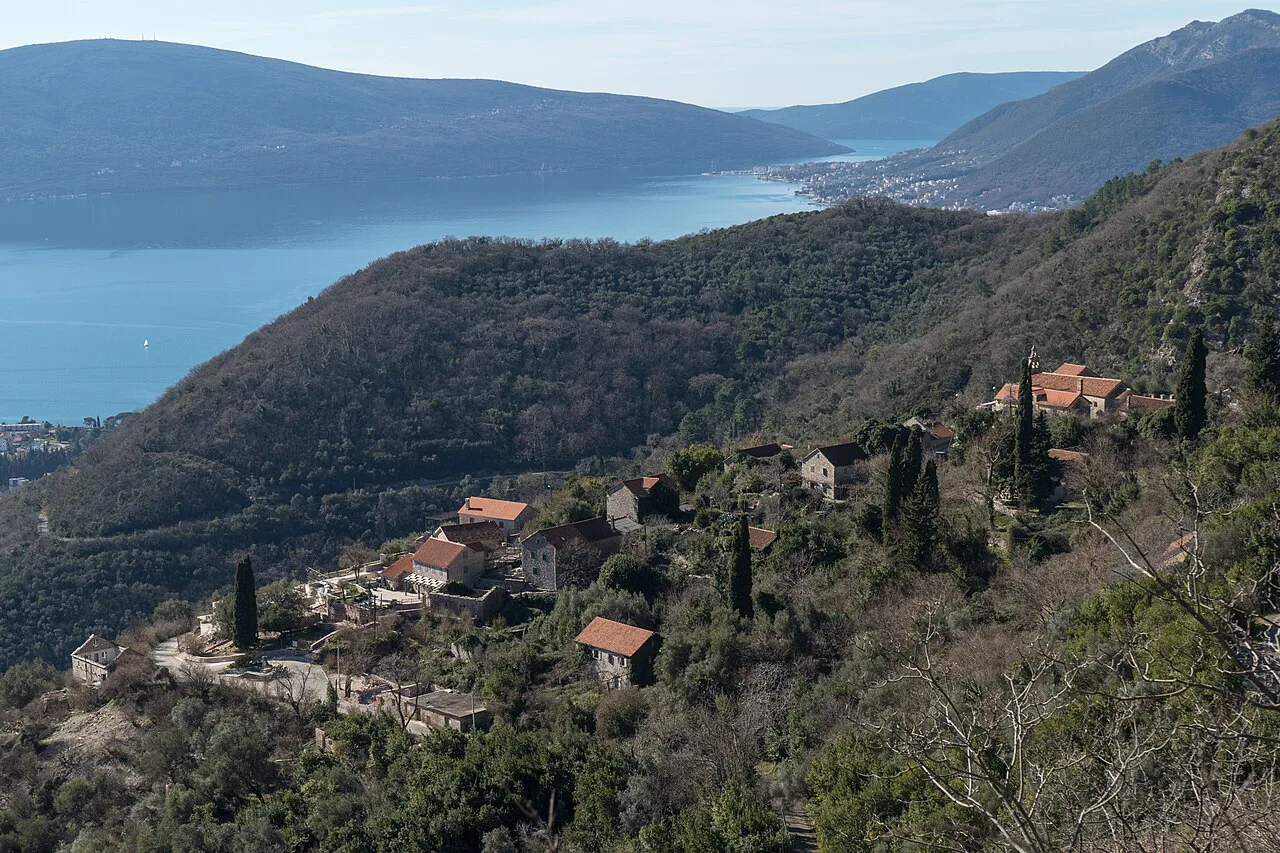
The walk up from Donja Lastva via Gornjolastovka
The usual approach on foot starts in central Tivat, continues through Donja Lastva and then follows Gornjolastovka, the street named after the upper village, as it winds up into the hills. The first stretch passes building plots and new construction, a reminder that Tivat's property boom has reached the leafy outskirts; the walk becomes greener and quieter once those sites are behind you.
Two things make the climb harder than the distance suggests. The gradient is uncompromising for most of the way, and there is no pavement, so you share the road with vehicles that appear from both directions on blind bends. Walk on the side that gives you the longest sightline, keep to single file on the corners, and wear shoes with grip rather than sandals.
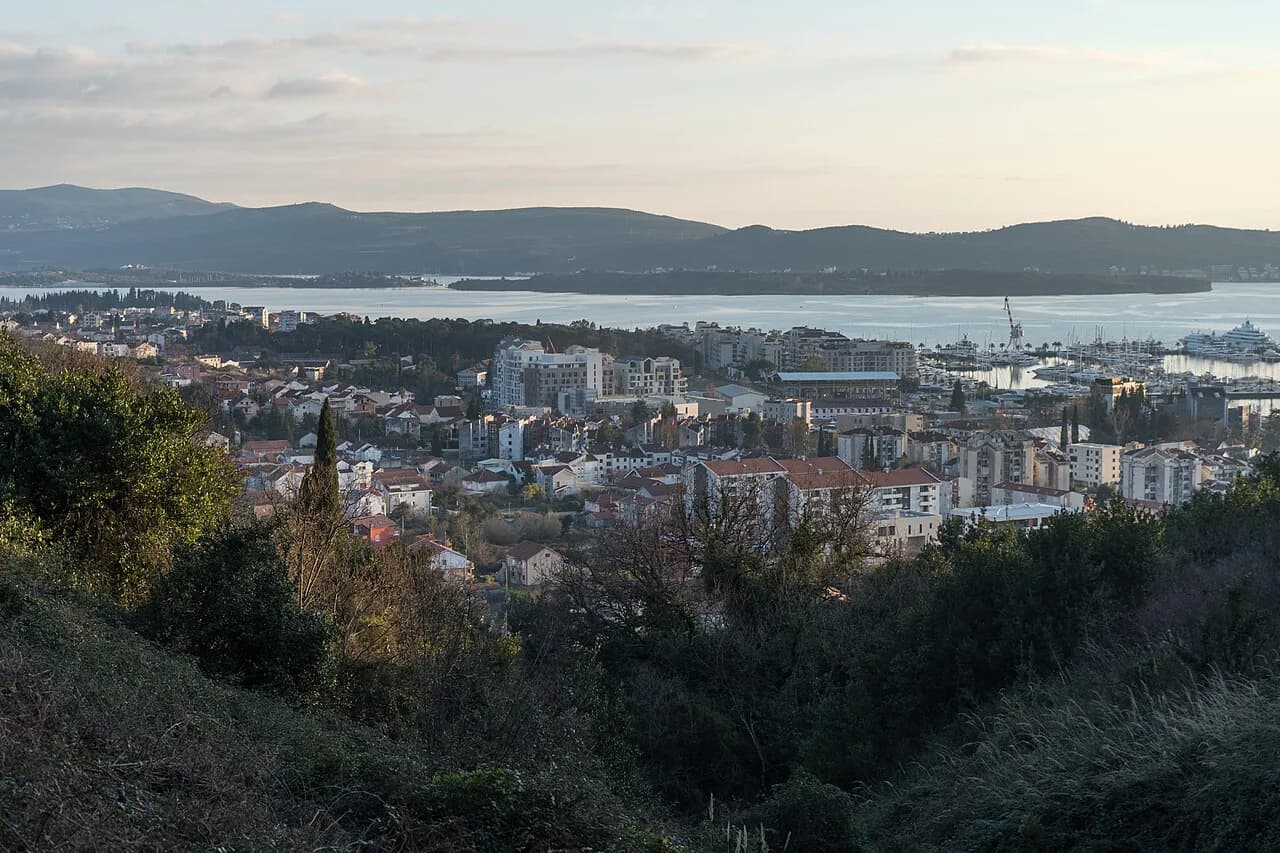
Views over Tivat and the bay open up through breaks in the tree cover as you gain height, so the ascent has its rewards before you reach the village. Go early in the morning or late in the afternoon in summer, when the light is softer and traffic is lighter. A Tivat walking tour can show you how the climb fits with the waterfront.
What you see at the central square
The central square is small and plain: a few parked cars, a public bench and a stone memorial to local people who died in the Second World War. It is the natural place to pause after the climb, and from it several stone paths lead into different corners of the settlement.
The square was historically used for festivities, parties and trading, which explains why such a modest space sits at the heart of the village. Treat it as a resting point and a place to orientate yourself, then follow one or two of the stone paths to see how the houses are arranged on the terraces.
Stone walls mark the final approach to the square, and stone is the defining material of the whole settlement. That gives you a simple way to read the place as you walk: look at how the walls, paths and buildings are fitted to the slope rather than expecting monument-style attractions.
Stone houses, terraces, cisterns and the olive mill
The settlement has about 20 simply built stone houses, most with yards that show grape trellises, small interior gardens, stone benches and water cisterns. Those details are the reason the village draws people who study traditional coastal building, and they reward a slow look rather than a quick circuit.
An original 19th-century stone olive mill still stands on display, the village's most tangible link to olive growing and winemaking. Terraced land snakes around the paths, evidence of how the slope was worked in small plots rather than fields.
Be realistic about condition. Many of the houses sit in various states of repair, and some stand empty. That is precisely what makes the place interesting, but it also means you should not expect a tidy museum village with interpretation boards or staff on site to explain what you are looking at.
The baroque church of the Birth of the Holy Mother of God
A baroque-style church dedicated to the Birth of the Holy Mother of God stands in the village, and it is the clearest single landmark to look for once you arrive. Match the dedication to the building rather than guessing from the square, since the surrounding houses are modest and easy to confuse.
The church is a historic building rather than a sight with published visiting arrangements. If seeing the interior matters to your trip, ask at the tourist information point in Tivat before you climb, and treat the exterior, the churchyard and the setting as the dependable part of the visit.
Facilities: no shop, café or restaurant
There is no shop, post office, café or restaurant in Gornja Lastva, so carry water and anything you need before starting up from Donja Lastva. The square has a public bench, but there is nowhere to buy a drink once you are at the top.
Plan the visit as a self-contained walk: fill your bottle in Tivat, use the facilities before you set off, and take your rubbish back down with you. If you want a day that mixes this climb with easier, free stops around town, line up some free things to do in Tivat for the rest of the afternoon.
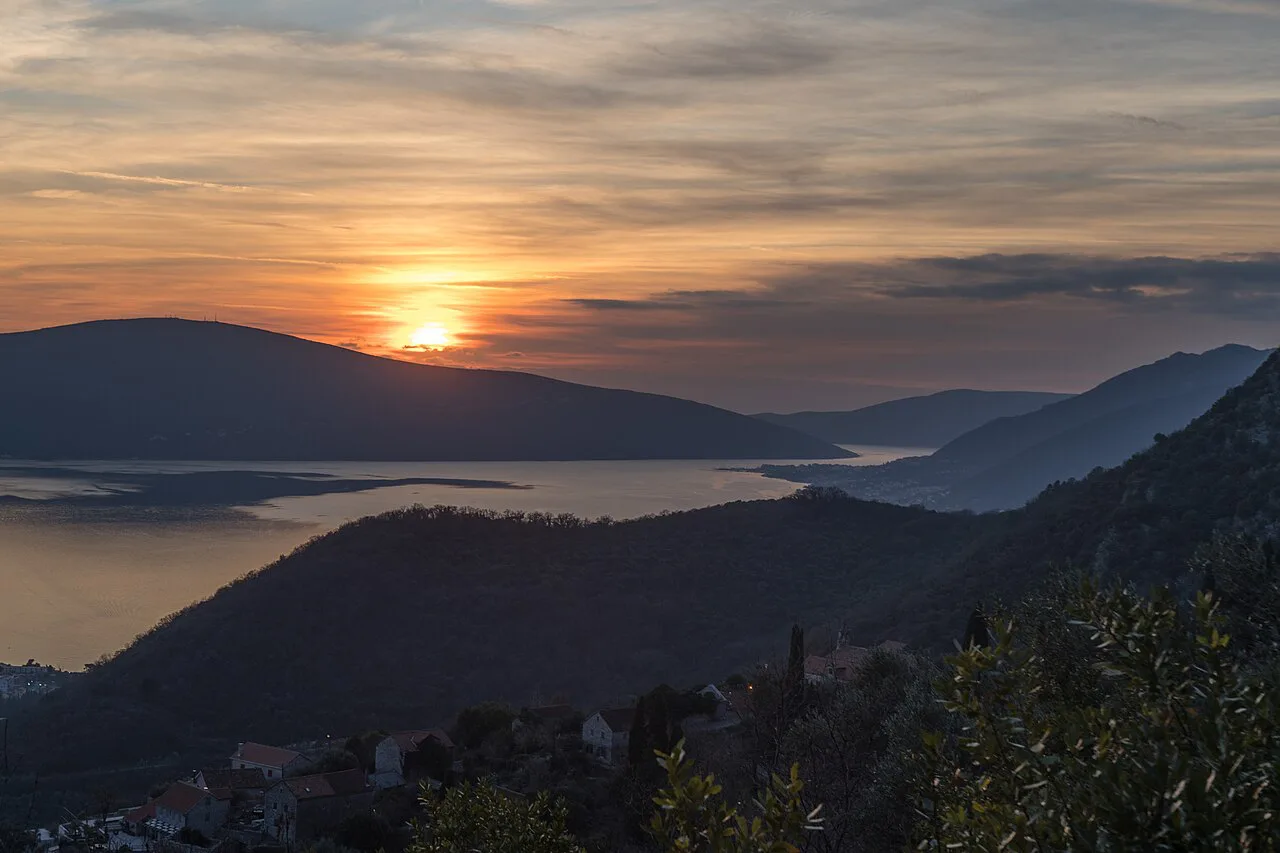
The Festivities of Lastva in August
The Festivities of Lastva are held in August and are the main reason visitor numbers to the village rise in summer. The event is a cultural and artistic occasion built around the traditions and cuisine of Boka Kotorska, with authentic Boka music, folk round dances and games.
Painting exhibitions by Tivat's fine art creators form part of the programme, which makes the festivities a reasonable fit if you want local culture rather than a staged show. The listings give the month but not a precise programme, so confirm the dates and times with Tivat tourist information before booking around them.
Architectural workshops and building researchers
The NGO Expeditio has organised international architectural workshops in Gornja Lastva, reflecting the village's value as a study subject. That is a good indication of what to look for: the way houses, yards, cisterns and terraces handle a steep site with simple materials.
For a general visitor, the practical takeaway is to slow down and look at details you would otherwise pass: stone benches built into walls, cisterns set into yards, grape trellises shading a doorway. None of this is signposted, so bring your own curiosity rather than expecting a guided experience.
How long to allow and who the walk suits
The walk suits travellers who are comfortable on a steep road without a pavement and who are content with a handful of stone houses, a church and a memorial rather than a village with services. Plan it as a steady outing with time to stop on the ascent, not a timed route.
It is less suitable for anyone unsteady on slopes, families with very young children, or anyone hoping for a café at the top. If that describes your group, keep the old town and waterfront as the day's base and treat Gornja Lastva as an optional extra for a cooler, quieter morning.
Should you make the climb to Gornja Lastva?
Make the climb if you want a steep walk with bay views, a baroque village church and a look at stone houses and a 19th-century olive mill that have not been turned into an attraction. Skip it if you need facilities, signage or an easy surface, because Gornja Lastva offers none of the three.
Time the visit for August if the Festivities of Lastva interest you, and otherwise go for a morning when the road is shaded. Before setting out, confirm the event dates with Tivat tourist information, and carry your own water for the climb.
Explore more Tivat guides
Frequently Asked Questions
Where is Gornja Lastva and how high is it?
Gornja Lastva sits in Tivat's hinterland on the slopes of Vrmac hill, the ridge above the town, at about 300 metres above sea level. The 16th-century Statute of Kotor mentions it as part of the Kotor district.
How do you walk up to Gornja Lastva?
The usual route on foot starts in central Tivat, continues through Donja Lastva and then follows Gornjolastovka, the street named after the upper village, as it winds up into the hills. The gradient is steep for most of the way and there is no pavement, so you share the road with vehicles on blind bends.
Is there a shop or café in Gornja Lastva?
No. There is no shop, post office, café or restaurant in Gornja Lastva, so carry water and anything you need up with you from Donja Lastva or Tivat.
What can you see in Gornja Lastva?
There are about 20 simply built stone houses, many with grape trellises, small interior gardens, stone benches and water cisterns, plus an original 19th-century stone olive mill on display. A baroque-style church dedicated to the Birth of the Holy Mother of God is the clearest landmark, and the small central square has a public bench and a stone memorial to local people who died in the Second World War.
When are the Festivities of Lastva held?
The Festivities of Lastva are held in August and centre on the traditions and cuisine of Boka Kotorska, with authentic Boka music, folk round dances and games, plus painting exhibitions by Tivat's fine art creators. Check the precise dates with Tivat tourist information before booking around them.
Sources
Notes for your Montenegro trip
Optional updates to our Montenegro town guides.
You might also like
Continue reading
More guides you'll find useful