Grlja Waterfall, Vusanje: Visiting the Falls and Canyon
Grlja waterfall drops about 12 metres near Vusanje in Montenegro. Here is how to reach it, when the flow is strongest and what the canyon below demands.
On this page
Grlja waterfall is a short walk from an open field in Vusanje, below the Accursed Mountains in the Prokletije national park. The falls drop about 12 metres into a deep canyon, and the water that feeds them comes from the Eye of the Grasshopper spring and snowmelt from the surrounding peaks. This guide covers the parking and walk, the seasonal flow, the separate challenge of the canyon and the stops worth adding nearby.
What Grlja waterfall is and where it sits below Prokletije
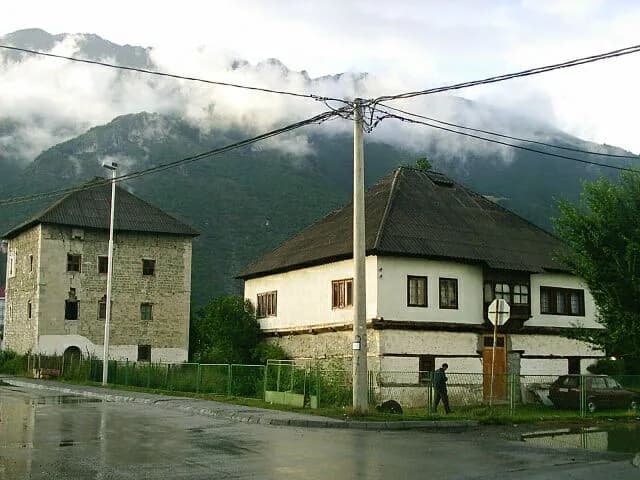
Vodopad Grlja, as it appears on local signs, sits in the village of Vusanje just before the entrance to Ropojana Valley. The falls are part of the Prokletije national park cluster, the mountain region that forms the country's northern border, so the wider trip planning belongs with the Prokletije national park guide. The stream that pours over the edge joins water from Ali Pasha's Spring before draining into Lake Plav, which makes the falls one stage in a chain of water features rather than an isolated stop.
The village sits at the foot of the Accursed Mountains, and the falls are one of the easiest sights to reach in the area. The source of the river Grlja is where the Skakavica meets the Vusanj stream below Prokletije, and the canyon below the village carries that water down towards the plain.
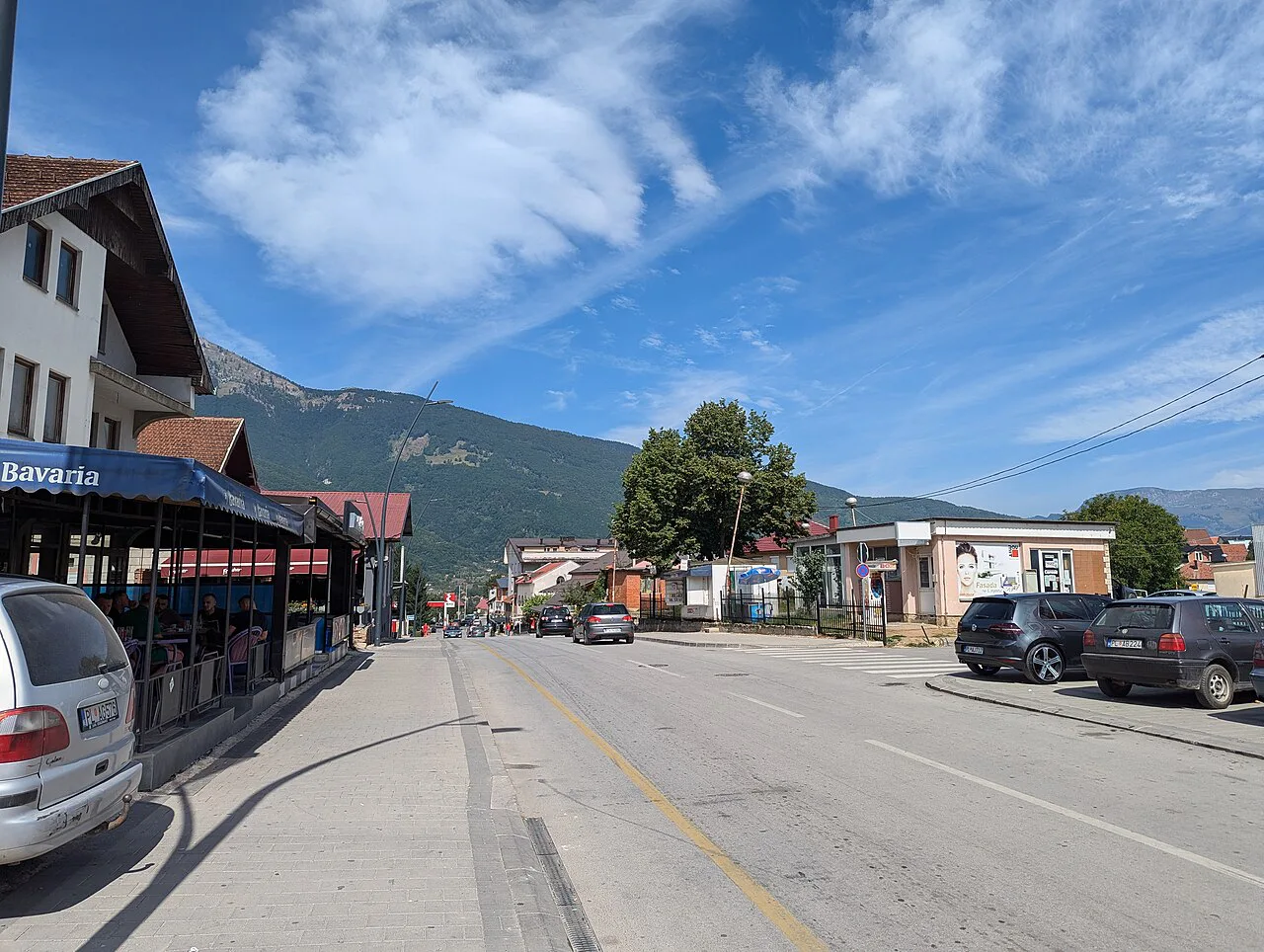
How to get there: parking in the field at Vusanje and the short walk
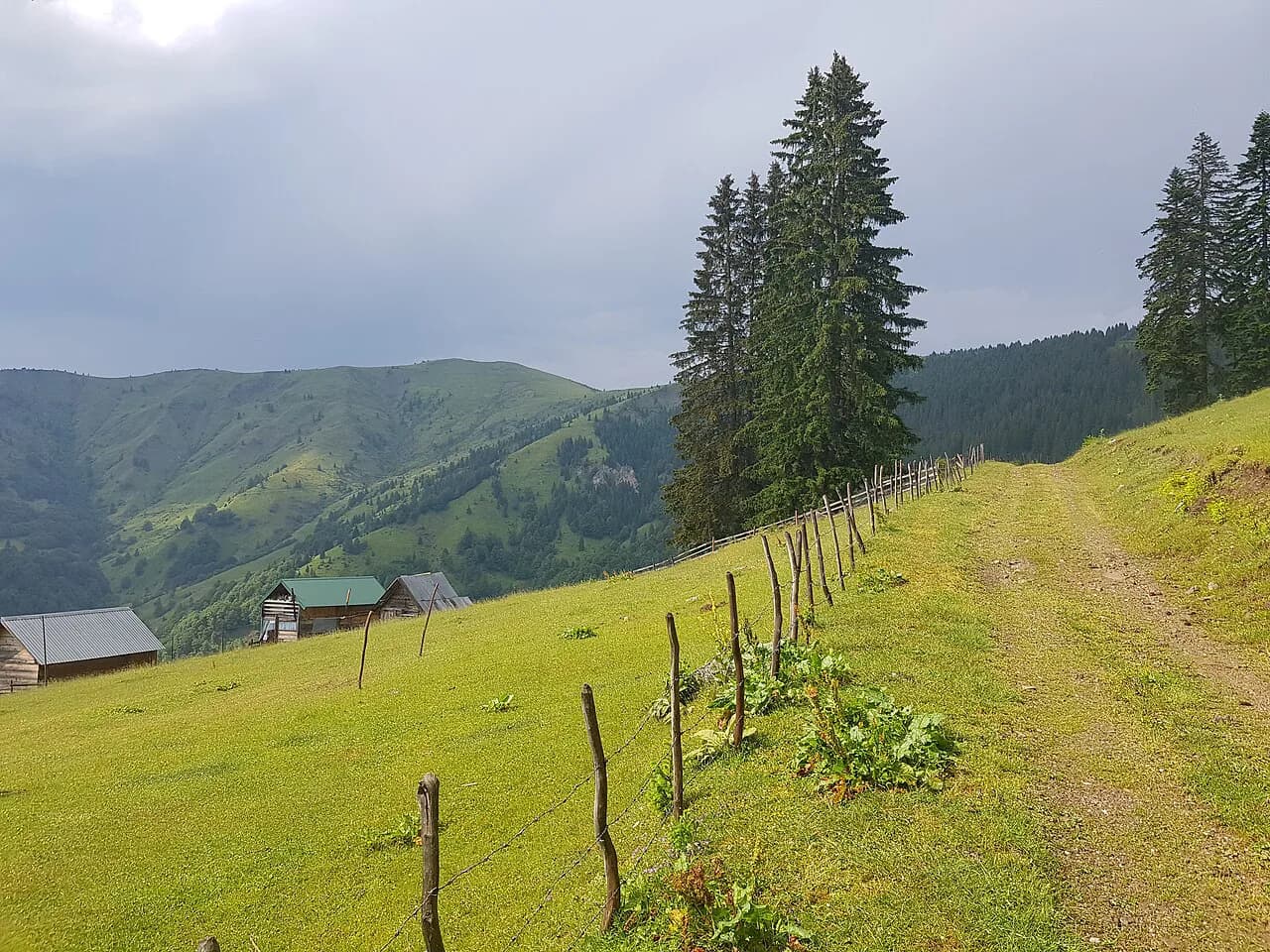
Drive into Vusanje and look for a large open field where you can leave the car. From there, follow the sound of falling water rather than a signposted trail; the falls are close enough that the noise carries. Walkers coming down from the Peaks of the Balkans trail pass Grlja on the stretch from Vusanje towards Theth, so the falls work as a roadside pause as well as a destination in their own right.
A short loop route from the roadside parking covers about three kilometres with barely 50 metres of ascent, classed as moderate and taking roughly an hour. The route starts beside the car park and passes the falls and the restaurant on the edge of the village. That gives you a realistic time for the walk if you want more than a five-minute stop at the viewpoint.
If you are coming from the nearest town, Plav, Montenegro makes a sensible base for the northern side of the park and the drive to Vusanje. The road up to the village is the same approach used for the Ropojana Valley and the border trailheads.
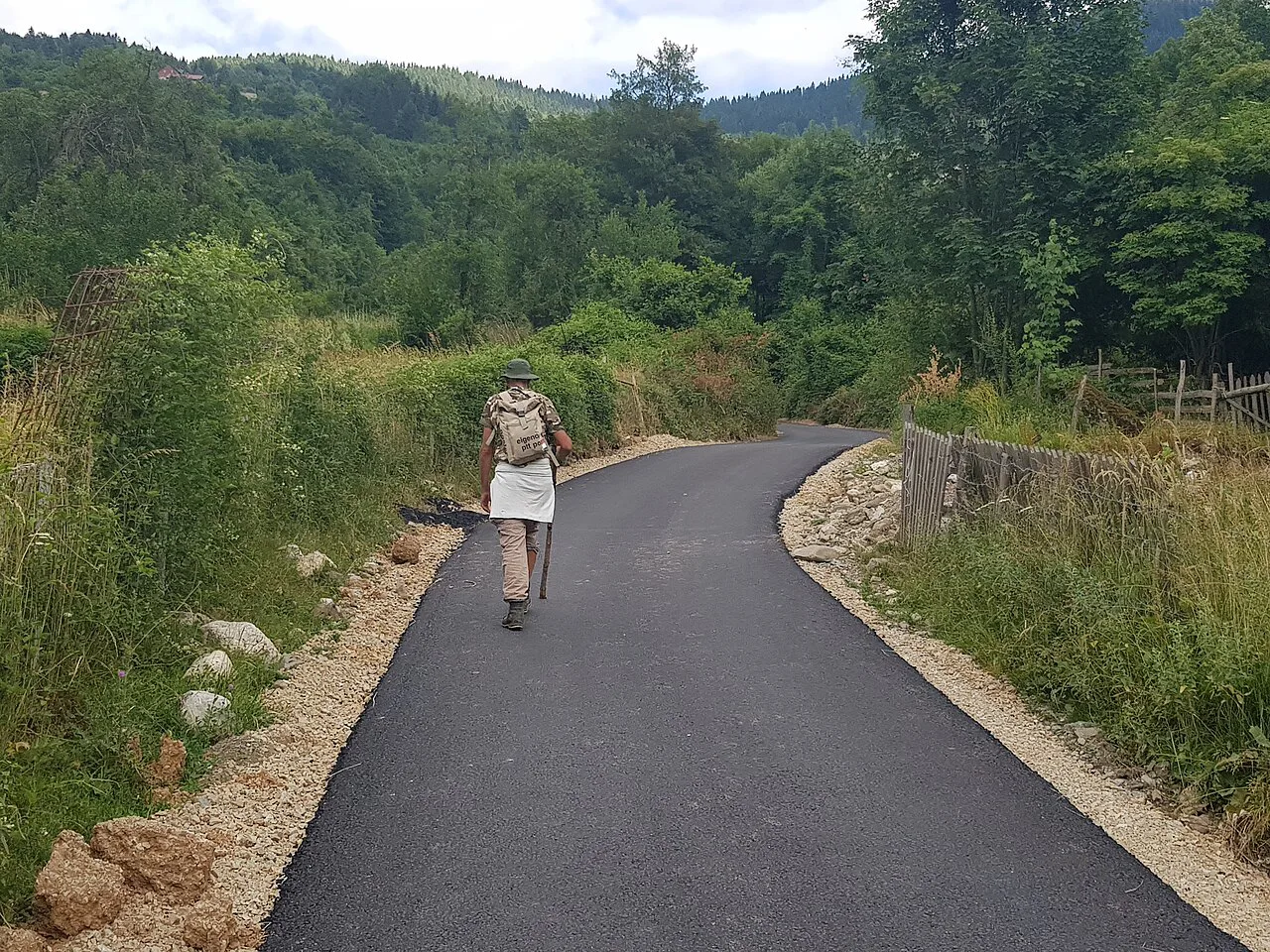
When the falls run at full power and when the flow drops
Late spring and early summer bring the strongest flow, when snowmelt from the peaks above Vusanje turns the falls into a roaring curtain. By early autumn the volume drops noticeably, though the falls still read as a striking sight rather than a trickle. Plan a visit around those two windows if the state of the water matters to you; the difference between them is significant.
Early autumn is also when the canyon below is at its most passable, because water levels are at their lowest. That is the opposite trade-off to the roadside view: the falls look less dramatic from above while the gorge becomes a realistic proposition for equipped visitors.
The 12-metre drop, the pool and the canyon entrance
The water dives about 12 metres from the lip into a deep canyon, which is what makes the viewing spot feel more exposed than a gentle cascade. Stand back from the edge, particularly after rain, because the rock around the lip is wet and the drop is sheer. The falls are the visible top of the system; everything below is the canyon proper.
At the canyon entrance a 15-metre waterfall pours into a large natural pot with a four-metre-deep pool at the bottom. The customary way past it is a rope descent, and the pool can be used to get around the fall itself. This is the point where a walk to the viewpoint ends and a technical descent begins.
Grlja Canyon: what lies behind the entrance fall
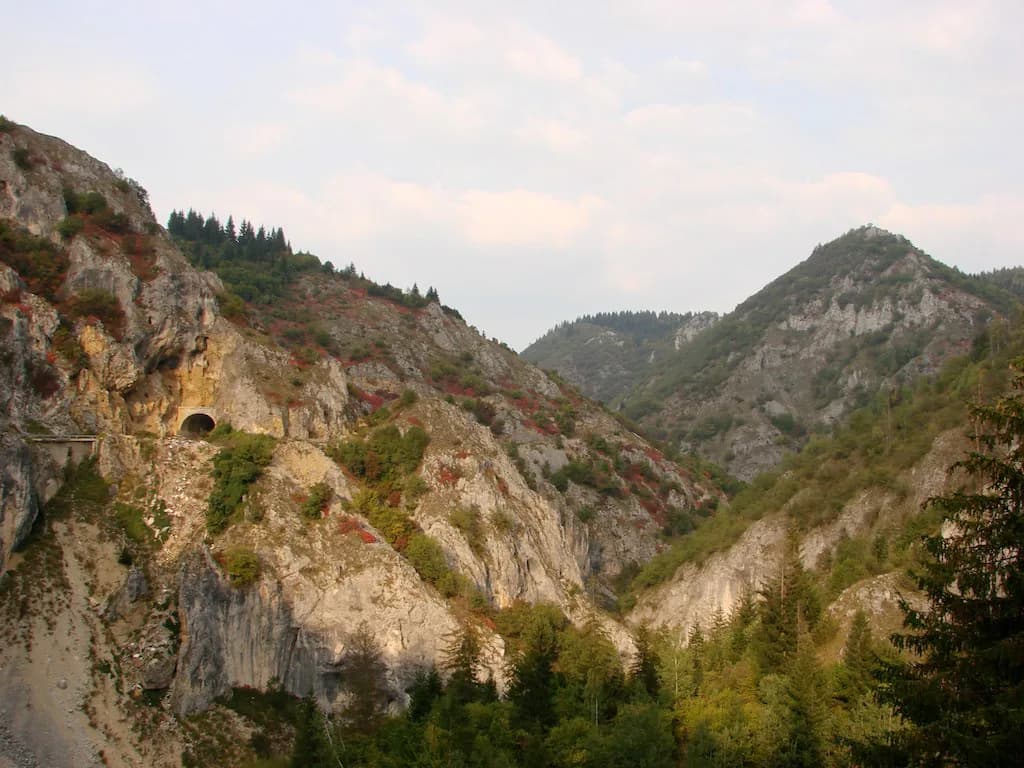
Beyond the first drop, five successive waterfalls link pools and narrow siphons of shifting shape. The canyon runs 500 metres long and reaches 50 metres deep, between two and seven metres wide, with 65 metres of height difference from entrance to exit. Those numbers explain why it is treated as an extreme route rather than a scenic stroll.
Light does not reach some sections, so a working torch is essential at several points. The rock is slippery, the passages are tight and the terrain is described as unpredictable. Even strong walkers should treat the canyon as a separate activity from the falls viewpoint, not an extension of it.
Canyon conditions: cold water, rope descent and about five hours
Allow around five hours for the passage through the canyon. The water sits below five degrees, while the air outside is roughly three times warmer, so the cold is the limiting factor as much as the scrambling. Suitable equipment, preparation and previous experience are all stated as requirements rather than suggestions.
The official advice is to check conditions with the Mountain Rescue Service of Montenegro before setting out, and the emergency number is 112. Have that conversation before you commit to the descent, not at the canyon rim. Anyone without rope skills and a guide-level background should stay on the viewing path above.
The restaurant by the waterfall
A restaurant sits right beside the falls on the edge of Vusanje, which makes it the obvious stop before or after the walk. It is known for traditional local dishes, coffee and cold drinks, and the owner has a reputation for looking after travellers.
Pairing the falls with Oko Skakavice and Ropojana Valley
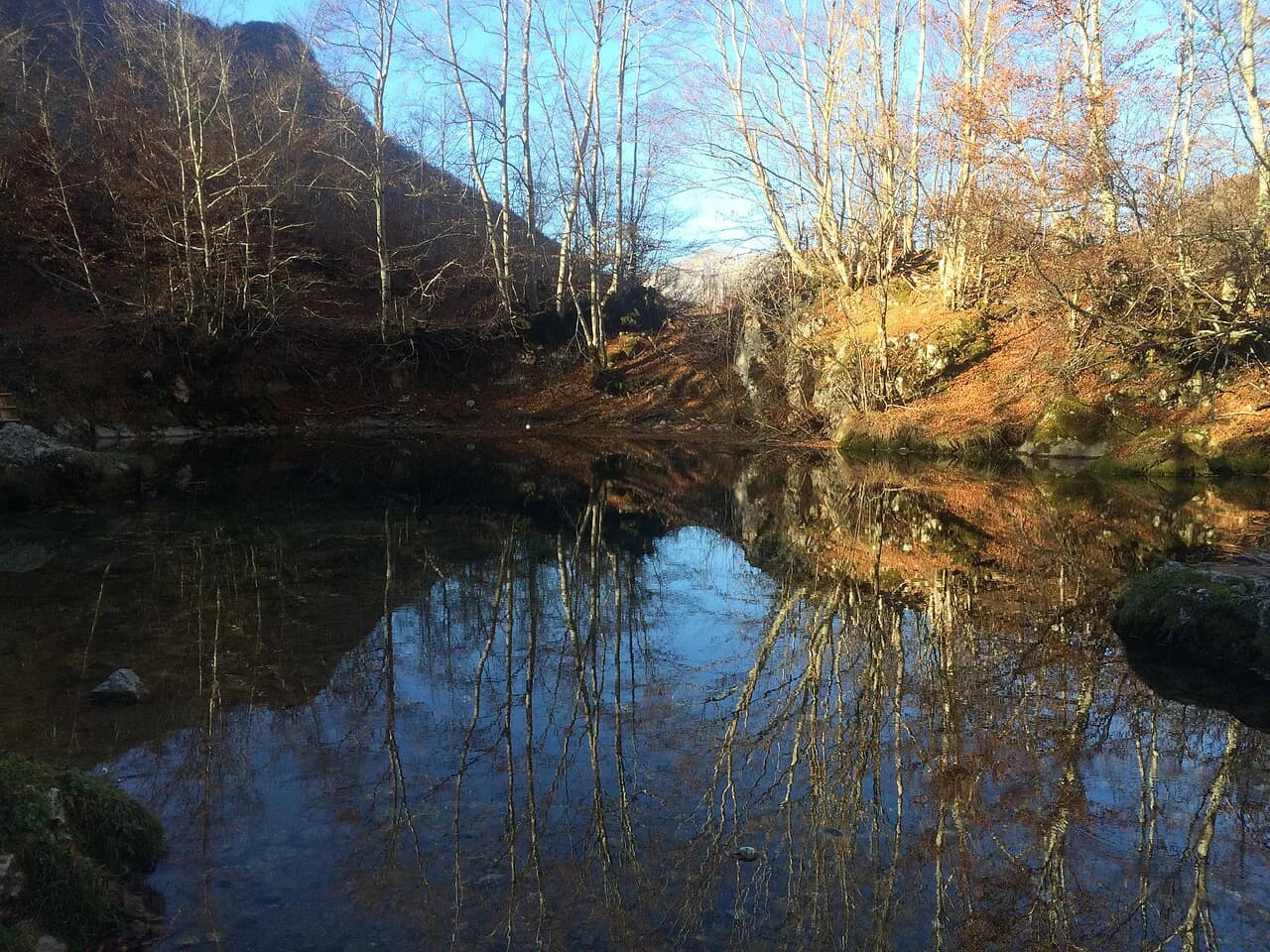
Oko Skakavice, the Blue Eye, is a short detour from the same area and rewards the extra stop with a strikingly clear mountain lake. The road up to it is rough, with boulders that suit a high-clearance vehicle more than a small car, so many visitors park about 1.4 kilometres down and walk. The restaurant by the falls is a useful landmark for that parking.
The falls sit at the mouth of Ropojana Valley, so a visit pairs naturally with a walk into the valley or a look at the Ali Pasha springs, which feed the same water system. Gusinje, Montenegro is the other nearby town and a sensible second stop on the same drive.
Should you walk to the falls or descend the canyon?
Most visitors should park in the field at Vusanje and walk to the falls, timing the trip for late spring or early summer if they want the full surge of snowmelt. The canyon is a serious five-hour commitment with cold water, a rope descent at the entrance and a torch needed inside. If you have the experience and kit, go in early autumn when levels are lowest; if not, the viewpoint and the restaurant are a good half-day.
Frequently Asked Questions
How long is the walk from the car park to Grlja waterfall?
The falls are a short walk from the open field where you park in Vusanje, and you follow the sound of water rather than a marked trail. A loop route from the same parking that takes in the falls and the restaurant runs about three kilometres and an hour.
Can you swim at Grlja waterfall?
There is a four-metre-deep pool at the base of the entrance fall inside the canyon, and it is used to get around the waterfall during a descent. That pool is part of a cold, technical canyon route, not a casual swimming spot beside the viewpoint.
Do you need a guide to go through Grlja Canyon?
The canyon demands suitable equipment, real preparation and previous experience, with a rope descent at the entrance and a torch needed in the dark sections. Check conditions with the Mountain Rescue Service of Montenegro before you go, and only attempt it if your rope and canyon skills match the route.
Sources
Notes for your Montenegro trip
Optional updates to our Montenegro town guides.
You might also like
Continue reading
More guides you'll find useful