Morača Monastery: Frescoes, Canyon Setting and How to Visit
Plan a visit to Morača Monastery in its canyon on the Podgorica–Kolašin road, from the 13th-century frescoes and the Raven of Elijah to the drive and timings.
On this page
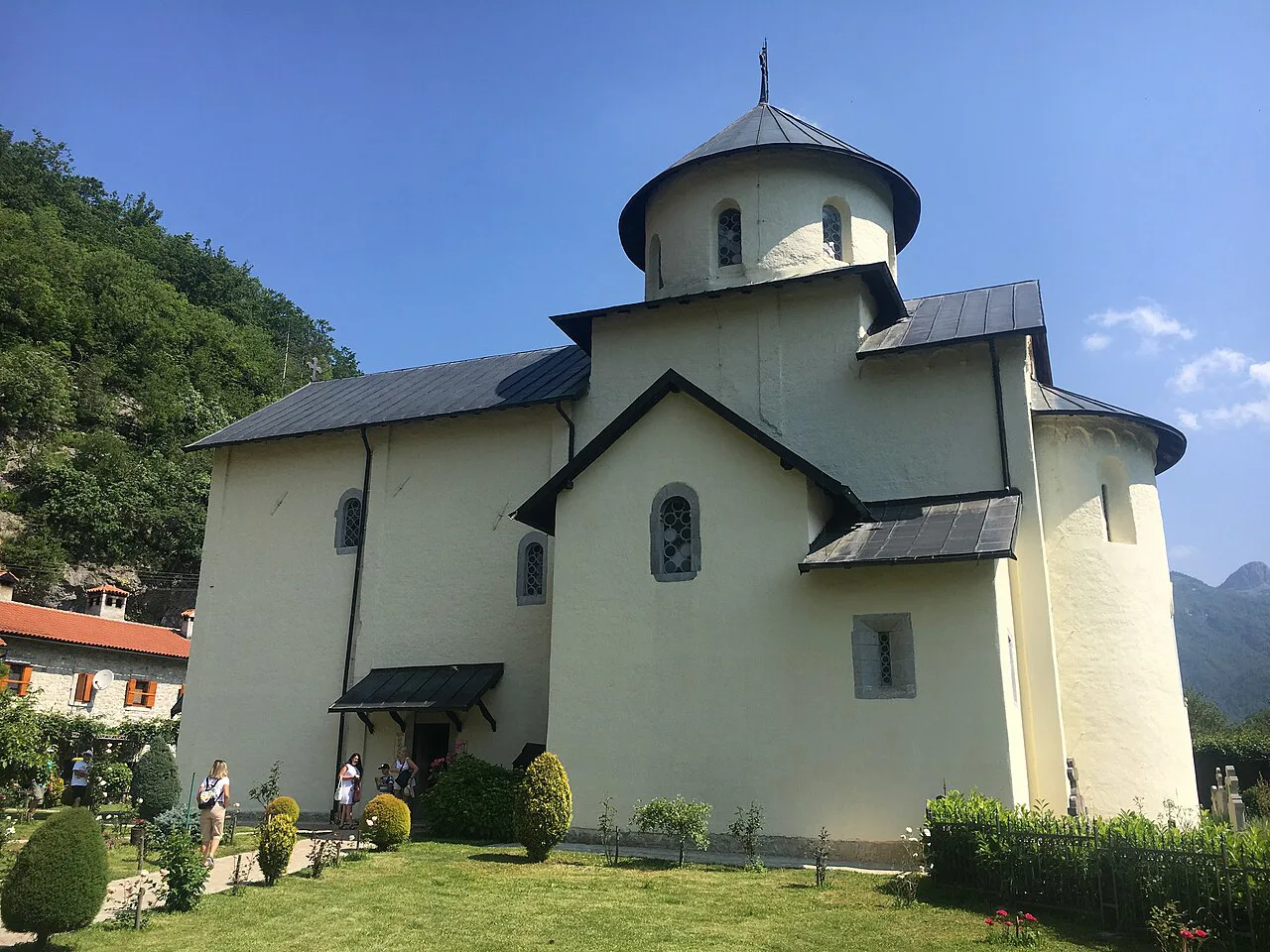
Morača Monastery is worth a stop of roughly 1.5–2 hours on the Podgorica–Kolašin road, long enough for the church, the frescoes and the small museum. The monastery sits on the right bank of the Morača river about 70 km north of Podgorica on the E65 and 20 km south of Kolašin, founded in 1252 by Stefan Vukanović.
The visit has two distinct halves. The Church of the Dormition holds a 13th-century fresco cycle in the altar apse and lower nave, while the narthex carries the later Raven of Elijah programme that has become the monastery's visual signature. The museum adds the foundation charter and the setting itself, a walled enclosure on the canyon floor between limestone walls.
What Morača Monastery is and where it sits in the Morača Canyon
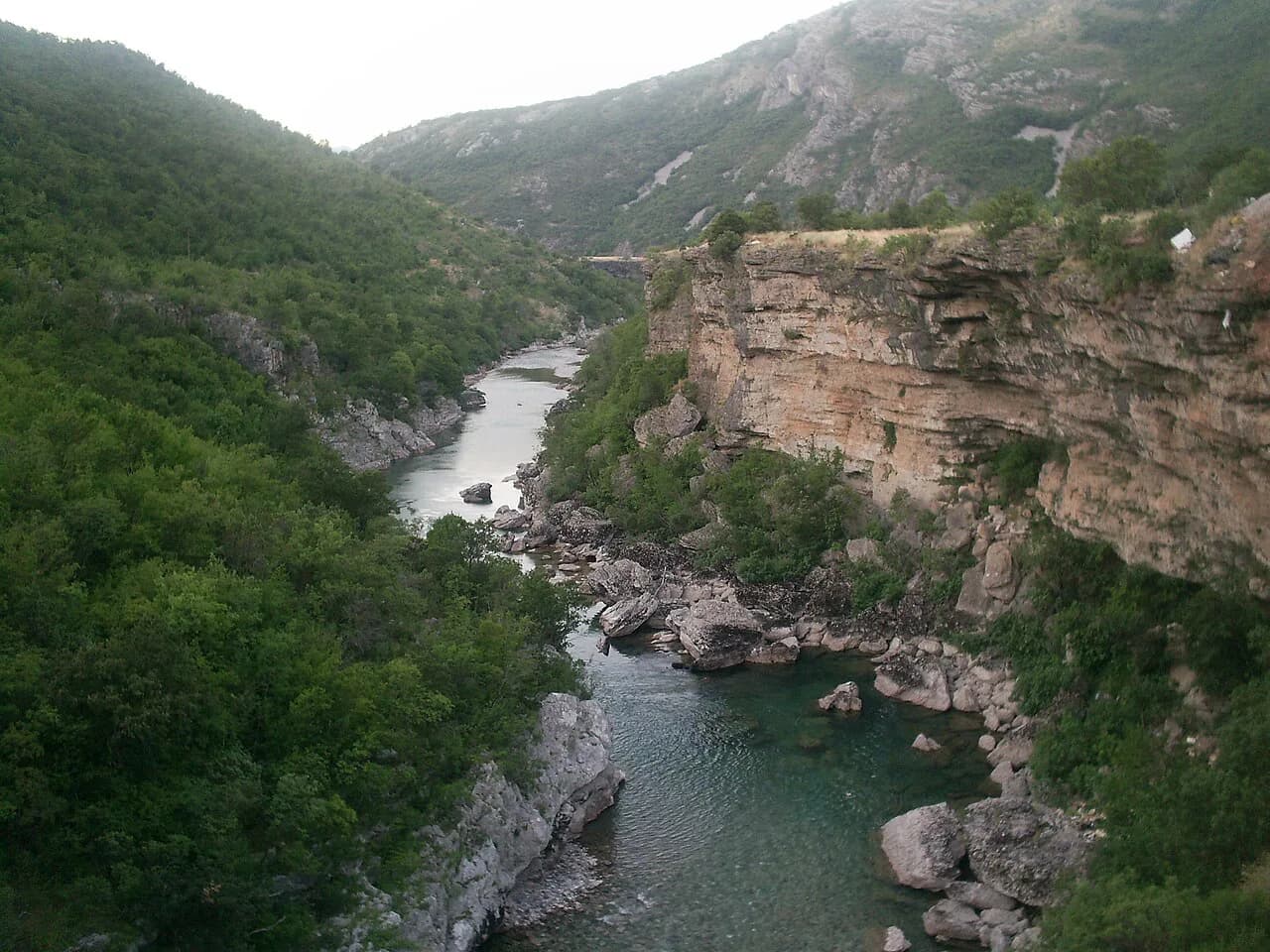
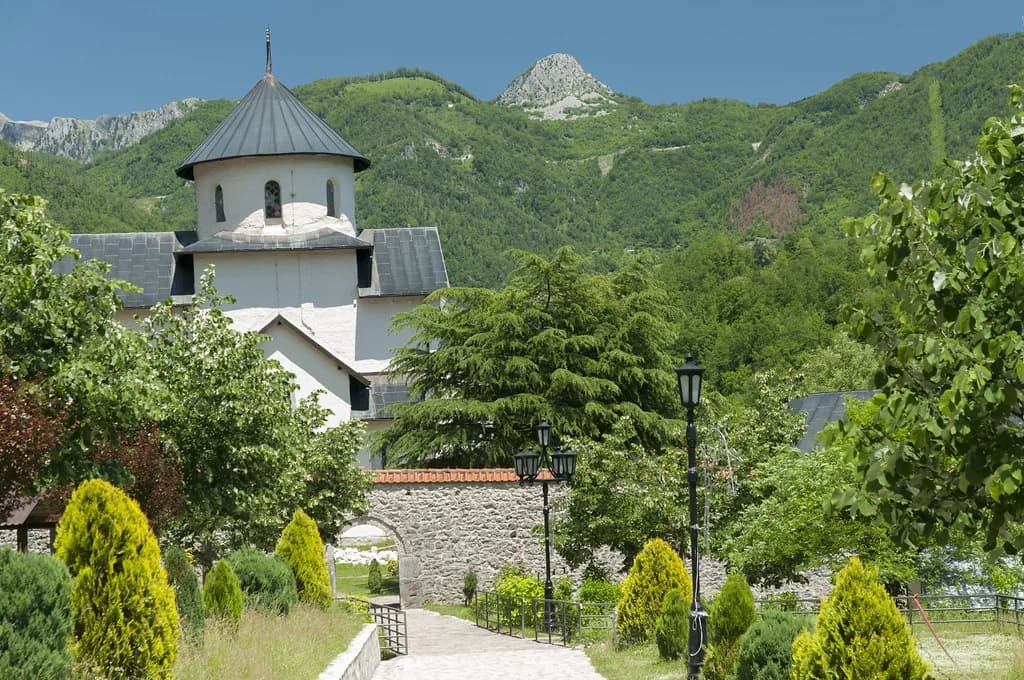
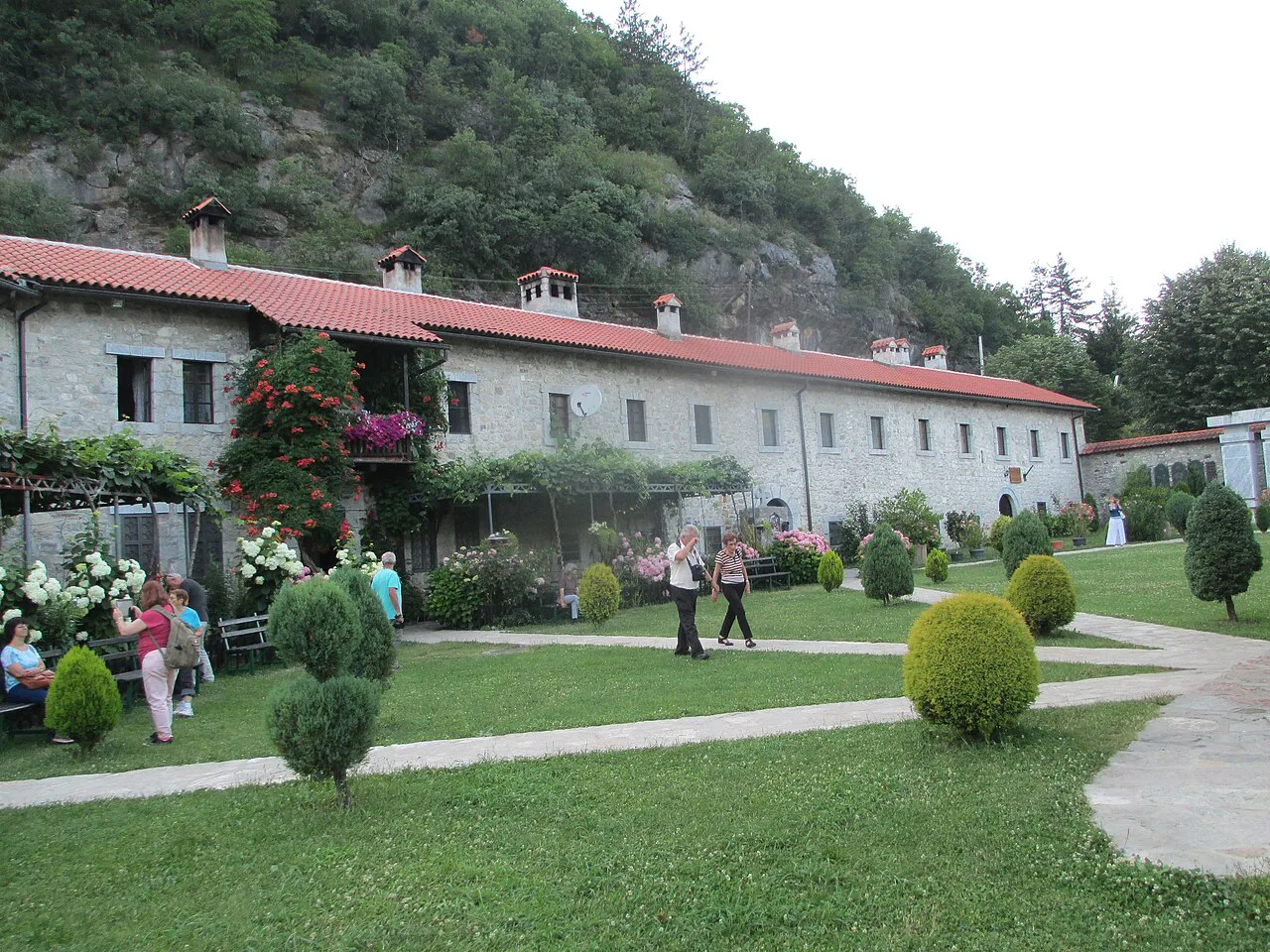
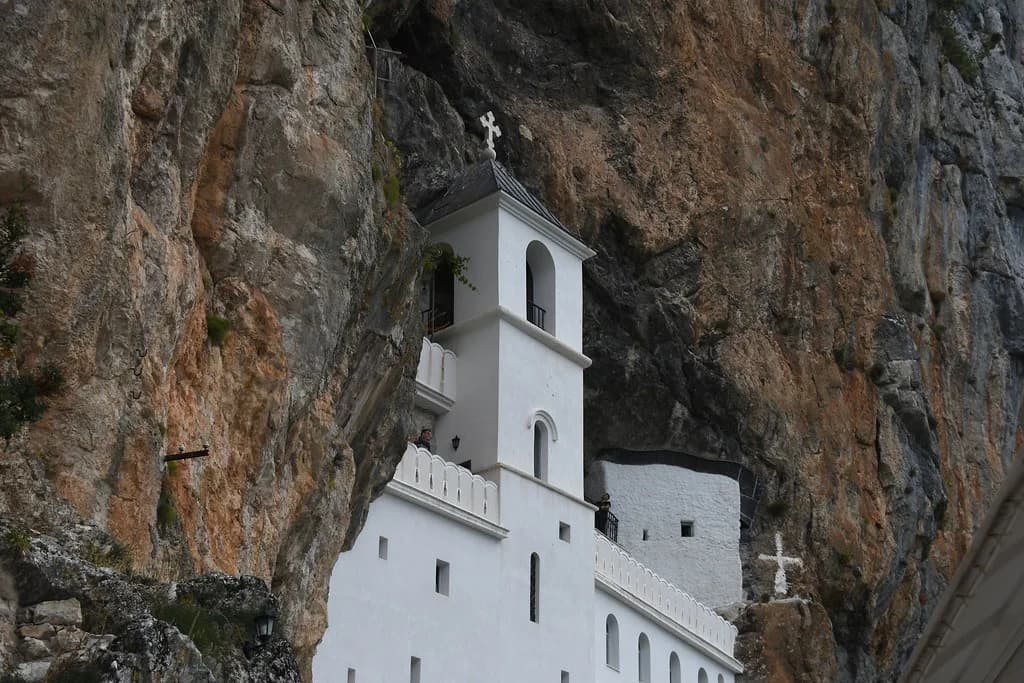
The drive north from Podgorica follows the river as it cuts through the canyon, with the road hugging narrow ledges and limestone walls rising on both sides. Around the 70 km mark from Podgorica the canyon opens slightly, and the monastery appears on the right bank behind a stone wall and mature trees.
Unlike a shrine built around a single relic, Morača is a working monastic community where monks live and work year-round, and visitors are received as guests rather than pilgrims. That distinction shapes the visit: you are walking through someone's home and place of worship, not a museum set.
Where Morača is: 70 km north of Podgorica on the E65, 20 km south of Kolašin
The monastery lies directly on the E65, the main inland road between Podgorica and Kolašin, which makes it an easy stop rather than a detour. Coming from the coast, Podgorica is the practical gateway; from the north, Kolašin is about 20 km away.
The canyon road is slow going in places, with the river on one side and rock on the other, so build the drive into your day rather than expecting motorway pace. This is also the stretch that makes the monastery's setting legible: the walls you see from the road are the same ones that enclose the grounds.
Who founded it and when: Stefan Vukanović, 1252
Stefan Vukanović, a prince of the Nemanjić dynasty, founded the monastery in 1252. The foundation charter survives as a parchment document specifying the monastery's endowments, privileges and the obligations of surrounding villages, and a reproduction is displayed in the monastery museum.
His tomb is inside the church. The monastery was damaged and partially rebuilt after Ottoman raids in 1508, which explains why the interior carries frescoes from more than one period rather than a single scheme.
The Church of the Dormition: the 13th-century fresco cycle
The Church of the Dormition of the Virgin is the main monastery church, built by Stefan Vukanović in 1252 and preserving significant sections of its 13th-century fabric. The oldest frescoes, from the original construction period, are in the altar apse and lower nave.
Look for the drawing rather than the colour. Even where pigment has flaked or darkened with candle smoke, the surviving contour lines show the quality of the draughtsmanship, in a palette of deep blue, ochre and terra cotta with elongated figures and frontal compositions.
The Raven of Elijah cycle in the narthex and why it stands out
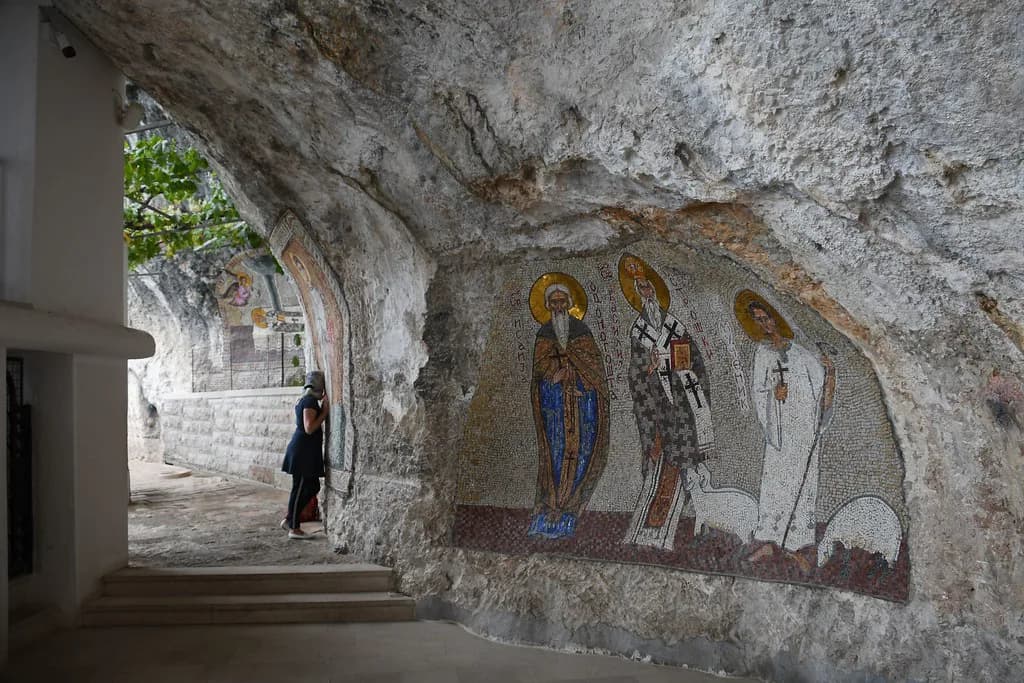
The Elijah cycle in the narthex is the fresco programme to prioritise if time is short. Painted in the 16th century as a restoration of the damaged original, it shows episodes from the Old Testament story, most famously the raven bringing bread to the prophet hiding by the Brook Cherith.
What sets the cycle apart is the landscape. The scenes place Elijah among rocks, a stream and a cave with a naturalistic attention to detail rare in Byzantine fresco traditions, and art historians have debated possible Italian influence reaching the painter through the Venetian Adriatic coast. The Raven of Elijah scene itself, with the bird carrying bread in its beak and the prophet sheltering under an overhanging rock, appears on publications about the monastery and on Montenegrin cultural heritage materials.
The small monastery museum: the foundation charter reproduction and what else is inside
A small museum in one of the monastic buildings holds the reproduction of the 1252 foundation charter, alongside material on the monastery's history. Entry to the monastery grounds is free, and a donation for the museum is welcomed rather than required.
Treat the museum as the quiet close to the visit rather than the opening act: see the church and the frescoes first while your eyes are fresh, then read the charter material with the building's history already in mind.
The Chapel of St Nicholas
A second church, the Chapel of St Nicholas, stands within the monastery complex. It is a smaller space than the Church of the Dormition and forms part of the same walled enclosure, so it takes only a few minutes within your overall time at the site.
Pair it with a walk around the grounds, which the monastery maintains as a working spiritual centre. The stone wall, the trees and the river below are part of the visit, not just the frame around it.
Morača as a working monastic community: how visitors are received
Monks live and work here year-round, and the monastery receives visitors as guests. That means behaving as you would in any active place of worship: keep voices low in the church, dress modestly, and stay out of areas that are clearly closed to visitors.
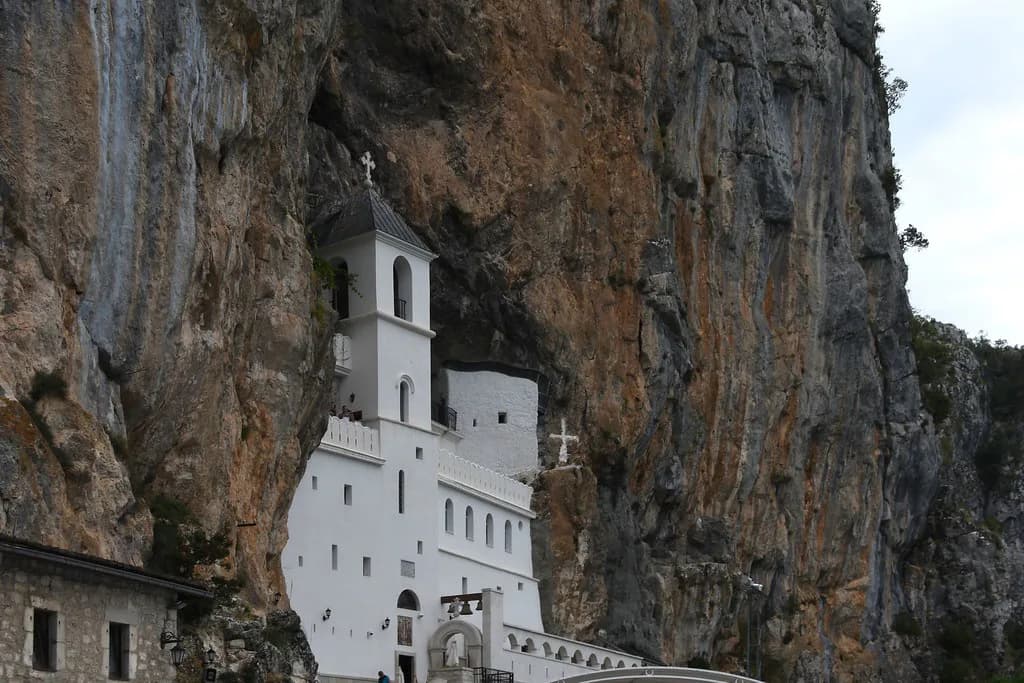
The comparison with Ostrog Monastery is useful for expectations. Ostrog draws pilgrims around a specific relic, while Morača is primarily a monastic community, so the rhythm of the visit is quieter and less processional.
Getting there: self-drive on the E65 versus a guided day trip from Podgorica or the coast
Self-driving gives you the most control over timing, since the monastery sits directly on the E65 between Podgorica and Kolašin. The trade-off is the canyon road itself, which is slow in places and demands attention rather than cruise control.
Guided day trips run from Podgorica and the coast, which suits travellers who would rather not drive the canyon road or who want the monastery combined with other inland stops. Coach and minibus tours do the navigating and the commentary, but they set your pace and your time at the monastery.
If you are weighing up which guided option to take, the practical difference is how much of the day is spent in transit versus on site, so compare itineraries such as Ostrog Monastery Tours against inland monastery day trips before booking.
How long to allow: around 1.5–2 hours for grounds, church and museum
Plan on 1.5–2 hours for the grounds, the church and the museum. That is enough to see both fresco periods properly, read the charter material in the museum and walk the enclosure without rushing.
If you are short of time, cut the grounds walk first and keep the church and the Elijah cycle in the narthex. If you have longer, the extra time is best spent sitting with the frescoes rather than adding stops.
When to go: May–June or September–October for water levels and light
May to June and September to October give the best combination of river water levels and light in the canyon. Summer brings stronger heat on the drive and more traffic on the E65, while winter shortens the daylight you need for the canyon section.
These are seasonal recommendations rather than a forecast, so check the monastery's own information before setting out, as opening arrangements at an active community can change.
Combining Morača with the rest of an inland Montenegro circuit
Morača works best as one stop on the inland run toward Kolašin rather than a standalone errand from the coast. Heading north, you can break the drive here and continue into the mountains with the canyon behind you.
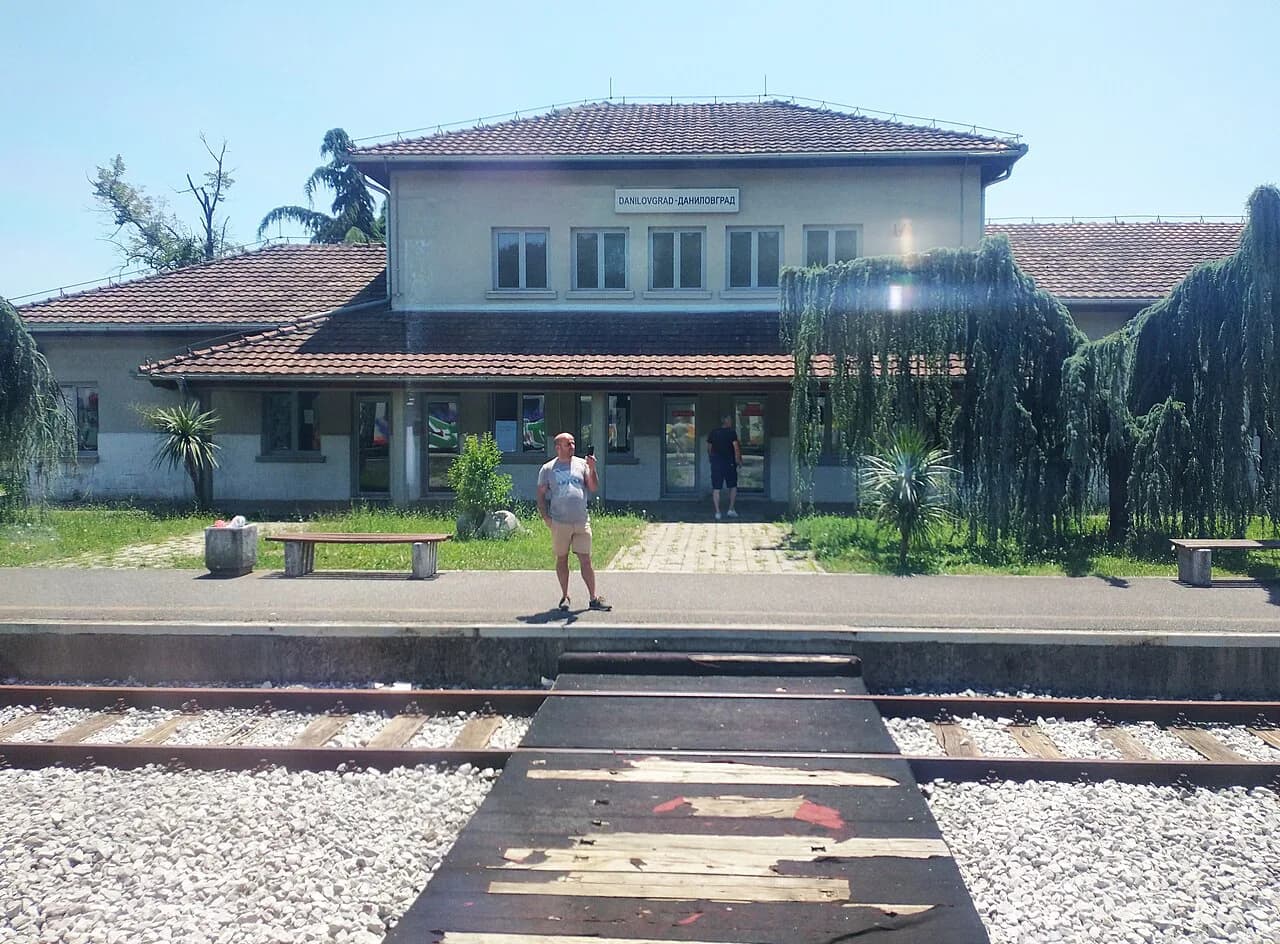
On the return leg, Danilovgrad makes a natural pause before Podgorica if you want to break a long drive.
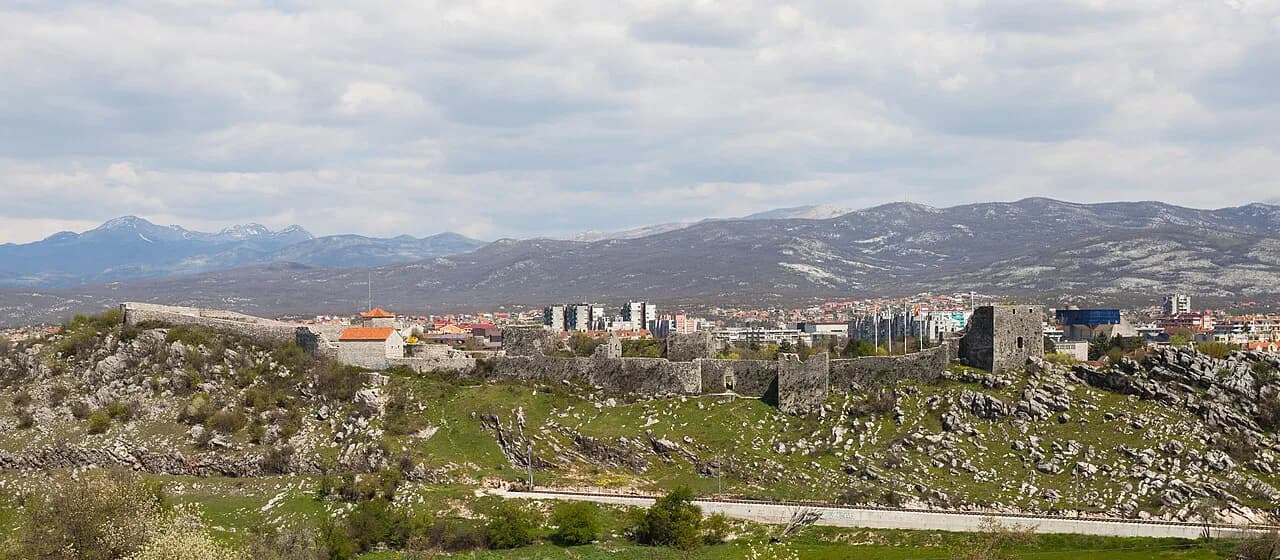
Nikšić sits west of the Podgorica–Kolašin axis rather than on it, so it fits a wider loop through the inland towns rather than a simple out-and-back to the monastery.
Photographing the monastery respectfully
Photography inside the church deserves care: check for any notice at the door and follow it, and avoid flash where frescoes are concerned. Outside, the walled enclosure and the canyon walls give you the setting without needing to intrude on anyone at prayer.
If you are building an itinerary around Orthodox sites, it helps to know how visiting conventions differ between a working community like Morača and a major pilgrimage destination such as Ostrog Monastery.
Should Morača be a stop or the day's destination?
Make Morača a stop, not the day's destination. It rewards 1.5–2 hours between the church, the frescoes and the museum, and it sits directly on the E65 between Podgorica and Kolašin, so the sensible plan is to fold it into the drive rather than build a day around it alone.
If you want the monastery without driving the canyon road, book a guided day trip and check how long the itinerary actually leaves you on site. Either way, go for the Church of the Dormition and the Raven of Elijah cycle, and leave time for the quiet afterwards.
Explore more Nikšić guides
Frequently Asked Questions
Can non-Orthodox visitors enter Morača Monastery?
Morača receives visitors as guests of a working monastic community rather than as a pilgrimage shrine, and the church and grounds are open to visitors generally. Dress modestly and keep voices low inside the church, since services may be under way. Check with the monastery directly if you are unsure about access on a particular day.
Is there accommodation near Morača Monastery?
Morača is a working monastery on the E65 rather than a village with a hotel strip, so most travellers stay in Podgorica or Kolašin and visit en route. Kolašin, about 20 km to the north, is the nearer of the two for an overnight stop.
Sources
Notes for your Montenegro trip
Optional updates to our Montenegro town guides.
You might also like
Continue reading
More guides you'll find useful