Ostrog Monastery: Upper and Lower, Getting There and Etiquette
Plan a visit to Ostrog Monastery in Montenegro: the upper and lower complexes, the cliff road and parking, trains and tours, dress code and etiquette.
On this page
Ostrog Monastery is free to enter and takes one to two hours, but it is two places rather than one: the Lower Monastery on the slope and the Upper Monastery set into the cliff face above it. This guide covers what you see at each complex, the steep road and woodland footpath that link them, reaching the site by car, train or organised tour, and the dress and behaviour expected at a working monastery that draws pilgrims of several faiths.
The monastery sits above the Bjelopavlići plain, west of Podgorica and within reach of Nikšić, and pilgrims treat the climb itself as part of the prayer. Plan the day around the Upper Monastery first, since that is what most travellers come for, then decide whether the lower complex and its church justify the extra stop.
What Ostrog Monastery is and who Saint Basil was
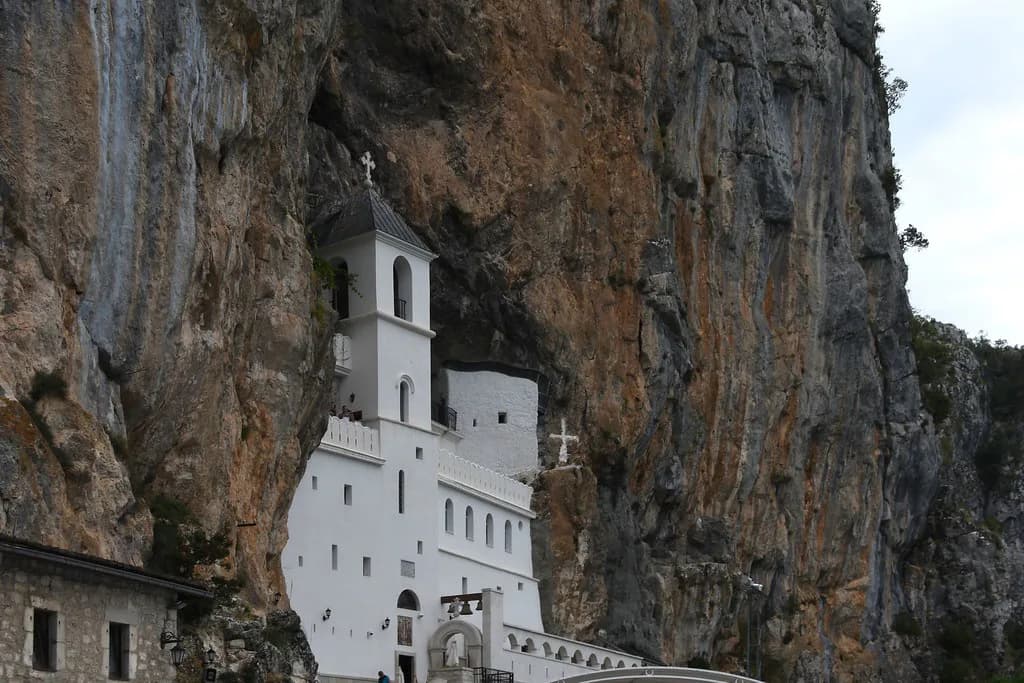
Ostrog is a Serbian Orthodox monastery built into a vertical cliff, and it functions as a working monastery rather than a visitor attraction with a turnstile. Its importance comes from Saint Basil, a 17th-century bishop who retreated to these cliffs during the instability of Ottoman rule and whose body has rested here since his death in 1671.
The relics are the reason people come. Pilgrims believe a prayer spoken close to his body can cure illness or ease hardship, and the monastery draws Orthodox Christians from across the Balkans alongside Catholics, Muslims and travellers arriving out of curiosity. Visitors of all three faiths regard the site as Holy, which shapes how you should move through it.
Stories of healing circulate widely around Saint Basil and are repeated by pilgrims rather than published as verified events. Treat them as part of the site's religious life, not as something to test or photograph.
Upper and Lower Monastery: what you see at each
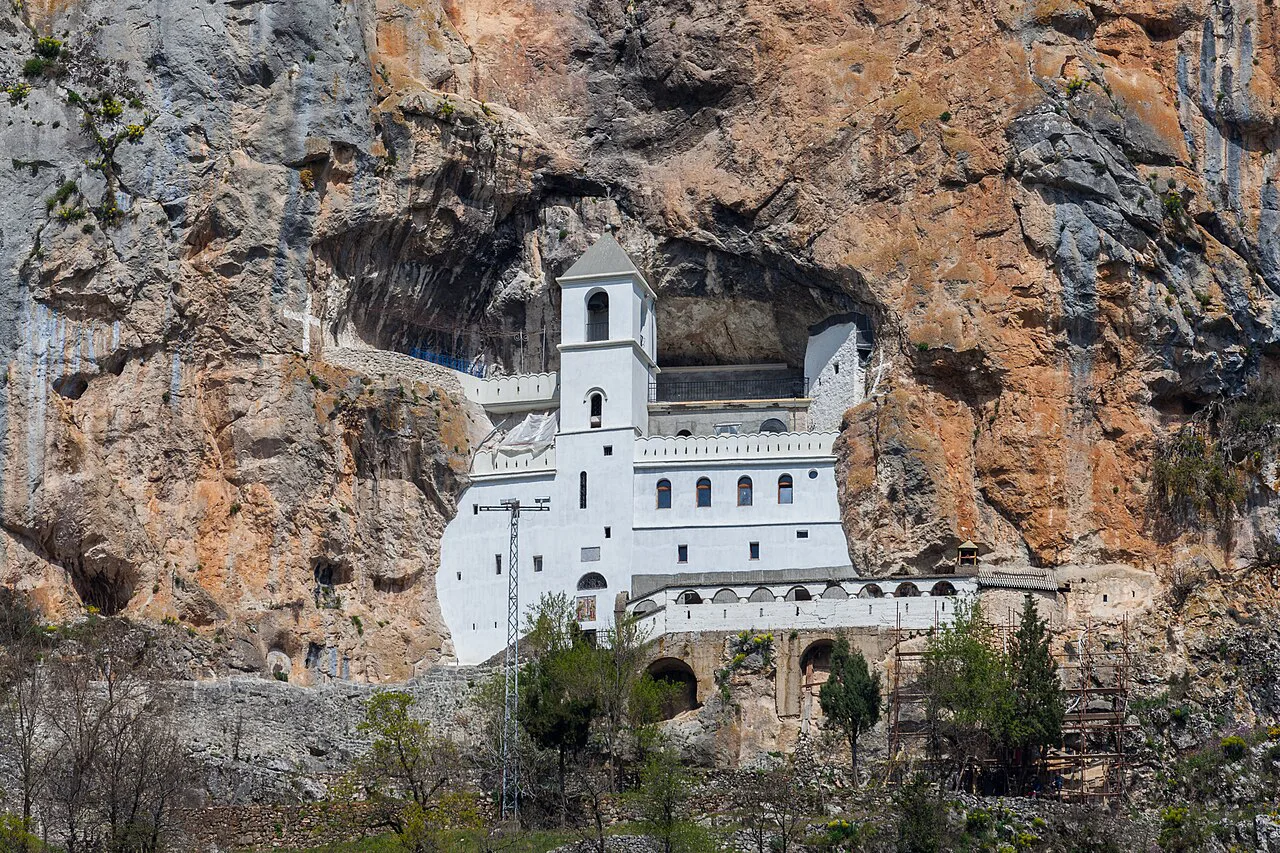
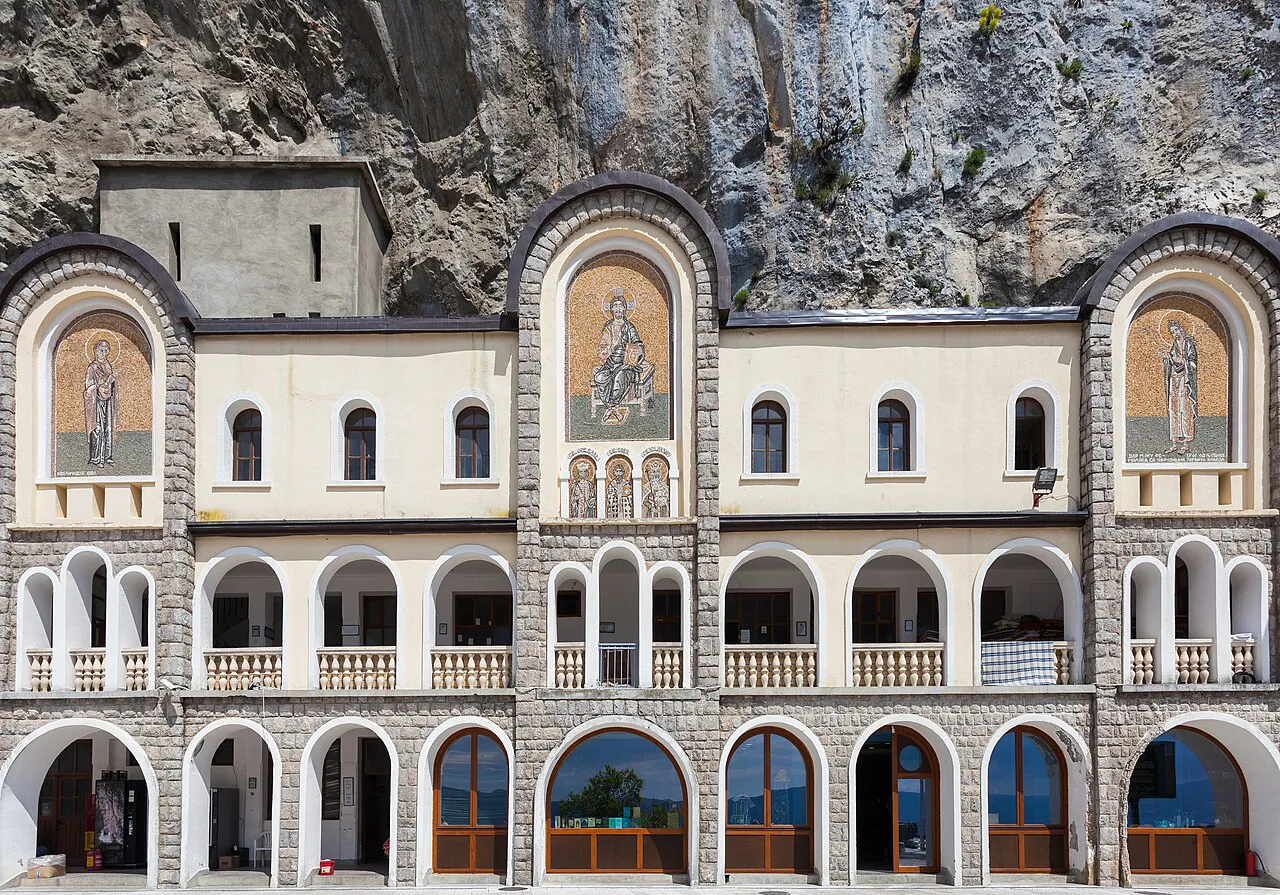
The Lower Monastery is the larger complex further down the slope, with accommodation buildings, courtyards and the 19th-century Church of the Holy Trinity. It is a genuine part of the site, but it is not the white façade on the cliff that most photographs show.
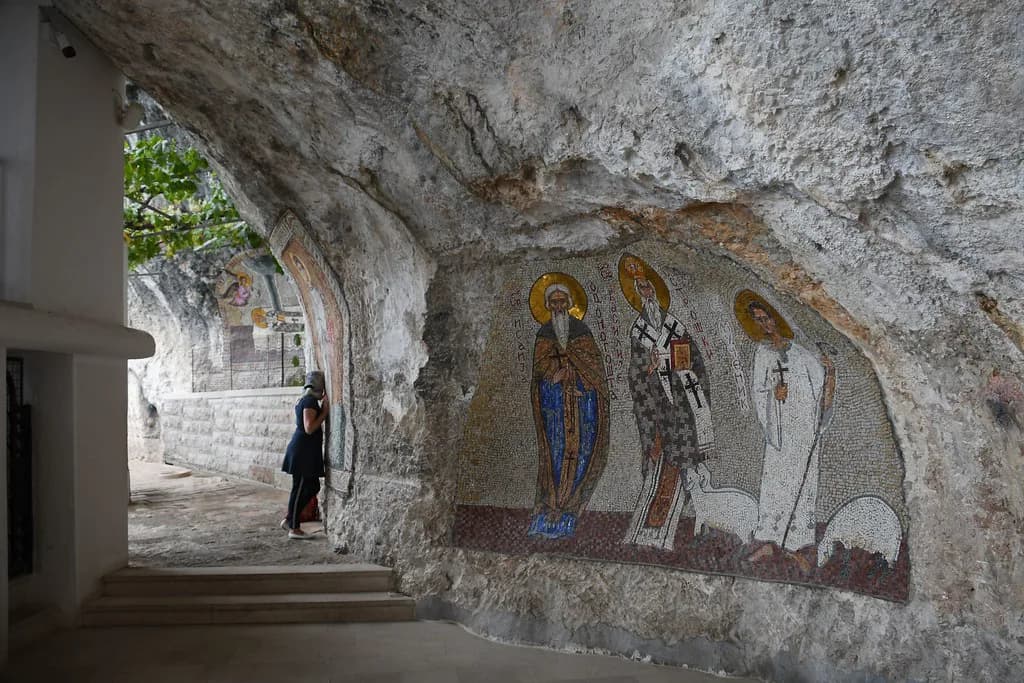
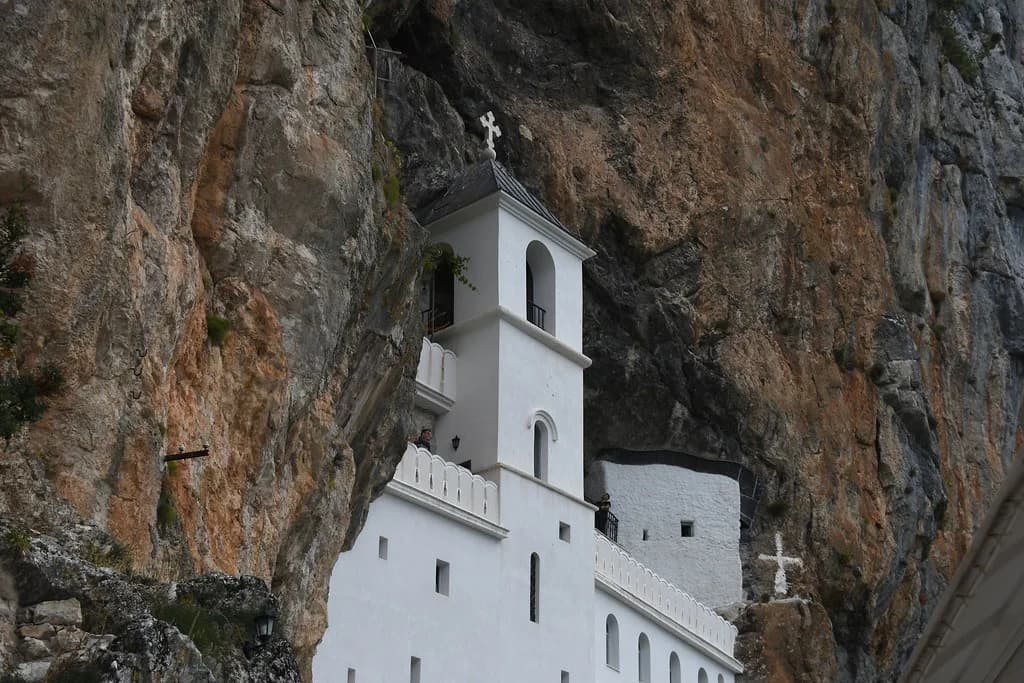
The Upper Monastery is the famous section built directly into the rock, with two cave churches carved into the cliff. One small chamber holds the relics of Saint Basil, reached through a narrow doorway cut into the rock face, and pilgrims queue to pass it in ones and twos rather than in a crowd.
Keep the two names straight when you plan, because they are separate destinations about five kilometres apart by road and much further apart on foot. Confusing them lands you at the wrong car park or on the wrong bus stop.
How long a visit takes and what to expect at the cave church
Allow one to two hours at the monastery itself, and expect the cave church to set the pace. The line moves in increments rather than steps, and inside you will find frescoes, candlelight and an Orthodox priest standing beside the glass-covered tomb. Visitors approach individually, some bowing or kissing the plaque bearing Saint Basil's name, and nobody is hurried along.
If you would rather not take part in a blessing, it is fine to step out of the line before you reach the front. This is a place of worship first, and the queue is not a visitor attraction with an exit route built in.
Dress code and etiquette at a working monastery
Dress modestly, with shoulders and knees covered, and keep voices low in the courtyards and around the cave churches. Photograph respectfully, which in practice means no flash during services and no pictures of people praying or queuing for a blessing without their agreement.
Remember that many people around you have travelled a long way for a specific purpose. Give pilgrims space at the relics, do not block the doorway while you frame a photograph, and step aside rather than holding a position at the front of the line.
Getting there by car: the narrow, bendy road and parking
Driving gives you the most control over timing, but the approach road is narrow, steep and extremely bendy, with roughly five kilometres between the Lower and Upper complexes. Do not trust every map listing: some place the monastery nowhere near the actual site, and others mix up the two sections, so confirm the pin before you set off.
The climb by car is manageable for a confident driver and uncomfortable for a nervous one, particularly when a pilgrimage group is walking the same bends. Leave extra time on feast days and in summer, and expect parking near the top to be the tightest part of the trip.
Getting there by train and bus via Ostrog station
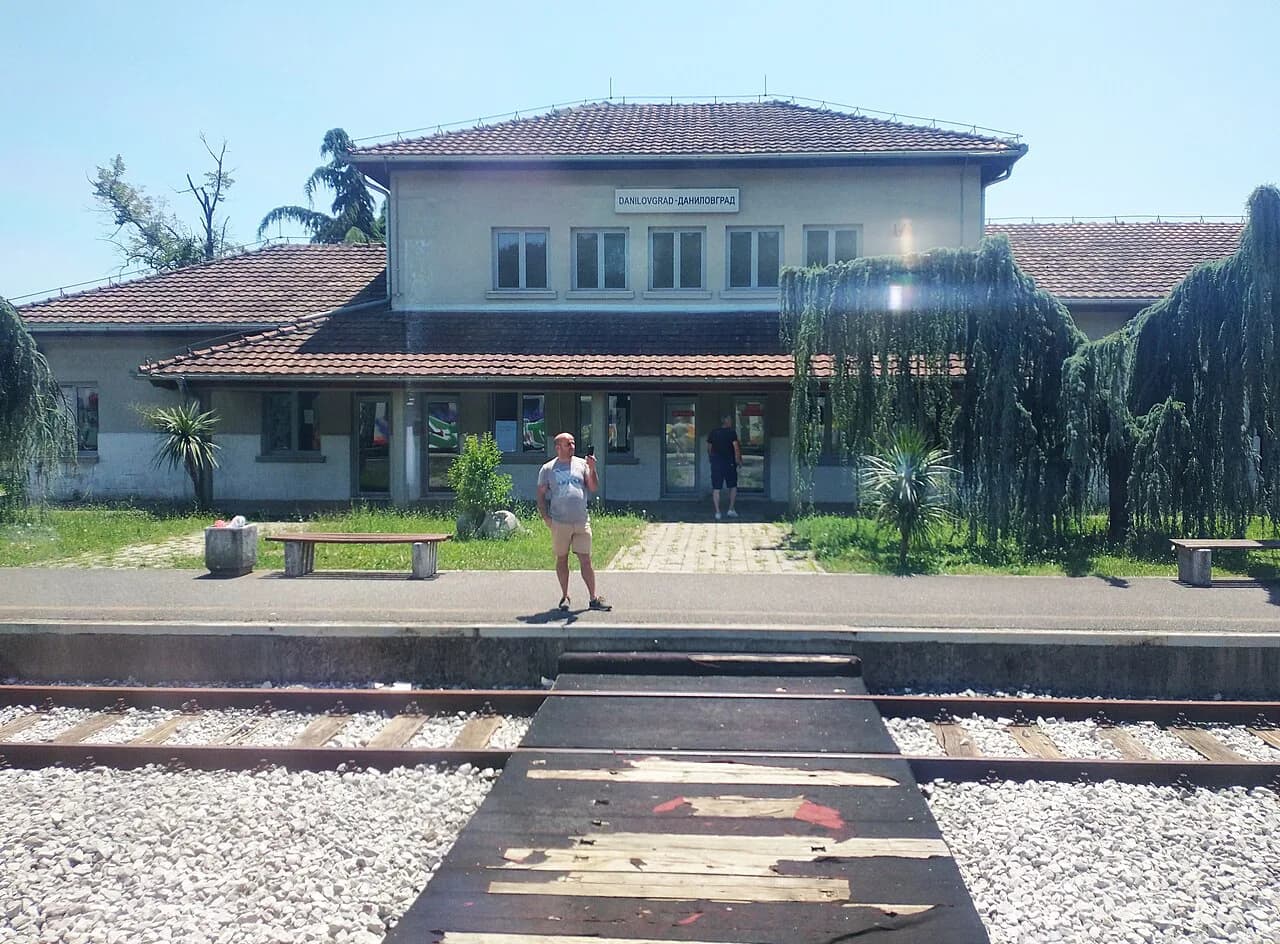
The railway route is the honest budget option, and it comes with a real cost in time: from Ostrog station the return walk to the monastery takes three to four hours, and with the visit itself you should budget around five hours. The trail is rocky and loose in sections, hot in summer, and passes the Lower Monastery about halfway up.
Trains to Ostrog are few each day, so the timetable decides your day rather than the other way round. From Kotor you travel via Podgorica to reach the line, and if you miss the return service the hike becomes a problem rather than an adventure. Check current departure times with the operator before committing, and take a taxi from the station if the walk is not for you.
An organised Ostrog Monastery tour removes the timetable risk entirely and often bundles in other stops on the same day. That is worth considering if you are based on the coast and have only one free day for the interior.
Tours from Kotor, Budva and Podgorica: what they add
Tours run from Podgorica, Kotor, Budva and even Dubrovnik, and the coastal departures tend to be long days that combine the monastery with scenery elsewhere. A Kotor departure, for example, may add Durmitor, the Tara canyon and photo stops along the coast before finishing at Ostrog. The trade-off is time in the cave church at the end of a tiring day.
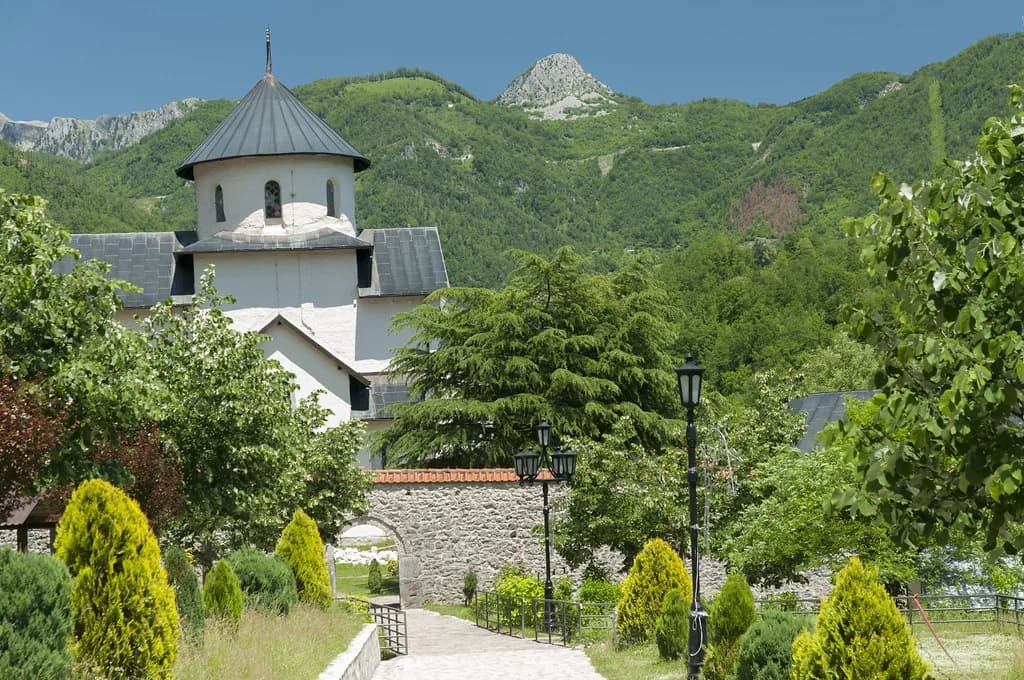
For the shortest transfer and the most time at the relics, a Podgorica or Nikšić base beats a coastal one. If your trip already includes the Morača canyon and its monastery, check whether a combined day makes better use of the drive.
Compare what each itinerary actually includes rather than the headline price, since a half-day from Podgorica and a full day from Kotor are different products. Our Ostrog Monastery tour breakdown sets out the options by departure point and what each one adds.
When to go: St Basil's Day crowds and summer heat on the footpath
Avoid 12 May, Saint Basil's feast day, unless attending the pilgrimage is the point of your trip. The monastery fills with pilgrims and the roads and courtyards become congested, which changes the visit completely.
Summer heat is the second planning factor, because the footpath between the complexes is exposed and steep enough to tire anyone. Walking up takes 30 to 40 minutes depending on pace and temperature, and doing it in the middle of a hot day is the version to avoid.
Early mornings are cooler and quieter, and they suit the drive up before the bends get busy. Build the day around the Upper Monastery, then add the lower complex if time and energy allow.
The footpath between the Upper and Lower Monastery
A woodland footpath connects the two complexes, and it is the route many pilgrims take, particularly those walking as part of a vow or a feast day observance. It is a legitimate alternative to driving the five kilometres of road, not a short cut.
Choose the footpath in the cool of the morning and the road by car at other times. The walk is steep, and the summer heat turns a 30 to 40 minute climb into something considerably less pleasant.
Staying overnight at the Lower Monastery
The Lower Monastery includes accommodation buildings, and staying overnight lets you reach the Upper Monastery early rather than driving up in the middle of the day. It also puts you among pilgrims rather than day visitors, which is a different experience of the site.
The Lower Monastery has accommodation buildings, and staying there puts you among pilgrims rather than day visitors, which is a different experience of the site. Treat it as guest accommodation attached to a working religious house rather than a hotel.
Should you drive, take the train or join a tour?
Drive if you want the Upper Monastery early and can handle a narrow, bendy climb; take the train only if you accept a three to four hour return walk and a timetable that limits your day; join a tour if you are coming from the coast with one free day.
Whichever route you choose, enter free, dress modestly, keep the cave church quiet and treat 12 May as a date to work around rather than a date to aim for. Pair the visit with Nikšić if you are staying inland, or with the Morača canyon if you are driving down towards Podgorica.
Explore more Nikšić guides
Frequently Asked Questions
Do you need tickets for Ostrog Monastery?
No. Entry is free. Visitors should still plan around the queues at the cave church holding Saint Basil's relics, which move slowly because each person approaches the tomb individually.
Why do people leave socks at Ostrog Monastery?
Pilgrims leave items as offerings or in thanks for prayers, and the practice sits within the monastery's religious life rather than a visitor custom. Treat any objects left at the site as devotional and do not handle or photograph them.
How long does it take to reach the Upper Monastery from Ostrog station?
The return walk from the station takes three to four hours, and with the visit itself you should budget around five hours. The trail is rocky and loose in sections and very hot in summer, so good shoes and plenty of water are essential.
Sources
Notes for your Montenegro trip
Optional updates to our Montenegro town guides.
You might also like
Continue reading
More guides you'll find useful