
Herceg Novi Clock Tower: The Old Town's Western Gate

The Herceg Novi Clock Tower is the old town's western gate, standing on Nikola Đurković Square where organised sightseeing walks usually begin. It is a waypoint rather than a destination in itself: you pass under it, look up at the clock faces and the stone base, then climb the steps behind it into the Upper Town. This guide covers where the tower stands, how to walk to it, what the sources record about its bell, clock and carved relief, and how to slot it into a short circuit of the old town.
What the Clock Tower is and where it stands
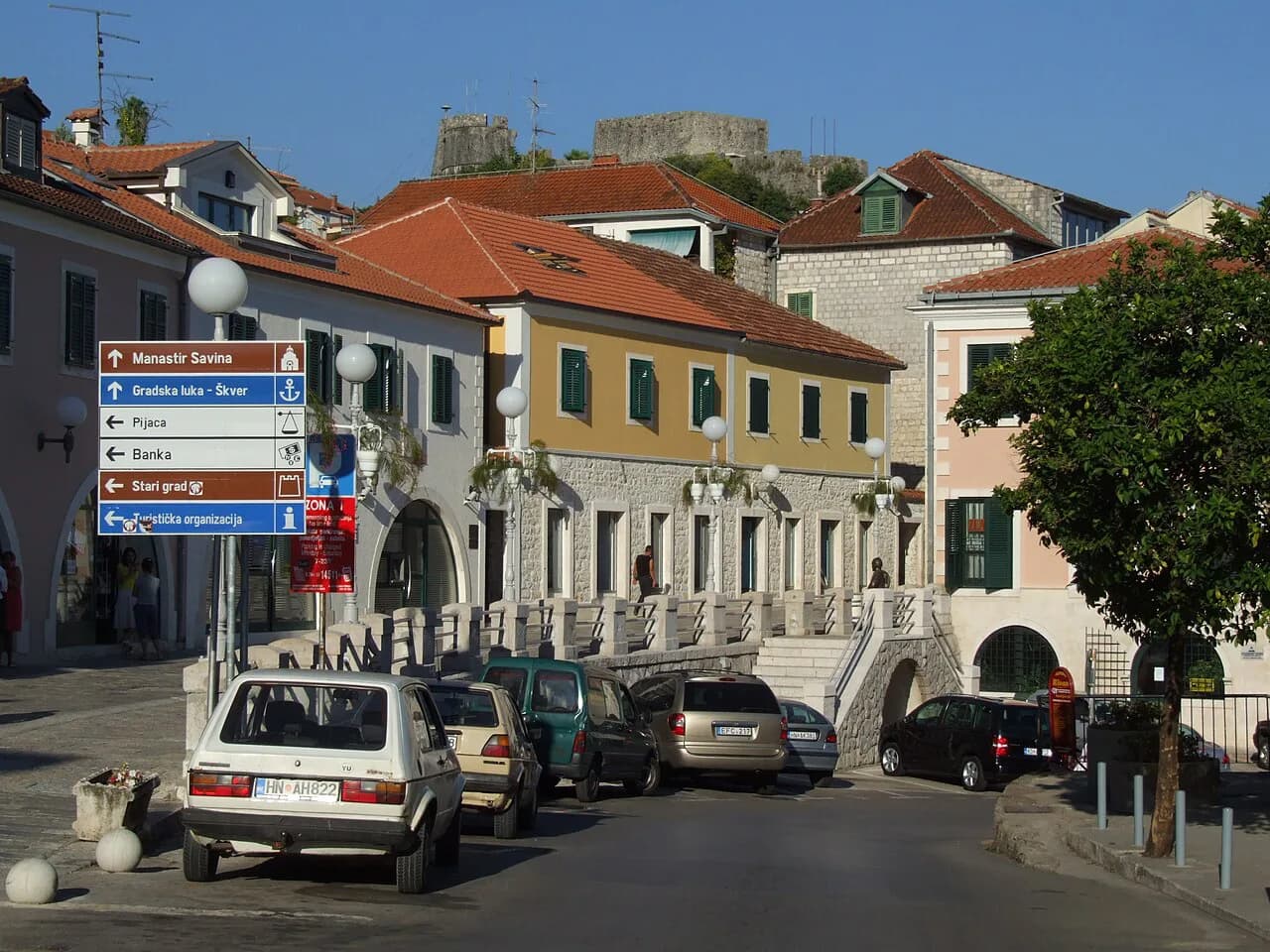
The tower sits at the western entrance to the old town, on Nikola Đurković Square, which was laid out over a canal that once ran to the sea. The municipality's account describes the present tower as built in 1850 with a clock in a pseudo-Roman style, on the site of an earlier Turkish-era clock tower also called Sahat Tower. The name Tora survives from the Venetian period and is still used locally, so Sahat Kula, Tora and the Clock Tower all point to the same structure.
A separate account dates a tower here to 1667 under Sultan Mahmud and links it to the daily prayer times shown by its mechanical clock. The two dates refer to different phases of building on the same spot, so treat the 1850 structure as the one you see and the earlier tower as its predecessor. The tower carries the city's heraldic sign, and its image appears on the town flag and on tourist souvenirs.

How to reach the tower and Nikola Đurković Square on foot
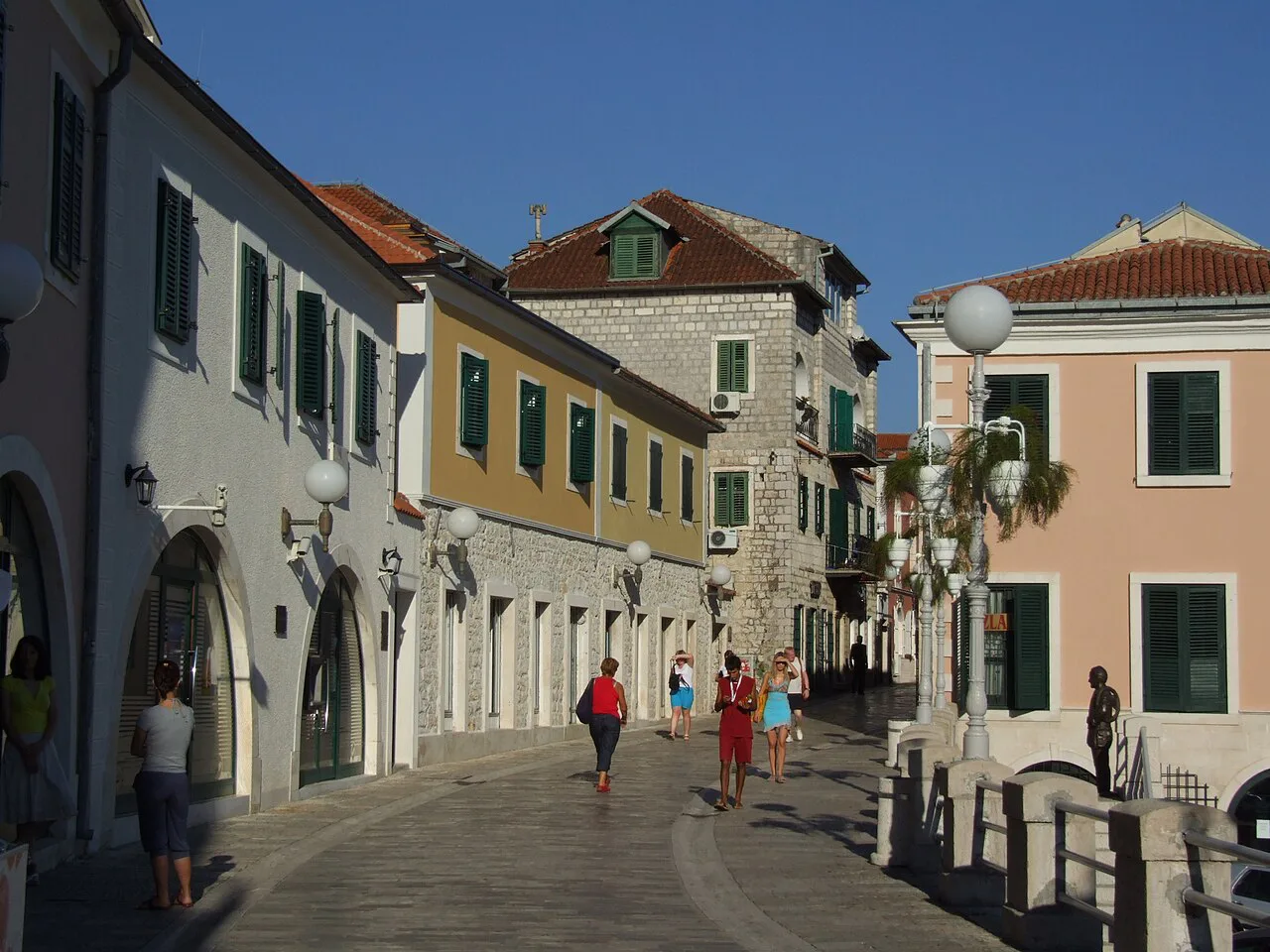
Walk straight along Njegoševa Street from the lower town and you arrive at Nikola Đurković Square, with the tower ahead of you. The old town is built on terraces and connected by flights of steps rather than continuous streets, so expect to climb on the approach and to carry bags rather than wheel them.
The square is the usual starting point for organised sightseeing tours of the old town, so you may find groups gathered at the gate in the morning.

The tower as the old town's western gate
In Turkish times this was the main door into the old town, with a wooden drawbridge over the canal where the stream met the sea. Old drawings and engravings show the bridge, and the canal was buried in the nineteenth century to create the square that now fronts the tower. The gate has kept its role as the entrance to the old town, which is why sightseeing tours tend to start here rather than deeper inside.
Passing under the arch is the practical way into the Upper Town: the stairs that run beneath the tower lead up to the Square of Herceg Stjepan, better known as Belavista. Treat the gate as the first step of the climb rather than a stop in itself. Read the tower from the square first, then walk through and up.
Inside and on the tower: the relief, the bell and the clock
Inside the tower is a relief carved from burnt wood, the Black Mother of God, dedicated to the town's founder, the Bosnian king Tvrtko I. A bell given to the townspeople by the Russian Empress Catherine II in 1753 survives in the tower. A mechanical clock faces several sides; the one in place today is an electric replacement fitted in 1995.
These details sit inside and above the gate, so they are not street-level features you will notice while walking past. The municipality notes that tourists can enter the tower as part of an organised visit and look out over the oldest part of town from the top. That is a guided arrangement rather than a door you can assume is open; ask in town on the day. The town does not publish a standing timetable for it.
Climbing the tower: the view over the oldest part of town
On an organised visit the reward is the view down over the tight core of the old town and across the rooftops towards the bay. The stairs inside are stone and narrow, with no lift or alternative route, so wear shoes with grip and take the descent slowly, particularly after rain.
If the tower interior is closed, the steps and the upper square still give a raised view over the gate and the surrounding lanes. Build the visit around the walk through the old town, with the tower as one point on it, rather than a single fixed stop. That way a locked door costs you nothing.
How long to allow and when to go
Give the tower and the square around it fifteen to twenty minutes, and half an hour if you join an organised visit inside. Adding the lane up to Belavista and the walk back down brings the whole gate-to-square circuit to under an hour. The tower is in the open, so the time of day matters more for light and heat than for access.
The old town is a cascade of steps, and summer afternoons make the climb harder work than the distance suggests. Go earlier in the day if you want the stairs to yourself, and carry water. Shade is patchy on the upper flights.
What is nearby: Belavista, Forte Mare and the rest of the old town
Above the tower, the stairs reach Belavista Square, formally Herceg Stjepan Square, where the Orthodox Church of St Archangel Michael stands with its stone iconostasis. Below and beside the gate, Forte Mare guards the seaward side above Škver, the main port. Both are within a few minutes of the tower and belong on the same walk.
Further round the old town, Kanli Kula sits high above the streets and is reached on foot through the lanes. Savina Monastery lies away from the gate, towards the edge of town, and makes a separate stop rather than part of the same short circuit. Pick two of these for a half-day and leave the rest for another visit.
Practical points: entrances, tickets and timings
The town has not published opening hours, ticket prices or entry rules for the tower, and none of the accounts here gives a charge. Check at the tourist information point in town or ask at your accommodation on the day before you plan an organised visit. Walking through the gate and up the steps costs nothing and needs no ticket.
The gate is open ground, so you can pass through it at any hour, but the inside of the tower depends on an organised visit being arranged. Plan the old-town circuit first and treat the interior as a bonus. That order keeps the day moving if the door is shut.
Is the tower worth the detour?
Yes, but as a gate and a viewpoint rather than a museum. Walk to Nikola Đurković Square, look up at the clock and the heraldic sign, pass under the arch and climb to Belavista, then carry on to Forte Mare or Kanli Kula. Budget twenty minutes at the tower itself and let the rest of the old town fill the morning.
Explore more Herceg Novi guides
Frequently Asked Questions
What is the Clock Tower in Herceg Novi famous for?
It is the old town's western gate and the image most associated with the town, appearing on its flag and souvenirs. Its clock faces are the feature visitors look for first, and the carved Black Mother of God relief inside is the detail worth knowing before you arrive.
Can you go inside the tower?
The municipality says tourists can enter the tower as part of an organised visit and look out over the oldest part of town from the top. There is no published standing timetable, so ask in town on the day and treat the interior as a bonus rather than the point of the visit.