
Savina Monastery, Herceg Novi: A Visitor's Guide

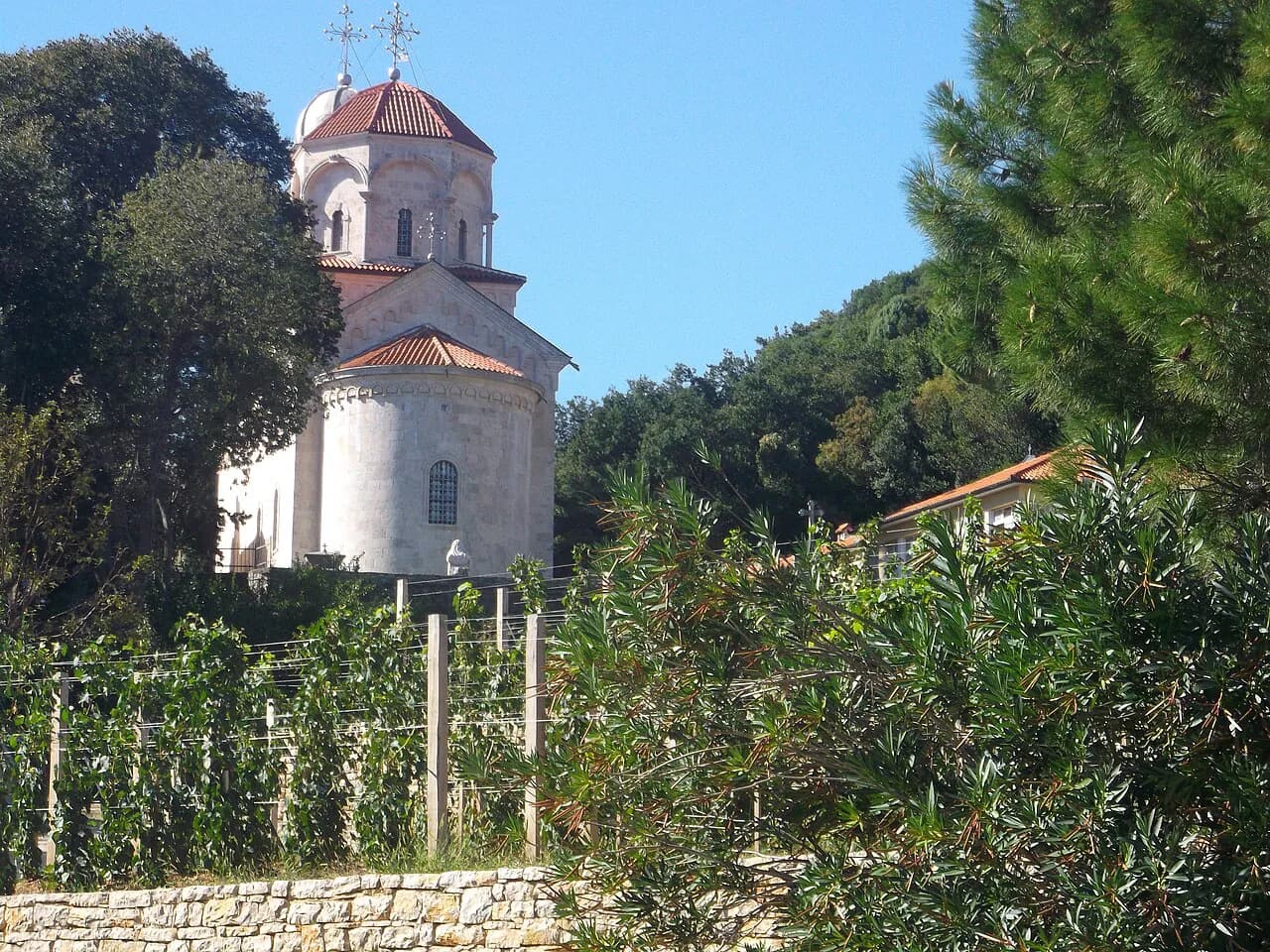
Savina Monastery is a working Orthodox monastery 2 km east of Herceg Novi, built around two Churches of the Assumption of the Mother of God, a residence holding a treasury, and a small Church of St Sava on the hill above. It is a place to give an hour or two, most of it indoors with the treasury and the Great Church, plus a short climb for the view back over the monastery and the bay. This guide covers where the complex sits, the two ways in from town, which building is which, and what is worth your time inside.
What Savina Monastery is and where it sits in Herceg Novi
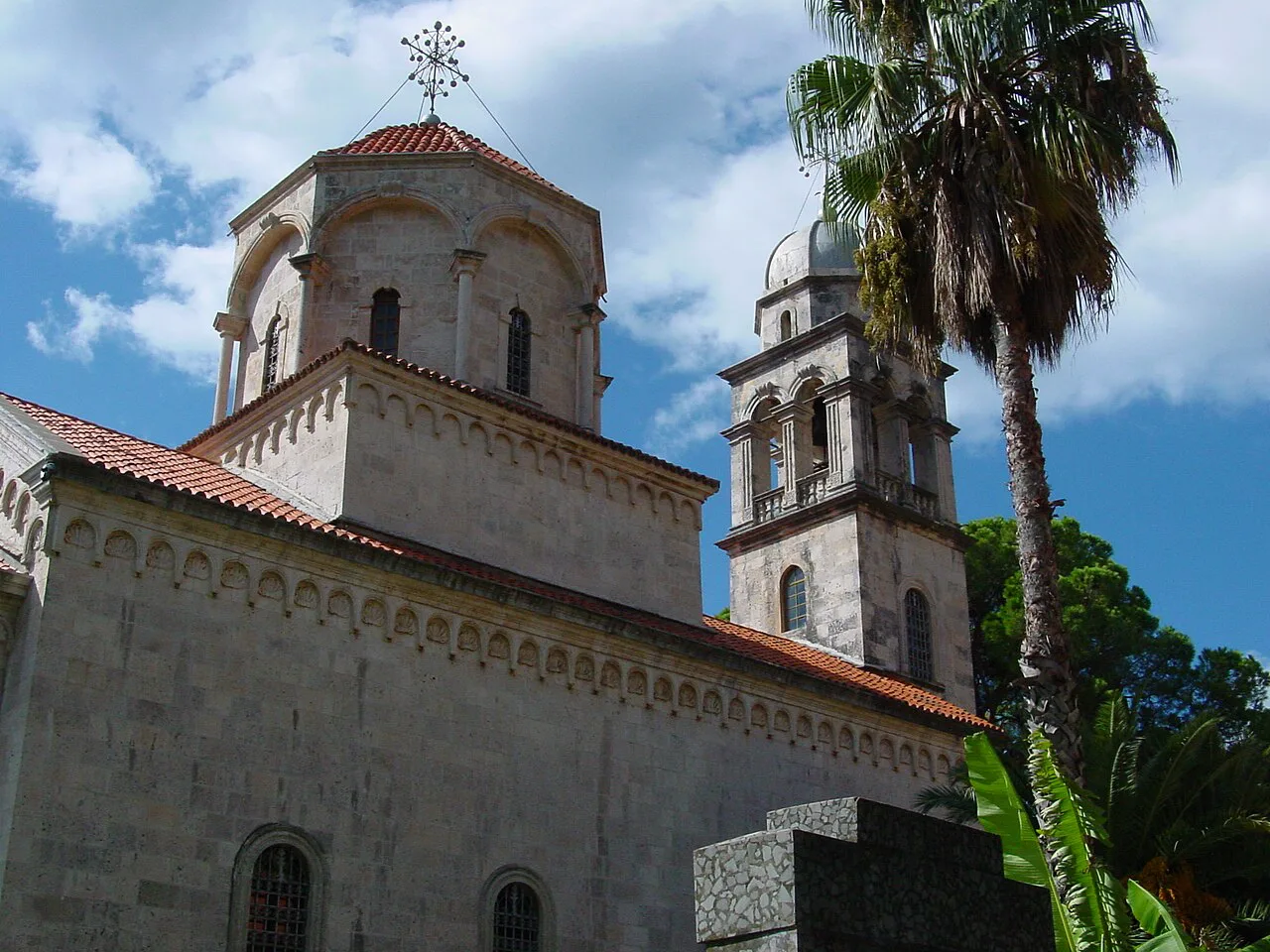
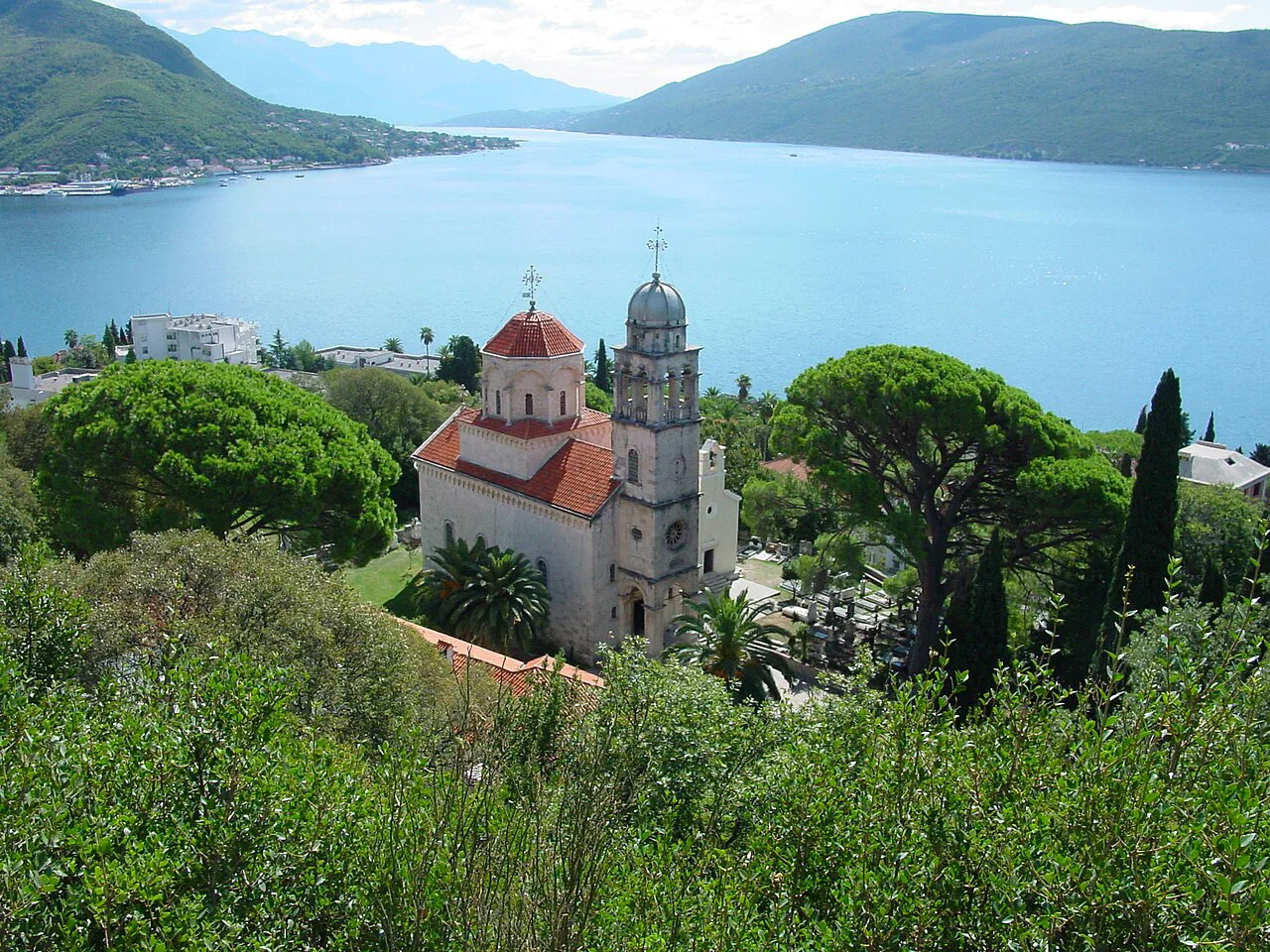
The monastery stands at Manastirska 21 in the Savina quarter, 2 km east of the town centre, in a pocket of Mediterranean vegetation between the main road and the water. The complex groups the Small and Great Churches of the Assumption, a monastery residence with a treasury and library, and the Church of St Sava on a hill just above. Because it sits outside the walled Old Town, it works best as a separate stop rather than something you pass through on a wander. The tourist office lists the address and phone number if you want to confirm access before setting out.

How to reach the monastery: on foot, by car or by taxi
On foot from the Old Town, a common route runs along Stjepana Sarenca and then Prve Bokeske Brigade to Manastirska street, with the monastery a short way beyond. By car, a listing gives about 7 minutes from the centre on the main E65 road, which suits anyone combining it with a drive further along the coast. The walk is along town streets and is realistic for most visitors already in Herceg Novi.
Taxis are the straightforward option if you are short of time or visiting in the heat of the day, and the driver will know Manastirska street by name. If you plan to continue to the winery beside the monastery, its own advice is to drive or take a taxi rather than walk, because the road up is very steep.

The three churches: which building you are standing in
The Small Church of the Assumption is the older of the two main buildings. An inscription above the inner door gives 1030 as its year of creation, though the surviving fresco layers point stylistically to the middle of the 15th century, with later painting from 1565 and 1831 over the top. Read that date as tradition rather than record: the fabric of the building tells a more complicated story than the inscription does.
The Great Church of the Assumption was built between 1777 and 1799 by the Korčula master Nikola Foretić, and its architecture mixes Byzantine, Romano-Greek and Baroque elements. It had no single patron: the tourist office records that the people themselves funded it, with family obituaries preserved in the church as evidence.
The Church of St Sava is separate, standing on the hill above the lodgings, single-nave and small at about 9.5 m by 6 m, with a bell tower on the pediment. Tradition credits St Sava with building it in the 13th century, and the monastery takes its name from him. It is not a room in the main complex, so leave time to walk up to it.
What to look for inside the Great Church
The iconostasis in the Great Church was made in 1795 by the icon painter Simeon Lazović of Bijelo Polje with his son Alexei, combining traditional iconography with Baroque forms. Look for the royal doors known as the tvrdoške and the great Crucifix above them, made in 1703 by Dimitrije Daskal, with the temple icon of the Assumption by his son Rafail.
The Great Church also holds a small icon of the Mother of God given by the Russian Empress Catherine the Great. In the Small Church, the multiple fresco layers are the thing to slow down for, since three different periods of painting sit one over another on the same walls.
The treasury and library: which exhibits are worth your time
The monastery treasury is the reason to give Savina more than a quick look. Its exhibits include the crystal cross of St Sava from the 13th century, the ark of the Tvrdoš Monastery from 1615, a shroud from 1642, a silver pentagon from 1648 and a chalice from 1650, alongside a Gospel from 1685 and a portrait of Peter the Great.
The library holds a large collection of books and documents, and the treasury keeps the building permit for the Great Church dating from 1776. The icon known as the Mother of God of Savina is credited by pious people of different faiths with saving the monastery from a Venetian captain who intended to blow it up.
The walk up to the Church of St Sava and the view
The climb to St Sava is short but worth doing as its own stop rather than an afterthought. The church stands on a hill above the lodgings, with a small port and cemetery around it, and the outlook from there takes in the monastery roofs and the bay, reaching as far as Lovćen on a clear day. Allow time at the top; the walk up is separate from the main complex, so build it into your visit rather than rushing it.
How much time to allow and when to go
An hour covers the two Churches of the Assumption and the treasury; two hours lets you add the climb to St Sava and sit with the view. One listing gives visitor hours as sunrise to sunset, with services in the early morning and early evening and the Holy liturgy on Saturday and Sunday mornings, so visits fit around worship rather than the other way round.
Go early in the day if you want quiet, and remember that a working monastery is not a museum: services take priority over sightseeing. Ask at the residence or check with the tourist office about any entry arrangements before you budget for a visit.
Dress and behaviour on monastery ground
Savina is an active Orthodox monastery, so dress modestly — shoulders and knees covered, no beachwear — and keep voices low in the churches. Do not photograph worshippers or the altar during liturgy. If you are unsure whether photography is allowed in a particular building, or what to wear, ask the monk or caretaker at the residence rather than assuming.
Nearby: the winery by the gate and Herceg Novi's sights
Castel Savina, a small winery, sits beside the monastery on the Savina hillside, with two hectares of vines and a cellar producing a limited number of bottles a year. It welcomes visitors by reservation only, with a guided tour of vineyard and cellar followed by a tasting; book ahead through its own site rather than turning up, and note that tasting prices and tour lengths are not published there.
Back in town, the Old Town's sights make a natural second half of the day: Belavista square is the open space at the heart of the walled centre, and Forte Mare Herceg Novi guards the waterfront below it. Kanli Kula and Španjola Fortress sit higher up the slope if you have the legs for them after the monastery, and the Herceg Novi attractions guide sets out the rest of the named stops so you can plan the walk back from Savina.
Should Savina be on your Herceg Novi list?
Yes, if you want one stop in Herceg Novi that is about something other than the walls and the waterfront. Give it two hours, walk from the Old Town if the weather is kind, and climb to St Sava last so the view is the note you leave on. Skip it only if your time in town is a single afternoon and the fortresses are already filling it.