
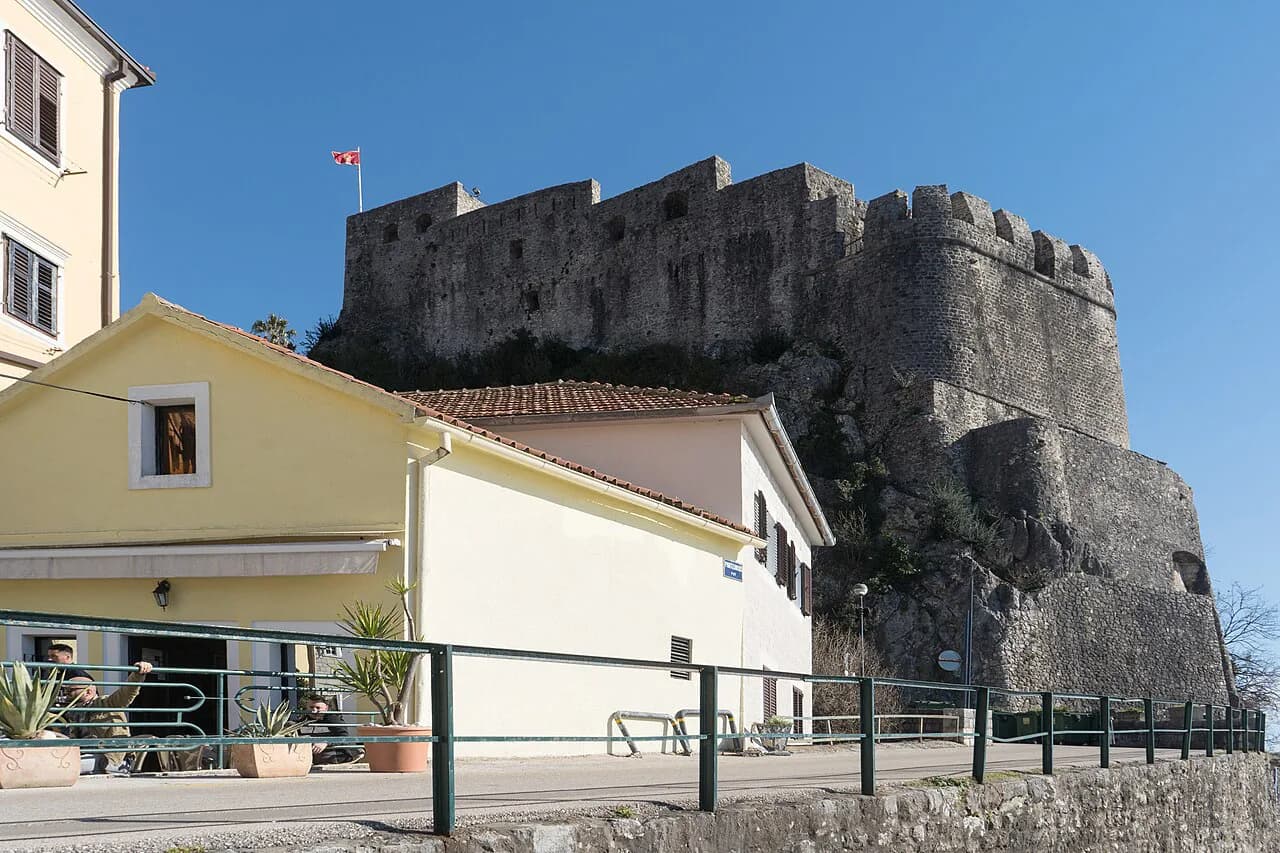
Forte Mare (Sea Fortress), Herceg Novi: What to See and How Long to Allow

Forte Mare is best treated as a short, rewarding stop of about 30 to 45 minutes rather than a museum visit. It is the sea fortress at the entrance to Herceg Novi's old town, built into the coast above the promenade, and there are no fixed exhibits inside to slow you down. This guide covers where it sits, how to walk to it from the old town and seafront, what to look for in the walls, and how to plan around its use as a summer stage. For the wider set of sights in town, see the Herceg Novi attractions guide.
What Forte Mare is and where it sits
The name translates as Sea Fortress, which describes its job exactly: it sits on the coast and guards the town's entrance from the sea. It is built on stone above the promenade, with walls running down to the shore and the old town rising behind. Because it is part of the seafront rather than a detached monument, you can see a good deal of it from outside before you commit to climbing anything.
The address is given simply as Forte Mare, Herceg Novi 85340, and contact details for the site are listed by the town's Herceg Fest cultural body, JUK Herceg Fest. That matters more than it sounds: it is a working venue as well as a monument, so the information you need before visiting is best confirmed through the operator rather than guessed from the gates.
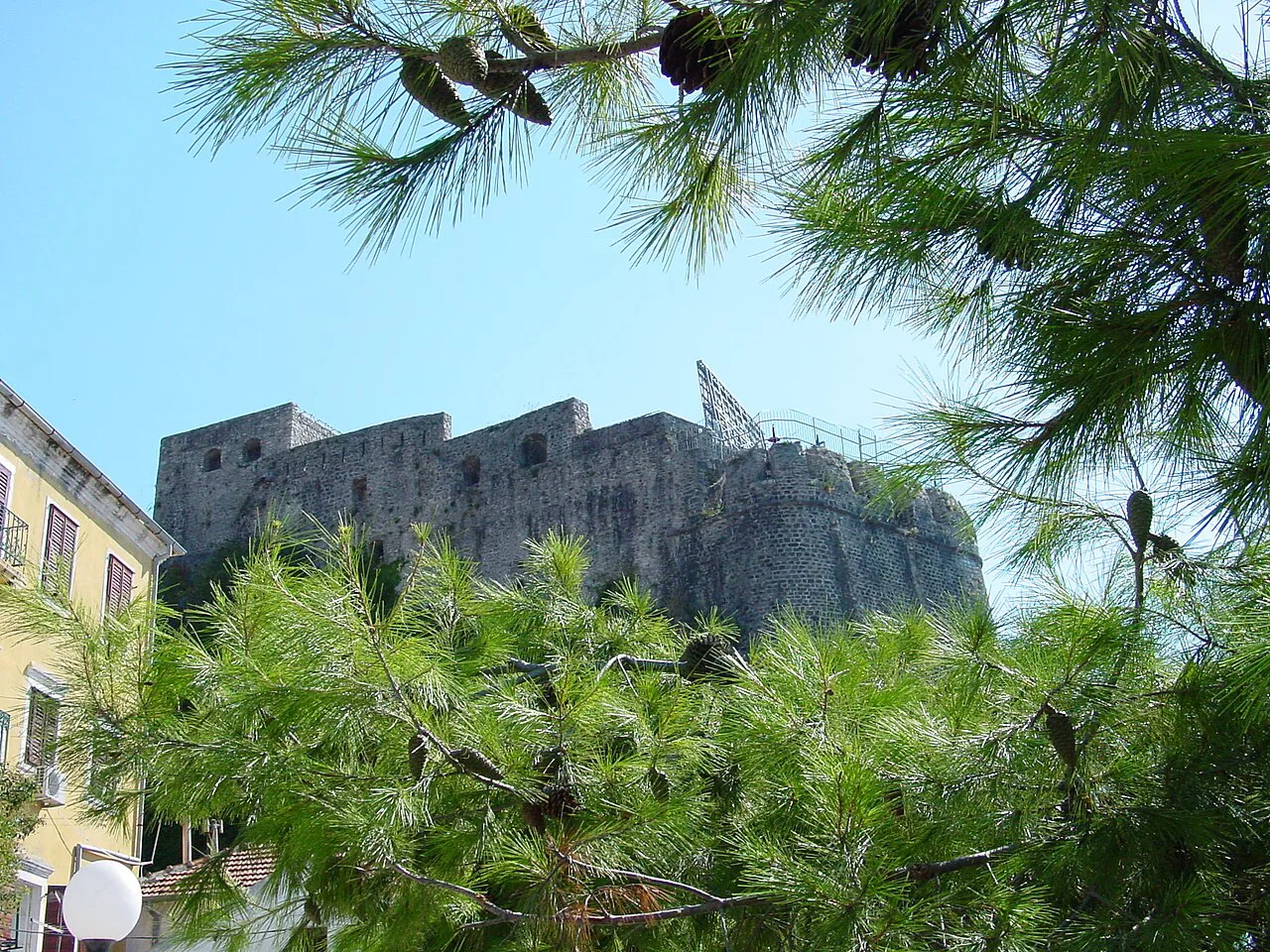

How to walk there from the old town and the seafront
Approach from the seafront promenade, Šetalište Pet Danica, where the fortress rises directly above the water, or from the old town lanes behind it. The two routes meet at the fortress: a passage inside its walls leads from the shore to the top, so you gain height without leaving the fortification. Wear shoes with grip, since you are walking on stone steps and historic surfaces rather than a paved path.
If you are coming from further along the bay, the walk through the old town is straightforward and short by landmark, but it involves steps and slopes. Anyone with limited mobility should scout the seafront approach first, as the passage up through the walls is the main way to the top. There is no need to plan a taxi for a site this central.
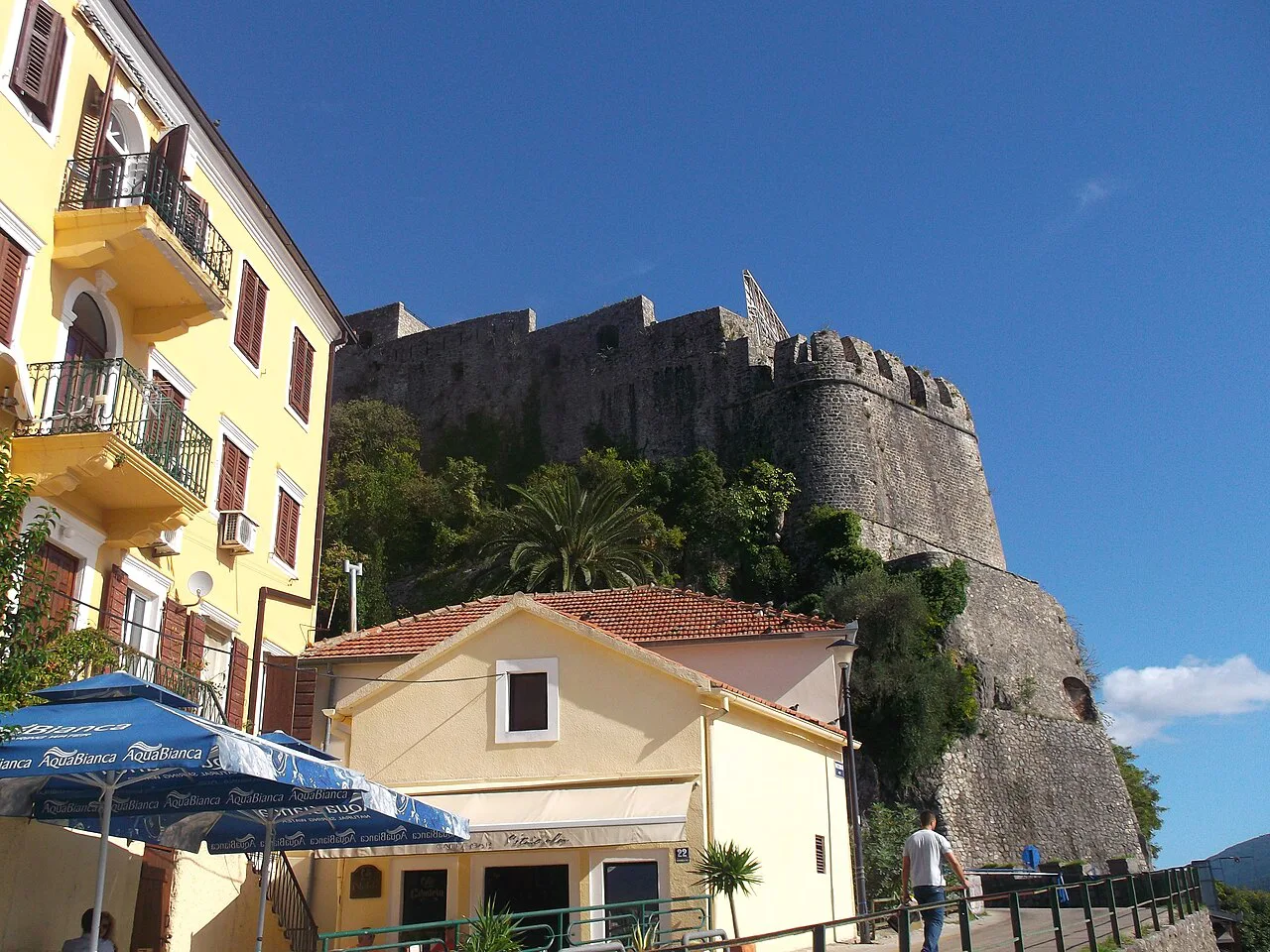

The Sea Gate and the passage through the walls
On the upper side you reach the Sea Gate, which keeps elements of fortification from the Bosnian period and is a fine piece of defensive architecture in its own right. Treat the gate as part of Forte Mare rather than as a separate old-town sight: it sits within the fortress's outer structure and is your route between levels. Most visitors photograph it and pass through without registering that they are walking through the medieval core of the town.
What survives from each building phase
The fortress was built between the 14th and 17th centuries, and the town's founding is linked to Tvrtko I Kotromanić in 1382. The only remnant of that earliest period you can pick out is a small piece of wall on the southeast side, plus a narrow staircase on the east side. Look for that fragment first; the rest of the walls are later work and reading them as one build is misleading.
The Turkish phase gave the fortress its present size and shape, and from that period come the cannons crowned with defensive crenellations. The Venetians, who took over the site in the 17th century, are the source of the name Forte Mare, while the Austro-Hungarians gave the fortress its current appearance with improvements to the upper section. Knowing these four phases turns a wall of stone into something readable.
The upper terrace and the view
From the top you look over the entrance to the Bay of Kotor, the town port, Igalo and the old town roofs. It is a compact terrace rather than a long rampart walk, so the view is quick to enjoy and easy to combine with a stroll along the promenade. Come in the morning or late afternoon for lower light and cooler stone underfoot.
The spring and Šantić's marble slab
At the foot of the fortress there is a spring, which the Holy League forces drained in 1687 during the siege of the town. Just above it, engraved on a marble slab, are verses dedicated to the Bay of Kotor by the poet Aleksa Šantić. It is one of the details most visitors walk past on the way up, so look for it on your way in rather than on the way down.
The summer stage and open-air cinema
The fortress was adapted into a summer stage in 1952 and has hosted film screenings as an open-air cinema for more than six decades. That means an evening visit may coincide with a performance or a screening rather than a quiet terrace, and parts of the site can be given over to an audience. Check the operator's programme before planning an evening, and if you want the fortress to yourself, go earlier in the day.
How long to allow and when to go
Allow 30 to 45 minutes for the fortress itself: the climb, the upper terrace, the Sea Gate and the spring. Add time if you plan to sit on the terrace or catch a performance. There are no fixed exhibits, so the pace is yours.
Midday summer heat makes the stone hot and the climb less pleasant, so aim for morning or late afternoon. Carry water, as the spring at the foot of the fortress is a historic feature rather than a drinking supply you should rely on.
Nearby sights within a short walk
Španjola fortress sits higher up the hill behind the old town and makes a natural second stop if you want another set of walls. The Belavista square is the open space to aim for when you come back down into the old town for a coffee. Together they fill a half-day without leaving the centre. For more of the town's sights with practical detail, see the Herceg Novi attractions guide.
Also in the old town, Kanli Kula is another fortress with its own character and is easily slotted in after Forte Mare. If you want to see more of the town's sights in one go, the Herceg Novi Attractions guides cover the main ones with practical detail.
Opening hours and tickets
The operator has not published fixed opening hours or ticket prices for Forte Mare, so confirm both with JUK Herceg Fest before you go. The fortress is used as an event venue, which can affect access on performance evenings. Telephone +382 31 323 072 or check the operator's page for current details.
Is Forte Mare worth the climb?
Yes, if you treat it as a 30-to-45-minute stop with a view and a set of readable walls, not a museum. Go in the morning or late afternoon, look for the southeast wall fragment, the Turkish cannons and Šantić's slab, then walk down to the promenade. Confirm any event or access restriction with the operator first if you are visiting in the evening.
Explore more Herceg Novi guides
Frequently Asked Questions
Is Forte Mare free to enter?
No ticket price is published for Forte Mare. Confirm entry terms and any charge with JUK Herceg Fest, the town's cultural body that runs the site, before you go.
Can you visit Forte Mare in the evening?
The fortress is used as a summer stage and open-air cinema, so evening access can depend on whether a performance or screening is on. Check the operator's programme for the date you plan to visit.
Is Forte Mare the same as the Sea Fortress?
Yes. Forte Mare translates as Sea Fortress, and the two names refer to the same fortification above the promenade at the sea entrance to the old town.