
Barno jezero (Barno Lake), Durmitor: What to Expect
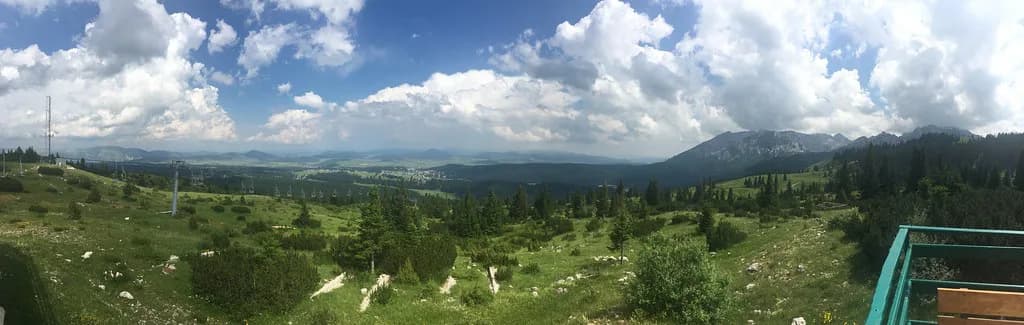
Barno jezero is not really a lake you stand beside so much as a boggy bowl you look into: a peat-floored depression at roughly 1,489 m in the Žabljak municipality, inside Durmitor National Park, with a maximum depth of about one metre. It works best as the final stop on the Crno jezero – Zminje jezero – Barno jezero walk, a few minutes on foot beyond Zminje. This guide covers where the lake sits among the Zabljak Attractions, how you reach it, what the ground and water are like, and how to fit it into a half-day.
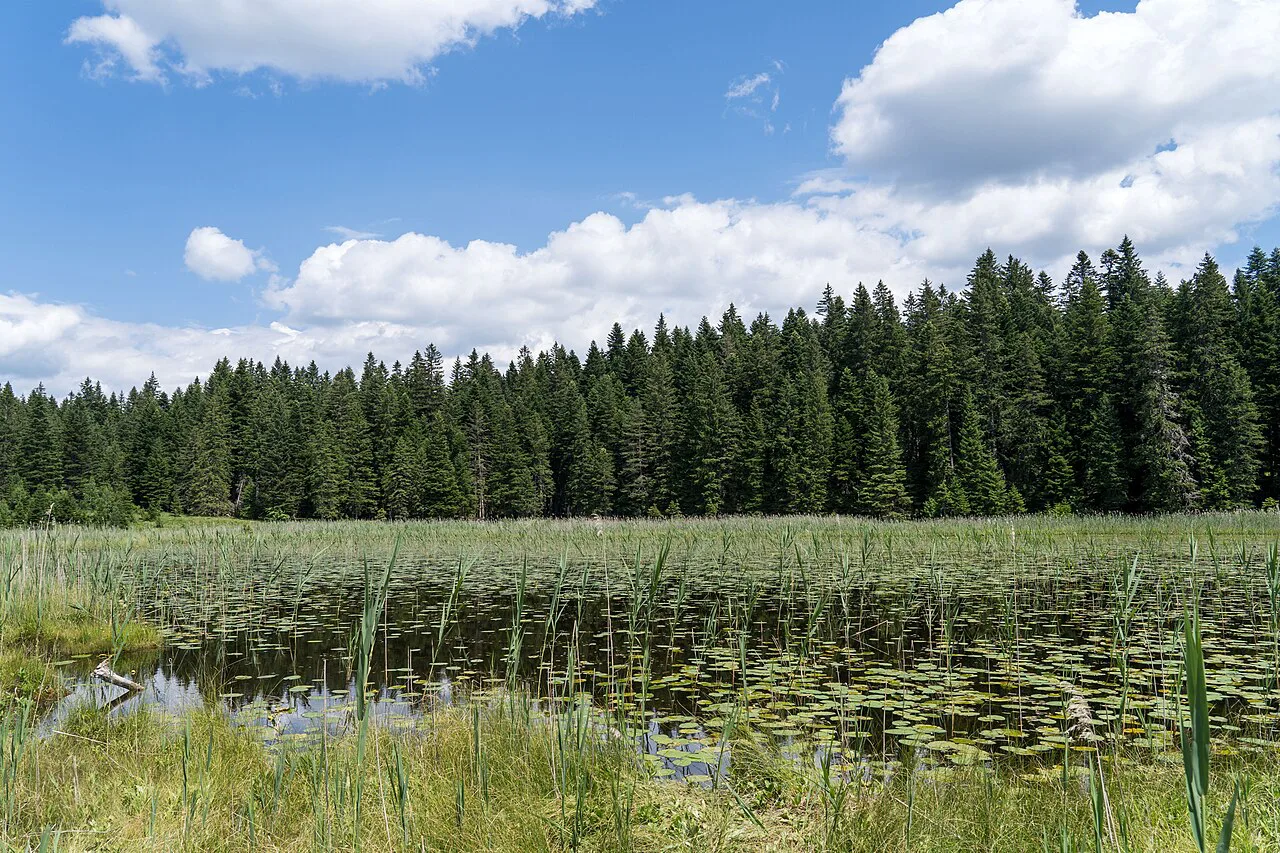
Plan around three facts. The water is dark from tannin and stained by peat, surrounded by reed, sedge and conifer forest. In high summer the open surface shrinks under dense marsh vegetation and can almost vanish. And there is no conventional shore, so it is not a place for swimming or spreading out a picnic.
Where Barno jezero sits in Durmitor
The lake lies in a marshy peat hollow ringed by conifers in the Žabljak municipality, within Durmitor National Park, at an altitude of about 1,489 m. That is slightly higher than Žabljak itself, which the local tourist board places at 1,450 m. It is the third and furthest stop in the classical three-lakes sequence: Crno jezero first, then Zminje jezero, then Barno.
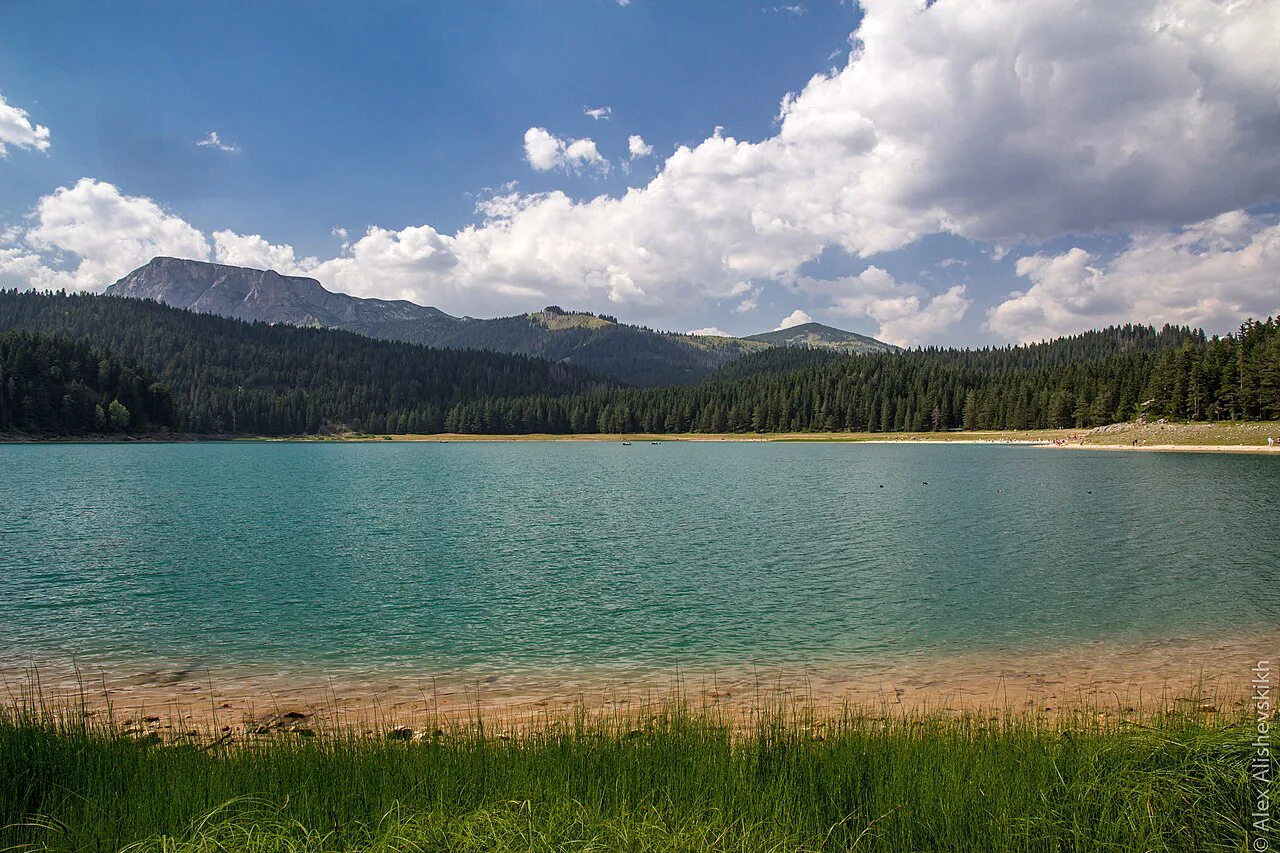
That order matters when you are planning. Crno jezero, usually called Black Lake in English, has the restaurant, rest area and boat ramp; Zminje is the quiet forest lake; Barno is the marshy edge beyond it. Treating Barno as the endpoint rather than a standalone trip saves you a separate journey and puts the most rewarding water first.

How to reach Barno jezero
On foot, you arrive from Zminje jezero: the connecting path takes a few minutes and crosses into the boggy hollow, which is why the two are usually described together. The wider three-lakes circuit from Black Lake runs roughly 10 km on the account given for Barno; the guided version logs 17 km round trip. Either way, you finish at the marsh and loop back through forest towards Žabljak.
If you would rather walk with a guide, Žabljak Mountain Guides run a three-lakes tour that starts at the boat ramp at Black Lake, with parking nearby and a free transfer offered from Žabljak. The price is €80 for one or two people plus €20 for each additional person, it lasts about five hours over 17 km, needs a minimum of four people and a minimum age of seven, and includes the national park entrance fee. Arrive 15 minutes before departure.
Cyclists can reach the same area on the Žabljak tourist board's marked circular route of 11.5 km, which links Zminje, Barno and Crno lakes on asphalt and gravel and is rated easy to moderate for mountain, gravel or trekking bikes. That season panel runs May to October and describes the route only, so it tells you nothing about park access or lake conditions outside those months.

What you actually see
Expect a small, dark pool rather than a bright mirror. The water carries a tea-brown colour from peat and tannin, and the basin is filled with reed, sedge and slow transitions between water and vegetation. Around it stand dark conifers and open marsh flora, with unusual fungi reported in the surrounding pine woods.
The contrast with its neighbours is the point. Zminje shows green water in deep forest and Crno, up on the plateau, shows deep blue; Barno is the muted, half-hidden one in between. Photographers do best in soft light, and the marsh is worth a few quiet minutes rather than a long stop.
Local tradition holds that the water has healing properties, particularly for skin complaints. That is folklore attached to the place, not medicine, and it is worth recording as a story rather than a reason to drink or bathe in a bog.
What the ground is like underfoot
The approach is often muddy after rain, and sturdy footwear is the sensible choice. There is no proper bank to stand on: you are walking to the edge of peat and reed, so the ground gives way in wet weather and the path itself can be slick.
This is the practical decision point on the walk. If you have only trainers and it has rained, enjoy Zminje and turn back; if you have boots, the few extra minutes to Barno are easy. Keep to the existing line through the marsh rather than pushing into the vegetation, which is fragile and hides wet holes.
How long to allow
Barno itself takes minutes, not hours. Count a few minutes from Zminje, a short pause for photographs, and the walk back out. The honest unit of time here is the half-day given to the whole three-lakes walk rather than a visit to Barno alone.
For scale, the guided tour allows about five hours for 17 km including all three lakes, while the local description of the unguided three-lakes walk puts it at roughly 10 km. The cycling version is 11.5 km. Pick the figure that matches your transport and fitness, and build in time at Crno jezero, where the facilities are.
When to come
Early summer is the window for seeing open water. The peat lake measures about a metre at its deepest, and by high summer the open surface contracts and may almost disappear beneath marsh growth. Come before the vegetation closes over it.
The cycling route is described for May to October, which is a fair guide to when the forest tracks around the lakes are at their most usable. Before relying on access, facilities or conditions at the lake, confirm current details with the national park.
What not to plan for
Do not come to swim. The lake is shallow marsh, not a bathing spot, and the sources describe quiet observation, photography and botany rather than swimming. There is no conventional shore for a picnic either, so eat at Crno jezero where there is a restaurant and rest area.
Do not treat it as a standalone day out. Barno rewards people already walking the three-lakes route; on its own it is a brief stop reached by a muddy path. Build the day around the water you can actually sit beside.
Nearby after Barno jezero
Retrace your steps to Zminje jezero for the forest and the greener water, then carry on to Black Lake for the boat ramp, parking and restaurant. Savin Kuk sits roughly 8 km away and is the other landmark in the immediate area if you are extending the day by car.
Drivers with more time can look at Sedlo Pass (Prevoj Sedlo) across the Durmitor plateau, or the Sušica canyon and the smaller lakes of the Jezerska visoravan. All of these need a vehicle and a separate half-day; none is a walk-on addition to the three-lakes circuit.
Should Barno jezero be on your walk?
Yes, if you are already walking from Crno jezero via Zminje jezero and you have boots on. It costs a few extra minutes, shows a different kind of Durmitor water, and gives the circuit a natural end. No, if it has rained hard and you are in trainers, or if you were hoping for a lakeside swim and a picnic.
Sort the logistics first: decide between the self-guided walk and the guided tour from the Black Lake boat ramp, check the entrance fee is covered if you book, and start early enough to finish the loop in daylight. Then the lake itself asks nothing more of you than a short, quiet look.
Explore more Zabljak guides
Frequently Asked Questions
How deep is Barno jezero?
About one metre at its deepest. It is a shallow peat-bog lake, and in high summer the open water shrinks under dense marsh vegetation and can almost disappear.
Can you swim in Barno jezero?
No. It is a shallow marsh with no conventional shore, best suited to quiet observation and photography. Use Crno jezero for facilities and somewhere to sit.
Do you need a guide to reach Barno jezero?
Not necessarily. The lake is a few minutes on foot from Zminje jezero on the three-lakes walk. A guided three-lakes tour is available from the boat ramp at Black Lake if you prefer one.