
Vražje jezero: a visitor's guide to Devil's Lake near Žabljak
Vražje jezero, usually translated as Devil's Lake, is a glacial lake on the Jezerska plateau about 12 kilometres southwest of Žabljak along the old road towards Nikšić, sitting at roughly 1,411 metres. It is a short drive-and-stop destination rather than a half-day outing: open pastures, deep blue water and a quiet shore.
This guide covers where the lake sits, how to reach it by car, what you actually find when you arrive, the fishing rules, the medieval tombstones nearby and how to pair it with Riblje jezero.
Where Vražje jezero sits on the Jezerska plateau
The lake lies on the Jezerska plateau inside Durmitor National Park, at an altitude of around 1,411 metres, on the old Nikšić road southwest of town. Žabljak's tourist organisation puts it about 12 kilometres from Žabljak; a Durmitor information site describes it as appearing at the ninth kilometre of the Nikšić road, visible from higher ground.
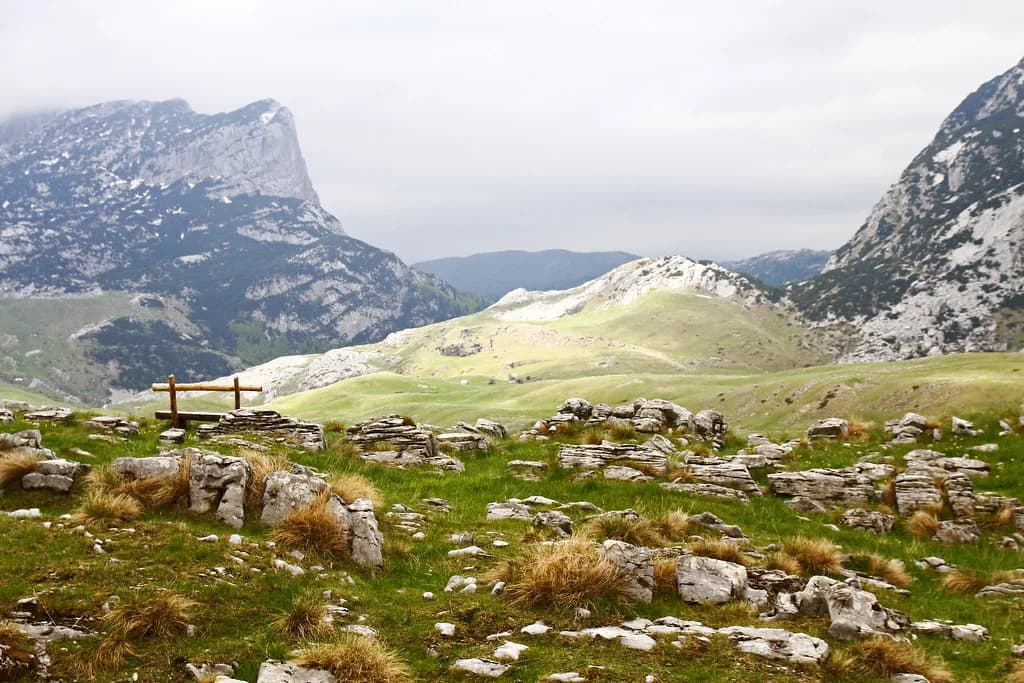
Depth is reported as up to 11 metres by the tourist organisation and as 10.6 metres by the Durmitor site. Its setting is the point: gentle pastures and open mountain landscape instead of the dense forest that hides many of Durmitor's other lakes.

Getting there by car from Žabljak
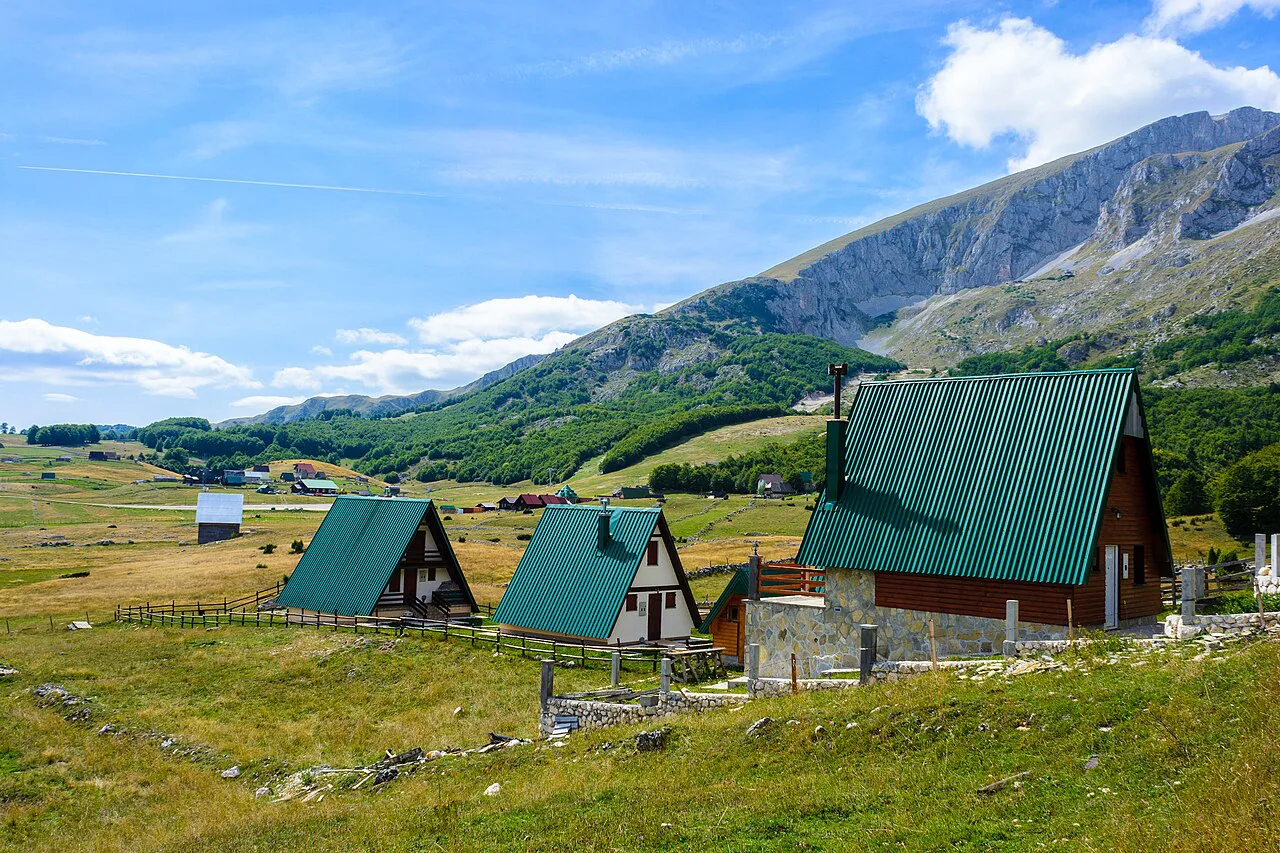
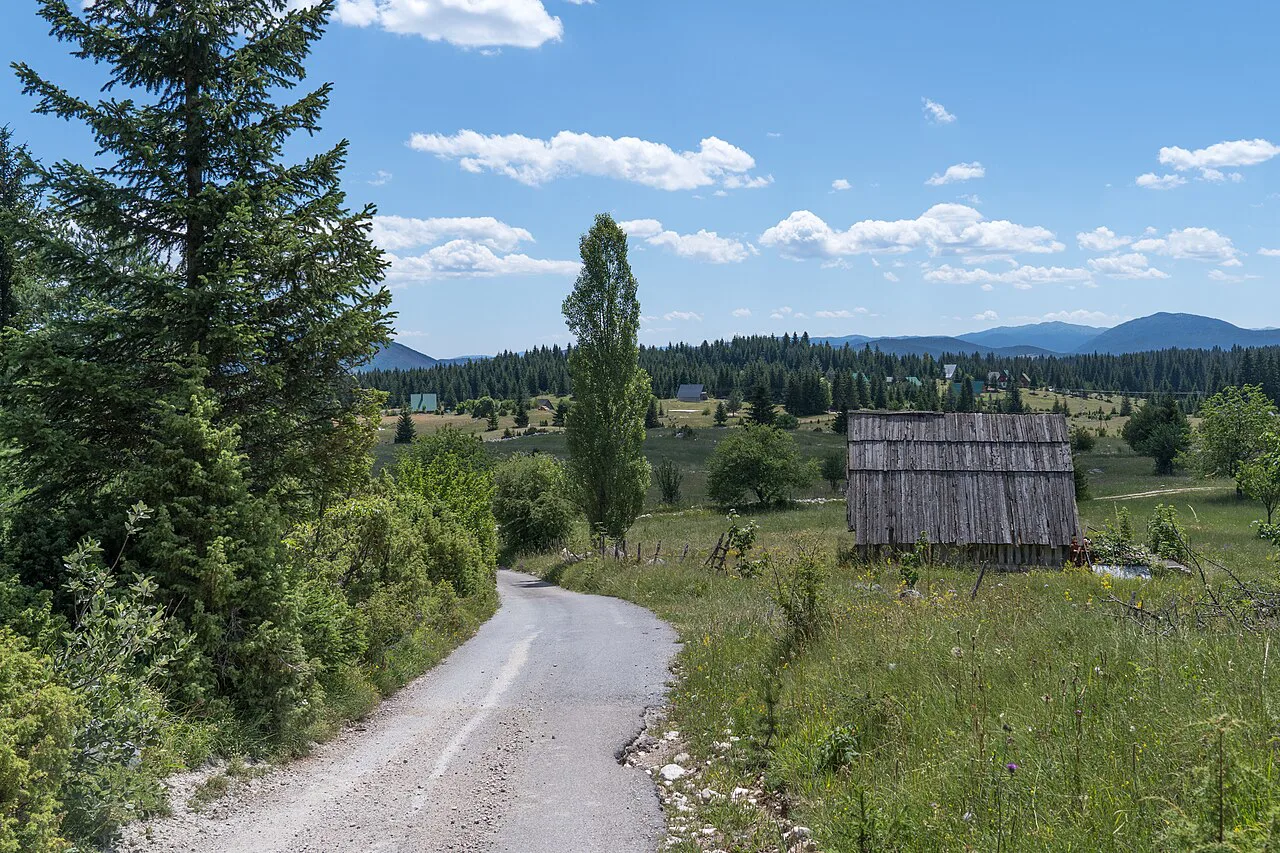
Drive out of Žabljak on the old Nikšić road and watch the higher ground; the lake's circular shape and blue surface show up clearly before you reach it. The lake is reached directly from the road, and the visit is a matter of parking beside it and walking down to the shore.
You will pass official Durmitor National Park checkpoints near Crno jezero and other entry points in the wider park area, where the daily park entrance fee is paid. Confirm the current charge and whether your route crosses a checkpoint when you arrive.
If you are basing yourself in town first, the broader Žabljak attractions guide covers the other sights within easy reach and helps you slot the lake into a day. For a wider picture of the town itself, there is a separate guide to Žabljak.

What the lake looks like
Vražje jezero is circular and unusually open, with deep blue water ringed by pasture rather than trees, which is what distinguishes it from Durmitor's forested lakes. The tourist organisation notes that the round shape is especially striking seen from above, which is one reason tandem paragliding flights over the plateau use it as a landmark.
The lack of tree cover leaves the shore exposed, and the plateau sits above 1,400 metres, so bring a layer even in high summer.
Swimming and picnics on the open shore
People swim at Vražje jezero in summer, and it is the more popular of the two neighbouring lakes for a dip, with the open shoreline making access straightforward. There are no lifeguards, changing facilities or marked swimming areas mentioned for the lake, so treat it as wild swimming and judge conditions yourself on the day.
The flat pasture beside the water takes a picnic blanket well, and the absence of development keeps the setting quiet. Carry out everything you bring, as there are no facilities at the lake.
Fishing with a ranger permit
Recreational fishing is allowed under Durmitor National Park regulations, generally between May and October, and requires a daily permit obtained from park rangers. Anglers may use one rod and artificial lures only, and the catch is typically trout, Arctic char and grayling; catch-and-release is recommended.
Ask a ranger for the current permit charge before you set up. The May–October window is the cited fishing season, not a guarantee that every day in it is fishable.
The stećci necropolises near the lake
Two necropolises with stećci, the medieval tombstones found across this part of south-east Europe, stand close to the lake. They form part of the transnational UNESCO World Heritage property inscribed in 2016, so the cultural stop comes with the same visit rather than requiring a separate trip.
Look for carved slabs set in the grass on the approach rather than expecting a museum or signage trail. Keep to the paths so the ground around the stones stays intact.
Walking, cycling and paragliding over the plateau
The open terrain around the lake suits flat walking and picnics, and the lake sits on cycling routes linking Žabljak with the surrounding plateaus and lakes. Bicycles can be rented from local tourism agencies and accommodation providers in Žabljak rather than at the lake.
Tandem paragliding flights over the Jezerska plateau give views back over the lake, with flights lasting around 15–20 minutes and the whole experience taking roughly an hour. Book through an operator in Žabljak and confirm the cost with them directly.
Riblje jezero next door
Riblje jezero lies about 500 metres further along the road, and the two lakes are commonly visited together as a short excursion across the Jezerska plateau. Walking between them takes minutes, so there is no reason to choose one over the other.
Treat the pair as a single stop of an hour or two rather than two separate outings. Away from the lakes, the Sedlo Pass (Prevoj Sedlo) is the other driving route worth knowing on this side of the park.
What else is on a Jezerska plateau drive
The plateau rewards a slow loop by car rather than a single pin on a map: the road towards Nikšić passes both lakes, and higher ground gives views across the open landscape. For contrast, a forest lake such as Zminje jezero shows how differently Durmitor's water sits in the terrain.
If you are driving further afield, the Sušica canyon lies within the wider park and works as a scenic add-on. For a marsh-edged alternative closer to the Black Lake area, Barno jezero is a quieter stop reached by an easy walk.
Facilities at the lake: none, so come prepared
There are no restaurants or major tourist facilities directly at the lake, and the tourist organisation treats that lack of development as part of its appeal. Bring water, food, sun protection and something windproof, and plan a toilet stop in Žabljak before you leave town.
Buy supplies in Žabljak; the nearest services are there, not on the plateau. In practice this makes Vražje jezero a bring-your-own stop rather than somewhere to build an afternoon around lunch.
How long to allow
Budget around an hour for the lake on its own, allowing for the drive out from Žabljak, a walk along the shore and a look at the stećci. Add another 30–45 minutes if you walk over to Riblje jezero, and more if you swim or fish.
The lakes are most accessible from late spring through early autumn, and in winter many freeze over and access can be difficult or dangerous. Fishing is permitted generally from May to October, a reasonable guide to when the plateau is at its most usable by car.
The name and the winged-horse legend
The name Vražje jezero means Devil's Lake, and local tradition attaches a cluster of supernatural stories and unexplained happenings to the water and its surroundings. The tourist organisation is clear that these tales are not based on documented historical events, so treat them as folklore rather than history.
A separate Durmitor account tells of a red-coated winged horse that grazes by starlight on the shore, with the stallion Jabučilo ridden by Vojvoda Momčilo from Pirlitor to Durmitor. It is a good story to carry round the lake, no more; the Pirlitor, Durmitor page covers the fortress end of the same tradition.
Should Vražje jezero be in your Durmitor day?
Yes, if you want an easy, quiet stop with a swim or a picnic and you are already driving the old Nikšić road. It is a short visit, not a destination in its own right, and its appeal rests on the open setting rather than on facilities, boats or a cafe.
Pair it with Riblje jezero, pack everything you need, and time your fishing for the May–October window if that is the draw. Check the park entrance and permit arrangements for the day you plan to go.
Frequently Asked Questions
How deep is Vražje jezero?
The lake is reported as up to 11 metres deep by Žabljak's tourist organisation and as 10.6 metres by a Durmitor information site. It is a glacial lake on open plateau at around 1,411 metres.
Do you need a permit to fish at Vražje jezero?
Yes. Recreational fishing is permitted under Durmitor National Park regulations, generally from May to October, with a daily permit from park rangers, one rod and artificial lures only. Ask about the current charge when you arrive.
What does Vražje jezero mean?
It translates as Devil's Lake. The name carries local legends about mysterious events and winged horses, which are folklore rather than recorded history.
Can you park at Vražje jezero?
The lake is reached directly from the old Nikšić road southwest of Žabljak. Expect to pull in beside the road and walk down to the shore; there are no facilities on site.