Bijelo Polje, Montenegro: What to See in the Town on the Lim
Plan a stop in Bijelo Polje, the town on the Lim in north-east Montenegro. See the Church of St Peter and Paul, the old stone bridge and nearby monasteries.
On this page
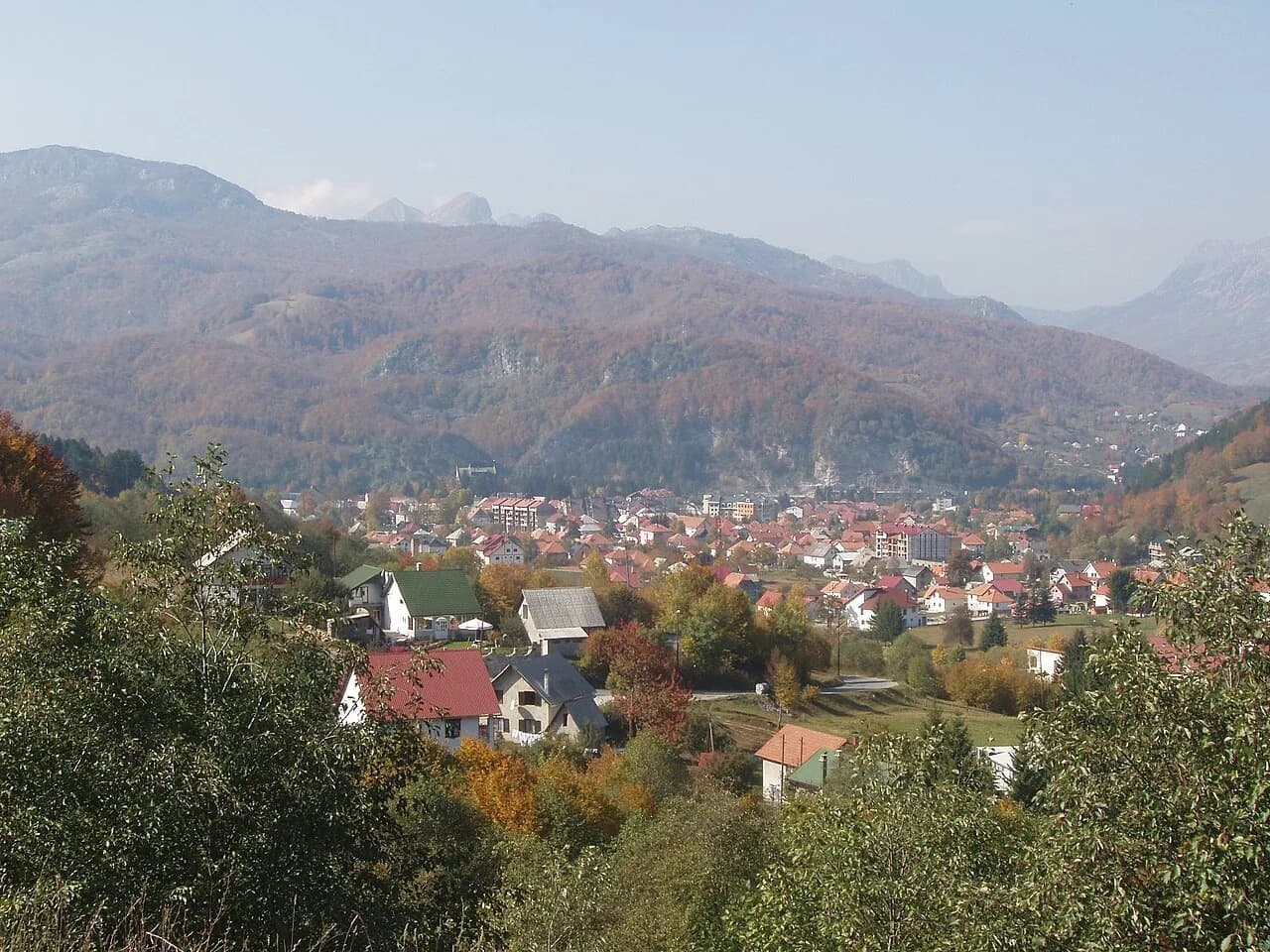
Bijelo Polje rewards a half-day rather than a full one: the town centre holds the Church of St Peter and Paul, St Nicholas Church and the old stone bridge, while the monasteries, caves and springs sit out in the surrounding villages and need wheels. The town sits in the valley of the Lim and Lesnica rivers at 550 m above sea level, close to the Bihor mountain.
This guide covers where the town sits in the north-east, how to reach it by rail and road, what is walkable in the centre, which monasteries justify a detour, and how to link the stop to Kolašin and Biogradska Gora. It treats Bijelo Polje as a Lim valley halt on the way to the mountains, not a destination in its own right.
Where Bijelo Polje is
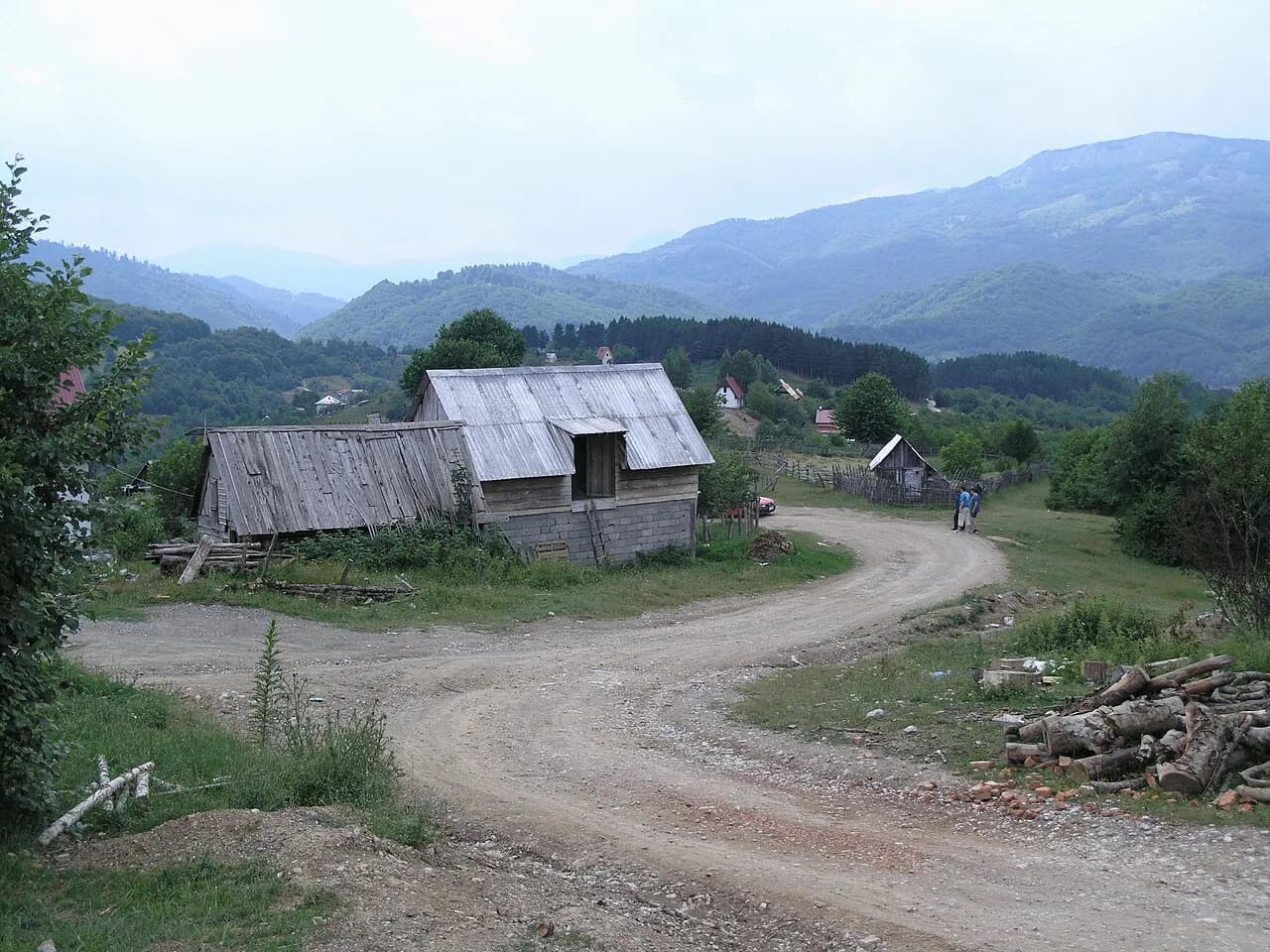
Bijelo Polje means "white field", a name that refers to the daisy fields that turn the landscape white in spring. The town lies in the valley of the Lim and Lesnica rivers, close to the Bihor mountain, and is the administrative centre of the municipality of the same name.
It sits in the north-east of Montenegro, well inland from the Bay of Kotor and the coast, so it works as a stop on a mountain itinerary rather than a day trip from the seaside. Distances matter more than driving times here: the town is around 130 km from Podgorica airport and around 185 km from the coast at Budva.
Getting there: the Bar–Belgrade railway and the Lim valley road
The Bar–Belgrade railway passes through the town, which has long made it an economic and commercial centre for the region. For travellers without a car, the train is the practical way in, with services on the line linking the coast to the north.
By road, the town sits on the Lim valley corridor between the coast and the mountains, which is what makes it a natural break rather than a detour. Check current train times and fares with the operator before you commit, since the timetable is not fixed from season to season.
What to see in the town itself
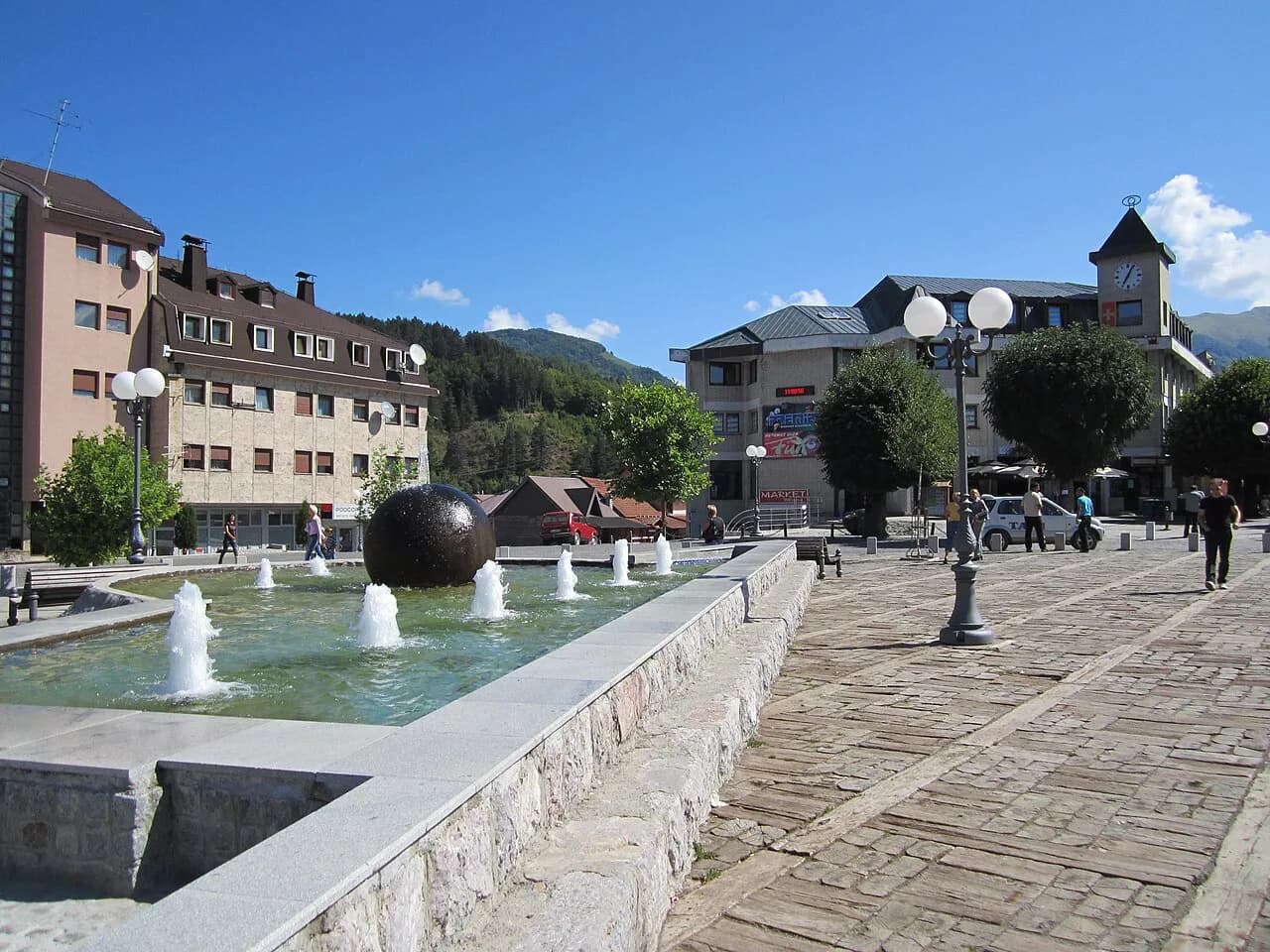
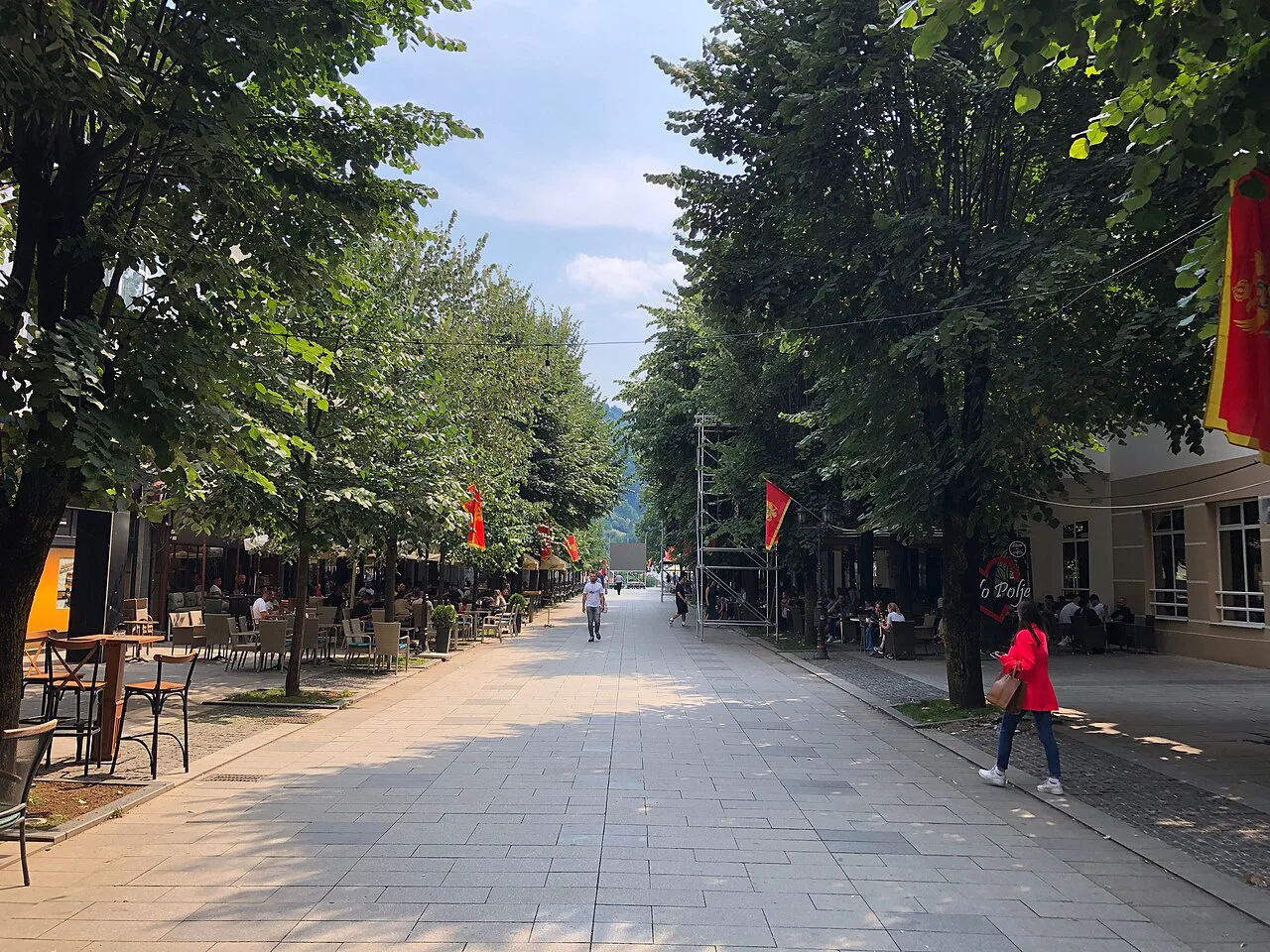
The centre is compact: the Church of St Peter and Paul, St Nicholas Church and the old stone bridge can be covered on foot in a couple of hours. Between them, the town has the ordinary life of a small Montenegrin town rather than a preserved old quarter.
The town's cultural calendar includes the Ratković poetry days, held in memory of the poet Risto Ratković, and an international festival of tamburitza orchestras each August. Treat the August timing as seasonal and confirm this year's programme through the tourist organisation before planning around it.
The Church of St Peter and Paul and the Miroslav Gospel link
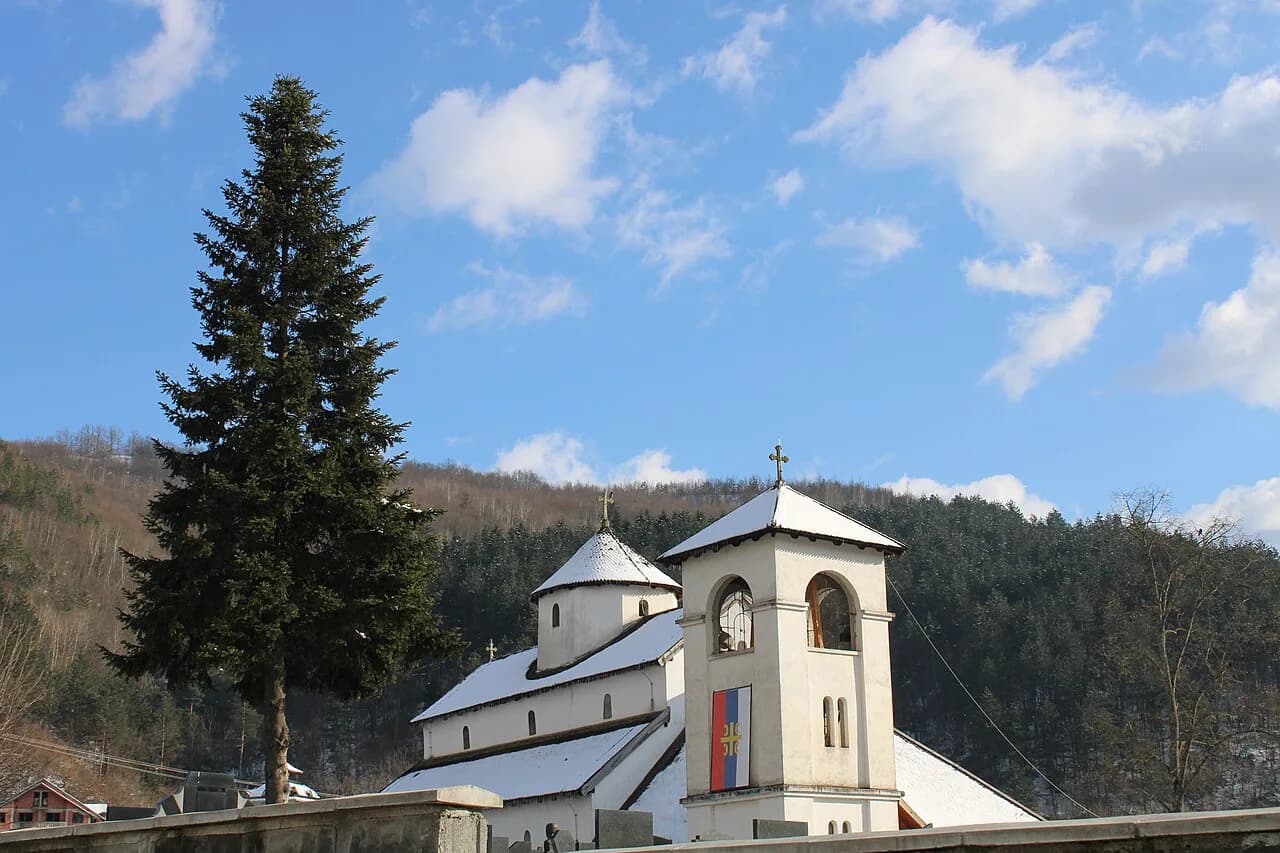
The Church of St Peter and Paul is one of the town's best-known churches, and the Miroslav Gospel was written here at the end of the 12th century. That link is a reason to give the church proper time rather than rushing past.
The church is in the town, so it fits into a walking loop with St Nicholas and, with a short trip out, the bridge.
St Nicholas Church, its frescoes and library
St Nicholas Church holds ancient frescoes and a library, which makes it a second stop rather than an afterthought. The combination of paintings and books gives the town more than one reason to linger in the centre.
Both town churches are small, so plan them together and keep the afternoon for the countryside. If you are travelling by train, the centre is close enough to walk between the two before your onward service.
The old stone bridge over the Bistrica
Not far from the town, across the Bistrica river, is the old stone bridge, which the source describes as Turkish heritage. It is a short trip out from the centre rather than part of a walking loop.
Because it sits outside the centre across the Bistrica, treat the bridge as a brief out-and-back rather than a separate outing.
Monasteries around Bijelo Polje: Voljavac, Majstorovina and Podvrh
The monasteries around the town are among its main draws: Voljavac, Majstorovina and Podvrh are named among the surrounding houses. They sit outside the centre, so this is the part of a Bijelo Polje visit that needs a car or a driver.
Dress modestly for monastery visits, as you would at any Orthodox house of worship in Montenegro, and check locally whether a particular house is open to visitors on the day you plan to go. Build the monasteries into a half-day loop by car rather than trying to reach all three on foot.
Caves and springs: Djalovica, Novakovica, Osoja and Kiselak
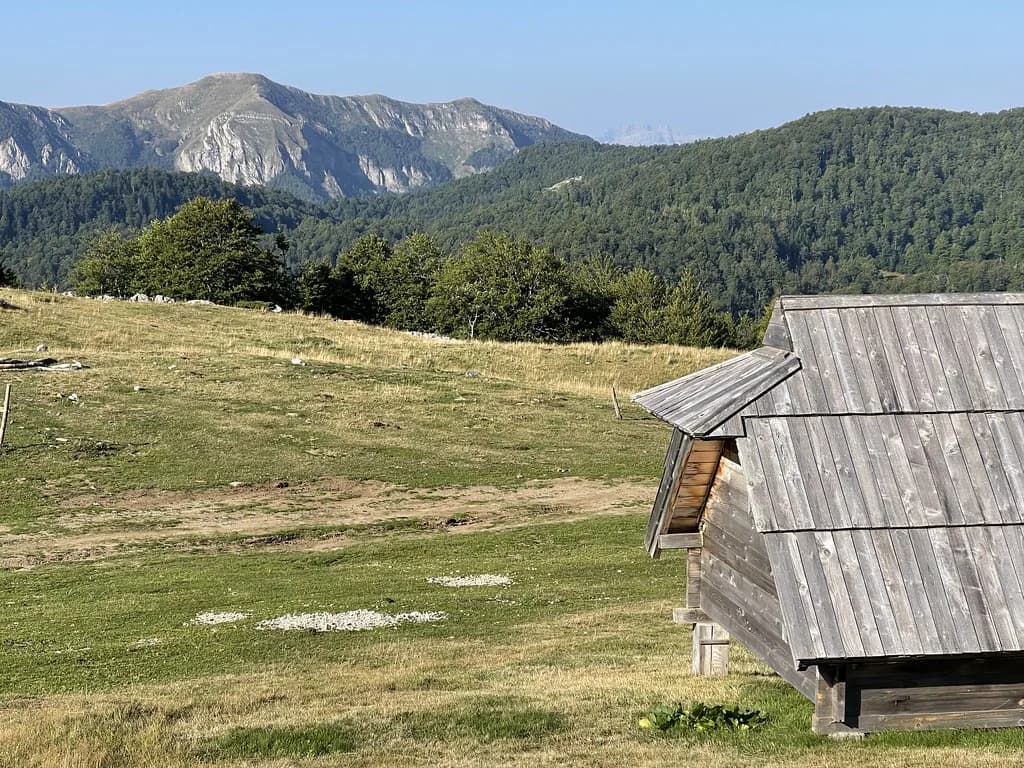
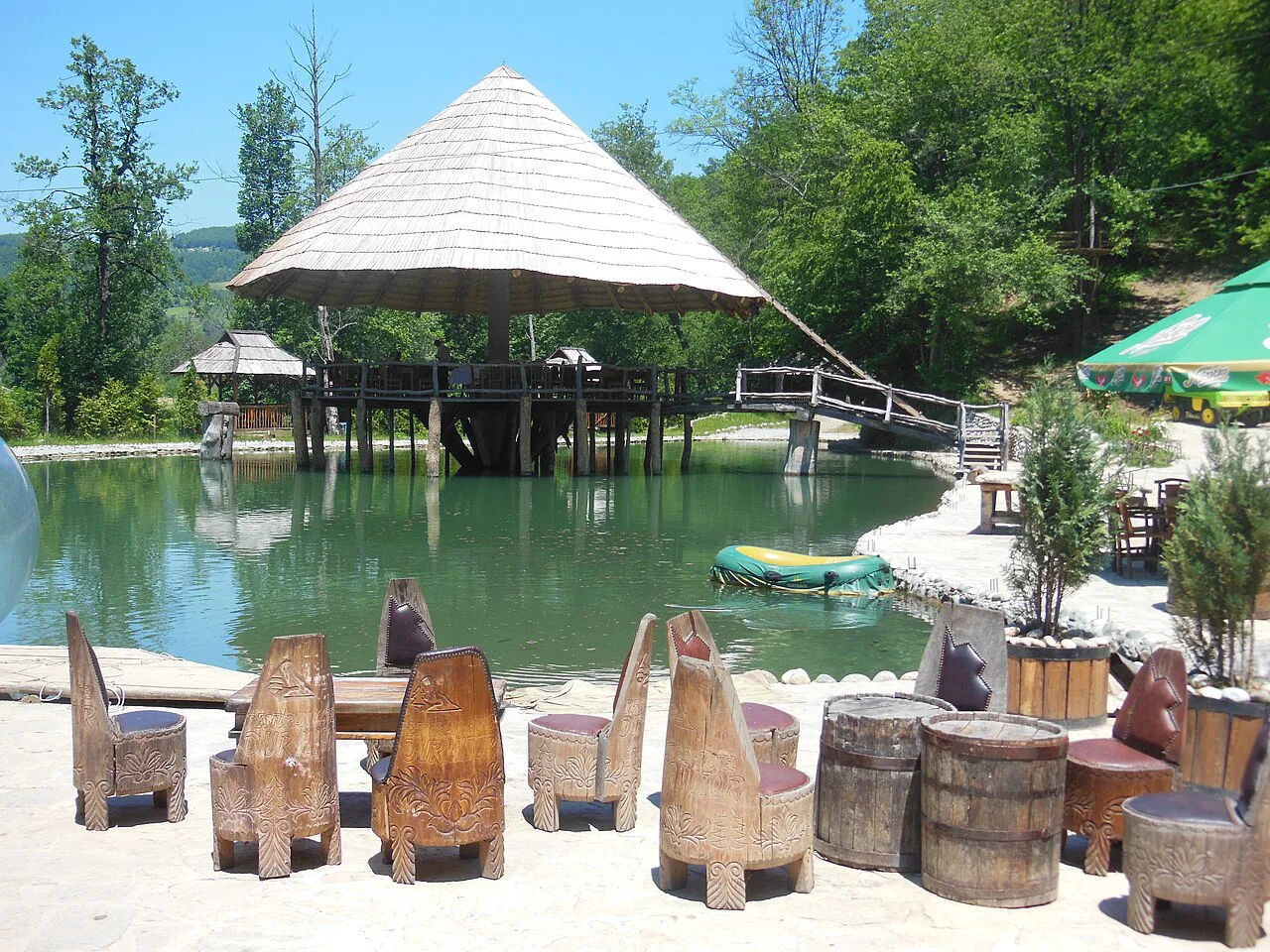
The countryside around the town holds three caves, Djalovica, Novakovica and Osoja, and a set of mineral and thermal springs. The best known spring is Kiselak, whose water is locally regarded as having healing qualities.
These are country sights, reached by road and suited to travellers with their own transport. Arrange cave access locally rather than turning up and expecting to walk in.
There is also a mineral water factory just outside the town, producing the water sold across Montenegro as Bijela Rada. That is a passing curiosity rather than a visit in itself.
How long to give Bijelo Polje and what to skip if you are passing through
With a car, allow a full day: the centre churches and bridge in the morning, then one or two monasteries or a cave in the afternoon. Without a car, half a day covers the centre and the bridge comfortably, and the countryside sights are out of reach.
If you are passing through on the train, skip the caves and springs and keep to the town. The winter sports slope at Zavratica-Majstorovina, at 930 m above sea level with a 300 m run, is a seasonal extra rather than a reason to plan the stop.
Where to go next: Kolašin, Biogradska Gora and the Lim valley
Bijelo Polje sits on the same corridor as the mountain towns to the south. Kolašin makes the obvious next stop if you are heading towards the mountains, with a compact centre and its own museum and House of Culture.
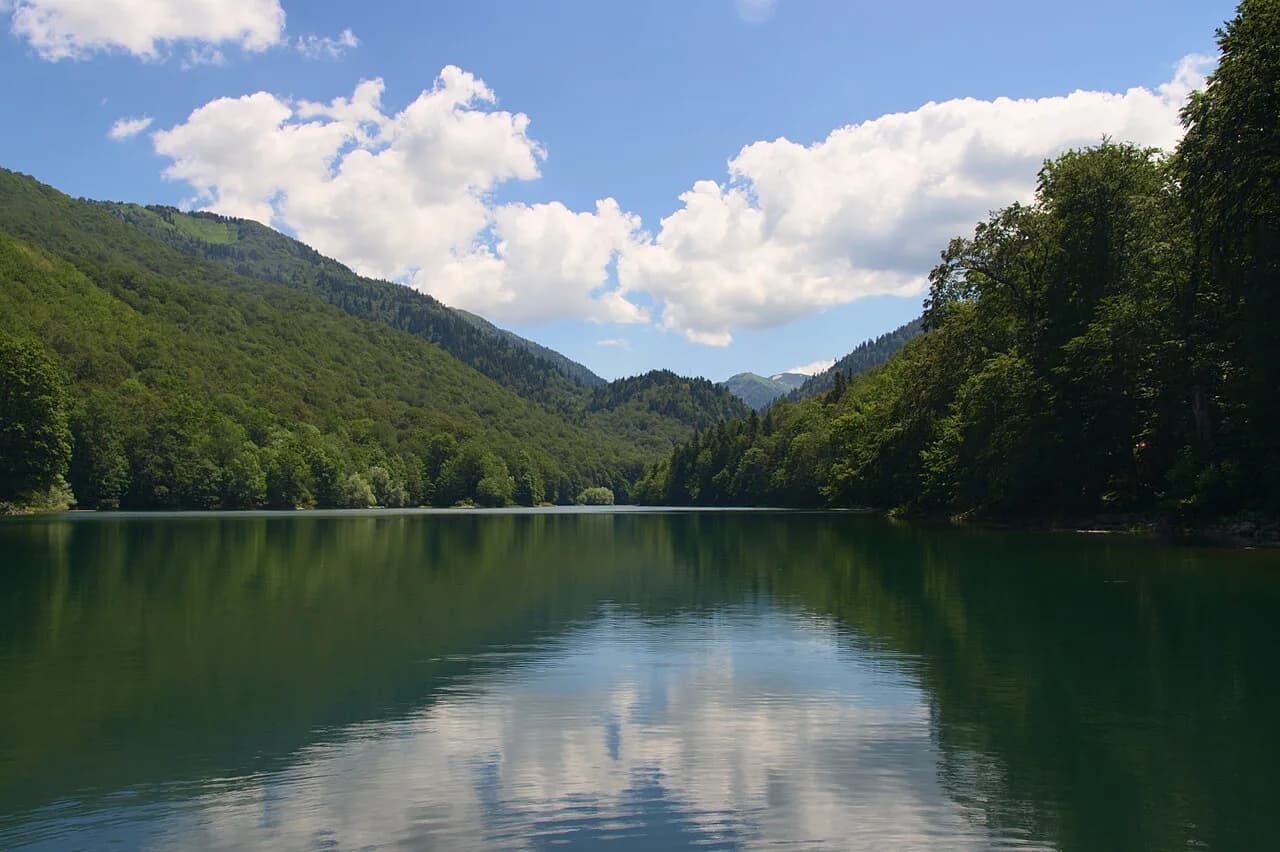
Beyond Kolašin, Biogradska Gora National Park protects one of Montenegro's remaining old forests, with Biograd Lake at its centre. That pairing turns a single stop into a short mountain itinerary.
Northward along the Lim, Berane continues the same river-valley pattern of churches and small-town streets. From Bijelo Polje both the railway and the Lim valley road run on in that direction.
Is Bijelo Polje worth the stop?
Yes, if you are already heading through the Lim valley: the two town churches and the bridge justify a morning, and the monasteries reward a car. It is not worth a dedicated journey from the coast on its own.
Build the stop around the railway if you have no car, and around Voljavac, Majstorovina and Podvrh if you do. Either way, push on to Kolašin and Biogradska Gora rather than treating the town as a base.
Explore more Kolašin guides
Frequently Asked Questions
What is Bijelo Polje known for?
For its churches and monasteries. The Church of St Peter and Paul, where the Miroslav Gospel was written at the end of the 12th century, and St Nicholas Church with its frescoes and library sit in the town, while Voljavac, Majstorovina and Podvrh are outside it. The old stone bridge over the Bistrica and the caves and springs in the countryside add reasons to stay a little longer.
How do you get to Bijelo Polje?
The Bar–Belgrade railway passes through the town, so it can be reached by train from the coast or from the north. By road it lies in the valley of the Lim and Lesnica rivers, around 130 km from Podgorica airport and around 185 km from Budva, as the source gives the distances. Train timetables vary, so check the current service with the operator before travelling.
Sources
Notes for your Montenegro trip
Optional updates to our Montenegro town guides.
You might also like
Continue reading
More guides you'll find useful