Blue Palace, Cetinje: What You Can See From the Gate
The Blue Palace in Cetinje was built in 1894–1895 for Crown Prince Danilo and is now the President of Montenegro's residence. You can view it from the gate.
On this page
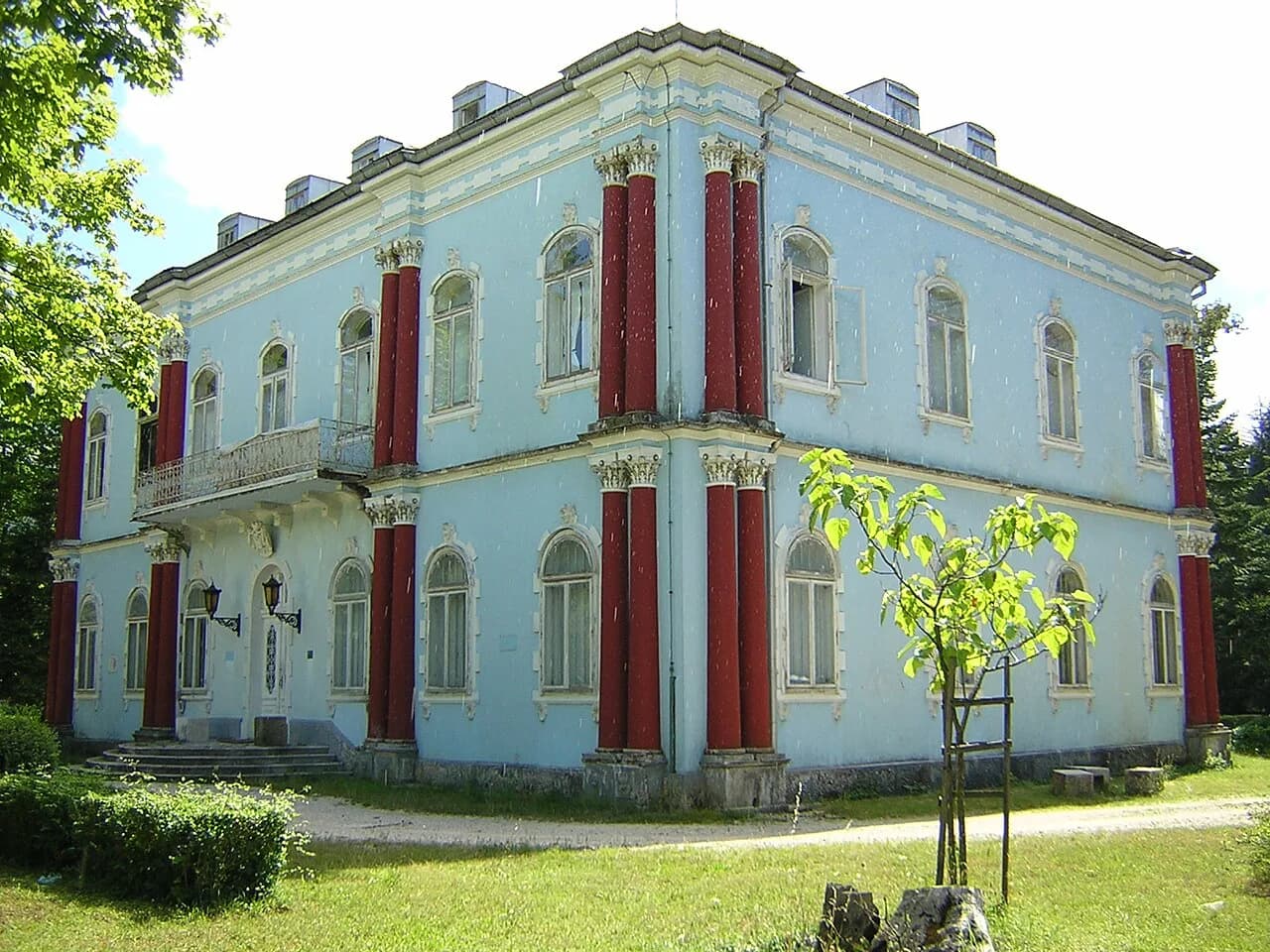
You cannot go inside the Blue Palace in Cetinje: it serves as the official residence of the President of Montenegro. What you can do is walk up Njegoševa and look through the gate at the pale blue late Empire-style facade, with the presidential guard stationed at the main entrance. This guide covers what the building is, where it sits in the old royal capital, and how to fold the stop into a short circuit of Cetinje on foot.
What the Blue Palace is and where it sits in Cetinje
The Blue Palace stands in the centre of Cetinje, the former royal capital of Montenegro, on Njegoševa. It was built in 1894–1895 in late Empire style as the residence of Crown Prince Danilo, then heir to the throne, and the design became a model for houses built for other members of the Petrović Njegoš family across Montenegro. Treat it as a ten-minute stop on a wider walk through the old capital rather than a sight in its own right, and plan the rest of your morning around it.
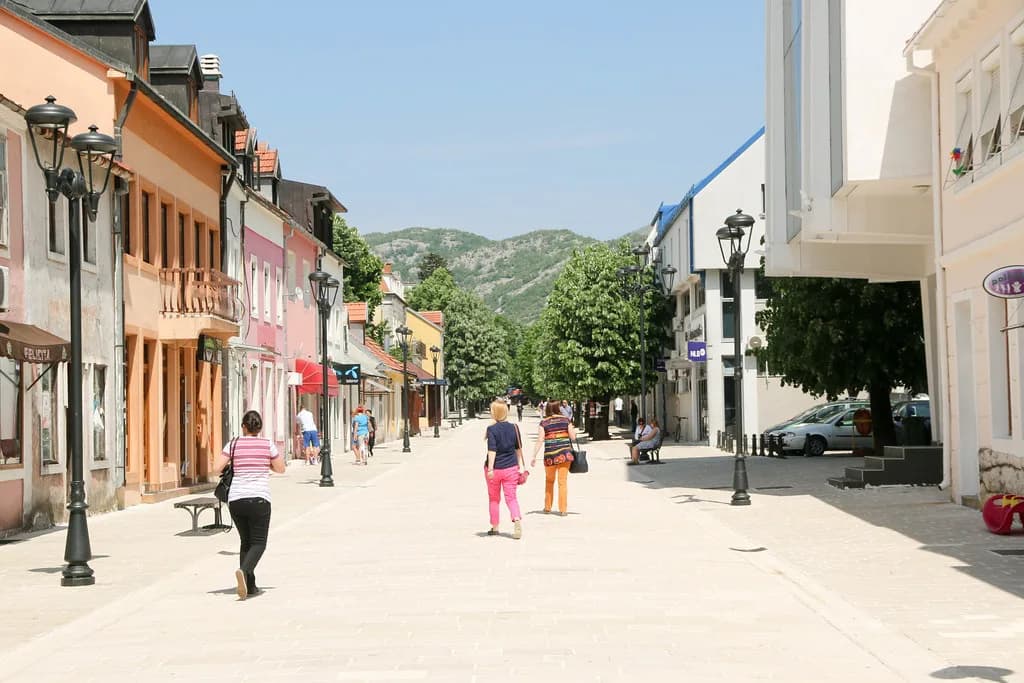
Its position makes it easy to combine with the rest of the old capital: the building sits in the middle of the small grid of streets and squares that formed the royal town, within sight of the main sights rather than out on the edge. If you are spending the day in town, start here, then work through the museums and the monastery. Our guide to Cetinje: the Old Royal Capital, Its Museums and Monastery sets out how the town fits together.
Can you go inside the Blue Palace?
No. The palace is not open to the public, and visits are limited to the main entrance, which you view through the gates. There is no ticket desk, no tour and no interior to see. That is the trade-off: the detour costs you a few minutes and the reward is a look at the facade and the guards, so set your expectations before you walk up.
The building took on its current role in 2010, when it became the official residence of the president after a phase of renovation. Because it is a working residence, expect the gate area to be a place to stand briefly and photograph, not to linger. Anyone hoping for state rooms should put their time into Cetinje's museums and the Cetinje monastery instead.
What you see from the gate: the facade and the presidential guard
The view is the point. The facade is the pale blue that gives the building its name, and at the main entrance the presidential guard stands watch in blood-red jackets, which makes the gate the most photographed spot on the street. People gather outside to take pictures with the palace behind them. Come early or late in the day if you want the gateway to yourself.
Look up at the detailing rather than through the railings: the style is late Empire, and the sources describe the 1894–1895 building as a model for later royal family houses elsewhere in Montenegro. Ten minutes of looking covers it, and the whole stop suits a Cetinje walk of an hour or so with the other sights. Do not plan around the interior, gardens or any particular room, because nothing there is open to you.
Who built it and who lived here
King Nikola I ordered the palace for his son and successor, Prince Danilo, and an Italian architect worked with Montenegrin builders to complete it. The prince, who became duke, lived here with his wife until 1916. Keep this royal context brief. What matters for a visit is the building's use today as the president's residence, not a retelling of Montenegrin history.
After the royal family left, the building spent decades in other roles as Cetinje's fortunes shifted. It served as a gallery, an event space and a museum before the renovation that turned it into the president's residence in 2010, a fact worth knowing when you see the guards. The same royal story continues at King Nikola's Palace, a short walk away, which is where you should go for the family's possessions and rooms.
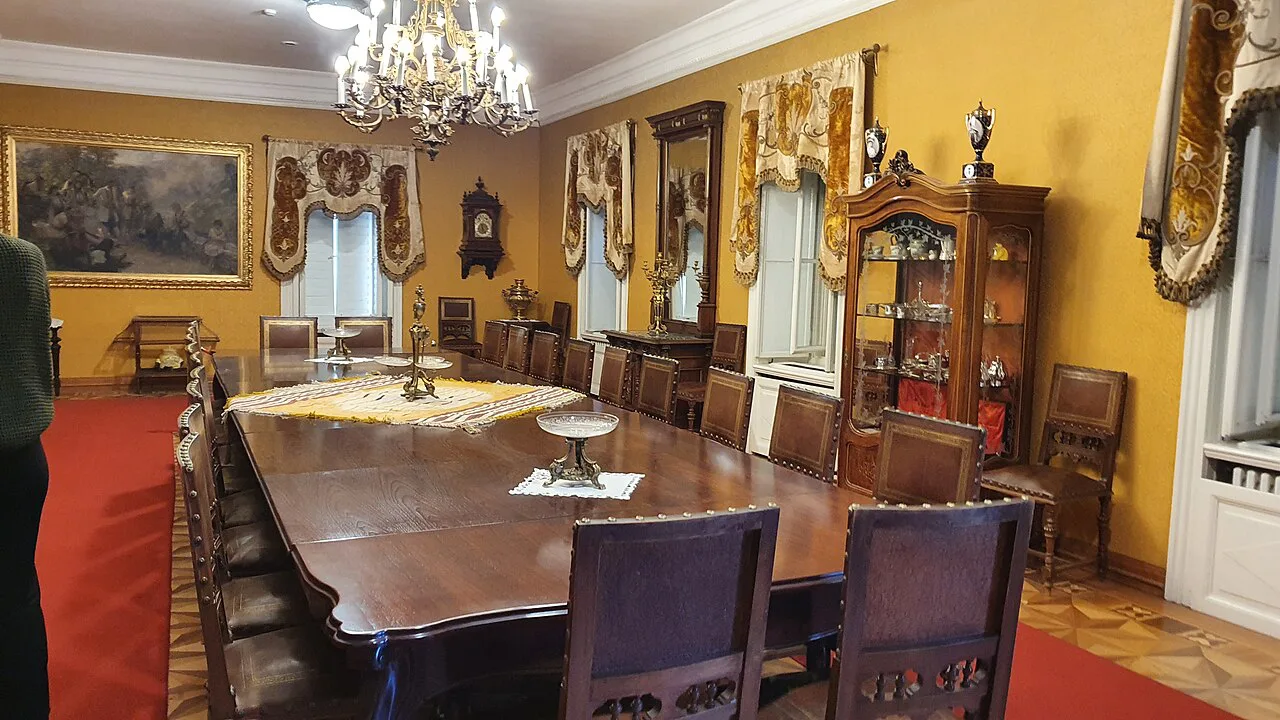
The 2006 renovation funded by the Norwegian government
The palace was extensively renovated in 2006 with a grant from the Government of Norway. That work explains why the exterior reads as a clean, well-kept building rather than a faded royal relic: the paint, the stonework and the immediate surroundings all benefit from it. The renovation came before the building became the president's official residence in 2010.
How to find it on Njegoševa in central Cetinje
The address is Njegoševa, Cetinje: the palace sits in the town centre, within the compact core that visitors walk in a morning. If you are arriving by bus, walk into the centre and ask for Njegoševa. Once you reach the street, look for the pale blue building and the guards at the gate. The entrance is the landmark, so you will not need precise navigation.
Cetinje's centre is compact, so the walk between sights is short, and comfortable shoes are enough. There is no ticket to buy and no timed entry, so the palace does not constrain your day. Build your plan around opening times at the museums and the monastery, which do.
Pairing it with King Nikola's Palace and the Vlah Church on foot
Two other sights sit within easy walking distance. King Nikola's Palace is about 0.2 km away, and the Vlah Church about 0.6 km, both listed as walking-distance neighbours of the Blue Palace. That makes a simple circuit: view the Blue Palace gate, walk to King Nikola's Palace to see how the family actually lived, then finish at the Vlah Church.
King Nikola's Palace served for more than 50 years as the seat of the Montenegrin royal family and later became a museum. Check the opening times with the museum itself on the day, then add the Vlah Church, built around 1450 on the site of a necropolis with around 150 stećci. Budget an hour or so for the circuit, and leave more time if museums and monasteries interest you.
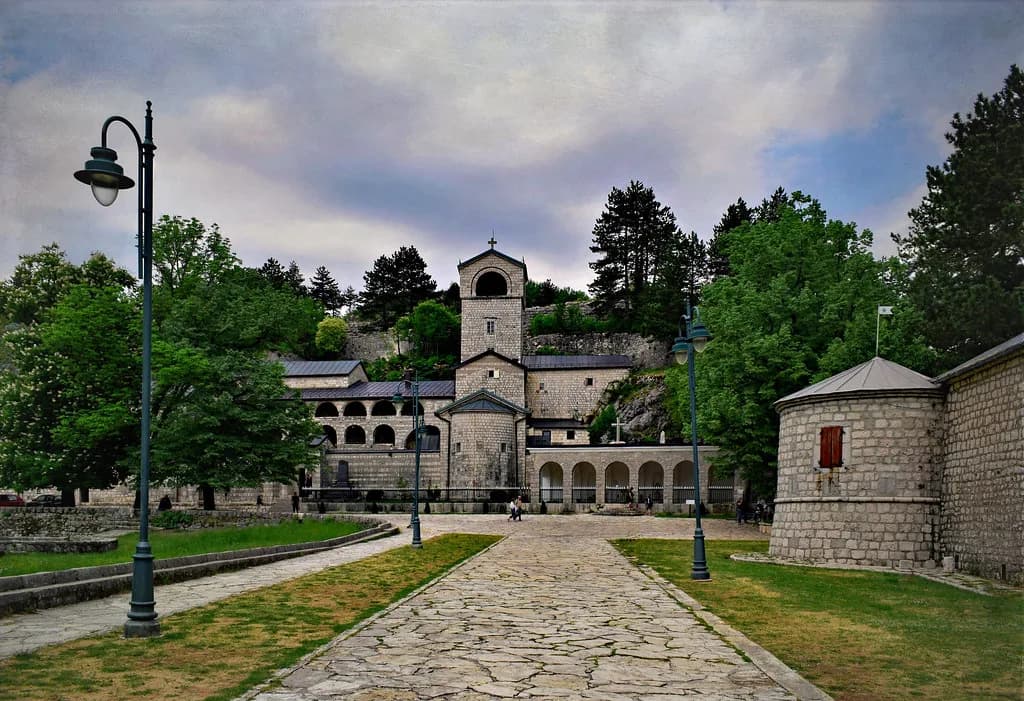
The Cetinje Monastery and Biljarda Cetinje sit on the same compact core and belong on the same walk. For a fuller picture of the town's royal and religious sights, use the Cetinje guide and check opening times with each site before you go, since the palace itself cannot be entered.
Is the Blue Palace worth the detour?
Worth it if you are already walking through Cetinje, because the gate, the pale blue facade and the guards cost you only a few minutes. Not worth a journey on its own: the interior is closed, there are no tickets or tours, and the whole visit is a look from Njegoševa. Slot it at the start of a circuit that includes King Nikola's Palace and the Vlah Church, then spend the rest of your time where you can actually go in.
Explore more Cetinje guides
Frequently Asked Questions
Can you go inside the Blue Palace in Cetinje?
No. The palace is not open to the public. Visitors can look through the gates at the main entrance on Njegoševa, where the presidential guard is stationed, to see the pale blue late Empire-style facade. There is no interior access, ticket desk or tour, so plan on a short stop from the street.
Why is the Blue Palace in Cetinje described as the president's residence?
It was built in 1894–1895 as the residence of Crown Prince Danilo. After decades in which Cetinje stagnated and the building was repurposed as a gallery, event space and museum, it became the official residence of the President of Montenegro in 2010 following a phase of renovation. Because it is a working residence, it is not open to the public.
Sources
Notes for your Montenegro trip
Optional updates to our Montenegro town guides.
You might also like
Continue reading
More guides you'll find useful