Budva History: What to Look For in the Old Town
Budva's Old Town packs 2,500 years into a walled peninsula. See which churches, the Citadel and the ramparts you can visit, and what the 1979 quake changed.
On this page
Budva's history is easiest to read on foot inside the walled peninsula, where the Citadel, the churches and the medieval ramparts stand within a few minutes of each other. The Old Town has more than 2,500 years of history behind it, and a walk of a couple of hours covers the buildings that carry the dates. This guide ties each era to a specific structure you can stand in front of, and explains why the street plan feels like a maze. For the wider picture beyond the walls, see the guide to things to do in Budva.
Expect a rebuilt fabric rather than untouched antiquity. The town was badly damaged in the 1979 earthquake and completely rebuilt, keeping its Venetian-style appearance, narrow streets and stone houses. The same shock and an earlier one in 1667 explain why so much of what you touch looks newer than the dates attached to the sites.
What you can still see of Budva's history today
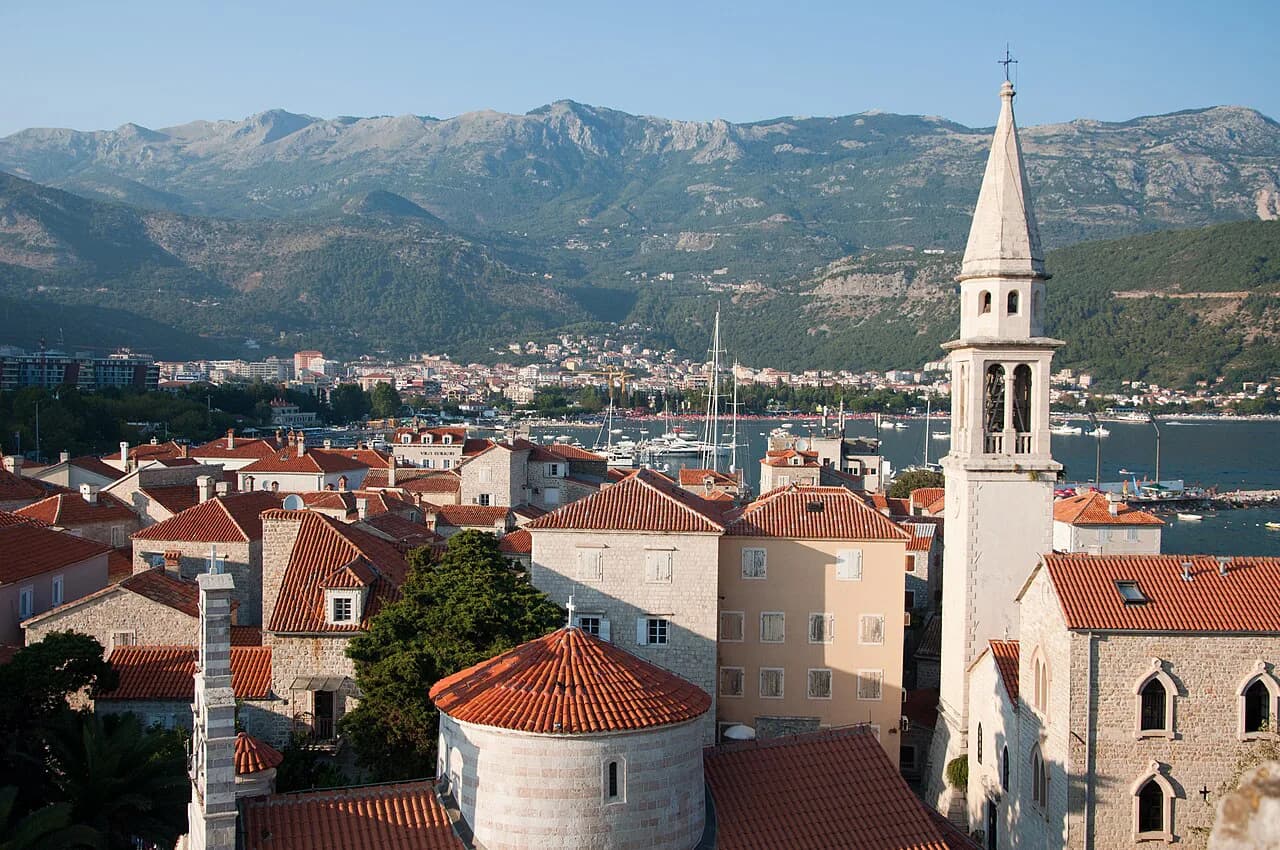
The historic core is a compact ensemble ringed by medieval ramparts, towers and gates, and locals still call it the heart of Budva. Within that ring you can pick out the Citadel, the churches, a former Benedictine monastery site and the Archaeological Museum. Treat the walls as the frame and the individual buildings as the chapters.
The sites that carry the clearest dates are the Citadel, Sveti Ivan, Sveta Marija in Punta and Sveta Trojica. The necropolis finds and the museum collections cover the periods the standing buildings do not. Plan the walk around those five stops and the rest of the lanes become the connective tissue rather than the main event.
Why the Old Town sits on a peninsula
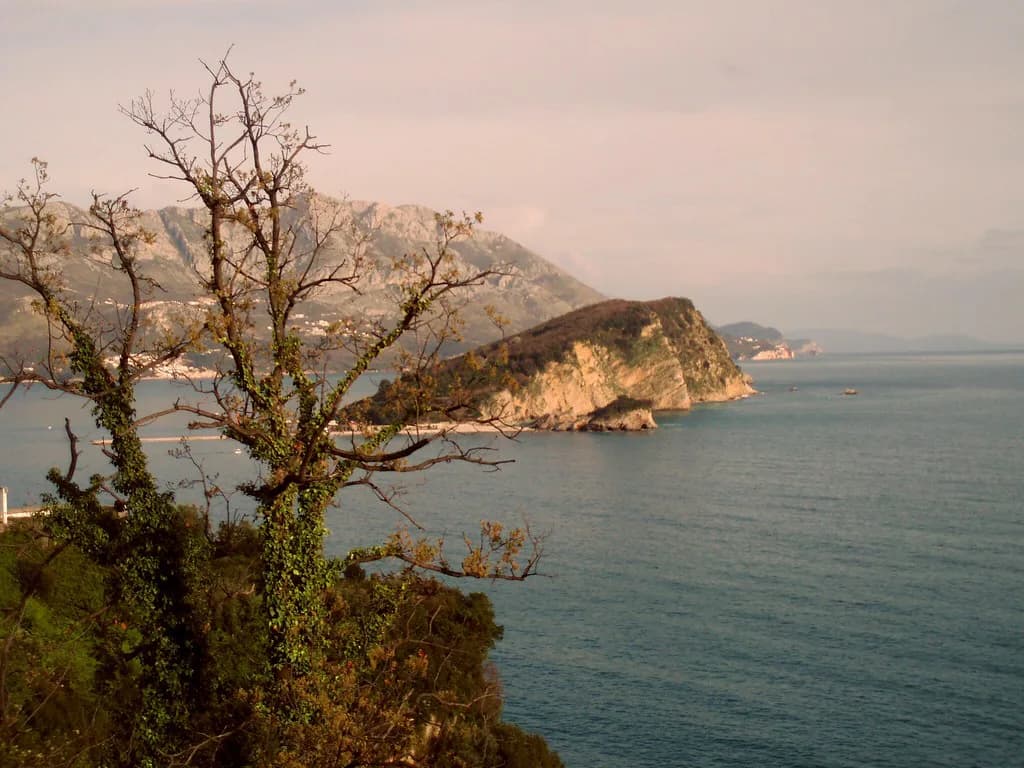
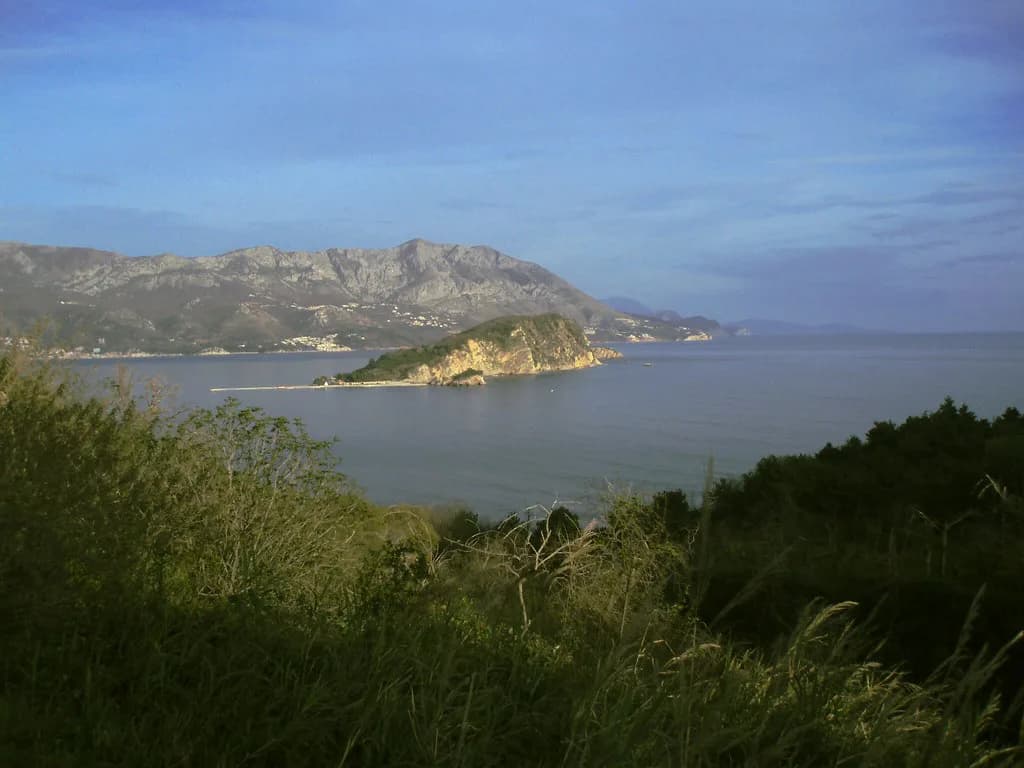
Budva's Old Town began on an island that was once joined to the land by a sandy covering, and it grew into the peninsula you walk today. That shape explains the crammed plan: there was never room to spread out, so the town stacked itself upwards inside its defences. Approach from the landward side and you feel the constriction immediately.
Historical sources describe the settlement in its early phase as a city of Illyria, and it appears in the written record in the 5th century under the name Buthoa. Treat the deeper origin stories, including the account of a founder arriving from Thebes, as tradition rather than established fact. What matters for a visit is the continuity: the same small headland has been fortified and inhabited across those phases.
The medieval walls, towers and gates
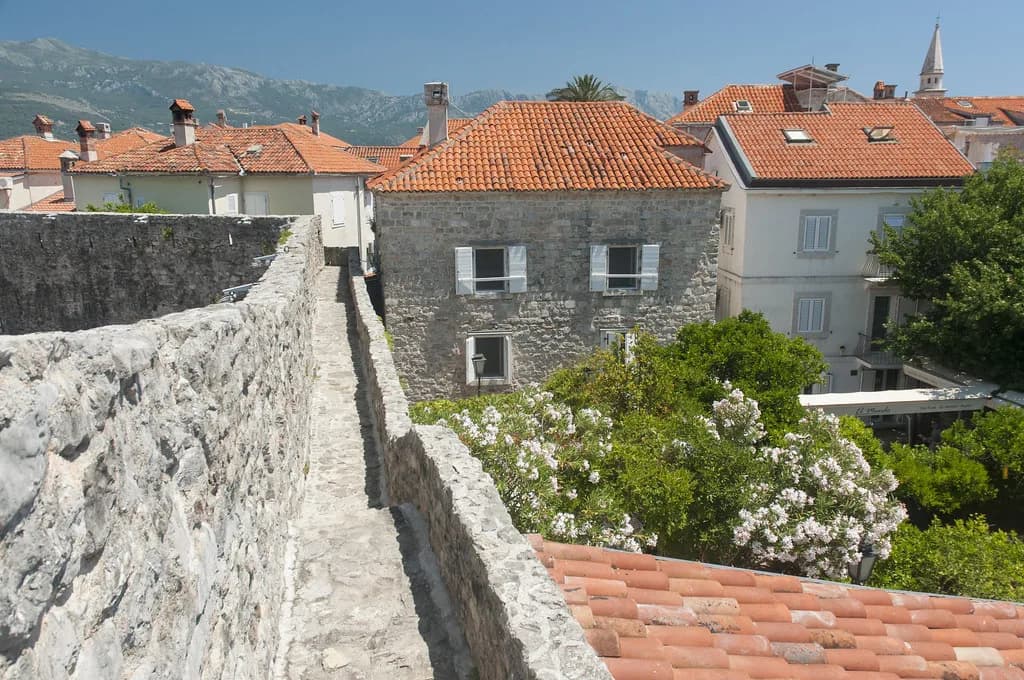
The ramparts date from the medieval period, when the Venetians ruled this coast, and they remain the town's most conspicuous feature. Towers punctuate the circuit and gates mark the points where the lanes meet the outside world. Walk the full outside line first to understand the shape, then enter.
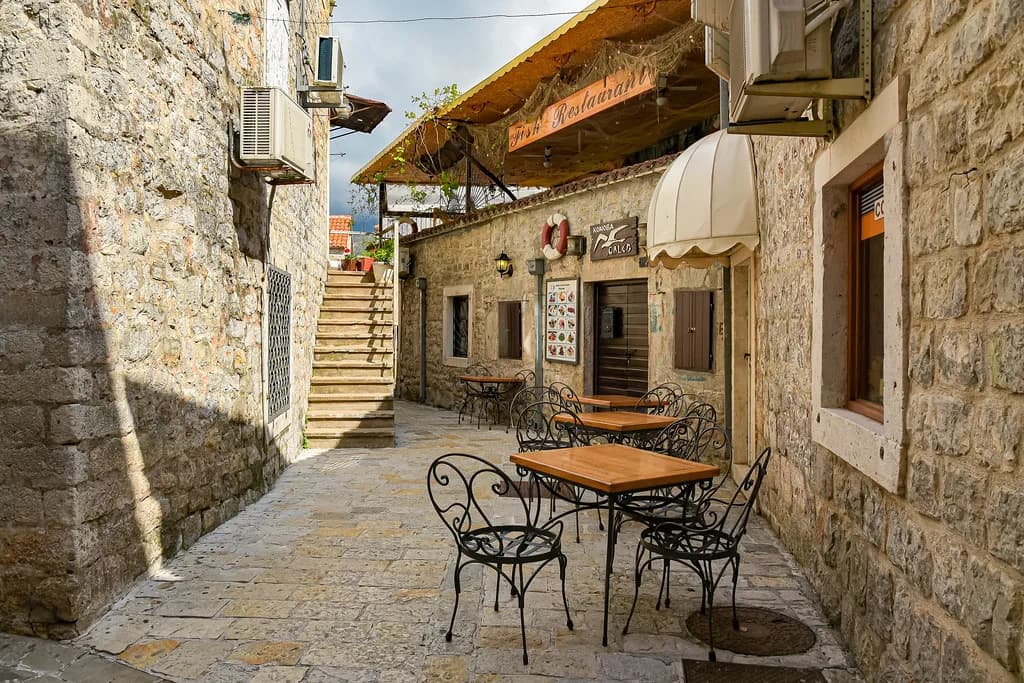
Inside, the streets, squares, bulwarks and towers of the late medieval period braid together so tightly that first-time visitors read the plan as a labyrinth. That is not a defect but the surviving street pattern. Give yourself permission to wander rather than navigate, and use the sea side as your compass.
The Citadel: Budva's sea-facing fortress
The Citadel, the fortress of St Mary, was built to protect Budva from attack from the sea and is first mentioned in 1425. A separate account dates the fortress to the 5th to 6th century BC and notes that it now serves as a stage for the city theatre. The two dates measure different things, so hold them lightly and look at the masonry in front of you.
Its position at the seaward edge is the point: stand there and the fortress logic of the whole peninsula becomes obvious. The Citadel is also a natural pause in a short circuit of the walls. If you only have time for one built structure, make it this one.
The churches inside the walls: Sveti Ivan, Sveta Marija in Punta and Sveta Trojica
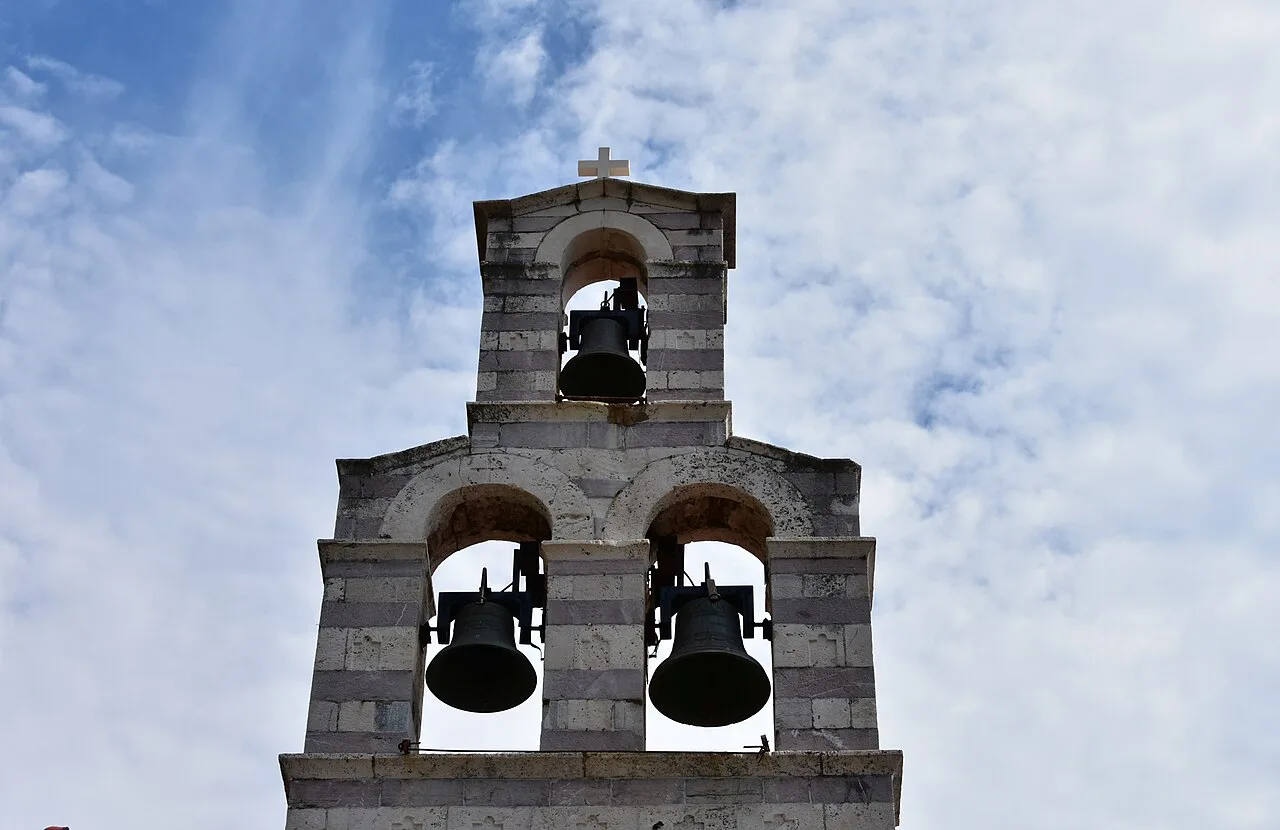
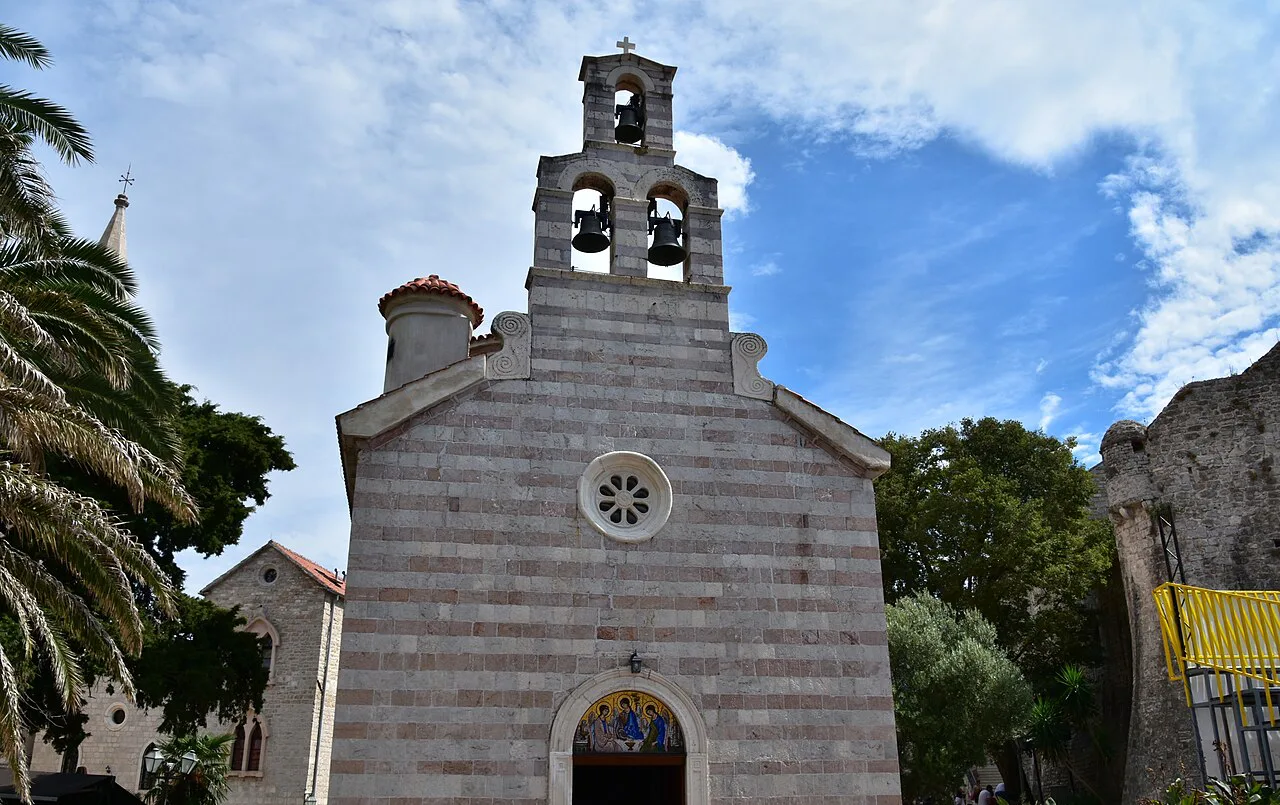
Sveti Ivan, or St Ivan, is described as a monumental basilica with three transepts built in the 7th century. Sveta Marija in Punta, the oldest edifice in that account, is dated to 840 AD and appears elsewhere as a former Benedictine monastery founded on the cape in the 9th century. Sveta Trojica, the Orthodox Church of the Holy Trinity, was built in 1804 and combines architecture with art in a single interior.
Three churches in a space this small tells you how the town's life was organised, and each sits within a minute or two of the next. Go early in the day if you want the lanes around them quiet. Dress as you would for any working church, with shoulders and knees covered.
The 1667 and 1979 earthquakes and the rebuilding you walk through
The town was damaged twice in major earthquakes, first in 1667 and again in 1979. The later shock was severe: a magnitude 7 earthquake damaged over a thousand buildings and displaced around 100,000 inhabitants, and restoration followed over the next four years. The Old Town was completely rebuilt and kept its distinctive appearance, Venetian style, narrow streets and stone houses.
Read the fabric with that in mind. Smooth stone and straight joints often mean twentieth-century reconstruction rather than Roman work, and the churches and Citadel are the places where the older dates are documented. The value of the walk is in the ensemble, not in any single ancient block.
The Archaeological Museum and the finds from the old necropolis
A necropolis was discovered in 1938 on the site of today's Hotel Avala, with its oldest parts dated to the 3rd and 2nd centuries BC. The Archaeological Museum, opened in 2003, holds Greek, Byzantine and Slavic material. The two together cover the long stretches that the standing churches and fortress cannot.
The museum is a sensible first stop if you want context before the lanes, or a cool pause in the middle of a summer afternoon. Entry arrangements are not something to guess at, so confirm them at the door or through the town's tourist information before you build a day around it.
Getting to the Old Town and finding your way in
By car, approach from central Budva along Mediteranska Street and use the car park opposite the Voli supermarket, then continue on foot. Walking, follow Mediteranska Street from the centre, or take the beach promenade past the hotels until the Old Town begins near Mogren Beach. Both routes put you at the landward edge of the walls.
Once inside, stop trying to hold a route and let the braided lanes carry you; the sea is always a reliable bearing. If you want the layout settled before you arrive, a Budva map is worth five minutes on the phone.
How long the Old Town takes and when to go
Allow around two hours to see the Citadel, the churches and a stretch of the walls without rushing, and longer if you add the museum. The compact area means you can cover the ground twice in that time and still notice new details. Pair the visit with a Budva walking tour if you want the chronology narrated in order.
Mornings give you the lanes at their emptiest and the best light on the seaward walls. In high summer, the middle of the day is better spent in the museum or over a long lunch than on the exposed ramparts. Evening brings the town back to life, but the narrow streets fill again.
Which part of Budva's history to see first
Start at the Citadel and the stretch of wall beside it, because the sea-facing fortress makes the town's defensive logic plain before you meet the churches. Then work inland through Sveta Marija in Punta, Sveti Ivan and Sveta Trojica, and finish at the museum if the necropolis finds interest you.
If you have a second day in town, use it for the wider riviera rather than a second circuit of the walls. The Budva Riviera Guide sets out the neighbouring stretches of coast and how they connect.
Explore more Budva guides
Frequently Asked Questions
What was Budva called in ancient times?
Written records mention the town in the 5th century under the name Buthoa, and historical sources describe the earlier settlement as a city of Illyria. The walled core is still known locally as Stari Grad, the old town.
Was Budva destroyed in the 1979 earthquake?
It was severely damaged: a magnitude 7 earthquake harmed more than a thousand buildings and displaced around 100,000 inhabitants. Restoration over the following four years rebuilt the Old Town while preserving its Venetian-style appearance, narrow streets and stone houses, so what you walk through today is largely reconstructed.
Who founded Budva?
One account credits a Phoenician prince who left Thebes with his wife, and another names the king and Queen of Thebe in the 5th century BC. These are origin traditions rather than documented fact, and the written record only begins with the 5th-century mention of Buthoa.
Sources
Notes for your Montenegro trip
Optional updates to our Montenegro town guides.
You might also like
Continue reading
More guides you'll find useful