Budva Old Town: What to See and How to Walk It
A practical walk through Budva Old Town: its Venetian walls, gates, the Citadel, Sveti Ivan and Sveti Trojica, and how long the walled peninsula takes.
On this page
Budva Old Town takes about two hours at an unhurried pace, and you enter it through a gate in the Venetian walls rather than arriving in it gradually. The town sits on a rocky peninsula, its streets braided into a small labyrinth of squares, bulwarks and towers, and this walk takes you from the gate through the lanes to the Citadel, then round the churches and out along the battlements.
Treat the walled peninsula as one compact route rather than a checklist of separate sights. It is one of several stops on a short break, and the full spread of things to do in Budva sits outside the walls as much as inside them, which is the main thing that makes a visit work.
What Budva Old Town is
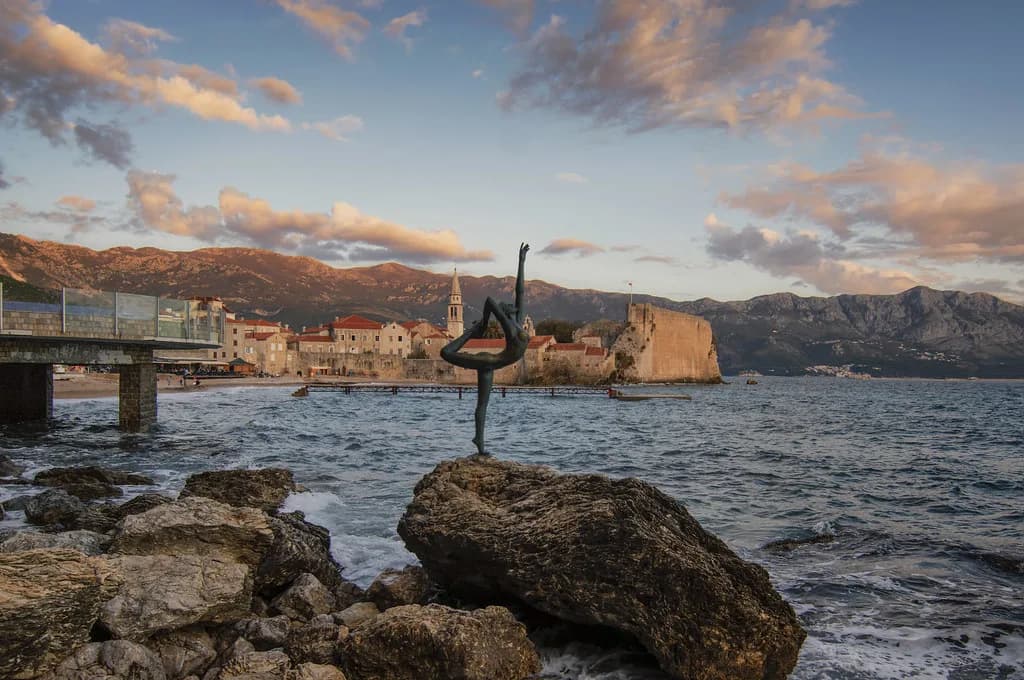
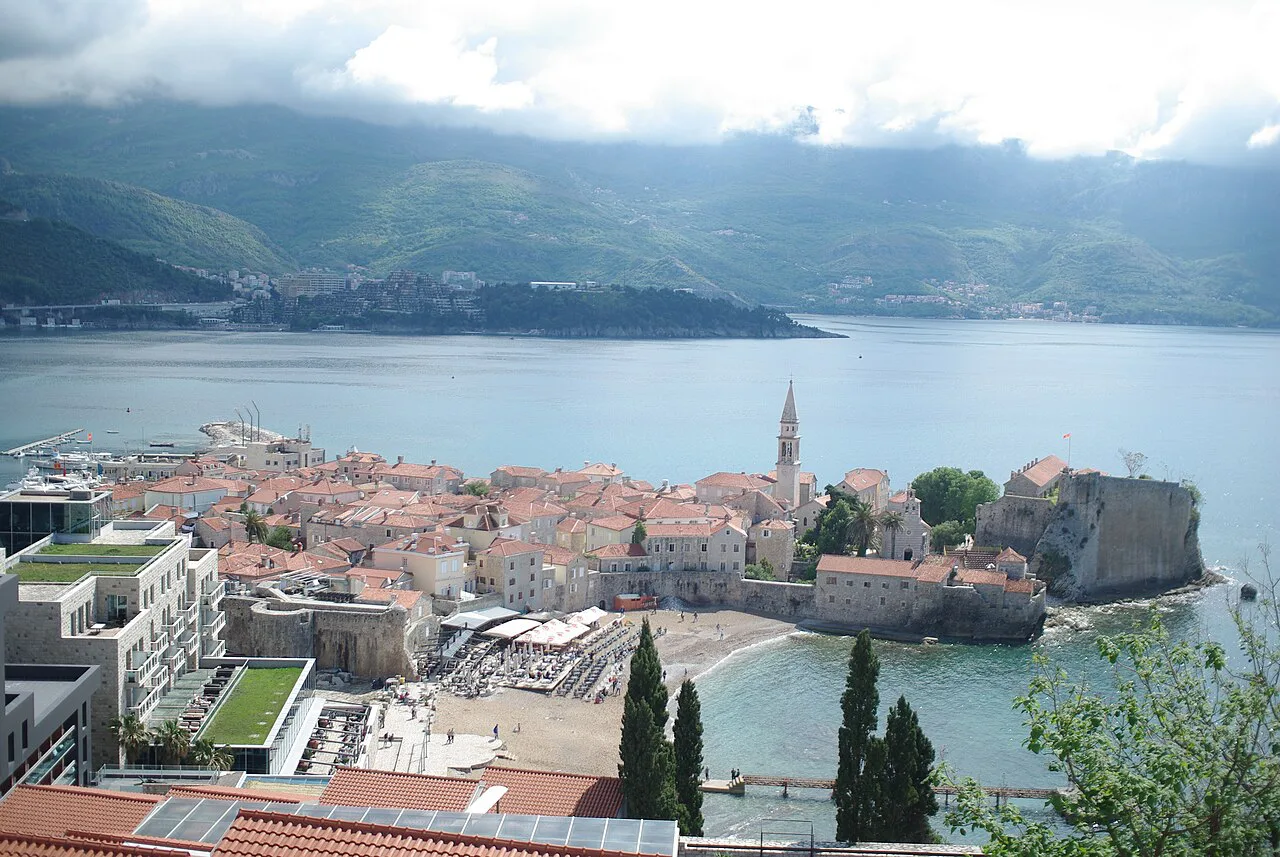
Budva Old Town is the walled core of Budva, built on what was once an island and is now a peninsula joined to the mainland. Its medieval walls are Venetian in origin, and the street plan inside them reads as a knot of narrow lanes, small squares, bastions and towers from the late medieval period.
The town was badly damaged twice, by earthquakes in 1667 and again in 1979, which is why the lanes you walk today are a reconstruction rather than an untouched medieval fabric. Knowing that changes how you read the place: the charm is in the plan and the walls, not in centuries of accumulated wear.
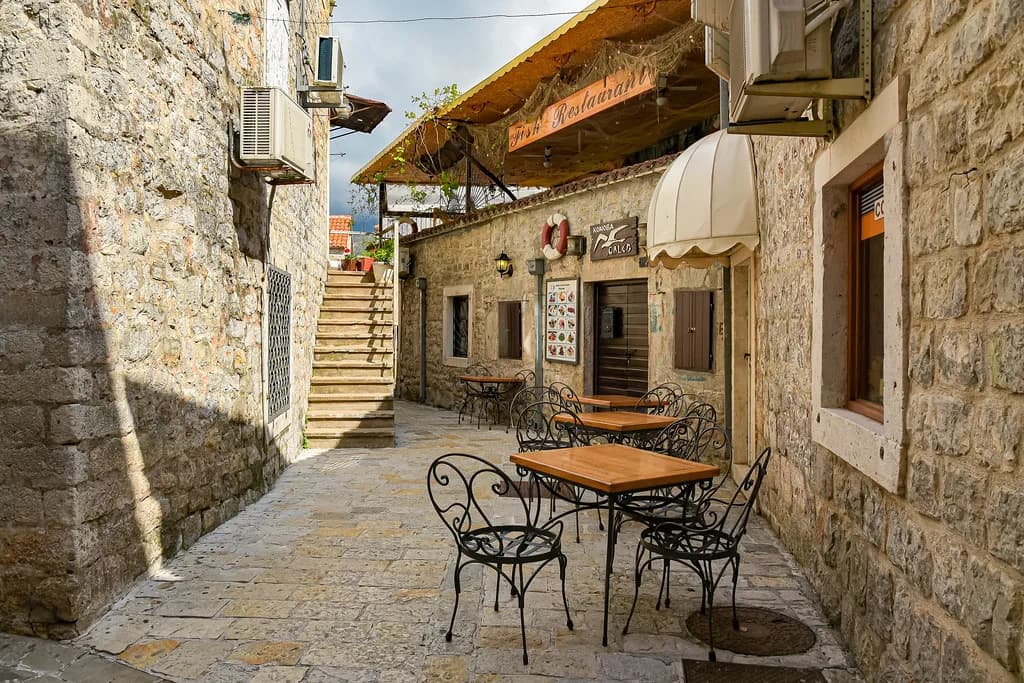
Step through the gate and the lanes are narrow and shaded, with the buildings running to two or three storeys and shops and restaurants at street level. It is still busy inside, and guided tour groups move through in blocks, so the calmer stretches are usually the ones away from the main through-route.
How the town is laid out, and where to start
Start at the landward gate on the side facing the resort, where the walls are thickest and the entrance is unmistakable. From there the lanes fan out rather than run straight, so pick one direction, keep the sea on one side and let the squares pull you through; you will come out at the far walls within minutes whichever way you go.
The plan is easiest to hold in your head as a ring: walls on the seaward edge, a cluster of churches and the Citadel toward the tip, and small squares where lanes meet. The braided layout is the point of the place, so a route that doubles back once or twice costs you little. The lanes, squares, bulwarks and towers are the surviving late medieval structure of the town.
If you want the layout explained as you go rather than worked out on the spot, a guided walk covers the gates and squares in a fixed order and saves the guesswork.
The Citadel
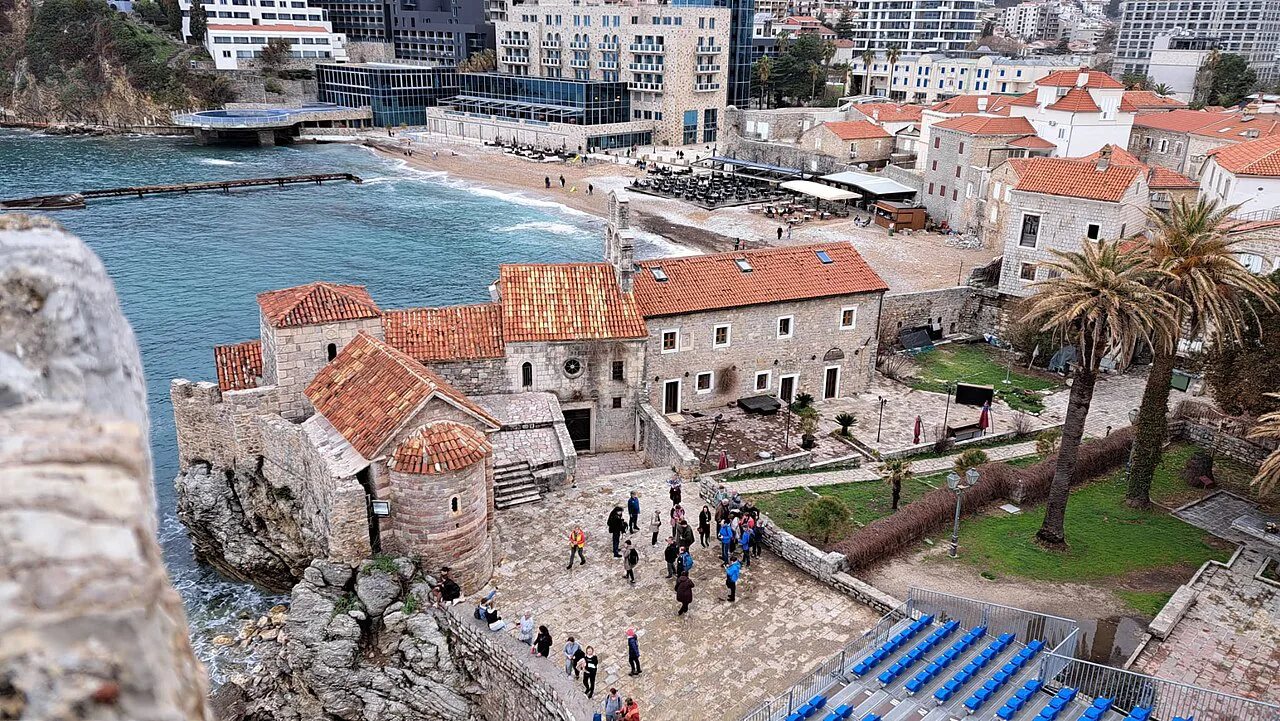
The Citadel, the Citadela, sits at the seaward end of the town and is the anchor of any circuit through it. The fortress fabric dates from the fifth to sixth century BC, and it now serves as a stage for the city theatre.
Build the Citadel in as the halfway marker: reach it, look back over the roofs, then work back through the lanes toward the landward gate. One recent account describes the citadel as now housing a library and restaurant, so treat it as a backdrop to the walk rather than a billed museum stop and see what is open on the day.
The churches inside the walls
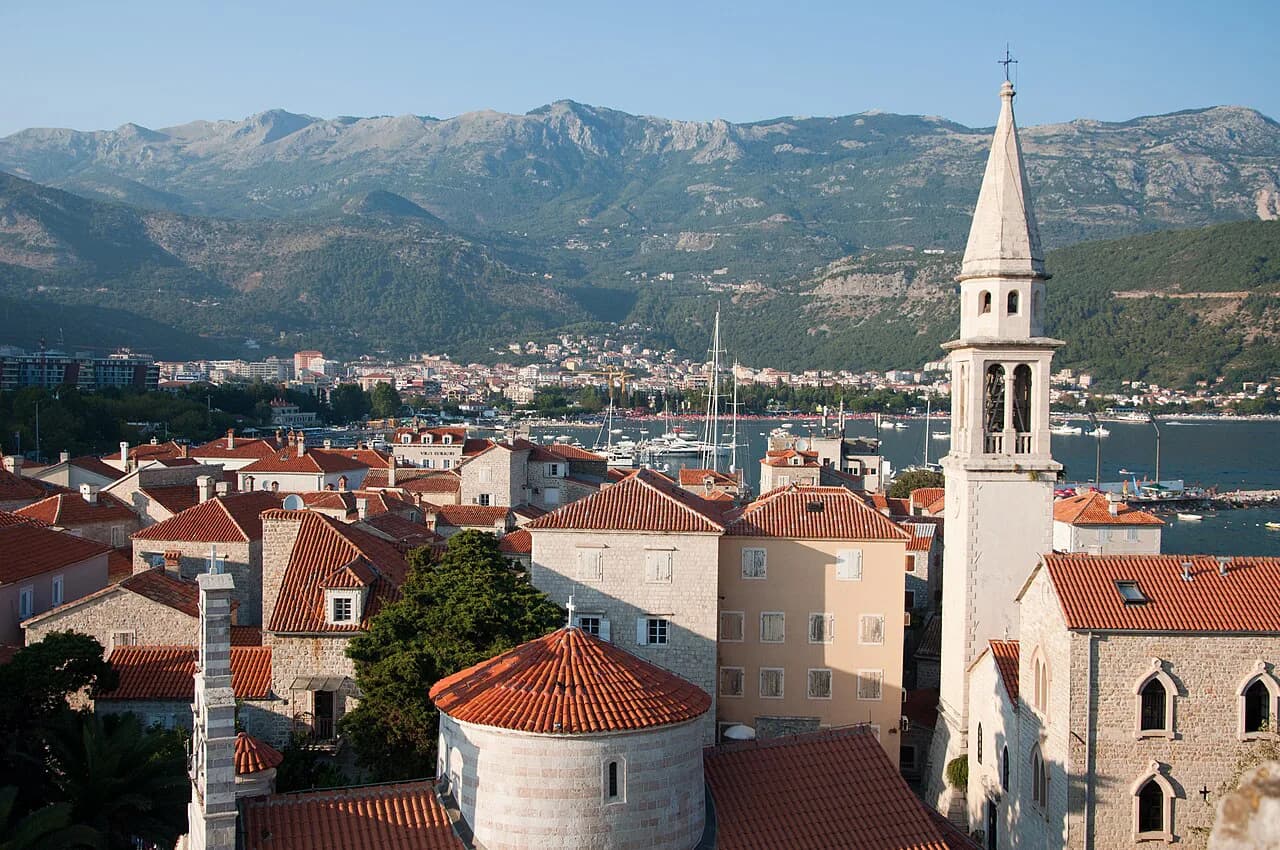
Three churches sit close together inside the walls and you can see all of them in a single loop. The Church of Sveti Ivan, St Ivan, is a three-transept basilica built in the seventh century; Sveta Marija from Punta, St Marija, dates from 840; and the Church of Sveti Trojica, St Trinity, was built in 1804.
Sveti Trojica is singled out for its frescoes inside, and the lanes around the three churches are where you will most often find a quiet corner.
Dress for a church rather than a beach when you plan to go inside: shoulders and knees covered is the reliable rule across Montenegro, and the smaller churches have no one at the door to lend you anything.
Walking the city walls
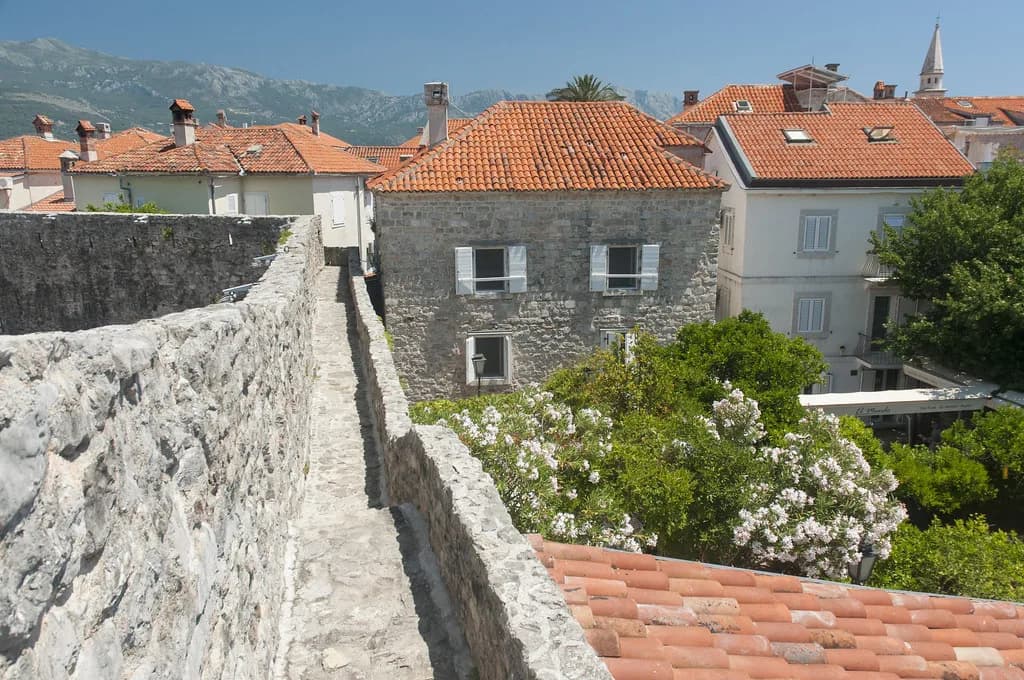
The wall walk is a narrow path along the top of the battlements, roughly a kilometre long, with the sea on one side and the roofs of the old town on the other, and views towards the coast. It is the best view in Budva Old Town and the part most people remember.
It is not a loop. You walk out along the wall and then turn round and walk back to where you started, so budget double the distance and check the time before you set off rather than at the far end.
There was an entry fee of two euros for the wall path in 2018, paid at the access point. Check the current charge at the entrance before you commit, since the price is set locally and changes.
The path is a narrow walkway, so it is a poor choice in wind or with small children who want to run ahead. If you want the coastal view without the height, the promenade and the viewpoints above the town give you a wider angle from ground level.
How long Budva Old Town takes, and when the crowds arrive
Give Budva Old Town two hours: forty minutes for the lanes and churches, twenty for the Citadel, and the rest for the wall walk out and back. If you only want a first impression, forty-five minutes through the lanes and past one church is enough to see the plan.
The lanes are busiest when tour groups are moving through and stay crowded for much of the day, with quieter corners away from the main routes. The waterfront outside the walls is louder still, with music and stalls along the promenade; the walls are what separate the two atmospheres, so cross them deliberately.
Old Town Budva is a medieval walled centre on a rocky peninsula, and the visit works best when you let it be a short, dense walk rather than an all-day outing. Pair it with something outside the walls if you want to fill a day.
Getting there and parking
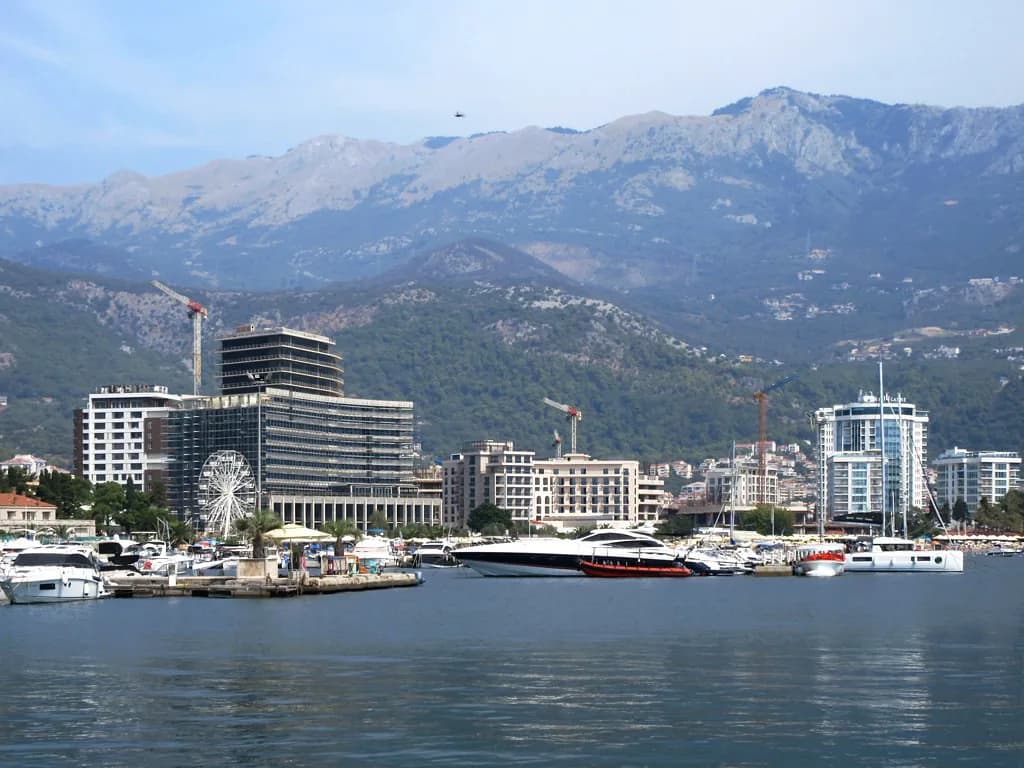
The approach to Budva drops down a serpentine road with a wide view of the coast, and that descent is the first sign of how built-up the resort has become. Traffic thickens as you near the water, and finding a space takes patience.
Parking near the old town is a mix of hotel car parks open to non-residents and marked zones with parking bans elsewhere, so take the first paid car park you see rather than circling the walls.
If you are staying along the coast, the walk in from the neighbouring resort strip is flat and straightforward, which avoids the parking problem altogether.
Once you are through the gate, the lanes are pedestrian and the distances short; the Budva map shows how the walled peninsula sits against the rest of the town before you set out.
Eating inside and around the walls
Restaurants fill the ground floors of the old town houses, and shops line the lanes too. Eat early if you want a table in the middle of the town rather than on the waterfront.
For a calmer meal, look at the lanes a street or two back from the main through-route rather than the first terrace you meet at the gate. Our picks for the walled town and the streets around it are gathered in the guide to the best restaurants in Budva.
What to do next from the old town
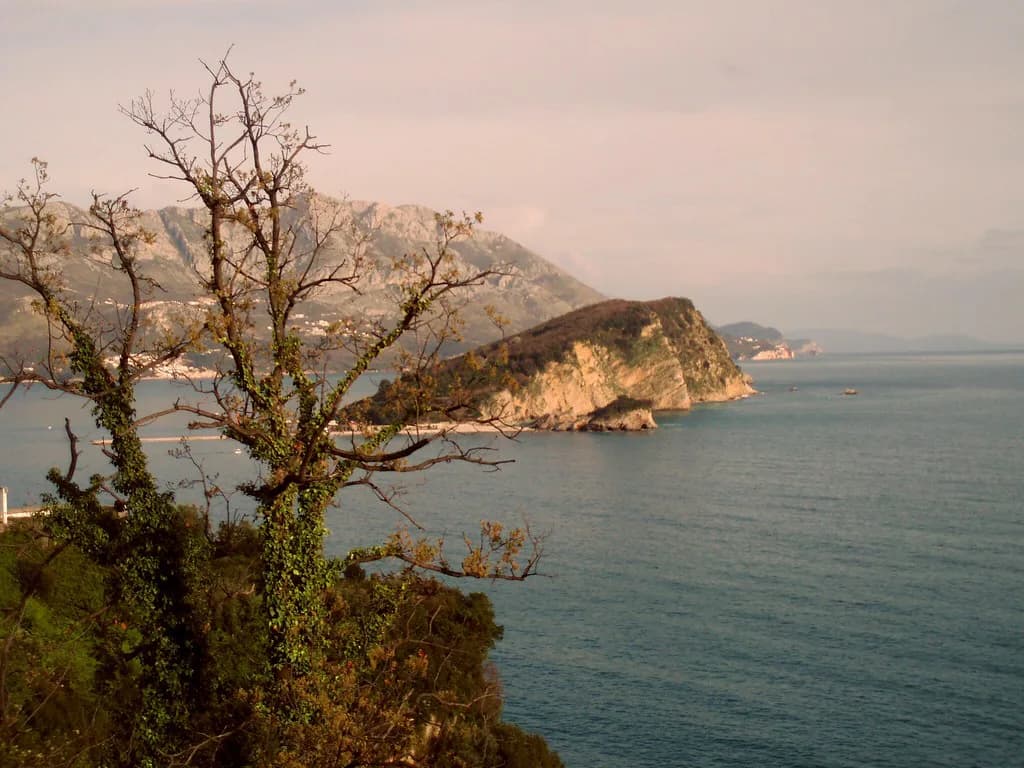
The old town is the natural start for the rest of the coast. Boats leave from the town side for the island offshore, and the beaches and resort strip run north and south of the walls.
A boat trip from Budva gives you the peninsula from the water, which is the only way to see how the walls meet the sea.
If you want to understand why the town looks the way it does before you walk it, the background on Budva history covers the earthquakes and the rebuild.
Further along the riviera, Rafailovići and the other resort strips are an easy continuation of a day that starts inside the walls.
Is the wall walk worth the detour inside Budva Old Town?
Yes, if you accept it as a there-and-back walk rather than a circuit. The lanes and churches take under an hour, and the walls add the one view you cannot get from inside the town, so go up early or late when the path is quieter and the light is better.
If you have only a short stop, skip the wall and spend the time in the lanes around Sveti Ivan and Sveti Trojica; if you have a full afternoon, do the churches, the Citadel and then the walls in that order.
Explore more Budva guides
Sources
Notes for your Montenegro trip
Optional updates to our Montenegro town guides.
You might also like
Continue reading
More guides you'll find useful