Montenegro Paragliding: Tandem Flights, Take-off Sites and Weather
A tandem paragliding flight in Montenegro usually launches from Brajići above Budva. Here is how the day works, from briefing to landing.
On this page
A tandem paragliding flight in Montenegro usually starts on a mountain ridge above the coast, and the most common launch for visitors staying in Budva is Brajići, at around 731 m above sea level. You fly with a qualified instructor who handles the wing, so no previous experience is needed. This guide covers where the Budva flight takes off and lands, how airtime compares with the whole outing, the other launches along the coast and in the mountains, why the weather decides, and what to ask before you book.
The setting matters as much as the flight itself: Budva and Bečići sit below a coastal ridge, while the Bay of Kotor and the northern mountains offer different landscapes and different conditions. Each launch has its own access road, wind direction and landing setup, so the choice is not simply a case of picking the nearest hill. Pair the flight with the rest of your things to do in Budva rather than building a day around it alone.
What a tandem paragliding flight in Montenegro involves
On a tandem flight you sit in a harness in front of a pilot who steers, trims and lands the wing while you follow a short briefing and a few take-off steps. The pilot reads the wind and cloud, chooses the launch and decides the landing setup for the day, then makes the final go or no-go call. The national tourism board describes a tandem flight in Budva as lasting around 10 to 15 minutes, which is typical airtime rather than the length of the outing.
It suits anyone reasonably mobile who wants a passive flight: you are not learning to fly the wing, and the pilot explains the harness and launch sequence before you leave the ground. A pilot-run site describes a typical first tandem as around 15 minutes in the air within an outing of roughly an hour, so treat the airtime figure as a norm rather than a promise.
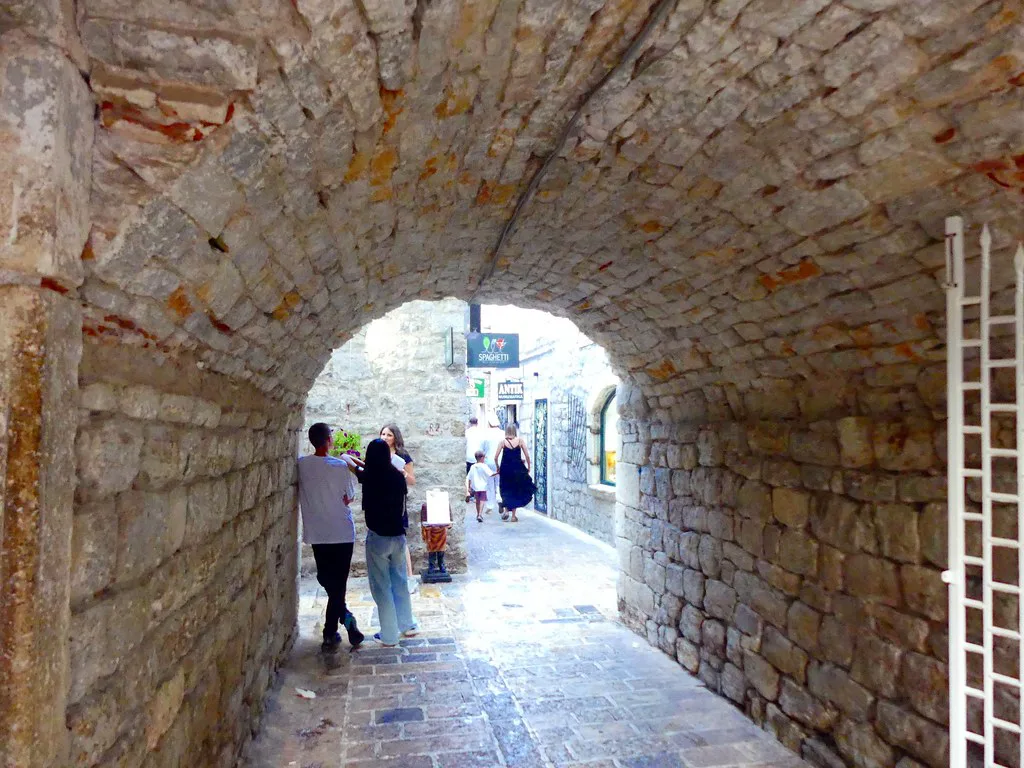
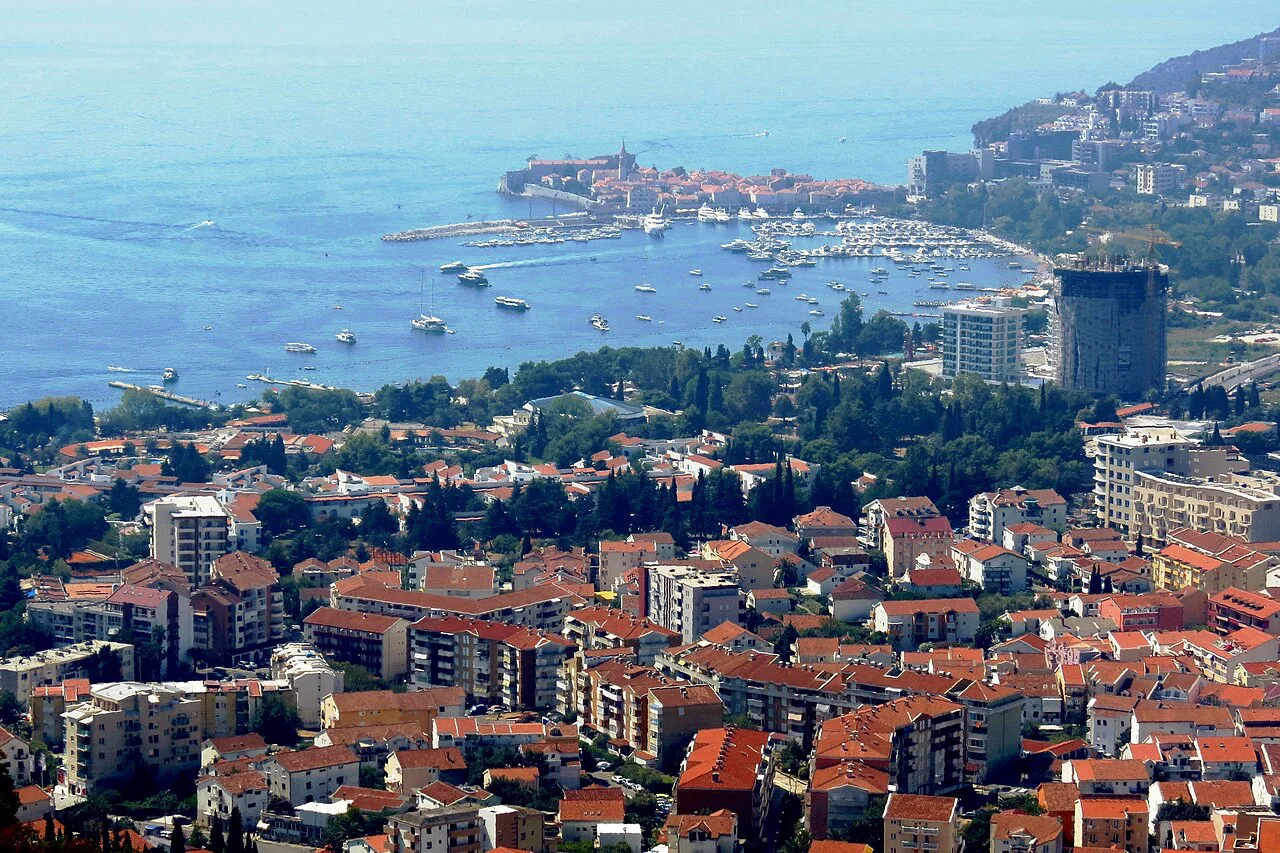
Where the Budva flight takes off: Brajići above the coast
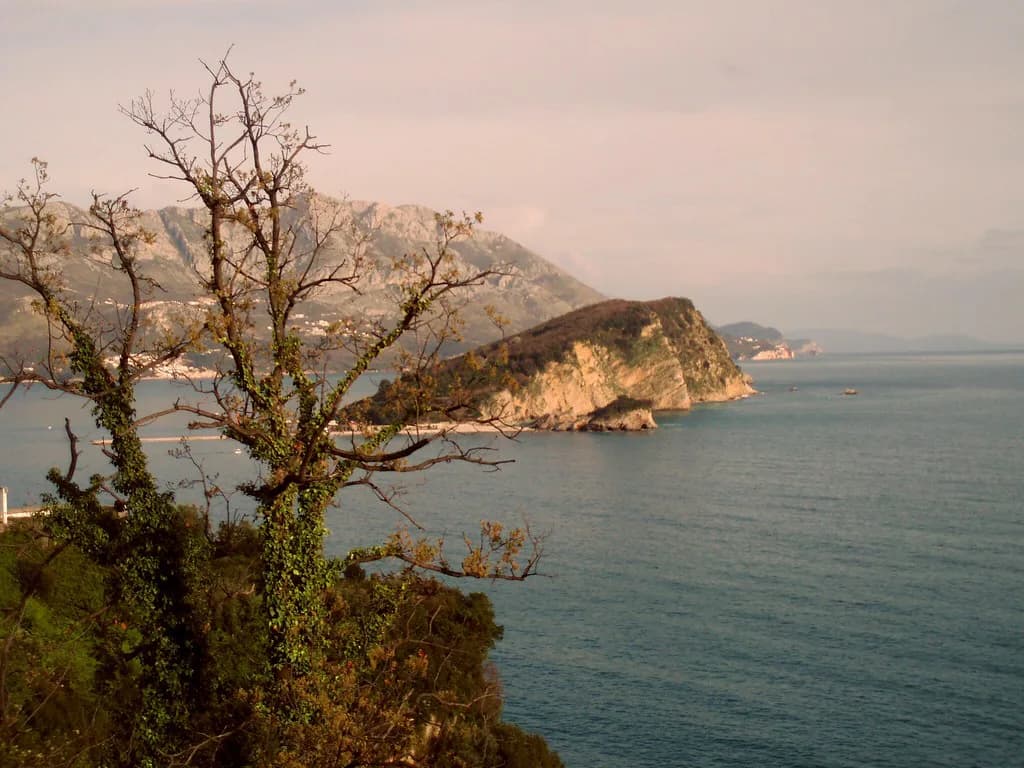
Brajići is the ridge launch for Budva, on the coastal slope between the Lovćen massif and Paštrovačka Gora. The national tourism board gives a take-off altitude of 731 m, while a local tandem operator cites roughly 760 m for the same slope; either way, you climb by road to a mountain launch, not from the beach. Budva, Bečići, Rafailovići, the bay and the open sea spread out below once you are airborne.
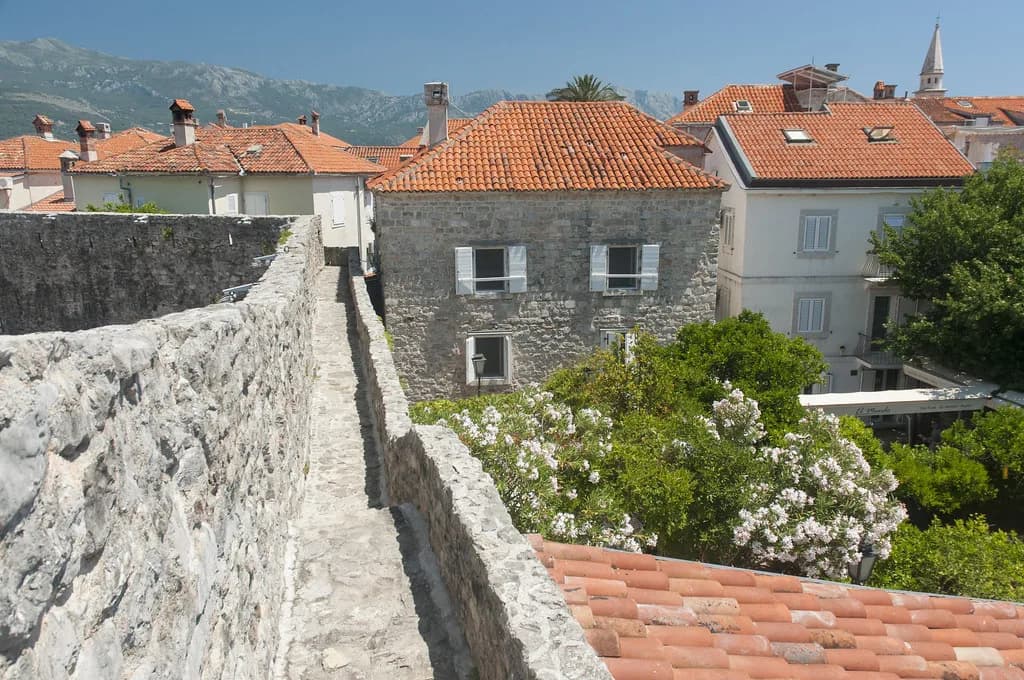
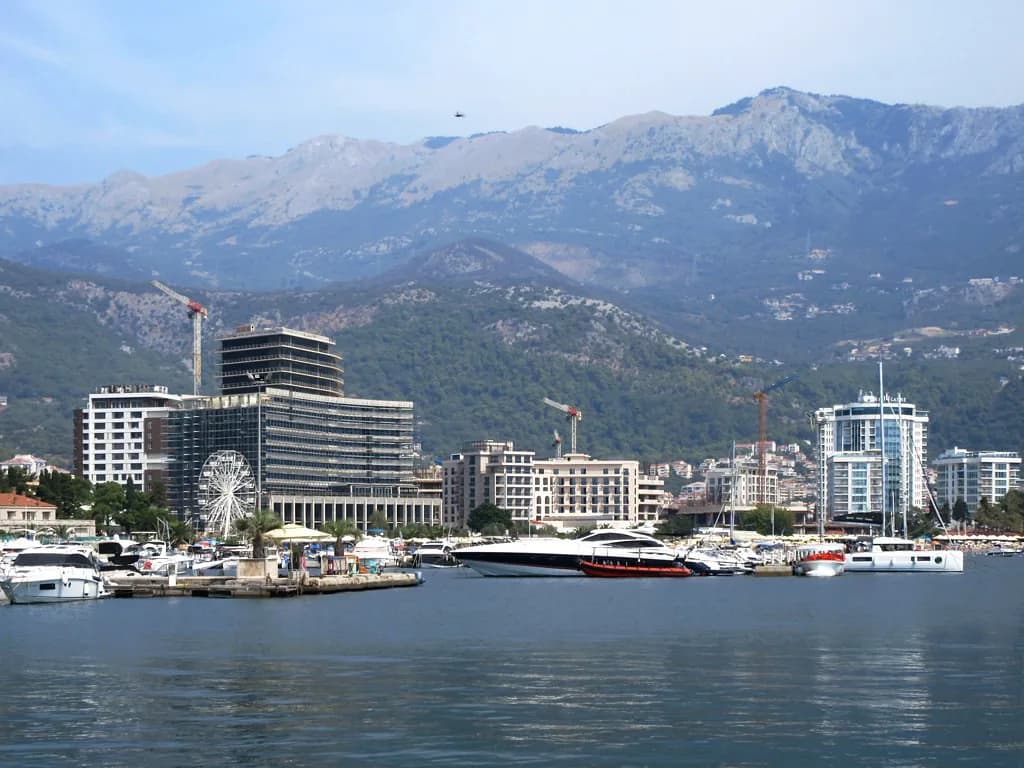
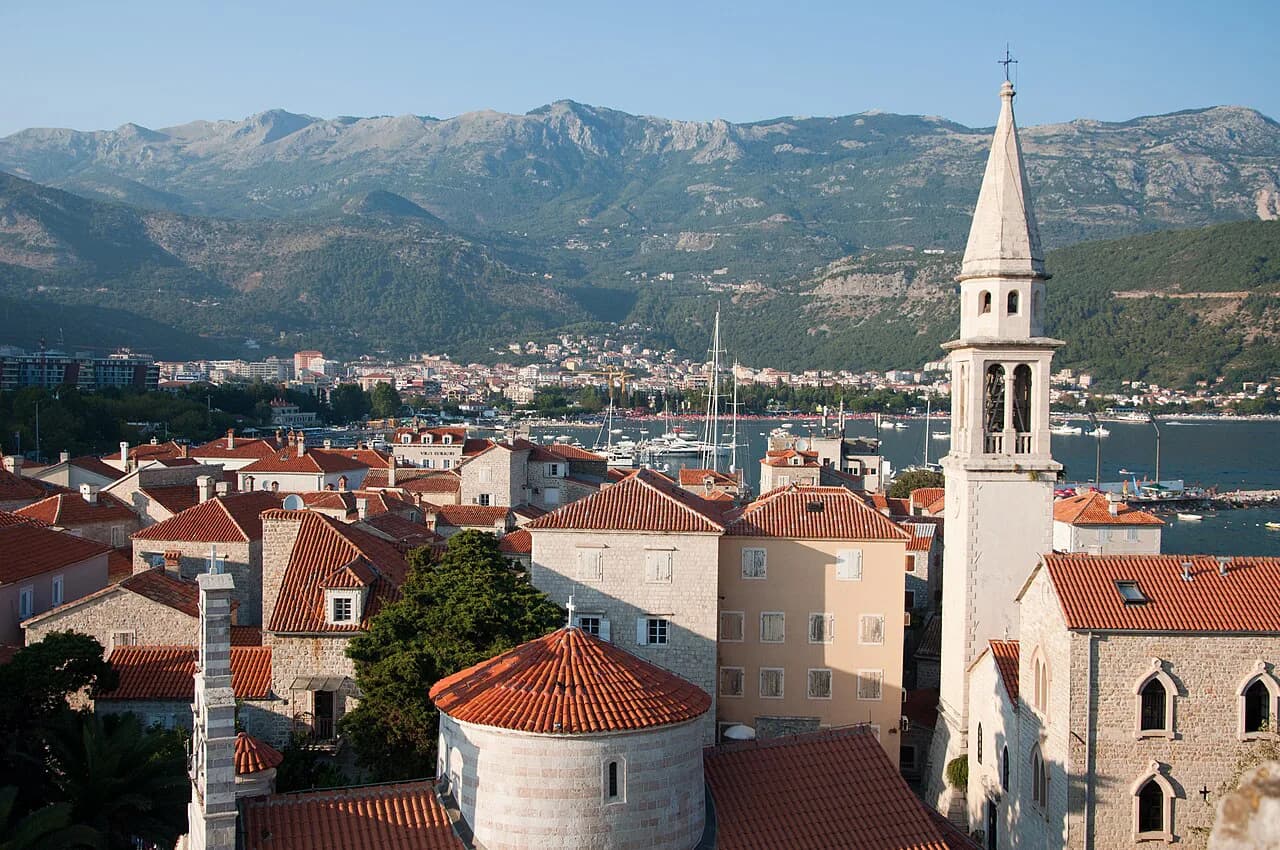
Framing the flight as a view over Budva helps you plan the rest of the day around it: the old town's roofs and Venetian walls sit below the ridge, and the marina and shoreline open up as you come round. If the old town is on your list anyway, pair the flight with a wander through it rather than scheduling both for the same tight window.
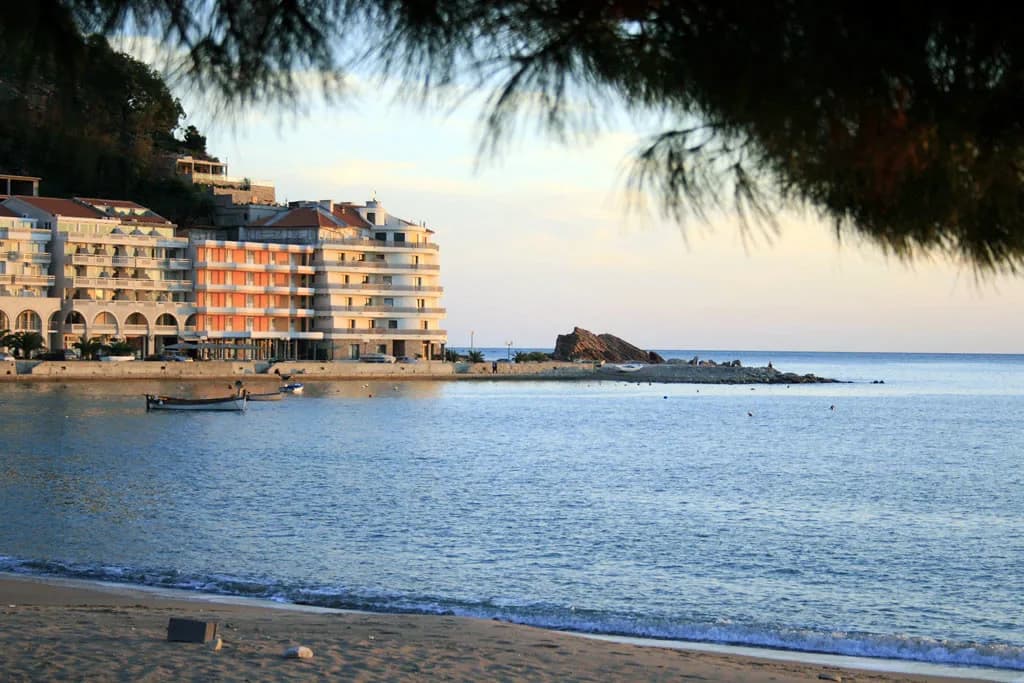
Where you land: Bečići beach and the pilot's call
The national tourism board lists the landing for the Budva tandem as the beach at Bečići. A local operator is more cautious, stating that the pilot selects the landing setup for current conditions, so the beach is the advertised setting rather than a guaranteed spot. Allow for the possibility that you drive back from a different field or finish further along the coast. For the practical details, see the Bečići.
If you are staying in Bečići rather than Budva, the flight fits neatly around a beach afternoon, since the meeting point is usually in Budva and the return brings you down to the coast. Keep the rest of the day loose: an hour is a reasonable block for the outing, but a wind change can push it later.
Airtime against the whole outing
Separate two numbers when you plan. The flight itself is typically around 10 to 15 minutes over the coast, while the whole activity, including meeting the team, driving to Brajići, briefing, launching and the return, often takes about an hour. A longer flight of roughly 25 minutes may be possible when the lift allows, but a local operator describes that as never promised.
Build in some slack rather than booking the flight against a bus or boat departure. If the ridge is unsuitable, flying may be delayed or called off altogether, so a free afternoon is a better base than a packed morning.
Other take-off points, from Vrsuta to Savin kuk
The coastline and the mountains hold very different launches. The national tourism board lists popular take-off points including Brajići above Budva, Vrsuta above Bar at 1,133 m, Dizdarica above Herceg Novi at 900 m, Dečić near Tuzi and, in the north, Savin kuk above Žabljak at 2,244 m and Visitor above Lake Plav at 1,589 m. The same source notes that a map with locations, coordinates and contacts sits with the Paragliding Association of Montenegro.
The coastal ridges give you sea, rooftops and a short flight, while the northern sites sit in high mountain air where the landscape below is lakes and canyons rather than shoreline. Reaching Savin kuk involves a two-seater cable lift to the take-off area, which the tourism board describes as about 20 minutes, with a 10 to 15 minute flight from 2,244 m.
Treat the site list as a starting point for a conversation with an operator. A launch that looks close on a map can have a difficult access road or a landing that does not suit the day, so the team you fly with is best placed to confirm which site fits your dates.
Flying from the Bay of Kotor and Herceg Novi
Around Kotor the bay creates an enclosed landscape with its own weather questions, which is why flying there looks and feels different from the open Budva coast. The Dizdarica launch above Herceg Novi sits at 900 m and is listed for southerly and south-westerly winds, so the wind direction at the launch decides whether it works on your day.
If you are based in Kotor for the old town and the walls, ask your operator whether a bay-side flight is realistic for your dates rather than assuming you can swap in the Budva launch at short notice. The two settings are not interchangeable, and the drive between them eats into the time you have.
Why the weather decides
A clear sky over the beach says little about conditions on the ridge above it. Wind direction, gusts, cloud build-up and landing conditions all feed into the decision, and the pilot makes the final call on the day. A national guide to flying in Montenegro puts it plainly: a forecast is context, not permission to fly.
Local teams publish live ridge readings for context, including a station at Brajići, but they present them as weather information rather than a fly or no-fly signal. If you have a fixed date, send it early and keep a second, flexible day in reserve so a grounded morning does not derail the trip.
Booking: an enquiry is not a confirmation
Most teams ask you to send a preferred date or date range and where you are staying, then check the current conditions before confirming anything. An enquiry starts that conversation; it does not hold a slot or guarantee a flight. Say whether you want the standard first tandem or a longer flight if the lift allows, and mention any mobility limits so the team can judge whether the launch suits you.
Before paying, ask what the fee covers, whether transport to the launch and any photos or video are included, and what happens if the weather stops the flight. Insurance and the operator's licensing are worth a direct question: the national tourism board points travellers to the Paragliding Association of Montenegro for site and contact information.
On the day itself, keep your phone on and confirm the meeting point. Many guests base themselves around the old town and New Budva, so a central meeting point is easy to reach on foot or by a short taxi ride on the lines shown on a Budva map.
What to wear and what happens at take-off
Wear closed shoes with grip and clothes that suit the mountain air rather than beach wear; the ridge is cooler than the shore. Bring a light windproof layer, secure anything loose, and leave bags you do not need with the team. At Brajići the crew explains the harness, the short launch sequence and how to hold yourself for the landing.
Expect to walk a few steps on uneven ground before the wing lifts. If you are nervous, say so: a pilot-led briefing is there to settle the harness and the first steps before the wind takes over. After landing, you return to the coast, which leaves the rest of the day free.
Prices and what a fee covers
Tandem prices are not quoted in the sources here, so ask the operator you choose for the current fee in euros before you commit. Ask what the fee includes: transport to the launch, the pilot, any photos or video, and the policy if weather stops the flight. Comparing two quotes on that basis is fairer than comparing headline figures.
Do not base your budget on a figure from a forum or a previous season. Keep the flight as one line in your broader Budva spending, alongside food and a boat tour, and confirm the price when the team replies to your enquiry.
Which launch should you ask for?
For most visitors based in Budva, ask about Brajići: it is the local ridge launch, close to the coast, and gives the classic view over the town, Bečići and the sea within an outing of roughly an hour. If you are staying around Kotor or Herceg Novi, ask whether a bay-side launch or Dizdarica suits your dates instead of driving to Budva.
Send your dates, your base and any mobility notes, expect the pilot to have the final say on the day, and treat the flight as the anchor of a loose half-day rather than a fixed appointment. Confirm the current fee, the meeting plan and the weather fallback before you pay.
Explore more Budva guides
Frequently Asked Questions
Do you need experience to fly tandem in Montenegro?
No. On a tandem flight a qualified instructor handles the wing, explains the harness and launch in a short briefing, and lands the glider. You follow simple instructions and do not steer.
How long is a tandem flight above Budva?
The national tourism board gives about 10 to 15 minutes in the air for the Budva tandem, and a local operator quotes around 15 minutes as typical. The whole outing, including the drive to Brajići, briefing and return, often takes about an hour.
Can you book a flight on the day?
Some teams may fit you in, but an enquiry is not a confirmation. Send your preferred dates and where you are staying, and the team checks conditions and availability before confirming.
What happens if the weather is unsuitable?
The pilot decides whether flying is appropriate, and wind, gusts or cloud can delay, shorten or cancel a flight. Ask the operator before paying what happens to your booking or fee in that case.
Sources
Notes for your Montenegro trip
Optional updates to our Montenegro town guides.
You might also like
Continue reading
More guides you'll find useful