Budva Map: Old Town, Sights and Getting Around
A practical guide to the Budva map: Old Town and New Budva, the neighbourhoods printed on it, free maps from tourist information points and walking times.
On this page
Budva divides into Old Town and New Budva, and reading the map as those two halves is the quickest way to orient yourself. This guide covers what the two parts of the map show, which free maps exist and where to collect them, and how the neighbourhood names printed on it change your walk times.
Most of the resort, including the beaches and hotels, sits within a 10–15 minute walk, so you can reach the sea without consulting a map at all. That figure is the best calibration for the whole town: nothing on the main map is far, but uphill edges of the map take longer than they look.
Where Budva sits on the map: the Old Town headland and New Budva
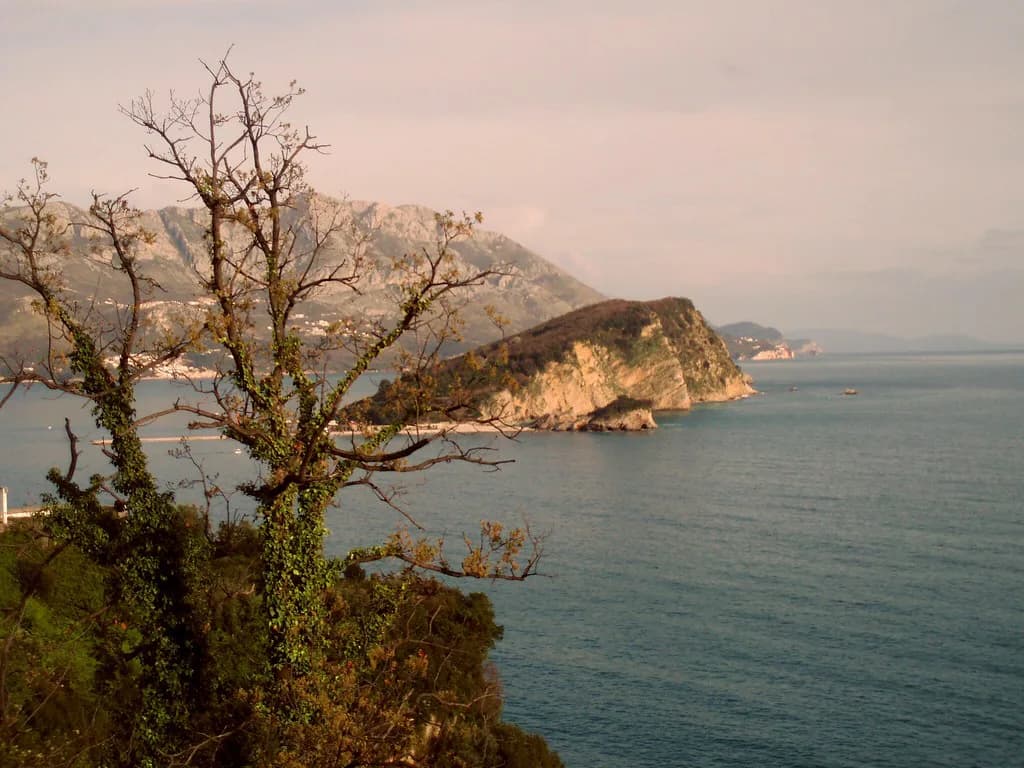
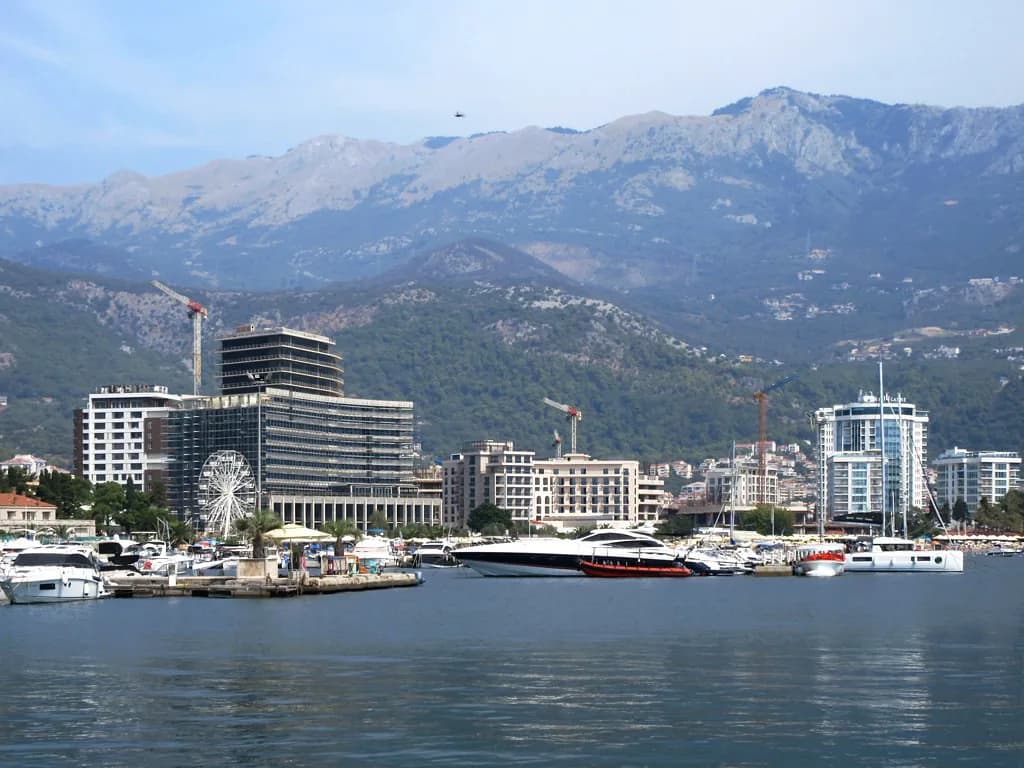
On the map, Budva reads as a coastal strip: the Old Town occupies a headland, and New Budva spreads around and behind it as the modern resort. The Old Town is the historic core; the modern part holds most of the hotels and beaches, and both are close enough that walking connects them.
The map guide describes the resort as split between Old and New Budva, with most hotels and beaches within a 10–15 minute walk and the sea reachable without needing a city map. Orient yourself first by the coastline, then by how far inland your accommodation sits.
For printable versions, a large-format map of Budva can be downloaded or printed for free, including a 3581 x 2560 pixel image and a smaller 1244 x 980 pixel version, from OrangeSmile's map collection. Print the larger file if you plan to annotate it with restaurants and swimming spots.
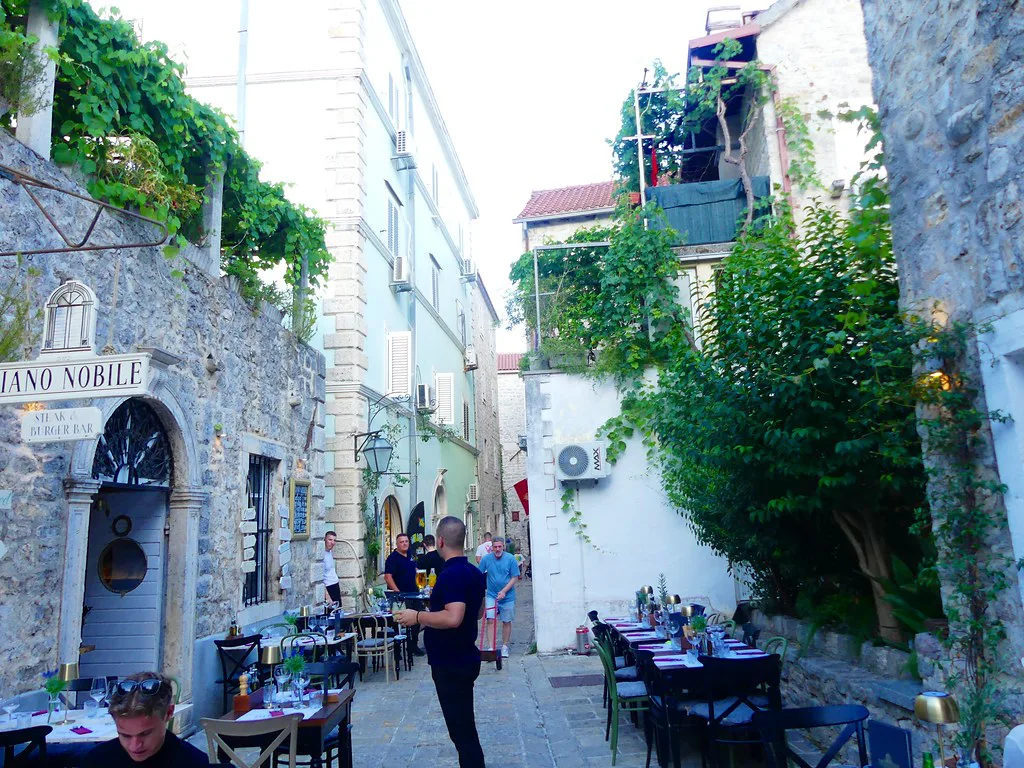
Old Town versus New Budva: what the two halves of the map show
The Old Town half of the map is the compact, historic core; the New Budva half shows the resort grid, hotel zones and the beaches. Starting with the Old Town half on paper is useful because everything else on the map can be measured from it.
The map guide's Old Town detail places permanent tourist information centres at Njegoševa br. 28 and in the municipality building, which gives you two fixed anchors to look for on the Old Town side. Mark both before you walk.
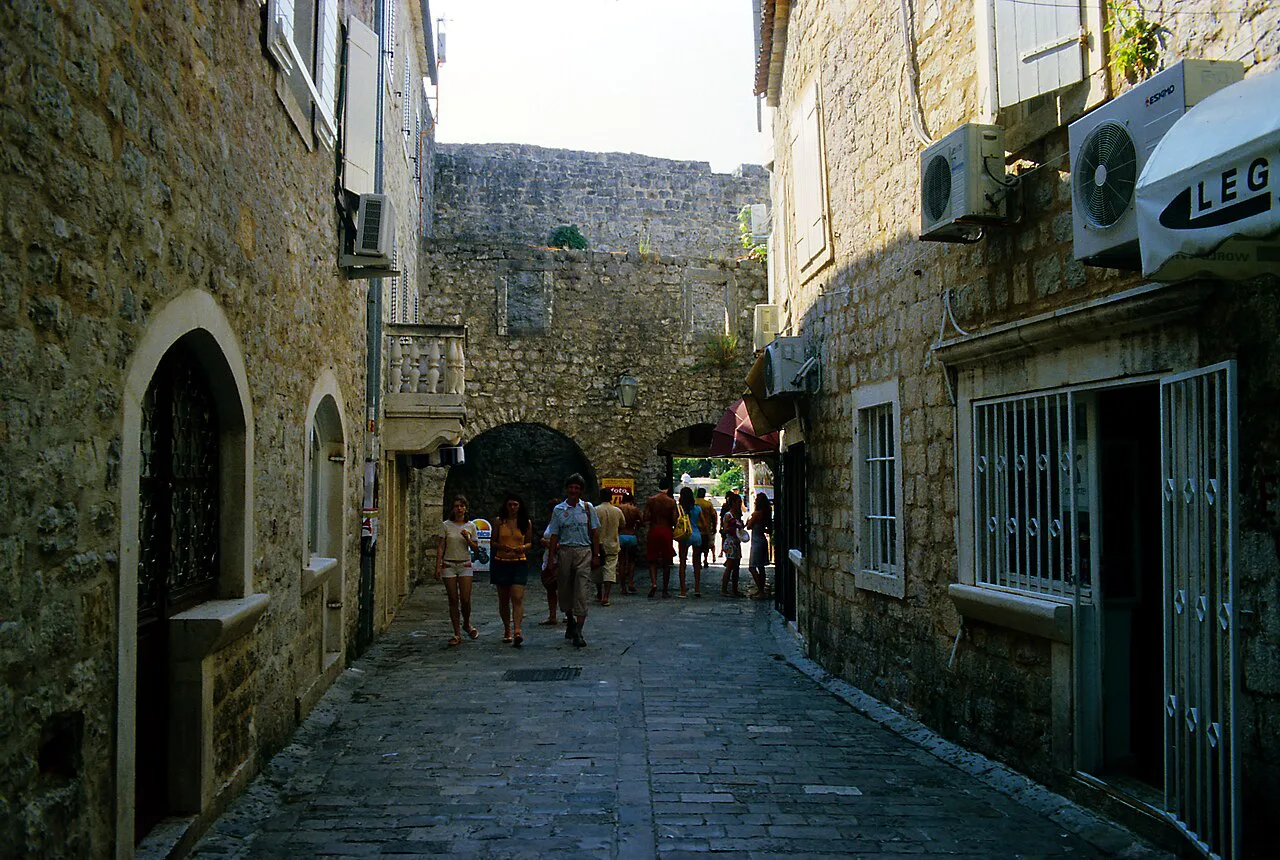
The Old Town at a glance: lanes on the map
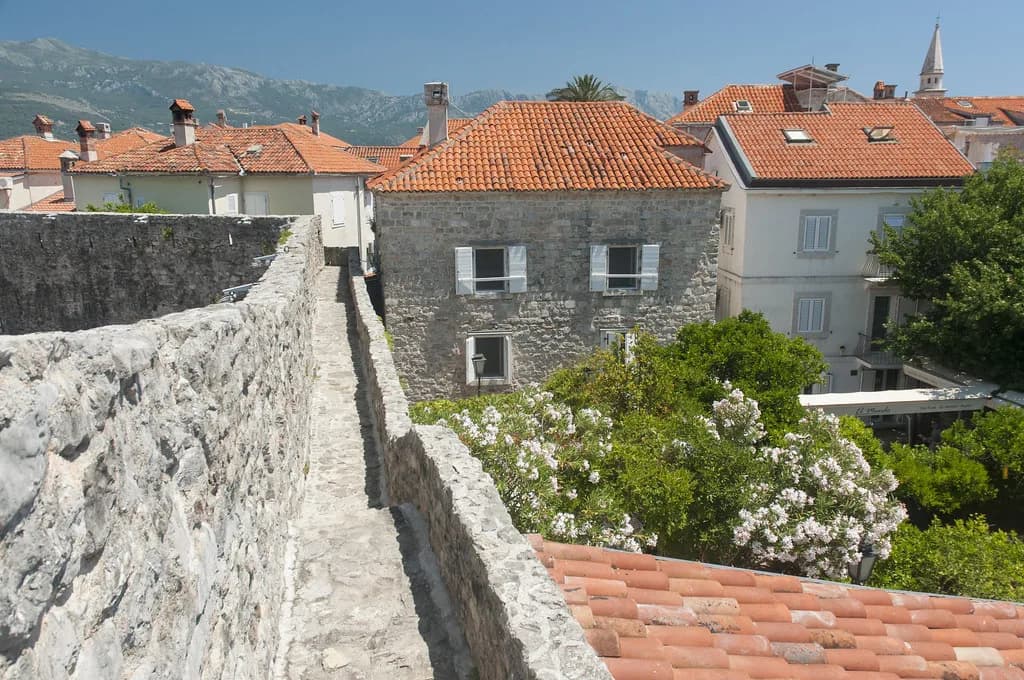
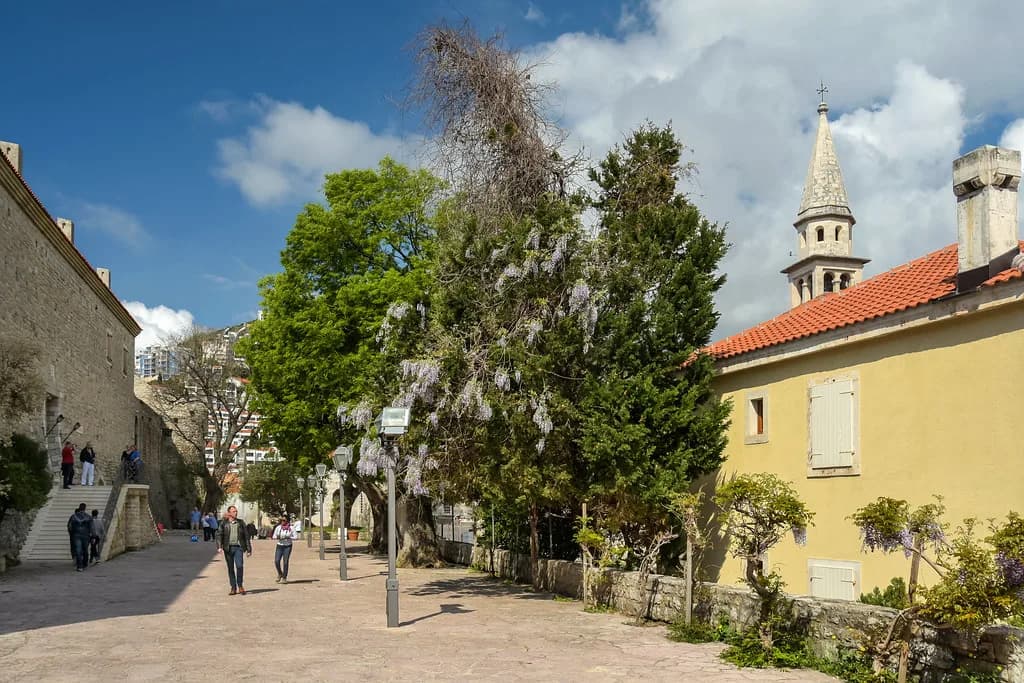
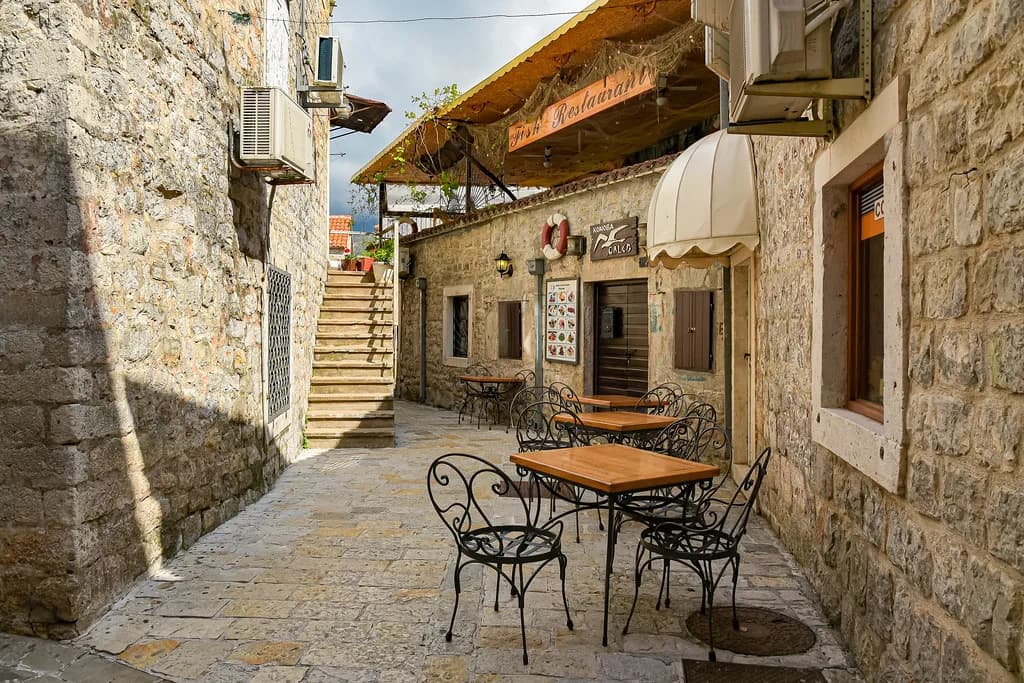
The Old Town is a tight cluster of lanes within the walled headland rather than a grid, so a street-level map of the town as a whole will not help much once you are inside it. Use town-level maps to get to the walls, then orient by the shoreline and the larger squares.
Plan around landmarks rather than street names: find the Old Town headland on the map, walk it from end to end, and note where lanes leave towards the sea and the modern resort. That gives you a natural loop back into New Budva.
Where to pick up a free map: tourist information centres
Permanent tourist information centres operate in the Old Town, and during the high season they also run at the Budva bus station and in the business centre across from Lugovi Stadium. Look for Njegoševa br. 28 and the municipality building for the year-round desks.
Those desks hand out free maps of Budva, hotel maps and brochures about the resort, so you can pick up a paper map on arrival rather than searching online. Collect one even if you rely on a phone, because it shows neighbourhoods at a glance.
The seasonal desks at the bus station and the business centre are worth knowing if you arrive by coach; check locally whether they are open when you arrive, as the high-season pattern applies only part of the year.
Beaches and Mogren marked on the map
The map connects hotels, the sea and the historic centre with short walks, so plot your route by where the sea sits relative to your accommodation rather than by street. Mogren and Richard's Head beaches sit near the leafy Gospostina area on the historic side, next to the historic part of the resort.
If you are staying on the far side of the Old Town, the walk into the centre follows the coast rather than the main road. A Budva map with the coastline marked shows this shortcut clearly, and the Budva old town guide covers what to do once you are inside the walls.
For water-based exploring, it helps to fix a starting point before you commit a morning to a Budva boat tour, and the town map's coastline is the clearest way to judge where the water meets the resort.
Neighbourhood names on the map and what they tell you
Several district names appear on a Budva map, and they explain your daily walk. Podkošljun sits opposite the Old Town, close to the sea, with affordable private housing and local infrastructure still developing. Gospostina is leafy and adjacent to the historic part, with Mogren and Richard's Head beaches nearby and shops within walking distance.
Rosino and Dubovica sit near the bus station, making them handy for day trips to other towns and well supplied with shops and cafes. Babin Do is the pick if you want sea and mountain views.
Lazi is described as mountainous and away from the beaches, a hard climb for adults and children alike. Vidikovac, higher still, gives strong views but is reached by a walk along the main road, steps through private houses or a cab ride.
The neighbourhood around Slovenski Beach is the crowded end in July and August, with cafes and restaurants close to the sea and the Old Town. If quiet matters, choose the other side of the map.
Reading the layout for orientation
The map splits neatly by function: bus-station neighbourhoods such as Rosino and Dubovica for transport, the seaside side for the Old Town and beaches. Decide which you need and plot accordingly.
If your accommodation is in Lazi or Vidikovac, expect a longish walk to the shoreline and plan a return route that does not add another climb at the end of the day.
For a single visual check of the whole resort, open the town's high-resolution map on a phone and zoom into the Old Town headland.
How to use the map with Google Maps on the ground
The paper map prints the names Podkošljun, Gospostina, Rosino, Dubovica and Babin Do, so matching them against a phone search by neighbourhood name rather than street address keeps you oriented. Cross-check with the printed map you collected from an information point.
Because the resort is compact, offline maps rarely fail you: pre-load the Old Town area, then use the coastline as your main guide for the last few minutes of each walk.
Distances in practice: what a 10–15 minute walk covers
In Budva, the section of the map between hotels and beaches is measured in a 10–15 minute walk. That covers most of the main resort, so a morning at the Old Town and a swim near Gospostina fit easily into one half-day.
Use that walk time to plan return trips rather than point-to-point distances: from most of New Budva, the Old Town and the sea are both within a short walk.
Which half of the Budva map should you use first?
Start with the Old Town headland and the two permanent information points, then use the neighbourhood names to plan your walks. Collect a free paper map when you arrive, because it shows the districts in one view, and pair it with our list of things to do in Budva for the stops along the way.
Explore more Budva guides
Frequently Asked Questions
How many days do you need in Budva?
Most of the resort sits within short walks of the sea and the Old Town, so a day or two covers the main layout comfortably. Add more if you plan day trips from the bus-station neighbourhoods of Rosino and Dubovica.
How do you get from Budva bus station to the Old Town?
The bus-station neighbourhoods of Rosino and Dubovica are handy for transport, while the Old Town and beaches sit on the seaside side of the resort; both are within the compact town the map lays out. Look for the seasonal tourist information desk at the bus station if you need directions on arrival, but check locally whether it is open when you arrive.
Is the Budva Old Town walkable?
Yes. The Old Town is a compact, historic core, and the map describes most hotels and beaches as within a 10–15 minute walk, so the Old Town is easily reached on foot from the resort.
Sources
Notes for your Montenegro trip
Optional updates to our Montenegro town guides.
You might also like
Continue reading
More guides you'll find useful