Herceg Novi Fortresses: Kanli Kula, Forte Mare and Španjola
A practical guide to Herceg Novi's fortresses: Kanli Kula, Forte Mare and Španjola, what each one is and how to walk between them in the old town.
On this page
Herceg Novi has three fortresses in and above the old town that you can link on foot: Forte Mare at the waterfront, Kanli Kula on the upper edge of the old town and Španjola on the Bajer hill about 170 metres above sea level. Walking between them takes a morning or a relaxed afternoon, and the order matters because Španjola sits highest. This guide covers each fortress, the gates and squares that link them, the stairs involved and what to confirm before setting out.
Each fortress shows a different hand. Forte Mare carries Venetian and Austrian rebuilding, Kanli Kula was erected by the Turks and later turned into an open-air stage, and Španjola was begun under short Spanish rule and finished by the Ottomans. The town's record of its rulers explains why the walls change character as you climb, and the background sits in the wider Herceg Novi History.
The fortresses in and above the old town
Three fortresses sit within the old town's stair network and are the realistic targets for a visit on foot: Forte Mare by the harbour, Kanli Kula at the northern edge of the old town and Španjola on the hill above. The town's fortresses date from the Turkish, Venetian, Spanish and Austrian periods and are the surviving evidence of its succession of rulers.
A separate group of forts guards the entrance to the bay rather than the town: Arza, Mamula and Prevlaka on Cape Ostra. These are seen from the water or from across the bay, not reached by old-town stairs, so treat them as scenery rather than stops on the walking circuit.
Forte Mare: the sea fortress by the harbour
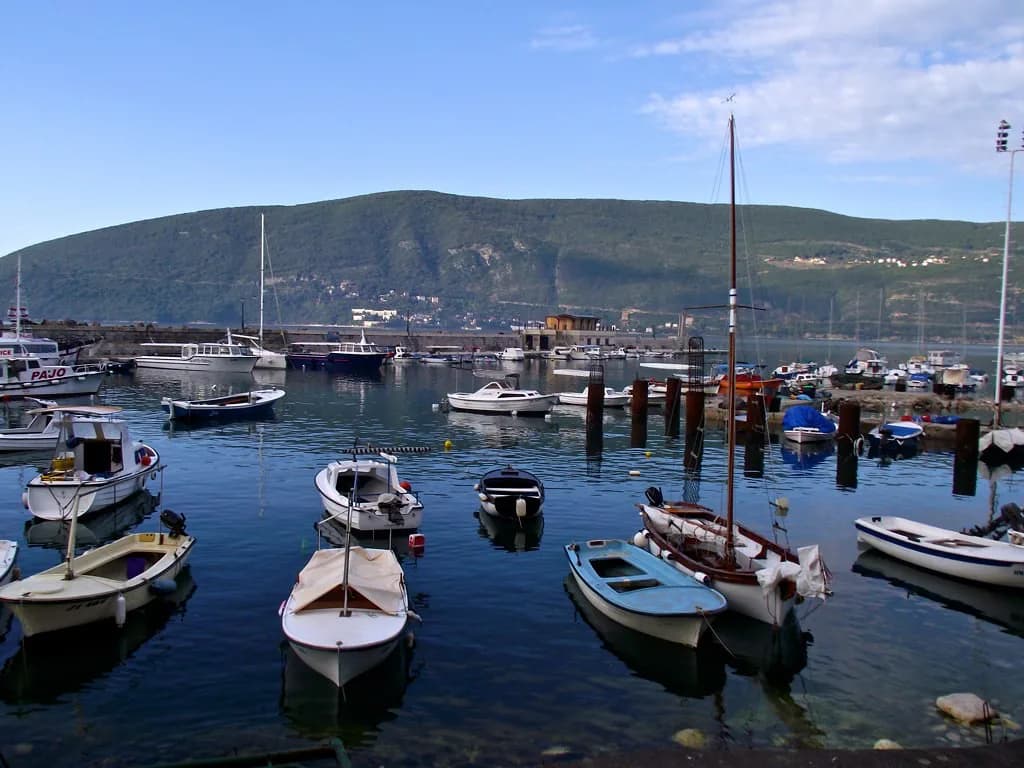
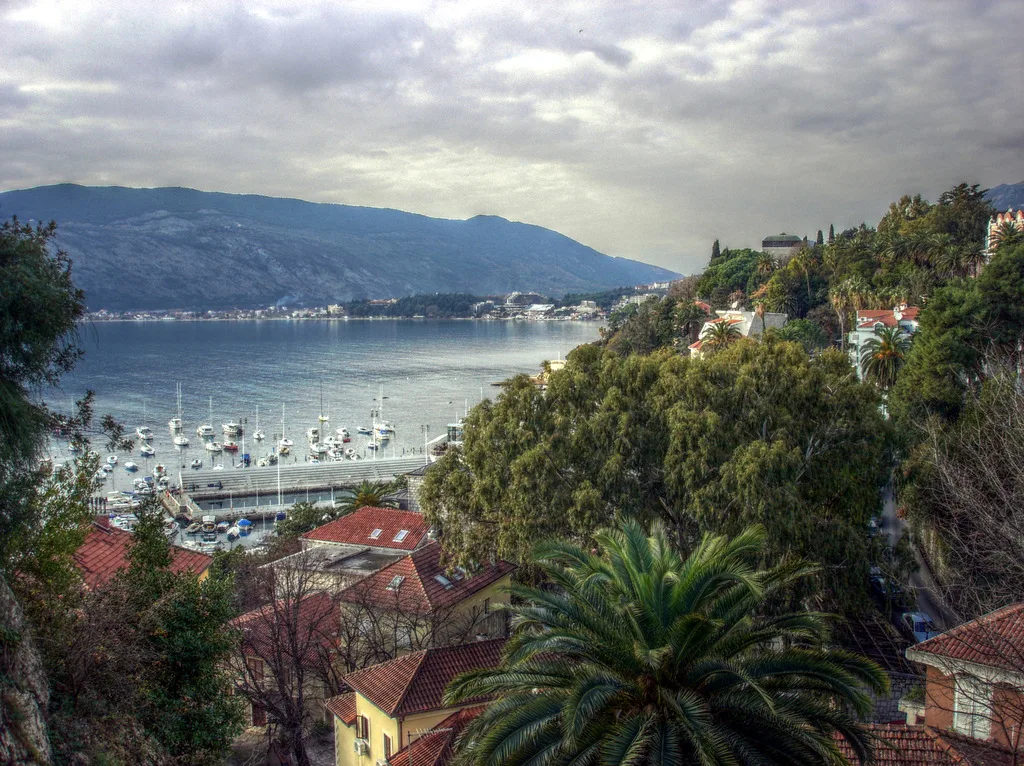
Forte Mare stands on the rocks at the southern end of the old town, beside the town harbour. It reached its present size and shape under Turkish rule, with cannons and defensive structures added, and the Venetians gave it the name Forte Mare in the 18th century.
The Austrians added further construction, and the fortress was reconstructed in 1833 in the form you see today, with passages and steps threaded through it. A theatre and a visitor entrance were added in 1952, and the upper level gives a view back over the town and the sea. Because it sits beside the harbour, Forte Mare works well as the start or end point of a fortress walk.
Kanli Kula: the Bloody Tower above the old town
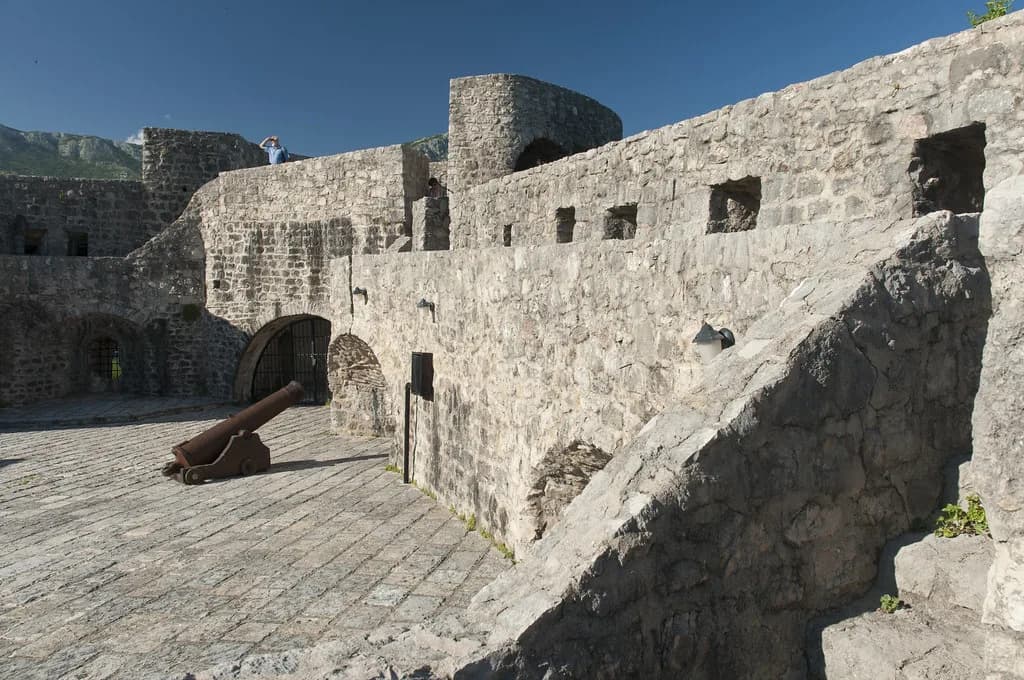
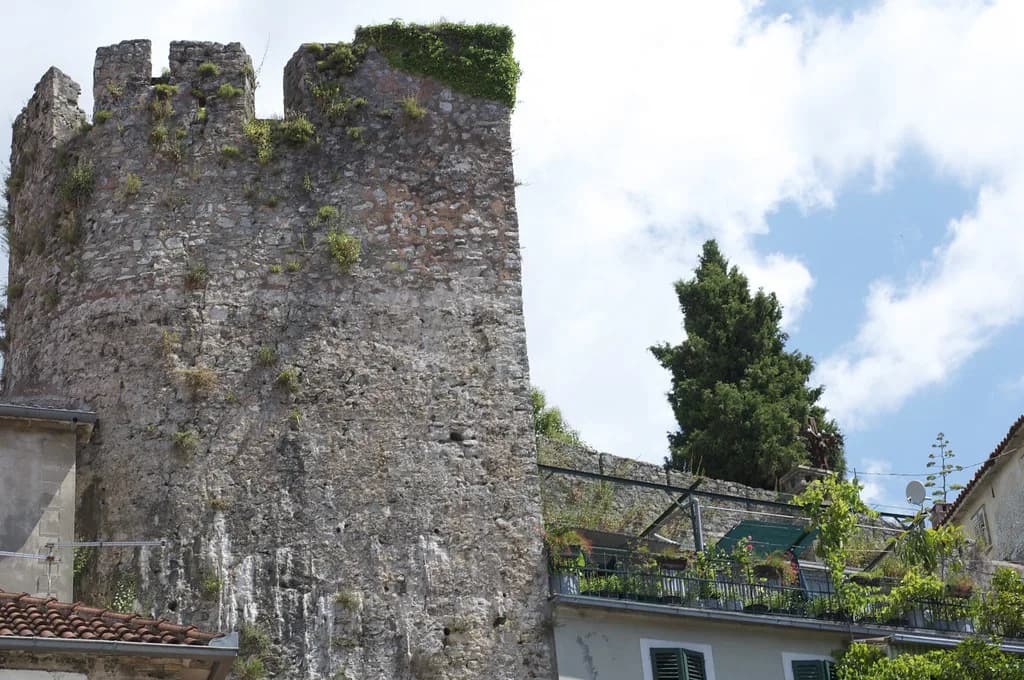
Kanli Kula, the Bloody Tower, stands at the northernmost point of the old town, about 85 metres above sea level, and is bound into the town's wider fortification system. Its irregular plan with well-preserved outer walls and corner towers encloses a space of roughly 70 by 60 metres. The cistern that served as a prison sits on the west side.
Renovated in 1960 and converted into a summer stage, then repaired again after the 1979 earthquake damaged the interior, Kanli Kula now hosts film, music and folklore events against the sea view. The fortress was erected by the Turks after they retook the town in 1539, and the cistern said to have served as a prison is the detail most worth seeking out.
Španjola: the Spanish fortress on the Bajer hill
Španjola sits on the Bajer hill in the north-eastern part of the old town, at about 170 metres above sea level, and the climb is the reason to leave it until you have seen the lower sites. The Spanish began building in 1538 and held the town only briefly, and the Turks later gave the fortress its final and comparatively inaccessible form.
Inside, very little remains, but you can still make out barracks, firing positions and auxiliary buildings, now overgrown, plus the Arabic inscription above the entrance and the view over the town and bay. Local records also call the site the Upper Town, so signs may use either name. Its ruined state means rough ground rather than rooms to wander.
The Clock Tower and the squares that link the fortresses
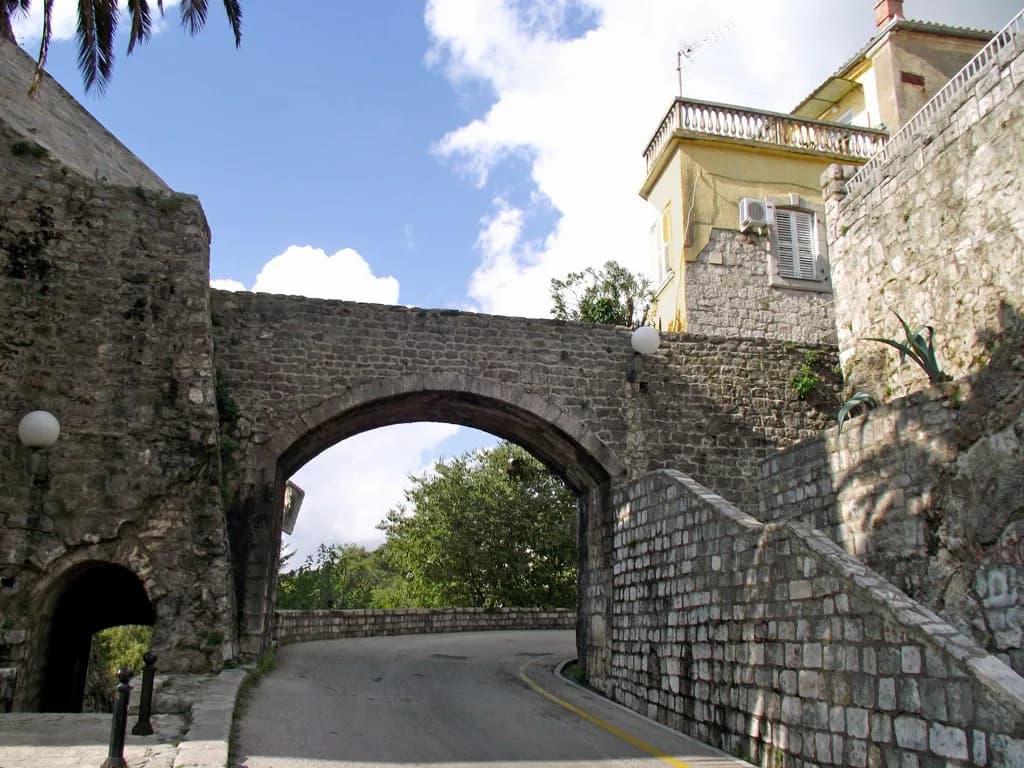
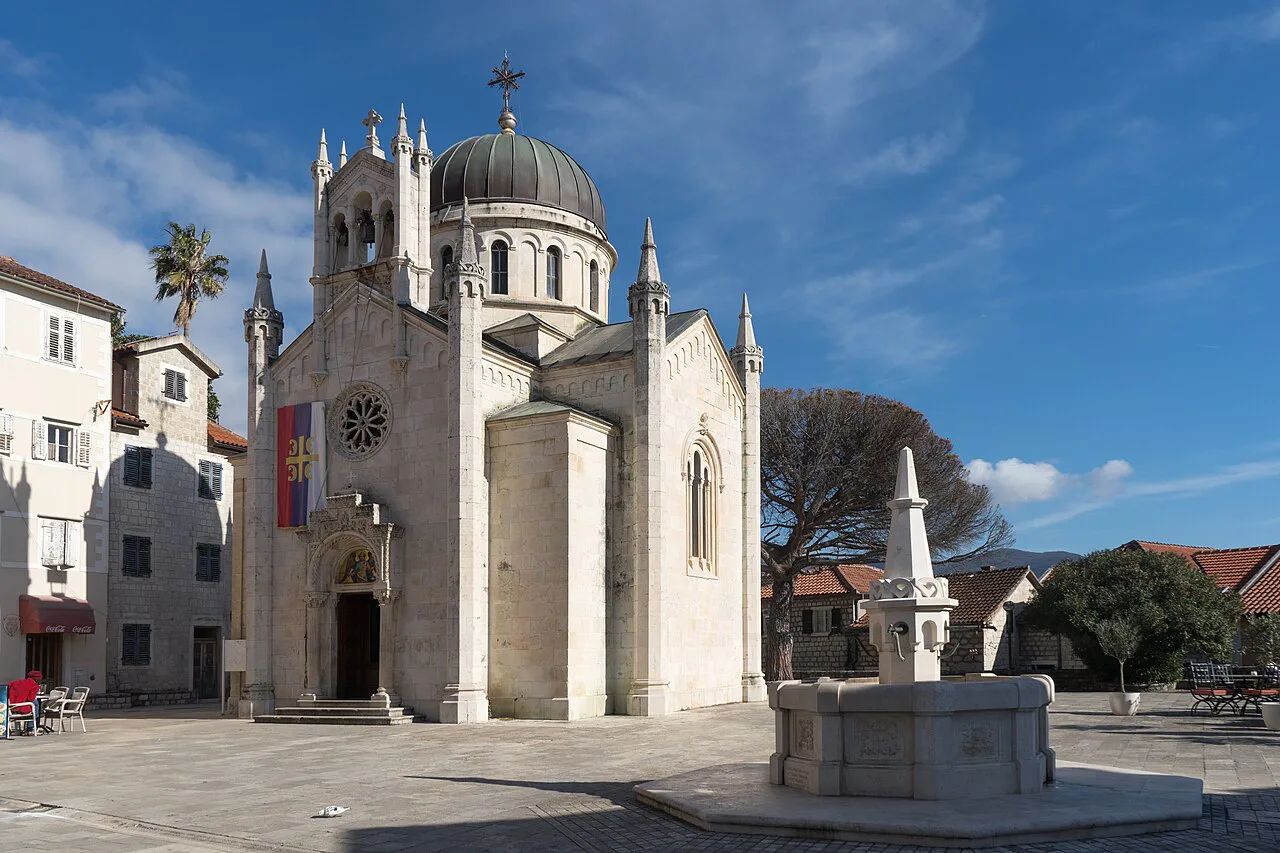
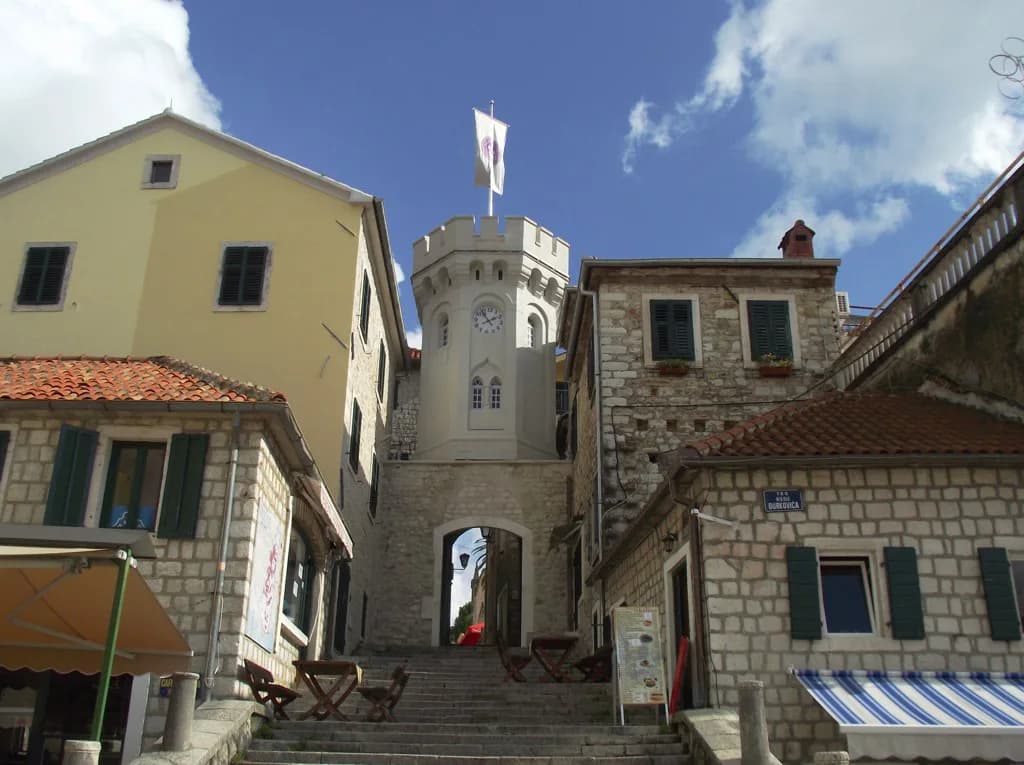
The Clock Tower, also called the Sahat Tower or Tora, stands at the western gate of the old town and serves as the town's symbol. Built in 1850 in a pseudo-Roman style, it has stairs beneath it that drop to Herceg Stjepan Square, also known as Belavista Square, which is dominated by St. Archangel Michael Church. The north stairs from that square lead up to Kanli Kula.
Use the Clock Tower as your orientation point: it separates the lower lanes near Forte Mare from the climb to the upper town. Several churches sit along these lanes, so the walk between fortresses is punctuated by stops rather than one long staircase.
Walking between the three fortresses
Start at Forte Mare by the harbour, climb through the lanes to the Clock Tower and Herceg Stjepan Square, then take the north stairs to Kanli Kula before continuing up to Španjola. Doing Španjola last means the steepest stretch is one continuous climb rather than something you repeat, and the descent afterwards is all downhill to the waterfront.
The old town is built on terraces and flights of steps, which is why the town has long been associated with stair climbing rather than level streets. Wear shoes with grip, carry water in summer and allow for the fact that the return from Španjola is spent watching your footing rather than the view.
How long to allow
Half a day covers the three fortresses, the Clock Tower and the squares between them at a comfortable pace, with the Španjola climb and descent taking the largest share. If you want time inside Kanli Kula and photographs from every terrace, give it the full morning and leave the afternoon free.
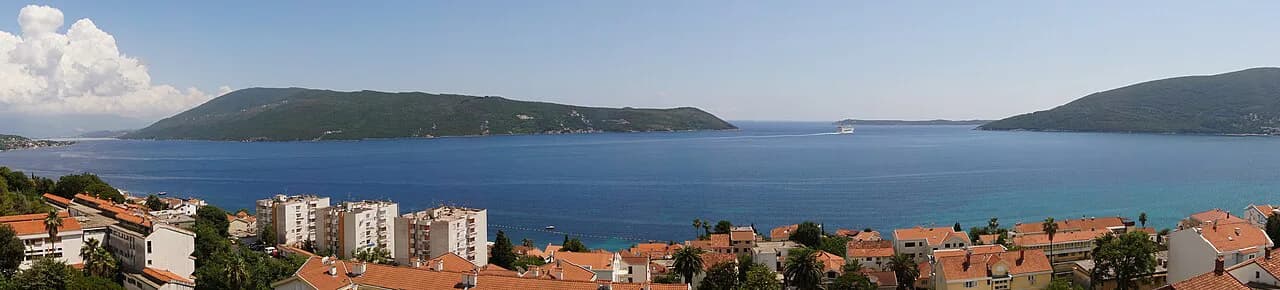
Allow extra on days when Kanli Kula is set up for a performance, since part of the interior may be in use. The town sits between Mount Orjen and the bay entrance, so sea views open up quickly as you gain height.
Access and events at the fortresses
Kanli Kula has functioned as a summer stage since its 1960 conversion and now hosts events including film, music and folklore performances, so parts of it may be in use for a show. Its walls and summer stage are open-air, and events there are held against the sea view.
Check locally before setting out if a performance is scheduled, as the stage area may be in use that evening. Wear shoes with grip for the stepped lanes, whatever order you choose.
Fortresses at the bay entrance: Arza, Mamula and Prevlaka
Beyond the town, the bay entrance is guarded by three forts: Arza, about one nautical mile from Mamula, and Prevlaka on Cape Ostra, which now lies in Croatia. Together they formed a shield against unwanted entry into the bay, and they belong to a different trip from the old-town circuit.
These forts are best seen on a boat trip out of the bay or from a viewpoint across the water; they are not part of the walk between Forte Mare, Kanli Kula and Španjola. If you plan to see them from the sea, ask the operator which route passes them and how close the boat comes.
Which fortress order suits your day
Forte Mare, then Kanli Kula, then Španjola is the order that puts the 170-metre climb last and ends with the widest view over the town and bay. If you have only an hour, take in Forte Mare and the Clock Tower, and save the upper town for a cooler part of the day.
Sources
Notes for your Montenegro trip
Optional updates to our Montenegro town guides.
You might also like
Continue reading
More guides you'll find useful