Herceg Novi Old Town: Fortresses, Squares and Stairs
Herceg Novi Old Town is a pedestrian warren of stairs, squares and two fortresses above the Pet Danica promenade. Here is how to walk it and what you will see.
On this page
Herceg Novi Old Town is a compact, pedestrian quarter built up a hillside, entered through stone gateways and threaded with steep flights of steps that locals call the City of Stairs. Allow two to three hours for a loop that takes in Kanli Kula at the top, the Clock Tower squares in the middle and Forte Mare at the water, with time out for the views. This guide walks you through it in that order and covers the waterfront below the walls.
The quarter sits in the centre of town, directly above the Šetalište Pet Danica seaside promenade, and there is no vehicle access inside it. You arrive on foot, from the main road above or from the seafront below, and you climb either way. Plan to leave the car in a paid public car park near the seafront and walk up.
Where the Old Town sits and how to enter it
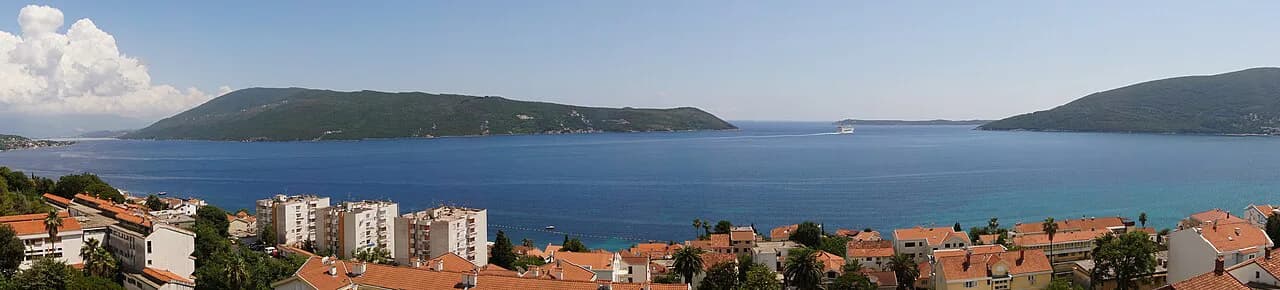
Herceg Novi Old Town occupies the historic heart of the town, perched at the western entrance to the Bay of Kotor where the Adriatic meets the bay. It lies between the main road on the slope above and the Pet Danica promenade at the water. If you are staying in town, the gateways are usually a few minutes' walk from your door.
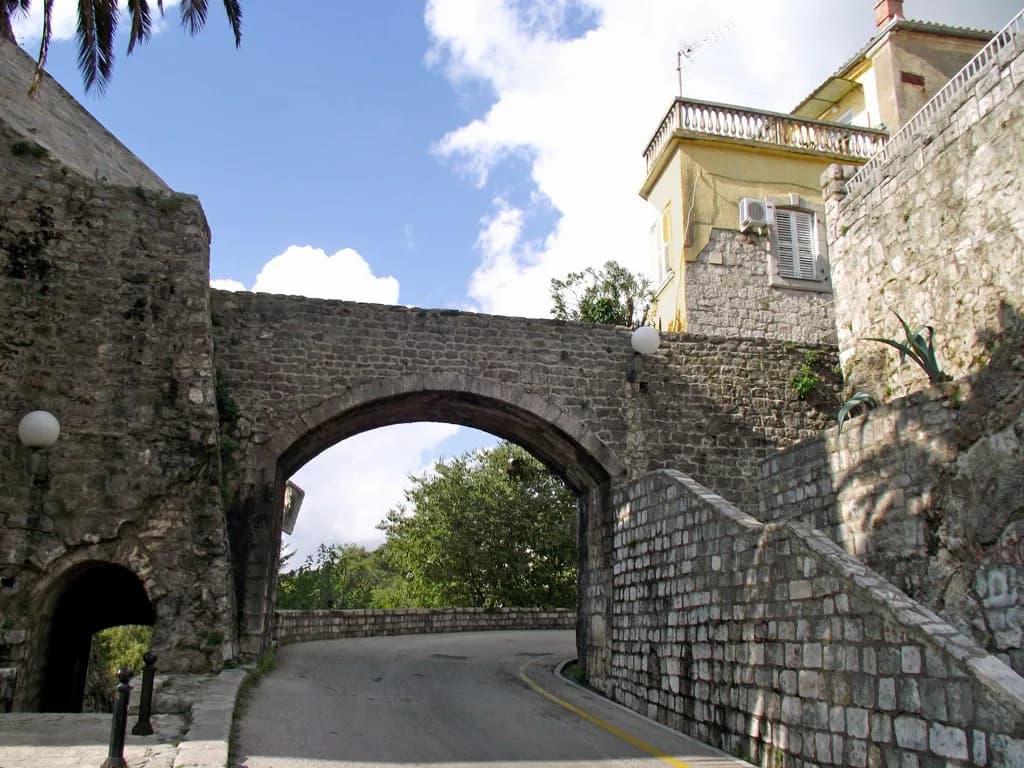
Coming from the east or the west along the main road, you drop into the centre and meet Kanli Kula first, in its position above the town. From the seafront, you enter lower down, through stone gateways off the promenade. Either way the gateways are the only way in, and once inside everything is on foot.
Two fortresses bookend the quarter: the seaside Forte Mare and the hilltop Kanli Kula, with a warren of cafés, stone-paved squares and viewpoints between them. Beneath it all runs the promenade, lined with swimming spots, beach bars and boat moorings. A good walk takes in the top fortress, the middle squares and the sea fortress in a single sweep down to the water.
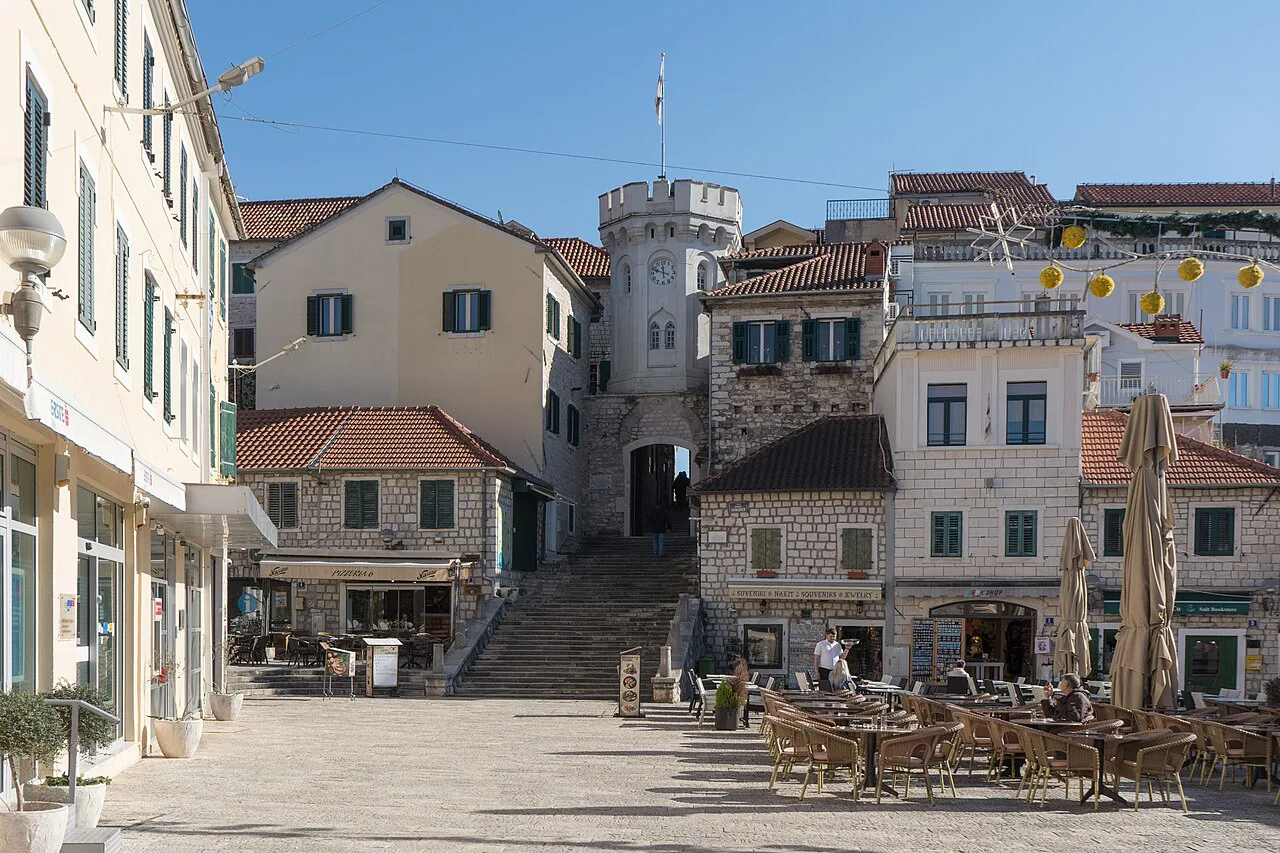
Kanli Kula: the hilltop fortress at the upper entrance
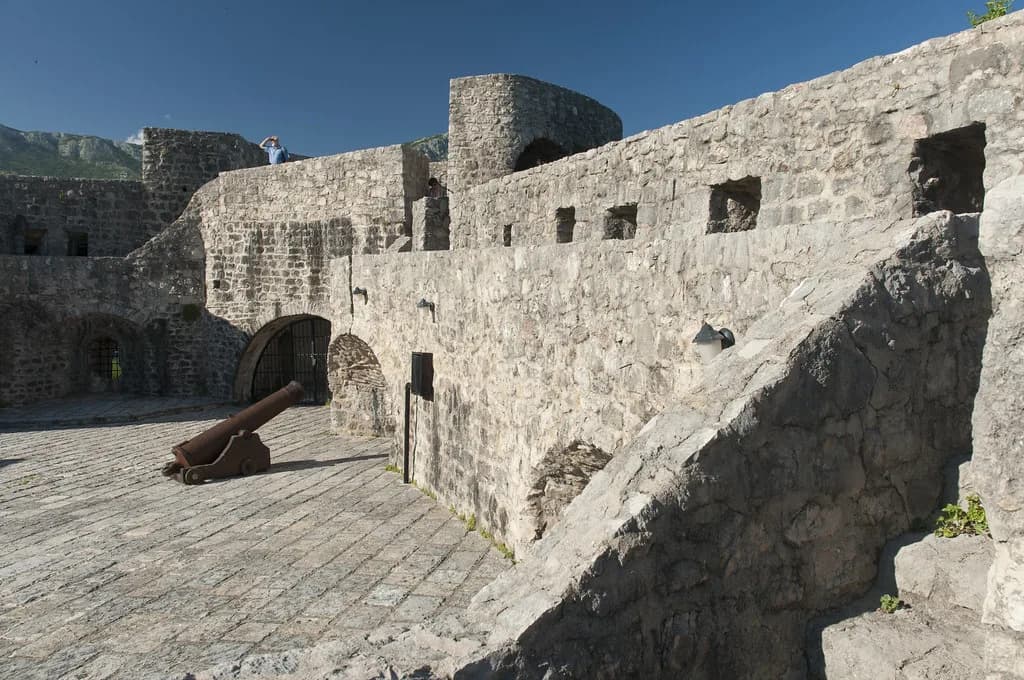
Kanli Kula, which translates as the Bloody Tower, stands at the upper edge of the old quarter and is the first major structure you meet when you arrive from above. It is a hilltop fortress, and its position gives the broadest view over the bay and the rooftops below. Treat it as the natural starting point and the place to get your bearings before descending.
The climb to it is the steepest part of the walk, and in summer the stone holds the heat. Go early or late in the day if you want the terrace quieter and the light on the bay rather than behind it. The streets are free to walk, and the two fortresses sit at opposite ends of the quarter, so allow time for both.
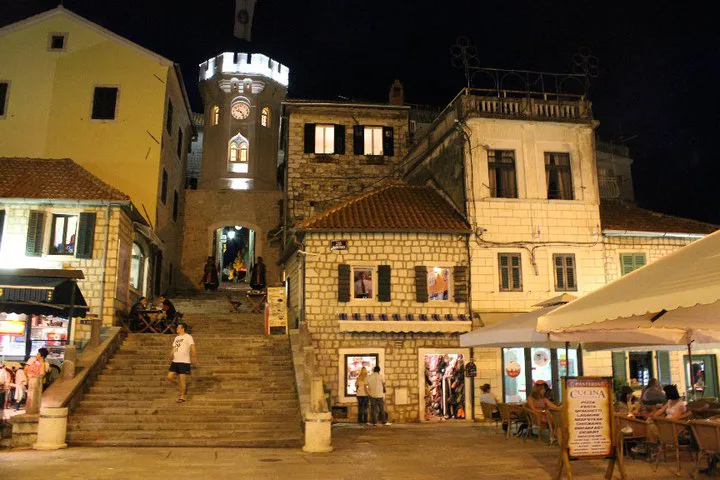
The Clock Tower and the two squares
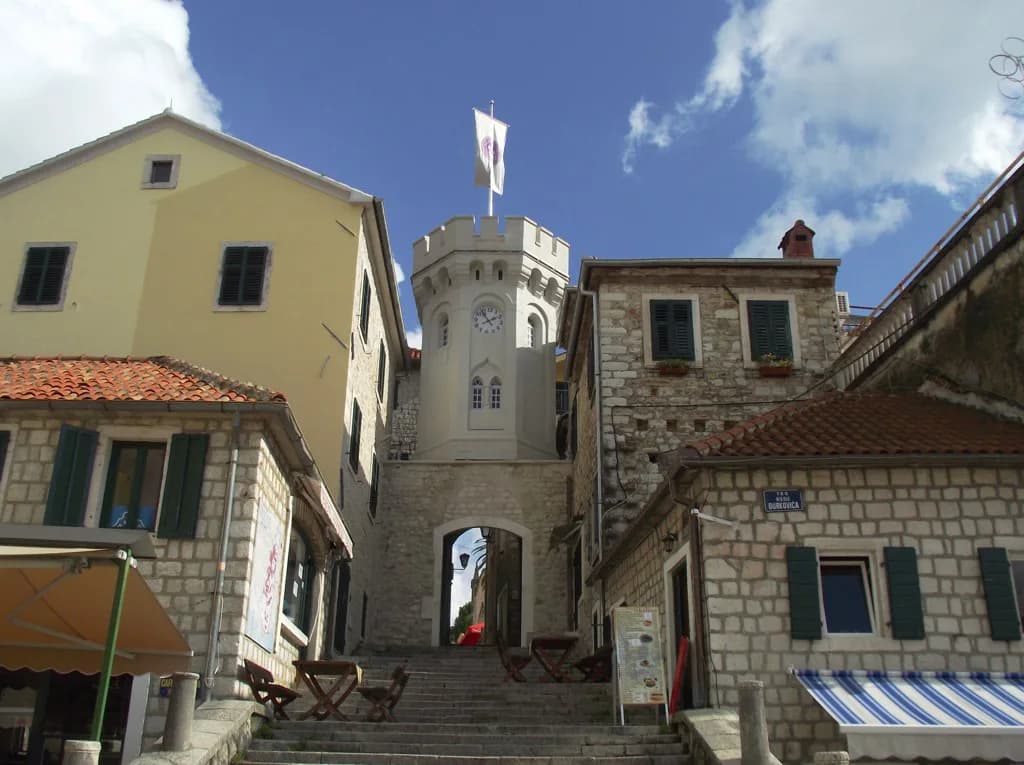
Below Kanli Kula, the Sahat Kula, or Clock Tower, marks the heart of the old quarter, where two squares open out among the stone houses. This is the social centre of the walk: café tables spill onto the paving, and the staircases converge here from several directions. It is the obvious place to pause and the easiest landmark to navigate by if you lose your thread.
The squares are small, and their character changes through the day: quiet in the morning, busier as the afternoon wears on and the cafés fill. Because the quarter is compact, you can loop back through the squares more than once without much effort. Use them as a rest stop between the upper fortress and the sea.
Streets and stairs: how steep the climb is and where the shade falls
The old quarter is built on a hillside, so exploring it means climbing up and down, often on steep stone steps. The climb is constant rather than concentrated in one place. Give yourself longer than you think you need, and wear shoes with grip rather than smooth soles.
Shade comes from the buildings themselves and from the vegetation that frames the steps: bougainvillea, oleander, mimosa and palms spill over the walls between the houses. The narrow passages stay cooler than the open squares, so on a hot day route yourself through the lanes and save the squares for the cooler hours. The town's mild microclimate supports lush Mediterranean and botanical gardens, which soften the stone.
A loop from Kanli Kula down through the squares to Forte Mare and back along the promenade fits comfortably into a half day, including stops. If you want to linger in the gardens, passages and churches on the way down, budget closer to a full morning. A self-guided route helps here, because the staircases fork in ways a map does not always show.
Forte Mare: the sea fortress on the waterfront
Forte Mare is the seaside fortress at the bottom of the old quarter, where the walls meet the water and the promenade runs past below. Its rooftop is the draw, giving a view back up over the roofs and stairs you have just descended, and out across the bay. Coming down from the squares to Forte Mare gives the walk a natural finish at the seafront.
Because it sits on the waterfront, Forte Mare is the easiest of the fortresses to reach if stairs are a concern, since you can approach it from the promenade without climbing the old quarter at all. If you only have an hour, this is the stretch to prioritise.
The Citadela and the walls in the water
Below the walls, the ruined Citadela stands in the water, adding a third fortification to the two that frame the old quarter. You see it from above on the descent and from the promenade below, and it reads best as part of the town's layered defences rather than as a separate visit. The fortifications, towers and gates you pass were left by successive rulers, which is why the stonework changes character as you go.
For the order the walls, gates and towers were built in, and which power left which layer, Herceg Novi history is worth reading before you walk. It makes the changes in masonry and the shifting line of the defences legible as you climb. Take it as background rather than a set of dates to memorise.
Churches, gardens and passages linking the upper town to the sea
Between the fortresses, small squares, ancient churches, narrow streets and exotic vegetation define the quarter, and the passages threading from the upper town down to the sea are where you feel the hillside most sharply. The route down is not a single street but a series of staircases and lanes between houses. Walk it slowly and take the turnings that look interesting rather than racing for the bottom.
The pedestrian-only layout keeps the lanes quiet enough to hear the town rather than traffic, although the staircases are shared with residents going about their day. Keep to the side of the steps when you stop for photographs. If you want the museum collections that sit within the old quarter, check opening days before you set out.
The Šetalište Pet Danica promenade below the walls
The Šetalište Pet Danica is the seaside promenade beneath the old quarter, a mostly flat walkway that traces the edge of the bay and ties together much of the town's daily life. It stretches roughly seven kilometres from Meljine to Igalo, past concrete swimming platforms, pebble coves and the occasional seafront restaurant. You do not need to walk the whole distance: start near the old town and follow it as far as feels good.
The section towards Meljine is the prettiest, backed by old villas and stretches of shade, while the path beyond Plaža kod Tunela towards Igalo feels far more built-up as beach bars multiply. A couple of kilometres is usually enough to get the feel of it, especially early in the morning or late afternoon when the light softens. This flat walk is the recovery after the stairs.
Along the promenade you also pass the old Railway Station and Škver, the shipyard stretch, which sit within the same waterfront band as the old town. These are landmarks of the walk rather than destinations in themselves. Use them to orient yourself on a map and to judge how far you have come from Forte Mare.
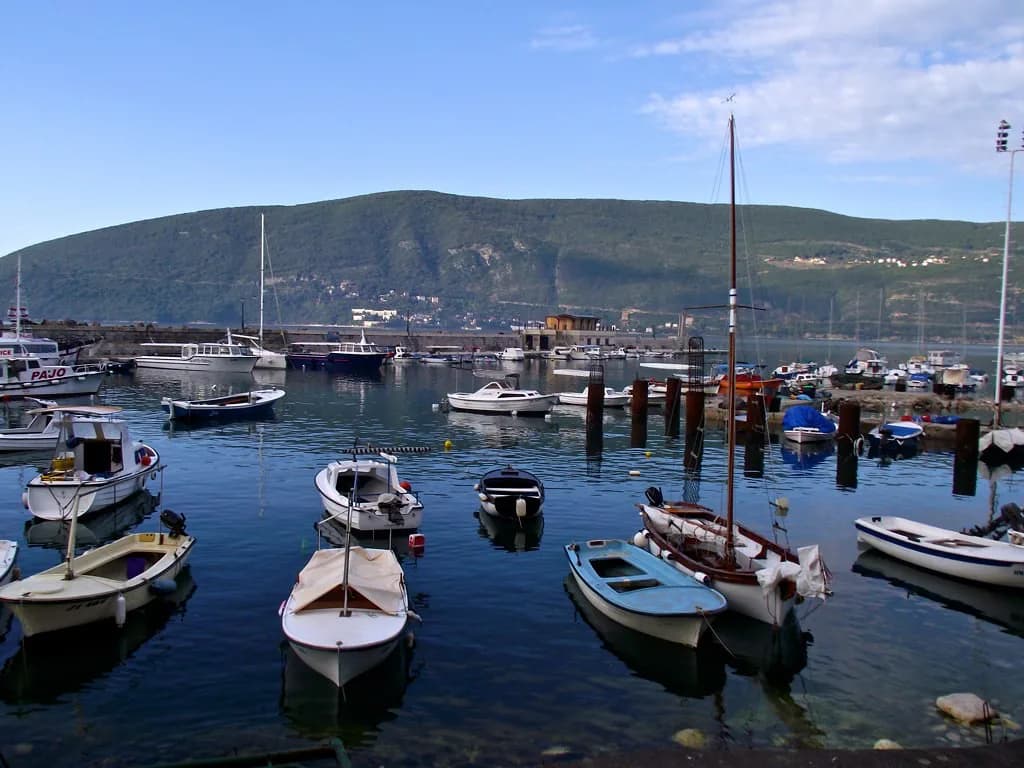
Boat trips from the Old Town waterfront
Boat trips leave from the Old Town waterfront with three named destinations: Rose, Mamula and Žanjice, with Mirišta mentioned alongside Žanjice. Rose is a small coastal settlement, Mamula is the island fortress, and Žanjice is a beach reached by water. Pick your trip by which of these you actually want to see rather than by the generic promise of a bay tour, and ask at the moorings which one is running that day.
A bay boat tour is also a reasonable way to spend a day here, particularly when the stairs have worn you out. The promenade doubles as the departure point, so you can combine a morning in the old quarter with an afternoon on the water. Services can thin out outside the summer months, so check what is operating rather than assuming a daily sailing.
Getting there: on foot, by car, by bus and from the airports
By car, the Adriatic highway runs right past the town. Drive to the centre, use one of the paid public car parks near the seafront, and walk up. Parking runs at roughly €1–2 per hour, and there is no vehicle access inside the old quarter.
From Tivat Airport the distance is around 25–30 km, which is roughly 40–50 minutes by car, partly depending on the Kamenari–Lepetane ferry across the bay. That ferry takes a few euros per car and runs frequently, and a taxi from the airport costs about €35–50, with transfers bookable in advance. From Podgorica Airport it is around 110 km, about 1.5–2 hours by car or transfer.
By bus, Herceg Novi's bus station connects to Kotor, Budva and Podgorica, and the old town is a short walk or taxi ride away. The station sits within the town rather than outside it, so you can leave the bags and be among the stairs quickly.
When to go: summer crowds versus spring and autumn
Unlike Kotor's old town, which draws heavy cruise-day crowds, Herceg Novi's quarter is a working part of town with a more local rhythm, so it rewards slow walking over a fixed timetable. Start early if you want the stairs to yourself.
If you are staying in town, the old quarter is best treated as an early-morning or late-afternoon walk, when the stone is cooler and the light on the bay softens. Build the rest of your day around it rather than trying to see everything in one push. Check the season's opening hours for any museums or fortress interiors you plan to enter.
Practical points: footwear, stairs and the pedestrian layout
Wear shoes with grip, carry water, and accept that the old quarter is a constant up-and-down rather than a flat stroll. The pedestrian-only layout keeps cars out, but it also means no shortcuts by taxi once you are inside. Plan your route so the hardest climb comes early, when you are fresh and the stone is cooler.
If you are comparing bases along the bay, Herceg Novi's old town is smaller and quieter than the old town in Kotor, which draws heavy cruise-day crowds; Perast old town, further along, is smaller again and sits on the water. Herceg Novi's own layout rewards slow walking rather than box-ticking.
How to spend your hours in the Old Town
Start at Kanli Kula for the view, drop through the two squares by the Clock Tower, then finish at Forte Mare and the promenade. That order puts the climb first and ends you at the water, ready for a flat walk towards Meljine or a boat to Rose, Mamula or Žanjice.
If you have only an hour, skip the upper climb and approach Forte Mare from the seafront instead. If you have a half day, take the full descent and add a stretch of the Pet Danica promenade. Either way, the stairs set the pace.
Explore more Herceg Novi guides
Frequently Asked Questions
Is Herceg Novi Old Town free to enter?
The old quarter is a public, pedestrian part of town, and you walk its streets, squares and staircases as you would any neighbourhood. The fortresses and churches are separate sights with their own access arrangements, so check those individually if you plan to go inside rather than just past.
How long does it take to walk around Herceg Novi Old Town?
Two to three hours covers Kanli Kula, the Clock Tower squares and Forte Mare at a relaxed pace with stops for views. Add time if you want to linger in the gardens and passages or drop into a museum, and add more again for the promenade below the walls.
Are there beaches near Herceg Novi Old Town?
The waterfront below the walls is lined with swimming spots, concrete sunbathing platforms and pebble coves along the Pet Danica promenade. Many are free to enter and most have a beach café nearby. The promenade towards Meljine is the prettier stretch; towards Igalo it is more built-up.
Do I need a car to reach Herceg Novi Old Town?
No. The old quarter is pedestrian and sits in the centre of town, reachable on foot from the bus station and from accommodation in town. If you drive, park in one of the paid public car parks near the seafront, since there is no vehicle access inside the quarter.
Sources
Notes for your Montenegro trip
Optional updates to our Montenegro town guides.
You might also like
Continue reading
More guides you'll find useful