Piva Canyon: The Lake Road, the Dam and Plužine
Piva Canyon is best seen from the lakeside road above it, not the canyon floor. Here is how the drive works, where the views open up and what to do in Plužine.
On this page
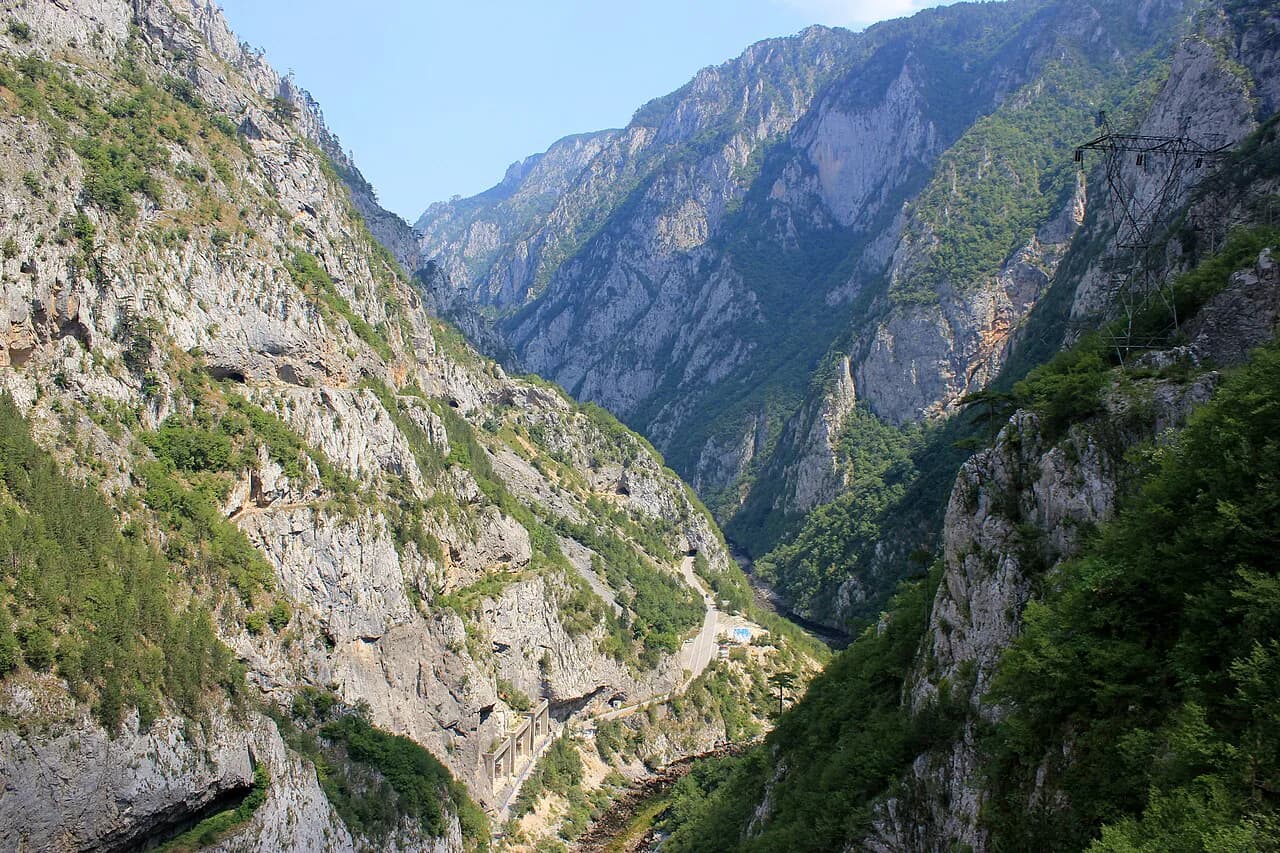
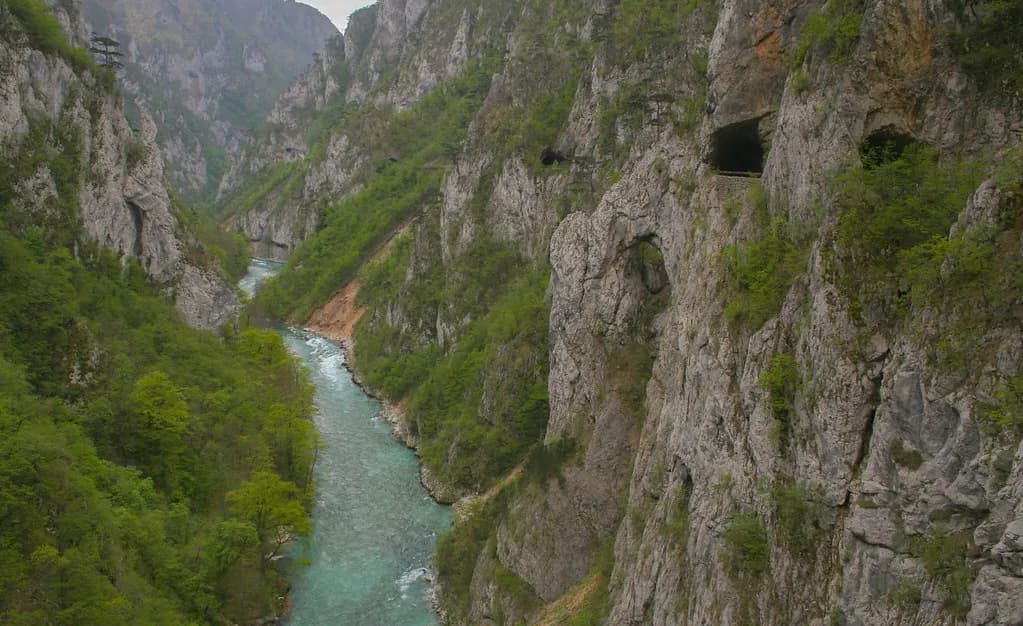
Piva Canyon is seen from above and from the side, not by walking through it. The Piva River has cut a gorge roughly 33 km long that drops as much as 1,200 m in places, and the road along the lake above it is how most travellers experience it. This guide covers the lakeside drive and its tunnels, the Mratinje dam and what the reservoir hides, the Piva Monastery, the plateau routes towards Žabljak, and the practical detail that makes a stop in Plužine work.
What Piva Canyon is and where it sits
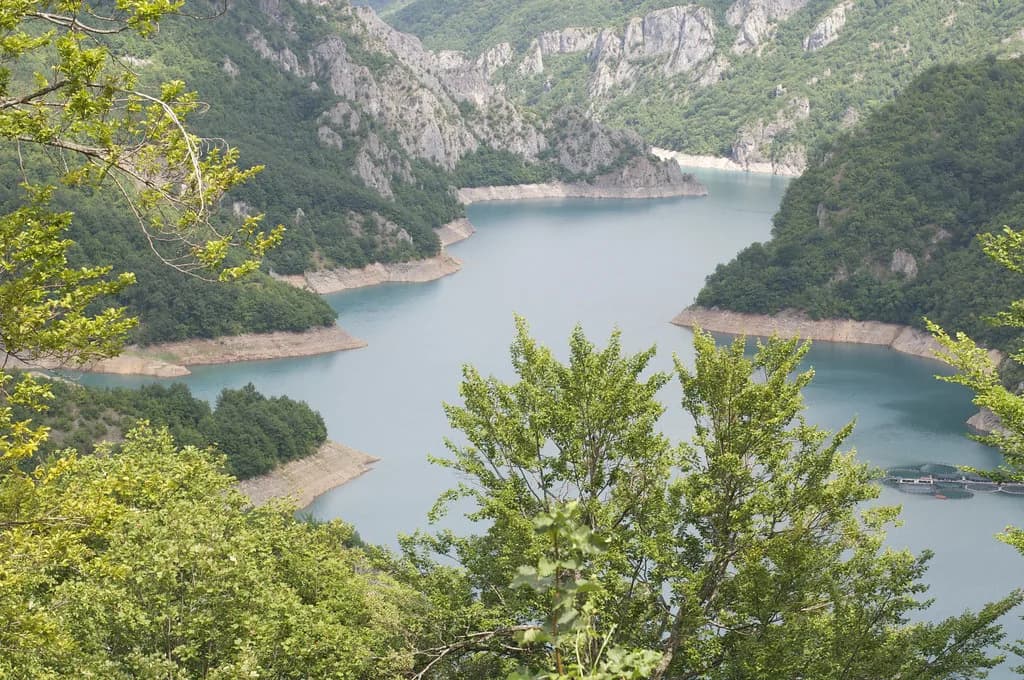
Piva Canyon lies in north-west Montenegro, cut between the mountains of Bioč, Volujak, Maglić and the Piva massif. Above it sits Piva Lake, the long reservoir behind the Mratinje dam, and the small town of Plužine stands on its shore as the base for everything else in the area. In season, most traffic drives straight through Plužine on the way to Durmitor, which is exactly why the canyon is quiet even in August.
Why you see the canyon from the rim, not the floor
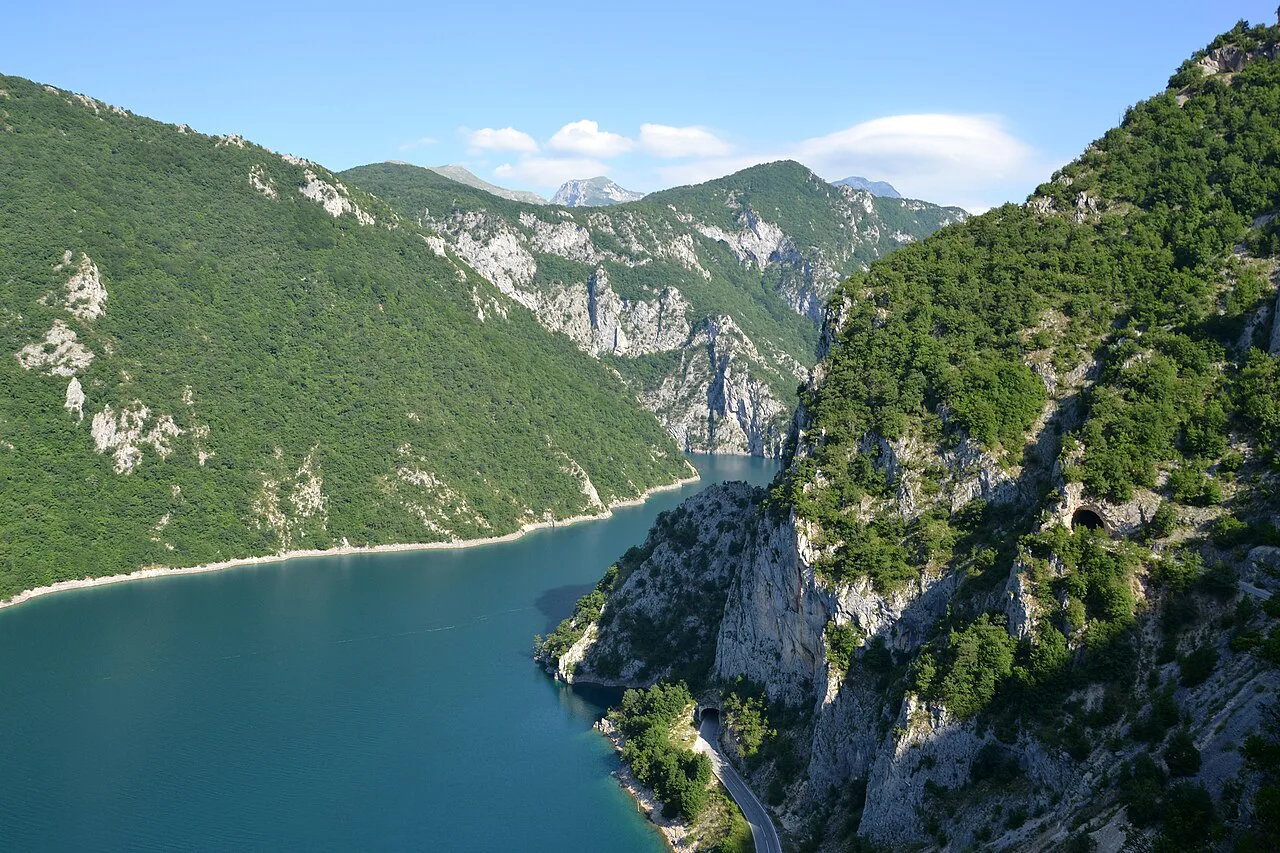
Deep gorges are hard to appreciate from the bottom, and Piva is no exception: you cannot see the canyon from the river and you often cannot reach its edge. This is not a canyon with a walking route through it, so unlike parts of the Tara you do not travel along the floor. The views come from the lake road, from the bridges where you feel the depth, from trails on the Piva plateaus that look down into it, and from boats on the water that put the cliffs above you.
Driving the lakeside road: tunnels, open stretches and views
The road along the lake runs through a sequence of tunnels and open stretches, and each opening gives a different angle on the cliffs. Driving it is a reason to come rather than just transport, and it is among the few roads in Montenegro where the journey itself is the attraction. Treat the tunnels as part of the experience: the road alternates between dark passages and sudden wide views, so plan on stopping where there is space rather than trying to look while driving. Fill up in Plužine before you continue, because services thin out beyond the town.
The Mratinje dam and Piva Lake: what the water hides
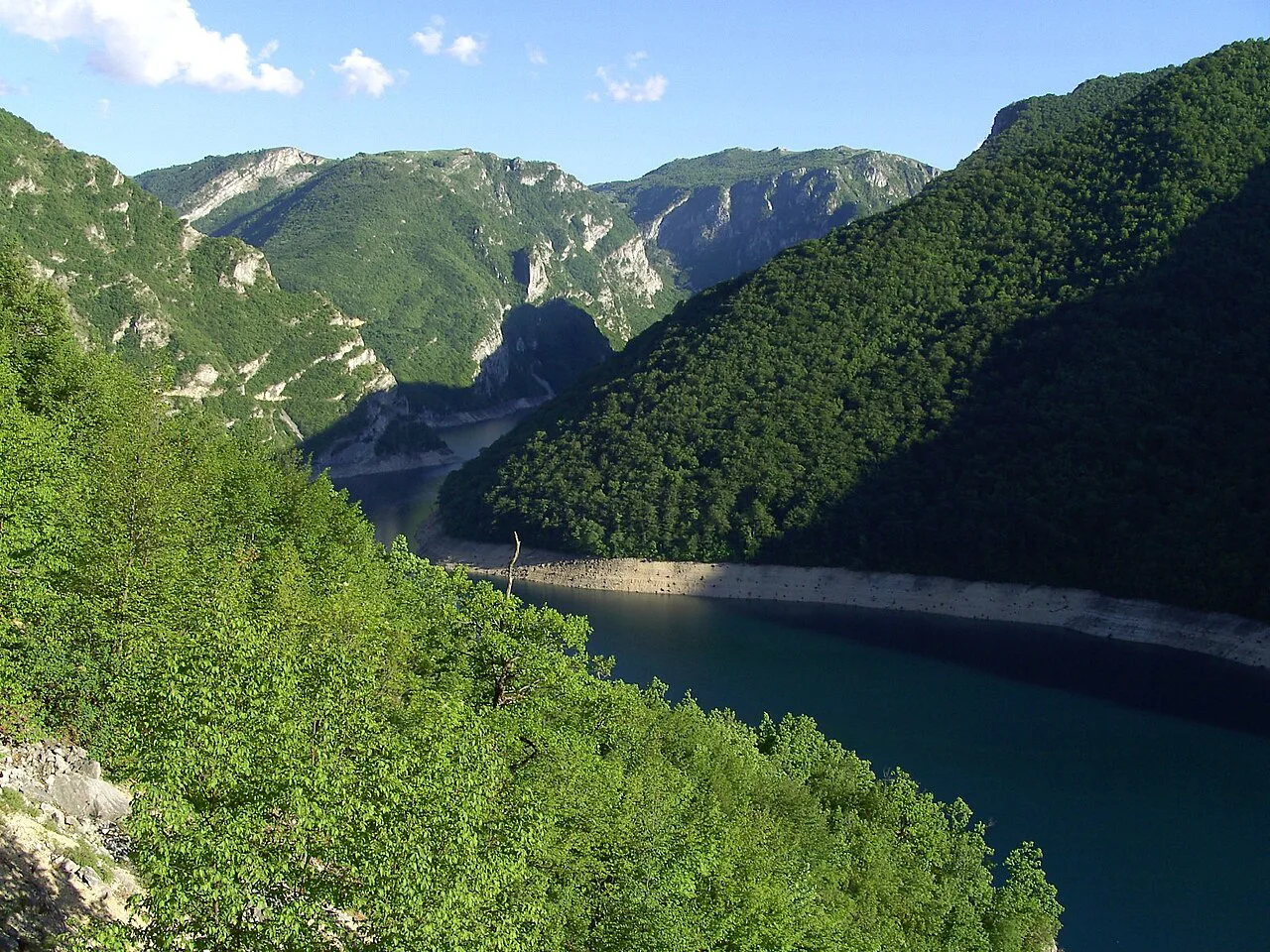
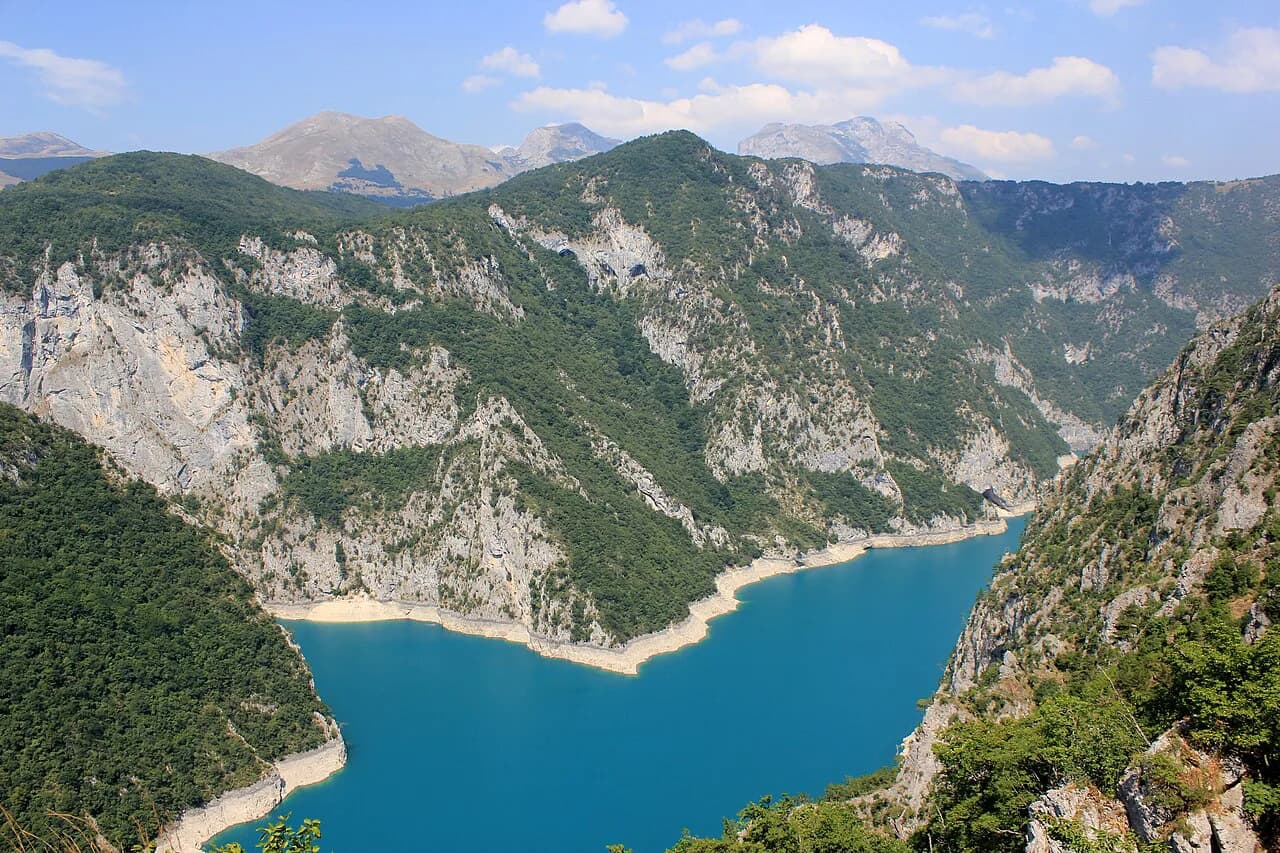
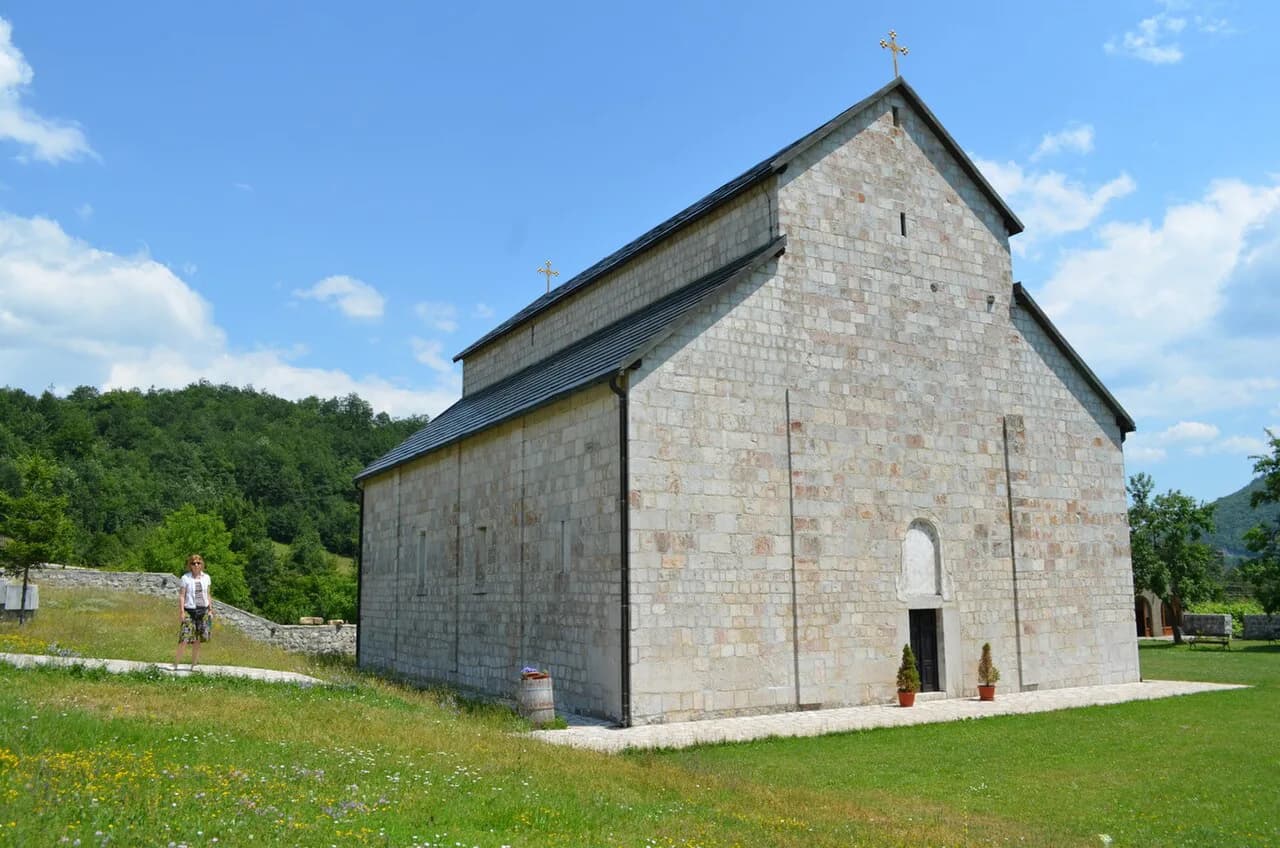
Piva Lake is a reservoir created by the Mratinje dam, and what makes it unusual is not only the improbable turquoise colour of the water but the fact that an entire landscape sits beneath it. The best-known consequence is the relocation of the 16th-century monastery that would otherwise have been submerged; the work ran from 1970 to 1982, with the church dismantled stone by stone, each piece numbered, and rebuilt on a new site near Goransko. Around 1,260 square metres of frescoes were removed from the walls and moved with it. For visitors, the lake is long and the road follows it for most of its length, so the water and the dam are part of the same drive rather than a separate stop.
Piva Monastery and why it sits where it does today
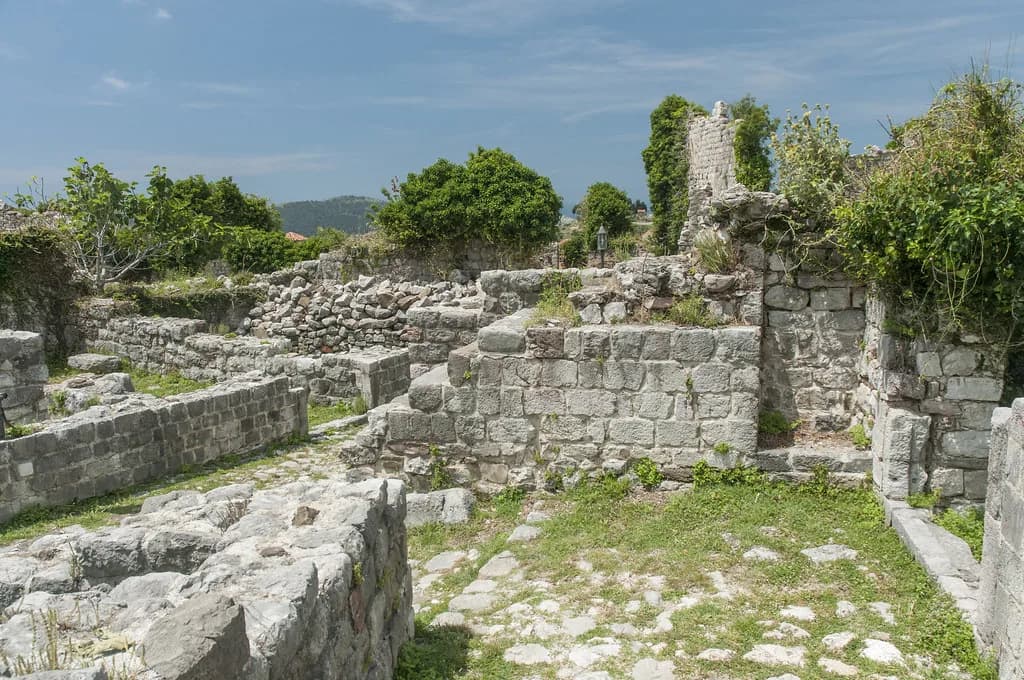
The monastery's position near Goransko is the direct result of the reservoir. Its original site lay in the valley that the lake now covers, and the reconstruction placed the church on higher ground with the numbered stones returned to their original positions in the walls. Seeing it alongside the lake makes the connection obvious in a way that a standalone church visit does not. For the building itself, its frescoes and how to visit, the guide to Piva Monastery covers the detail.
Getting there: Podgorica, Nikšić and onward links
From Podgorica, the drive to the Piva area takes about 2.5 hours via Nikšić on well-maintained roads; from Dubrovnik in Croatia it is roughly 3.5 hours. The meeting point for organised activities sits near the Piva River Bridge, with free parking, and Plužine itself has accommodation and restaurants and works as a gateway to Durmitor National Park, the lake and Tara rafting. Beyond Plužine there is no meaningful public transport, so a car is the practical way to reach the canyon, the plateau roads and the villages. Plužine is the last place to refuel before the high ground.
The plateau roads to Trsa, Pišče and Žabljak
The Plužine–Trsa–Žabljak road crosses the plateaus rather than following the main route, and it is longer and slower. What you trade for the time is katun country, the seasonal summer settlements where livestock graze, and a view of Durmitor from a side that almost nobody sees. Pišče is the plateau on the slopes towards Durmitor and the place to look for skorup, the rich skimmed-milk cream this area is known for. These roads are narrow, partly unguarded and have unlit tunnels, so they suit confident drivers only, and you should check that the plateau section is passable before setting off.
What to do in Plužine: boats, bikes, horses and a katun lunch
Via Ferrata Piva is a 400 m protected climbing route on the canyon walls, with a total of 1.5 km including the approach trail, graded B/C and taking 1.5 to 2 hours with a certified guide. The operator says it was built in 2024 to European safety standard EN 16869:2017; tours run year-round, weather permitting, starting from the Piva River Bridge, descending to natural springs, traversing just above the river and finishing with a 100 m vertical ascent. Guided tours start at €65 per person, including all safety equipment, and large group discounts are available for eight or more. No climbing experience is needed, only moderate fitness, and the operator advises against it for people with serious health conditions or an extreme fear of heights; participants must be 12 or over, and the maximum weight is 120 kg.
Via Ferrata Piva: grade, duration and cost
Via Ferrata Piva is a 400 m protected climbing route on the canyon walls, with a total of 1.5 km including the approach trail, graded B/C and taking 1.5 to 2 hours with a certified guide. It opened in 2024 and was built to European safety standard EN 16869:2017; tours run year-round, weather permitting, starting from the Piva River Bridge area and finishing with a 100 m vertical ascent. Guided tours start at €65 per person, including all safety equipment, and large group discounts are available for eight or more. No climbing experience is needed, only moderate fitness, and the operator advises against it for people with serious health conditions or an extreme fear of heights; participants must be 12 or over, and the maximum weight is 120 kg.
When to go: season, katuns and winter on the plateau roads
June to September is the season here. Katuns operate in summer by definition, so outside that window that part of the offer is simply not there; May and October still give you the lake and canyon, but with a different trip. July and August are the most comfortable on the plateaus and the time when everything is open, and August brings no crowding problem on this side of the country. In winter Plužine is in the north and conditions can be serious, and the plateau roads are not an option then.
Practical notes: car, cash, fuel, signal and layers
You need a car for anything beyond Plužine itself, and you should fill up in Plužine before heading onto the plateaus. Cards generally do not work at households and katuns, so carry cash, and signal on the plateaus is patchy to non-existent. Take warm layers even in summer, because the difference between Plužine and the high ground is noticeable and larger in the evening. Tunnel lighting and road conditions on the plateau routes change with the season, so confirm the state of the road locally before committing to the slow route.
Lake road or plateau road?
Take the lakeside road for the canyon itself: tunnels, open stretches and water views, with the dam and the monastery as the natural stops. Add the Trsa and Pišče route only if you have the time, a confident driver and a car that handles narrow mountain roads, because the reward is katun country rather than a quicker journey. Either way, base yourself in Plužine, refuel there and carry cash before you climb.
Explore more Plužine guides
Sources
Notes for your Montenegro trip
Optional updates to our Montenegro town guides.
You might also like
Continue reading
More guides you'll find useful