Plužine, Montenegro: Piva Lake, the Canyon Road and Piva Monastery
Plužine sits on Piva Lake in northwest Montenegro, with the canyon road, Mratinje Dam and Piva Monastery nearby. Here is what to see and how long it takes.
On this page
Plužine is a half-day stop that becomes a full day once you drive the canyon road and call at the dam. The town itself is a short lakeside strip in the far northwest of Montenegro, rebuilt higher up after the Mratinje dam closed and the reservoir filled in 1975. This guide covers the layout, the lake, the canyon drive, Piva Monastery and how the town fits a route between the coast and Durmitor.
Two things shape a visit: the water and the single road. Almost everything worth seeing sits along the lake edge or on the road that climbs away from it towards Nikšić, Foča and the north, and there is no old quarter to wander at random. Plan the day around the car and the light, and confirm boat departures locally before you set out, since trips run in summer rather than year-round.
A new town on an old valley floor
The Plužine you visit is a modern settlement: when the Mratinje dam closed and Piva Lake filled in 1975, the old town was submerged and the new one was built on the slope above the new waterline. Piva Monastery was taken apart and rebuilt higher up between 1970 and 1982, frescoes included, rather than left to the reservoir. That history explains the town's plain, terraced look and why nothing here reads as an old core.
The town has roughly 1,100 to 1,200 residents, which is enough for a couple of small convenience stores, a restaurant or two and a lakeside place to eat but not for a day of browsing. Restoran Sočica in the centre serves the local mountain cooking, kačamak and cicvara among it, and makes a sensible lunch stop before the canyon. Treat Plužine as a base and a viewpoint rather than a sight in itself.
How the town is laid out
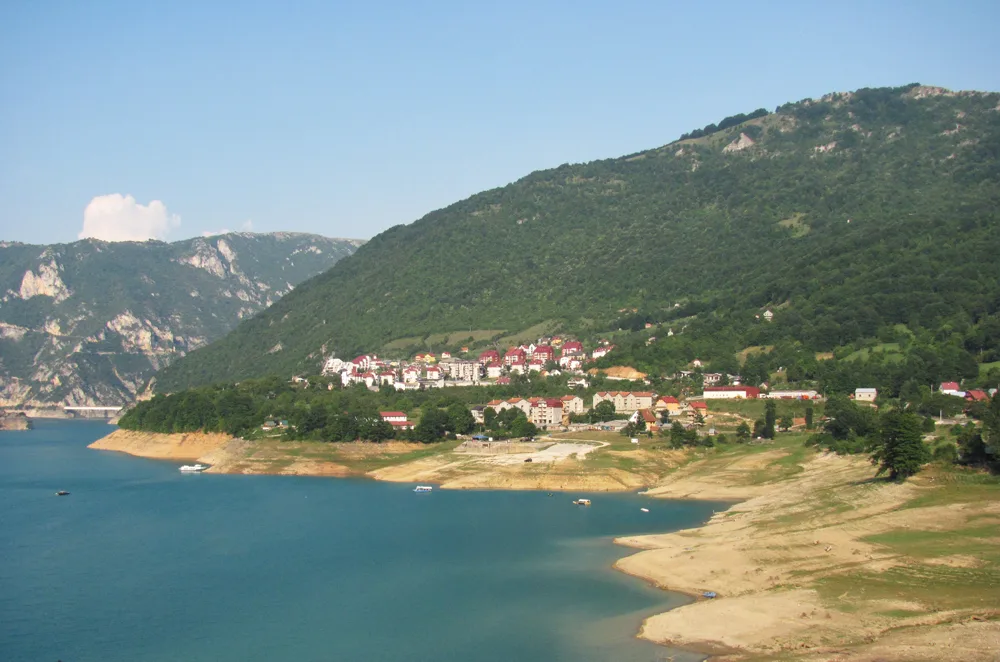
The centre is one lakeside strip: a waterfront road with the water on one side and the terraced housing and shops on the other. From that strip, the main road turns and climbs away from the lake towards the tunnels and the north, so the places you eat and park cluster within a few minutes' walk of the shore.
That one-road layout has a practical consequence. You can walk the centre in twenty minutes, but anything beyond it, including the monastery, the dam and the viewpoints, needs a vehicle or an organised trip, because bus departures from Plužine are limited and the last one leaves in the early evening. If you are travelling by bus, aim to arrive in the morning and plan the day around that departure.
Piva Lake: swimming, boats and fishing
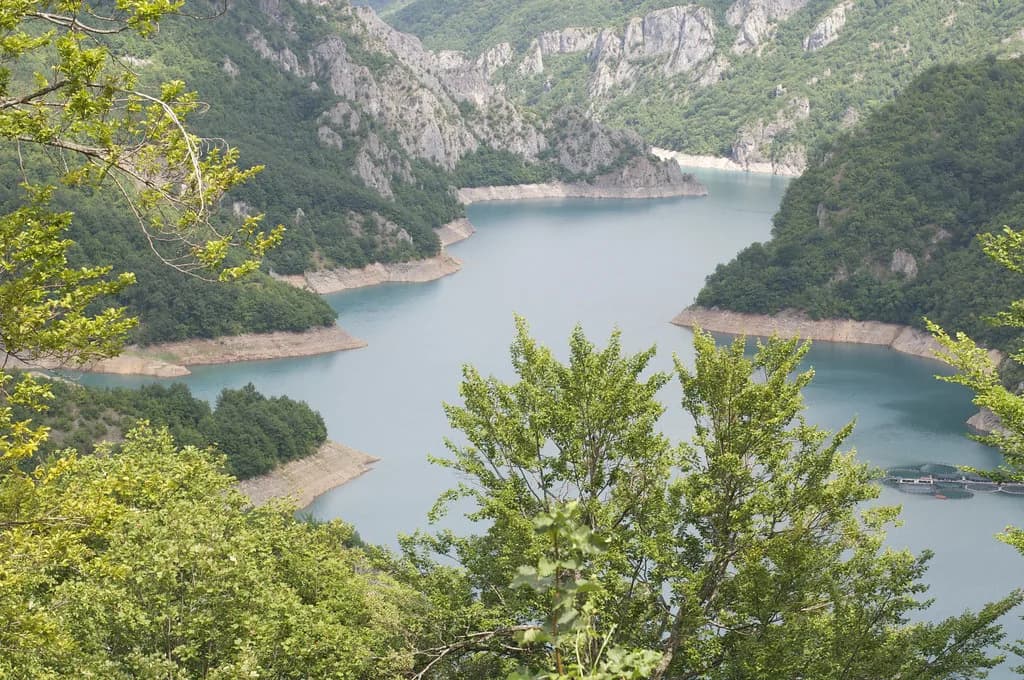
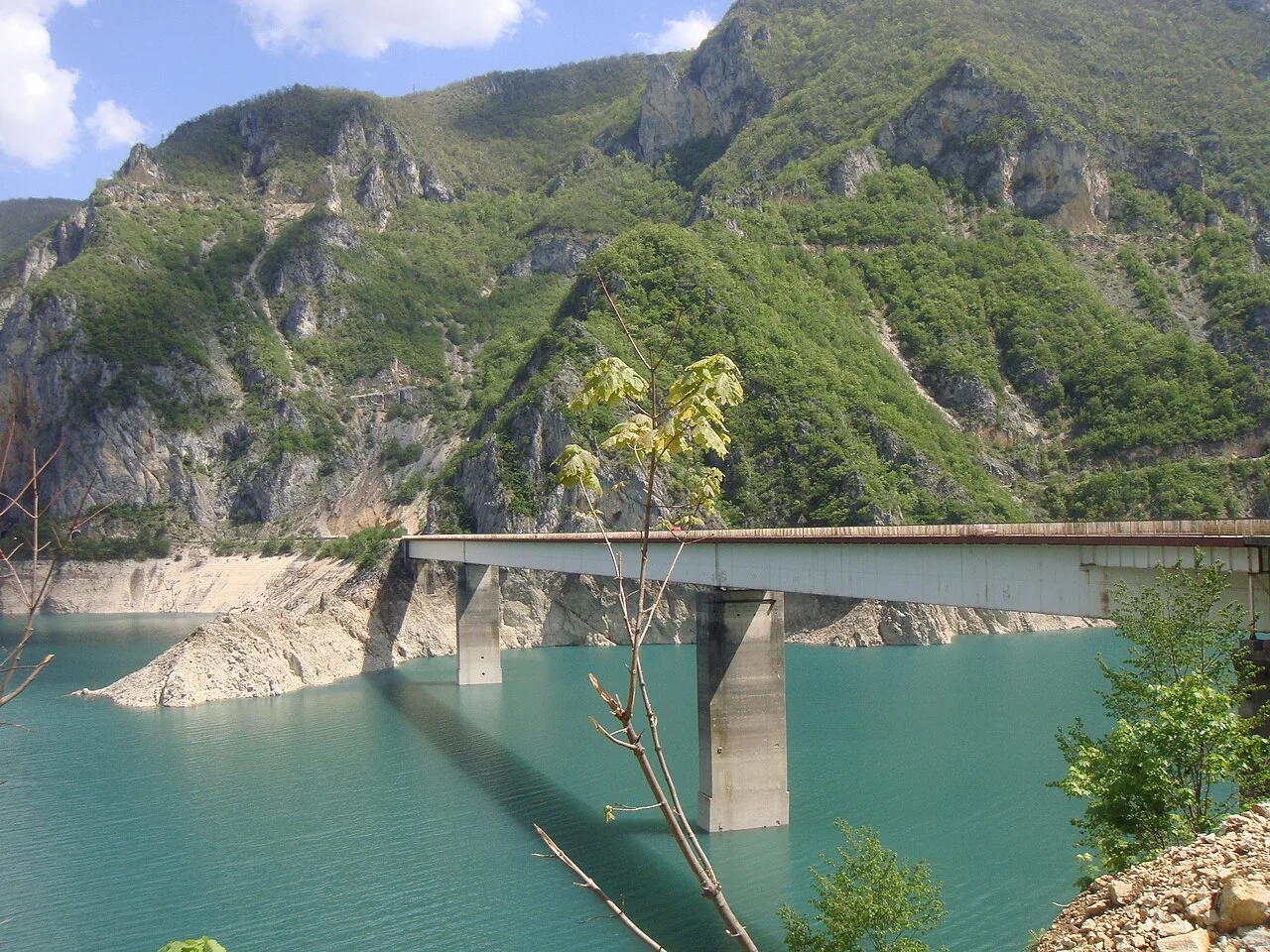
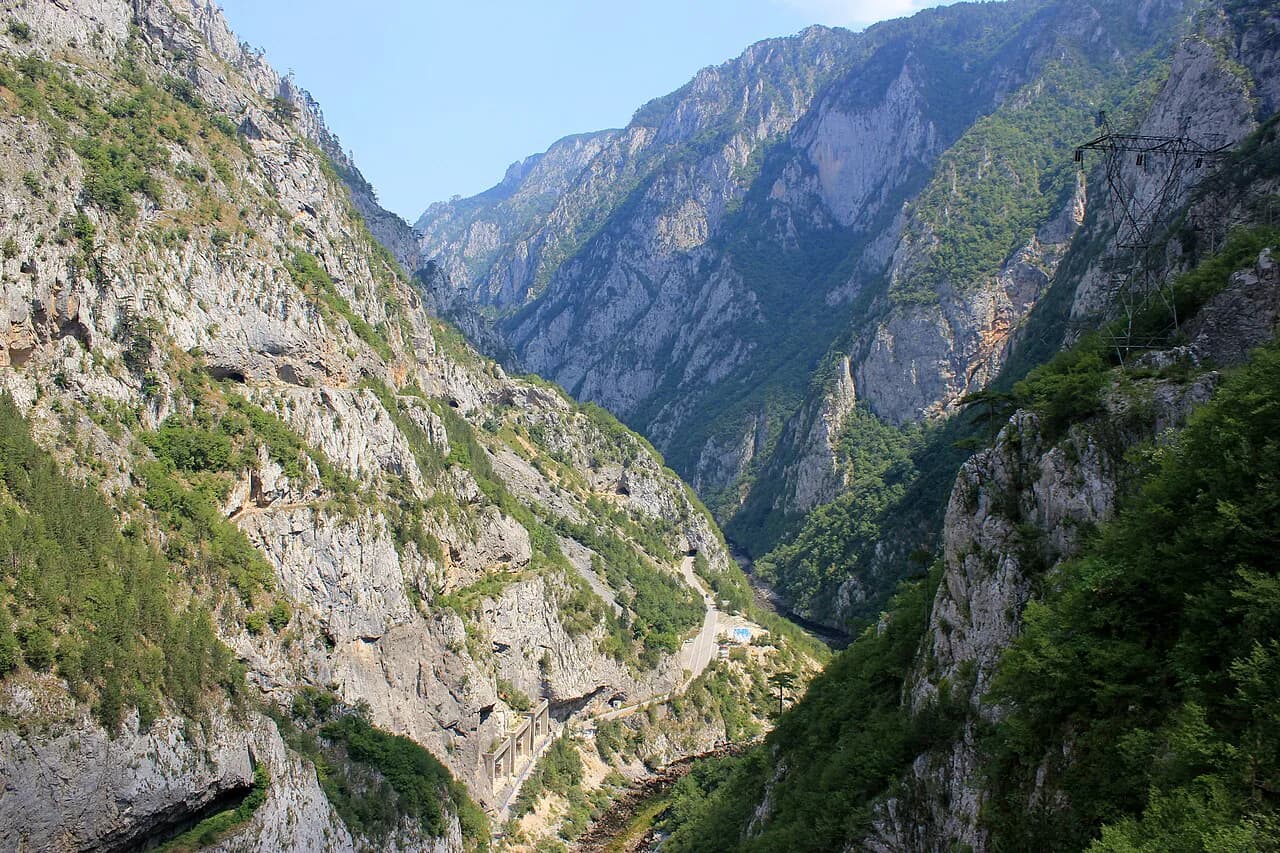
Piva Lake, Pivsko jezero, is a 45 km reservoir held back by the dam, reaching depths of more than 200 metres in places and sitting at about 675 metres above sea level. The colour is the draw: a cold, clear turquoise-green that comes from mountain water over limestone, with pines seemingly growing straight out of bare rock along the shore. The lake fills the floor of Piva Canyon, so the same drive gives you both.
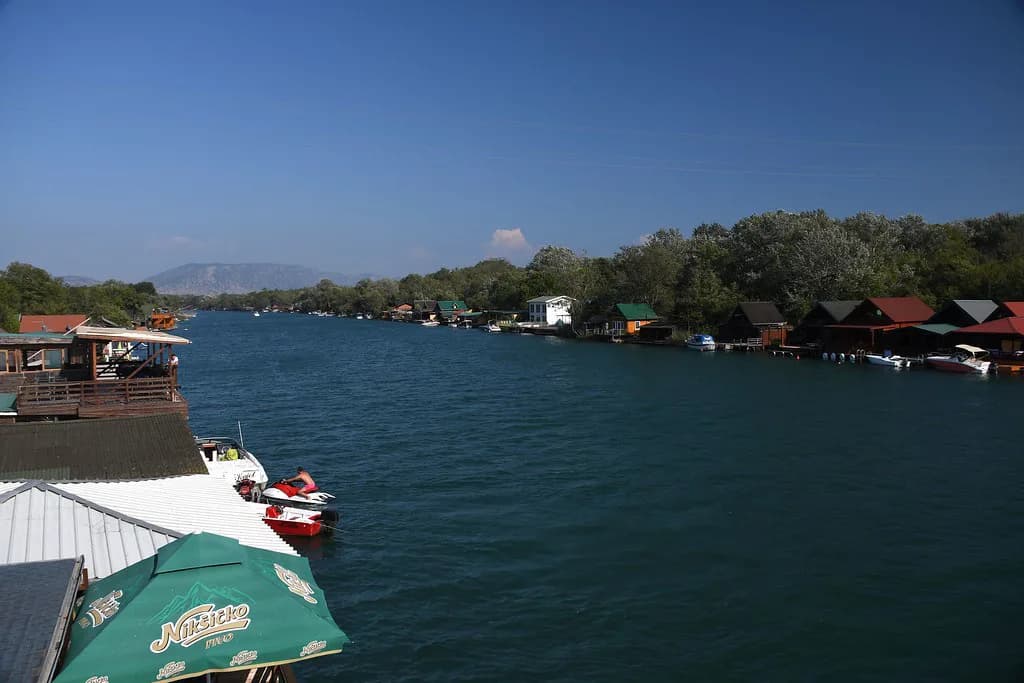
Summer is the season for the water. Organised boat cruises run from Plužine through the canyon in summer, with stops at Oteša Cave, reachable only by boat, and Podvođe Bay, and summer water temperatures reach roughly 22°C, cold enough to be bracing even in August. Kayaking and stand-up paddleboarding suit the calm surface, and fishing for trout and carp needs a permit, so arrange one before you cast.
Boat trips run in summer rather than year-round, so there is no timetable to build a fixed booking around in advance. Ask locally on arrival about that day's departures, and keep the lake as a flexible half-day rather than a fixed commitment. If the boats are not running, the shoreline walk and the drive still give you the water.
Piva Canyon and the tunnel road
Piva canyon runs for about 33 km with walls up to 1,200 metres deep, cut between the Bioč, Volujak, Maglić and Pivska Planina mountains. The road through it is the main event of any stay here: more than fifty short tunnels are hacked straight into the rock above the water, many of them unlit, so headlights are essential even at midday.
Allow far more time than the distance suggests. The tunnels force a slow pace, and the pull-ins for photographs are the point of the drive, so a stretch that looks like an hour on a map easily takes two. Start with a full tank in Plužine, since fuel stops thin out once you are into the gorge.
Kruška viewpoint sits about 5 km from the centre on the main road towards Žabljak, and gives the wide panorama back over the lake and the canyon walls. Stop there on the way out rather than on the return, when the light flattens, and use the other marked viewpoints as short breaks from the tunnel driving.
Mratinje Dam
Mratinje Dam is the wall that made the lake, a concrete arch structure roughly 220 metres high across the canyon at the northern end of the municipality. From the dam you look one way into the drop of the old Piva riverbed and the other across the calm turquoise reservoir, which is the clearest way to understand how the landscape was remade.
It pairs naturally with the canyon drive: follow the road north through the Piva Regional Nature Park, see the dam, then turn back or continue towards the Šćepan Polje border crossing with Bosnia. There is no need to build a separate excursion around the dam, since it sits on the same road and takes perhaps half an hour of looking and photographs.
Piva Monastery
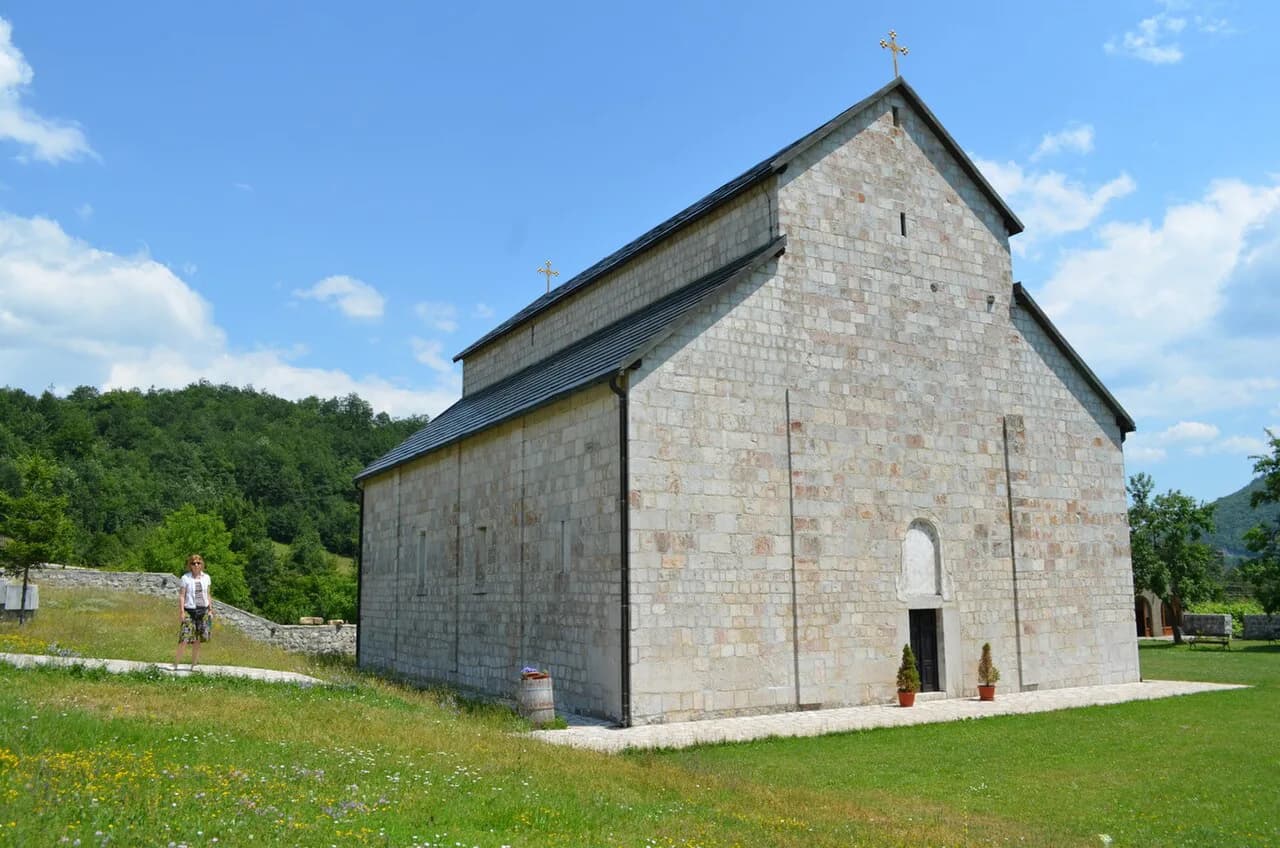
Piva Monastery was built in the second half of the 16th century and is known for two things: its frescoes and the fact that the whole building was moved. Between 1970 and 1982 it was dismantled, shifted a few kilometres to higher ground and reassembled above the new waterline, with around 1,260 square metres of wall painting removed and restored in the process. That relocation is why the monastery sits where it does today, not on its original site.
Inside, the treasury holds golden icons and rare handwritten books alongside the paintings. It is an active monastery, so dress modestly with shoulders and knees covered, keep voices low and check whether photography is allowed before you raise a camera. Allow an hour for the church and the grounds.
Opening hours are not fixed for visitors year-round, and services take priority over tourism. Confirm times locally or by telephone before making the monastery the anchor of your day, especially outside summer, and be ready to swap it with the canyon drive if the church is closed when you arrive.
Trnovačko Lake and the road north to Durmitor
Plužine works as a staging point between the coast and the mountains. Trnovačko Lake lies in the Dinaric Alps above the town, and Durmitor National Park is the next major stop north, reached by continuing through the canyon towards Žabljak. From the coast, the run from Podgorica takes around two hours and the drive from Nikšić around one, which makes Plužine a natural break rather than a detour.
Trnovačko is a walking destination reached on foot, and guided trips to it and to Durmitor viewpoints are offered in the area. Prices depend on the operator and the group size, so compare what is included, transport, a guide and any park entry, before booking rather than judging by the headline figure.
If you want a canyon walk away from the road, the Nevidio canyon area lies south of Plužine towards Šavnik and can be worked into the drive between the lake and Durmitor. It is a separate outing with its own access arrangements, so treat it as an alternative to the canyon road, not an addition to the same afternoon.
How long Plužine needs
Give the town and monastery half a day, and the canyon road and dam a full one. The half-day covers the waterfront, a meal in the centre and Piva Monastery; the full day adds the tunnel road north, Kruška viewpoint, the dam and time at the water. Anything involving a boat trip pushes you towards a full day on its own.
The trap is judging the day by kilometres. The tunnel road is slow, the viewpoints eat time, and the last bus leaves in the early evening, so a late start limits you to the lake shore. Plan the driving for the morning and keep the monastery and the town for the afternoon, or split the two across a night in Plužine.
Getting there and around
Plužine sits on the road that links Nikšić with the north and, eventually, Foča and Sarajevo in Bosnia. Coming from the coast, Podgorica is around two hours away by road and Nikšić about one, with Podgorica airport roughly 120 km off. There is no need to look for a local flight; you arrive by road.
A car is the practical choice. It lets you take the canyon at your own pace, stop at the viewpoints and reach the monastery without waiting, and it removes the risk of being stranded by the evening bus. Drivers should expect unlit tunnels, narrow sections and a slow average speed, and should not count on fuel or food between the town and the dam.
For the Bosnia border, Šćepan Polje is the crossing on the road north from Plužine, useful if you are continuing towards Foča rather than returning south. Carry your passport and check current entry rules for both countries before you leave the lake, since requirements change and are not something to guess at the barrier.
Where Plužine fits in a wider trip
The obvious route runs from the Bay of Kotor or Podgorica up through Nikšić to Plužine, then north through the canyon to Žabljak and Durmitor, which puts the coast and the mountains in one drive. Going the other way, Plužine is the last comfortable stop before the high ground, which makes it a good place to break a long day rather than a destination to rush.
Keep it to one night if the canyon road is your priority, two if you want a boat trip and the monastery without watching the clock. Book accommodation in advance in summer, when the town fills with travellers heading for Durmitor, and confirm the following morning's plans over dinner rather than on the road.
Is Plužine worth the stop?
Yes, if you treat it as a driving base rather than a town to explore on foot. The lake, the tunnel road, Kruška viewpoint, the dam and the relocated monastery make a solid full day, and the position between Nikšić and Žabljak saves a long detour.
Skip it if you want cafés, an old quarter and an evening stroll, or if you have no car and a tight schedule, because the early evening bus and the spread-out sights work against you. Confirm boat departures and monastery hours locally before you commit the day, then drive north with a full tank and headlights on.
Frequently Asked Questions
Can you swim in Piva Lake?
Yes. Summer water temperatures reach around 22°C, cold enough to be refreshing rather than balmy, and the calm surface also suits kayaking and paddleboarding. Boat cruises run in summer, so check departures in the town when you arrive.
How long does the canyon road take?
Longer than the distance suggests. More than fifty short tunnels are cut into the rock, many unlit, and the viewpoints pull you over, so a stretch that looks like an hour on a map can take two. Start early and keep headlights on.
Where is Piva Monastery?
The monastery was dismantled between 1970 and 1982 and rebuilt a few kilometres away, above the new waterline of the reservoir. It is reached by road from Plužine and is an active monastery, so dress modestly and check visiting times locally.
Sources
Notes for your Montenegro trip
Optional updates to our Montenegro town guides.
You might also like
Continue reading
More guides you'll find useful