Piva Lake, Plužine: The Canyon Reservoir and How to See It
Piva Lake is an artificial reservoir in the Piva canyon by Plužine in north-west Montenegro. What the lake is, where it sits and how to approach it by road.
On this page
Piva Lake is an artificial reservoir on the Piva river beside Plužine, in the north-west of Montenegro. It fills the floor of a limestone canyon, and the drive along it is as much of the visit as the water itself.
This guide separates the lake from the river and the nature park around it, explains the dam that created it, and covers the road approach, the tunnels and the border crossing towards Bosnia and Herzegovina. It also sets out what you can arrange on the water and what you cannot, so you know where to put your effort before you set off.
What Piva Lake is, in one answer
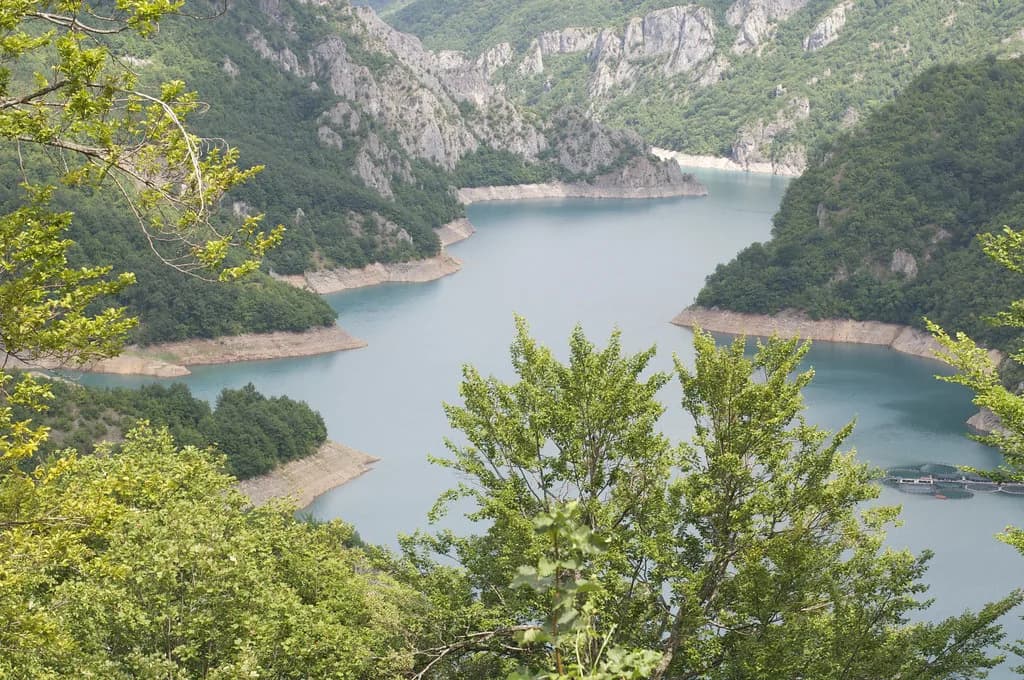
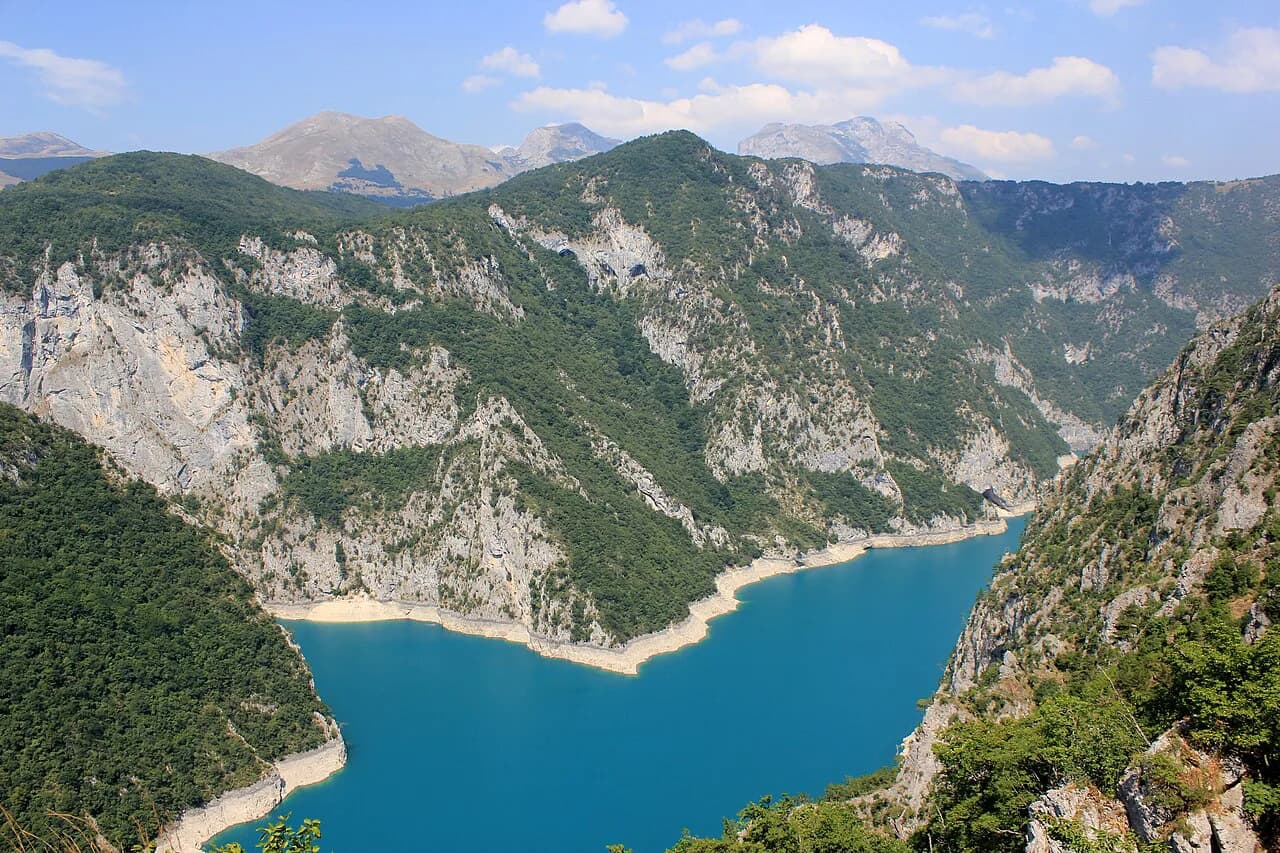
Pivsko jezero, as it is written locally, is a reservoir held behind the Mratinje Dam rather than a natural sheet of water. It lies in the Municipality of Plužine on Montenegro's north-western side, with the water running through a canyon cut into the surrounding limestone.
The distinction matters on the ground. The lake is one feature of a much larger landscape of river canyons and plateaus, so do not expect a single shoreline promenade with everything arranged along it. Think of the water as the spine of a day spent moving between viewpoints, the town of Plužine and the roads that link them.
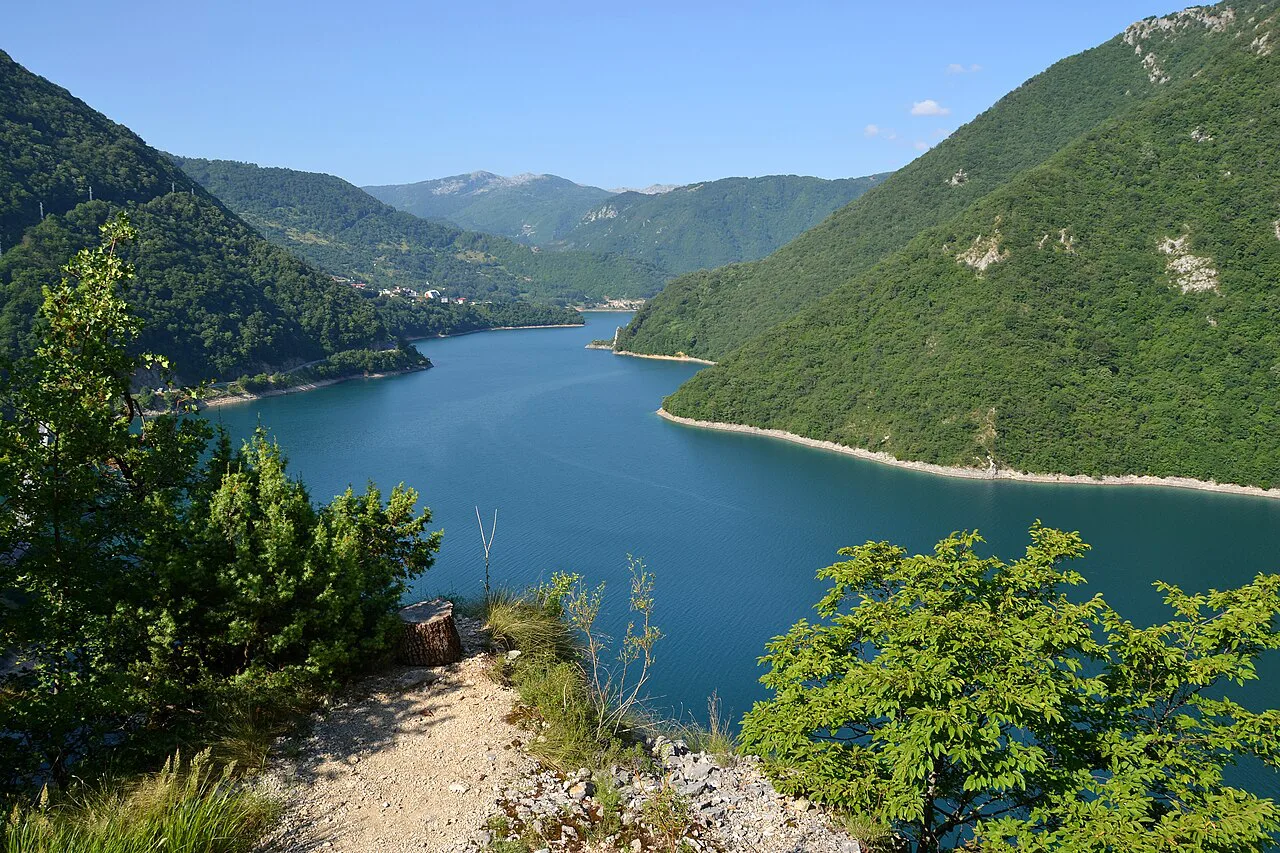
Where the lake sits: Plužine and the Piva canyon
The reservoir occupies the Piva canyon, a limestone cut with steep sides that narrows and opens as the water turns. Plužine is the town on its shore and the natural base for seeing it, with the lake immediately alongside rather than a drive away.
Because the water sits in a canyon rather than on open lowland, the views change with every bend and tunnel. The practical consequence is that a map distance along the lake tells you very little about how long the drive will take; plan on stopping, and treat the road itself as the outing.
How the lake was formed: the Mratinje Dam
Piva Lake exists because of the Mratinje Dam, which holds back the Piva river to form the reservoir. A travel guide dates the creation of the lake to 1975, which places it within living memory rather than in the distant past.
For a visitor, the dam is the explanation for the shape of everything you see: a long body of water in a canyon, with a concrete structure at one end.
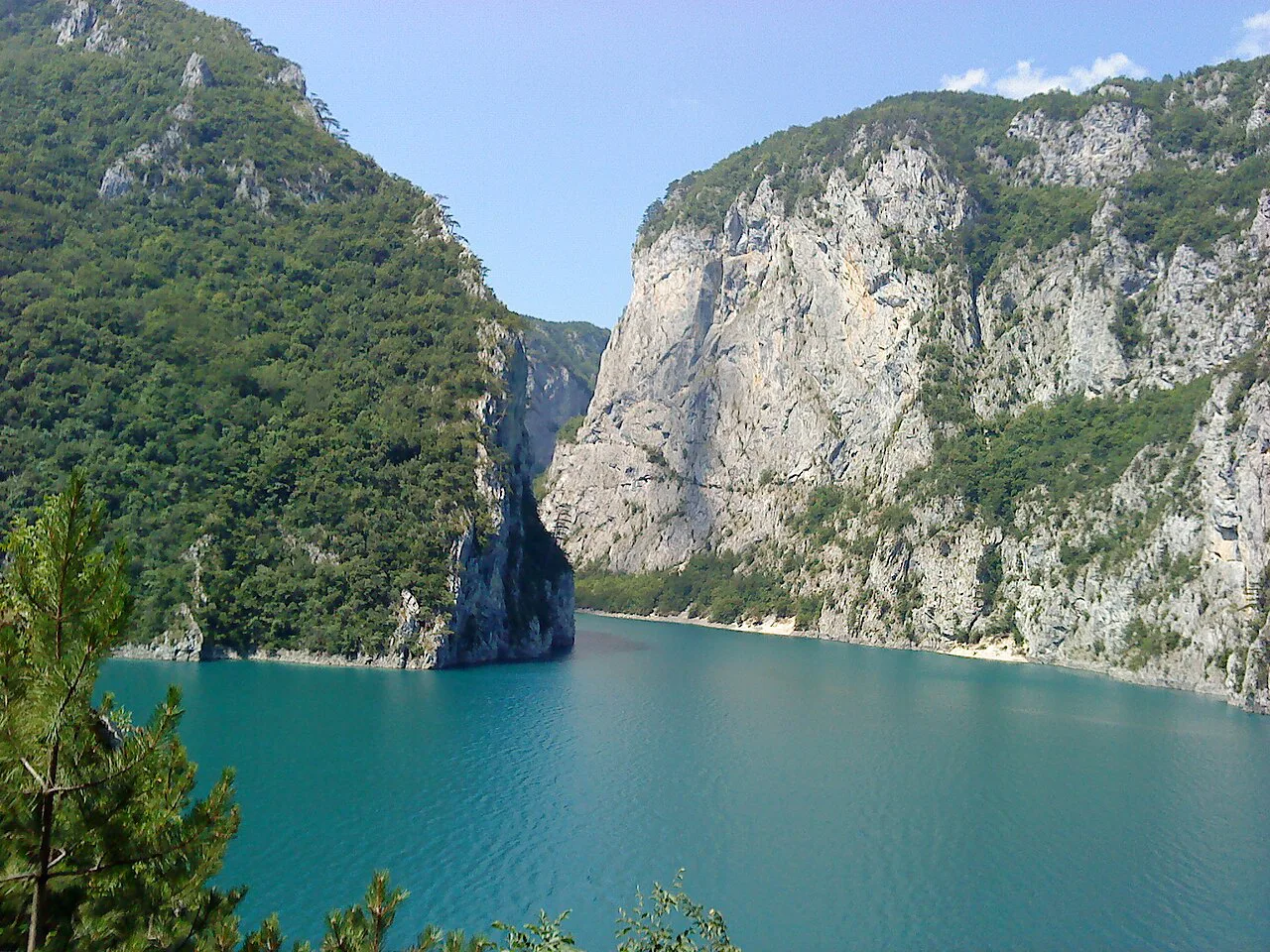
The canyon landscape around the lake: rivers and limestone plateaus
The Piva landscape is marked by dense stands of trees and limestone plateaus, with spectacular canyons formed by the Tara, Piva, Komarnica and Sušica rivers. That combination, rather than the lake alone, is what makes the north-west corner of Montenegro worth the drive.
The Komarnica and its neighbours also belong to a wider protected area, which is why the terrain beyond the water reads as separate country rather than as a lakeside park. If gorge scenery is the point of your trip, the Nevidio canyon and the surrounding Komarnica country are worth building into the same loop.
Approaching by road: the canyon road and tunnels
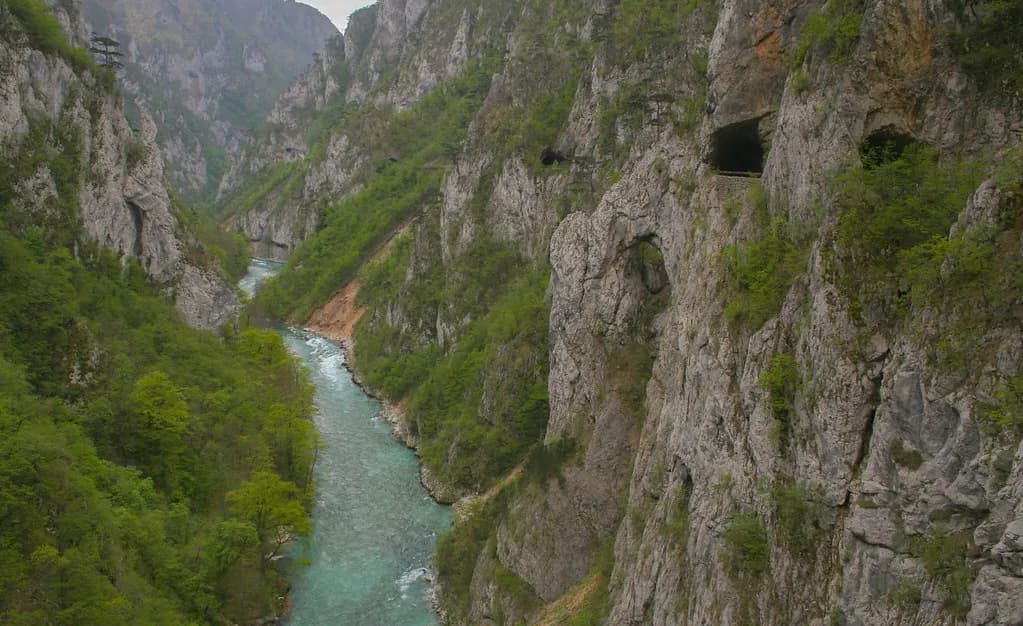
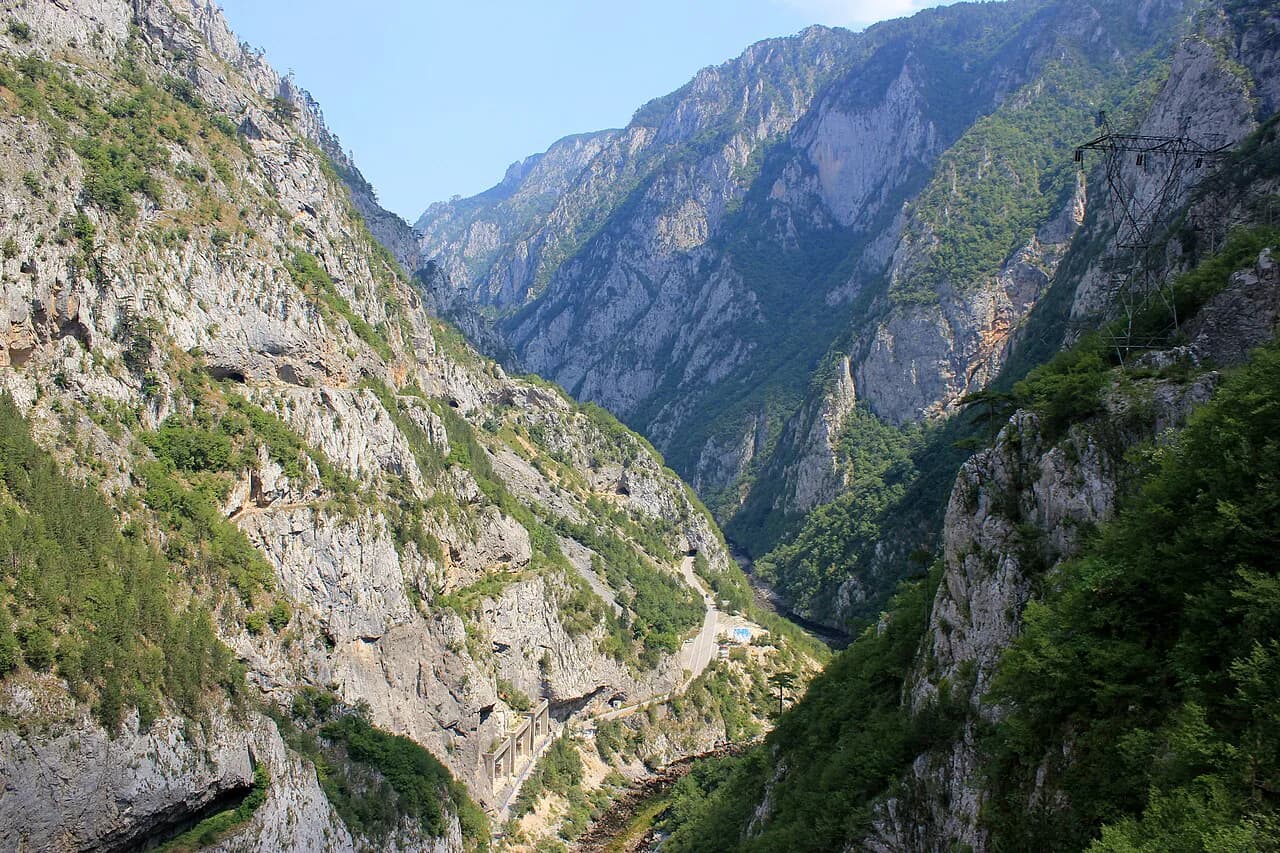
The road along the lake runs through tunnels, and one driver's report notes that navigation apps can show a jagged, sawtooth profile from the border down towards Plužine. That profile reflects the tunnels rather than a series of sharp climbs, so do not let it put you off the route.
Driving the lake means sharing a canyon road with local traffic, and stopping places are limited by the terrain. Build slack into the day for viewpoints and for the tunnels, and fill up before the canyon stretch rather than assuming services sit at every bend.
The lake in the Piva Nature Park landscape
The lake sits within Park Prirode Piva, a regional nature park of mountains, deep canyons and artificial lakes in Montenegro's north-west. The park description names the turquoise water of Piva Lake, formed by the Mratinje Dam, alongside the Piva and Tara canyons.
The same landscape holds peaks and mountain lakes that are outings in their own right rather than lake activities: Maglić, Trnovačko Lake and the two Stabansko lakes at 1,194 and 1,319 metres. Treat them as separate days with their own approach and equipment, not as add-ons to a lakeside afternoon.
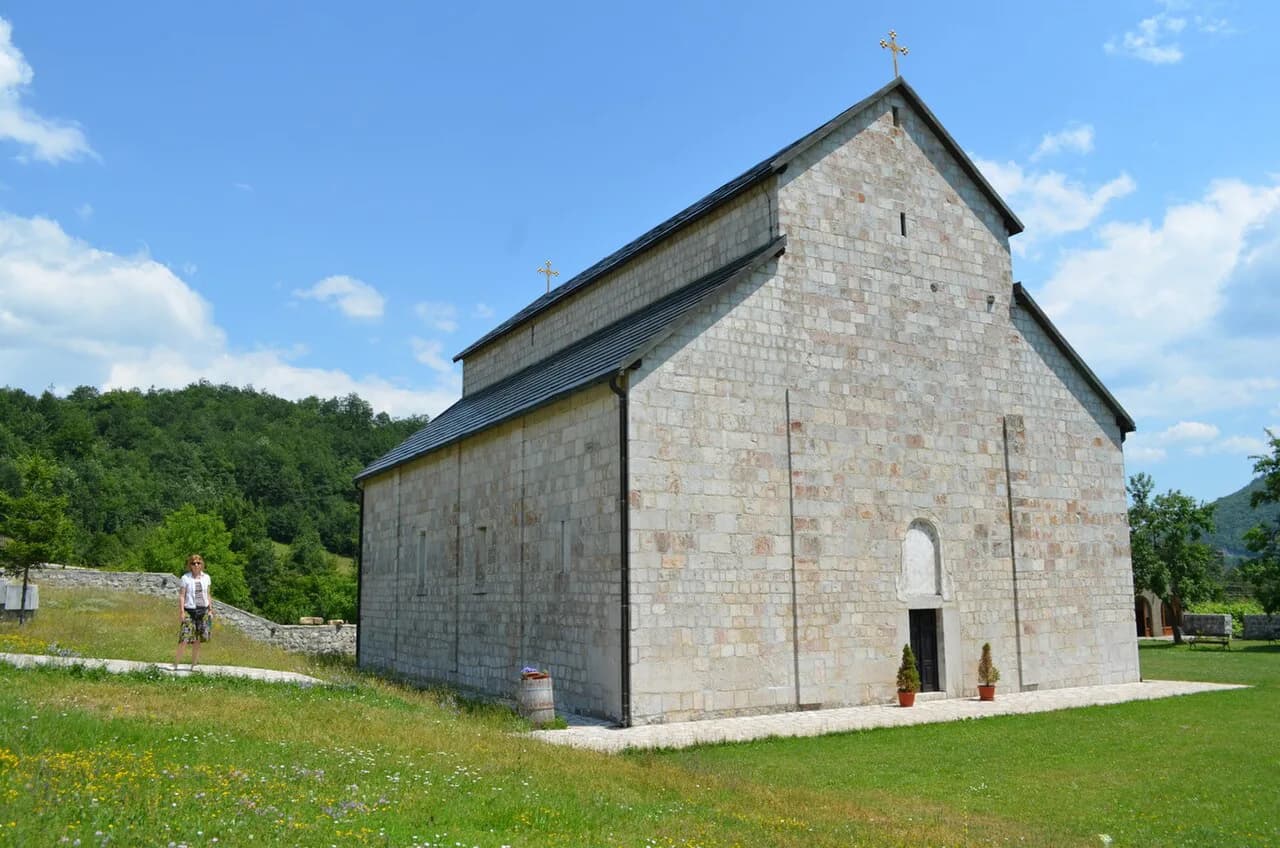
Piva Monastery is part of the wider heritage of the Plužine area rather than something to reach by water, so it works best as its own stop with time set aside. See the guide to Piva Monastery for what to expect.
The border at Šćepan Polje
At Šćepan Polje a border bridge crosses the Tara river towards Bosnia and Herzegovina, and the crossing has a barrier and camera on the Tara gorge side that guards open when someone is standing there. If you are driving the canyon with a crossing in mind, allow for that pause rather than expecting an open road through.
Turning immediately towards Bosnia and Herzegovina at the bridge is reported to be awkward, so approach the crossing as a deliberate step in the route. Check your documents and the current crossing arrangements before you commit to a border loop.
Fishing, swimming and cruising on the lake
A travel guide to the lake lists fishing, swimming and cruising as things to do on Piva Lake. Those are the activities to plan around if you want time on the water rather than only beside it, subject to local conditions on the day.
The reservoir is a working body of water held behind a dam, so conditions on the day govern what is sensible. Ask in Plužine about the current state of the water and any local restrictions before you swim or take a boat out.
Boats on the lake: arranging a trip in Plužine
There are no boat timetables, ticket prices or landing points on Piva Lake set out here, so sort trip arrangements in person in Plužine, where the town sits on the shore, and ask what is running that day.
That in-person approach suits a reservoir in a canyon: demand is small, the water level and weather shift, and operators work to the day rather than to a printed sheet. Keep your plans flexible and treat a boat trip as a bonus rather than the fixed point of the visit.
Getting to Plužine and the lake without a car
Plužine is the access point for the lake, and the town itself is small enough to cover on foot once you arrive. A guide to the town on Piva Lake sets out what is there and how the place is laid out.
For travellers without a car, the lake is harder work than the map suggests: the canyon road and its tunnels are the approach, and the viewpoints sit along it rather than in the town. Confirm bus connections with the operator or at a station before you build a day around them.
Timings, tickets and facilities: what to sort before you go
This guide gives no ticket prices, opening hours or boat schedules, so plan around what is actually fixed: a reservoir in a canyon, the town of Plužine on its shore, a dam at one end and a border crossing at Šćepan Polje.
Facilities along the water are limited by the terrain, which restricts where you can stop. Carry what you need for the day, and sort out food, fuel and any boat arrangement in Plužine before heading along the canyon.
Should you drive the canyon or just stop in Plužine?
If you have a car, drive the canyon road: the tunnels, the water and the limestone walls are the reason to come, and Plužine works as the pause in the middle. Without a car, base yourself in Plužine and treat the lake as scenery rather than a circuit.
Either way, leave the boat until you arrive, ask in town what is running, and keep the border crossing and the monastery as separate decisions rather than squeezing them into the same afternoon.
Explore more Plužine guides
Sources
Notes for your Montenegro trip
Optional updates to our Montenegro town guides.
You might also like
Continue reading
More guides you'll find useful