Piva Monastery: Visiting the Monastery Moved for the Dam
Piva Monastery was moved to Sinjac before the Piva reservoir flooded its old site. Here is what to see inside and how to reach it on a Piva Lake day out.
On this page
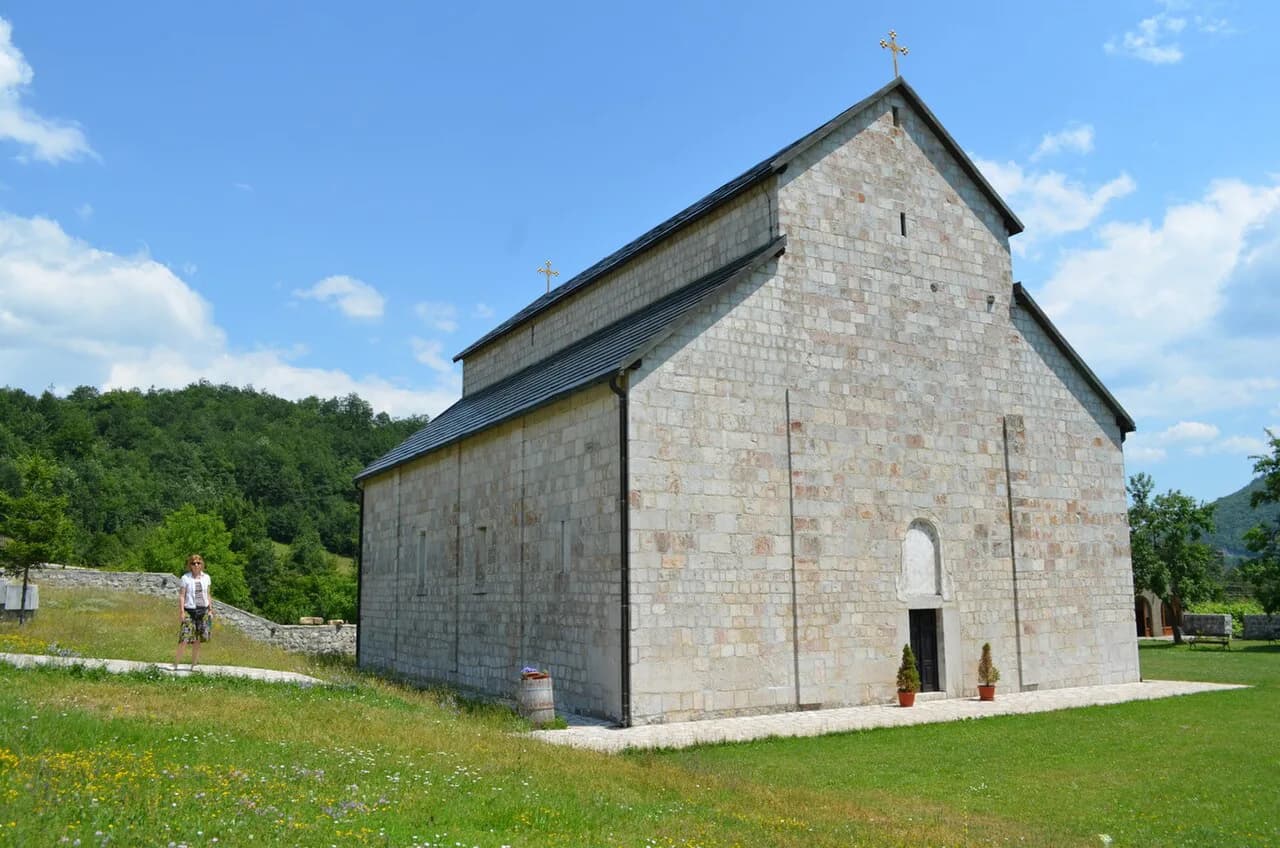
Piva Monastery is a 16th-century Orthodox monastery that was taken apart and rebuilt higher up the valley when the Piva reservoir swallowed its old site, and it now stands at Sinjac, around 2 km above the original spot. The building looks modest from outside, so the reason to come is what is inside: a church interior of old frescoes with a story of relocation behind it. This guide covers what is visible at the new site, how the move was carried out, what the low water revealed at the old one, and how to reach the monastery from the coast.
Treat it as one stop on a circuit rather than a destination on its own. The monastery sits close to the Mratinje Dam and the water at Plužine, so pair the visit with a dam walk and time in town rather than making the monastery your only stop.
Where Piva Monastery stands
The monastery stands at Sinjac, above the Piva reservoir near Plužine, about 2 km from the site it originally occupied at Pivski Oko. Visitors arriving by road see a working monastery rather than a ruin: the church, its walls and the surrounding buildings are all in use. Plužine is the practical base, a small town on the water with fuel, food and parking before the last stretch to the monastery.
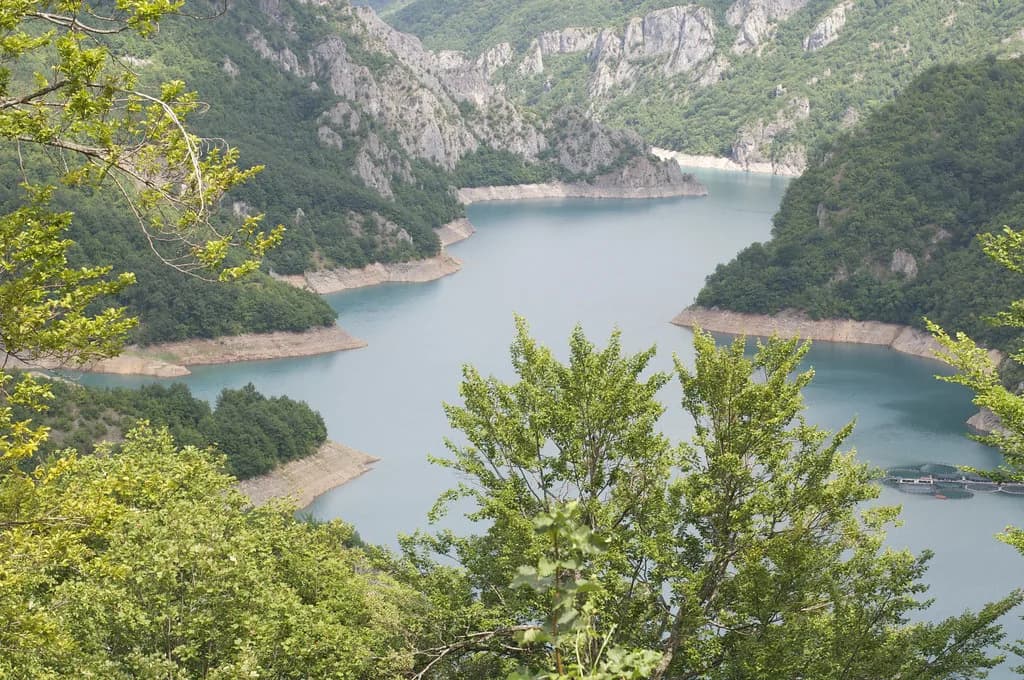
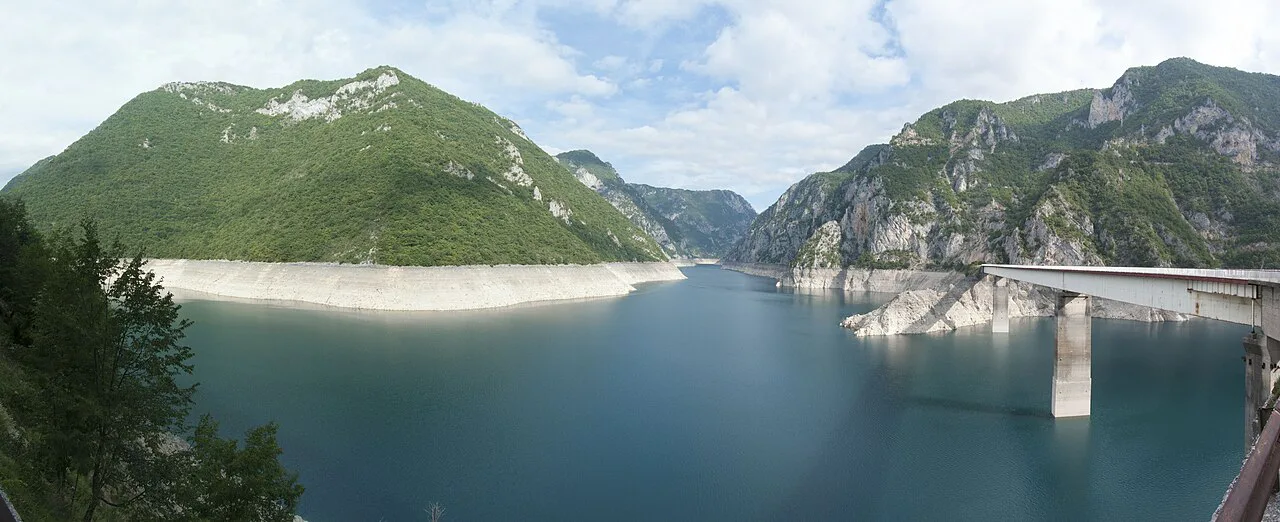
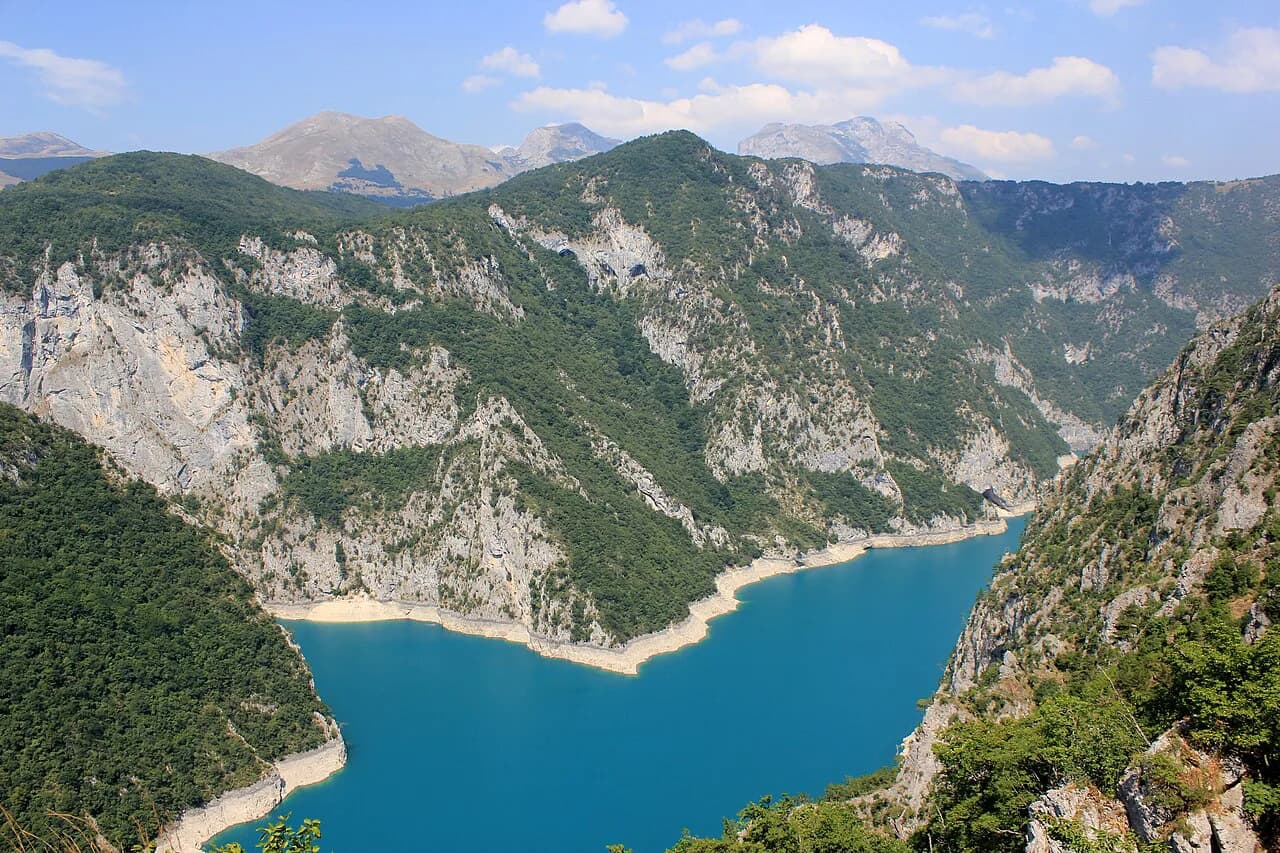
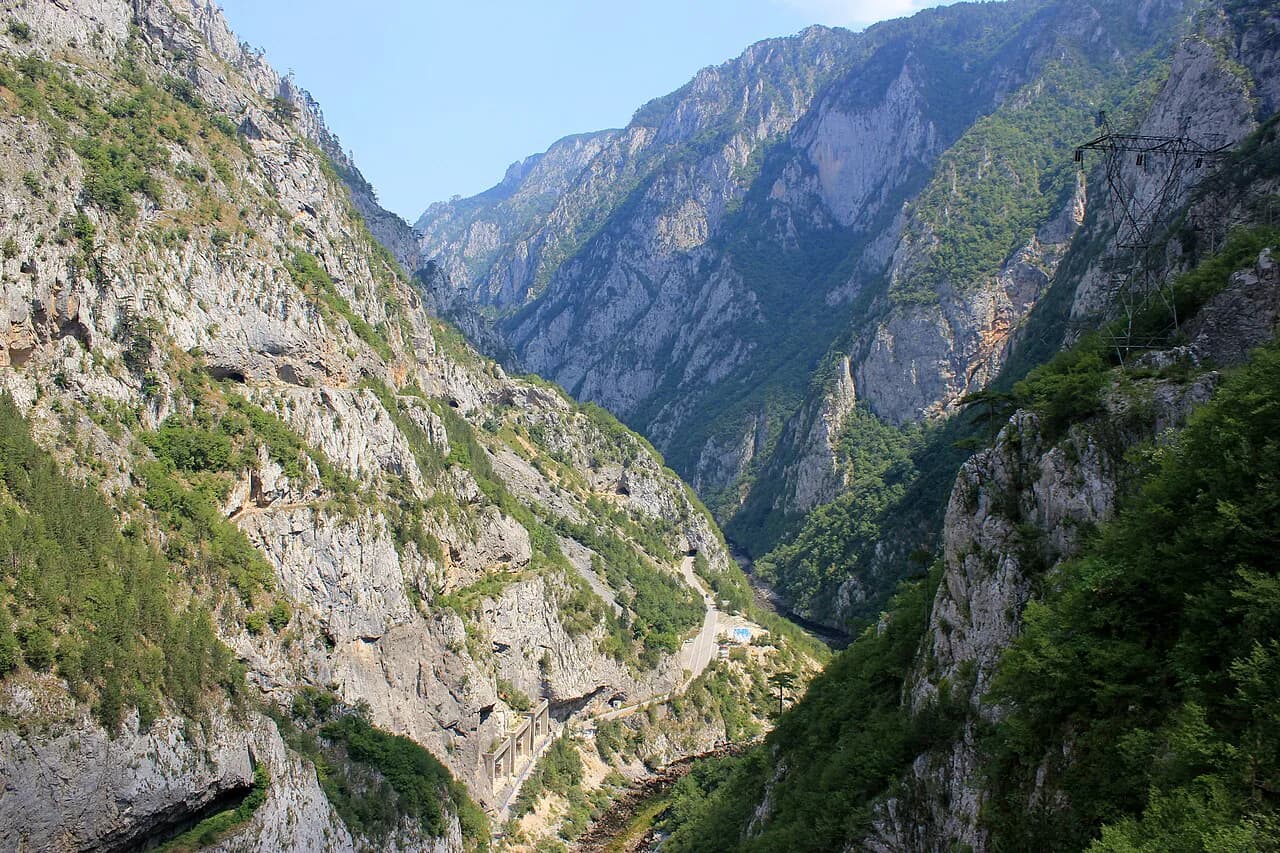
Piva Lake itself is a reservoir filling the canyon of the Piva River, with the water held back by the Mratinje Dam. The monastery is not on the shoreline but set back above it, which is why the view from the road takes in water and cliffs at once.
Why the monastery was moved
The monastery was relocated because the construction of the hydroelectric plant on the Piva flooded the ground it stood on. A news report on the flooding's visible aftermath states that between 1969 and 1982 the monastery was moved piece by piece from Pivski Oko to Sinjac, and that more than 1,250 square metres of 16th- and 17th-century frescoes were placed on the reconstructed walls. That reported span of years sits alongside the 12-year figure given in a travel description of the same project, so treat the exact duration as a reported detail rather than a fixed number.
One tour operator dates the monastery to 1578, which fits the 16th-century frescoes and the troubled period in which it was built. That date is the operator's own attribution rather than the monastery's own signage, so treat it as one operator's dating rather than a verified founding date.
What to see inside
The frescoes are the main reason to step inside. The interior is described as decorated with very old frescoes, and a tour description mentions showing visitors the entrance and a steep staircase to a hidden upper room used by the monks during raids. The church is dedicated to the Assumption of the Blessed Virgin Mary, and the building's outward plainness is a product of the period in which it was founded: it reads more like a house than a monument, with the symbolism of a working church rather than a grand facade.
Look at the walls as you walk in. What you see is a reconstruction: the church was dismantled and rebuilt on new ground, and the frescoes were reset into the rebuilt interior rather than left in place. Knowing that changes how you read the building, because every surface you look at has been moved at least once.
Pairing the monastery with the dam and Plužine
A sensible day out runs monastery, dam, then town. The Mratinje Dam is walked for its height and the drop on one side, and the drive between the dam and Plužine along the old riverbed is used as a photo stop on organised itineraries. Allow an hour for Plužine itself, with time for the water or a swim in the river where the bank allows.
The highland stretch above the lake gives the panorama most people come for, with views back over the water from the serpentine road. A travel description puts the cliffs of the Piva canyon at around 1,200 m and the Mratinje Dam at 220 m high, both figures from that description rather than measurements taken on site. For the practical details, see the Piva canyon.
Getting there from the coast
The usual approach from the coast runs through the Bay of Kotor and Nikšić before turning north towards Plužine. A full excursion from Budva starts at about 8.30 and reaches the Piva River around 11.00, with the monastery visit beginning at 11.30; that gives a sense of drive times if you are doing it yourself in a car. The return leg past Nikšić, Podgorica and Cetinje is long, so plan the day around daylight rather than adding extra stops.
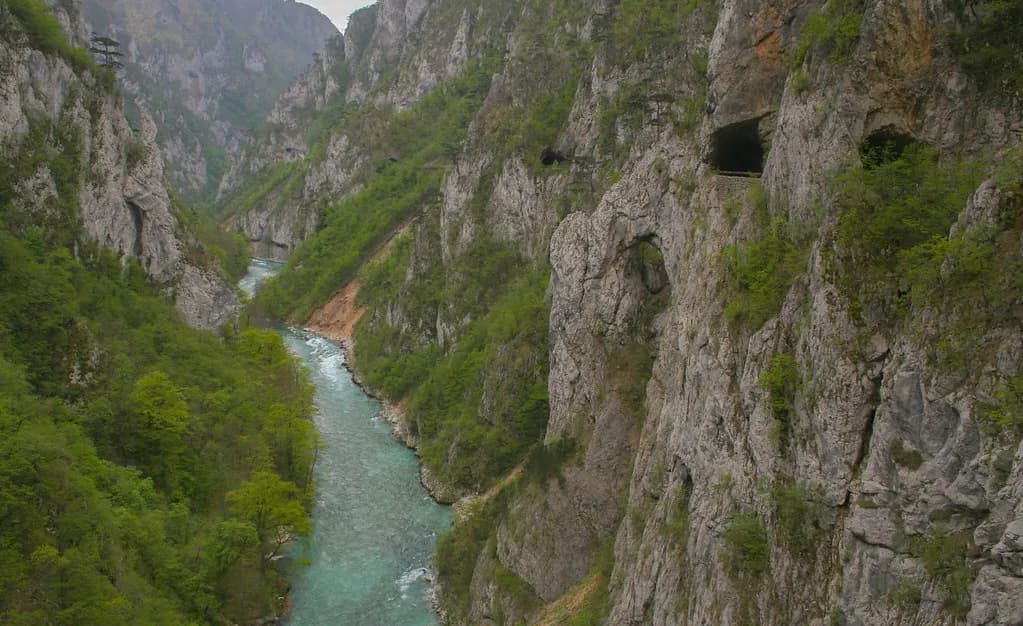
Driving yourself gives you flexibility over the viewing platforms and the tunnel descent along the Piva River, which organised tours build into their route. Pick up fuel and supplies before the final run to the monastery, since the last stretch is not the place to look for services. If you are putting the lake at the centre of the day, the wider Piva Lake guide covers what else is on the water.
Boat trips on Piva Lake
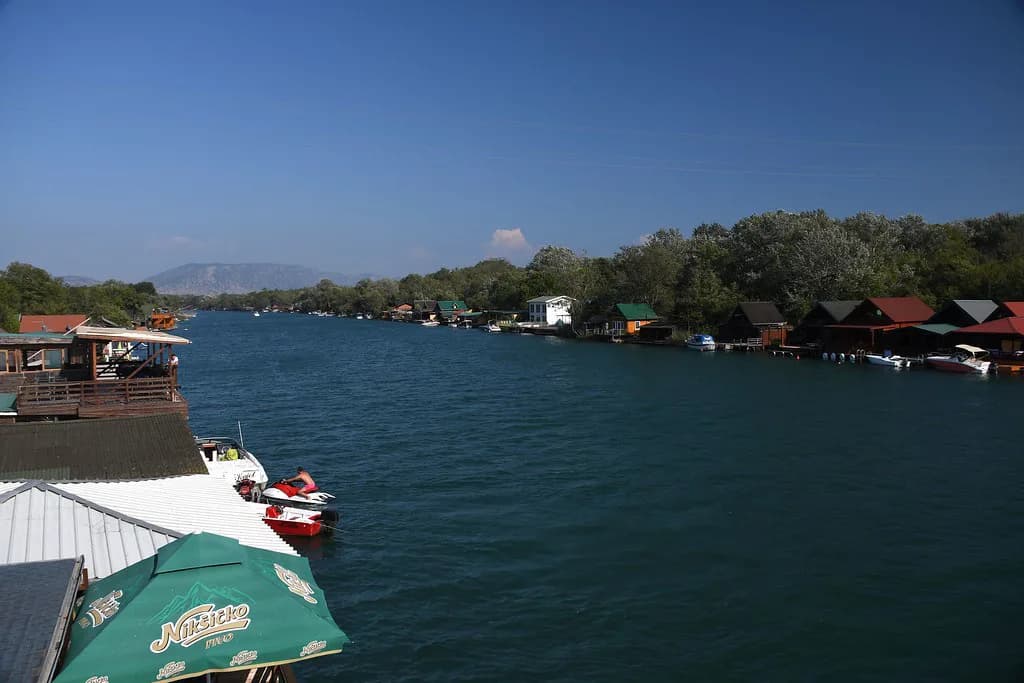
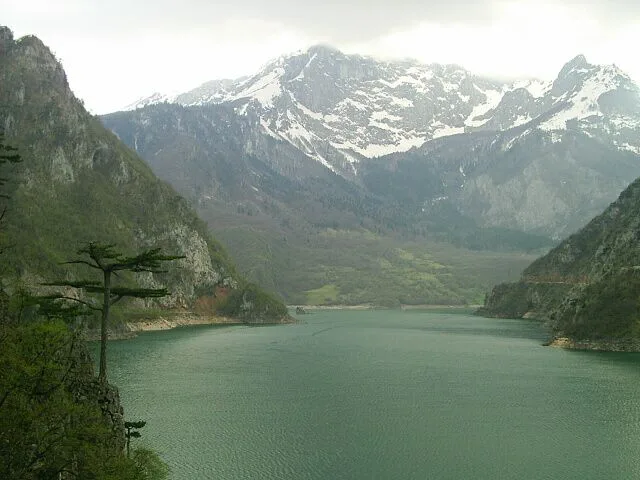
Boat trips set off from Plužine and stop at caves and swimming spots on the water, but they are not a scheduled service. A tour description is explicit that there are few boaters on the lake and an agreement is required in advance, so arrange one before you travel rather than turning up and hoping. That operator offers a one-hour trip as an option, and it takes a slot out of the same day as the monastery.
Ask about the boat when you book your accommodation or on arrival in Plužine, and keep the monastery visit early in the day so a late confirmation does not eat into it. If no boat is available, the drive along the reservoir and the dam walk fill the time without difficulty.
What low water reveals at the old site
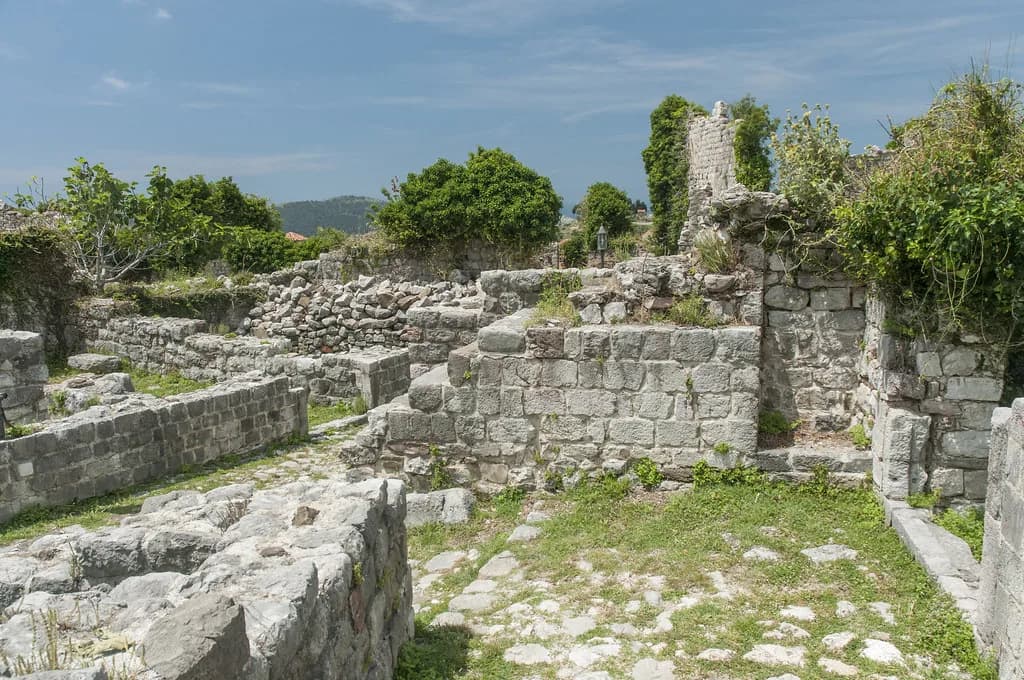
When the reservoir drops far enough, the old monastery site reappears. A news report from 2011 described the submerged remains emerging after a drought, with traces of the monastery visible as the water ran back towards the canyon, along with graves, old lodgings and the remains of the 13th-century church of the Holy Apostles Peter and Paul. The same report names old Plužine, the settlement lost under the reservoir, among what lies beneath the water.
Do not plan a trip around seeing this. The exposure depends on water levels and drought conditions at the time, and it is a reported event rather than a feature of the site. The reliable monastery to visit is the one at Sinjac, and the old site is a bonus if conditions happen to favour it.
What to wear and how long to allow
This is an active monastery, so dress for a church rather than a viewpoint: a tour description asks visitors from a mixed group to wear clothes down to the knees and comfortable walking shoes. Keep your voice low inside and check before photographing the frescoes, since the rules are set by the monastery rather than the guide.
Allow around an hour at the monastery and a further two to three for the dam and Plužine on the same outing. Confirm current visiting times with the monastery or your accommodation before setting out. One monastery tour combining Piva with Cetinje, Podgorica and Ostrog quotes a duration of 8+ hours, which is the realistic cost in time of combining Piva with other sites.
Is Piva Monastery worth the drive to Plužine?
Yes, if you treat it as part of a day on the water rather than a standalone pilgrimage. The frescoed interior and the story of a monastery rebuilt above a rising reservoir justify the detour when it sits alongside the Mratinje Dam and a walk through Plužine.
Skip it if your only free day is short and the coast is your base: the drive through Nikšić and back eats most of the day. For the wider picture of what the reservoir offers, start with the Piva Lake guide, then set your route.
Explore more Plužine guides
Frequently Asked Questions
Can you see the old Piva Monastery under the water?
Only when the reservoir drops far enough, as happened during a drought reported in 2011, when remains of the monastery, graves and the old church of the Holy Apostles Peter and Paul came into view. It is not something you can count on for a planned visit.
How long does it take to get to Piva Monastery from the coast?
One organised excursion leaves Budva around 8.30 and reaches the monastery at about 11.30, so budget a morning for the drive. Doing it yourself by car follows the same route through the Bay of Kotor and Nikšić, and the return leg is long enough that you should not add more stops.
Do you need to book a boat on Piva Lake in advance?
Yes. Boats run from Plužine to caves and swimming spots, but there are few operators on the water and an agreement has to be made beforehand. Ask when you book your accommodation or as soon as you arrive in town.
Sources
Notes for your Montenegro trip
Optional updates to our Montenegro town guides.
You might also like
Continue reading
More guides you'll find useful