Stari Bar: Visiting the Walled Ruins Above Bar, Montenegro
Stari Bar is the ruined walled town above modern Bar, five kilometres inland. What survives inside the walls, how to reach it and what to see outside them.
On this page
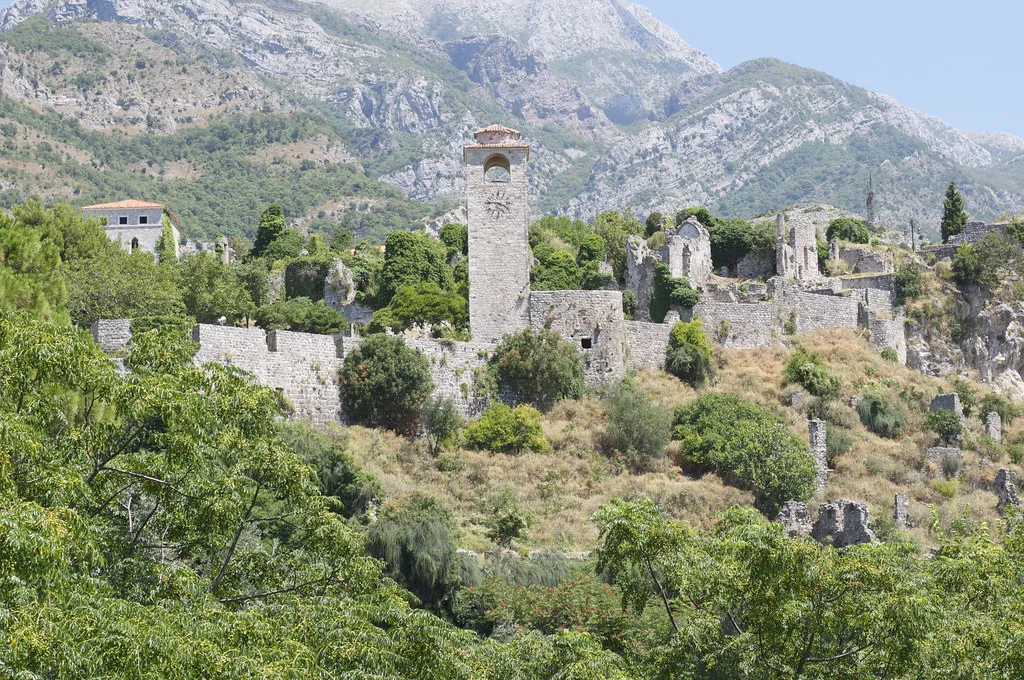
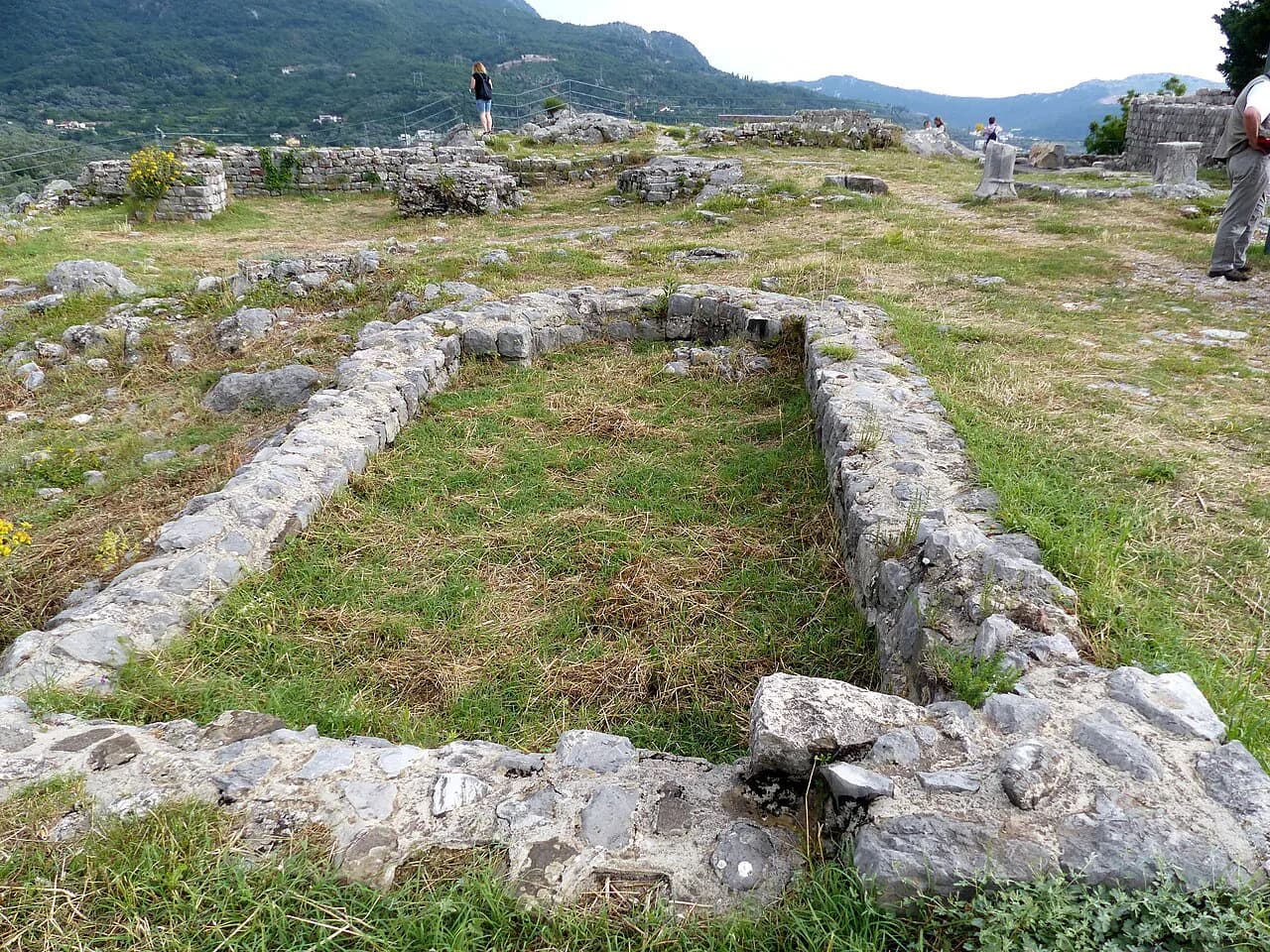
Stari Bar is the walled ruin of the old town of Bar, set five kilometres inland from the modern port beneath the Rumija massif. You come for surviving stonework rather than a polished old town: walls and round corner turrets, cobbled paths running under arches, a clock tower and a scattering of ruined churches.
Two structures on the approach road catch out visitors who drive straight to the gate: the Omerbašića mosque about a hundred metres before the entrance, and the Bar Aqueduct roughly 450 metres from the old town. This guide separates what lies inside the fortifications from what sits outside, gives distances from the coast and the airports, and flags the summer heat that decides when to walk it.
What Stari Bar is and where it sits below Rumija
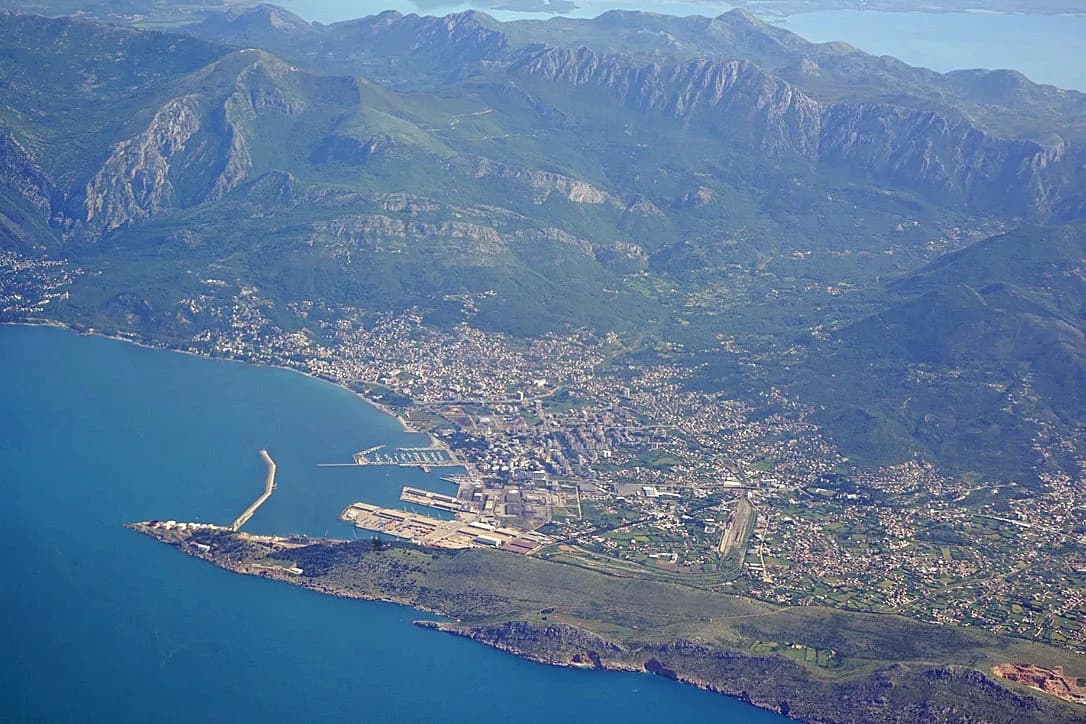
The fortified town sits at the foot of Rumija in the south-eastern part of the Montenegrin coast, about four kilometres from the Adriatic and five from the centre of modern Bar. It served as the centre of Bar for several centuries before the town moved down to the field beside the water at the start of the twentieth century, which is why the site is now a ruin rather than a living neighbourhood.
Its position is the point: set against the slope, it controlled the route between the sea and Lake Skadar, and the approach is from the west rather than over the mountain. Treat it as an archaeological site with uneven cobbles and open drops rather than a walled town with cafés inside.
Allow more time than the map suggests, because the site spreads across a slope and the walking is slow. If you want the deeper chronology of the town, read about it before you climb up.
How to get to Stari Bar
By road, Stari Bar is roughly 43 km from Budva and 65 km from Kotor, with about an hour's drive quoted from both Budva and Podgorica. Podgorica airport is about 55 km away and Tivat airport about 61 km, so a car makes sense if you are combining the ruins with the coast in one day.
From Bar itself the distance is short enough for a taxi from the town centre. Buses run between Bar and Budva, but the old town sits above the modern town, so plan the final leg rather than assuming a bus stops at the gate.
If you would rather not drive, organised excursions from the coast include the site among their stops. Compare what is offered before booking, since itineraries vary in how long they allow inside the walls.
Inside the fortifications
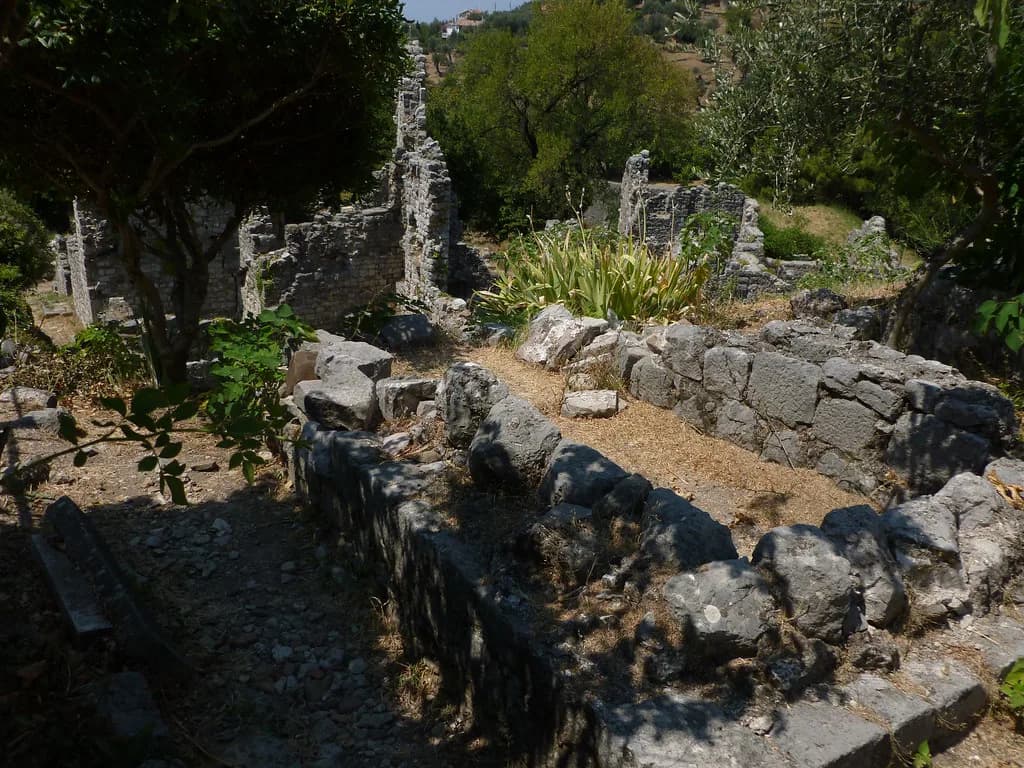
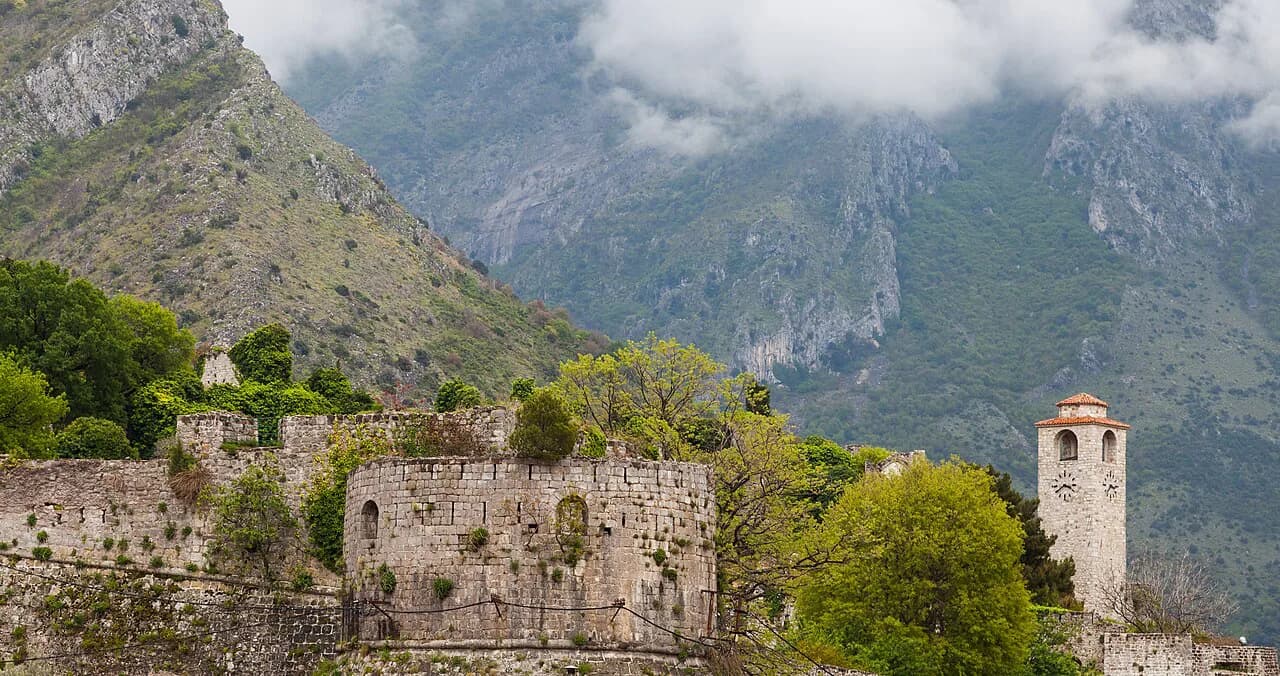
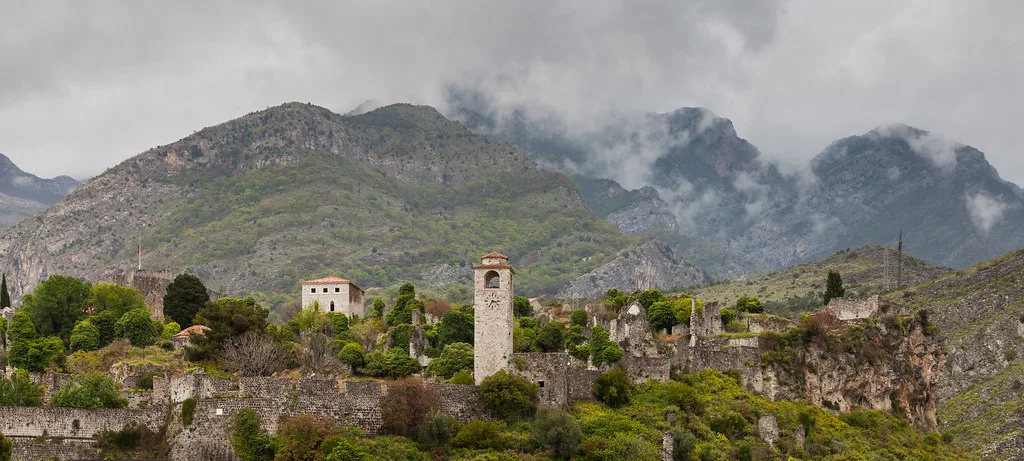
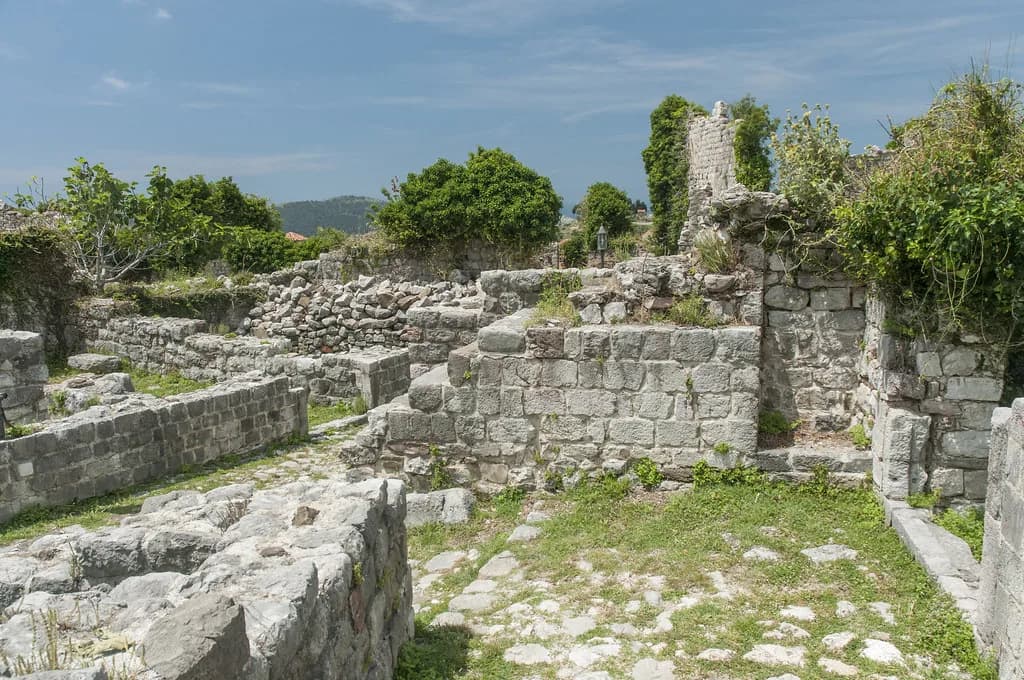
The walls and the sturdy round turrets at the corners are visible from outside, but the character changes once you pass through. Inside there are no shops or stalls, just cobbled paths beneath old arches, towers standing where the buildings around them have crumbled, and plants pushing out between the bricks.
Gates lead to the remains of tunnels within the fortifications, so bring a torch if you want to look into them. Footwear matters: the cobbles are uneven and much of the site is exposed, so this is not a sandals-and-sundress stop.
The gate, the walls and the surviving towers are the core of the visit, and they reward an unhurried walk rather than a circuit of the perimeter. Keep to the paths where the masonry is loose.
The Clock Tower, built in 1753
The Clock Tower is the structure most visitors remember, built in 1753 by Yahya Ibrahim Osman Agha, a prominent resident, with clocks on all four faces. War and natural disasters damaged it, and it was completely reconstructed in 1984, which is why it now reads as the symbol of old Bar.
Treat the tower as your anchor inside the walls and build the rest of the walk around it. It is also the one element that survives in a legible state, so it makes a natural place to stop and work out the layout of everything else.
The Omerbašića mosque before the entrance
About a hundred metres before the entrance to the old town stands the Omerbašića mosque, built in 1662 by the Bar merchant and nobleman Omer Baša with his two sons. It was restored in 1971, badly damaged by the 1979 earthquake and thoroughly repaired in 1986, and it remains the central mosque of Bar with prayers still held there.
It is a working place of worship rather than a ruin, so dress and behave accordingly and keep voices low if prayers are in progress. Because it sits outside the walls, anyone who heads straight for the gate will miss it entirely.
The Bar Aqueduct and its 17 arches
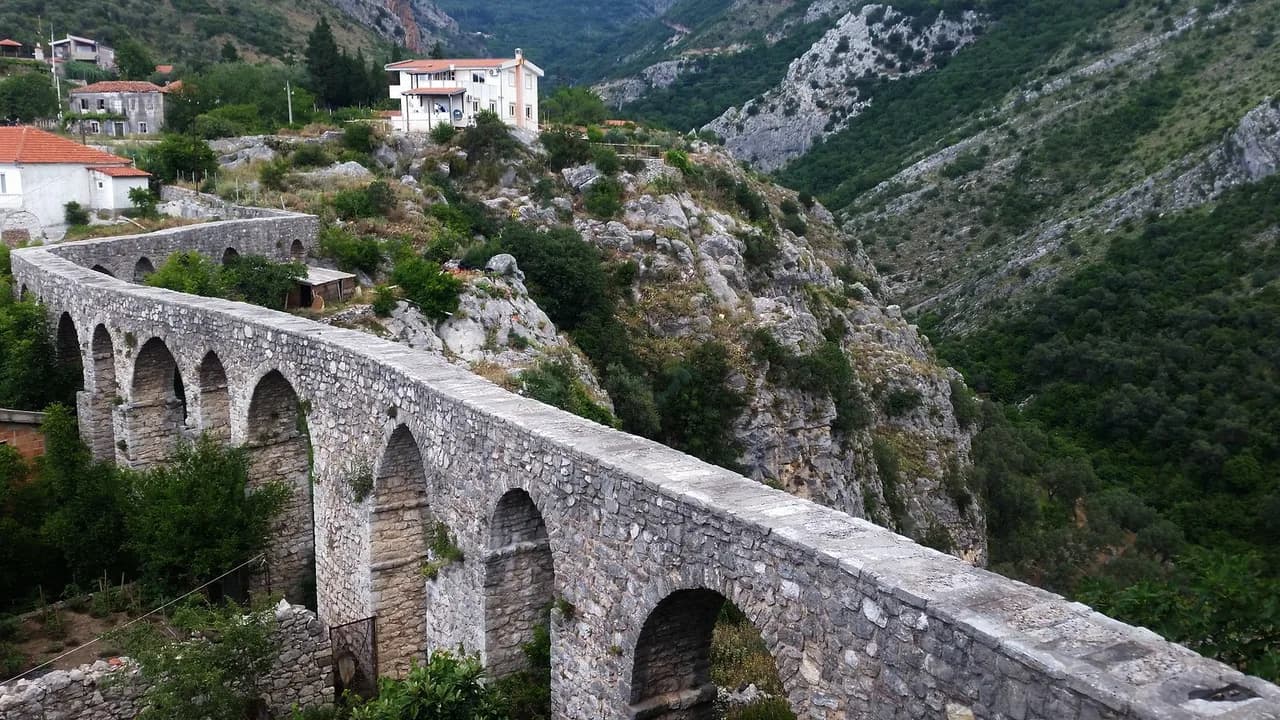
About 450 metres from the old town, the Bar Aqueduct is a stone bridge carried on 17 arches of different widths and heights, supported by 17 massive stone columns. It was built under Ottoman rule between the sixteenth and seventeenth centuries to bring water from a spring on Rumija some three kilometres away.
The aqueduct was badly hit by the earthquake of 15 April 1979 and subsequently repaired. Either way, what you see today is a restoration of the Ottoman original, best combined with the mosque on the same approach rather than treated as a separate outing.
What else lies around Stari Bar
Below the fortress, the bazaar street gives a sense of the trading settlement that grew up against the walls, and there are restaurants in and around it. It makes a sensible first or last stop rather than a detour, with the walls of the old town directly above.
Beyond the town, the Turčini waterfalls and the Rikavac canyon are the natural counterparts to the ruins, both reached by road from Stari Bar. Neither is a casual walk from the gate, so plan them as a separate leg of the day with transport.
Closer to modern Bar, the old olive tree at Mirovica is an easy add-on if you are driving between the ruins and the coast. It suits the same half-day as Stari Bar rather than a trip of its own.
How long Stari Bar takes and when to go
Give the walled town a couple of hours if you want to walk it without rushing, and add time for the mosque and aqueduct on the approach road. Combine it with the bazaar street for lunch and you have a comfortable half-day from Bar or a full stop on a drive from Budva.
Heat is the constraint. Stari Bar's climate brings long, hot, dry summers that can reach 40°C, with mild, rainy winters averaging around 8°C in January; these are typical figures, not a forecast. Mid-May to mid-September is the window the local guides recommend, and starting early in the day is the simplest way to avoid the worst of the afternoon.
Carry water, wear shoes with grip and check the day's conditions before setting out. Then read up on how the town developed before you wander the walls.
Practical notes on food and the modern town
The cuisine around Stari Bar reflects Ottoman influence: vegetarian mezze with stuffed peppers, aubergines and okra, plus grilled meat dishes, and locally pressed olive oil worth buying. Eating near the ruins is part of the visit rather than an afterthought, so time your walk to end at the bazaar street.
Back down in modern Bar, the promenade and King Nikola's Palace fill the rest of a day comfortably. Together with Stari Bar they give you both halves of the town, the ruin on the slope and the seaside city that replaced it.
Should Stari Bar be your first stop from Bar?
Yes if you want the old town rather than the port: Stari Bar gives you walls, towers, a clock tower and an aqueduct in a quiet setting, and it takes a half-day rather than a full one. The trade-off is that it is a ruin, not a restored town, so come for the stonework and the setting below Rumija rather than for shops and cafés inside the walls.
Build the day around the approach road and the bazaar street: mosque first, then the gate and the Clock Tower, then the aqueduct on the way back down. Start early between May and September, and check the current opening arrangements before you travel, as they are not listed here.
Explore more Bar guides
Frequently Asked Questions
Is there an old town in Bar, Montenegro?
Yes, but it is not in the modern town. The old town is Stari Bar, a fortified ruin about five kilometres inland from the port and four kilometres from the sea, beneath the Rumija massif. It held the centre of Bar for several centuries before the town moved down to the coast at the beginning of the twentieth century.
What can you see in Stari Bar?
Inside the walls you find the fortifications with round corner turrets, cobbled paths under old arches, surviving towers and the Clock Tower built in 1753 and reconstructed in 1984. On the approach road are the Omerbašića mosque, built in 1662, and the Bar Aqueduct with its 17 arches, and the bazaar street below the walls has restaurants.
How far is Stari Bar from Budva and Kotor?
Stari Bar is roughly 43 km from Budva and 65 km from Kotor, with about an hour's drive quoted from Budva and Podgorica. Podgorica airport is about 55 km away and Tivat airport about 61 km, and a taxi from Bar town centre covers the last few kilometres.
When is the best time to walk around Stari Bar?
Mid-May to mid-September is the recommended window. Summers are long, hot and dry and can reach 40°C, so an early start matters, while winters are mild and rainy with January averaging around 8°C. These are typical climate figures rather than a forecast.
Sources
Notes for your Montenegro trip
Optional updates to our Montenegro town guides.
You might also like
Continue reading
More guides you'll find useful