Doclea, Podgorica: The Roman City Ruins and What Survives
Doclea is a Roman and late Roman city site north of Podgorica, with a forum, baths, an episcopal basilica and a triumphal arch. Here is what survives there.
On this page
Doclea is a Roman and late Roman city site in the territory of Podgorica, and you visit it for the layout rather than for spectacle: a grid plan, a named main street, a forum, baths and a triumphal arch, with early Christian churches added in the 5th and 6th centuries. The UNESCO Tentative List entry calls Doclea the most significant archaeological site in Montenegro, a billing worth weighing against the low-key state of the ruins themselves. This guide sets out what survives, how the pieces relate, and how the site fits into a few hours in the city.
Plan on rough ground, sturdy shoes and your own water rather than a visitor centre. What follows runs through the monuments in the order you will want to look for them, then covers how to get there and where the excavated finds have gone.
What Doclea is and where it stands
Doclea stands north of the modern centre of Podgorica, on the plain where the Romans were urbanising the province of Dalmatia from the early 1st century CE. The city took its name from the Illyrian tribe Docleati, on whose land it was built, and grew into a trading centre that received municipium status in the Flavian Age. In practical terms it is a city-edge site: reachable from the centre, but well outside the built-up streets.
For orientation, the Podgorica attractions guide shows how the city's sights sit together, and Doclea forms the Roman end of that spread rather than a stop on the main square circuit. Treat it as a half-day outing built around one site, not something to bolt onto a tight old-town walk.
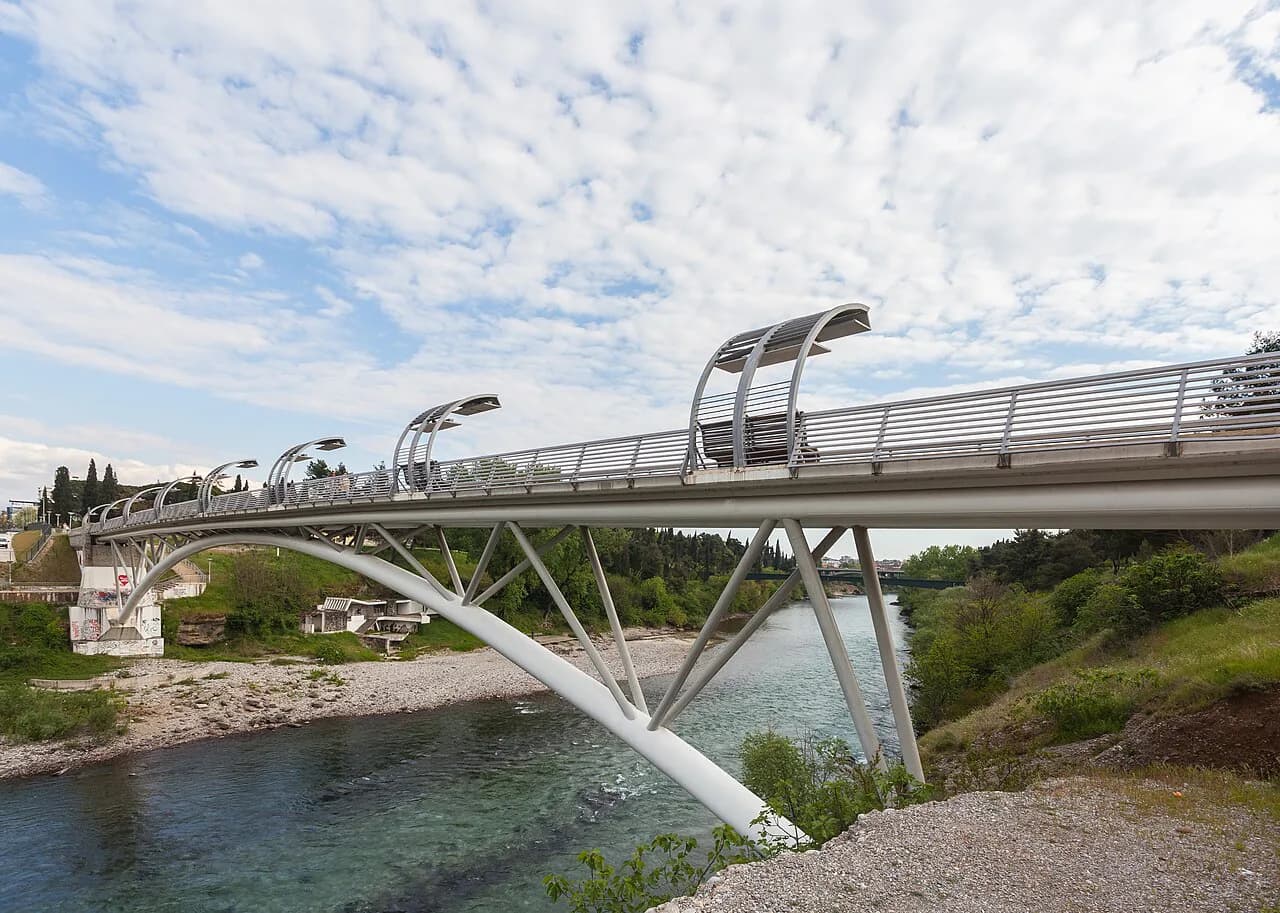
If you are planning a day around the city rather than a single monument, it helps to see Doclea as one entry on a wider list of things to do in Podgorica, sitting alongside the centre's Ottoman streets and the river crossing at the Ribnica Bridge. That framing keeps the travel time honest: the ruins take a chunk out of the day on their own.
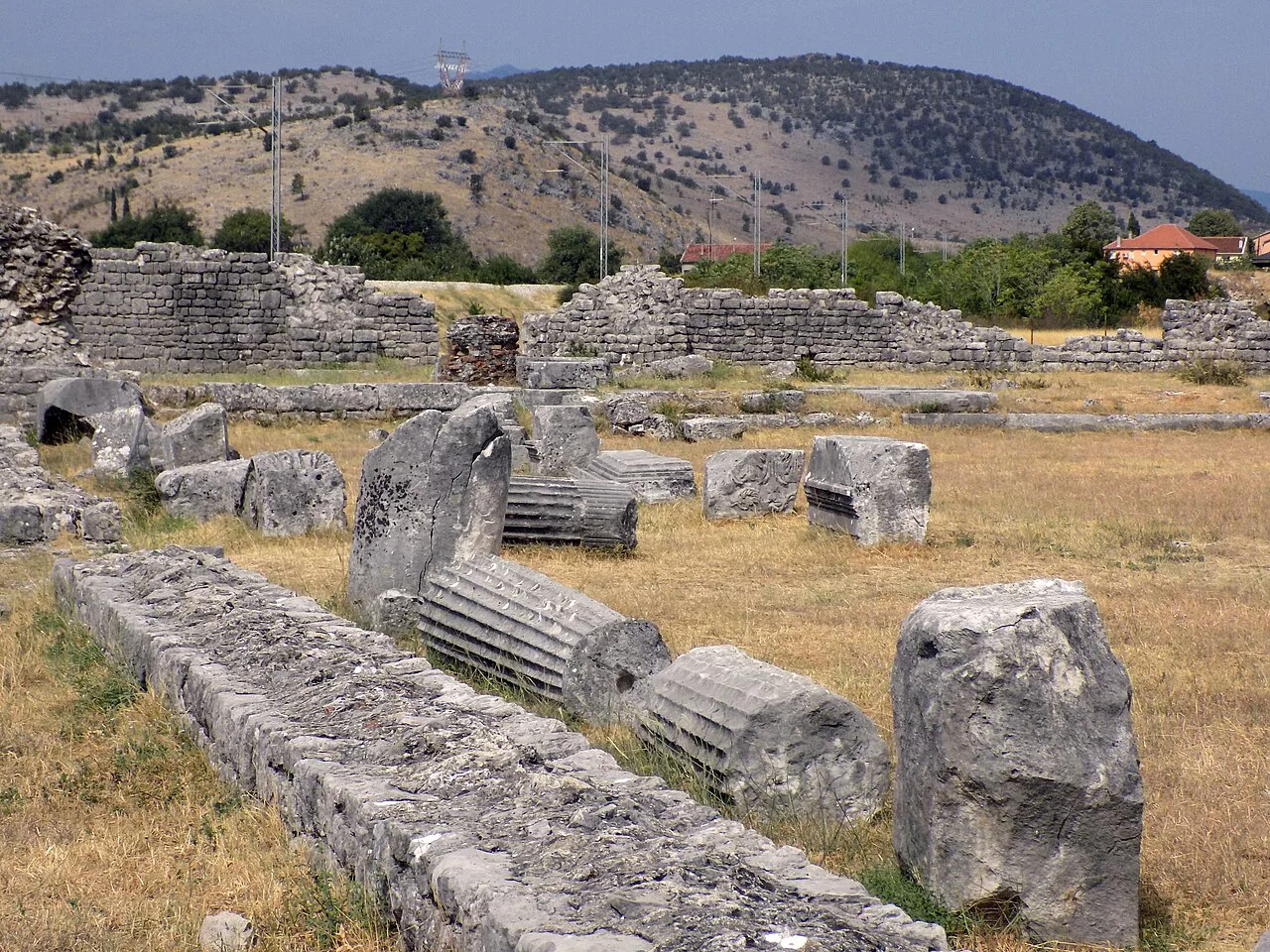
What survives on site: the Via Principalis, triumphal arch, temples, forum and baths
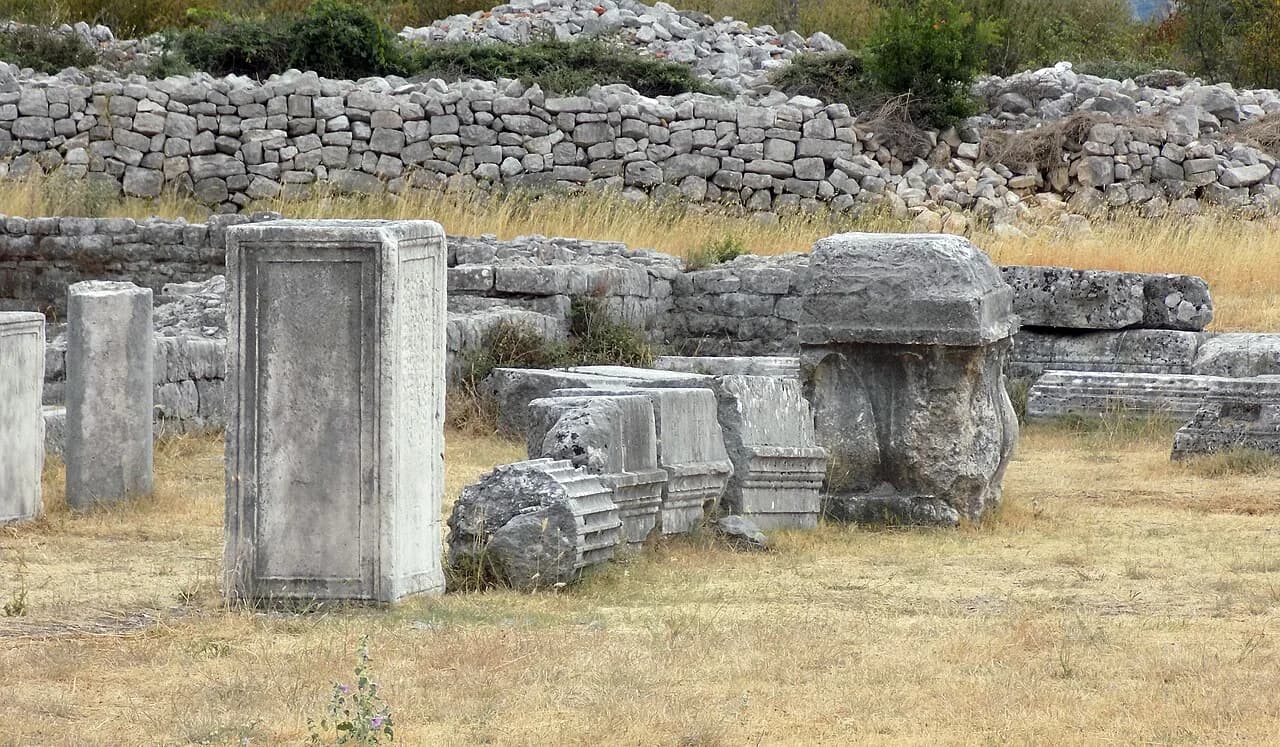
The city was built on the classical grid, and the east-west Via Principalis carried its most important buildings, several of which can still be traced. Look for the triumphal arch dedicated to the Emperor Gallienus, the temple and statue of Roma, the temple of Diana, a palace and the large, richly decorated city baths. The street name is the key: it is the spine that lets you relate one stretch of masonry to the next.
The forum follows the standard Roman form, square with colonnaded porticoes running its length. One of its basilicas was dedicated to Flavius Frintanus Balbinus, a boy of fifteen whose gilded statue stood in the forum; why he was honoured that way is still unknown. The baths are the other set-piece, and their scale is the clearest sign of the city's wealth in its classical phase.
The late Roman city: the episcopal basilica and the churches
Doclea's Christian phase belongs to the 5th and 6th centuries CE, when it was capital of the Late Roman province of Praevalitana. Early Christian churches and a large episcopal basilica stand in the eastern urban and suburban areas, both inside and outside the walls. In the ruins you are reading two cities in one: the classical grid, and a Christian city that reused and extended it.
The bishop Evandros of Doclea is recorded among the participants at the Fourth Ecumenical Council at Chalcedon in 451 CE, which fixes the city in the church hierarchy of the period. For a visitor, the basilica is the monument that makes the site more than a Roman ruin: it shows where the city's centre of gravity had moved by the end of antiquity.
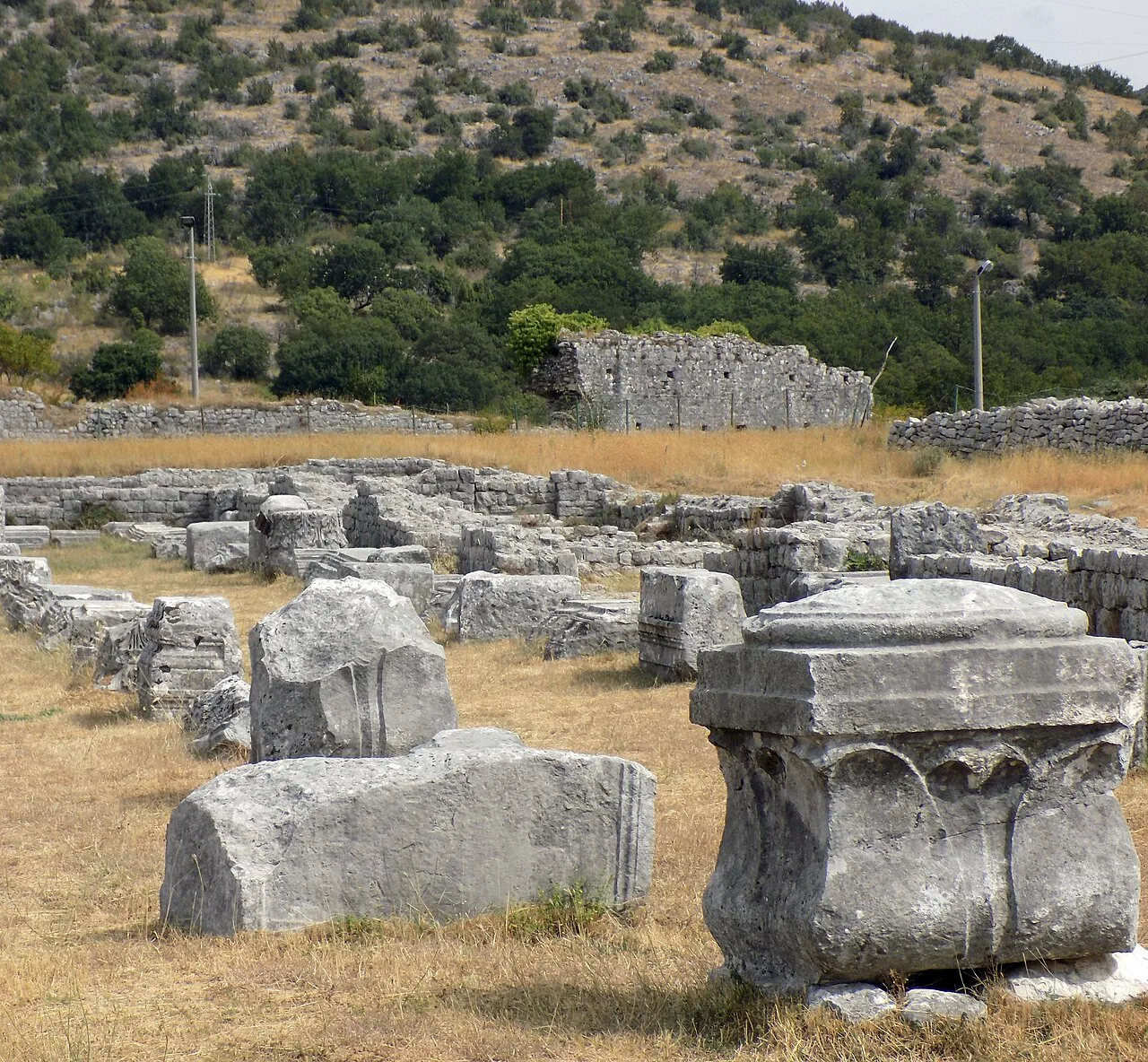
The walls, towers and fortified bridges
The Romans defended Doclea with walls about 2.5 metres thick, towers, battlements and fortified bridges across the rivers. Use that language as the framework for your walk: the defensive line gives shape to the scattered masonry, and the bridges explain why the approaches mattered. It is a site where the gates and bastions, not a single showpiece building, tell you how the city worked.
Urban life declined after the Ostrogoths sacked Doclea in 490 CE and was hit again by the earthquake of 518 CE. The city never recovered its standing and was finally abandoned during the Avar and Slavic invasions. The ruins are accordingly fragmentary in places: the walls and street lines are often the clearest structures, while the grand buildings survive as foundations and scattered masonry.
Doclea and Duklja: how the Roman name became the later name
Visitors meet the name in several forms, and the variants are not a sign of sloppy signage. Later Byzantine authors often called the city Dioclea and named it as the birthplace of Diocletian, a confusion that misled researchers into the mid-twentieth century. The Roman name is Doclea, the variant is Dioclea or Diokleia, and the local name Duklja belongs to the same lineage.
Podgorica history is worth reading alongside the ruins, because the city's medieval and Ottoman layers are what most visitors actually walk through in the centre. Doclea supplies the origin story; the old town streets supply the rest.
Excavations and what is still buried
Archaeology at Doclea has a long, interrupted record. Pavle Rovinski directed the early excavations in 1890 and 1892 on the orders of King Nikola I of Montenegro, Piero Sticotti published the only monograph on the site in 1913, and in the 1960s the Serbian Academy of Sciences and Arts excavated the necropolises. After that, work was limited to small-scale projects in various sectors.
Since 2017 the Balkan Heritage Foundation has supported excavation and research in the central residential and trading neighbourhood east of the Temple of Capitoline Triad, near the Cardo Maximus. That project investigated over 150 square metres, uncovering a representative residential building with a mosaic floor and a supposed glass workshop, and the finds were cleaned, documented and stored. Read this as project history rather than a promise of what you will see on the ground.
How to reach the site from central Podgorica
The site lies north of Podgorica, and the practical question is how to cover the last stretch. Bus numbers, journey times, parking charges and walking times for Doclea are not something to guess at from a guidebook, so settle the practicalities in the city before setting out. Ask at your accommodation or a tourist information desk in the centre, and confirm the return leg at the same time.
A Podgorica map is the sensible thing to have on your phone here, because the site sits outside the compact centre and the approach roads are not obvious. If you have your own transport, confirm the access road and where you can leave the car; if you do not, settle the taxi fare and the return before you go.
Doclea with the Museums and Galleries of Podgorica: finds, mosaics and inscriptions
The excavated finds from Doclea were cleaned, documented and stored, and the Museums and Galleries of Podgorica is a partner in the excavation project alongside the Municipality of Podgorica and the University of North Carolina Greensboro. That makes the city's museums the place to look for material from the site rather than expecting it in situ. Check what is on display before you go, since a stored find is not automatically an exhibited one.
Build the museum stop into the same day as the ruins if you want the objects to make sense of the walls. The Podgorica Old Town end of the centre gives you a compact cluster of sights to pair it with, and a look at the city's museums helps you plan that half of the day.
Practical points for a site visit
Doclea feels like an open archaeological field rather than a managed attraction. Plan around daylight and confirm access and any ticketing in the city before you set out rather than turning up late and hoping. Wear closed shoes for uneven ground, carry water, and allow generous time for a slow circuit of the visible monuments.
Allow around two hours if you are reading the plan as you go, less if you only want the forum and baths. The site rewards a little preparation: read up on the Via Principalis and the Cardo Maximus first, and the rubble starts to resolve into streets and buildings. Afterwards, a Podgorica Walking Tour of the centre gives you the modern city as a contrast.
Is Doclea worth the detour?
Yes, if you want the Roman layer of Podgorica rather than another square. Doclea is not a polished attraction: it is a large, partly excavated city where the reward comes from knowing what the Via Principalis, the forum and the episcopal basilica were, and then finding them in the ground.
Go with low expectations of facilities, high expectations of space, and a confirmed way back into the centre. Pair the ruins with the city's museums for any finds on display, and keep the rest of the day light.
Explore more Podgorica guides
Frequently Asked Questions
Do you need a ticket for Doclea?
Confirm the current ticketing and access arrangements locally before you travel out; plan around daylight and do not rely on arriving without checking first.
How long does a visit to Doclea take?
Around two hours covers the forum, baths, walls and basilica at a reading pace, and less if you concentrate on the main monuments. The site is spread out and the ground is uneven, so walking takes longer than the map suggests.
Where are the finds from Doclea kept?
The excavated material was cleaned, documented and stored, and the Museums and Galleries of Podgorica is a partner in the excavation project. Ask at the city's museums what is currently on display, because storage is not the same as exhibition.
Sources
Notes for your Montenegro trip
Optional updates to our Montenegro town guides.
You might also like
Continue reading
More guides you'll find useful