Where to Eat in Podgorica: Taverns, Grills and Cafés
Plan meals in Podgorica by neighbourhood: charcoal grills and kajmak in Stara Varoš, coffee in the centre and quieter local lunches across the river.
On this page
Eat in Stara Varoš for a traditional dinner, in the centre around Hercegovačka and Njegoševa for coffee and a working lunch, and across the Morača in Preko Morače for cheaper, quieter local plates. Podgorica is not a fine-dining capital, and the food scene runs on traditional cooking, grilled meat, generous portions and very serious coffee culture. This guide routes you by neighbourhood and occasion, with dish names, typical prices and the timing that decides whether a meal goes smoothly.
The city rewards choosing a district first and a restaurant second. Walk two streets off the main squares and quality and price both improve, while menus printed in eight languages with photos of every dish are the reliable tourist filter. If you have time for one walk before dinner, use a Podgorica map to fix the river crossing between the centre and Preko Morače in your head, because the bridge is the decision point for a cheaper evening.
Where to eat in Podgorica: the short answer, by neighbourhood and occasion
For a traditional dinner, Stara Varoš is the default: stone walls, charcoal smoke and tavern service that is slow in the best sense. The city centre suits breakfast, espresso and casual sit-down lunches, Preko Morače suits a quieter lunch at better value, and the Cijevna canyon east of town is the classic Sunday meal. The Gintaš central market is not a restaurant zone but the place to taste cheese, pršut and figs straight from producers before a coffee nearby.
The food scene rewards low expectations of glamour and high expectations of grills: mixed meat platters, kajmak, warm somun bread and local Vranac wine, served in portions that make lunch the main meal of the day. If you are still assembling a day around the meal, our guide to things to do in Podgorica covers the city's sights and how they sit together, while the restaurant decisions below are purely about where and when to eat.
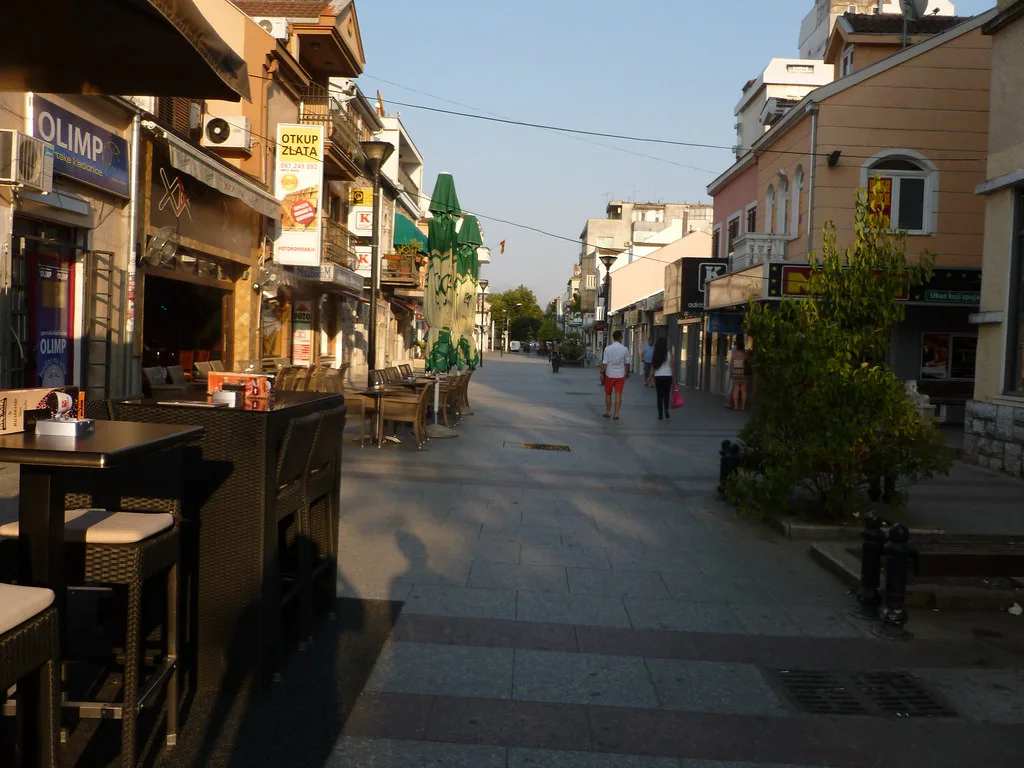
What Podgorica food is: grilled meat, traditional cooking and coffee
The core of the menu is grilled meat cooked over charcoal, served with kajmak, a thick dairy spread, and somun, the soft local bread. Tavernas also serve slow-cooked meat under the bell, known as sač, plus river trout and simple salads. A small glass of Vranac, the dark local red, is the usual accompaniment to a grill plate.
Coffee is a ritual rather than a transaction. Mornings are spent on terraces with a single espresso or domaća kafa, ideally for at least an hour, and many cafés serve simple food at lunch such as sandwiches, salads and light pasta. Ordering coffee to take away works against the local rhythm, so treat the café table as part of the itinerary rather than a stop between sights.
Stara Varoš: the default district for a traditional dinner
Stara Varoš is the natural food district, with old streets, low ceilings, charcoal smoke drifting from courtyards and a crowd that is mostly local. Tavern-style restaurants dominate, and if you are choosing one neighbourhood for a long lunch or an evening dinner, this is the answer. The side streets hold several family-run tavernas with stone walls and outdoor seating where you can walk in and point at what other tables are eating.
The district also holds the city's older architecture, so a meal here pairs naturally with a look at the surrounding streets and the river. Our guide to Podgorica Old Town explains how the district is laid out and which buildings anchor a short walk before dinner.
Pod Volat in Stara Varoš: what to order and what it costs
Pod Volat is the most recognised traditional tavern in the district: long-standing, local in its crowd, with a charcoal grill, somun, kajmak and Vranac on tap. A mixed grill for two typically comes in at €20–€25, which makes it the clearest entry point to the city's food scene and the easiest answer when nobody can decide where to eat.
Order from the grill and share, rather than ordering a dish each; the portions are built for it. Treat the price as the typical level for a shared grill plate rather than a fixed menu, and if you want sač, ask when you sit down because it can need one to three hours' notice.
City centre around Hercegovačka and Njegoševa: breakfast, brunch and working lunches
Around Hercegovačka and Njegoševa the city centre runs on coffee culture and light food: breakfasts, brunches, espresso, casual lunches and the occasional modern bistro. This is where you eat on a working trip, between meetings or before a flight, and it is the practical choice if you want a table without committing to a long tavern meal.
For the faster local combination, a bakery does burek and yogurt better than a café does brunch, and central bakeries are built for exactly that order. Keep an eye on timing as well: traditional tavernas run at full rhythm between 13:00 and 15:00, so the centre is more useful for late morning and early afternoon than for a long evening.
Preko Morače: cheaper, quieter local lunches across the Morača
Across the Morača, Preko Morače is the residential half of the city, and its restaurants serve the same food as the centre to a different crowd of students, families and regulars. Prices are lower, rooms are quieter and there is no tourist pressure, which the neighbourhood guide describes as the strongest local price-quality ratio in Podgorica.
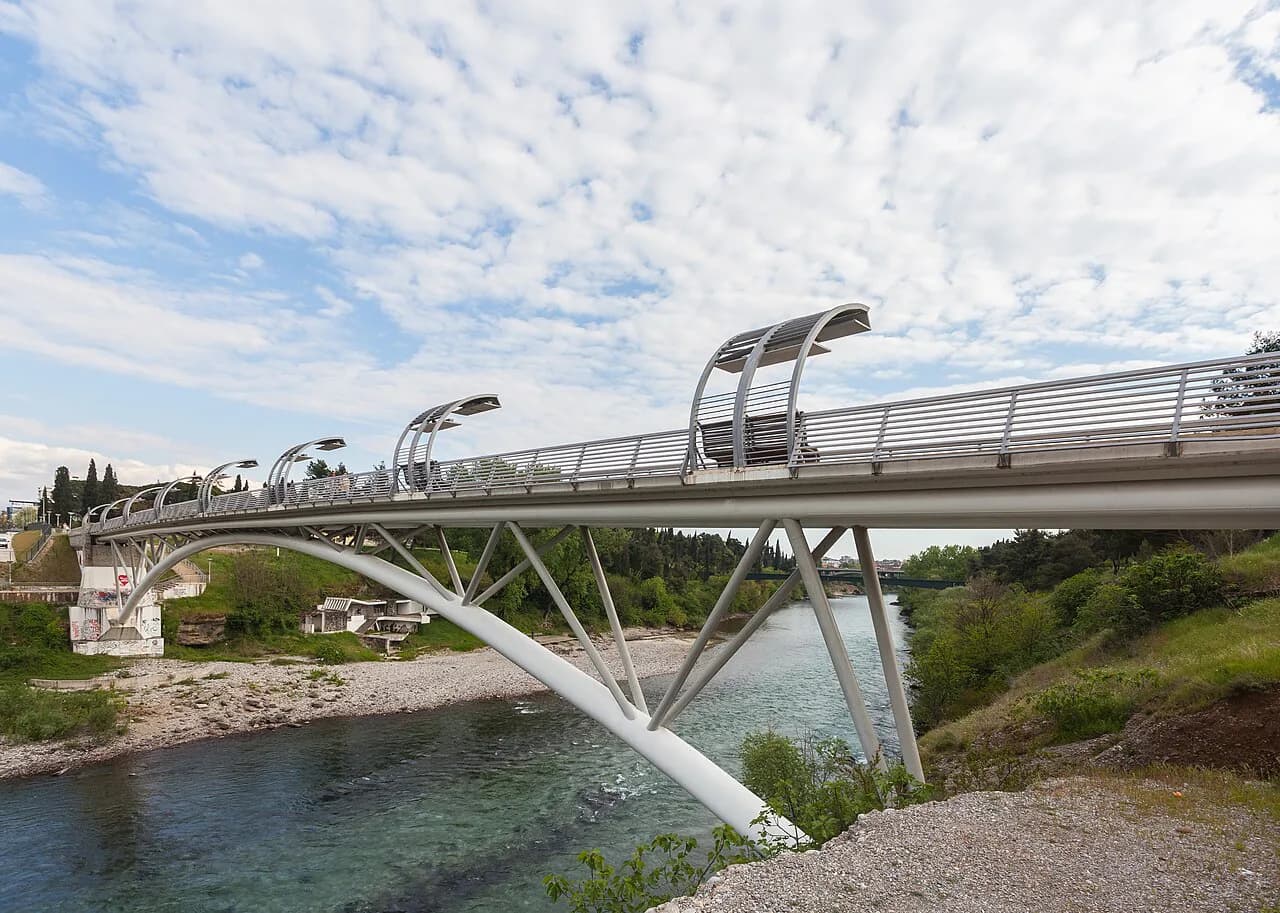
The order here is simple: grills, salads and bread, the same quality as the centre at a lower price. The district sits across the river from the centre, so the bridge crossing is the practical decision point for a cheaper lunch, and it is worth making on a weekday when you want a quieter room.
Cijevna canyon near Niagara Falls: the riverside Sunday lunch
Fifteen minutes east of the centre, the Cijevna canyon area is locally nicknamed Niagara Falls and has two riverside restaurants. Order trout, salad and white wine and sit with the sound of the water. It is the classic Podgorica Sunday lunch and works as a half-day food outing rather than a quick stop.
The trade-off is transport: it sits outside the centre and is not part of a walking route, so plan the return before you settle in for a long table. A Sunday lunch here will fill the middle of the day rather than slot around other sights.
Gintaš market: cheese, pršut and figs from producers
The Gintaš central market is where you taste cheese, pršut and figs straight from producers rather than from a menu. It is not a restaurant zone, so treat it as a tasting stop and follow it with a coffee nearby. Bring small cash, because the neighbourhood guide advises it for markets and bakeries even though cards work in most restaurants.
Aim to buy what you can carry rather than a picnic for the whole day, and go earlier in the day when the stalls are at their fullest. If you are pairing the market with a longer walk, the museums in Podgorica are a useful indoor follow-on when the weather turns.
How to read a menu: short lists, tourist filters and ordering sač
A short, focused menu is the better sign; a place specialising in everything is specialising in nothing. Menus printed in eight languages with giant photos of every dish are the universal tourist filter, and walking two streets in any direction from the main squares usually improves both quality and price. Skip the chains on Republic Square and take the side streets instead.
Sač, the meat slow-cooked under a bell, needs one to three hours' notice, so it changes how you plan a dinner: order it when you sit down or ask when you book the table. Lunch is the main meal in the city, and traditional tavernas are at their busiest between 13:00 and 15:00, with dinners lighter and later as a rule.
Lunch and dinner timing, cash, tipping and coffee culture
Plan your main meal at lunch. Tavernas hit their full rhythm between 13:00 and 15:00, and an evening meal is usually lighter and more social than a midday grill. Carry small cash for markets, bakeries and some tavernas, while cards work in most restaurants. Tipping is not mandatory: round up or leave five to ten per cent for good service.
Coffee deserves its own slot rather than a takeaway cup. Mornings on a terrace with a single espresso or domaća kafa are the local pace, and a café table is a reasonable place to sit out a hot afternoon before dinner. None of this requires a schedule, but the timing of lunch and coffee will shape the rest of your day more than any list of restaurants.
Practical picks by need
Traditional dinner: Stara Varoš, starting with Pod Volat for a shared mixed grill. Cheap local eats: bakeries, neighbourhood grills and Preko Morače lunch spots, which deliver the strongest value without leaving central Podgorica. Breakfast and brunch: the city centre cafés, or a bakery for burek and yogurt. Sunday lunch: the Cijevna river and Niagara Falls area with trout, salad and local wine.
If your evening is still open after eating, the timing of the city's sights matters more than another restaurant name. Our pick of Podgorica attractions covers what stays open late enough to follow a long tavern lunch, and it sits alongside a guide to Things to Do in Podgorica that fits a morning in the centre before the grill smoke starts.
Which meal should you plan first?
Plan lunch first and build the day around it. A shared grill in Stara Varoš at midday, a coffee in the centre in the afternoon and a light evening is the shape that suits the city best, with the Cijevna canyon reserved for a Sunday when you have the half-day to spare.
If your dates are fixed and you want a specific tavern, confirm its hours and whether sač needs ordering ahead when you book, since the city's eating rhythms are more reliable than any individual kitchen's schedule.
Explore more Podgorica guides
Sources
Notes for your Montenegro trip
Optional updates to our Montenegro town guides.
You might also like
Continue reading
More guides you'll find useful