Things to Do in Montenegro: Coast, Old Towns and Mountains
Things to do in Montenegro, from the gates and churches of Kotor Old Town to Perast's island boats, Herceg Novi's fortresses and Podgorica's architecture.
On this page
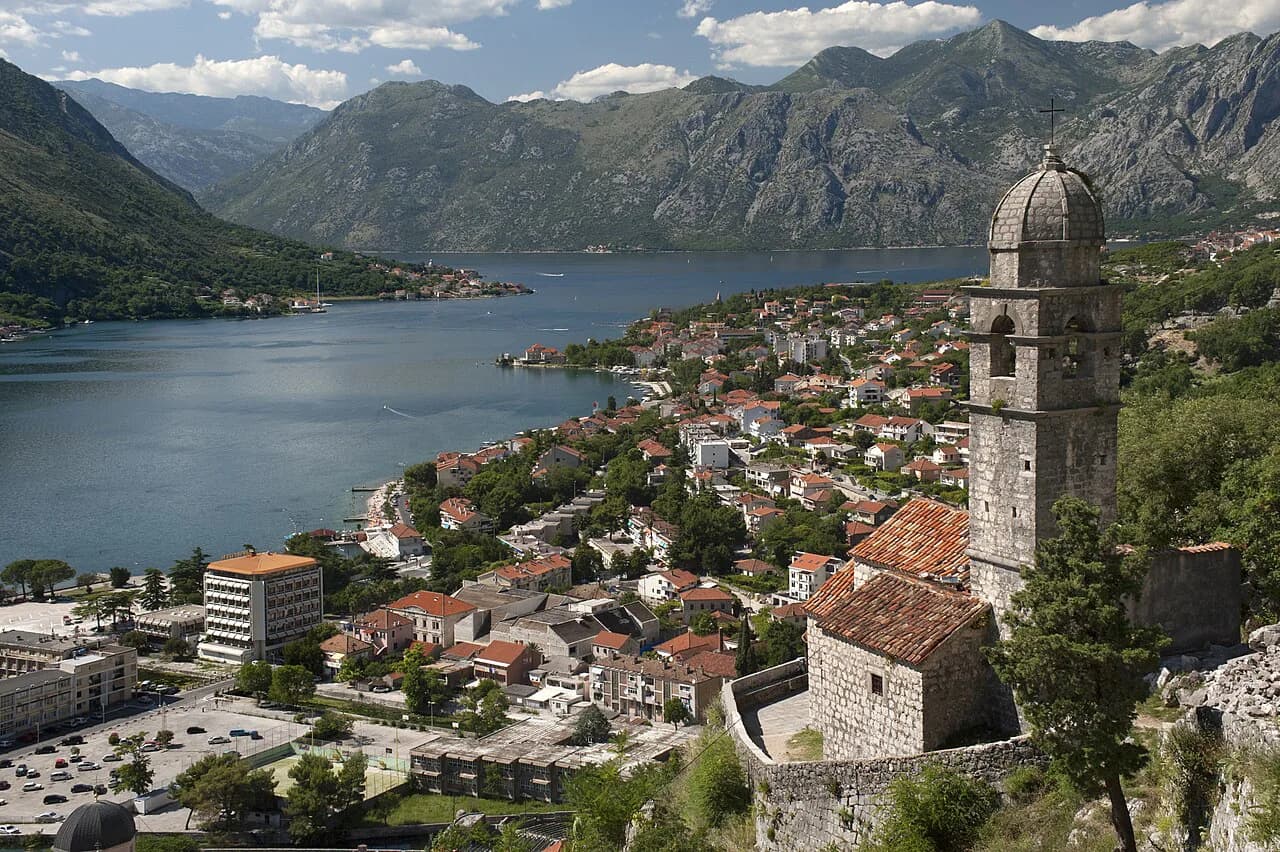
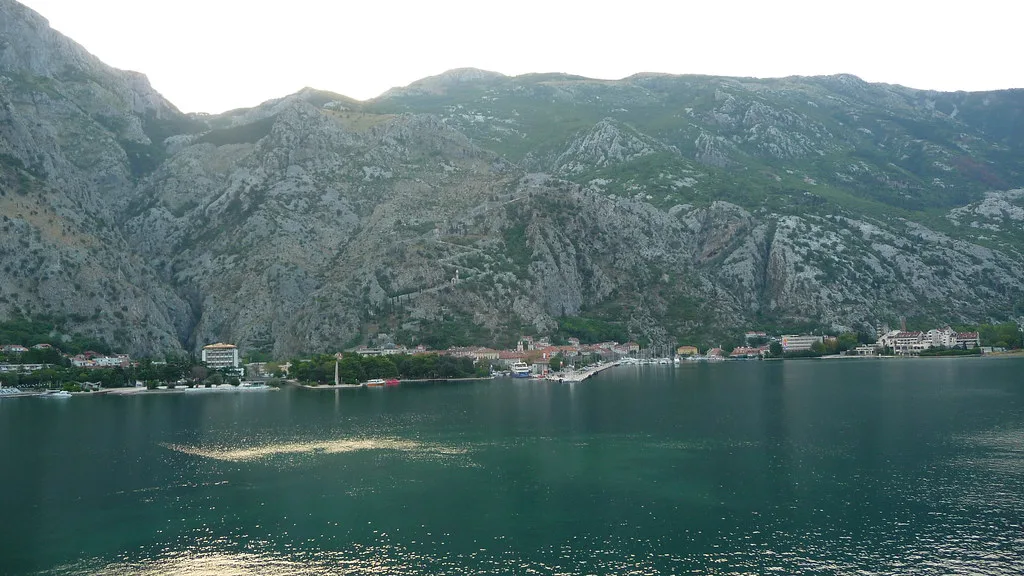
The single best concentration of things to do in Montenegro sits around the Bay of Kotor, where Kotor Old Town, Perast and the boat crossing to Our Lady of the Rocks can be strung together without changing base. Beyond the bay, Herceg Novi has two fortresses, Budva has a walled centre, Lake Skadar and Lovćen need a car, and Durmitor pulls you north into mountain country. This guide groups those places by region so you can see which fit one day and which need an overnight.
It is written for travellers who want named gates, specific churches and honest answers about effort rather than a list of vague highlights. Where a price is documented, it appears with a citation; where it is not, the detail is left out rather than guessed.
What there is to do in Montenegro, at a glance
Montenegro's sights divide cleanly by geography, and that is how to plan around them. The Bay of Kotor holds the walled towns, from Kotor itself to Perast and the quieter southern shore; the Budva riviera holds Budva Old Town and the islet of Sveti Stefan; Lake Skadar and Lovćen sit inland from the bay; and Durmitor, the Tara and Piva canyons and Biogradska Gora make up the north. Podgorica, the capital, is a few hours of architecture and coffee rather than a day of monuments.
The practical consequence is that a small number of places cluster tightly and everything else costs road time. Kotor, Perast and the island churches fit one day; Herceg Novi and its fortresses fit another along the same bay; Budva and the riviera fit a third. The north deserves at least an overnight, because Durmitor and the canyons are hours from the coast.
Kotor Old Town: the three gates and the churches inside
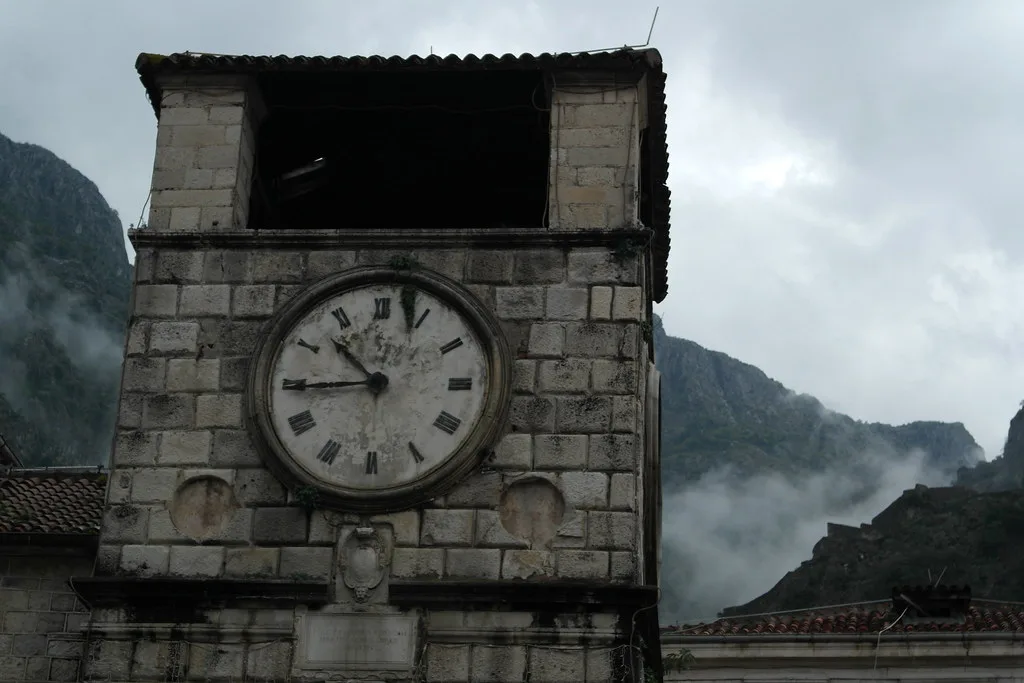
Kotor Old Town is entered through three sixteenth-century gates, and each gives a different first impression. The Sea Gate is the main entrance, approached from the marina, leading to the Square of Arms and the Kotor Clock Tower; most walking tours start here and there is a tourist information booth nearby. The River Gate sits to the north across a stone footbridge over the short Scurda River and gives views of the Kampana Tower and the city walls; the Gurdić Gate to the south is reached over a small wooden drawbridge and is the least busy of the three, with a stairwell a few metres inside that leads up to wall-top views.
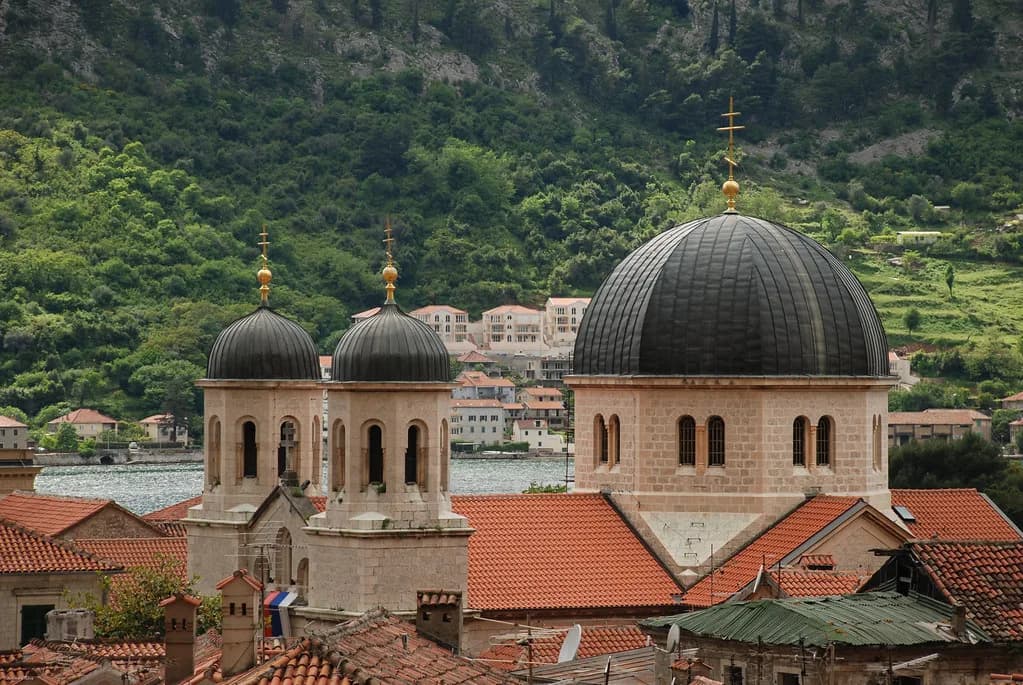
Inside the walls, four churches are worth seeking out. St Tryphon's Cathedral is a large Catholic church near the Palace of the Drago Family with a small museum on its second floor; Saint Nicholas Church is the imposing Serbian Orthodox church with a striking interior; Saint Luke's Church is a small historic church across the courtyard from it; and the Church of St Mary Collegiate sits in the north-east corner of the walled town, with preserved frescoes and a bronze door covered in bas-reliefs. The old town itself is a maze of narrow cobbled streets and small courtyards where the alleyways all connect, so wandering without a map rarely leaves you stuck.
Allow half a day for the old town alone, and more if you want a guided walk. Tip-based walking tours operate in Kotor, and the local operator 360 Monte, which has an office in the old town, runs tours here and further afield in Montenegro. The old town's lanes are flat and shaded, which makes it the easiest part of a Kotor day; the walls and fortress above are a different proposition entirely, and the wider set of Montenegro old towns follows the same Venetian pattern of gates, squares and a single main street.
Kotor's Maritime Museum: what is inside and what it costs
The Maritime Museum occupies a historic three-storey building and tells the story of Kotor as a port, with old weapons, wooden model boats and naval paintings, plus an ethnography section of antique furniture, ornaments and Montenegrin folk costumes. An hour covers it comfortably, and it doubles as shelter from summer heat. An audio guide is included with entry.
Entry is documented at six euros, with summer hours of 9am to 6pm, winter hours of 9am to 3pm, and shorter Saturday and holiday opening from 9am to 1pm. Treat those as the published pattern rather than a guarantee, and confirm at the desk before you build a day around it.
Fortresses and viewpoints above Herceg Novi
Herceg Novi, at the mouth of the bay, gives you two fortresses within walking distance of the water. Kanli Kula and Forte Mare both offer views over the bay, and they are the reason to give the town more than a passing stop. Between them runs the Pet Danica Promenade, a seven-kilometre coastal path dotted with stone arches left from the train line that operated here until 1968; the stretch towards Meljine is the quieter half.
Herceg Novi is a flatter, slower alternative to Kotor and receives fewer visitors, which makes it a sensible place to start a bay trip. The trade-off is that the fortresses sit above the town, so reaching the best views means a climb rather than a stroll. Allow a half day for the promenade and one fortress, and if you plan to collect several fortified sites on one trip, it is worth reading around Montenegro fortresses before you commit the days.
Perast: one kilometre of waterfront and the boat to Our Lady of the Rocks
Perast is a single kilometre of waterfront road with no through traffic: stone palaces, waterfront cafés and a bell tower, and not much to 'do' in the conventional sense. That is the point. Climb St Nicholas' Church bell tower for views over the bay, then slow down; the town rewards an hour of sitting far more than an hour of checking off sights.
The boat trip to Our Lady of the Rocks leaves from Perast harbour, with small boats ferrying visitors across several times an hour. It is a short crossing to a small island church, not a day out, so pair it with the waterfront rather than treating it as a separate excursion. Fares are not documented here, so ask at the harbour before boarding.
The Luštica Peninsula and the bay's quieter southern shore
The Luštica Peninsula closes the bay on its southern side. Tivat sits at its base and works as a practical stop, and the peninsula is one of the named places on the bay that rewards a car. Without one, it is harder to reach most of what makes the peninsula worth the detour.
Treat Luštica as a half-day drive combined with a bay town rather than a standalone day, and build in slack rather than scheduling a fixed number of stops.
Budva Old Town: the walled centre
Budva Old Town is a compact walled centre on the riviera and a natural contrast to Kotor. Give it two or three hours, then use the town as a base for the riviera rather than as the day's only stop. Sveti Stefan, the islet further along the coast, is a short drive and a photograph rather than a visit.
Lake Skadar: the Karuč viewpoint and boats from Rijeka Crnojevića
Lake Skadar is the inland counterweight to the coast, and the Karuč viewpoint is one of the named places to see it. Skadar Lake is best explored by boat, and organised boat tours run from the coast, including combinations with monasteries. This is car country; public transport will not get you to the viewpoint at a useful hour.
Lovćen National Park and the road up from the bay
Lovćen National Park rises directly behind the Bay of Kotor, and the drive up from the coast is the reason most people go. The road climbs in switchbacks, so the journey takes longer than the distance suggests and the passenger gets the better deal. Give it a half day from Kotor or Budva, and skip it entirely if winding mountain roads unsettle you.
Durmitor National Park and the Black Lake
Durmitor National Park in the north is mountain country: soaring peaks, glacial lakes and deep canyons, with the Black Lake (Crno Jezero) as the accessible centrepiece near Žabljak. The Tara River Canyon and Piva Lake and Canyon are on the same northern circuit, so plan them as one trip rather than three separate outings. This is the part of Montenegro that needs an overnight and a car.
Ostrog Monastery: what a visit involves
Ostrog Monastery is cut into a cliff face and reached by a mountain road, so a visit is a half-day commitment from the coast rather than an hour's detour. Dress modestly: shoulders and knees covered is the sensible rule at Montenegrin monasteries, and a light layer in your bag saves a walk back to the car. The monastery is an active religious site, so keep voices low and cameras away during services.
Podgorica: brutalism, Stara Varoš and Karver Bookstore
Podgorica repays a few hours rather than a day. The city was largely rebuilt after the Second World War in brutalist and socialist-modernist styles, and the results include the Television and Radio Building, the Clinical Centre, Morača Sports Centre and Hotel Podgorica, with Blok 5 and the Church of the Holy Heart of Jesus among the most photographed examples. Beyond that, the Clock Tower and the old quarter of Stara Varoš, the Cathedral of the Resurrection of Christ and the Millennium Bridge make a walkable circuit.
Karver Bookstore is tucked into a former bathhouse under the bridge over the Ribnica river and is a good coffee stop. Podgorica's airport is separate from the centre and there is no public transport link, so a taxi is the standard transfer. Treat the capital as a half-day between coast and mountains, not a rival to them.
Biogradska Gora and its primeval forest
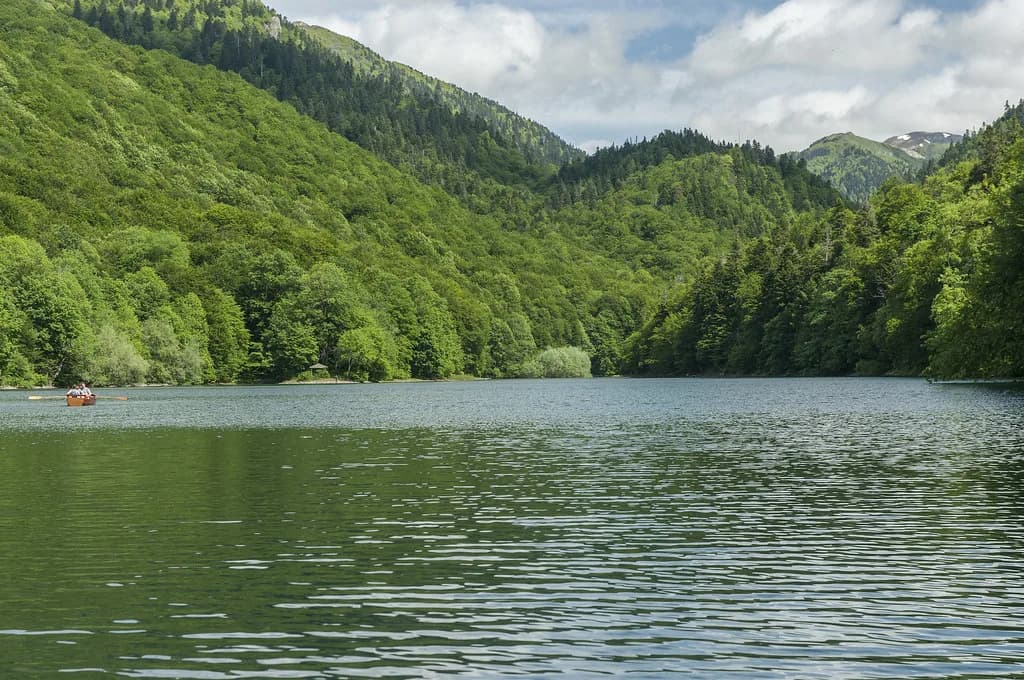
Biogradska Gora in the north-east protects one of Europe's last primeval forests, with a glacial lake at its centre. It sits on the northern circuit with Durmitor and the canyons, and it is the sort of place where you stop walking and simply look. Access is by road, and the park is quiet compared with the coast.
Putting a trip together: what clusters and where a car earns its keep
Kotor, Perast and the island churches form one day; Herceg Novi and its fortresses form another; Budva Old Town and Sveti Stefan form a third. Lake Skadar and Lovćen are each half a day from the bay and want a car. The north, meaning Durmitor, the Tara and Piva canyons, Ostrog and Biogradska Gora, is a separate trip of at least two nights.
A car earns its keep the moment you leave the bay towns. Kotor, Perast, Herceg Novi and Budva are all reachable without one, but Lake Skadar's viewpoints, Lovćen's switchbacks and every northern sight depend on having your own wheels or joining a tour. Choose between the two before you book accommodation, because it changes where you sleep.
Deciding what to cut from your Montenegro trip
If you have three days, stay on the bay and do Kotor Old Town, Perast with the island boat, and Herceg Novi's fortresses, and leave the north for another visit. With a week, add Lake Skadar and Lovćen by car, then push north to Durmitor and the Black Lake for two nights. The honest rule is that the coast rewards walking and the interior rewards driving, so do not try to do both properly in the same short trip.
Budget for the Maritime Museum's documented entry fee, and ask at Perast harbour about boat fares before boarding. Confirm opening hours at the museum desk on the day, since Saturday and holiday hours are shorter than weekday ones.
Explore more Montenegro guides
Frequently Asked Questions
How many days do you need in Kotor Old Town?
Half a day covers the three gates, the Square of Arms, the four main churches and the Maritime Museum. Add another half day if you want a guided walking tour or a slow lunch inside the walls.
Do you need a car to see Lake Skadar and Lovćen?
Yes, for practical purposes. The Karuč viewpoint and the Lovćen road are not served by useful public transport, so you either drive or join an organised tour from the coast.
How do you reach Our Lady of the Rocks?
Small boats cross from Perast harbour to the island church several times an hour and the crossing is short. Ask about the fare at the harbour before boarding.
What should you wear at Ostrog Monastery?
Cover shoulders and knees, carry a light layer, and keep quiet during services. It is an active monastery rather than a museum, so modest dress and low voices are expected.
Is Podgorica worth more than a few hours?
For most visitors, no. The brutalist architecture, Stara Varoš, the Clock Tower and Karver Bookstore fill half a day comfortably, and the coast and mountains are the main event.
Sources
Notes for your Montenegro trip
Optional updates to our Montenegro town guides.
You might also like
Continue reading
More guides you'll find useful