Kotor Market: What's Sold at the Pijaca and When to Go
Kotor's green market sits outside the Sea Gate between the Valier and Corner bastions. Here is what it sells, how to find it and how to time your visit.
On this page
Kotor market, the Kotorska pijaca, is a compact open-air produce market just outside the old town walls, set between the Valier and Corner bastions to the right of the main city gate. It sells mostly fruit, vegetables and fish, with side stands of costume jewellery and small goods, and it is best visited early and on an empty stomach. This guide covers where it sits, what the stalls hold, why Saturday carries the market tradition and how to fold it into a walk through the old town.
Where Kotor market sits
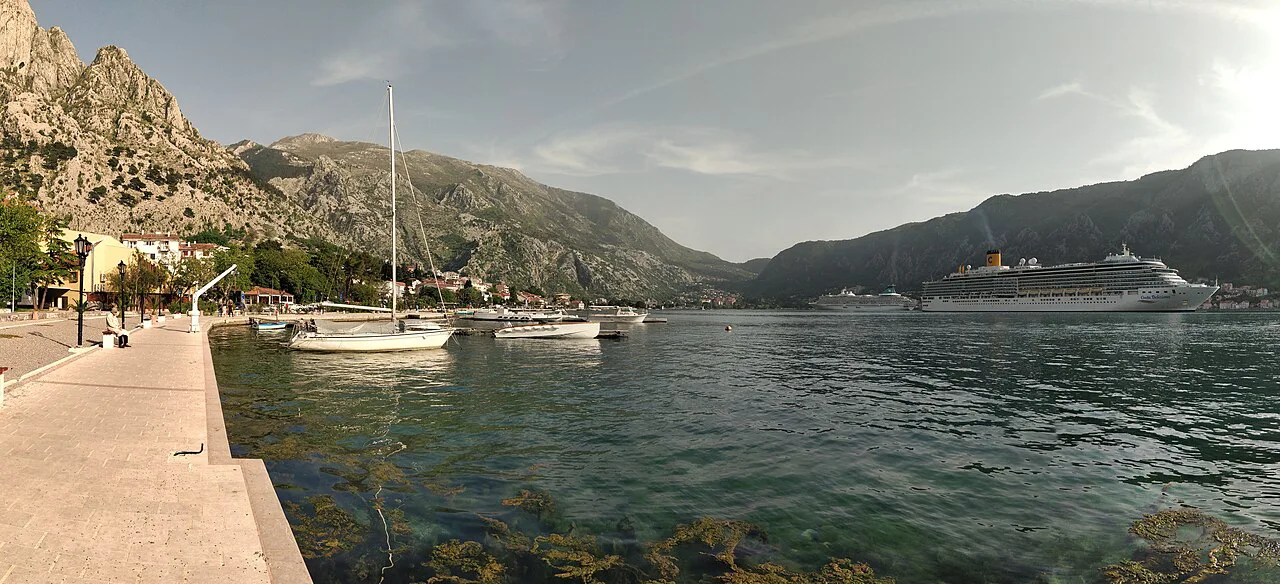
The pijaca occupies the strip between the Valier Bastion on the western ramparts and the Corner Bastion, immediately to the right of the main city gate. That puts it across the Riva and harbour from the walled town, so you pass it naturally on the walk between the waterfront and the gates, one of the easy things to do in Kotor that costs nothing but time. Use the bastion names rather than a vague 'near the old town' when you are navigating, because the two bastions bracket the site precisely.
The market moved to this spot outside the walls only after 1900, with the municipality acquiring the land between the two bastions and the market established there from 1905 to 1907. Until then it had been held inside the town, which is why the old town's squares still carry produce names. Position yourself on the Riva side and look for the open stalls against the wall rather than a covered hall.
A second entrance into the old town faces the Riva and harbour, and the market sits just across from it, so the walk from the waterfront to the stalls is a matter of minutes. If you are driving, treat the market as a stop on a wider parking plan rather than a place with its own dedicated car park.
What the stalls sell
Fruit, vegetables and fish make up the core of the market, alongside stands selling costume jewellery and other small trifles. Vendors also put out cheese and prosciutto, which makes the pijaca a reasonable first stop if you want picnic supplies or something to nibble while you walk. The mix is everyday provisioning rather than a souvenir market, so bring small notes and expect to weigh and choose rather than browse packaged goods.
Fruit, vegetables and fish are weighed and sold at the stalls, and vendors also put out cheese and prosciutto, which makes the pijaca a reasonable first stop if you want picnic supplies or something to nibble while you walk. The mix is everyday provisioning rather than a souvenir market, so bring small notes and choose from the produce on display. If you want a proper sit-down meal afterwards, keep the market as a snack stop and consult our guide to the best restaurants in Kotor for lunch.
The Saturday tradition
The market was first mentioned in the first half of the 15th century and was held on Sundays in the square in front of St Tryphon's Cathedral, which interfered with services. The Bishop of Kotor, Marin Contareno, moved the market day to Saturday, and the Saturday tradition has survived. For a weekend visitor that history matters: plan your market walk around Saturday if you want to catch the day the town has long associated with trading.
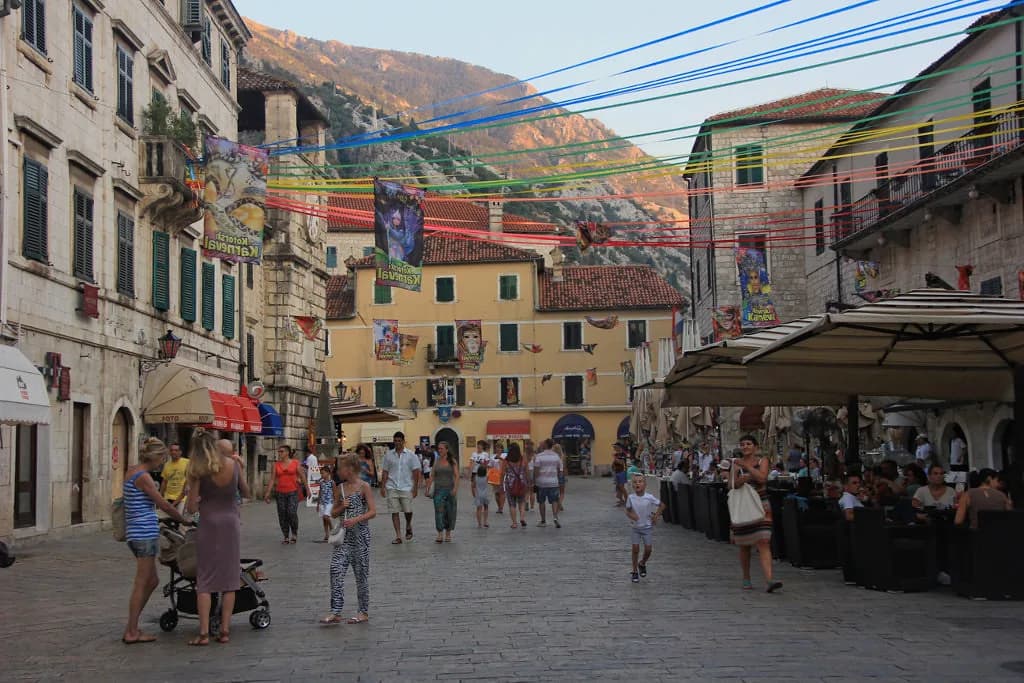
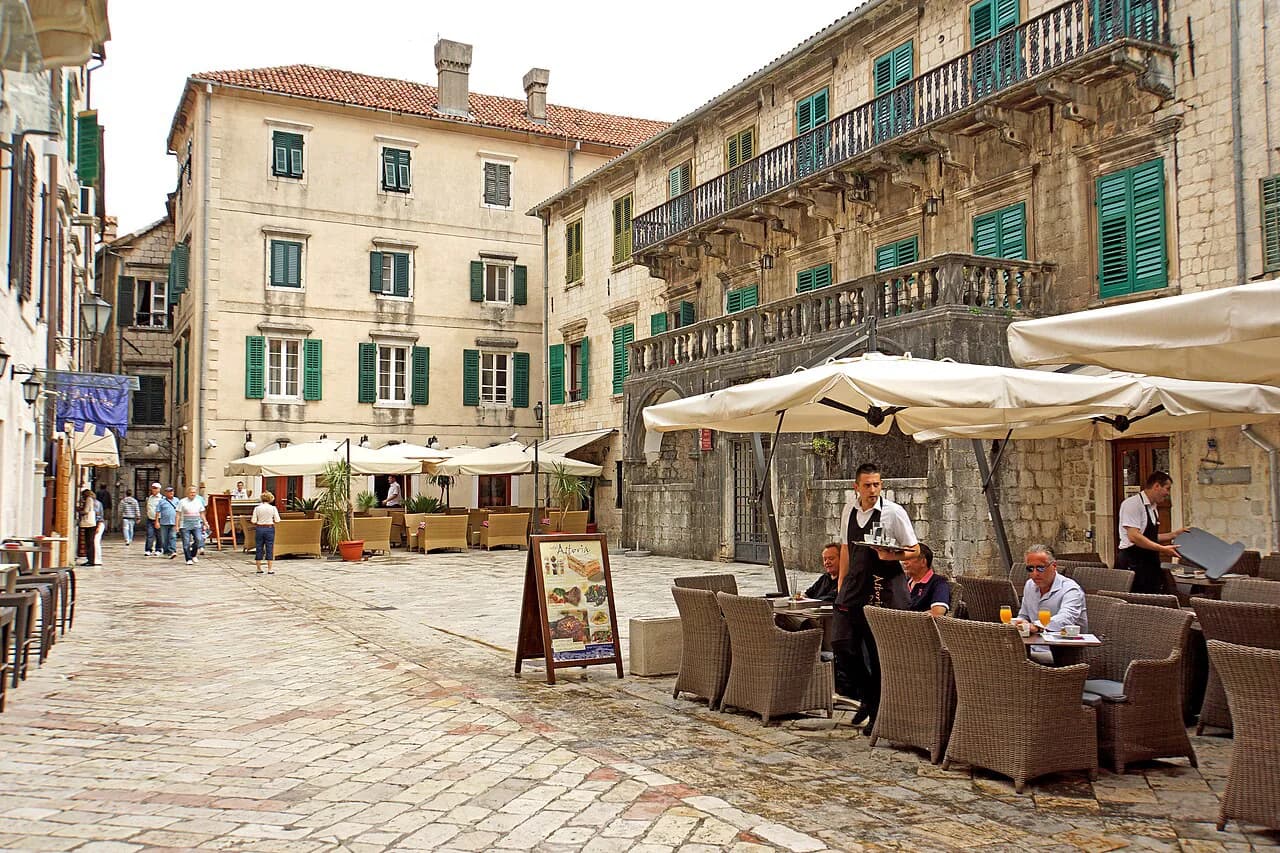
The old town's Milk Square, Flour Square and Salad Square are the surviving markers of how central produce once was inside the walls. Walk them after the market and the loop makes sense: the squares show where food was sold, and the pijaca shows where it ended up. St Tryphon's Cathedral stands nearby as the landmark that anchored the original market square.
The market's current trading pattern is not posted in a form you can rely on, so confirm the day's activity with your accommodation or simply walk past the Riva and see whether the stalls are up. Build the market into a flexible morning rather than a fixed appointment.
Go early and go hungry
Locals tend to arrive early to get the best produce, and the atmosphere builds as vendors and neighbours catch up over the stalls. Turn up hungry: there is plenty to taste, from fruit and vegetables to cheese and prosciutto. An early start also lets you finish the market before the old town fills up, which is the sensible trade-off on a cruise day when the gates and squares get busy.
If your time is tight, treat the market as a 20-minute stop on the way into the walled town rather than a destination in itself. Walk the stalls, buy what you will eat that day, then head through the gate for the squares and cathedral. That sequencing keeps the market as a preamble to the old town rather than a detour from it, and works well as the opening move of one day in Kotor.
The market is open-air, so there is no covered alternative on site when the weather turns. Keep a light layer and a bag for produce, and if rain sets in, shift to the shops inside the walls and come back on a drier morning rather than waiting under the ramparts.
Reading the old town's food squares
Milk Square, Flour Square and Salad Square sit within the old town and record the days when produce was traded inside the walls before the market moved out after 1900. Walking them gives the pijaca context: the squares are the historical footprint, the bastion-side stalls are the modern version. Pair the two on foot and the old town stops being a set of pretty corners and becomes a map of how the town fed itself.
The squares also work as a practical route. Enter through the main gate, loop the named squares, visit St Tryphon's Cathedral as a landmark, then exit towards the Riva and the market. Walk the full circuit in an hour or so early in the day, and you have a compact Kotor Old Town introduction without needing a guide.
Kotor market versus Shopping Centre Kamelija
The pijaca is the open-air option; Shopping Centre Kamelija is the modern alternative just outside the old town gates. Kamelija is built to UNESCO standards and combines traditional and modern features, with 120 parking lots, a ground floor and two further floors. Choose the market for food and atmosphere, and Kamelija for covered retail and easy parking.
Inside the old town you will find smaller boutiques, souvenir shops, photo shops, jewellers, bookshops, antique shops and mixed-goods stores, so the walled streets cover fashion and gifts as well as the food squares. That makes a clean either/or: market and squares for produce and local colour, boutiques and Kamelija for clothing and covered shopping.
Neither option needs a whole day. Give the market a short morning slot and Kamelija an hour if you need something specific, then put the rest of your time into the old town. The market rewards an unhurried browse more than a shopping list.
Pairing the market with the old town
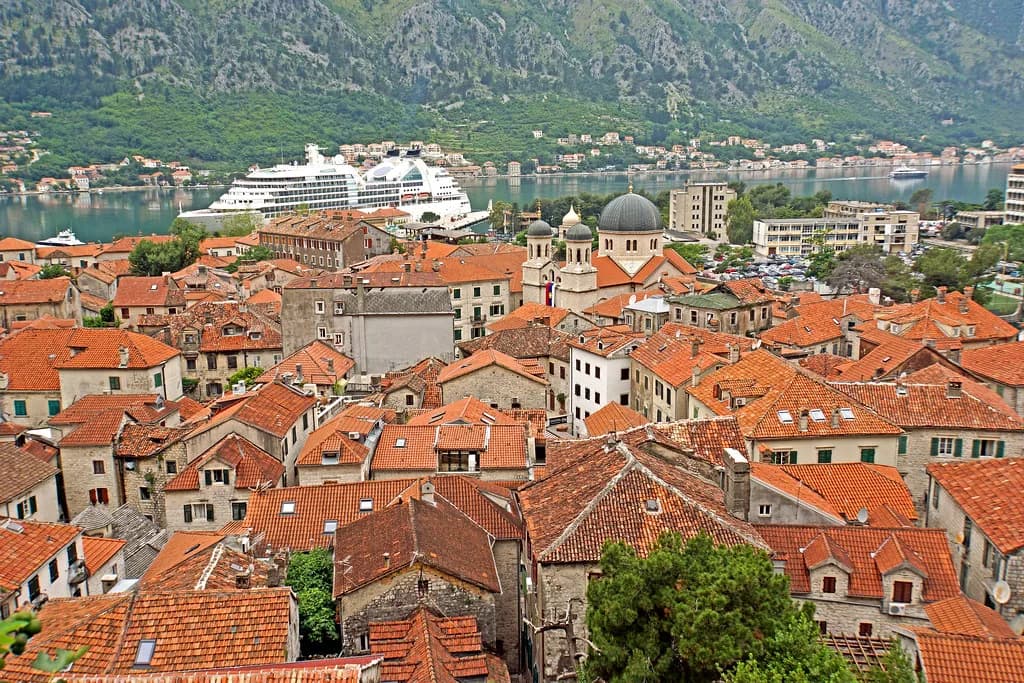
A sensible loop starts at the Riva, crosses to the pijaca between the Valier and Corner bastions, then passes through the main gate into the squares and up to St Tryphon's Cathedral. From there you can climb for a view over the rooftops or drift back down to the waterfront. Keep the loop on foot, because the distances are short and the parking is better used for the whole day than moved between stops.
If you want to extend the morning onto the water, a Kotor boat tour from the bay can be slotted in after the market rather than before it. That ordering keeps your produce buying early and your boat time in the brighter part of the day.
For a fuller plan across the town's gates, squares, museums and waterfront, put the day in writing before you arrive. A Kotor itinerary helps on cruise days, when the old town fills and the quiet moments at the stalls are worth protecting.
Is the market worth the detour?
Yes, if you are already walking between the Riva and the old town. The pijaca is small, sells fruit, vegetables, fish and small goods, and sits exactly where you would pass it, so the detour costs minutes rather than a morning. Go early, go hungry, and treat Saturday as the day the town has long given to trading.
If you want covered retail or a car park, use Shopping Centre Kamelija instead and keep the market for a produce run. Either way, confirm the day's activity when you arrive rather than building a fixed appointment around it.
Explore more Kotor guides
Frequently Asked Questions
Is Kotor good for shopping?
It depends what you want. The old town has small boutiques, souvenir shops, jewellers, bookshops and antique shops inside the walls, Shopping Centre Kamelija offers covered retail with parking just outside the gates, and the pijaca covers fruit, vegetables, fish and small goods in the open air. For food and atmosphere, the market is the better stop; for clothing and covered browsing, head to Kamelija and the old-town boutiques.
Sources
Notes for your Montenegro trip
Optional updates to our Montenegro town guides.
You might also like
Continue reading
More guides you'll find useful