Kotor Old Town: Gates, Squares and Churches Walked in Order
A practical walk through Kotor Old Town, from the Sea Gate and Arms Square to St Tryphon's Cathedral, with the walls, gates and church entrances explained.
On this page
Kotor Old Town takes roughly two hours to walk properly, and the sensible way in is through the Sea Gate on the waterfront side, which leads straight into Arms Square and the Clock Tower. From there the lanes, churches and palaces sit within a few minutes of each other, so you can see the town centre in sequence rather than criss-crossing it. This guide covers the three gates, the main square, the church cluster, the Venetian palaces and the walls that frame the whole thing, with a route at the end.
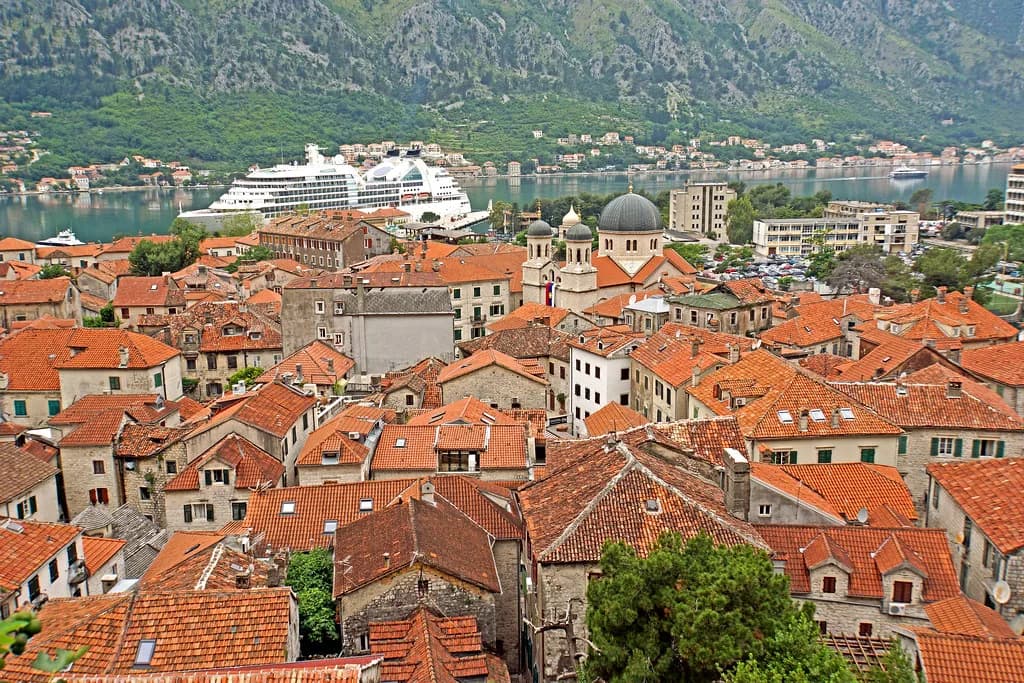
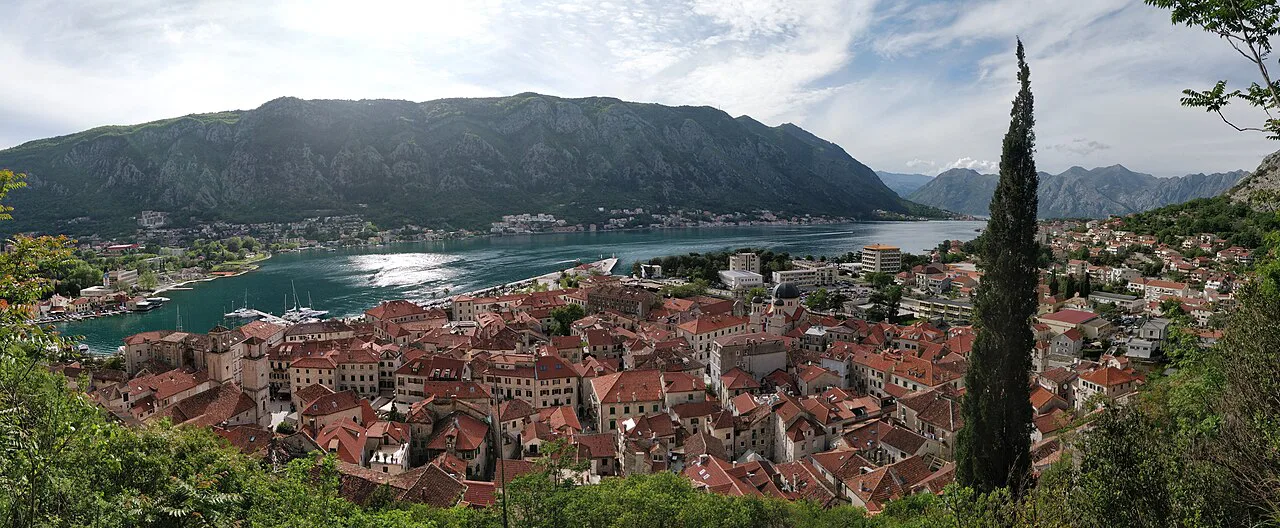
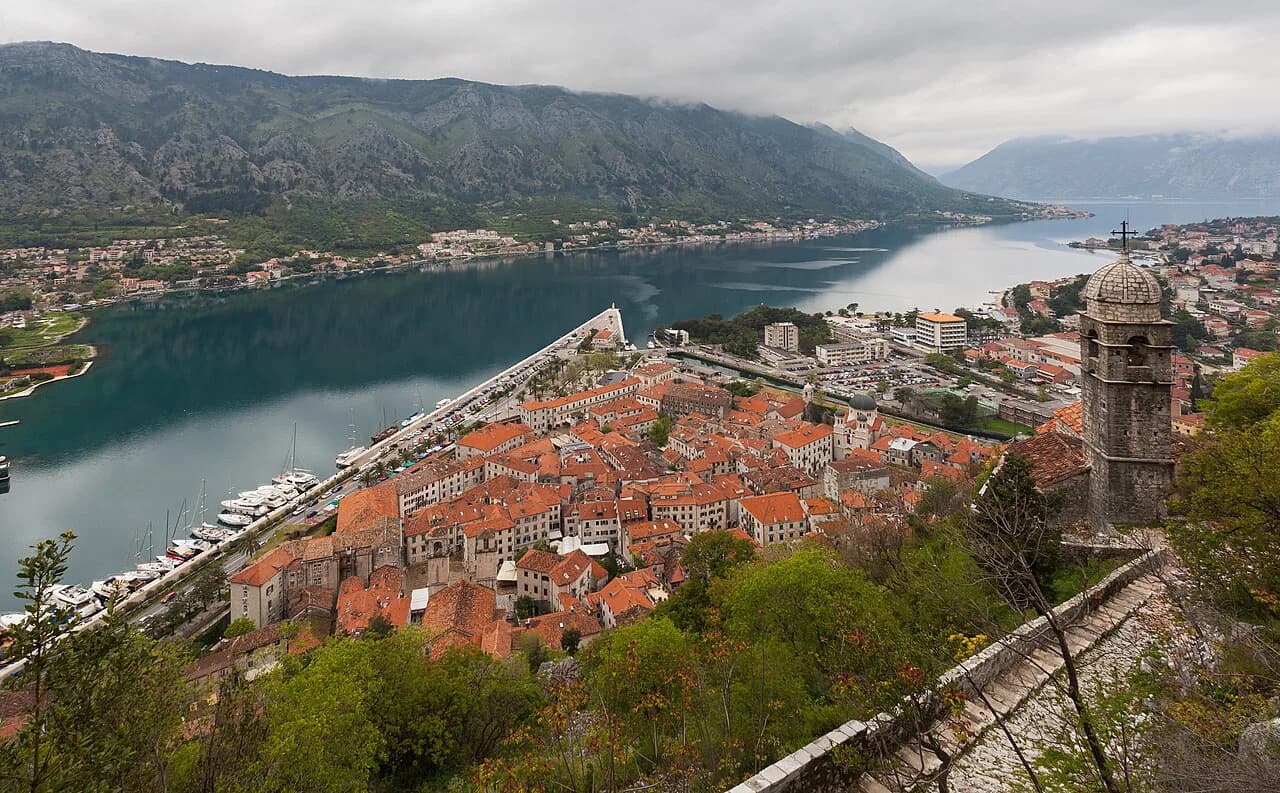
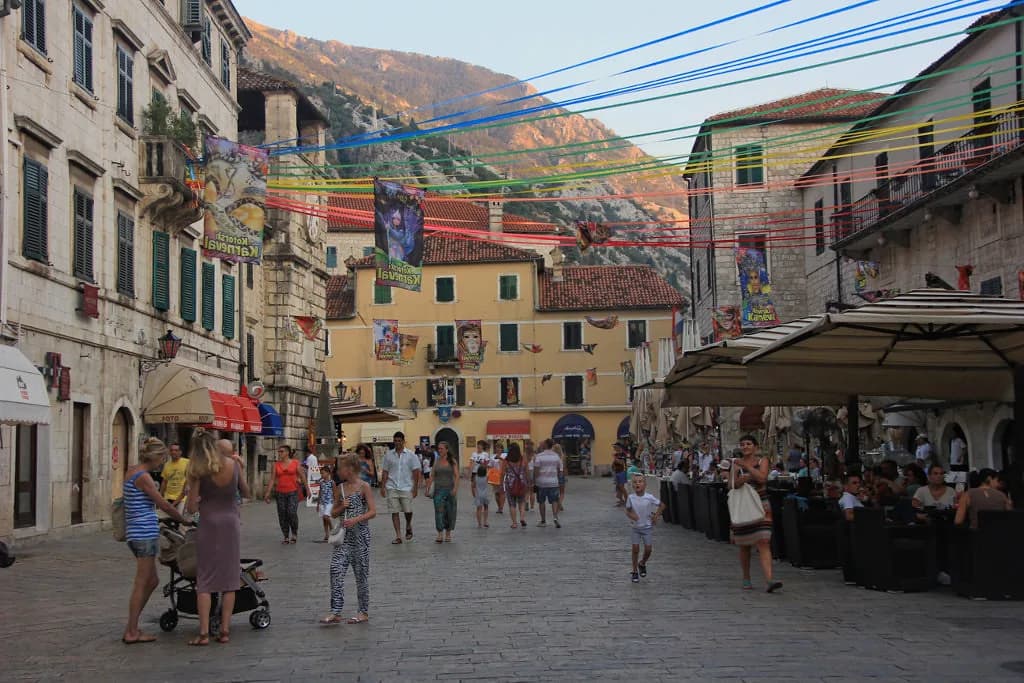
The town sits at the foot of the Lovćen massif on the Bay of Kotor, and the mountains rise directly behind the rooftops, which is why the walls climb rather than simply circle. Everything inside is walkable on stone paving, and the whole historic area is enclosed by fortress walls that creep up the slope behind it.
Kotor Old Town at the foot of the Lovćen massif
Kotor sits on the bay roughly 50 kilometres west of Nikšić, beneath the steep Lovćen massif, which rises to 1,749 metres. That geography defines the town: a natural harbour with mountains close behind, giving viewpoints over the rooftops and the water from almost any high point.
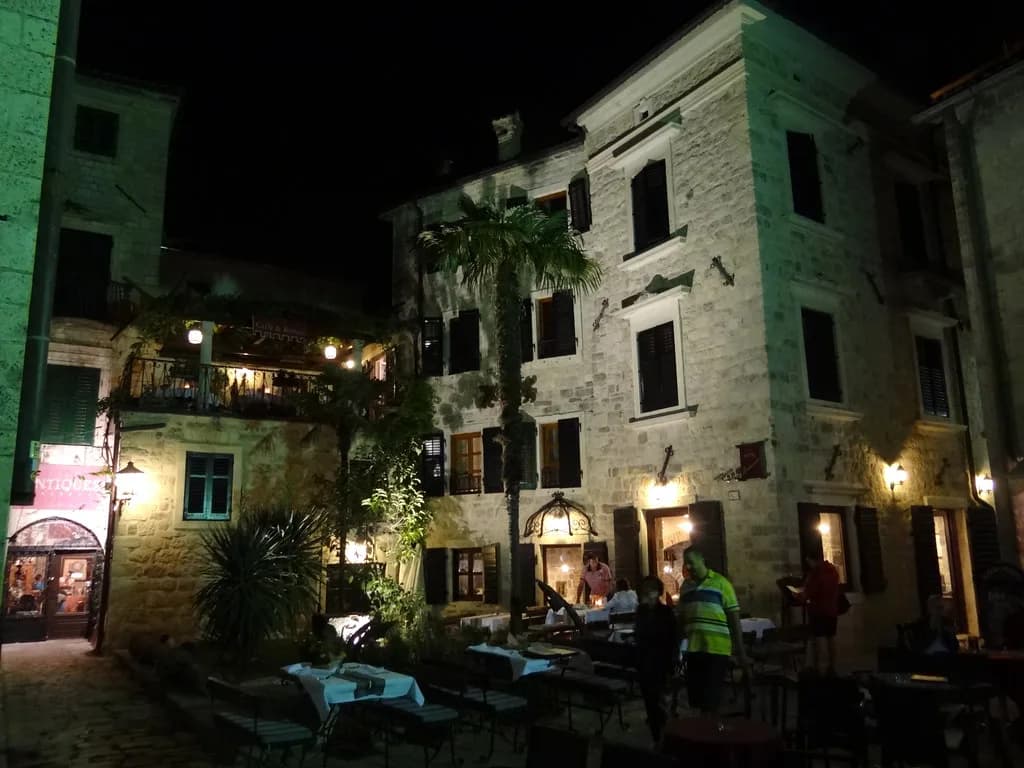
Inside, the old town mixes architectural styles from several European traditions, with both spacious squares and narrow streets packed into a small area. That combination is what makes it worth exploring in detail rather than treating as a single photo stop.
The three gates and which one to enter by
The Sea Gate is the main entrance and the one most visitors use. It dates from the 16th century, and above the opening sits the coat of arms of Yugoslavia, in place for almost a century, with an engraved quote from Marshal Tito below it. Coming in this way puts you directly in front of the Clock Tower.
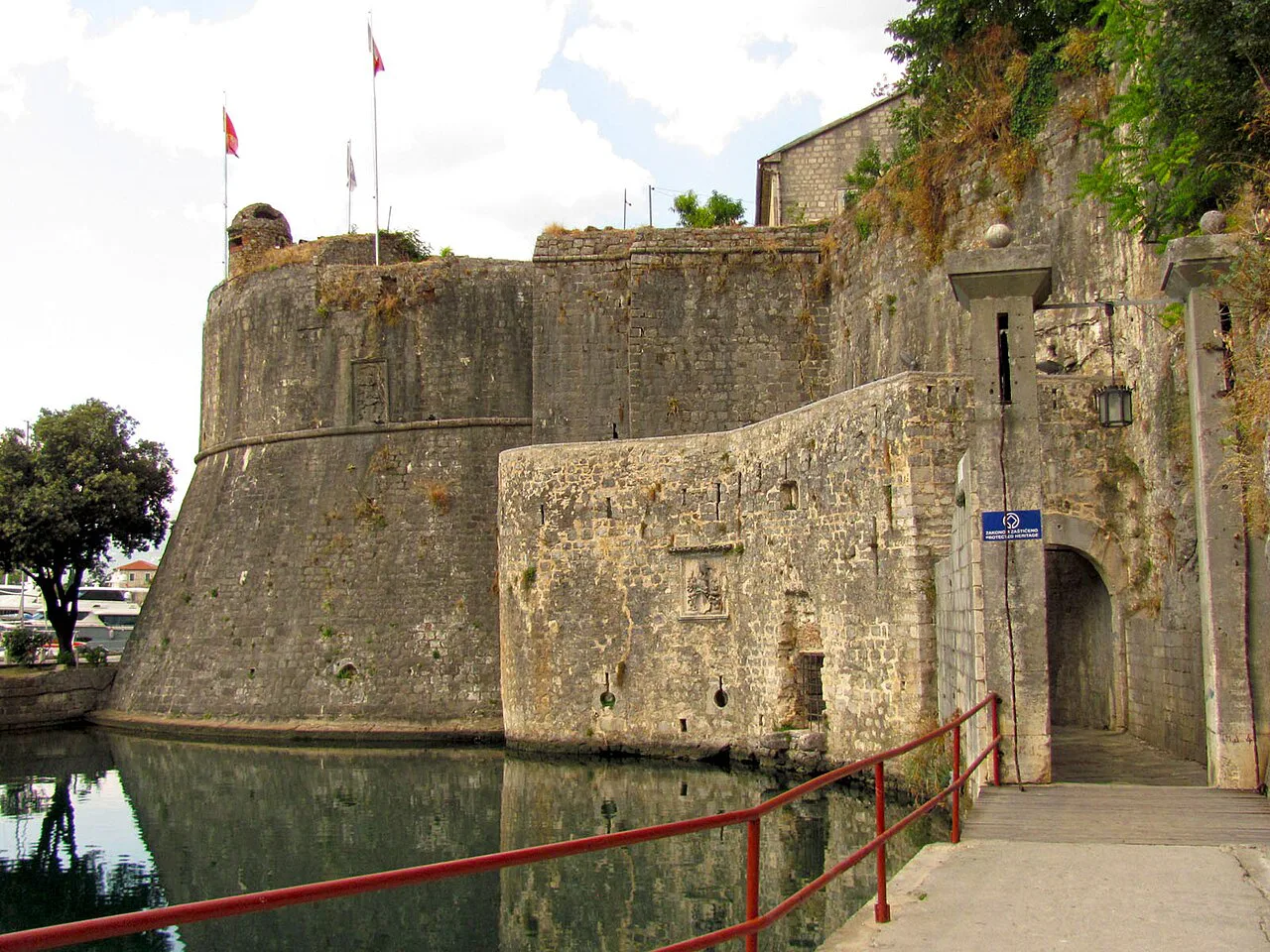
The other two entrances serve different sides of town. The River Gate, on the northern side, has an arched bridge, while the Gudrić Gate on the southern side is guarded by a bastion and reached over a moat-like bridge. The Gudrić Gate is built in three parts, the oldest from the 12th to 13th century and the newest from the 18th.
For a first visit, enter by the Sea Gate and leave by whichever gate suits where you are heading next. If you want the gate names, dates and approaches laid out side by side before you arrive, the guide to the Kotor gates does that, and it is worth reading alongside a Kotor map so you know which side of town each one opens onto.
Arms Square and the Clock Tower: your first five minutes
Walking through the Sea Gate brings you straight into Arms Square, named for the Venetian period when munitions were stored here. The stone Clock Tower dominates the view as you come in, and the mountains are visible rising behind the buildings around the square.
The Clock Tower was originally built in the early 17th century and rebuilt in 1979 after an earthquake. Treat the square as your orientation point: it is the one open space you will pass through twice if you loop the town, and it makes a useful meeting place before or after a walk.
The layout: lanes, squares and where you drift
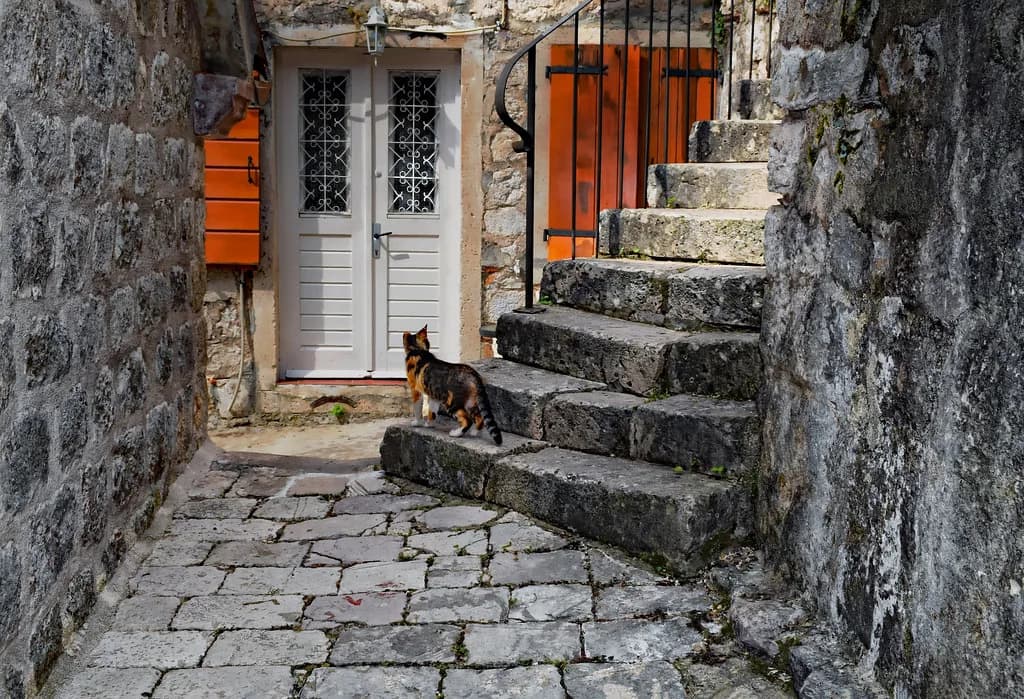
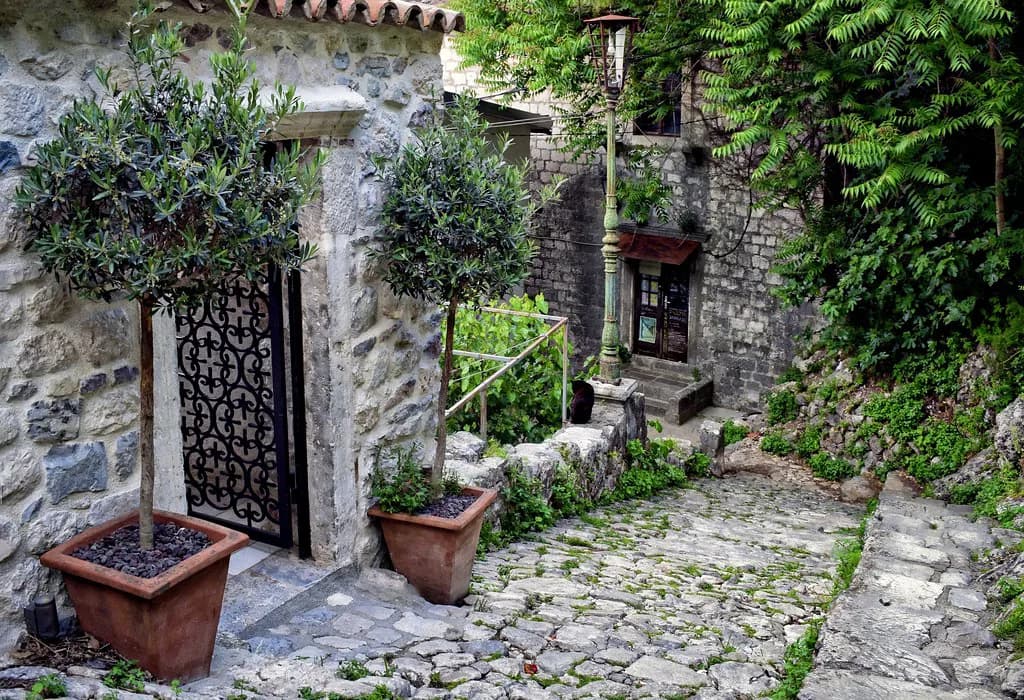
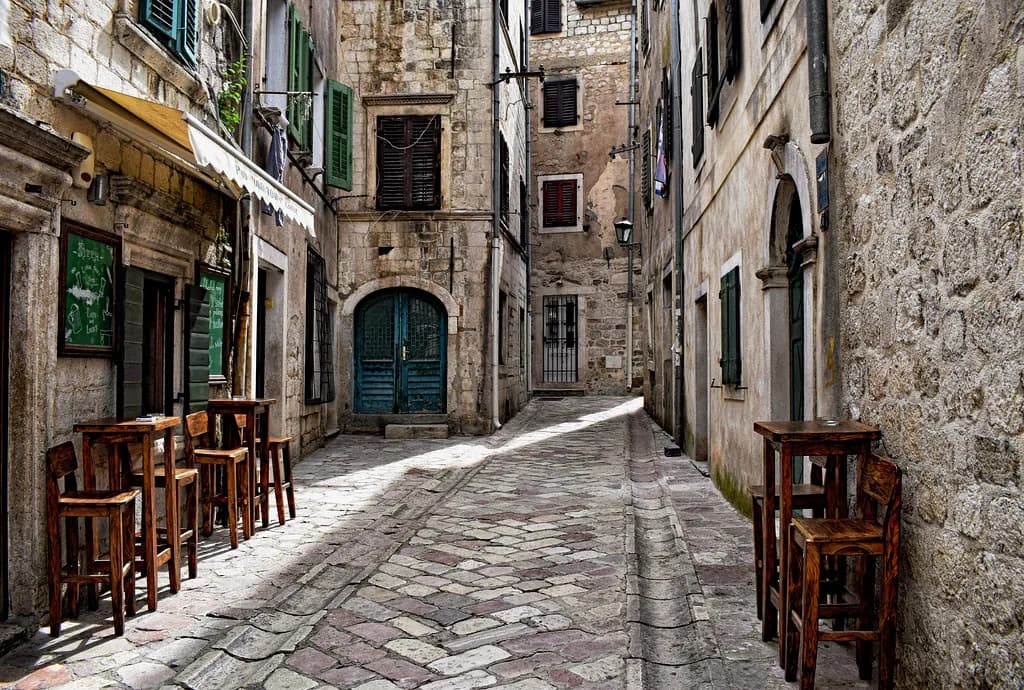
Away from Arms Square the town becomes small stone walkways, and getting mildly lost in them is part of the experience rather than a problem. The lanes are short and interconnected, so a wrong turn costs a minute, not a morning.
The practical consequence is that you do not need a turn-by-turn route inside the walls. Pick a direction, note which gate you entered by, and use the churches and squares as checkpoints to work out where you are.
St Tryphon's Cathedral, the town's principal building
St Tryphon's Cathedral is a Roman Catholic cathedral consecrated in 1166 and dedicated to Saint Tryphon, the protector of Kotor. It was badly damaged in the 1667 Dubrovnik earthquake and rebuilt afterwards with the addition of the bell towers, then damaged again in 1979 and further restored. The building was originally put up in 1166 and holds frescoes and a treasury with works by a long list of named artists.
Among the treasury pieces is a 15th-century golden altarpiece on the apse wall showing Christ, the Virgin, Saint John the Baptist, Saint Tryphon and sixteen other saints, described as a masterpiece of Kotor goldsmithing. The cathedral is the one building in town worth slowing down for rather than photographing from the doorway.
St Luke's Church and its two altars
St Luke's Church was built in 1195 as a Catholic church, and its oxidised stone walls give it a scorched appearance. From 1657 to 1812 it served both Catholic and Orthodox worshippers, with two altars inside, before being given to the Orthodox Church.
The two-altar period is the detail that makes this small church more than a passing glance. It is a two-minute stop on the way between the cathedral and the town's northern lanes, and the interior is quick to read once you know what you are looking at.
Church of St Nicholas and the church it replaced
The Church of St Nicholas is a Serbian Orthodox church built between 1902 and 1909 on the site of an earlier Orthodox church that stood from 1810 to 1896 and burnt down. It is dedicated to St Nicholas, regarded as a protector of sailors and travellers.
The three churches sit close enough together to see as one cluster in sequence: St Tryphon's, then St Luke's, then St Nicholas. If church interiors are your main interest, the guide to Kotor churches covers them individually, and the broader story of how the town's religious buildings changed hands over the centuries is set out in Kotor History.
Elsewhere in town, the Church of St Mary dates from 1221 and holds medieval frescoes plus the remains of a 6th-century basilica. Treat it as an optional addition rather than a fixed stop, since the three-church cluster already takes the best part of an hour.
Venetian palaces and the maritime museum
Under Venetian rule a series of palaces went up between the 15th and 18th centuries, and they still shape the townscape today. The 18th-century Grgurina Palace now houses a maritime museum, which makes it the natural place to spend time if you want context on the harbour's trading past.
Other noble family palaces are scattered through the lanes without fanfare, often as plain stone fronts you would walk past. Knowing that the 15th-to-18th-century Venetian buildings are the ones to look for changes how you read the streets; the wider picture is set out in this Kotor history overview. If you want to pair palaces with other collections, museums in Kotor lists what else is open.
The walls: 4.5 km of fortification
The city walls extend over 4.5 km, vary from 2 to 15 metres thick and reach a maximum height of 20 metres. The main gate dates from the 16th century, and the South Gate, the oldest in Kotor, was partly built in the 9th century.
The walls do not stop at the town edge; they climb the mountain behind to a fort perched high above, blending into the grey slope by day and lit with an orange glow at night. From below, that climb is a useful reminder of how much fortification sits above the rooftops.
Walking part of the walls from inside the town
Visitors can climb on the fortress walls and walk around the edge of most of the encased old town for free. Benches on top of the northern wall give a place to sit, with the river hugging the wall on one side and towers and the steep mountain on the other.
That free stretch is different from the paid ascent up the mountain, and it is the best value in town if you only have an hour to spare. Check locally for current access arrangements before planning a day around the higher route.
The bastion and moat-like bridge at the southern gate
The southern side of town is the most heavily defended entrance. The Gudrić Gate is guarded by a bastion and approached over a moat-like bridge, with three phases of construction behind it, the oldest from the 12th to 13th century and the newest from the 18th.
Walk down to this gate even if you do not leave through it. The bridge, bastion and layered stonework explain the town's defences better than any single wall section, and it takes five minutes from the church cluster.
The Cat Museum and the cats of the old town
Cats are everywhere in Kotor Old Town: on windowsills, on stone steps, on cafe tables and in Cat Park, where they wait for someone to sit down. They are treated as good luck in the town, and the souvenir shops sell cat-themed goods to match.
The Cat Museum in the old town is filled with cat art, postcards and stamps, and entry was 1 euro according to a 2025 account, with the money going towards feeding the town's cats; confirm the current charge at the door. It is a short, cheap stop rather than a museum you need to schedule around.
If the cats are the reason you came, plan the lanes slowly rather than racing between sights. The full picture of where they gather is covered in the guide to Kotor cats, and you will meet most of them without trying.
A route through the old town in a sensible order
Start at the Sea Gate and Arms Square, then take the churches in sequence: St Tryphon's Cathedral, St Luke's, then the Church of St Nicholas. From there head south to the Gudrić Gate and its bastion, then work north through the lanes past the Grgurina Palace and out via the River Gate.
Allow about two hours for that loop at an unhurried pace, more if you go into the treasury and the maritime museum. If you want a guide to do the interpreting, a walking tour of the old town covers the history, architecture, culture and cuisine with a guide; confirm the price and departure time when booking.
Cruise days: timing your walk
The town changes character when a ship is in. A five-hour January call and a week in early June produced very different experiences of the same lanes, with the summer visit far busier and hotter.
Check the bay's ship schedule for your date and walk early or late if a large vessel is due. The lanes are narrow enough that a crowd turns a ten-minute stroll into a shuffle, and the free wall walk is much better without company.
What to skip if you have under two hours
With under two hours, cut the museums and stay outside. Do the Sea Gate, Arms Square and the Clock Tower, the three churches from the street, and the free stretch of the northern wall.
Skip the climb above the town, the Cat Museum and any long sit in a café. The compact core is what people come for, and rushing the walls to fit in a museum defeats the point of the detour.
Getting in from the bay and where a guided walk fits
The town is reached from around the bay by road, and the Sea Gate faces the water, so you arrive on foot from the waterfront. Kotor also works as a base for the rest of the bay: Perast old town and its island churches lie along the same shore and make a natural half-day addition.
Further afield, Herceg Novi old town at the bay's entrance has its own gates and the Kanli Kula fortress, and it rewards a separate day rather than an afternoon tacked onto Kotor. For the full list of what to see in the town itself, start with the Kotor attractions guide, which links each sight to its own page.
Which gate should you enter by?
Enter by the Sea Gate unless you are arriving from the north or south edge of town, in which case the River Gate or Gudrić Gate saves you a walk. The Sea Gate gives you Arms Square, the Clock Tower and the churches in the right order with no backtracking.
Whichever gate you use, note it as you go in; the lanes all look similar after an hour. Two hours inside the walls covers the town properly, and the free wall walk is the one thing worth protecting from a tight schedule.
Explore more Kotor guides
Frequently Asked Questions
How long does Kotor Old Town take to walk?
Allow about two hours for the main loop: Sea Gate, Arms Square, the three churches, the southern bastion gate and the free stretch of the northern wall. Add time if you go into St Tryphon's treasury or the maritime museum.
Do you pay to walk the walls of Kotor Old Town?
You can climb on the fortress walls and walk around the edge of most of the enclosed old town without charge. That is separate from the higher climb up the mountain above the town, so check locally before planning your day around it.
Which gate of Kotor Old Town should I use?
Use the Sea Gate on the waterfront for a first visit, because it leads straight into Arms Square and the Clock Tower. The River Gate on the northern side and the Gudrić Gate on the southern side are better if you are arriving from those directions.
Sources
Notes for your Montenegro trip
Optional updates to our Montenegro town guides.
You might also like
Continue reading
More guides you'll find useful