Kotor Kayaking: Guided Tours, Routes and What to Expect
Kotor kayaking explained: what a guided tour covers, where you paddle on the Bay of Kotor, how long trips last and how to stay safe on the water.
On this page
Kotor kayaking is a half-day paddle on the sheltered water of the Bay of Kotor, usually run as a guided tour of roughly two and a half hours with a beach stop for swimming and snorkelling. You launch near Kotor, follow the shoreline past the fishing villages of Muo, Prčanj and Stoliv, and see the old town from water level rather than from the deck of a boat. This guide covers the route, the choice between a guided tour and hiring a kayak yourself, when to go, safety on the bay and how the day compares with the other things to do in Kotor.
What a Kotor kayaking trip actually involves
Most people book a guided sea-kayak tour rather than turn up and paddle off alone. Adventure Montenegro, a local company in Kotor, runs kayak and stand-up paddleboard tours with guides who talk about the history of the bay as you go, and the format is a relaxed shoreline paddle rather than an endurance test. You will get wet from the knees down and possibly more if the water is choppy, so treat the trip as a water activity first and a sightseeing outing second.
The water in the bay is clean enough to swim in, and tours build in a stop at a beach where you can swim, sunbathe or use the snorkels supplied with the trip. That stop breaks up the paddling, so you are not on the water for the full duration. If you want a lazy day on the bay rather than an active one, a boat trip is the better fit; if you want to be in the water and see the shoreline close up, kayaking wins.
Where you paddle: Muo, Prčanj, Stoliv and the beaches along the bay
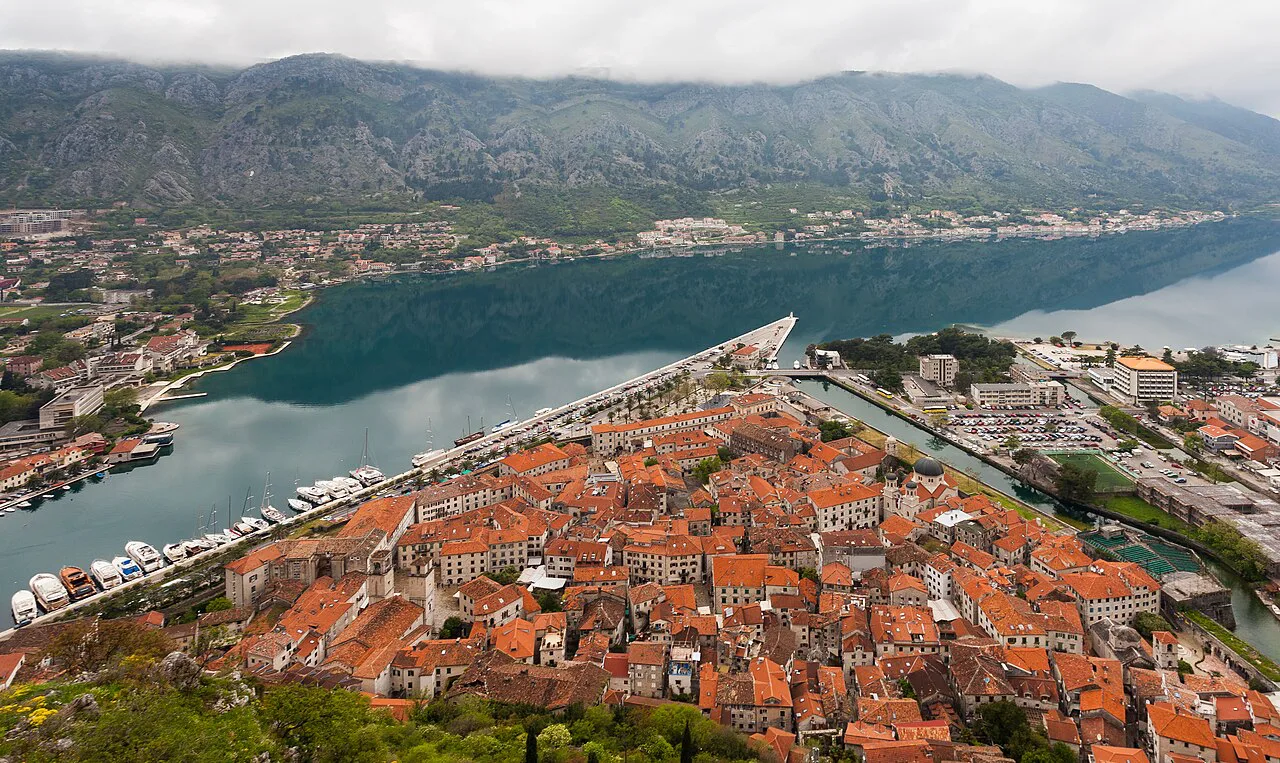
The usual route hugs the shore west of Kotor, passing the small fishing villages of Muo, Prčanj and Stoliv. These are places most visitors never see because they are reached by boat or kayak rather than by road, and they give you a picture of how the bay is actually lived in. Prčanj in particular has a waterfront lined with Venetian villas and gardens running down to the shore, and a sizeable church that you pass close to from the water.
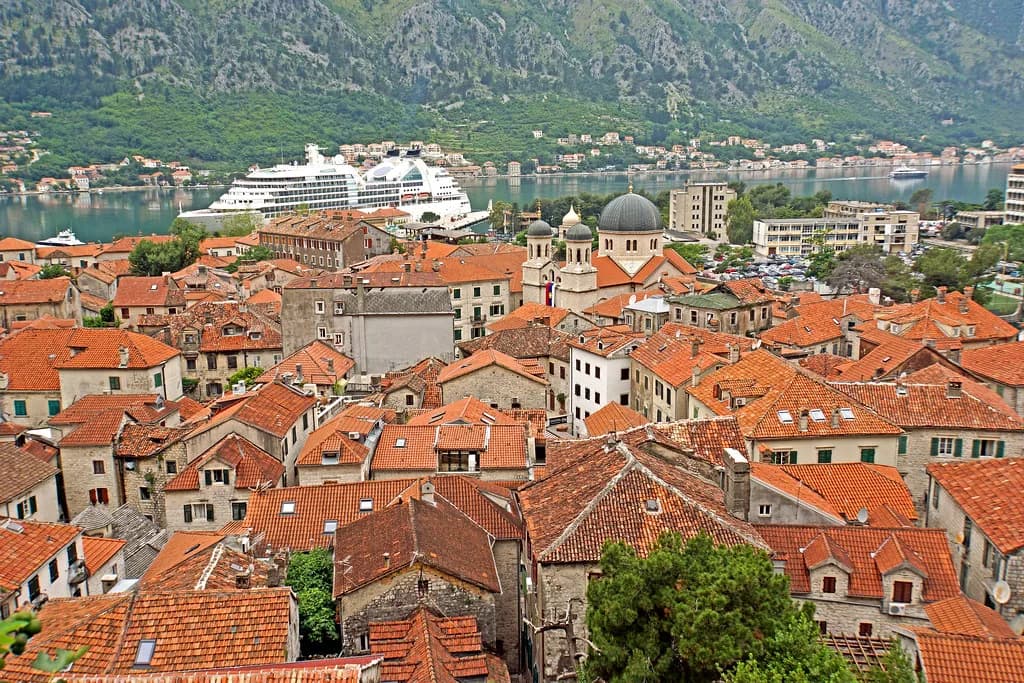
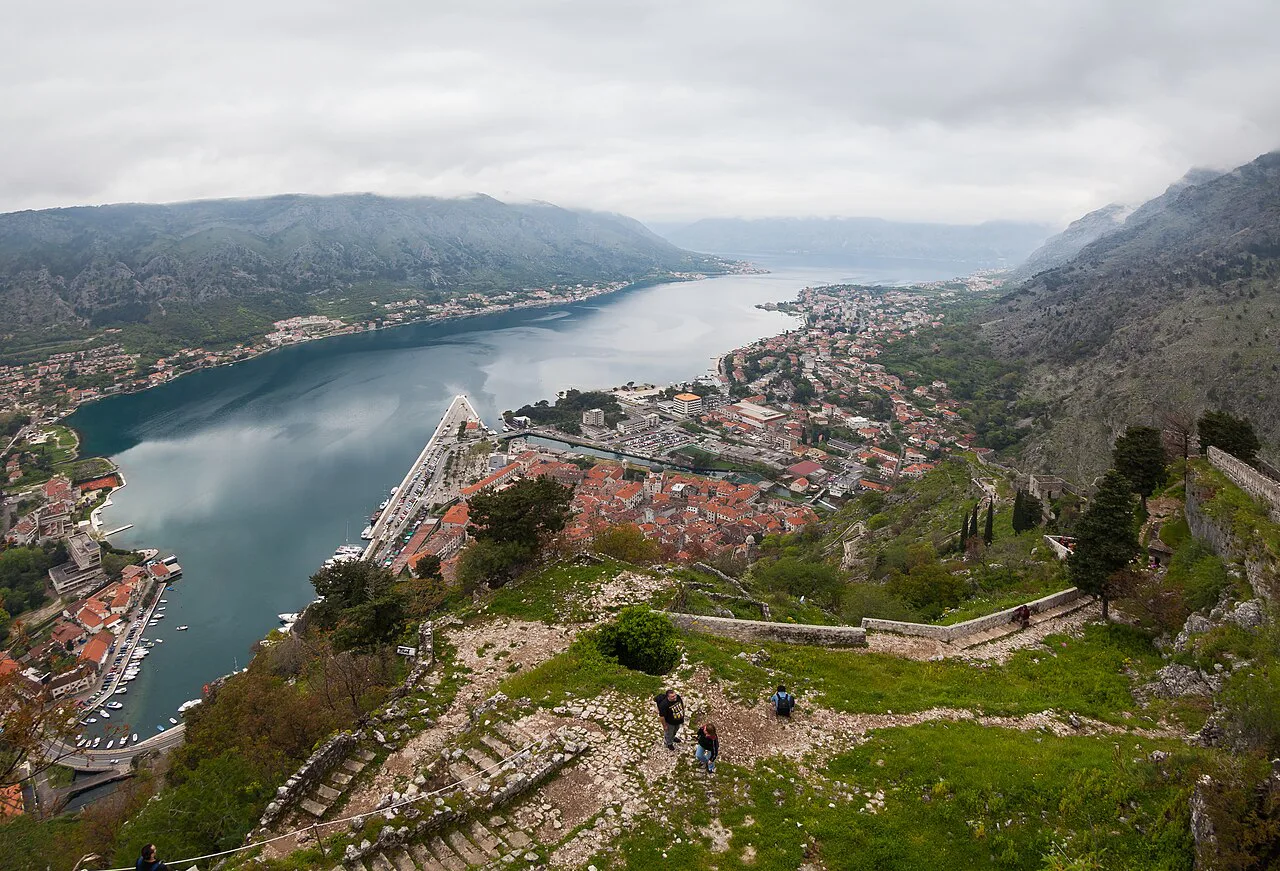
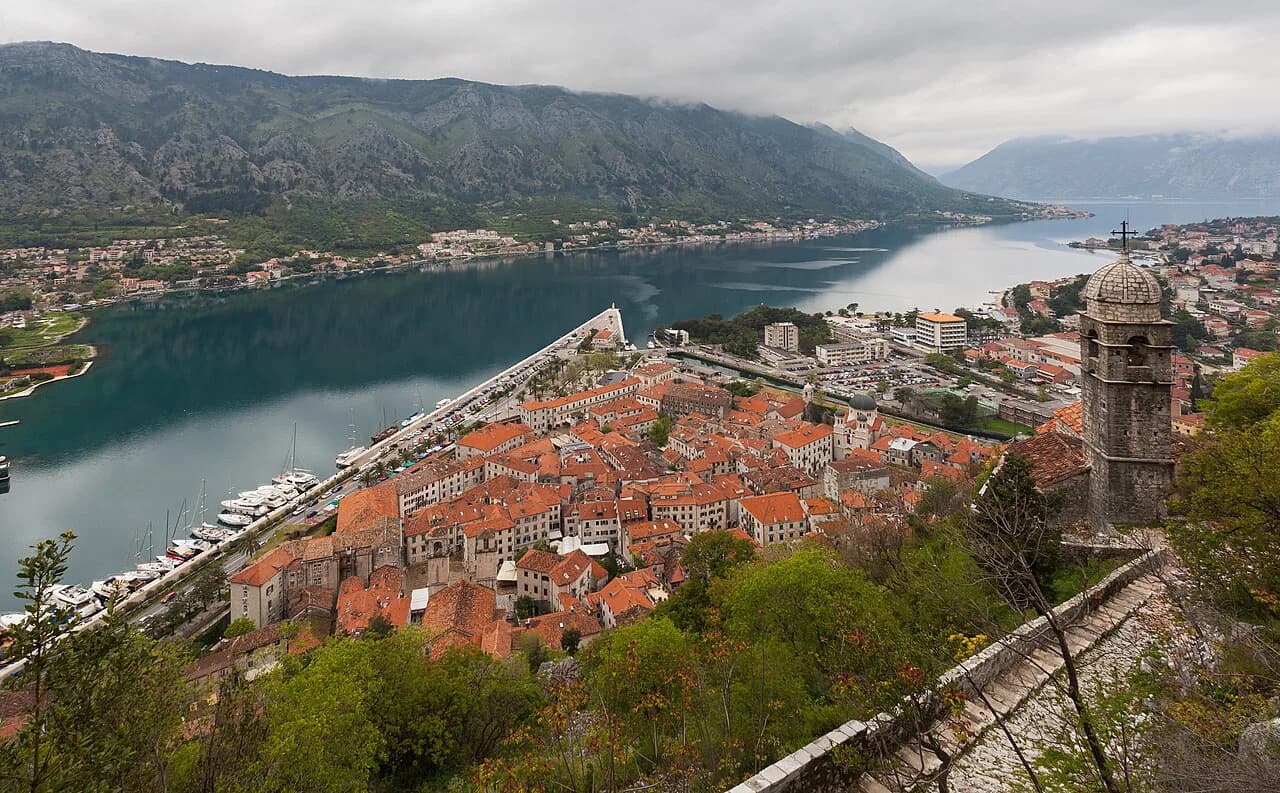
The beaches you reach by kayak are quieter than the town centre because most tourists stay close to Kotor's old town, according to the kayak tour write-up. Your guide picks the beach on the day depending on conditions, so do not expect a fixed itinerary. This is the section of the bay where the paddle feels most rewarding: you are looking up at the walls of a UNESCO-listed town and the mountains of Orjen and Lovćen behind it, with red-roofed villages and stone quays close enough to touch.
Guided tour versus going out on your own
A guided tour is the easier choice if you want the history, the safety cover and the beach stop without planning anything. You turn up, paddle in a group on a known stretch of shoreline, and the guide handles the route and the timing. The trade-off is cost and flexibility: you go where the group goes and at the group's pace, and you cannot linger at one village for an hour.
If you would rather paddle independently, talk to the operators in Kotor about hire and compare what they offer in person before deciding. Paddling alone puts the decisions on you: which side of the bay to stay on, when the wind is picking up, and how to avoid the wake of tour boats and cruise tenders. If you are not a confident paddler, the guided option removes most of that thinking.
How long a Kotor kayak tour lasts and what is included
The standard tour runs about two and a half hours, a figure used both by operators and by the booking listings. That includes time on the beach for swimming and snorkelling, so the paddling itself is shorter than the total. Treat the duration as approximate: wind, group pace and where the guide chooses to stop all shift the finish time.
Snorkelling gear comes with the tour, and the format includes a beach stop and a shoreline route past the villages. Prices and departure times vary by operator and season, so check the individual listing rather than relying on a figure quoted elsewhere. Book ahead in the school summer months, when the coast is at its busiest and the good time slots go first.
When to go kayaking on the Bay of Kotor: season, crowds and water traffic
Responsible Travel's sea kayaking guide names May, June and September as the best time for paddling here, for good weather, smaller crowds and lower prices. In the peak school summer holiday months the coast can feel very crowded and temperatures can reach 30°C, and the water gets busier with tour boats and cruise traffic. You escape the crowds on land by being on the water, but you meet the boats there instead.
Spring and autumn bring changeable weather, with wind and cloud increasing the chance of choppy conditions. If it gets too windy, the sensible move is to stop and wait on shore rather than push on. A morning start usually gives you calmer water before the afternoon breeze builds, so ask your operator on the day which slot they recommend.
Staying safe on the bay: tides, wake, wind and the Verige Strait
The bay is tidal and resembles a fjord or an estuary as it spreads and meanders inland from the Adriatic over more than 100km of sheltered shoreline. That shelter helps, but it is not a pond: the bay is 7km across at its widest and there is real boat traffic around the popular beaches and resorts. Stay on one shallow side of the coastline rather than cutting across the middle, where speedboats and cruise liners create wake in deeper water.
Several stretches of coastline have been declared motorised transport-free zones, which makes them the kayaker's equivalent of a cycle lane. Crossing from one side of the bay to the other is possible but not recommended, even at the narrowest point, the 340m-wide Verige Strait. Pick your side of the bay deliberately and stay on it, and you avoid the most stressful part of the day.
What to bring and what to wear
Wear quick-drying clothes you do not mind getting wet, and bring a dry bag or waterproof pouch for your phone and anything else that must stay dry. Swimwear under your clothes makes the beach stop easier, and a hat and high-factor sun cream matter on the water even when the sky is hazy. The tour supplies snorkels, but bring your own mask if you have one that fits.
You will want water and a snack for after the paddle, and somewhere to leave a towel and a change of clothes. Ask your operator where bags can be stored while you are on the water, since storage arrangements differ between companies. Kotor Old Town is a short walk from the waterfront, so you can combine the paddle with a walk through the gates and squares afterwards; our Kotor Old Town guide covers the layout.
Kayaking versus a boat tour to Our Lady of the Rocks and Perast
A boat tour takes you further and faster, and it is the practical way to reach the church islands off Perast: Our Lady of the Rocks (Gospa od Škrpjela) and the island of Sveti Đorđe. If seeing the islands and the baroque shoreline of Perast is the point of your day, book the boat rather than the kayak. The Kotor Boat Tours guide covers that ground in a way a paddle from Kotor cannot.
Kayaking gives you the opposite trade: less distance, more immersion, and a shoreline you see at eye level rather than through a boat window. You will not reach Perast or the islands on a standard paddle from Kotor, and you should not try to. Choose kayaking if you want to be in the water and see the villages close up, and a boat if you want the islands and the architecture of Perast in one outing.
Which Kotor paddle to book
Book a guided kayak tour if you want two and a half hours on the water, a beach stop with snorkelling and the villages of Muo, Prčanj and Stoliv seen from the shoreline. Check the operator's own listing for the current price, departure point and what to bring, because those details change by season and by company.
If the church islands and Perast are the reason you are in Kotor, take the boat instead and keep the kayak for a day when you want to be active. Either way, build the rest of your day around Kotor Old Town: the gates, squares and waterfront are a short walk from where most tours launch. A good lunch afterwards is part of the plan, and the best restaurants in Kotor fill quickly on cruise days.
Explore more Kotor guides
Frequently Asked Questions
Can you swim in the Bay of Kotor?
Yes. The water is clean enough for swimming, and kayak tours build in a beach stop where you can swim, sunbathe and snorkel. Ask your guide where the best spot is on the day, as conditions and boat traffic vary along the shore.
Are there beaches near Kotor?
There are beaches around the bay, and the quieter ones are reached by boat or kayak rather than on foot from the town centre. Most visitors stay close to the old town, so the shoreline beaches stay relatively uncrowded. Your guide will pick one that suits the conditions.
What country is the Bay of Kotor in?
The Bay of Kotor is in Montenegro, on the Adriatic coast. It is sometimes mistaken for Croatia, but Montenegro is a relatively small country right below Croatia, with the old town of Kotor at the head of the bay.
Sources
Notes for your Montenegro trip
Optional updates to our Montenegro town guides.
You might also like
Continue reading
More guides you'll find useful