Churches in Kotor: Which Ones to Step Into and What to See
Kotor's walled town holds more than twenty churches and chapels. Here are the ones worth your time, what to look for inside, and how to walk between them.
On this page
Start with two buildings: St Tryphon's Cathedral and St Luke's Church on Piazza Greca. Between them you get the Catholic cathedral and the dual-altar church that makes Kotor's churchscape different from the Italian towns it is often compared with. Everything else is a bonus you add on the way between gates.
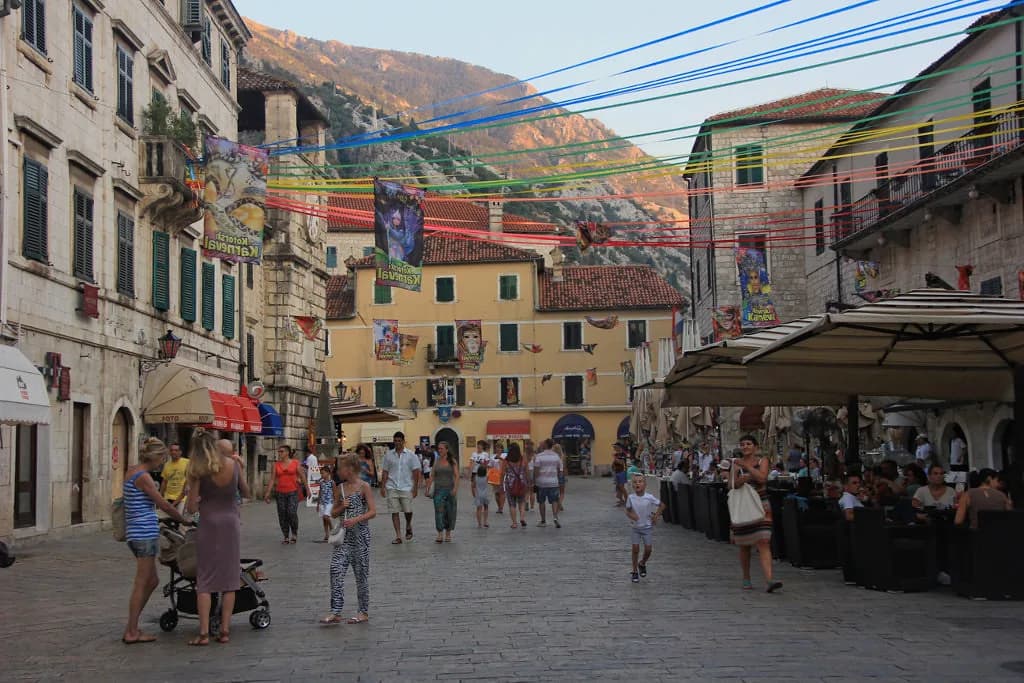
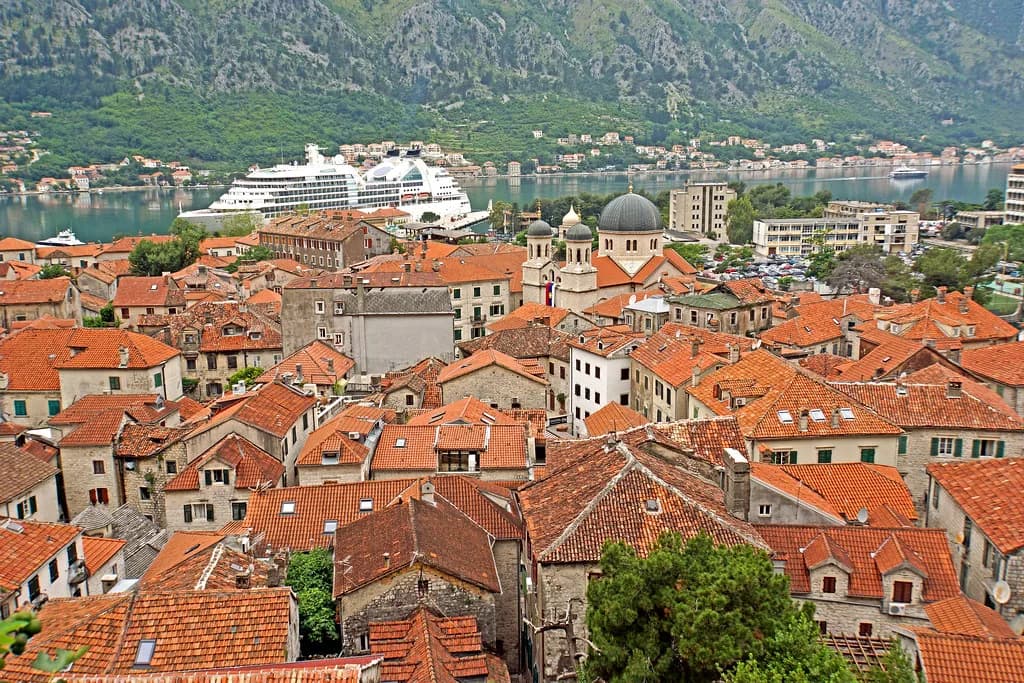
This guide groups the churches by what the sources show you can reasonably expect to get inside and what to look for once you are through the door, then gives a walking order from the Sea Gate. Kotor's walled town measures barely 600 metres from gate to gate yet holds more than twenty churches and chapels, so the real task is choosing between them.
Which churches in Kotor can you actually enter?
The honest answer is that it varies by day and by building, and several are locked for long stretches. One traveller's account of six churches within the walls found only three open, and the tiny St Luke's needed several return visits before the door gave way.
Plan on the assumption that you will see two or three interiors rather than a full set, and treat any extra open door as a gift. That matches the pattern in the traveller account above: three of six interiors reached, the rest passed by.
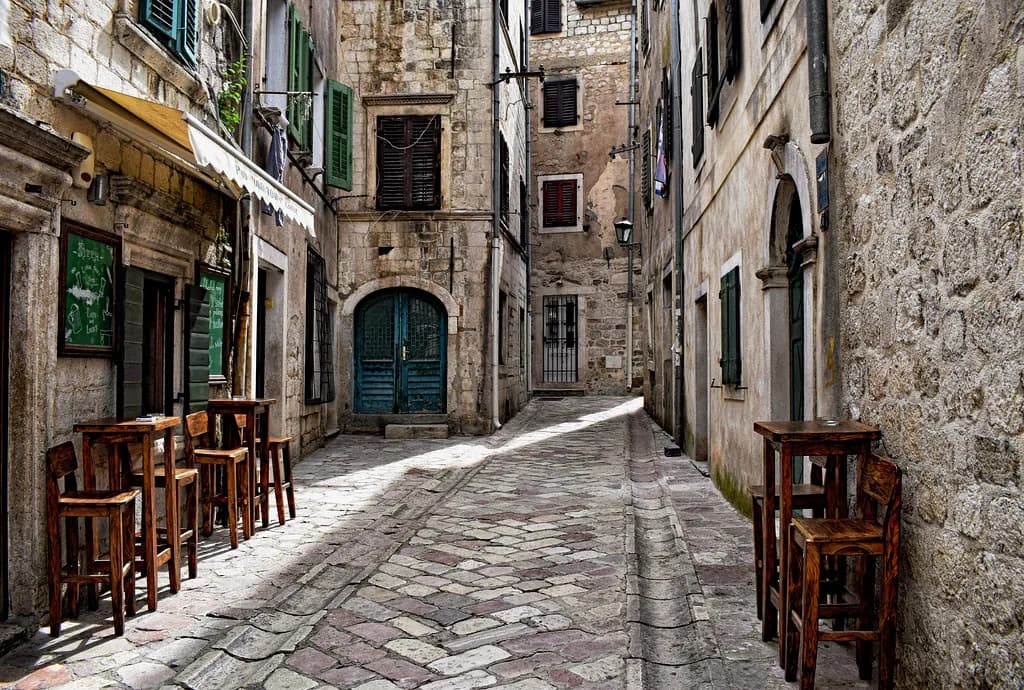
If a building is shut, the neighbouring lanes hold enough carved doorways and facades to make the detour worthwhile, and St Michael's winged lion or St Tryphon's mismatched towers reward a look from the street even when the door is locked.
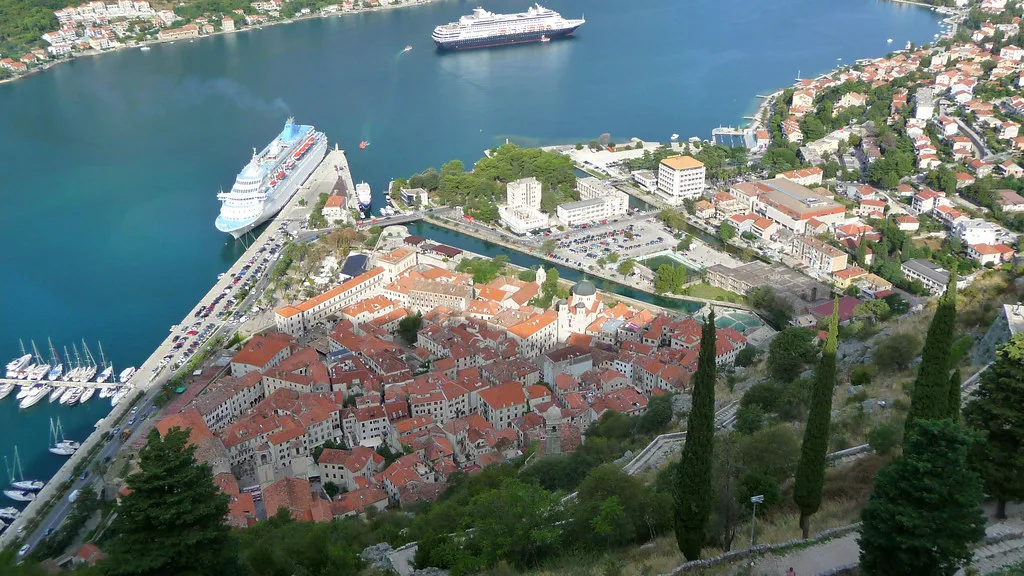
St Tryphon's Cathedral (Katedrala Svetog Tripuna)
St Tryphon's is the one church in Kotor you should not skip. The Romanesque cathedral honours the city's patron saint and was consecrated in 1166 on the site of an older church, and it remains the largest building in the walled town.
Look up before you go in. The two towers do not match: the 1667 earthquake partly destroyed them, and the money for a symmetrical rebuild never materialised, so the pair ended up lopsided. Knowing this turns a quick photo stop into the most legible piece of building history in town.
Inside, the draw is the collection rather than the nave. The interior and the treasury upstairs hold 14th-century frescoes and a wide spread of art from different periods, including several very different depictions of the crucifixion and a life-sized wooden Pietà. Give it twenty minutes more than you planned.
St Luke's Church (Sveti Luka): the dual-altar church on Piazza Greca
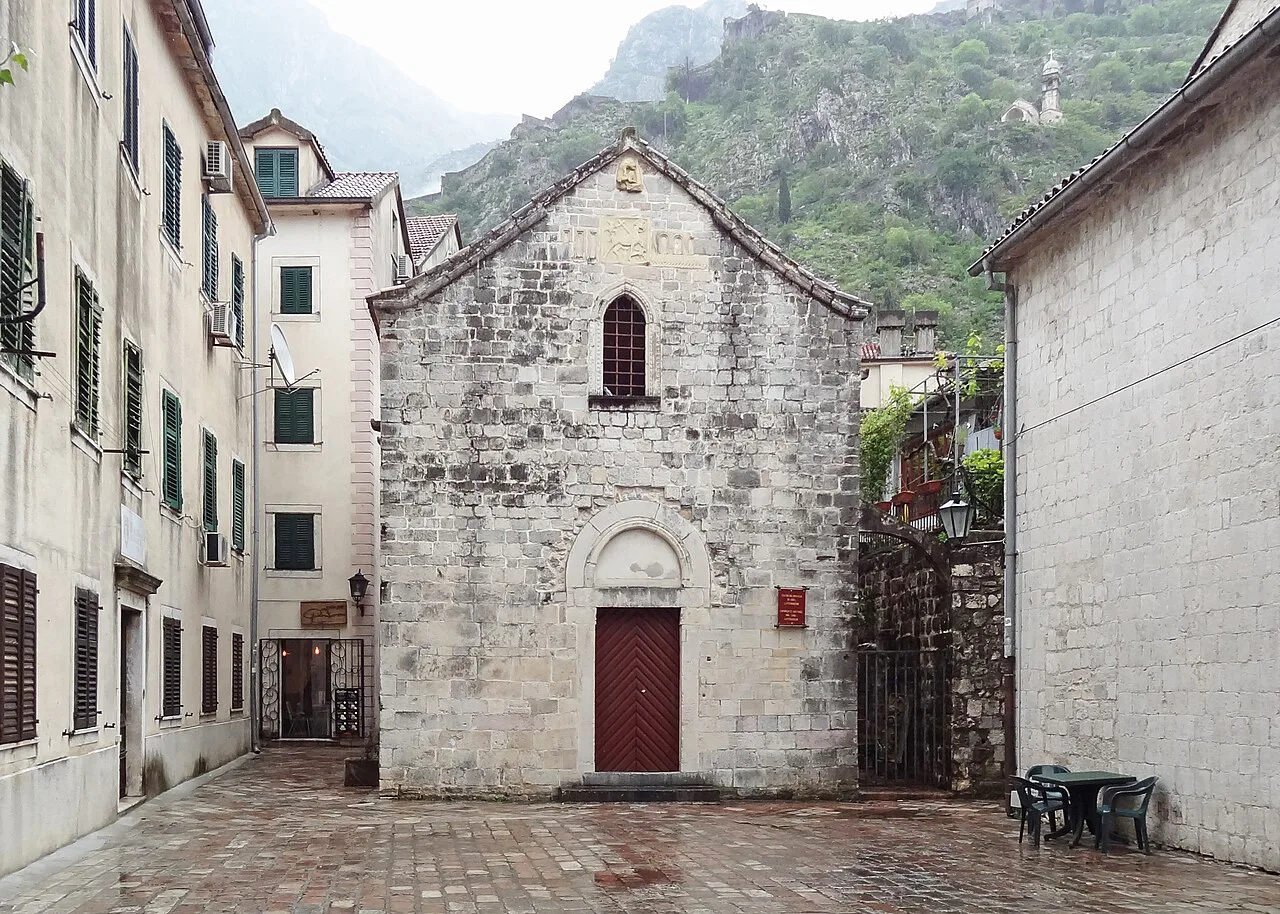
St Luke's is the church that rewards knowing what you are looking at. Built in 1195, it mixes Roman and Byzantine traits, survived the 1979 earthquake without significant damage, and still keeps fragments of fresco painted soon after construction on the south wall.
The arrangement that makes it unusual is the pair of altars, one Catholic and one Orthodox, standing in the same small room. The church began as a Catholic foundation before being given to Orthodox believers in the mid-17th century, and the iconostasis was made in the 17th century by Daskal Dimitrij, founder of the Boka Kotorska painting school.
Mind where you step. The floor is made of tomb panels over the joined graves of Kotor citizens, since burials took place inside the church until the 1930s. The room is small enough that a group of four fills it, so go early or late in the day.
St Nicholas Church (Sveti Nikola): the 1909 Orthodox church
St Nicholas faces St Luke's across the same small square, which gives you an eight-century leap in one glance. The Serbian Orthodox church was consecrated in 1909 and is the version of Kotor most people photograph on the way up to the fortress, since it is the church most visible from that climb.
Step in for the golden iconostasis at the front, with its red doors painted with the Annunciation and tiers of scenes from the life of Christ above. The church also holds a collection of silver icons, and the chandelier is worth a look in its own right.
Services are held here regularly, and visitors are received between them. That makes it the church most likely to be open but least suited to wandering about with a camera mid-service, so time your entry accordingly.
St Mary's Collegiate Church (Sveta Marija Koledjata) and the fortress trail
St Mary's sits near the start of the fortress trail, and that position shapes how people use it. The building is modest from outside but the carved stone doorway repays a close look, and most walkers pass the interior on their way up the hill.
Inside, the 13th-century church was badly damaged in the 1979 earthquake and only partly restored, so what you see is exposed stone, a simple altar and fragments of medieval carving set into the side walls. A small display of photographs documents the damage and the restoration work.
Treat it as the natural first stop if you are combining churches with the climb, and note that it does double duty as the ticket point for the fortress. A look inside costs you five minutes and sets the tone for the rest of the circuit.
The small ones: St Anna, St Michael, St Paul and St Clara
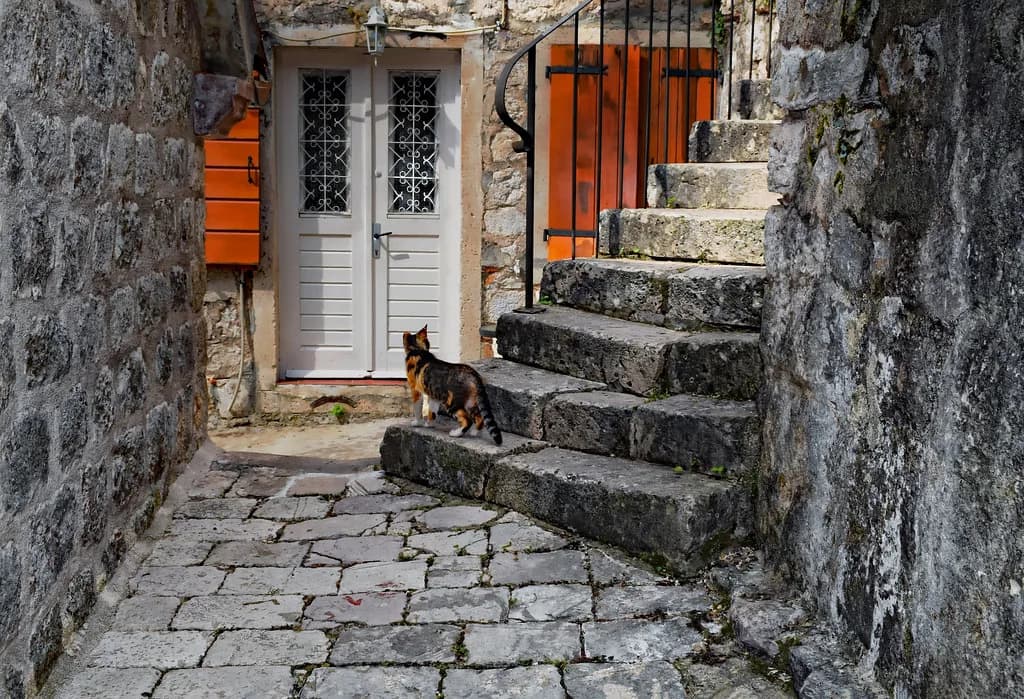
The Chapel of St Anna is the sort of find that makes a slow wander pay. It sits in a blind alley off the lane between Trg od Brašna and the North Gate, usually with the door ajar in daylight, and holds a single small room with a stone altar and a faded fresco above it that is believed to date from the 15th century.
St Michael's Church, near the River Gate, keeps a leaning bell tower and a mix of Romanesque and Gothic work, with a 13th-century carved font near the entrance and a small display of religious art in summer. The Church of St Michael is a simple one-nave building from the late 1300s or early 1400s, with the winged lion of St Mark carved in relief on its back wall.
Two more small interiors are easy to bolt on. The Oratory of St Paul sits above a confraternity room reached through a courtyard near the main square, with 17th-century painted panels and a narrow window looking onto the cathedral square. The Franciscan Church of St Clara was rebuilt several times between the 1300s and 1600s and keeps a Venetian Baroque altar carved from multi-coloured marble.
One more sits above the town rather than inside it. The Church of Our Lady of Remedy is a Roman Catholic church belonging to the Roman Catholic Diocese of Kotor, and you pass it on the fortress climb rather than on the street circuit.
A walking order from the Sea Gate: 90 minutes on foot
Enter through the Sea Gate and turn right towards St Luke's Square. That puts St Luke's and St Nicholas within a few steps of each other on Piazza Greca, and you can compare the 1195 building with the 1909 one while the morning is still quiet.
From there, work north and west rather than doubling back: St Tryphon's Cathedral for the treasury, then the lanes off Trg od Brašna for the Chapel of St Anna, then St Michael's near the River Gate. Keep St Mary's for the end if you are going up to the fortress, since it stands at the start of that trail. The whole street circuit fits comfortably into 90 minutes on foot.
If you would rather follow a fixed route with the layout in front of you, plot the gates and squares on a map before you set off; the lanes are short but they bend, and the street names change between corners.
Catholic and Orthodox in one town: what the dual altars tell you
Kotor's churchscape is not a single tradition with variations. Within the walls you have a Roman Catholic cathedral, an Orthodox church built in 1909, and a small medieval church that served both congregations at once. St Luke's keeps both a Catholic and an Orthodox altar, an arrangement the town presents as evidence of the two communities living alongside each other.
That shift happened over time rather than by design. St Luke's started as a Catholic foundation and passed to Orthodox use in the mid-17th century, as wars and the arrival of Orthodox residents reshaped the town's congregations. Reading the churches in that order, Catholic then shared then Orthodox, makes the walk feel like a timeline rather than a checklist.
Dress and behaviour at the door
These are working churches, not museums. St Nicholas holds regular services and receives visitors between them, so if a liturgy is under way, look and leave rather than circulating with a camera.
Cover shoulders and knees, keep your voice down, and ask before photographing anyone at prayer. Several interiors are dim and small, so a torch or a bright phone screen is more disruptive than useful; give your eyes a minute to adjust instead.
What a single ticket does not cover
There is no single pass that opens the churches of the Old Town. St Mary's functions as the ticket point for the fortress climb, which is a separate matter from church entry, and the smaller chapels are visited on their own terms.
Cathedral entry, treasury access and any guided visit are separate from the fortress ticket, and any charge is settled at the door on the day. Carry small euro notes in case a donation box is the only option, and treat published prices with caution, as they change with the season.
Which three churches to pick if your time is short
With half a day, take St Tryphon's Cathedral for the towers and treasury, St Luke's for the dual altars and the tomb-panel floor, and St Nicholas for the iconostasis. Those three sit close together and cover the Catholic, shared and Orthodox strands without any long walks between them.
If you have a full day, add the Chapel of St Anna on the lane off Trg od Brašna and finish at St Mary's before climbing to the fortress. That route gives you the quiet chapels the standard circuit misses and ends at the point where the town's churches meet its walls.
Explore more Kotor guides
Sources
Notes for your Montenegro trip
Optional updates to our Montenegro town guides.
You might also like
Continue reading
More guides you'll find useful