
Grgurina Palace, Kotor: What You'll See Inside the Maritime Museum
Grgurina Palace is an 18th-century baroque palace in the old town of Kotor, just north of St Tryphon's Cathedral (Katedrala Svetog Tripuna), Kotor, and it now holds the Maritime Museum. Go for the collections as much as the façade: the museum fills several rooms with ship models, old maps, navigation instruments, portraits of seafarers and seascape paintings. This guide covers where the palace sits, the route on foot, the exterior details, what to look for inside, how long to allow and where to confirm times and tickets.
What Grgurina Palace is: a baroque townhouse with a maritime collection
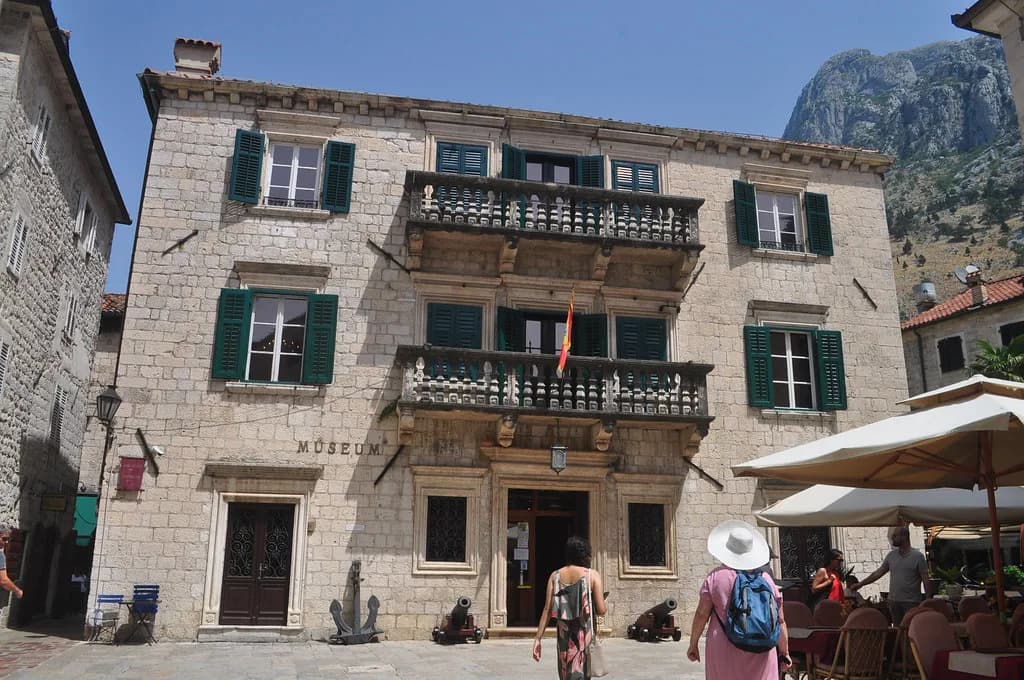
Grgurina Palace is a baroque building from the 18th century in the old town of Kotor, and it now houses the Maritime Museum. The façade is restrained: a stone balcony with a balustrade runs symmetrically across the main front, framed by carved stone openings. Inside, the building keeps baroque proportions, with high rooms and heavy wooden ceilings rather than museum-white walls. Treat it as two things at once: a surviving townhouse you can walk through and a collection of maritime objects displayed in its rooms.
The interiors were restored after the 1979 earthquake. The wooden ceilings, the main hall floor and the entrance hall were rebuilt in the baroque manner, with stone slabs laid diagonally in contrasting tones. Look up and down as you move between cases, because the ceilings and floors are part of the visit rather than just the backdrop. One first-floor room still has its original decorative parquet, made from a different wood to the rest of the flooring.

Where Grgurina Palace is in the old town
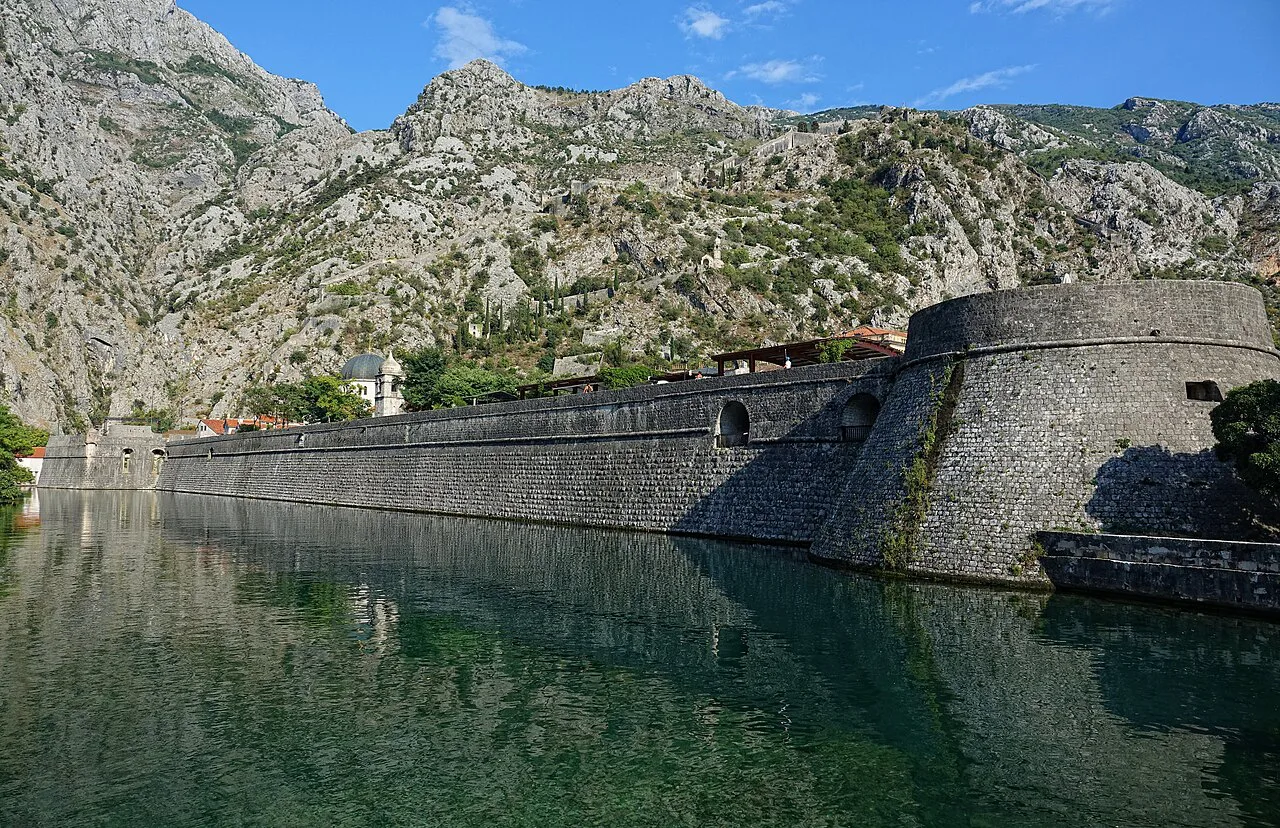
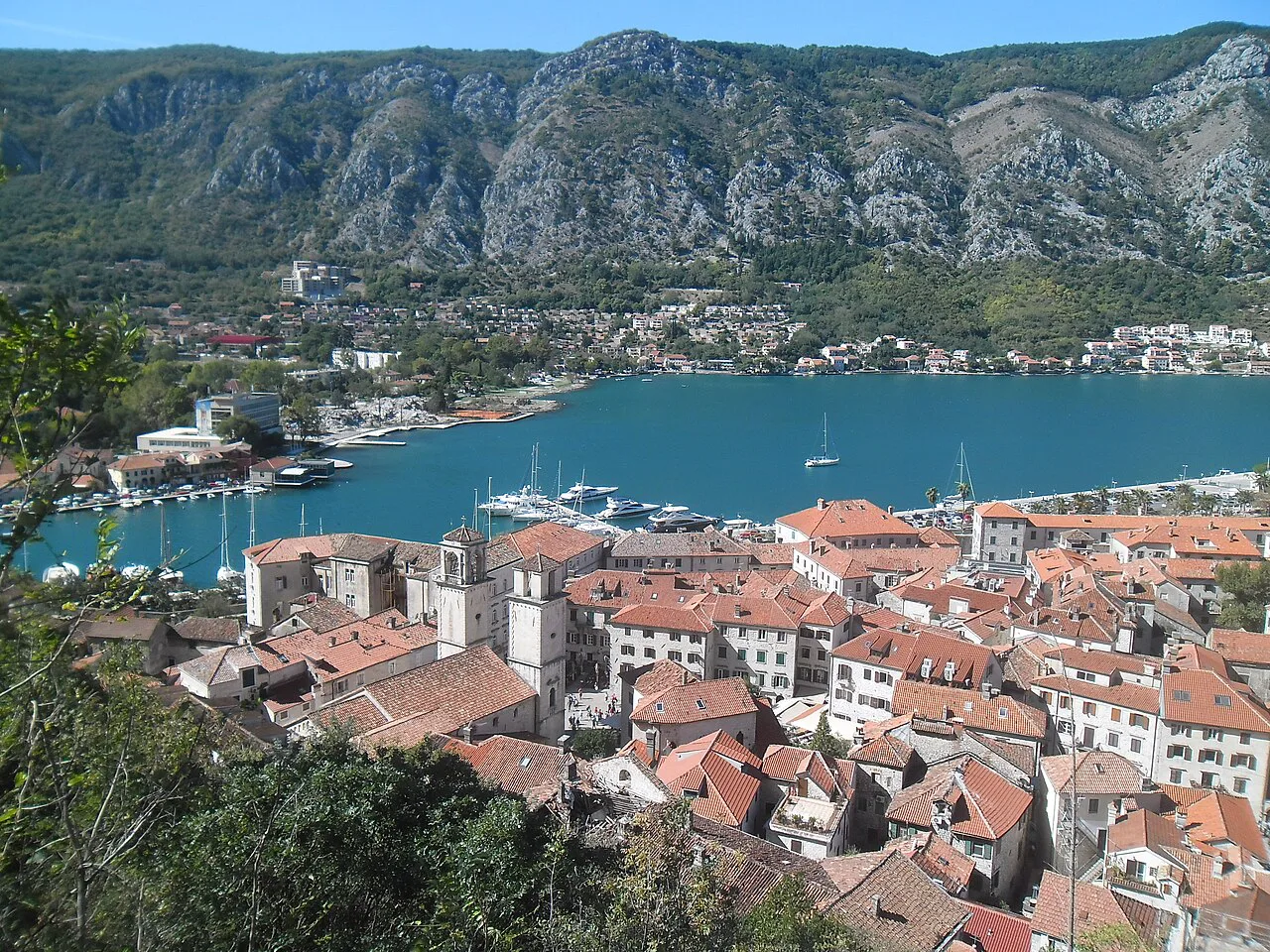
The palace stands in the old town of Kotor, north of St Tryphon's Cathedral. Use the cathedral as your landmark: from its square, walk north through the lanes and the palace is a short distance along the way. The old town is a compact triangle pressed between the Bay of Kotor and St John's Hill, so orientation is easy once you are inside the gates.
The old town was added to the UNESCO World Cultural Heritage list in 1979, and the surviving street pattern is what makes a short walk between the cathedral and the palace feel like a step back in time. The lanes are a medieval maze of museums, churches, café-filled squares and Venetian palaces, and the palace sits within that grid rather than on its edge. Approach from the cathedral side rather than from the Sea Gate if you want the quieter route.

How to reach it on foot through the old town
The palace is reached on foot, because the old town's lanes are too narrow for normal traffic. Enter through the Sea Gate, the main western entrance, then head towards St Tryphon's Cathedral; from the cathedral square, continue north for a couple of minutes. The whole walk from the gate takes under ten minutes at an easy pace. Wear shoes with grip, as the cobbles and stone steps are polished by long use.
If you arrive by bus or car, park or alight outside the walls and walk in. The lanes around the cathedral and the palace double as café terraces in fine weather, so the route can be slower than the map suggests when the tables are out. Keep the cathedral bell tower in view as a bearing and you will not get lost. Any detour costs only a few minutes.
The exterior: stone balcony, balustrade and the entrance
The main façade is symmetrical around a central stone balcony with a balustrade, supported by carved corbels and framed by stone window and door surrounds. The stone is the pale stone quarried on the island of Korčula, used across the façade for the balcony, the corbels and the openings. On the north side a terrace with a pavilion carries the Grgurina family coat of arms, a goat, the symbol of Koper from which the family moved to Kotor. Two cannons stand beside the museum entrance, marking the doorway from the lane.
Inside the Maritime Museum: what to look for
The Maritime Museum displays a collection tied to the maritime history of the region: ship models, old maps and charts, navigation instruments, portraits of seafarers and seascape paintings. Give the ship models and charts the most time, as they carry the detail that makes the collection worth the entrance. The portraits and seascapes suit a quick look rather than a long stop. Work steadily through the rooms rather than zigzagging.
The baroque interior is part of the display: the restored wooden ceilings, the diagonal stone flooring of the main hall and the entrance hall, and a first-floor room with its original decorative parquet. The contrast between the stone floors downstairs and the wooden ceilings above shows how the house was used before it became a museum. The parquet room is easy to miss if you walk straight through, so slow down as you move between rooms.
How long to allow for the palace and museum
Allow around 45 minutes to an hour at a relaxed pace. Thirty minutes covers the ship models, charts and instruments, but the ceilings, floors and first-floor parquet reward a slower pass. The palace is not a quick photo stop if you want the collections: the exhibits are in cases and on walls across several rooms. If you only have ten minutes, look at the façade and the cannons from the lane and move on.
Tickets and opening hours: where to confirm them
Ticket prices and opening hours are not listed here, so confirm both at the museum entrance or on the museum's own listing before you plan your day around it. The palace is a working museum, and hours can change with the season.
If the museum is closed when you arrive, the exterior and the lane around the palace are still worth a short look, and the cathedral and squares are a few minutes away. The clock tower and the surrounding squares fill a wet or closed afternoon without much walking. Build your day around the cathedral and the squares, with the palace as one stop rather than the only reason for coming into the old town.
Nearby in the old town: St Tryphon's Cathedral and the walls
St Tryphon's Cathedral is the obvious companion stop, a short walk south of the palace and the landmark most visitors use to orient themselves in Kotor Old Town. Pair the two in one loop: cathedral first, then north to the palace, then back through the squares. Allow extra time at the cathedral if you want to look at the interior rather than just the square.
Above the rooftops, the walls climb St John's Hill and give you a view back over the palace and the old town. The ascent to Kotor fortress is steep and exposed, so it suits a cooler part of the day and shoes with grip, and it takes longer than the map suggests. Leave it for a separate outing if you are fitting the museum into a short old-town wander.
Other small stops within a few minutes' walk
The Cats Museum, Kotor is another small old-town stop within a few minutes' walk, and it suits families or anyone who wants a lighter break after the maritime collection. The clock tower and the surrounding squares are on the same route, so you can string together the palace, the cathedral and the Cats Museum without crossing the old town twice. A half-day covers all three at an easy pace.
Is Grgurina Palace worth an hour of your old-town walk?
Yes, if you want to see Kotor's maritime story told through objects, and if you confirm the day's opening hours at the door before you commit. The palace works best as one stop in a loop that includes St Tryphon's Cathedral and the squares, rather than as a standalone destination. Skip it if you only want architecture and have no interest in ships; the lanes and the walls give you more of the old town's fabric for less time.
Explore more Kotor guides
Frequently Asked Questions
Do I need to book Grgurina Palace in advance?
No advance booking requirement is published, so plan to turn up during opening hours and pay at the entrance. Confirm the day's opening hours at the museum door or on its own listing before you travel, particularly outside the summer season.
Can I visit the palace without entering the Maritime Museum?
You can see the exterior, including the stone balcony, the balustrade, the family coat of arms on the north terrace and the two cannons by the door, from the lane without a ticket. The museum rooms and the baroque interior, including the restored ceilings and the first-floor parquet, are inside and require entry.
What is the best way to combine the palace with other old-town sights?
Start at the Sea Gate, walk to the cathedral square, then continue north to the palace, and finish back at the squares for a coffee or a stop at the Cats Museum. The loop fits comfortably into half a day, with the museum taking around 45 minutes to an hour.