
Sea Gate (Morska vrata), Kotor: What to See and How Long to Allow
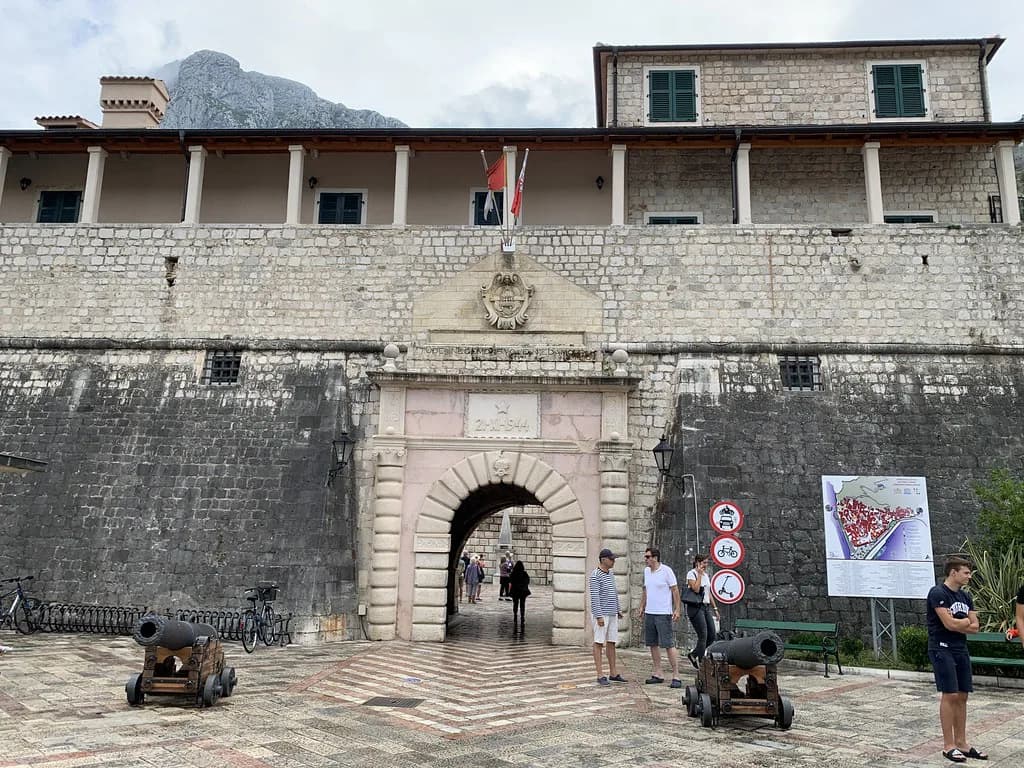
The Sea Gate, or Morska vrata, is the main entrance into Kotor's Old Town and the one most visitors walk through, set on the western side of the fortress walls with old cannons flanking the opening. You pass under it and arrive directly on the Square of Arms. This guide covers where the gate sits, what to look for in and above the arch, the other two gates, and how long to allow before you carry on into the lanes behind it.
Where the Sea Gate sits in Kotor's walls
Kotor's Old Town is a compact walled grid at the head of the bay, and the Sea Gate is its central and main entrance, built into the western stretch of the fortifications. The walls themselves run roughly 4.5 kilometres, vary between about 2 and 15 metres in thickness and reach around 20 metres in height, so the gate is the natural first contact with a much larger defensive circuit that climbs the mountain behind the town. Treat the gate as the doorway to the Old Town rather than a sight in its own right, and you will pace it correctly.
Because the gate faces the water side, anyone arriving from the bay, the bus station or the car parks reaches it first without needing to navigate the lanes. That makes it the obvious meeting point if your group splits up, since the Square of Arms is immediately inside. For the wider set of sights behind the walls, the Kotor attractions guide covers them one by one.

Getting to the gate from the bay side
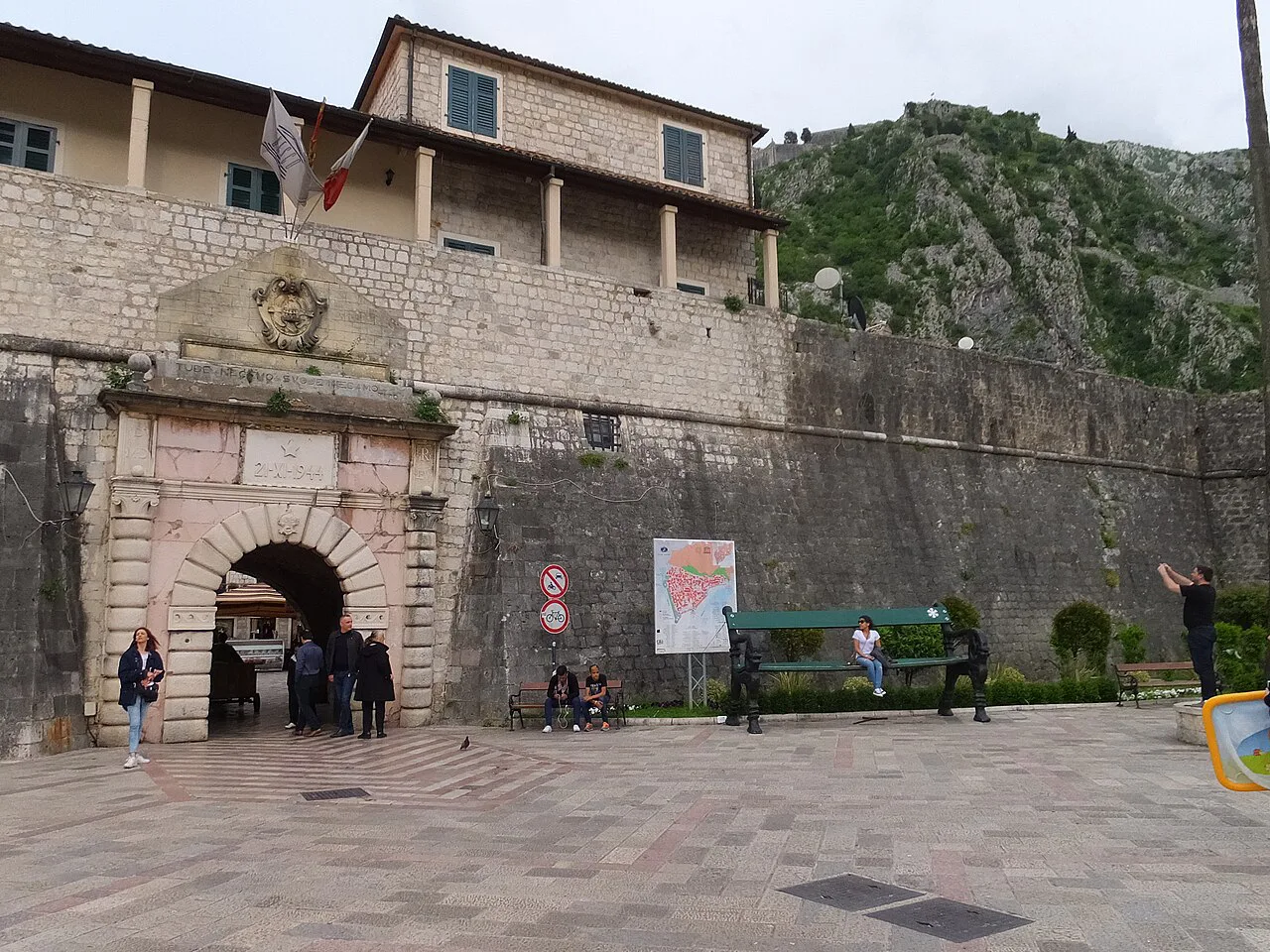
Approach from the shoreline promenade and you cross a short open stretch before the arch, with the walls closing in on either side; the old town and its marble-paved lanes begin the moment you are through. Walking from the bay side takes only a few minutes from the waterfront, and the gate is open all day, so there is no timing pressure on arrival. Trip.com's listing suggests 1–2 hours for the gate and its immediate surroundings.
If you are coming from further along the coast, the gate is the starting point of a flat shore walk that leaves the crowds behind within about five minutes. That makes it a sensible place to begin a morning on foot rather than a detour.

What to look for at the gate itself
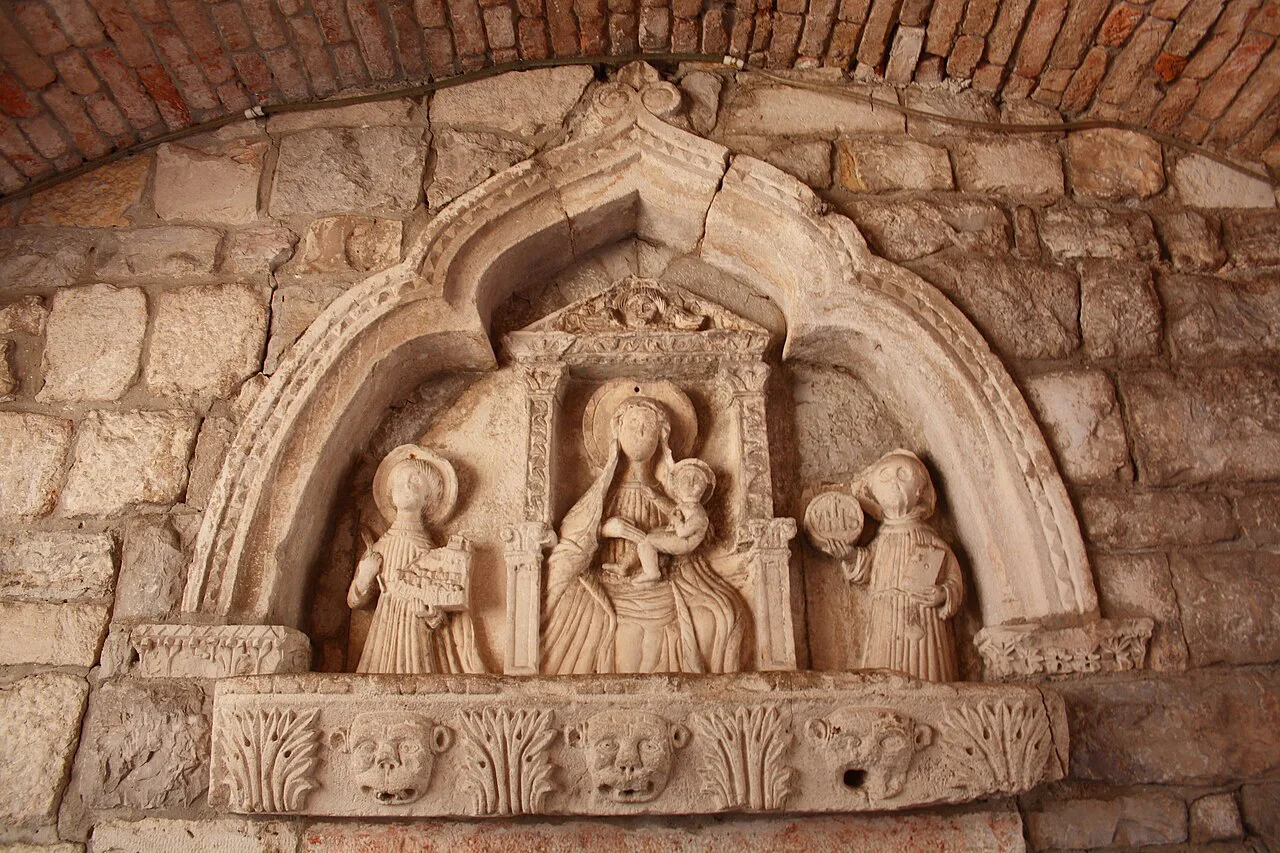
The gate you walk through was rebuilt in Renaissance style in 1555, and its arch carries more detail than most people stop for. Inside, look for a 15th-century relief showing the Virgin Mary with Christ, St Tryphon and St Bernard. Above the opening sits an inscription from former Yugoslav president Tito, rendered in English as a statement about not wanting what belongs to others and never surrendering what is one's own. It is worth a minute of your time before the lanes pull you on.
Stepping into the Square of Arms (Trg od Oružja)
Through the arch you land on the Square of Arms, also called Trg od Oružja, which takes its name from the arms and artillery once stored here for the town's defence. The clock tower is the first thing that catches your eye as you enter, and the square is filled with cafés, gelato stands and historic buildings, plus a medieval pillory once used for public punishment. The Clock Tower in Kotor leans as a result of an earthquake in the 1600s, a detail easy to miss if you are looking at the ground.
This is the moment to decide how to use the square: sit down for a coffee and watch the gate traffic, or push straight into the lanes while the light is good. Either way, the square works as your orientation point for the rest of the visit.
The other two gates: River Gate and Gurdić Gate
Kotor's walls have three gates in all, and knowing the other two helps you plan a circular walk rather than retracing steps. The River Gate, also called the North Gate, was built in the 16th century to mark the failure of an Ottoman assault in 1539 and stands at the northern edge of town overlooking the River Škurda, with a small bridge that makes a good spot for photographing the fortifications.
The Gurdić Gate, or South Gate, is the more unusual of the two: it is made up of three passages built in different periods and was once linked to the mainland by a drawbridge over the River Gurdić, with a bastion guarding the approach and a moat-like bridge leading in. If you only have time for one extra gate, pick this one for the fortification detail and the sense of entering a defended town.
How long to allow at the gate and beyond
Give the gate itself five to ten minutes if you want to read the relief, look at the inscription and take a photograph from the outside; the suggested 1–2 hours in the Trip.com listing covers the gate and its immediate surroundings rather than the whole Old Town. Add a further hour or two if you intend to wander the lanes and stop for coffee on the square, and a good half-day if you plan the wall walk. Cruise passengers often have a fixed window, so deciding on the wall walk at the gate saves you from doubling back.
The walls beyond the gate climb the mountain to the fortress high above the town, and that ascent is a separate commitment with its own time cost. Kotor Fortress (Tvrđava Svetog Ivana) is worth reading up on before you commit, particularly if the day is hot or your time ashore is short.
Nearby: St Tryphon's Cathedral and the Old Town churches
Within a couple of minutes of the square stands St Tryphon's Cathedral, built in 1166 in honour of the town's protector and holding a collection of frescoes and a treasury of jewels. It is the obvious next stop after the gate, and St Tryphon's Cathedral (Katedrala Svetog Tripuna), Kotor covers the interior, the treasury and the practical details of a visit.
Two more churches sit close by. St Luke's Church is a small building with oxidised stone walls, built in 1195, which served both Catholic and Orthodox worshippers between 1657 and 1812 before passing to the Orthodox Church. St Nicholas' Church, the Serbian Orthodox church a short walk away, was built between 1902 and 1909 on the site of an earlier Orthodox church that had burnt down, and is dedicated to the protector of sailors and travellers.
If you want to see the churches in sequence with the rest of the Old Town, the things to do in Kotor guide sets them alongside the squares, palaces and museums. The Maritime Museum of Montenegro, Kotor is the other indoor stop worth building into the same loop.
Nearby: the northern wall walk and the cats of the Old Town
Visitors are welcome to climb on the fortress walls and walk around the edge of most of the walled town for free, with benches at the top of the northern wall offering a place to sit and look back over the roofs and towers. That short section is a gentler alternative to the full climb to the fort and fits easily into an hour.
The Old Town's other small pleasure is its cats, which sit on windowsills, sleep on stone steps and gather in the Cat Park hoping someone will sit down. The Cats Museum Kotor, filled with cat art, postcards and stamps, charges 1 euro to enter and puts the money towards feeding the town's cats. At that price it is an easy add-on when you are already passing.
Should you enter Kotor through the Sea Gate?
Yes, if you want the simplest arrival: the Sea Gate puts you onto the Square of Arms with the clock tower in view and the cathedral a couple of minutes beyond. Allow five to ten minutes at the arch itself, then decide whether the day belongs to the lanes, the churches or the walls.
Use the River Gate or Gurdić Gate to leave by a different route and you turn a single entrance into a circuit of the walls. Carry water and check the wall walk's condition at the gate before committing to the climb.
Explore more Kotor guides
Frequently Asked Questions
Is there a ticket to walk through the Sea Gate?
No ticket is needed to walk through the gate and into the Old Town; the Trip.com listing describes it as open all day. The walls around the Old Town can also be walked for free along most sections, and specific charges apply only at individual museums and churches. Check at the entrance for anything that has changed.
Which gate should I use to leave the Old Town?
Leave by the River Gate on the northern side for the bridge over the River Škurda, or the Gurdić Gate to the south for the bastion and the old drawbridge approach. Both let you circle the walls rather than retrace your steps through the Sea Gate.