
Kotor Fortress (Tvrđava Svetog Ivana): What to See and How Long It Takes

Kotor Fortress is the walled complex on St John Mountain above Kotor Old Town, and the climb from the streets below to St John fortress at the top is the reason most visitors come. Allow a couple of hours for the round trip at an easy pace, more if you stop often, and treat the walk down as part of the job rather than an afterthought. This guide covers where the fortress sits, what you pass on the way up, and how to plan the climb around heat and fading light.
What Kotor Fortress is and where it stands above the old town
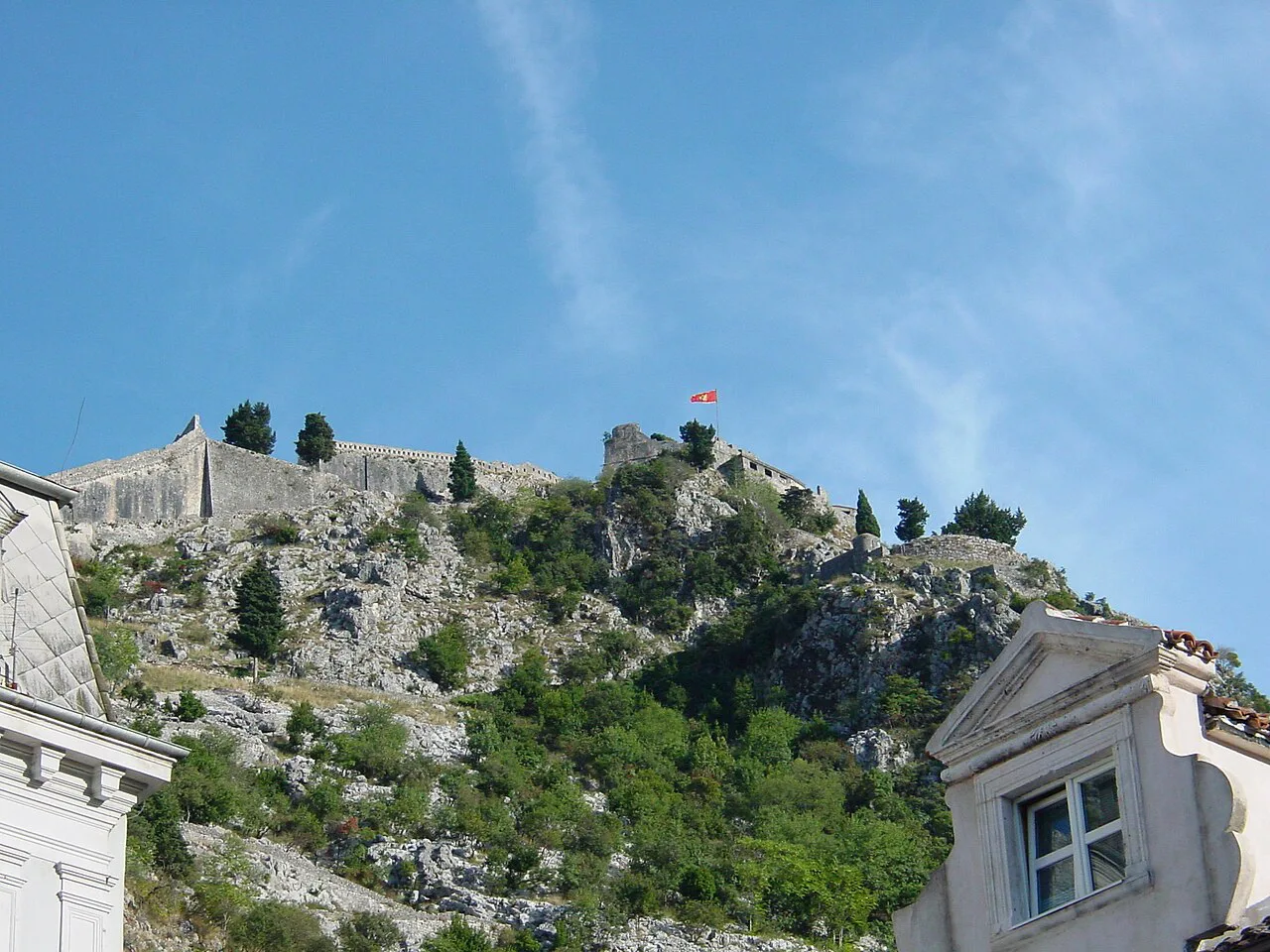
The fortress, known in Montenegrin as Tvrđava Svetog Ivana, rises on the steep mountainside directly behind Kotor Old Town, with the walls running up to St John Mountain and St John Castle. The old town sits at the foot of that slope, so the fortress is not a separate excursion you travel to but the ridge above the streets you are already walking. Seen from the water or from across the bay, the walls read as a long band above the rooftops; seen from the old town, they are the crag you look up at.
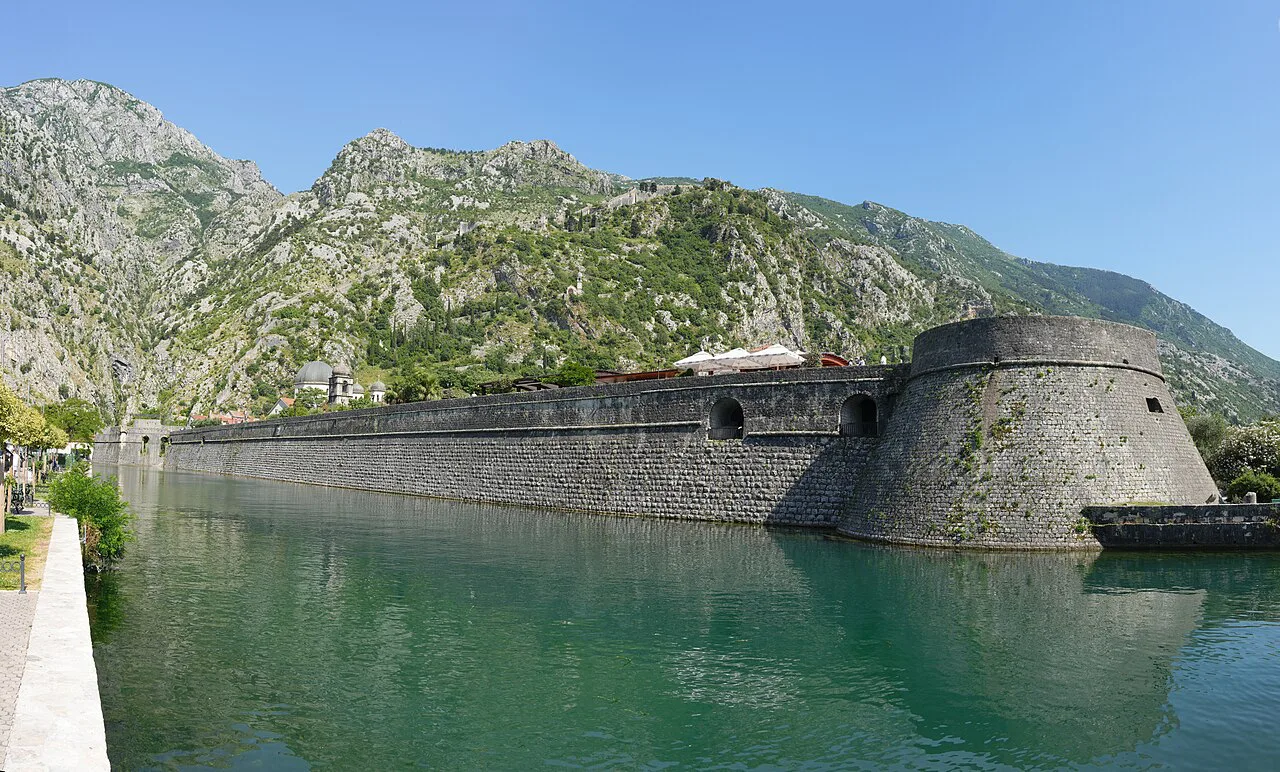
One detail worth knowing before you start is that the fortifications are not confined to the summit. The walls continue all the way around the old town at sea level, so part of what you are visiting is the ring you walk past on flat ground. That matters for planning: you can see a stretch of rampart without climbing anything, and save the ascent for when you have the time and the weather for it.

The walls in numbers: 4.5 km of ramparts and the bastions along them
The circuit of the city walls measures about 4.5 km, and bastions are spaced along the line for added strength. That figure covers the whole defensive ring, not just the path up to the summit, which is why the fortress rewards a bit of looking as well as a climb. If you only have time for one thing above the old town, the ascent gives you the views; if you have an hour to spare at street level, the lower walls give you the scale.
From high on the path, the shape of the old town becomes clear: a triangle pressed between the slope and the water. It is one of the better reasons to keep pausing on the way up rather than pushing straight for the top, since the outline only resolves itself once you have some height. Look back towards the rooftops each time the path turns.

How to reach the start of the climb from Kotor Old Town
The climb begins from Kotor Old Town, which is where you will be staying, eating or arriving by bus. Walking tours of the fortress typically start at the Sea Gate, also called Vrata od Mora, the main entrance through the walls on the waterfront side, and head into the old town before gaining the slope. Using the gate as your landmark is the simplest way to orientate yourself: from there you cross the squares and pick up the path above the rooftops.
If you want a fixed start time and someone else to handle the route, guided walking tours of the fortress run from the old town, and they are worth considering if you would rather not navigate the turnings yourself. Otherwise the approach is on foot and unglamorous: find the path above the town, follow it up, and keep the walls in sight. The old town itself is compact enough that you will pass several of its sights on the way, including the clock tower Kotor keeps at its centre and the St Tryphon's Cathedral, Kotor, both close to the main squares.
The climb itself: the steep opening stretch and the church of Our Lady of Remedy
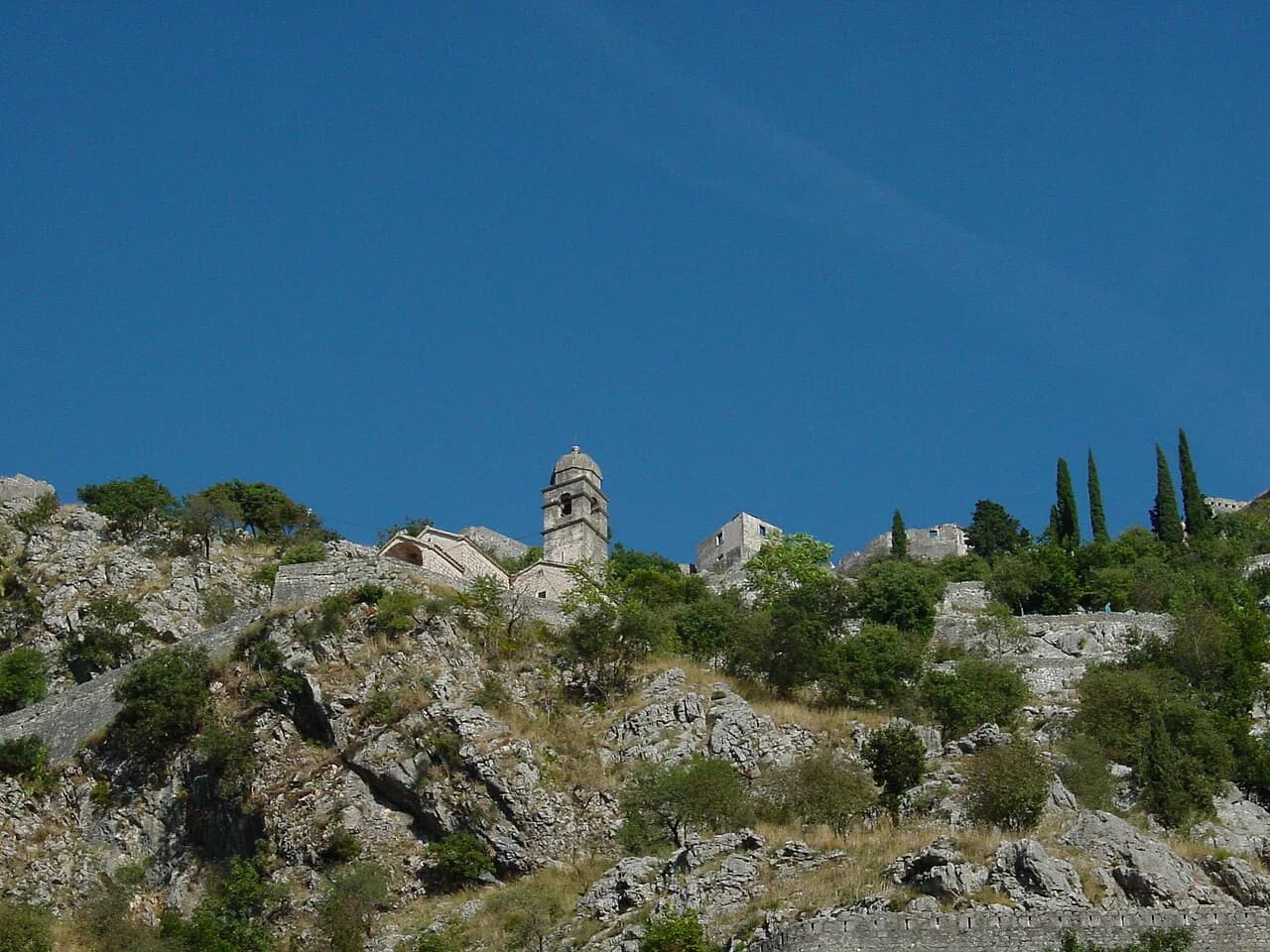
The path opens steeply, and the first sustained gain in height is the hardest part of the day. Take it slowly and let the views over the medieval old town below do the work of persuading you to stop. The Church of Our Lady of Remedy, Gospa od Zdravlja, is the first landmark you reach, sitting on the slope partway up.
The church building is closed, so do not plan on looking inside, but the ground just above it is the best early viewpoint on the route. From there the bell tower of the church stands in the foreground against the Bay of Kotor, which makes it the natural place to catch your breath and take the photograph you came for. Carry on past it when you are ready rather than treating it as the summit.
Continuing to St John fortress and the flag on the summit
Above the church the path keeps climbing past stretches of rampart, some of them visibly weathered, until it reaches St John fortress at the top. The Montenegrin flag flying there is the marker that you have arrived, and the view opens out over the whole bay, the ramparts below and the ridge to the west. Give yourself time at the top rather than turning straight round; the descent is quicker than the climb and there is no prize for hurrying it.
How long the ascent and descent take, and how to pace it
On one account the walker reached St John fortress about twenty minutes after leaving the town, but that reflects a fast, fit pace and should not be treated as a timetable. Most people need considerably longer, with stops at the church and the viewpoints, and the descent takes its own time on loose stone. Plan for roughly half a day if you want the climb to be enjoyable rather than an endurance test, and start earlier than you think you need to.
Pacing is mostly about water and rest rather than speed. Break at the church, break again wherever the path flattens, and eat something before you start. If you are unsure how your legs will cope, treat the church as a trial run: reach it, judge how you feel, and decide there whether to continue to the top.
Ramparts in poor repair and bastions closed to visitors
Not every part of the fortification is open or safe. Sections of the ramparts are in a poor state of repair, and some bastions are closed to visitors, so the route to the summit is not a walk around the entire wall circuit. Stick to the path that is in use rather than scrambling onto damaged stretches for a better angle.
When to go: heat, light and the slippery stones on the way down
Heat is the main constraint on the climb. Late in the day, once the worst heat has passed and the sun is going down, is a more comfortable time to start up, and it gives you the best light over the bay. The trade-off is that you must leave enough daylight to get down: the stones underfoot are slippery, and descending in the dark is where people come unstuck. Decide your turning point at the top before the light starts to go.
What to wear and carry for the climb
Wear shoes with grip and leave sandals for the old town; the path is stony and worn, and the descent is harder on the feet than the climb. Bring more water than feels necessary and a layer for the wind at the top, where the exposure is greater than in the streets below. A light jacket also helps if you stay up for sunset and walk down as the temperature drops.
The walls at night, seen from the bay
If you would rather not climb at all, or want a second look after coming down, the illuminated walls are worth seeing from across the water. At night the fortress takes on a different appearance entirely, and with the reflection in the calm water of the bay it becomes a sight in its own right. That is an evening's plan rather than a substitute for the climb, but it rounds off the day cheaply.
Nearby: the Sea Gate and the old town at the foot of the walls
Back at sea level, the Sea Gate is the natural place to start a tour of the old town, and the squares behind it hold most of what else is worth seeing in Kotor. The St Tryphon's Cathedral, Kotor, is the principal church, and the maritime museum Kotor is the pick for anyone interested in the bay's sailing past. If you are travelling with children or want something smaller, the Cats Museum, Kotor, is a short stop that pairs well with a slow afternoon.
The church of St Luke sits centrally and is easily folded into a wander, and it rewards a look if you are interested in how the town's places of worship sit among the streets. Beyond the walls, the wider selection of things to do in Kotor covers the rest of the town and the water.
Where to check current entry arrangements before you set out
Details of entrance fees, opening hours and any seasonal restrictions for the fortress path are not set out here, so check the position with the town's tourist office or at the point where the path begins before you commit to an evening start. That is especially worth doing if you are planning the climb for sunset, since a late arrival at a closed gate would waste the walk up.
Climb to the church or go all the way to the flag?
Treat the church of Our Lady of Remedy as the minimum and St John fortress as the goal. If the heat is against you or the day is short, turn back at the church with a clear view over the old town and save the summit for another visit; if you have water, daylight and steady shoes, carry on to the flag. Either way, leave the descent enough light and start down before your legs tell you to. For the rest of the town below, see the Kotor attractions guide.
Explore more Kotor guides
Frequently Asked Questions
How long is the climb to Kotor Fortress?
One walker reached St John fortress from the old town in about twenty minutes at a fast pace, which is not a realistic target for most visitors. Allow a couple of hours for the ascent and descent together, with stops at the church and the viewpoints, and add more time for photographs or a long rest at the top.
Do you need a ticket for Kotor Fortress?
Entrance fees and any restrictions are not set out here, so ask at the tourist office or where the path begins before you start up. Do that before committing to a late-afternoon or sunset climb, when a closed gate would cost you the walk.