
Church of Saint Luke, Kotor: What to See and How Long to Allow

The Church of Saint Luke (Crkva Svetog Luke) needs about 15 to 20 minutes, and most of that is spent looking down at the floor and up at the dome rather than reading labels. It stands on Greca Square in the northeastern quarter of Kotor old town, a short walk from the Sea Gate, and it is small enough to fold into any old-town circuit without cutting anything else. This page covers where the church sits, how to reach it on foot, the three details worth stopping for inside, and what to pair it with nearby.
What the Church of Saint Luke is and where it stands
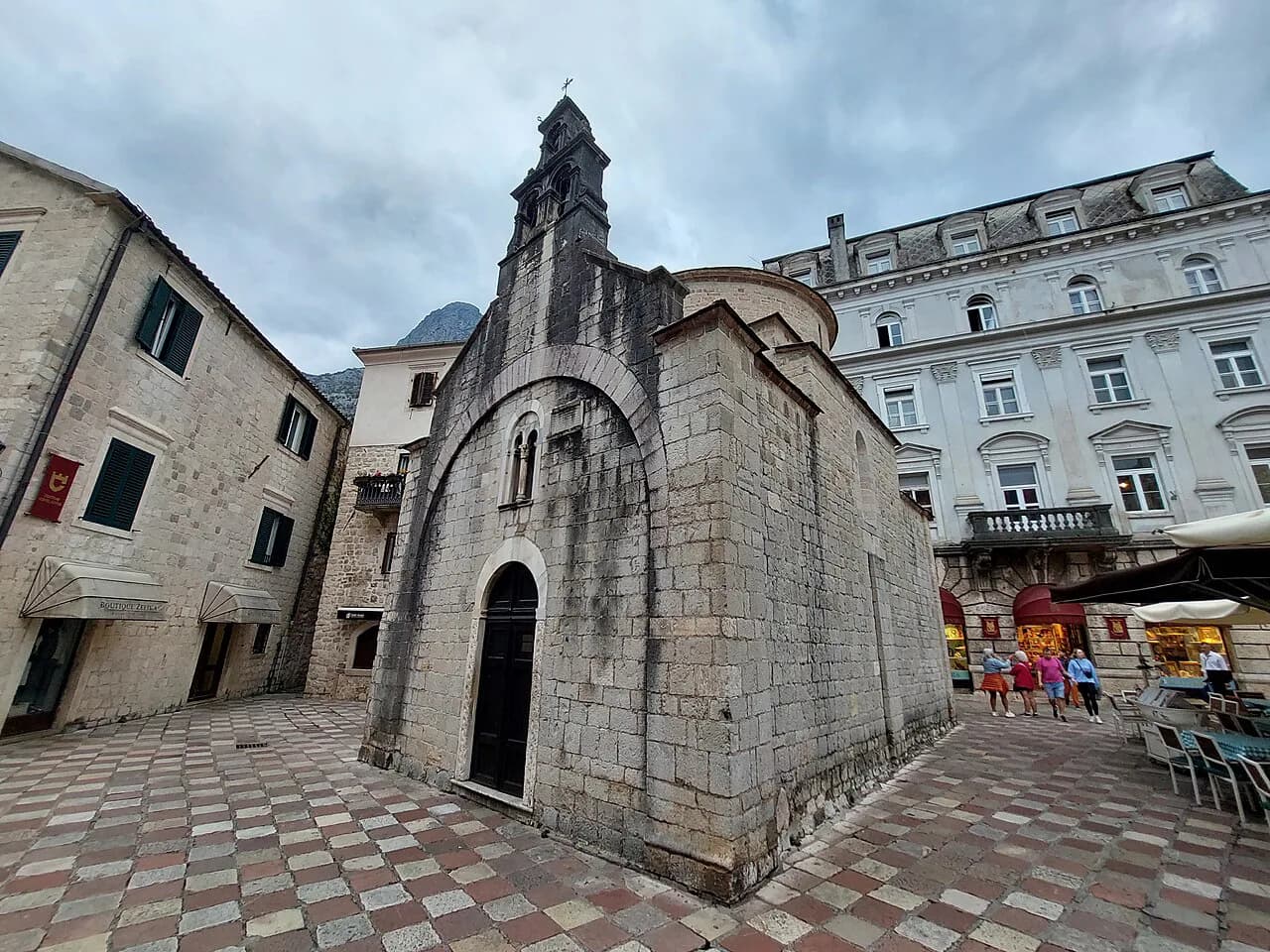
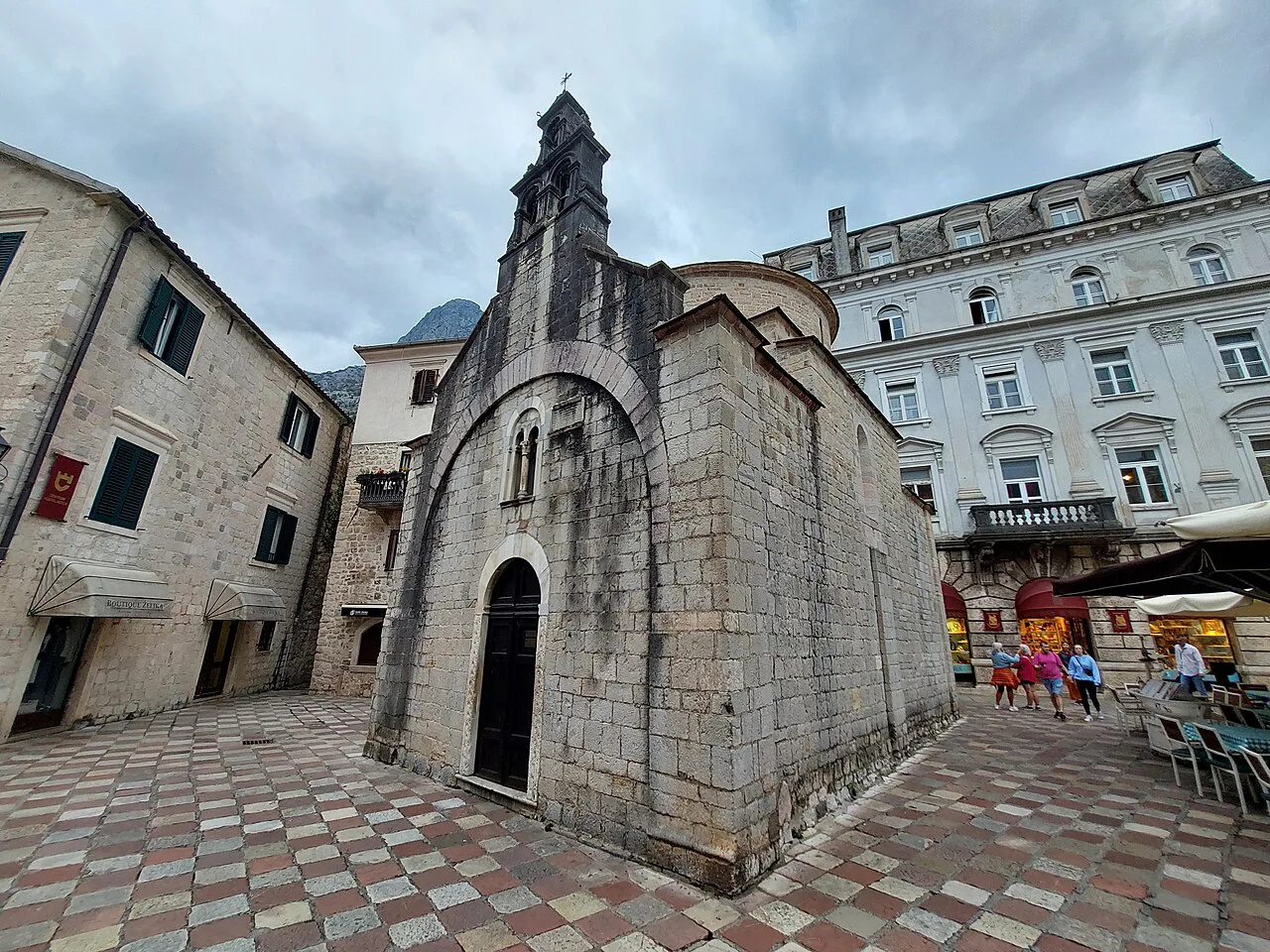
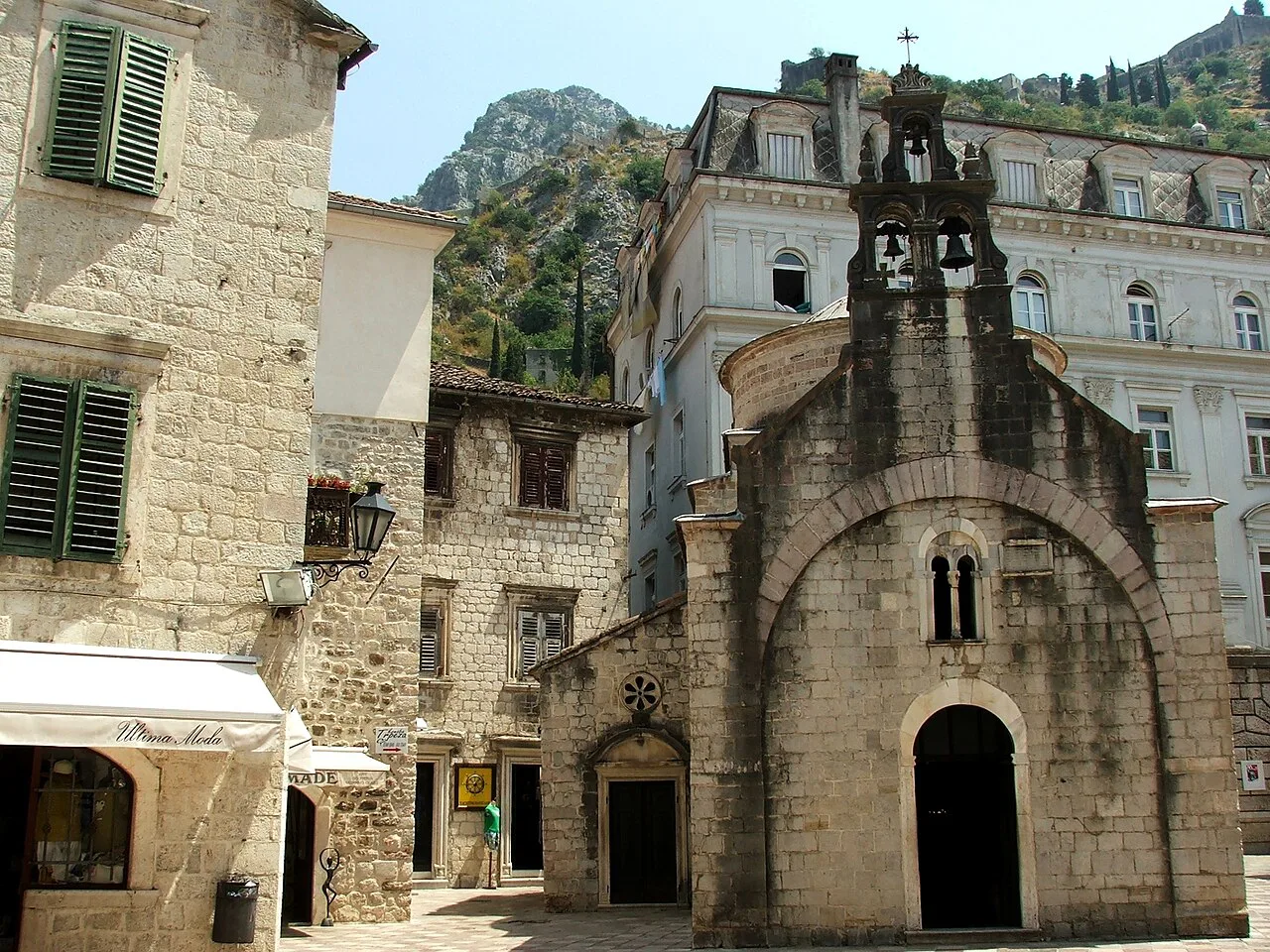
The church is a single-nave building with a central dome, founded in 1195 by a local citizen, Mauro Kacafrangi, during the rule of Stefan Nemanja. It faces Greca Square (Piazza Greca) in the northeastern part of the walled town, inside the UNESCO-listed old city of Kotor. Treat the square rather than a street number as your landmark: signposting inside the lanes is patchy, but the church front and its bell gable are unmistakable once you reach the square.
Romanesque and Byzantine features sit side by side here, along with Slavic elements, and a Chapel of Saint Spyridon was added in 1747 with a baroque bell gable around the same time. Because the building is compact, the whole exterior reads quickly; the reward is in the detail rather than the scale.

How to reach Greca Square on foot from the Sea Gate
Enter the old town through the Sea Gate on the waterfront, then follow the lanes northeast towards Greca Square; the church sits on the square itself. Distances inside the walls are short, so the walk from the gate takes only a few minutes at an unhurried pace, and you pass several of the town's other sights on the way.
The old town is pedestrian, so the church is reached on foot whatever your transport to Kotor. If you are working through the main sights in one block, mapping the Kotor attractions guide before you set off is worth doing, because the lanes double back and a little planning saves repeated walking.

The two altars: Catholic and Orthodox worship under one roof
Look for two altars, one Catholic and one Orthodox, which is the arrangement that makes this church unusual. The building was founded as a Catholic church, and in 1657 the Venetian authorities allowed Orthodox refugees to worship inside, creating a second altar beside the first.
Both faiths used the church together from 1657 to 1812, after which it passed to the Orthodox church and remains an active Serbian Orthodox church today. Stand at the end of the nave to see the altars together, which is the clearest way to read the arrangement.
The floor of tomb panels and the burials held in the church
The worn stone floor is made entirely of tomb panels, and burials took place inside the church itself until the 1930s, in collective graves beneath the paving. Estimates put the number interred there at around 3,000, which explains why the floor is the detail most visitors remember.
Look at the panels rather than walking straight over them: the inscriptions and worn edges are the point, and the floor is the reason to slow down in an otherwise quick visit.
Fresco fragments and the iconostasis
Fragments of the original frescoes, painted soon after construction, survive on the south wall, so turn to that side before you leave. The iconostasis is a 17th-century work by Daskal Dimitrij, founder of the Boka Kotorska painting school, and it is the piece to look for at the east end of the nave.
The building also survived the region's major earthquakes without significant damage, including the 1979 event that damaged much of the town, so the structure you are looking at is largely the medieval one. That is a useful reminder to look up at the dome and the supporting arches, not only down at the floor.
Romanesque and Byzantine detail to look for outside
Walk round to the rear, where a semicircular eastern apse sits under a semi-dome, with paired arched windows divided by a mullion. At the western front the door is recessed beneath a larger arch, which makes a good comparison with the eastern end.
Inside, the circular dome rests above a square space with arches braced by pillars, and the pendentives between them carry the base of the dome. None of this takes long to see, but knowing where to look turns a two-minute pause into a proper visit.
How long the church needs, and pairing it with the old town
Give the church 15 to 20 minutes: a few minutes outside, ten minutes inside on the floor, the south wall and the altars, and the rest on the dome and apse detail. Add five minutes if you want to read the tomb panels closely.
Greca Square works well as the pivot of an old-town walk, because the lanes around it put you within a few minutes of St Tryphon's Cathedral (Katedrala Svetog Tripuna), Kotor, the Clock Tower and the town's museums. Build a two-to-three-hour loop: church first, then the cathedral, then the squares, then a museum if it is raining.
Two small museums sit in the same lanes and suit a shorter attention span than the Kotor Fortress climb: the Maritime Museum of Montenegro, Kotor occupies a former palace and covers the bay's seafaring past, while the Cats Museum, Kotor is a quirky stop of a different kind.
Opening hours and entry: what to confirm before you go
The church is typically open to visitors during daytime hours, and those hours vary between summer and winter seasons, so check the times locally on the day you plan to visit. Entry is generally free, but do not build an itinerary around a fixed opening time.
As an active Orthodox church, it is a place of worship first: dress with shoulders and knees covered and keep voices low while services are under way. If you are visiting on a cruise turnaround day, go early, because the old town lanes and squares fill quickly from late morning.
Nearby: St Tryphon's Cathedral, the Sea Gate and the fortress walls
St Tryphon's Cathedral, Kotor sits a few lanes away and is the obvious next stop, with a longer visit than Saint Luke's and a different scale entirely. The Clock Tower and the Sea Gate are on the route back to the waterfront, which makes a natural end to the loop.
If you want the view over the rooftops you have just walked through, the Kotor City Walls climb from the old town to the Church of Our Lady of Remedy (Gospa od Zdravlja), Kotor, and that ascent is a separate outing with its own time budget. Leave it for a cooler hour rather than tacking it onto a church visit.
Is Saint Luke's worth the ten minutes?
Yes, but for specific reasons: the two altars, the tomb-panel floor and the south-wall fresco fragments, all inside a building you can see properly in a quarter of an hour. It is a poor choice if you want a grand cathedral experience, and an excellent one if you want an old-town interior that still feels used rather than curated.
Slot it into a two-to-three-hour old-town loop on a weekday morning, dress for a working church and confirm the day's opening times on arrival. That sequence gets you the church, the cathedral and the squares without racing, and leaves the walls climb for when you have the legs for it.