
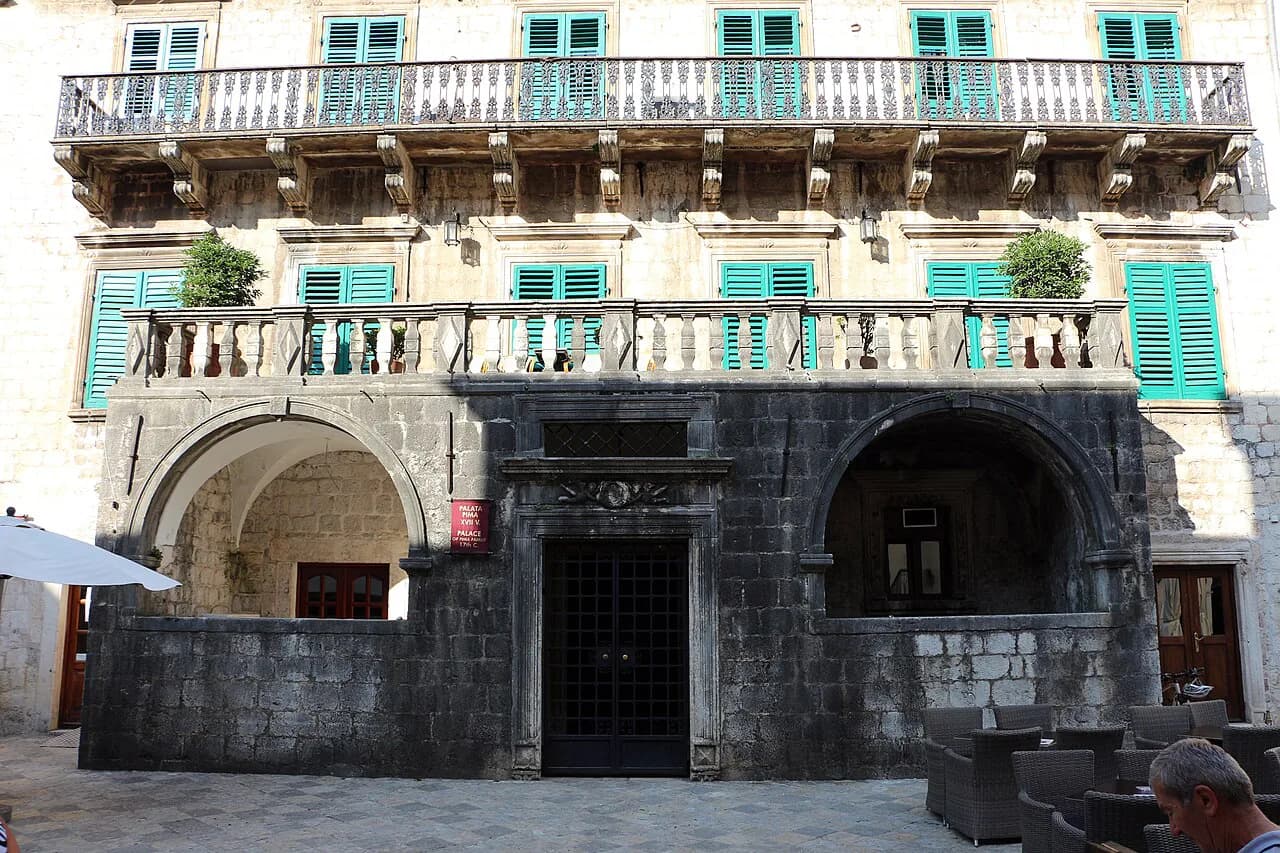
Pima Palace (Palata Pima), Kotor: A Visitor's Guide

Pima Palace (Palata Pima) is a 17th-century palace in the centre of Kotor's old town, built by the Pima family and standing on a small square rather than on one of the main thoroughfares. Treat it as a five-minute stop folded into an old-town walk: what you see from the lane is the facade, and the reward is looking up.
This guide covers how to steer to the square, which architectural details to look for, how long to allow and what to see next in the same walk, with no pretence that the building is a ticketed museum. It slots naturally into a wider day around the Kotor attractions guide if you are working out what else to see.
What Pima Palace is
The palace is a townhouse of the 17th century, built for the Pima family and set on a little square in the heart of the old town. Photographs of the building describe it as a 17th-century palace on a small square in the centre of Kotor, which is the most useful fact for planning: it is a piece of the residential streetscape, not an isolated monument behind a gate.
It was built in the Renaissance style after the 1667 earthquake, and the windows and upper balcony are the details singled out in descriptions of the facade. That dating matters for how you read the building: you are looking at a post-earthquake rebuild, with the ordered Renaissance form below and the balcony detail above.

Where to find it in the old town
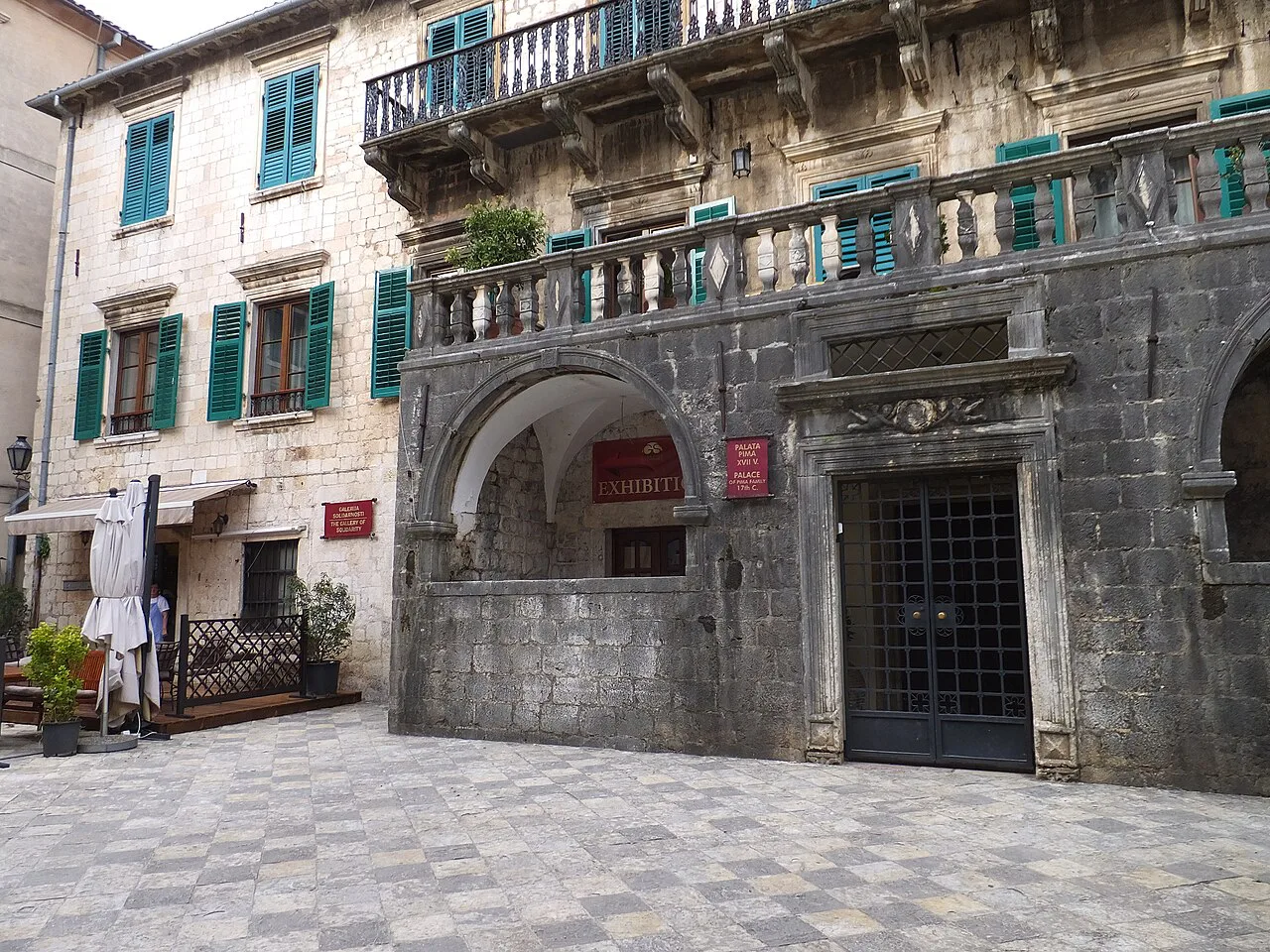
Aim for the small square rather than a street address. The palace sits on a small square in the centre of the old town, so the wayfinding trick is to keep an eye out for a widened pocket of paving between the lanes off the main squares, then look up at the stonework. The square itself is the landmark; the palace is the wall on it.
Come in through the main old-town lanes and work inward rather than trying to plot a precise route, because the palace is on a side square rather than a main thoroughfare. If you are building the walk around the town's headline sights first, the Kotor attractions guide sets out the stops you will pass on the way, which makes the palace a natural pause between them.
A practical sequence is to start from the Clock Tower and walk away from the waterfront, drifting toward the quieter interior lanes where the small squares open up. The Clock Tower makes a clear first landmark, and from there you are only a few turns from the palace square.

What to look at on the facade
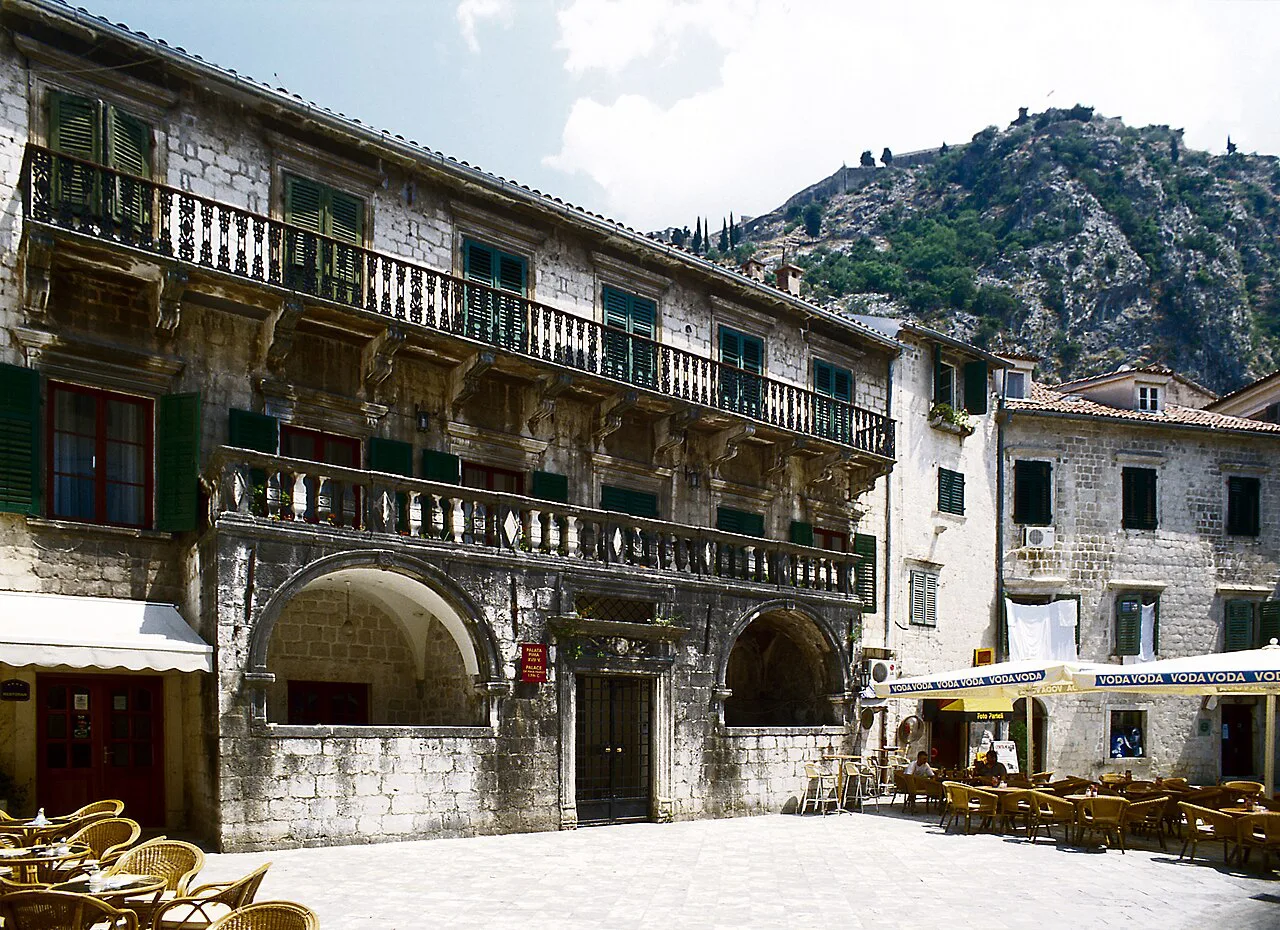
Look up. The Renaissance form from the post-earthquake rebuild gives the palace its proportions, and the upper balcony and windows are the details worth your attention rather than the ground-floor shopfronts or doors. Stand back as far as the square allows to see the balcony in context, because up close it is cut off by the roofline of the lane.
The stone is the other thing to register: photographs of the palace show a solid stone front in the old town's palette, which is why it reads as domestic architecture rather than a church or a public building. Give it a slow look rather than a snapshot, then move on; what you see from the square is the facade.
How long to allow and when to come
Allow five minutes, ten if you want photographs without people crossing the square. The palace is a stop on a walk, not a destination in itself, so it fits between larger sights rather than replacing one. If you have only half a day in the old town, slot it in on the way to the cathedral rather than making a detour for it.
Timing works the same way as the rest of the old town: the lanes are busiest when a large number of visitors are in port, and quieter early and late in the day. Because the palace is seen from an open square, you can move on the moment it fills up, which makes it a low-risk stop.
Nearby sights on the same walk
St Tryphon's Cathedral (Katedrala Svetog Tripuna), Kotor is the obvious next stop, a short walk from the palace square and the old town's principal church. Its own page deals with the interior, the relics and the tower, so treat this as a hand-off rather than a summary.
The Maritime Museum of Montenegro, Kotor is another good pairing if you want an indoor hour after the lanes, and the Kotor cats museum sits close by for something smaller and quirkier. Both are the kind of stop that fills a gap between churches and walls without eating the afternoon.
If you want the climb, Kotor Fortress (Tvrđava Svetog Ivana) starts from the old town's edge and takes far longer than the palace stop; save it for a morning with cooler air. For churches closer to hand, the Church of Saint Luke, Kotor and the Church of St Nicholas (Crkva Svetog Nikole), Kotor are both inside the walls and easy to fold into the same loop.
Practical notes for the visit
What you see from the public square is the facade, and that is the core of a visit. If you want to know whether the interior can be entered, ask at the tourist information desk in the old town on the day rather than assuming an arrangement.
Wear shoes that cope with polished stone, because the lanes and squares around the palace are smooth and slippery when wet, and carry water in summer if you are combining the stop with the walls. The old town is compact, so a palace, a cathedral and a museum fit comfortably into one unhurried half-day. Check current opening arrangements for the cathedral and museums on the day, since these change with the season.
Should Pima Palace be on your old-town walk?
Yes, as a five-minute pause rather than a headline sight. Find the small square in the centre of the old town, look up at the facade, the windows and the upper balcony, and then carry on to the cathedral or the museum with the rest of your morning intact.
Build the walk around the sights that need time, and let the palace be the moment you slow down between them. If you want the town's full set of stops laid out in order, work from the Kotor attractions hub and slot the palace in where the lanes narrow.
Explore more Kotor guides
Frequently Asked Questions
Is Pima Palace free to visit?
The facade is seen from a public square in the old town. If you want to know whether the interior can be entered or whether any charge applies, ask at the tourist information desk in Kotor on the day.
How do I find Pima Palace in Kotor's old town?
Head for the small square in the centre of the old town rather than a street address. Once you reach a widened pocket of paving between the lanes, look up: the palace is the stone front with the upper balcony facing the square.
How much time should I give Pima Palace?
Five minutes is enough, or ten if you want photographs. It works best as a pause on a walk between the cathedral, the museums and the walls rather than a sight you plan a trip around.