Museums in Kotor: What Each One Holds and How Long to Allow
A practical guide to Kotor's museums, from the Maritime Museum to the Cats Museum and the Lapidarium, with what each collection holds and where to find it.
On this page
Kotor's museums fit comfortably into one Old Town afternoon if you pick two or three, and the strongest single choice is the Maritime Museum on the Square of the Boka fleet. The town's other collections are smaller and more specialised, while the Perast Museum and the Risan mosaics sit along the bay and need separate transport. This guide covers what each museum holds, the square or palace it occupies, and how long to allow, so you can plan a route rather than wander between closed doors.
Almost everything in the Old Town sits within a few minutes' walk of the Sea Gate, which makes a loose circuit practical: Maritime Museum first, then the Lapidarium on Cinema Square, then the Gallery of Solidarity on Flour Square. Use the Kotor map to fix the squares before you set off, because the museum buildings are named after their squares and palaces rather than signposted from the gates.
What museums you can visit in Kotor and around the bay
The Museums of Kotor institution groups several sites under one body: the Perast City Museum, the Lapidarium in the Church of St Michael, the Gallery of Solidarity and St Paul's Church, all in Kotor, plus the Roman mosaics at Risan. Knowing the grouping helps because the buildings are scattered rather than gathered in one complex.
Two further museums sit outside that group. The Maritime Museum occupies the baroque Grgurin palace in the Old Town, and the Cats Museum has its Kotor branch on Trg Gospa od Anđela in Stari Grad. For a wider set of things to see beyond museum walls, the Kotor Attractions hub lists the town's other named sights.
Plan on two Old Town museums plus a church interior as a realistic half-day, or three if you move briskly and skip the longer labels. Save Perast and Risan for a separate run along the bay, since each needs its own travel time.
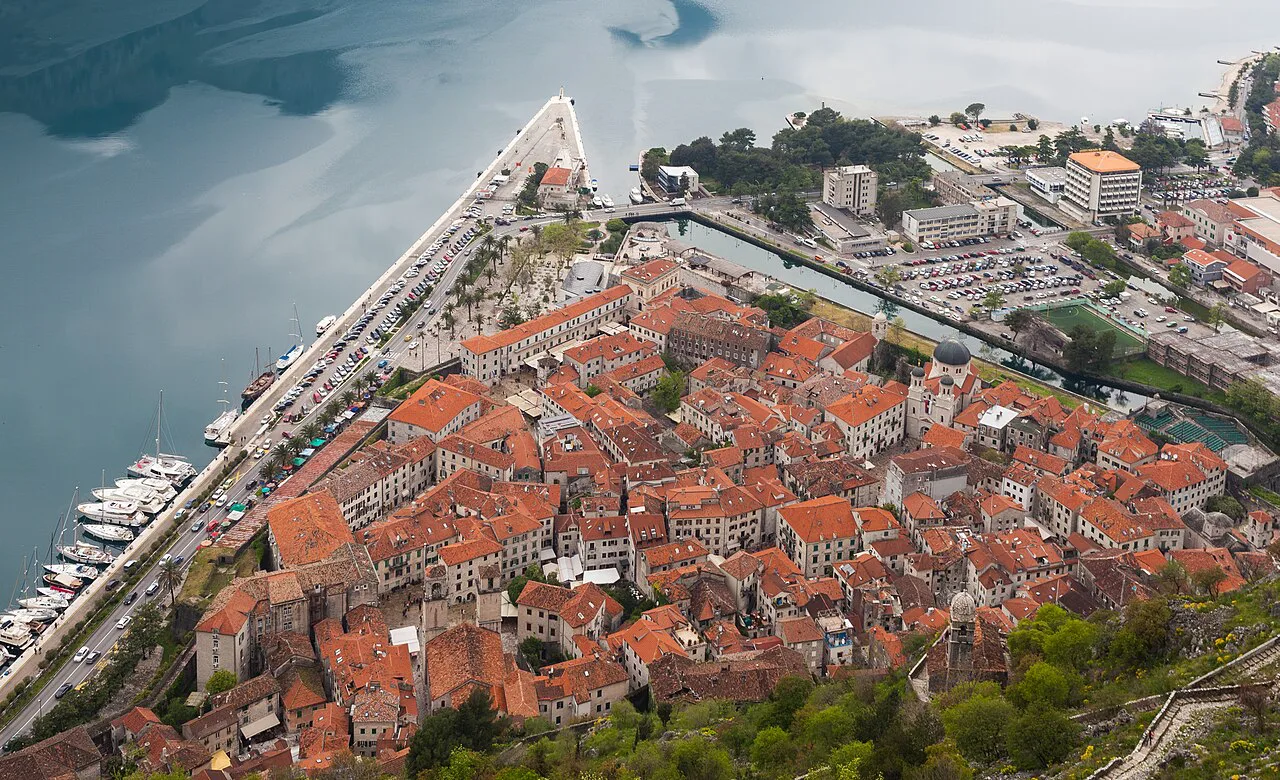
Kotor Maritime Museum: the Grgurin palace and the Boka fleet
The Maritime Museum is the Old Town's most substantial collection, housed in the baroque Grgurin palace and reached from the Square of the Boka fleet. Two small cannons stand beside the entrance to the medieval palace, marking the seafaring theme before you are through the door.
Inside, the displays run from portraits of captains to models of old galleys and sailboats, navigational instruments, maps, engravings and watercolours of the coastal towns. Six bronze relief tablets record key events and figures from the town's maritime past, and an ethnographic collection covers the 16th to 18th centuries. A copy of the oldest document about navigation in the Boka area, dated 1168, is kept here.
Allow around an hour if you read the main panels, or 45 minutes for a brisk pass through the captain portraits and ship models. It is the one museum here where the collection rewards slower reading, so put it first in the day when your attention is freshest.
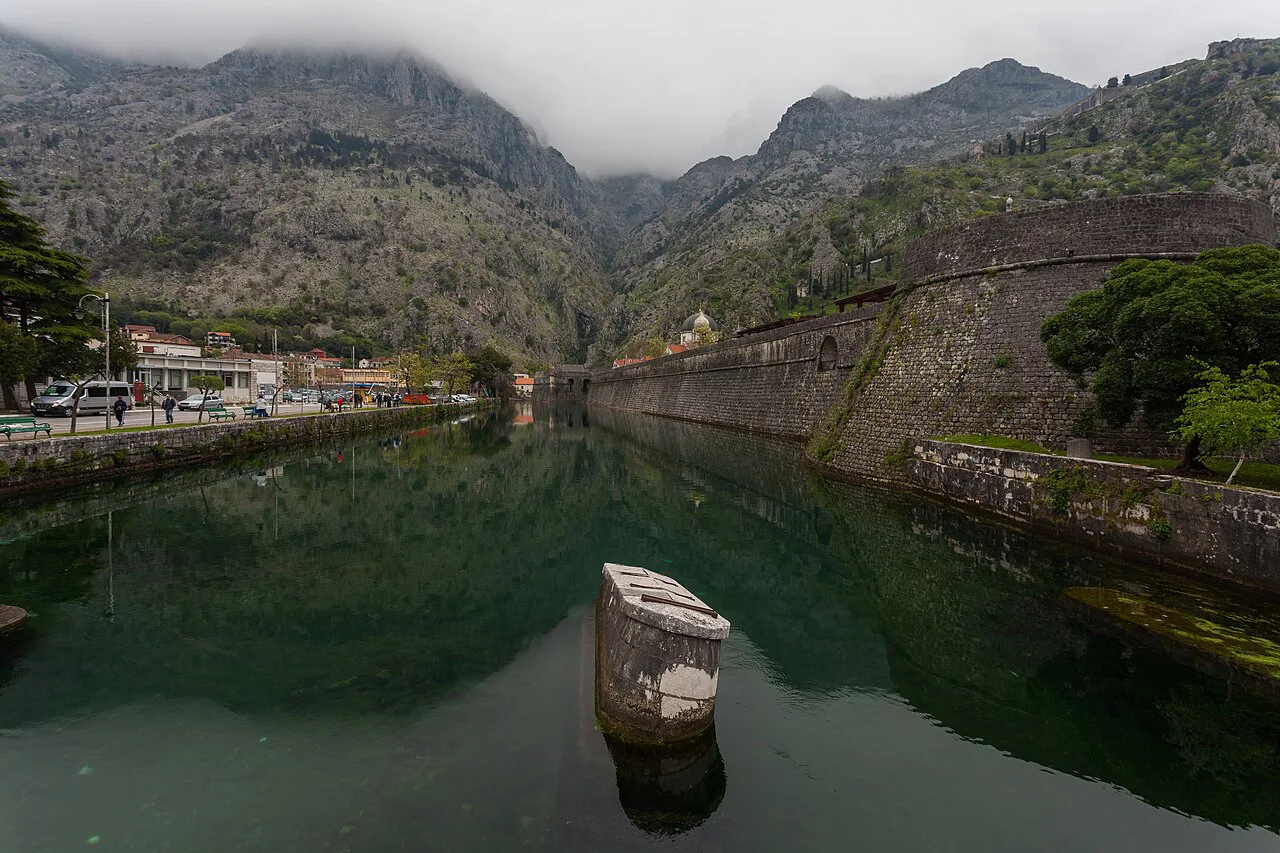
Finding the Maritime Museum inside the Old Town
The museum's address is the Square of the Boka fleet, so navigate by the square rather than by street numbers. From the Sea Gate, walk into the Old Town and ask for the square by name. The museum is in the Grgurin palace, with two small cannons beside its entrance.
If you are coming from the River Gate side, cross the Old Town on foot rather than looping around the walls, which adds distance for no gain. A Kotor walking tour route through the main squares will pass close to the museum and help you fix the layout for the rest of the day.
Lapidarium in the Church of St Michael on Cinema Square
The Lapidarium displays Kotor's collection of stone sculpture in the Romano-Gothic Church of St Michael on Cinema Square. The pieces span the Classical and Late Classical periods through early Christianity, the pre-Romanesque and Romanesque, Gothic, Renaissance and Baroque.
Look for the 1st-century AD portrait of the Roman Emperor Domitian, the Illyro-Roman cone-shaped tombstones from the 2nd to 3rd centuries AD, and the Agnus Dei relief among the early Christian fragments. Partly reconstructed stone church furnishings from the pre-Romanesque period and a run of decorated capitals are also on show, along with coats of arms of Venetian governors and Kotor and Perast noble families.
This is a single-room collection, so 20 to 30 minutes covers it well unless you are drawn to the carved capitals. The church setting makes it a natural pairing with the town's other religious interiors, which the guide to churches in Kotor sets out.
St Paul's Church: from monastery to exhibition space
St Paul's Church was built in 1263 by Pavle Bari as a legacy, with a Dominican monastery established alongside it, male at first and female from the 16th century. Blessed Osanna of Kotor died there in 1565, walled up in her cell.
The interior was divided into two levels during Napoleon's occupation between 1807 and 1814, and the building later served as a prison in the Second World War and again as a women's prison in 1948. It has since been adapted as a single exhibition museum space for the rich collection of stone monuments from the town Lapidarium, and as a multi-purpose space for exhibitions, concerts and meetings.
St Paul's is listed by the Museums of Kotor as a multimedia hall, and its stone monuments form part of the town Lapidarium's collection, so treat it as a short stop of 15 to 20 minutes rather than a separate fixed collection. Check what is on before you build it into a route.
Gallery of Solidarity in Pima Palace on Flour Square
The Gallery of Solidarity holds more than 400 works — paintings, graphics, drawings, sculptures and photographs — collected from across the former Yugoslavia after the 1979 earthquake. Since 2011 the collection has been displayed on the ground floor of the Renaissance-Baroque Pima palace on Flour Square in the Old Town.
For visitors who have had their fill of stone and maritime instruments, this is a change of register: more than 400 works of modern and contemporary art in a palace interior. Allow 30 to 40 minutes.
Perast Museum: Captain Vicko Bujović's palace
The Perast Museum occupies Captain Vicko Bujović's 1694 palace, described as one of the most renowned 17th-century secular buildings on the eastern Adriatic. The museum was established by municipal decision in 1937, and its holdings were largely built from donations by Perast families in the late 19th and 20th centuries.
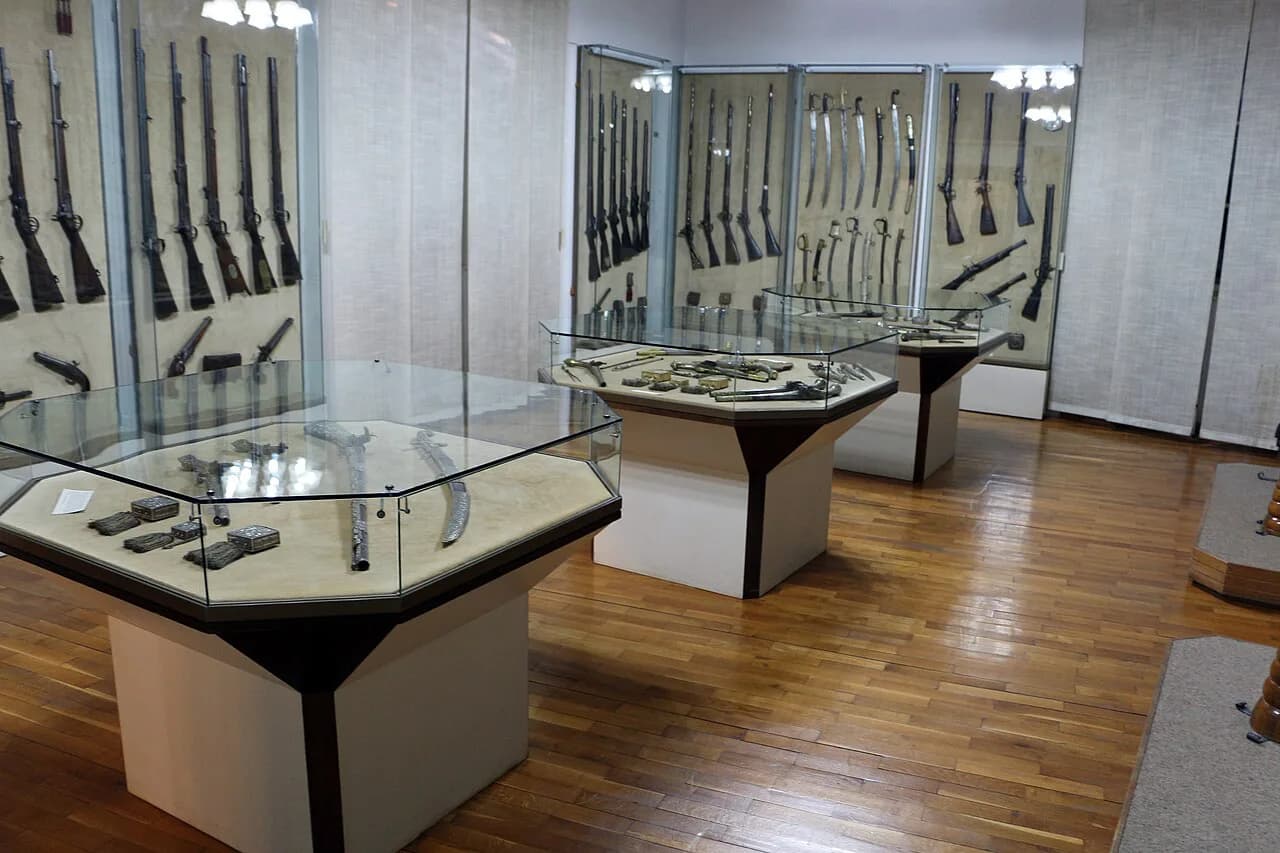
The collection covers portraits of notable Perast residents, weapons and other objects from the town's past, and archival material from the mid-15th century onwards. The Visković Family Memorial has formed part of the holdings since 1970.
Perast sits along the Bay of Kotor rather than in the Old Town, so this is a half-day outing rather than a stop on a town walk. Allow about 40 minutes inside and factor in the coastal journey each way.
Cats Museum on Trg Gospa od Anđela: what it covers and what it costs
The Kotor branch of the Cats Museum sits on Trg Gospa od Anđela in Stari Grad, and entry is 1,00 €. The collection gathers antique and vintage material about cats, dated between the 16th century and 1970, including old books, prints, manuscripts, coins, medals, advertising and period postcards, newspapers and magazines.
The works lean towards Italian, Spanish, Austro-German and French material, with items from other countries shown alongside. It is a small, single-theme museum, so give it 20 to 30 minutes, and it suits a slot when heavier collections have tired you out. For more on the town's feline associations, see the Kotor cats guide.
Risan Roman mosaics: the villa urbana floors outside the Old Town
The Roman mosaics at Risan preserve the remains of a villa and its floor mosaics, dated to the 2nd century AD. The villa was a villa urbana, a type of city villa noted for its floor decoration and treated as a representative example of Roman provincial architecture on this part of the Adriatic coast.
The complex extends to 790m², with a rectangular villa laid out symmetrically: a central rectangular space separated by a corridor, around which the interconnected rooms are arranged. Allow 30 to 40 minutes on site, plus the drive or boat along the bay to reach Risan.
How long each museum takes and how to fit three into a day
A workable Old Town day runs: Maritime Museum first thing for around an hour, the Lapidarium at 20 to 30 minutes, then the Gallery of Solidarity at 30 to 40 minutes, with St Paul's and the Cats Museum slotted in if time allows. That is four stops with walking between them and a break, which fits a comfortable half to two-thirds of a day.
If you have only an afternoon, pick the Maritime Museum plus one other; if you want breadth over depth, swap the Maritime Museum for the Cats Museum and the Lapidarium, which are quicker. Keep Perast and Risan for a separate bay day.
Ticket prices and opening hours to confirm before you set out
The Museums of Kotor site includes a page headed admission fees and opening hours, and the only individual entrance fee confirmed here is the Cats Museum's 1,00 €. Check current admission and opening times on the Museums of Kotor site and with the Maritime Museum before travelling.
Which museums to choose on the day
Choose the Maritime Museum as your anchor, add the Lapidarium on Cinema Square and the Gallery of Solidarity on Flour Square for a compact Old Town circuit, and treat the Cats Museum as the light, cheap finish. Perast and Risan are their own trip along the bay.
Confirm admission and hours before you leave, and carry euros for the smaller collections. Prices and closing days can shift by season.
Explore more Kotor guides
Sources
Notes for your Montenegro trip
Optional updates to our Montenegro town guides.
You might also like
Continue reading
More guides you'll find useful