Lipa Cave, Cetinje: Guided Tour, Train Ride and What to Expect
Lipa Cave near Cetinje is seen on a guided tour with a short train ride inside. Here is what you see, what to wear and how to reach it from Cetinje or Kotor.
On this page
Lipa Cave is visited on a one-hour guided tour that begins with a short road-train ride to the cave entrance and continues on foot through illuminated passages and halls. Allow two to three hours for the whole outing from Cetinje, including the drive, and bring a jacket: the interior stays cold all year.
The cave sits in the karst above Cetinje, signed from the Cetinje–Podgorica road, about 15 minutes by car from the town centre and roughly 50 minutes from Kotor on the mountain road. This guide covers the layout of the visit, the train section, the formations you walk past, the cold, and how to fit the cave into a day that also takes in Cetinje or Lovćen.
What Lipa Cave is and where it sits
Lipa Cave is a karst cave near Cetinje with several kilometres of galleries, chambers and stalactite formations cut into the limestone plateau. The operator runs guided visits only, so you cannot walk in on your own; the tour is the visit.
The entrance and car park are signed from the Cetinje–Podgorica road east of town, and parking at the site is free. Coming from Kotor, the drive via the Cetinje route takes about 50 minutes and you can reach the cave without stopping in Cetinje first, which makes it a workable addition to a day on the mountain rather than a separate excursion. If you are coming up from the Bay of Kotor, the Kotor Cable Car shortens the climb and lands you within easy reach of the Cetinje road, though you still need wheels for the final leg to the cave.
How the visit works: tickets first, then the train
Tickets are collected at the information desk in the car park area before boarding the train, not at the cave mouth, so build in time for that stop on arrival. The operator asks visitors to be at the site at least 30 minutes before the start of their slot, and comfortable footwear is recommended.
The operator publishes a tour timetable and asks visitors to confirm the current departure slot when booking rather than turning up and hoping for the next train. Tour times can change with the season, so check the schedule before you travel and build in the 30-minute arrival buffer.
The train ride and the walk
The visit has two parts. An electric train first carries visitors along the main gallery past the largest formations without any walking on uneven ground, then drops them in the central chamber, a vaulted space where the guided walk begins.
From the chamber, the guide leads the group through decorated galleries and main halls at an easy pace, with the route lit so the formations are easy to see. The walking is modest but the paths are wet in places, which is why closed, non-slip shoes matter more than distance.
What you see inside
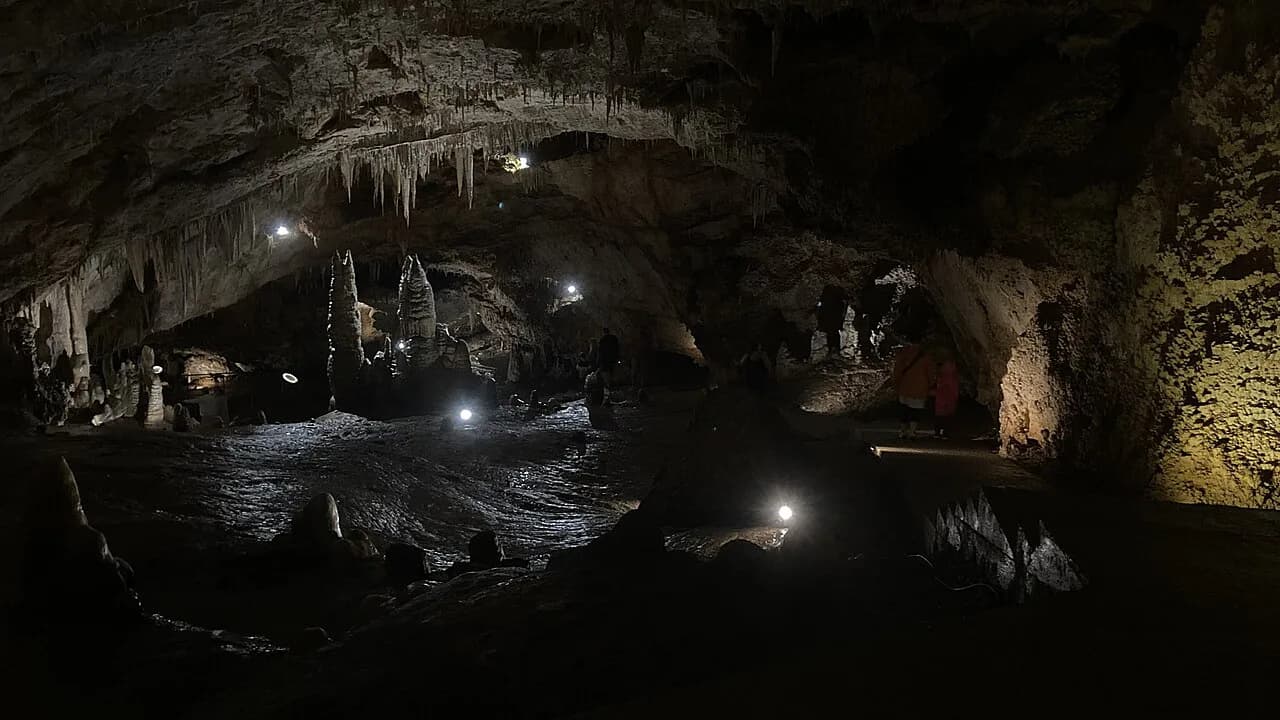
The route passes stalactites hanging from the ceiling, stalagmites rising from the floor, flowstone curtains and small cave pearls, all picked out by coloured lighting. The halls and passages are the point of the trip rather than a single set piece, so the tour works best if you look up and sideways rather than waiting for one highlight.
The operator describes the cave as a show cave where water, erosion and time have shaped the halls now opened to visitors, and the guide explains what you are looking at as you go. Photography is straightforward in the lit sections; the darkness between them is part of the experience rather than a fault.
How cold it is and what to wear
The cave is cold year-round: the operator puts the interior at a constant 10–12°C, cold enough that a summer T-shirt will feel wrong within minutes. Pack a light fleece or jacket regardless of the temperature outside, and expect a real shock stepping in from summer heat.
Closed, non-slip shoes are the other essential: trainers or walking shoes rather than sandals, because the paths are maintained but damp. Children feel the cold faster than adults, so a spare layer in a daypack is worth the weight even on a hot afternoon.
How long it takes and how it fits a Cetinje day
The tour itself runs about an hour, and the visit as a whole takes two to three hours from Cetinje once you add the drive and the arrival buffer. That makes it an afternoon addition to a morning in Cetinje rather than a day in itself.
The natural pairing is a few hours at Cetinje's monastery and museums, a 15-minute drive to the cave for a later slot, and a return to the coast by early evening. A fuller circuit adds Lovćen and a lunch stop in Njeguši, which needs an early start and steady pacing to avoid a rushed finish.
Getting there: car, taxi and the bus question
By car, take the Cetinje–Podgorica road east; the cave entrance and free car park are signed from it. From Kotor the mountain road takes around 50 minutes, and from Cetinje about 15 minutes.
Without a car, a taxi from Cetinje town centre is the practical option; an estimate of EUR 10–15 one way appears for that run, but treat it as an approximation and agree the fare before setting off. There is no direct public bus to the cave, so non-drivers should plan the return leg as well as the outward one.
Who it suits
Families with children do well here: the train covers the longest stretch, the tour is short, and the cool air makes it a genuine break from summer heat. The operator sets a moderate fitness level and notes that children under 16 must come with an adult.
Visitors who find uneven ground difficult get the most from the train section, which reaches the main formations without walking, though the cave is not wheelchair accessible. As a wet-weather stop it also earns its place when the coast is grey or the mountain is in cloud.
Should Lipa Cave be your inland stop?
Book Lipa Cave as a half-day from Cetinje or as the cooling middle of a Lovćen circuit, not as a standalone run from the coast. The train handles the walking, the hour-long tour suits children, and the cold is the one thing people underestimate.
Check the departure timetable and reserve a slot before you set out, pack a jacket and proper shoes, and arrange your return from Cetinje if you are going by taxi. That is the whole of the planning; the cave does the rest.
Explore more Cetinje guides
Frequently Asked Questions
Is Lipa Cave worth visiting?
If you are already spending time in Cetinje or crossing Lovćen, yes: the tour is an hour, the train removes most of the walking, and the formations are well lit. As a dedicated trip from the coast it makes less sense, because the drive eats into the time you would spend underground.
Do I need to book the Lipa Cave tour in advance?
Booking ahead is the safest approach, since visits run on a timetable and tickets are collected at the car park desk before boarding the train. Check the operator's current schedule before you travel and arrive at least 30 minutes before your slot.
Can I visit Lipa Cave without a car?
Yes, but plan around a taxi from Cetinje, as there is no direct public bus to the cave. Agree the fare for the outward and return legs when you set off, and keep the driver's number for the trip back.
How long does the Lipa Cave tour take?
The guided tour lasts about an hour, split between the train ride and the walk through the chambers. Allow two to three hours in total from Cetinje once the drive and the pre-tour arrival time are included.
Sources
Notes for your Montenegro trip
Optional updates to our Montenegro town guides.
You might also like
Continue reading
More guides you'll find useful