Njegoš Mausoleum: Tickets, Opening Hours and How to Get There
Plan a visit to the Njegoš Mausoleum on Lovćen: the 461 steps, summer opening hours and winter closure, ticket prices in euros and routes from Cetinje or Kotor.
On this page
The Njegoš Mausoleum is a marble monument to Petar II Petrović Njegoš at 1,660 m on Jezerski vrh, the summit of Lovćen, reached on foot via 461 steps and a marble tunnel. Allow time for the climb and a look inside, and go between 11 April and 15 November, when the National Museum of Montenegro keeps it open daily from 9 to 18. This guide covers the tickets, the steps and what waits at the top, plus the two realistic ways to drive there.
What the mausoleum is and where it sits
The building honours Petar II Petrović Njegoš, the 19th-century bishop, ruler and poet, and stands on the site of his earlier chapel on Jezerski vrh. The National Museum of Montenegro records that the government decided in 1951, a century after his death, to raise a mausoleum in his honour. The present building was completed in 1974 to a design by the architect and sculptor Ivan Meštrović, and it runs along the length of the peak at 1,660 m.
The plateau below the entrance holds a restaurant with the ticket shop and a small souvenir store, and a custodian or guide is on hand with information about Njegoš and Montenegrin history. Buy your ticket here before starting the stairs, because the entrance itself is the other end of the tunnel. The whole site sits inside Lovćen National Park, which is worth knowing if you plan to combine the mausoleum with other stops on the mountain.
Opening hours: summer season and winter closure
The mausoleum opens from 11 April to 15 November, every day, from 9 to 18. From 16 November to 10 April it is closed for visiting, so a winter trip up Lovćen will take you to the viewpoint and the plateau rather than inside the monument. Plan coastal days in late autumn and winter around that closure rather than assuming a year-round opening.
Visits are heaviest between May and October, when thousands of domestic and foreign travellers come up the mountain. If you want the stairs and the crypt with more room around you, aim for the earlier part of the morning within the 9 to 18 window. The season and hours are published by the National Museum, which also lists the mausoleum among its museum units.
Ticket prices in euros
An adult ticket costs 8,00 € and covers the Njegoš Mausoleum together with Njegoš's birthplace, so it is not a bare entrance fee to the crypt alone. Pupils and students pay 4,00 €. If you also plan to see the museum units in Cetinje, the collective ticket for all museum units, including the mausoleum, is 20,00 €, and a group ticket for pupils and students covering all museums and the mausoleum is 10,00 €.
Work out the arithmetic before you buy at the plateau: a single adult visit is straightforward, but a family or a group spending a day on museums may do better with the collective or group ticket. Tickets are sold at the shop on the plateau below the stairs, so there is no need to arrange anything in Cetinje first. Keep the price list itself as your reference, since it is the museum's own published list.
The 461 steps and the marble tunnel
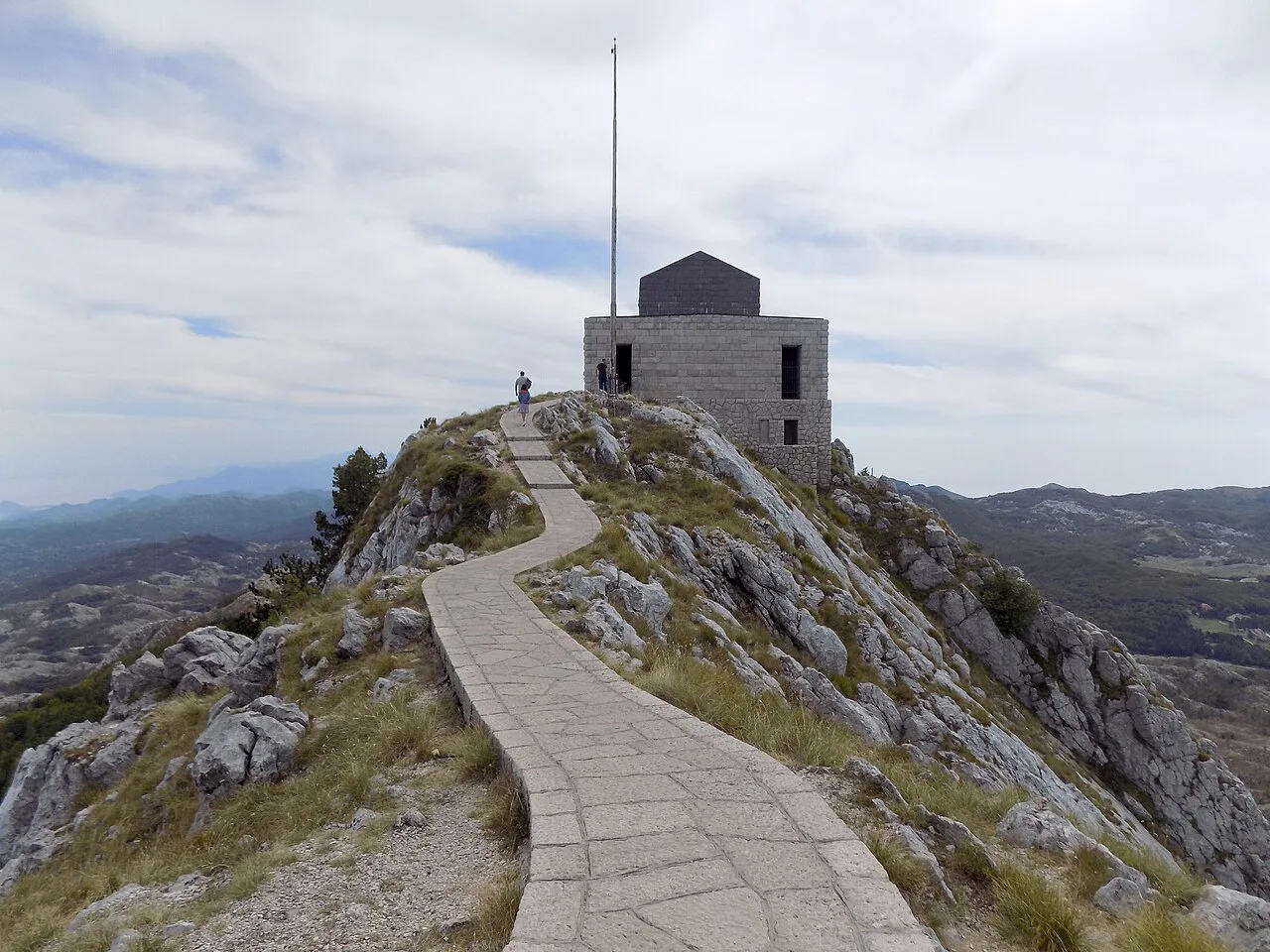
From the plateau, a stone stairway of 461 steps climbs to the mausoleum entrance, and part of the route runs through a lit marble tunnel. The steps are the real constraint on a visit: they demand effort, and the sensible approach is to break the climb with short pauses and use them to look back over the mountain. Allow more time than you would for a flat museum, and carry water in the warmer months.
The climb is not a scramble, and the path is built, but it is steady uphill work at altitude. Travellers with limited mobility, small children or a tight schedule should weigh whether the view from the plateau is enough for them.
What you see inside: the façade figure, the caryatides and the crypt
The façade carries a stone figure of Njegoš weighing 28 tonnes, with a grey eagle above it. In the lobby stand two stone caryatides, a mother and a daughter, weighing 7.5 tonnes. Down in the crypt, a white marble sarcophagus holds his remains, and the vault is decorated with 18 kg of gold worked into 27,000 kernels. The tombstone reads "Njegoš 1813. – 1851."
Building the marble giant took five years and several tonnes of stone, and it replaced the chapel in which Njegoš had been buried. The interior is compact, so a visit inside takes a fraction of the time the stairs do.
The view from Jezerski vrh
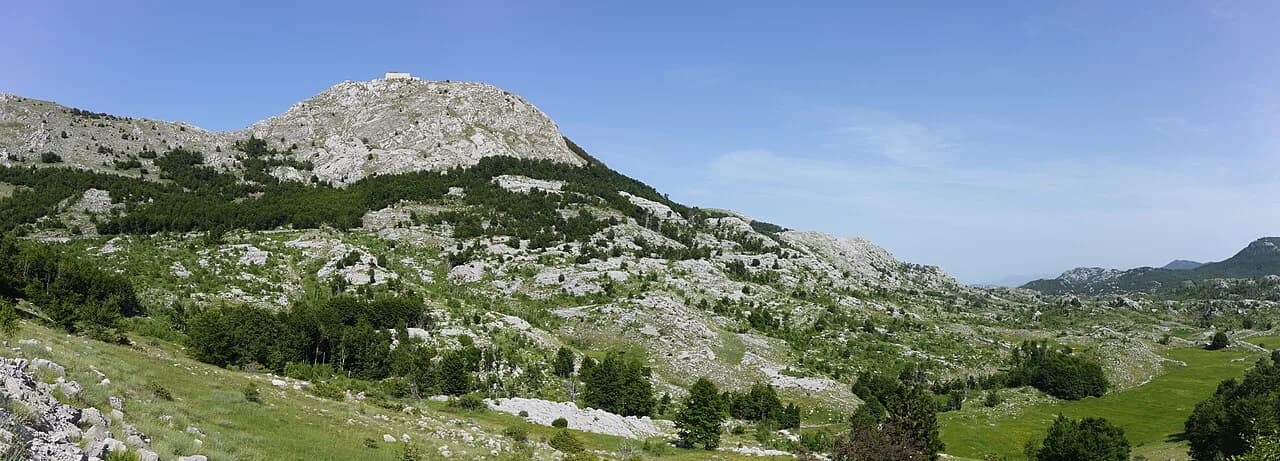
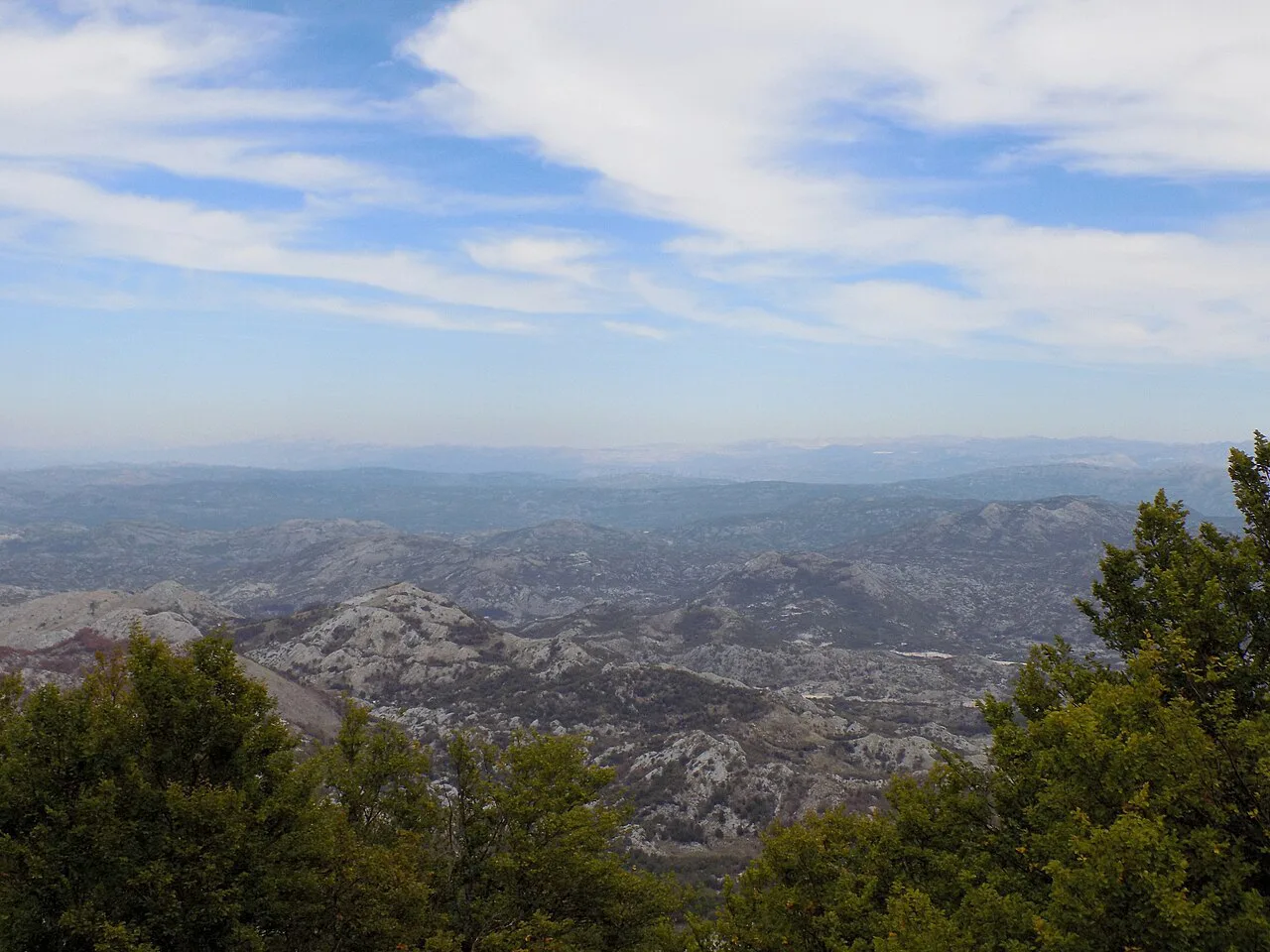
On a clear day the summit looks over Kotor Bay, the open sea, Skadar Lake, the Prokletije range and Cetinje, which is why the climb is worth it even for travellers who skip the interior. The Lovćen ridge stands between the Bay of Kotor and the inland basins, so the panorama takes in both the coast and the mountains behind.
Come prepared for wind and cooler air at 1,660 m, even when the coast below is hot. The restaurant Vidikovac, down the stairs on the way back, has a view over the slopes of Lovćen and makes a sensible stop.
Getting there by car from Cetinje
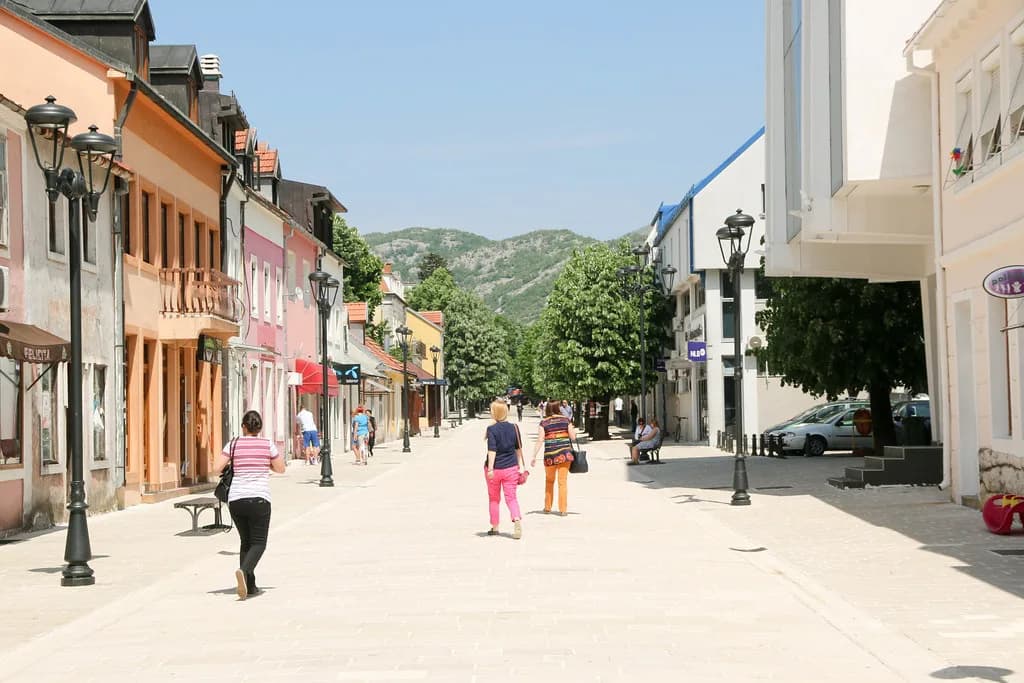
From Cetinje the drive is 13 km, passing through the climate spa of Ivan's riverbeds on an asphalt but fairly narrow road that curves up through beech, oak and linden forest. That is the shortest approach and the one to choose if you are basing yourself in the old royal capital. The road ends at the plateau below the stairs, where you park and buy your ticket. For the practical details, see the Cetinje.
Ivanova Korita, the saddle the road crosses, is a rest area in its own right and a natural place to break the drive. From there the road continues to the mausoleum car park.
The Kotor–Njeguši–Krstac route from the coast
From Budva or the coastal towns, the easiest way up is by your own car, a rental, a taxi or an organised tour. Driving from the Ivan's riverbeds way towards Lovćen, you can also come over the Krstac saddle on the Kotor–Njeguši–Cetinje road, which suits travellers starting from the bay rather than from Cetinje. The climb through the serpentines is slower and more demanding than the Cetinje approach, but it puts the mountain village of Njeguši on your route.
The Kotor Serpentine is the switchback section above the bay that connects Kotor with the Lovćen plateau. If you are driving it for the views, treat the mausoleum as the second half of the day rather than the first.
Organised tours and taxis from the coast
Almost every tourist agency on the Montenegrin coast sells excursions to Lovćen, so a tour is the simplest option if you would rather not drive the mountain road. Taxis and rental cars from Budva or Tivat are the other alternatives, and both drop you at the plateau. Ask the agency what the tour includes and whether the mausoleum ticket is separate before you book.
Coach tours tend to arrive in the middle of the day in high season, so an independent arrival in the morning gives you a quieter climb. If you are combining the mountain with the coast, note that the Kotor Cable Car is a separate attraction with its own operator and schedule.
The stone threshing floor and the path beside the entrance
Turning right from the mausoleum entrance, a short stone path leads to a circular Montenegrin threshing floor with a stone rim for sitting, where folk assemblies once met and decisions were taken. It is only a few metres from the door and worth the detour before you start back down the stairs.
Is the mausoleum worth the climb?
Yes, for the combination of the 461-step climb, the Meštrović interior and a summit view that takes in the bay, the open sea and Skadar Lake. Go between 11 April and 15 November, buy the 8,00 € adult ticket at the plateau shop, and start early to avoid the busiest hours.
Choose the 13 km road from Cetinje for the shortest drive, or the Krstac route from Kotor if you are coming from the bay. Either way, budget your energy for the stairs rather than the driving.
Explore more Cetinje guides
Frequently Asked Questions
How many steps are there to the Njegoš Mausoleum?
There are 461 steps from the plateau to the mausoleum entrance, part of the route running through a lit marble tunnel. The climb is steady uphill work at 1,660 m, so break it with short pauses.
Can you drive to the Njegoš Mausoleum?
Yes. An asphalt but fairly narrow road leads to the plateau below the mausoleum, where you park, buy tickets and start the stairs. From Cetinje the distance is 13 km; from the coast you can also come over the Krstac saddle on the Kotor–Njeguši–Cetinje road.
What does the Njegoš Mausoleum ticket include?
The adult ticket covers the Njegoš Mausoleum together with Njegoš's birthplace, so it is not an entrance fee to the crypt alone. Discounted pupil and student tickets and a collective ticket for all museum units are also available at the plateau shop.
Sources
Notes for your Montenegro trip
Optional updates to our Montenegro town guides.
You might also like
Continue reading
More guides you'll find useful