Montenegro Coast: The Towns From Herceg Novi to Ulcinj
A town-by-town guide to the Montenegro coast, from Herceg Novi and the Bay of Kotor to Budva, Bar and Ulcinj, with the old town sights each one holds.
On this page
The Montenegro coast is best planned as a single line from Herceg Novi at the western entrance to the Bay of Kotor down to Ulcinj near the Albanian border, with the sheltered bay as its own loop in the middle. The towns south of Budva face open Adriatic water and feel warmer and more Mediterranean, while the bay towns of Kotor, Dobrota, Perast and Risan sit under steep limestone mountains. This guide takes each town in turn, names the specific sight that earns it a stop, and explains how the coast is linked by road and boat.
Where the Montenegro coast starts and ends
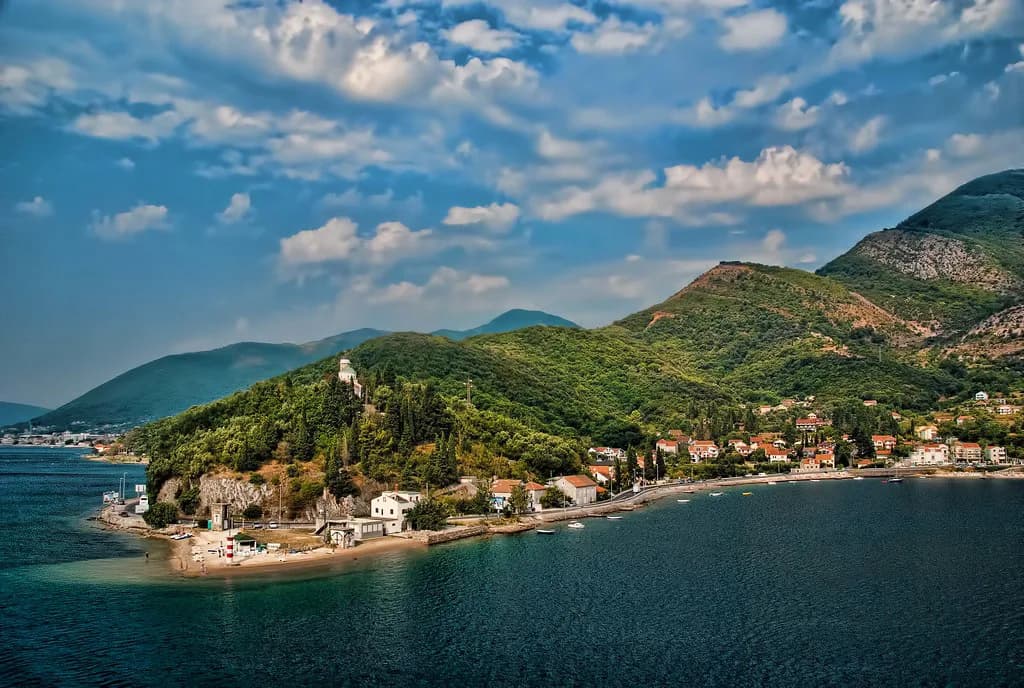
The Montenegrin coast runs from Herceg Novi at the western entrance to the Bay of Kotor down to Ulcinj near the Albanian border, a short stretch of land that packs in walled towns, pine-covered mountains, coves and marinas beside old fishing villages. The Bay of Kotor anchors the coastal run, with Kotor, Perast and Dobrota sitting along its edge. South of the bay the coast opens out through Budva and Bar before reaching Ulcinj.
Treat the bay and the open coast as two separate itineraries rather than one long drive. The bay rewards a slow loop of short hops between towns, while the southern stretch is a line of stops you work through in order. That split shapes how you book time, and it matters more than any individual sight on the list.
Herceg Novi: Kanli Kula fortress and Igalo
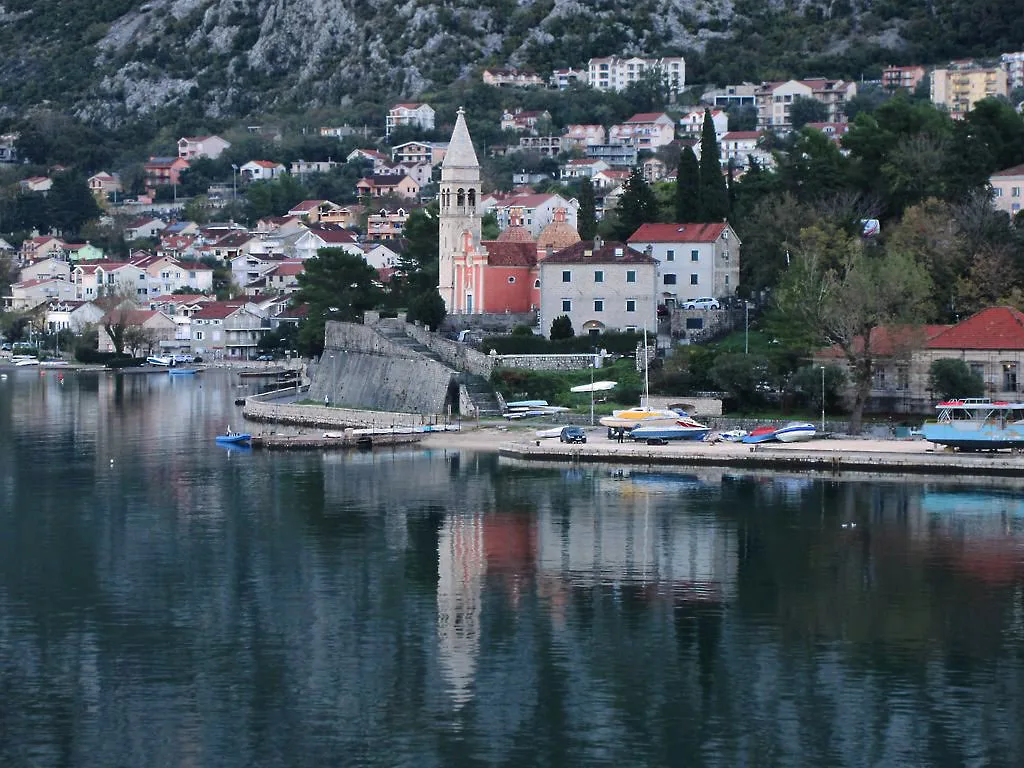
Herceg Novi sits at the western entrance to the bay, and its old town holds two named stops worth planning around: the Kanli Kula fortress and the Old Railway Station, both useful for a sense of the area's history. The town stands out for its shopping streets and buzzing evening life, which makes it one of the livelier stops on this end of the coast.
Just along the shore, Igalo has a beach with a gentle slope into the sea, which suits anyone who wants calm water rather than a long walk out. Pair the two in a single half-day and you have seen the western gateway to the bay without committing a full day to it.
The Bay of Kotor: Kotor, Dobrota, Perast and Risan
Plan the bay as one loop rather than four separate outings. Kotor, Dobrota, Perast and Risan sit along the water's edge within reach of each other, and villages such as Muo, Prčanj and Risan are where the local konoba cooking happens, with grilled fish and local olive oil on the tables.
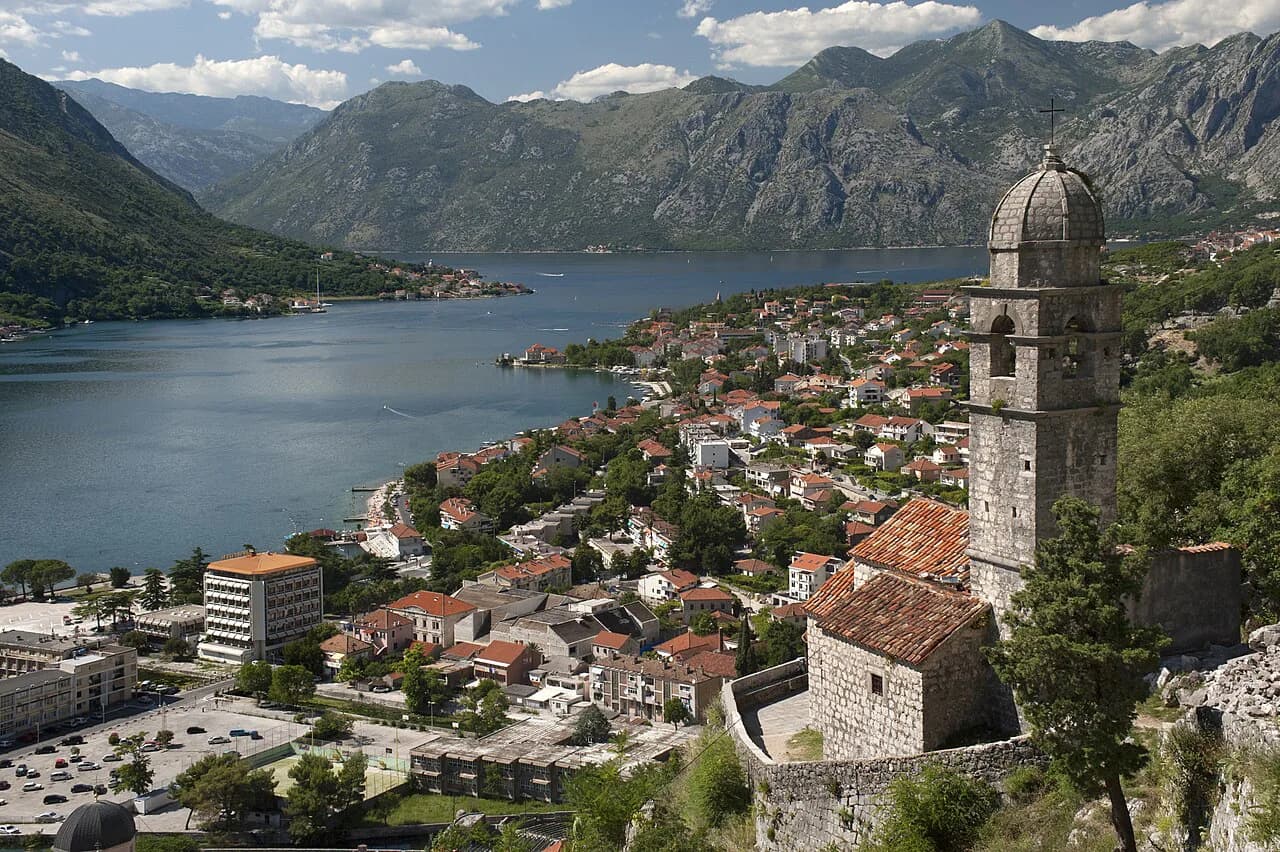
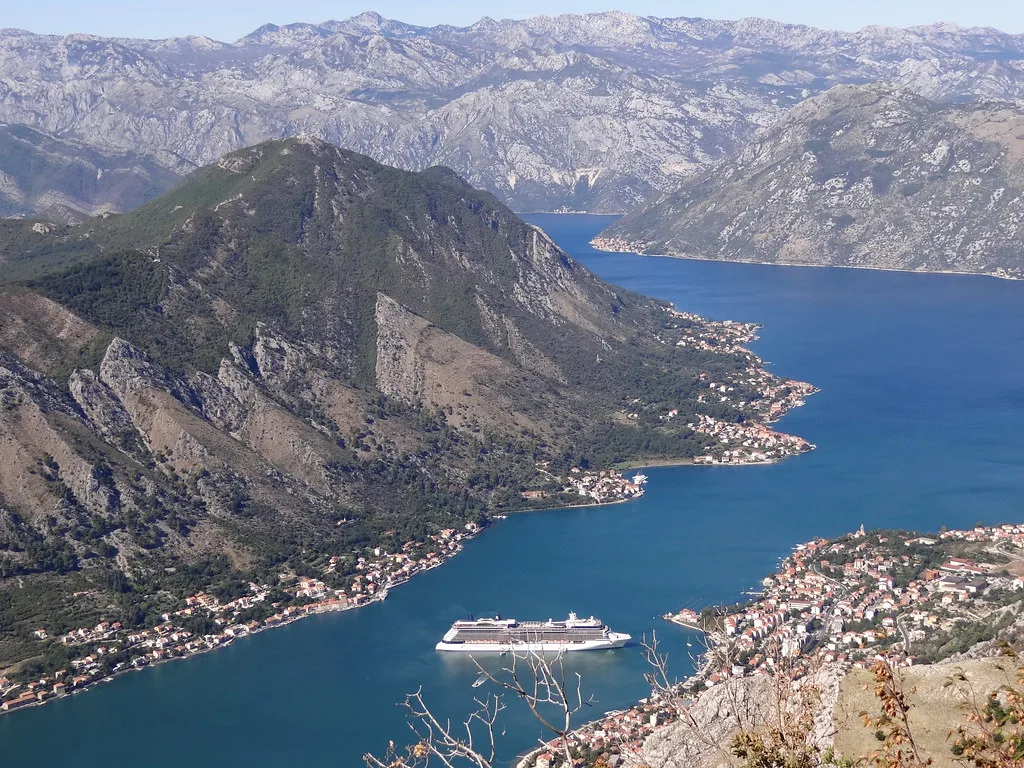
The water is the reason to slow down here. The bay's limestone mountains drop to deep, clear water, and the reflections of Kotor's illuminated walls appear to close the loop around the town at night. Allow the bay a full day at minimum and two if you want Perast and Risan without rushing.
Kotor old town: walls, cathedral and museum
Kotor old town is a maze of Venetian architecture, Baroque churches, small squares and cafés, and the preserved walls loop around it and light up after dark. Anchor the visit on three named sights: St Tryphon's Cathedral, admired for its Romanesque and Gothic design, St Nicholas' Church, the region's largest Orthodox church, and the Maritime Museum of Montenegro, which explains Kotor's historic role on the coast.
Timing decides how much of Kotor you actually enjoy. Cruise passengers arrive by mid-morning, so the unhurried version of the town is either early or late, when you can take a table on one of the quieter squares away from the main flow and watch the morning start. The same advice holds for the cathedral and museum: go at the edges of the day and keep the middle for coffee.
Perast and the boat to Our Lady of the Rocks
Perast is a small village of churches and old palazzos, with St Nicholas' Church as its main draw; climb to the top of the belfry for a view over the historic centre and the surrounding countryside. From the waterfront, a short boat ride takes you to the tiny artificial islet of Our Lady of the Rocks, which holds a medieval church whose interior is covered in silver votive plaques left by sailors over the centuries.
The boat crossing is short enough that Perast and the island fit into a half-day together. Check sailing arrangements and any church entry terms with the operator on the day rather than assuming a fixed timetable.
Risan and its Roman mosaics
Risan is one of the bay's older settlements and the stop for anyone interested in archaeology rather than waterfront cafés. It is known for its Roman mosaics, particularly the depiction of Hypnos, the Greek god of sleep, and its tranquil setting makes it an easy counterweight to busier Kotor.
Give Risan an hour or two inside a bay day rather than a day of its own. It works well as the quiet final stop on a loop that began in Kotor and passed through Perast.
Tivat and Porto Montenegro
Tivat is often underestimated. It is a working town with a local character that the busier summer towns can lose, and its waterfront market in the morning is the place to see it. Porto Montenegro, the marina development on the edge of town, is a striking waterfront walk in its own right and gives Tivat a second, glossier face.
Use Tivat as a practical anchor: it sits between Kotor and Budva, so it shortens the driving on either side of the bay. The town itself needs half a day at most, marina walk included.
Budva: narrow streets and open squares
Budva old town is compact: narrow streets opening onto squares, beach clubs running from morning into the night, and evenings that go late. It is the most concentrated dose of old-town wandering on the southern coast, and easy to cover on foot in an afternoon.
Expect summer congestion on the roads into Budva and around Kotor, and expect parking near the old towns to be close to impossible. Arriving on foot or by bus removes that friction entirely.
Sveti Stefan, Pržno and Miločer
Sveti Stefan is a small island just off the coast and one of the Adriatic's most photographed spots, seen from the shore rather than visited. Pržno, a fishing village of stone houses and traditional boats, has a sandy beach and sits beside Miločer Park, whose shaded paths open onto sea views.
Treat this trio as a single stretch between Budva and Petrovac. Pržno suits anyone who wants a slower pace than Budva, and Miločer gives you shade when the afternoon heat sets in.
Petrovac and the islets of Katič and Sveta Nedjelja
Petrovac is the quieter alternative to its busier neighbours, with beaches fringed by pine forests and olive groves. The Venetian fortress of Kastio gives the town its historical anchor and a view back over the bay.
From Petrovac, a boat trip reaches the nearby islets of Katič and Sveta Nedjelja. The crossing is a short outing rather than a day at sea, so it slots neatly into a morning.
Bar and Stari Bar: King Nikola's Palace and the ruins
Bar splits into two: the modern city with its cafés, lively port and seaside promenade, and Stari Bar, the old town above it, a historic site filled with ruins. King Nikola's Palace is the named stop in the modern town, and the promenade is where to end the day.
Stari Bar deserves more time than its ruined state suggests, and the contrast with the working port below is the point of the stop. Pair the two in a day rather than racing between them.
Ulcinj: where the coast changes character
Past Bar the coast runs on to Ulcinj, where the feel shifts noticeably: warmer, more Mediterranean, with an edge that nudges toward North Africa. It is the southern end of the Montenegrin coast and a natural place to finish a run down the Adriatic shore.
Plan Ulcinj as its own night rather than an afternoon tacked onto Bar, because the change of atmosphere is the reason to go.
Linking the coast: airports, buses and the road between towns
Fly into Tivat Airport for the bay towns, or use Podgorica or Dubrovnik airports further out, then travel by bus or hire a car for the wider coastal run. Roads are scenic but also narrow and winding, and in peak summer the stretches around Kotor and Budva become heavily congested.
If you would rather not drive, base yourself in Tivat, which shortens every transfer on the bay side, and use buses for the southern towns. Boat services cover the bay crossings but do not replace the road for the open-coast run down to Ulcinj.
How long the coast needs, town by town
Allow half a day each for Herceg Novi and Tivat, a full day for Kotor old town, and a half-day loop for Perast and Our Lady of the Rocks together. Risan fits inside a bay day, and Budva old town takes an afternoon on foot with Pržno and Miločer added on the way south.
Give Bar and Stari Bar a day, and give Ulcinj an overnight so the mood shift registers. Taken together, a comfortable run down the whole coast is four to five days without hurrying any single stop.
Where to start on the coast
Start at Herceg Novi, loop the bay through Kotor, Perast and Risan, then run south through Budva, Petrovac and Bar to end in Ulcinj. That order follows the water, groups the bay stops into one circuit, and puts the long drives at the beginning rather than the end of each day.
Book the bay around early or late visits to Kotor old town, and keep the middle of the day for Perast, the boat to the islet or the quiet at Risan. One honest trade-off: the coast rewards slowness more than it rewards coverage.
Explore more Montenegro guides
Frequently Asked Questions
What is the most beautiful town in Montenegro?
It comes down to what you want. Perast is small and full of churches and old palazzos, with a belfry view over the historic centre and a short boat ride to Our Lady of the Rocks. Kotor offers the maze of Venetian streets, cathedral, Orthodox church and maritime museum in a single walled town. Budva is compact and lively, and Ulcinj feels warmer and more Mediterranean than either. Pick by mood rather than by a league table.
Which is nicer, Kotor or Budva?
Kotor is the one for a history-led visit: walls, St Tryphon's Cathedral, St Nicholas' Church and the Maritime Museum sit inside a compact old town, and the unhurried hours are early or late because cruise passengers arrive by mid-morning. Budva is the livelier old town, with narrow streets, open squares, beach clubs and late evenings. Choose Kotor for sights and atmosphere, Budva for energy and an afternoon on foot.
Is Montenegro cheap or expensive?
Admission charges, boat fares and bus tickets vary by town and by season, so confirm the current figure at the ticket desk, the boat operator or the bus station before you commit. Treat any figure you see online as a guide only unless the operator publishes it directly.
Why is Montenegro so famous?
Its coastal stretch is short but dense: walled towns and ramparts, a sheltered bay under limestone mountains, a tiny artificial islet with a church inside, and a run of towns from Herceg Novi to Ulcinj that change character as you go south. The range within a short distance is the draw.
Sources
Notes for your Montenegro trip
Optional updates to our Montenegro town guides.
You might also like
Continue reading
More guides you'll find useful