Montenegrin Food: What to Eat, Coast to Mountains
A practical guide to Montenegrin food: Njeguški pršut, kačamak, priganice, Black risotto and Lake Skadar carp, with the coast and mountain split explained.
On this page
Montenegrin food is regional cooking shaped by the Mediterranean, Slavic and Balkan kitchens around it, and the single most useful thing to know is where you are eating: seafood and olive oil on the coast, polenta, cheese and smoked meat inland. This guide sets out the dishes to try, what each one physically is, and the named konobas where a cited source places them. It covers the coast from Herceg Novi to Budva, the mountain kitchen around Lovćen, and the lake fish of Skadar.
What Montenegrin food actually is
Montenegrin cooking is hearty and built from local fish, meat, fruit, vegetables and spices, with paprika, bay leaves, cumin, oregano, basil, thyme, rosemary and garlic doing much of the work. It is a fusion of Mediterranean, Slavic and Balkan traditions rather than a single uniform cuisine. That means a menu in Kotor and a menu in the mountains can feel like two different countries, even though both are Montenegrin.
The practical rule is to order what the landscape around you produces. On the seaboard that means grilled fish, shellfish and olive oil; inland it means cheese, kajmak, smoked mutton and cornmeal. The dishes below are grouped accordingly so you can pick by region rather than by a flat list.
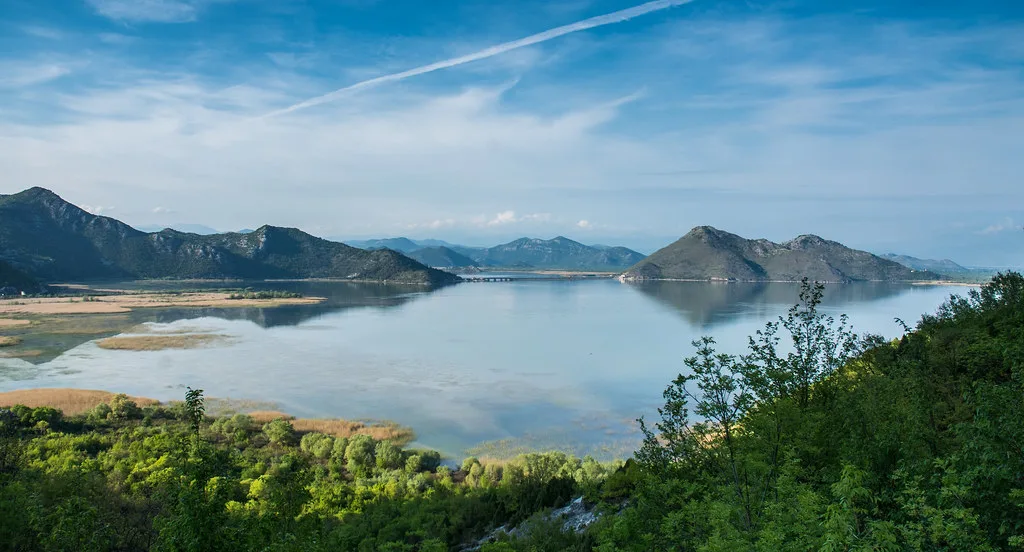
Coast versus mountains: two kitchens in one country
The coastal kitchen is the lighter of the two, based on seafood, fish, cereals and olives. Fish such as bream, sea bass, barb and mullet is grilled, boiled, stewed or fried, and grilled fish arrives sprinkled with herbs and topped with garlic, parsley and olive oil, usually with boiled potatoes and chard. Octopus, mussels, squid, oysters and prawns are all standard choices in fish restaurants along the shore.
Which Montenegrin dishes are meat-free? Burek with cheese or spinach is sold in bakeries across the country, kačamak is a polenta dish with potato and kajmak, and the coast offers grilled vegetables, chard, olives and cheese. Mountain menus lean more heavily on smoked mutton and lamb under the sač, so meat-free choices are easier on the coast or in a bakery.
What is the difference between kačamak, cicvara and popara? Kačamak is polenta with buttered potato and kajmak served with yoghurt. Cicvara and popara are warm dishes of cereals and grains boiled in milk or water, mixed, mushed or served with potatoes, cheese and sour milk; popara adds bread and milk with oil and cheese.
Where should I try Lake Skadar fish? Eat it at the lake rather than on the coast. The Skadar kitchen specialises in carp fried in a pan with dried plums, apples and quince, carp fried with onions, eel with rice, thick fish soup and smoked bleak.
Inland the cooking turns heavier and dairy-rich. Mountain specialities include smoked mutton or sheep (kastradina), a stew of the sturdy cabbage-family vegetable raštan with white potatoes, and polenta dishes served with buttered potato, kajmak and yoghurt. The lake belt around Skadar has its own fish kitchen, covered further down. If you are driving from coast to mountains in one trip, expect your plate to change completely within an hour or two.
Start with Njeguški pršut and Njeguški sir
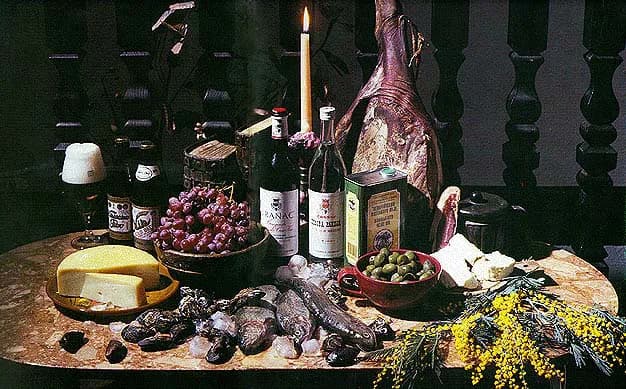
Njeguški pršut is a dry-cured ham hung for several months in special huts to reach the right flavour and moisture, and it is served on its own or with olives and Njeguški sir, a cheese made from dried milk and its fats. The combination is a popular local breakfast. The ham comes from Njeguši, the village under Lovćen on the road between Kotor and Cetinje, and its taste and aroma come from the mix of sea and mountain air plus the beech wood used for smoking.
Buy it as a roadside purchase rather than a museum piece. Villagers in Njeguši sell both the ham and the cheese directly, which ties the food to a route most travellers already drive between Kotor and Cetinje. If you want the background on how the ham is made and sold, our guide to Njeguški pršut covers the curing and the village stop in detail.
Njeguši cheese is the natural companion, and the wider family of Montenegrin cheeses is worth knowing if you plan to buy from village stalls or order a cheese plate. Our Montenegro cheese guide explains the main types and what to look for.
Priganice: the welcome fritter
Priganice are small airy fritters or doughnuts served with home-made honey, sometimes jam or cheese, and they are the usual thing a guest is offered in a Montenegrin home. National restaurants serve them too, and they work as a snack alongside a bottle of Nikšić beer, a glass of lozovača or a cup of herbal tea.
If you want to order them with confidence or make them at home, our guide to priganice sets out how they are made and served, including the honey and cheese versions.
Kačamak, cicvara and popara: the mountain staples
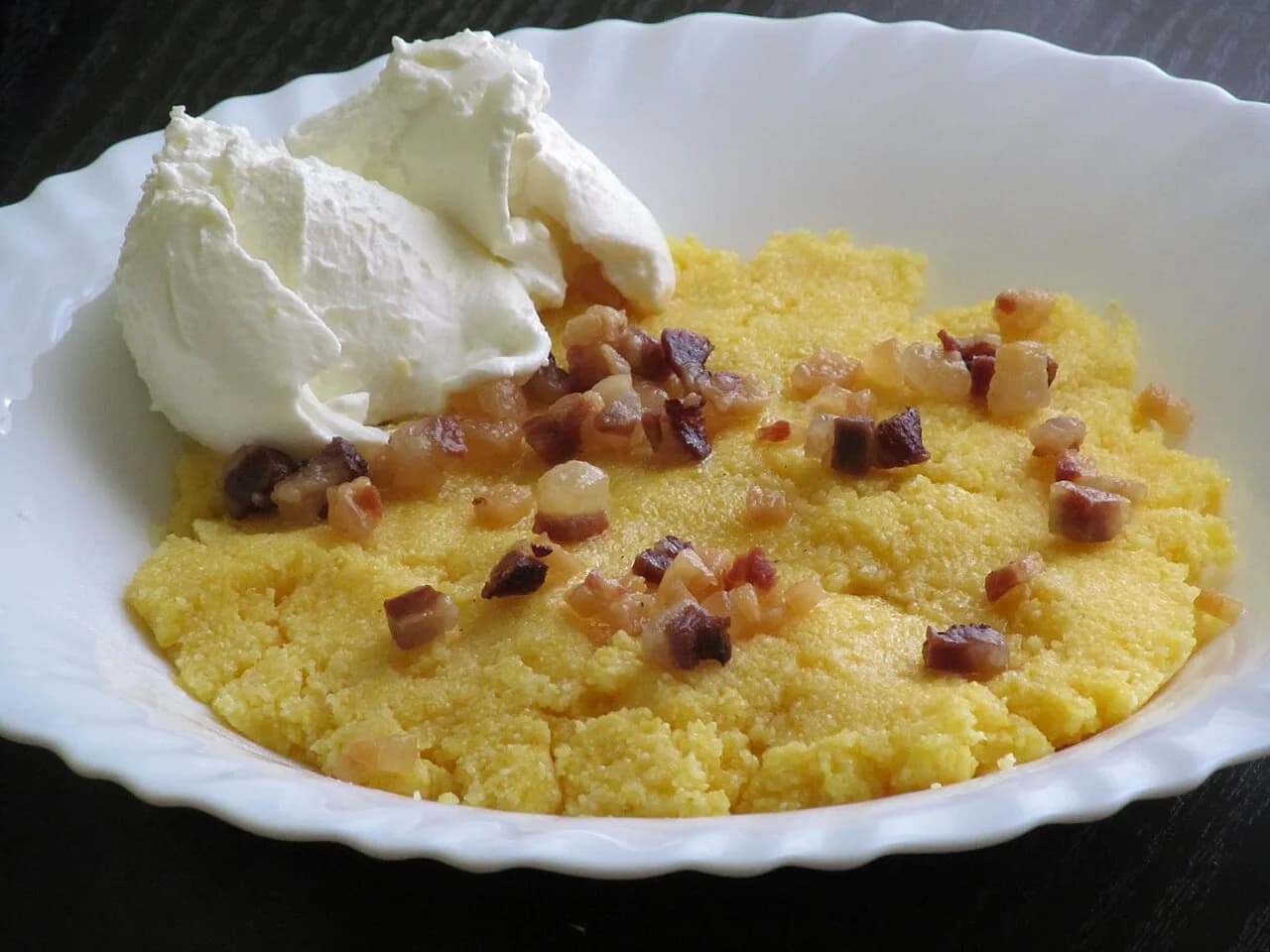
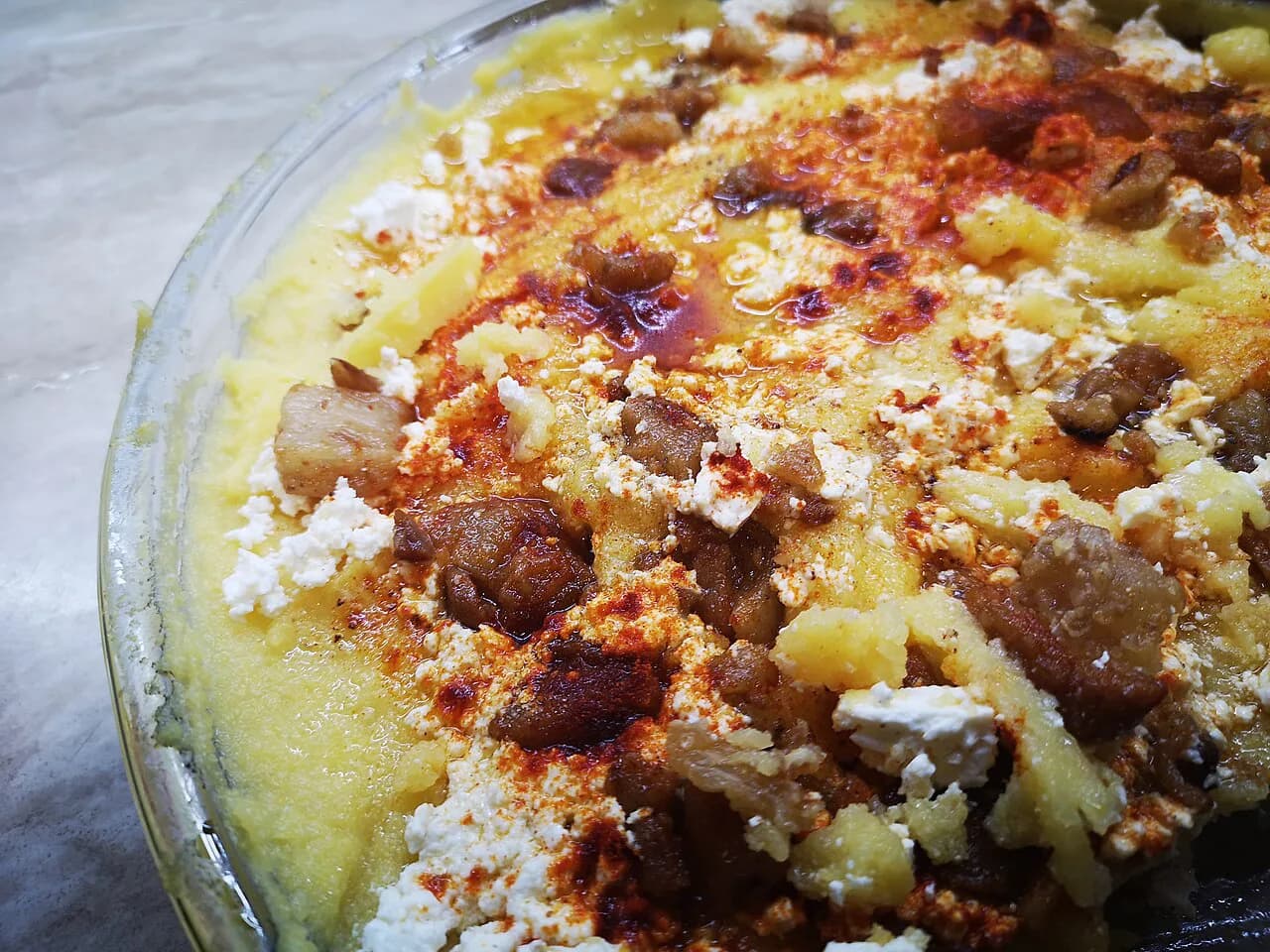
Kačamak is polenta with buttered potato and kajmak, served with yoghurt, and it is the dish to order when you are hungry in the mountains. Cicvara and popara are warm dishes of cereals and grains boiled in milk or water and mixed, mushed or served with potatoes, cheese and sour milk; popara adds bread and milk with oil and cheese.
These are the dishes that most often confuse visitors because the names give nothing away. Our guide to kačamak explains exactly what arrives on the plate and how to order it, while the cicvara guide covers its close relative in the same family.
Lamb under the sač, and Vranac with it
Lamb under the bell is meat placed under an iron pan called a sač, then covered with ember and ashes and cooked slowly. It is one of the mountain dishes most worth planning a meal around. Pair it with Vranac, the robust red wine produced in the central part of the country.
The wine list is one place where it pays to know two names: Vranac for red and Krstač for a Montenegrin white. Both are made from grapes suited to the dry, mountainous, Mediterranean landscape, and Vranac in particular is a bold, full wine that stands up to smoked meat and lamb.
Lake Skadar fish: carp, eel and smoked bleak
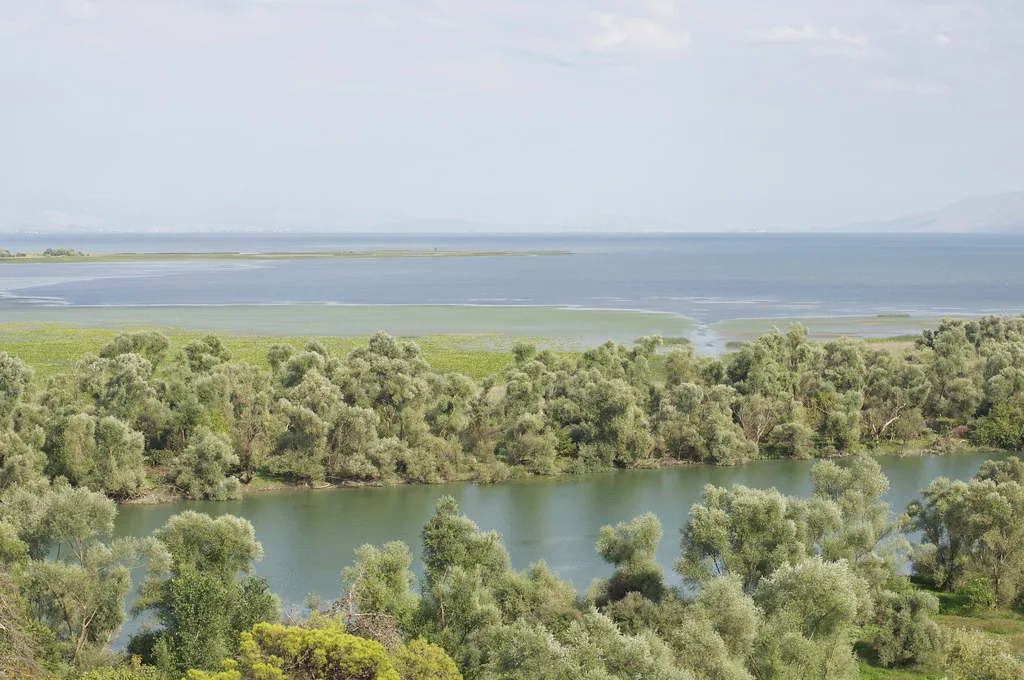
The area around Skadar Lake is known for carp, eel and small bleak caught in large quantities. Typical lake dishes are carp in a frying pan with dried plums, apples and quince; carp fried with onions; eel with rice; thick fish soup; and smoked bleak. Carp is the one visitors hesitate over, and smoked carp is the easiest introduction.
This is a different kitchen from the coast, so do not expect the same menu in a lakeside village as in Budva. If your route takes in Lake Skadar, eat there rather than saving your fish meal for the sea.
Coastal seafood: what to order on the shore
On the coast, order grilled bream or sea bass and let the kitchen keep it simple, or go for squid ink risotto, octopus, mussels or oysters. Fish is mainly grilled, boiled, stewed and fried, and the coastal kitchen leans on seafood, cereals and olives. A glass of Krstač, a Montenegrin white, is the natural accompaniment.
The olive oil on the table is part of the meal, not a garnish. Our Montenegro olive oil guide explains what you are tasting and where the oil comes from, which helps when a restaurant makes a point of it.
Grilled meat and bakeries: the everyday quick options
For a fast, cheap meal, look for čevapčići (small meat balls) and pljeskavica (a kind of hamburger) with onions, served in national restaurants and fast-food places alike. Bakeries sell burek, a handheld pastry filled with meat, cheese or spinach, and it is found in every bakery in the country. These are the everyday options that keep a day of sightseeing moving.
Burek with cheese or spinach is also the simplest meat-free hot snack on the road, and bakeries are the place to buy it. Keep an eye on what you are paying against the menu board rather than assuming a price, since these are everyday shops rather than destination restaurants.
Konobas to know, and what each one is known for
Konoba Feral is a family-run place in Herceg Novi at 4 Vasa Ćukovića, with traditional, hearty dishes and a particular strength in seafood; the catch of the day and the squid ink risotto are the dishes to consider. Ribarsko Selo sits on its own peninsula on the Luštica peninsula near Herceg Novi, grows its own ingredients and takes delivery of fresh fish at noon, with a menu that changes to taste; prices are steeper than in most Montenegrin restaurants, and guests should book at least two days in advance.
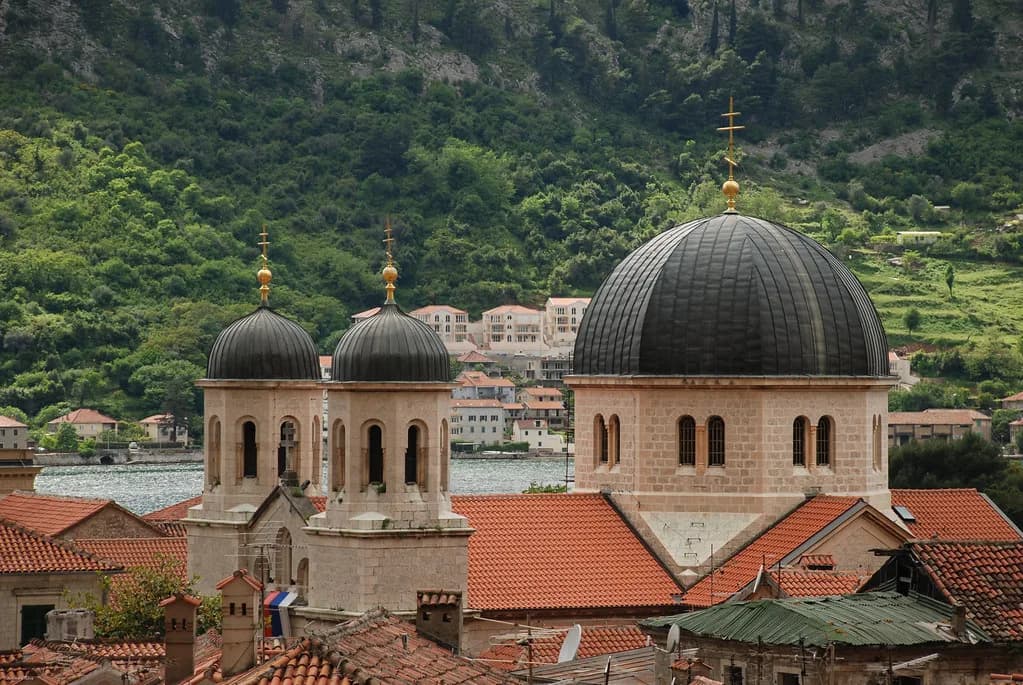
Konoba Trpeza is in the centre of Kotor's old town at Stari grad 478, known for fish dishes and a strong wine list. Bokeski Gusti sits at the water's edge in Prčanj looking back across the bay, with home-cooked food and a mixed plate called Bokeski Pjat that brings calamari, risotto and fried fish together. Gradska Kafana in Herceg Novi at Njegoševa 31 is a good morning stop for its breakfast menu and cold appetisers, though it gets busy in the evenings.
La Bocca in Budva sits away from the touristy centre of the old town, serves large portions at mid-to-high prices, and is known for desserts that draw people from the capital. If you want one sit-down seafood meal with a view, Bokeski Gusti in Prčanj is the pick; for a family-run introduction to the cuisine, Konoba Feral in Herceg Novi is the easier start.
What to drink: beer, wine and brandy
Nikšić beer is a real Montenegrin trademark, brewed with barley, hard mountain water and aromatic hops in both light and dark versions. Vranac is the bold red from the central part of the country, and Krstač is the white to order with fish. Rakija, the local fruit brandy, is stronger and more aromatic than vodka, and lozovača is the grape version.
Prices for beer and wine vary by venue, so check the drinks list rather than relying on a remembered figure. Our Montenegro rakija guide explains the different fruit brandies and how they are served.
Desserts: kolači and palačinke
Kolači is the general name for cookies and cakes, covering apple pies, butter biscuits with powdered sugar, fruit tarts, waffle cakes with fillings, nut cookies and Turkish-style pastries. Palačinke are thin pancakes filled with honey and chopped walnuts, jam or chocolate, made in almost every café and restaurant and often sold take-away from street stands.
If you want to know what to order after a long lunch of grilled fish or lamb, our Montenegro desserts guide sets out the cakes and pastries in more detail.
Eating vegetarian from a Montenegrin menu
Meat-free choices exist without special ordering. Burek with cheese or spinach is sold in every bakery, kačamak is a polenta-and-potato dish with cheese, and the coastal menu supplies grilled vegetables, chard, olives and cheeses. Njeguški sir and the wider family of Montenegrin cheeses make a light plate on their own.
The catch is that mountain menus lean on smoked meat and lamb under the sač, so a vegetarian meal is easier on the coast or in a bakery than at a mountain konoba. If you are travelling inland, plan your main meal around the cheese and polenta dishes rather than assuming there will be a meat-free special.
What to order on your first day
Start with the region in front of you. On the coast, order grilled fish with a glass of Krstač, or squid ink risotto if you want something richer. In the mountains, go for kačamak or lamb under the sač with Vranac. In Njeguši, buy pršut and sir directly from the villagers and eat them as a roadside lunch on the Kotor–Cetinje drive.
Use the names in this guide to read a menu rather than guessing, and check the bill against the listed price at each venue. If you are linking food to the rest of the trip, our Montenegro national parks guide helps you plan the inland days around Lovćen and the mountain villages where this cooking comes from.
Explore more Montenegro guides
Frequently Asked Questions
Which Montenegrin dishes are meat-free?
Burek with cheese or spinach is sold in bakeries across the country, kačamak is a polenta dish with potato and kajmak, and the coast offers grilled vegetables, chard, olives and cheese. Mountain menus lean more heavily on smoked mutton and lamb under the sač, so meat-free choices are easier on the coast or in a bakery.
What is the difference between kačamak, cicvara and popara?
Kačamak is polenta with buttered potato and kajmak served with yoghurt. Cicvara and popara are warm dishes of cereals and grains boiled in milk or water, mixed, mushed or served with potatoes, cheese and sour milk; popara adds bread and milk with oil and cheese. Both are deeply rooted in Montenegrin cooking.
Where should I try Lake Skadar fish?
Eat it at the lake rather than on the coast. The Skadar kitchen specialises in carp fried in a pan with dried plums, apples and quince, carp fried with onions, eel with rice, thick fish soup and smoked bleak. Smoked carp is the easiest introduction if you have not eaten carp before.
Sources
Notes for your Montenegro trip
Optional updates to our Montenegro town guides.
You might also like
Continue reading
More guides you'll find useful