Cicvara: What Montenegro's Cheese and Cornmeal Dish Is
Cicvara is a thick savoury dish of cornmeal or wheat flour, cheese and kajmak, stirred until it leaves the pan. Here is what it is made from and how it is served.
On this page
Cicvara is a thick, savoury homemade dish of flour, cheese, kajmak and fat, cooked in a pan and stirred until the mixture leaves the sides. It is a substantial breakfast or supper rather than a light starter, and it belongs to the same family of mountain dairy dishes as kačamak. This guide covers what goes into it, how it is cooked, how it is served, and how to order it without confusing it with something else.
What cicvara is
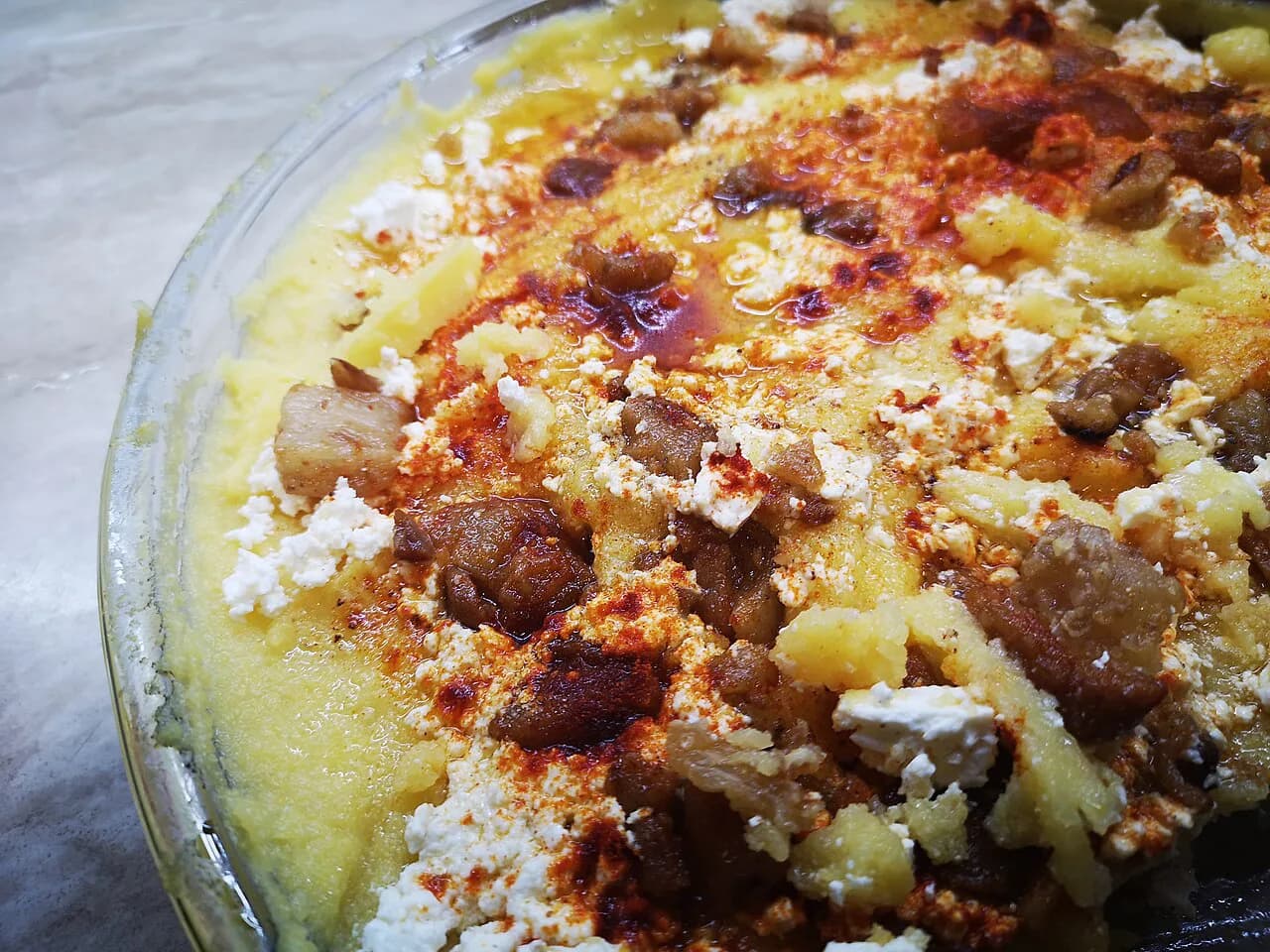
Cicvara is a firm, spoonable savoury dish made by cooking flour into a hot liquid, then working in cheese, kajmak and fat until everything combines. Recipes describe it as an old domestic dish, grouped with kačamak, popara and proja as breakfasts whose smell and taste are associated with childhood. It is not a thin porridge: the finished mixture is dense, and it sets further as it cools.
Recipes vary by household. Some lean on milk and soft wheat flour, others on water and cornmeal with a little wheat flour for body. Expect two different textures and two different balances of cheese to starch if you order it in two places.
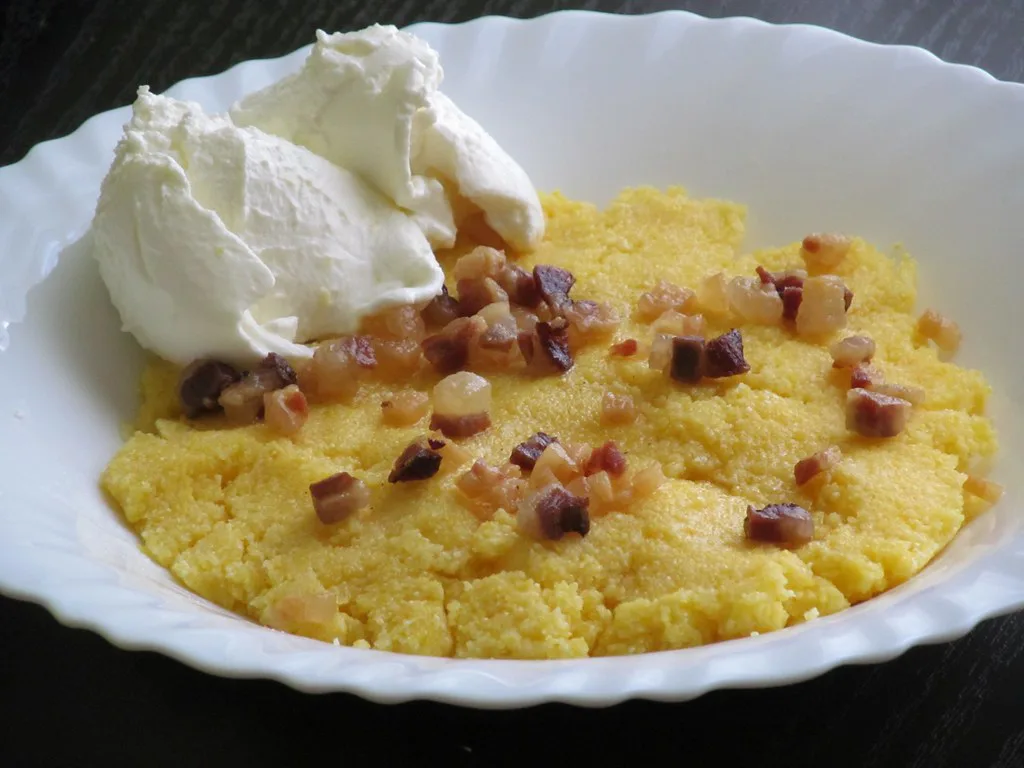
What goes into cicvara
The core ingredients are flour, fat and dairy: milk, cheese and kajmak. A milk-based version uses milk, oil, soft wheat flour, skorup, crumbled domestic cheese and pavlaka, which gives a soft, creamy set. Kajmak carries much of the flavour, which is why the dish is so filling.
A second family starts with water rather than milk and uses cornmeal plus a spoon of integral wheat flour, with pork fat, kajmak and a generous quantity of semi-hard or full-fat cheese. Optional additions include leek, egg, pavlaka, soured milk, other hard cheeses and parsley. If you avoid pork, ask which fat the recipe uses, because oil does not behave like kajmak in the pan.
Cornmeal and wheat flour behave differently, so the choice matters for texture. Cornmeal gives a grainier, more open crumb; soft wheat flour thickens faster and produces a smoother, more uniform mass. Neither is the correct method, and no single version is claimed as authentic.
How cicvara is cooked
The method is a single pan and constant stirring. Heat the liquid with the fat, bring it to a boil, then add the flour straight in and start mixing so the lumps break down. Add the skorup or kajmak next and keep working the mixture as it melts, then crumble in the cheese, stir again, and finish with the pavlaka as the mass thickens.
The test for doneness is physical: the mixture is ready when it separates from the pan and pulls away behind the spoon. Coolinarika sets out that cue, and it is more reliable than a clock because the water content of the cheese and kajmak varies. Keep the heat moderate so the dairy does not catch.
A cornmeal version follows the same logic in a different order: boil water with fat and salt, melt in the kajmak and cheese, then add the cornmeal and cook on a lower heat, stirring continuously until the mixture leaves the pan and for a few minutes more. Those extra minutes let the raw taste of the cornmeal cook out.
Cicvara is not kačamak or palenta
Cicvara, kačamak and palenta are routinely confused because all three are cooked starch dishes built on cornmeal or flour. Cicvara is distinguished by the quantity of dairy folded in, and by the way it is stirred to a dense, unified mass rather than served as a soft mound with cheese poured over.
Cicvara is not simply palenta with cheese. Palenta is a cooked cornmeal base, while cicvara uses the flour as a thickener for a dairy-heavy mixture that includes skorup or kajmak and crumbled cheese. The finished texture is heavier and closer to a spoonable bake than to a side dish of polenta; Milin Kuvar describes it as far from palenta and rarely cooked.
One practical implication: cicvara is more work than kačamak or popara, because it needs steady stirring and a watchful eye on the pan. That is why it appears less often on everyday tables and more often as a deliberate, celebratory breakfast.
How cicvara is served
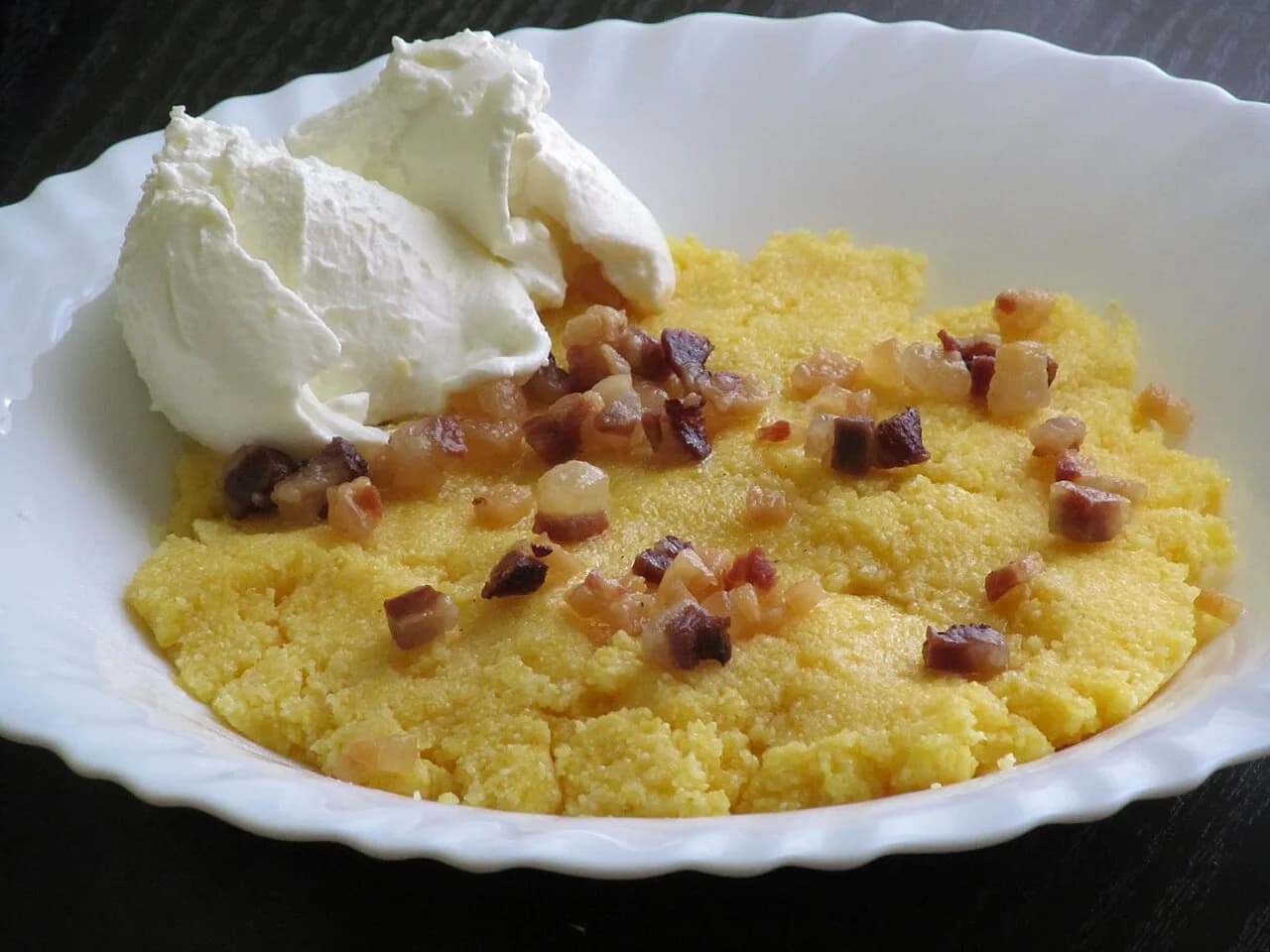
Serve it hot, straight from the pan, because it firms up as it cools and loses the molten quality that makes it worth eating. Coolinarika is explicit on this point and suggests nothing else is needed alongside, because cicvara is a filling meal in itself. A cup of cold homemade soured milk is the usual accompaniment.
For a visitor, the closest comparison on a Montenegrin breakfast table is a warm, savoury dairy dish eaten with a spoon and a cold drink, not a slice of bread with a topping. Expect it in the pan or in a deep bowl, and expect it to be substantial enough to count as the meal.
If a serving comes with soured milk or a spoon of pavlaka on top, that is consistent with the dairy-heavy character of the dish rather than a garnish. Drink the soured milk alongside rather than pouring it over the cicvara unless you are invited to; it is there to cut the richness.
What to expect when you order it
Cicvara is filling and dairy-rich, and the calories come mostly from milk fat and cheese rather than from the flour alone. That makes it a good choice before a cold morning outdoors and a poor choice if you have a long drive straight afterwards. Treat it as a proper meal and plan the rest of the day around it.
Is it vegetarian? It is not vegetarian by default, because pork fat and kajmak appear in the standard recipes, and some versions add egg.
How filling is it? Cicvara is filling and dairy-rich. Treat it as a proper meal and plan the rest of the day around it.
What is it served with? A cup of cold homemade soured milk is the usual accompaniment.
It is not vegetarian by default, because pork fat and kajmak appear in the standard recipes, and some versions add egg. If you avoid meat, ask before ordering rather than assuming the cheese version is meat-free. The same applies to the cheese itself: a strong, full-fat local cheese is what gives the dish its character.
The lactose question
Cicvara is built on milk, cheese, kajmak and sometimes soured milk, so anyone with a lactose intolerance should treat it with caution. The recipes include no dairy-free version, and swapping out the cheese and kajmak would leave a different dish. If dairy is a problem, ask what the kitchen uses before you order.
Goat's cheese is sometimes suggested as a way for dairy-sensitive people to enjoy dishes like this, on the basis that some goat products are better tolerated than cow's milk. eKlinika is careful to frame that as something to try in small amounts and only after professional advice. Anyone with a diagnosed allergy should get guidance rather than testing it at breakfast.
More than one version
The milk-and-wheat-flour family produces a softer, creamier cicvara with skorup and pavlaka, and it comes together quickly once the milk is boiling. The water-and-cornmeal family produces a firmer, grainier dish with more cheese and kajmak and a longer stir. They are two household traditions that share a name rather than variations on one recipe.
When you cook it at home, pick one recipe and follow it through rather than merging quantities from several. The liquid-to-flour ratio controls whether you end up with a spoonable dish or a stiff one, and the cheese and kajmak you can buy will already shift that balance. Adjust at the end with a little hot liquid or a spoon more flour if the texture is off.
Cooking cicvara at home or ordering it on the road
If you want to cook cicvara, start with the water-and-cornmeal version and use the pull-away-from-the-pan test rather than a timer. Buy a full-fat semi-hard cheese and real kajmak, keep the heat moderate, and serve it immediately with cold soured milk. The milk-and-wheat-flour version is the softer, quicker alternative if you prefer a creamier set.
If you are ordering it in Montenegro, ask whether the kitchen uses pork fat and whether the cheese is cow's or goat's milk, especially if anyone at the table avoids dairy or meat. Eat it hot and treat it as the main meal of the morning rather than a starter. For the wider set of mountain dairy dishes it sits alongside, the Montenegrin food guide is the place to start.
Explore more Montenegro guides
Sources
Notes for your Montenegro trip
Optional updates to our Montenegro town guides.
You might also like

Continue reading
More guides you'll find useful