Montenegro Old Towns: Kotor, Budva, Herceg Novi and Stari Bar
Montenegro's old towns compared: Kotor's Sea Gate and walls, Budva's citadel, Herceg Novi's forts and hilltop Stari Bar, with costs and how long each needs.
On this page
Two old towns fit comfortably into a three-day stay on the coast, and a third only if you skip a beach afternoon. Kotor and Budva are the two that reward most first-time visitors: Kotor for its gated, car-free lanes and the walls rising above them, Budva for a compact walled core with a citadel and churches inside. Herceg Novi, Stari Bar and Ulcinj are the ones to add when you have a car or a spare day.
This guide covers what sits inside each set of walls, how much walking is involved, how to get between them and what you actually pay in euros. It treats each town as a time-and-money decision, so you can choose which walls are worth climbing rather than ticking off every gate.
Which Montenegrin old towns fit into one trip
A sensible coastal plan pairs Kotor with Budva and uses a day for Herceg Novi on the way north or Stari Bar on the way south. Ulcinj sits further down the coast and suits a longer stay. Perast is not walled in the same way but works as a half-day add-on from Kotor.
Distances are short but the roads are slow in summer, so two old towns in one day means one in the morning and one after lunch, not three. Heading south from Kotor to Stari Bar or Ulcinj eats most of a day on its own.
Base yourself in one town and travel out, rather than moving bags between walled towns that all sit within an hour or so of each other. Kotor's bus station is a five-minute walk from the main gate, with connections to Budva, Tivat and Herceg Novi.
Kotor: the Sea Gate, St Tryphon's Cathedral and the walls above
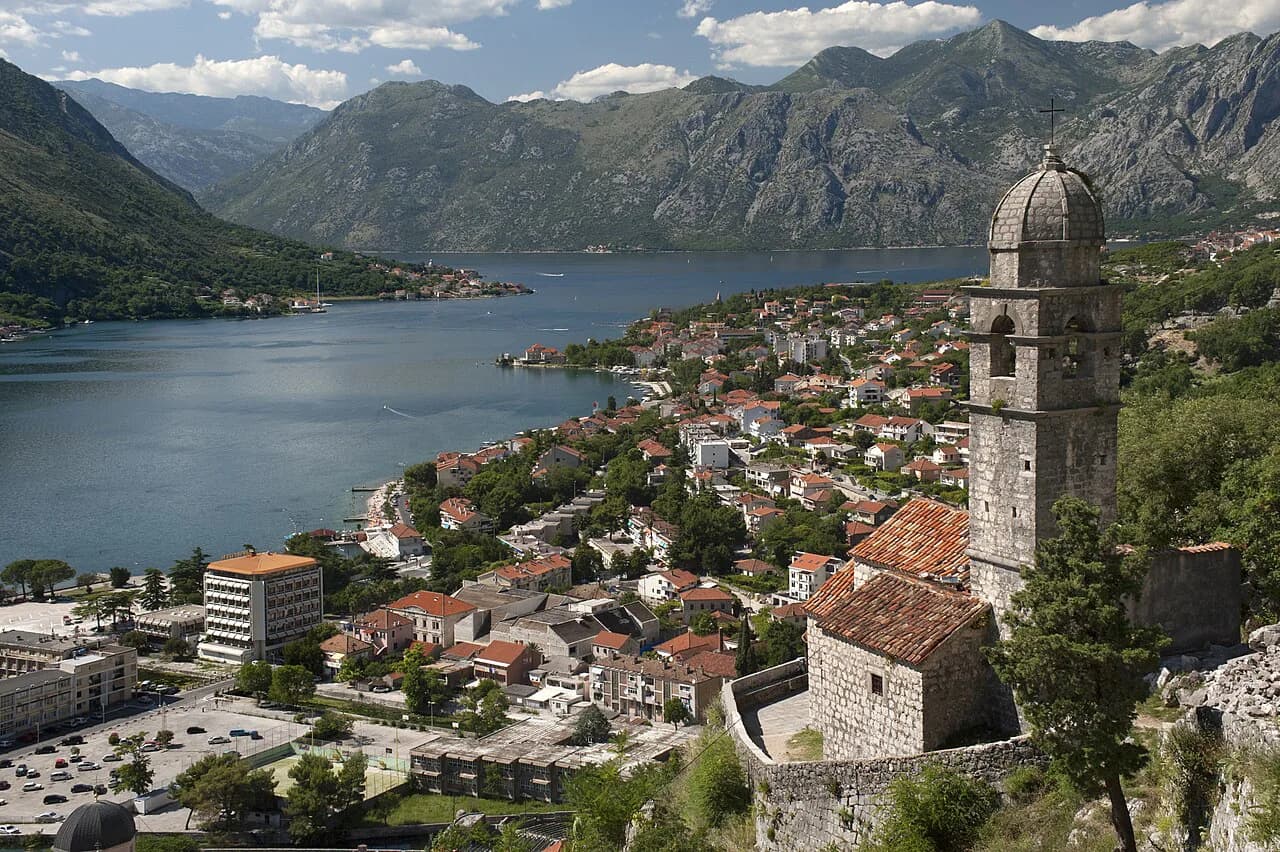
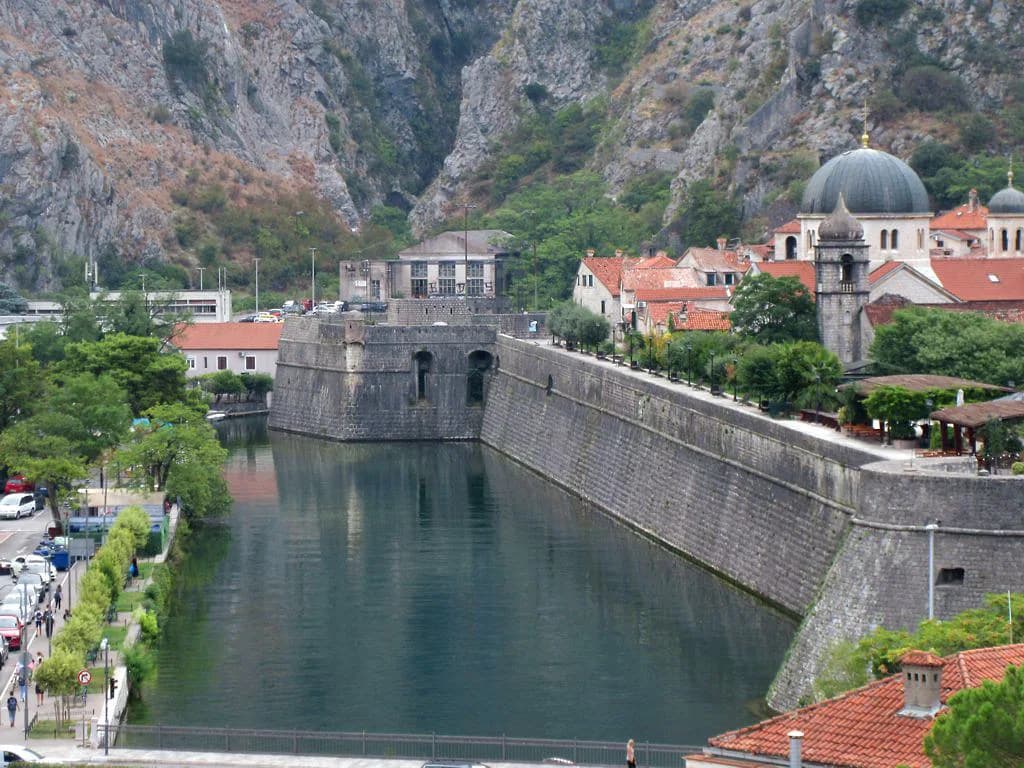
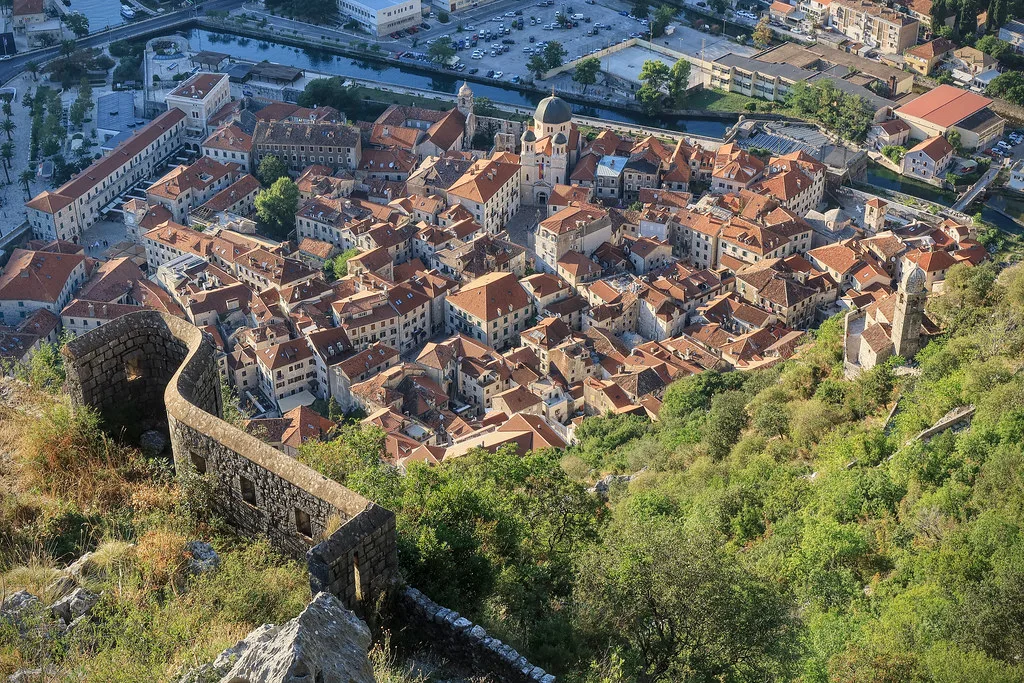
Kotor's old town is entered through the Sea Gate, built in 1555, and the lanes beyond hold St Tryphon's Cathedral, a Romanesque church consecrated in 1166, plus a 17th-century clock tower. No cars run inside the walls, so the visit is entirely on foot. The town itself is free to enter; the ticket applies only to the walls climb.
Above the rooftops, the city walls run up the mountainside to San Giovanni fortress, a climb of roughly 1,350 steps and a punishing ascent. The fortifications themselves stretch about 4.5 km around the town. Wear proper shoes and carry water; the track is steep and exposed.
Climbing the walls costs around €8–15 in high season, and the route is sometimes free or unstaffed early in the morning and out of season. Parking around the outside of the walls runs at roughly €1–3 per hour and fills early in peak season. The town is best walked in the early morning or late afternoon, when the heat and the crowds ease.
Tivat Airport sits about 8 km away, roughly 15–25 minutes by taxi at around €15–25, while Podgorica Airport is about 90 km and an hour and a half by car. Buses connect Kotor with Budva for around €4.
If you are travelling around the Bay of Kotor by water rather than road, summer excursion boats and water taxis cross from Perast and Tivat and drop passengers by the waterfront. Schedules shift with the season.
Budva Old Town: citadel, churches and medieval walls
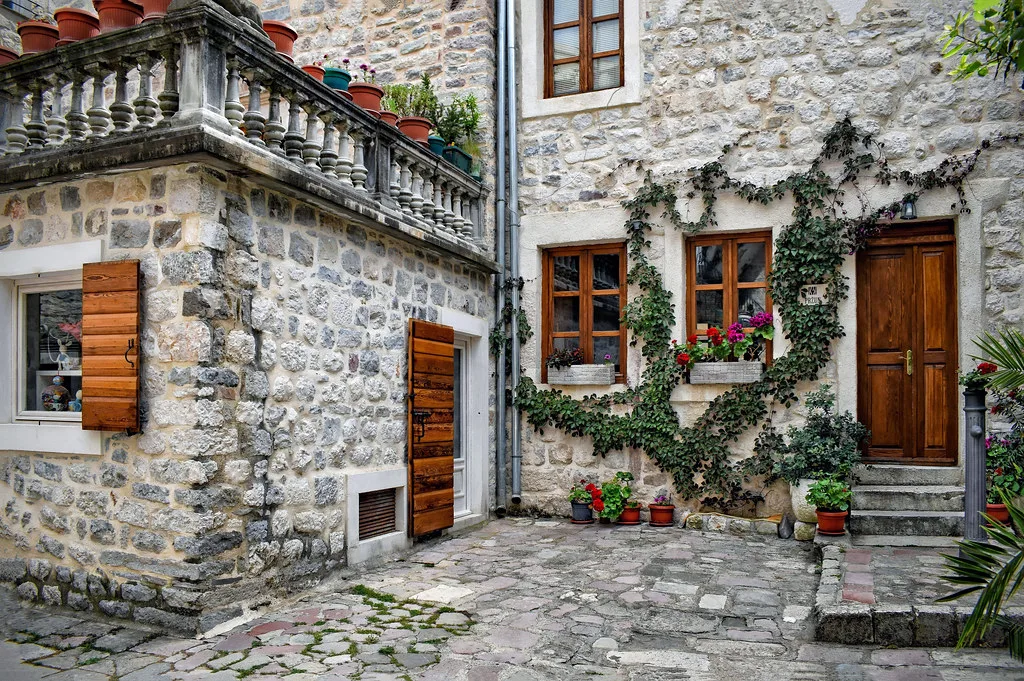
Budva's old town is a compact walled peninsula holding a citadel, ancient churches and medieval walls, with squares lined by cafés, restaurants and shops. It makes a contrast with Kotor: smaller, flatter and quicker to walk, with the sea on three sides.
The town was hit hard by the earthquake that struck Montenegro's coast on 15 April 1979, and the core has since been reconstructed. Roman artefacts still turn up during building work. Much of the look visitors see today comes from more than 400 years of Venetian rule.
Allow half a day to see the citadel, the churches and the lanes without rushing, and pair it with the coast road north or south. Because it is flat and small, Budva is the easier old town for anyone who finds steps difficult.
Herceg Novi: Forte Mare, Belavista Square and Kanli Kula
Herceg Novi's old town pairs two fortresses with a central square. Forte Mare offers views over the Adriatic, while Belavista Square sits in the heart of the old town, hemmed by historic buildings including St Michael's Church. Kanli Kula, built in the 16th century by the Ottomans, originally served as a prison and now hosts cultural events and concerts.
The town is spread over terraces and flights of steps, so it asks for more climbing than Budva's flat core. Treat it as a half-day built around the two forts and the square rather than a quick stop.
Herceg Novi works well as a stop on a coast journey, sitting on the route between the Bay of Kotor and the Croatian border. If you are linking it with other stops along the coast, allow travel time between towns rather than assuming a short hop.
Stari Bar: a hilltop town 4 km from the sea
Old Bar is the odd one out: it sits up on the hill Londša, on Mount Rumija, about 4 km from the sea. That position was chosen for protection from pirates and invaders, with unpassable hills guarding it on three sides. It is a ruin field rather than a living town, so expect walls, gates and the shells of buildings rather than cafés.
The site shows layers from Roman, Byzantine and Ottoman periods, and the oldest part clusters by the main city gate. Inside, religious buildings from different periods stand among the ruins. Fresh water once reached the town by an aqueduct dating from the 14th to 16th centuries.
A short distance from Old Bar stands an olive tree estimated at over 2,000 years old, a local symbol of longevity. Without a car, reaching the hilltop is awkward: the site is inland of the modern coastal town, so plan transport before setting out.
Ulcinj Old Town: the south coast's walled town
Ulcinj's old town sits at the southern end of the Montenegrin coast, its origins tied to the Illyrian settlement founded in the 5th century BC. Rule passed from Slavic kings to the Venetians and then the Ottoman empire, leaving mixed building styles within the walls.
Its position makes Ulcinj a commitment from the Bay of Kotor: reachable, but not as an afternoon add-on. Pick it if you are staying in the south, or give it a full day with travel at both ends.
Perast and the bay villages as a half-day add-on
Perast is not a walled town in the Kotor mould, but it is the easiest half-day from Kotor and the launch point for the two islets in the bay. Our Lady of the Rocks, known locally as Gospa od Škrpjela, is an artificial island built from rocks and sunken ships and reachable only by water. Its blue-domed church was built in 1630 and is a fine piece of Baroque architecture.
The other islet, Sveti Đorđe, sits nearby, but the boats that cross from Perast and Tivat are a summer service, so check what is running before you build a day around it. A half-day covers the waterfront and a boat crossing without hurrying.
For anyone interested in the coastal towns' mixture of Venetian, Ottoman and Slavic layers, the bay villages make a quieter counterpoint to Kotor's lanes.
How long each old town needs, and the walking involved
Kotor needs the longest: half a day for the lanes and cathedral, plus two to three hours for the walls climb if you do it. Budva's flat core takes two to three hours. Herceg Novi asks for about half a day because of its terraces and two forts.
Stari Bar is a ruins site on a hill and takes a couple of hours once you are there, with the olive tree a short extra hop. Ulcinj is best given a full day including the drive. Perast and the boat to Our Lady of the Rocks fit into half a day.
Footwear matters more than any other packing decision: the Kotor walls climb is steep and needs comfortable shoes and water. All the walled towns are cobbled, so wheels and heels struggle.
Getting between them by bus, car and boat
Buses link Kotor with Budva and Herceg Novi, and the bus station in Kotor is only five minutes from the main gate. Fares are quoted per route rather than per distance, so confirm the return fare at the counter.
A car is the practical option for Stari Bar and Ulcinj, and for combining Herceg Novi with the bay in one day. Cars cannot enter Kotor's old town, so park outside the walls and walk in.
Boats cover the bay: in summer, water taxis and excursion boats cross from Perast and Tivat to Kotor's waterfront, and boat trips run out to the islets. These are seasonal services, so check schedules locally before relying on one for a connection.
What entry and climbing actually cost in euros
Entering Kotor's old town is free. The paid item is the walls climb to San Giovanni fortress, which runs at around €8–15 in high season and is sometimes free or unstaffed early in the morning and out of season. Parking around the town costs roughly €1–3 per hour.
Other costs are per site: check the ticket desk at each fortress or ruin field rather than assuming one ticket covers several towns. For the islet church at Our Lady of the Rocks, the boat crossing is part of the cost, so ask the operator what the fare covers before boarding.
Budget for the walls climb as a separate outing rather than part of the town's entry, and carry cash for the smaller sites where card machines may not be present.
When cruise crowds and midday heat change the plan
Cruise ships change the feel of Kotor: the lanes fill when a ship is in, and the walls climb gets busy at the same time. Early morning or late afternoon is the better window, and out of season the climb is quieter and sometimes unstaffed.
Midday heat makes the walls climb harder than the step count suggests, so start early or leave it until the light softens. For the forts at Herceg Novi and the ruins at Stari Bar, there is little shade, so plan a morning visit.
Shoulder months give comfortable walking weather for the coastal towns, which matters if you plan to climb walls in more than one place.
Which old town should you start with?
Start with Kotor: enter through the Sea Gate, walk the lanes to St Tryphon's Cathedral, and decide on the walls climb on the day, depending on the heat and the queue. Add Budva for a flat, quick second old town, then Herceg Novi's two forts if you have another half-day.
Save Stari Bar and Ulcinj for a car day or a southern base, since both sit too far from the bay for a casual add-on. Perast and the boat to Our Lady of the Rocks fill the gap between Kotor and the coast road nicely.
Explore more Montenegro guides
Frequently Asked Questions
Is Kotor Old Town free to enter?
Yes. Walking into Kotor's old town costs nothing, and no ticket is needed to see the Sea Gate, the lanes or St Tryphon's Cathedral. The ticket applies to the walls climb up to San Giovanni fortress, which is priced separately; the ticket desk at the entrance sets the current rate, and outside high season the route is sometimes free or unstaffed.
How many steps is the climb to San Giovanni fortress?
Roughly 1,350 steps, up a steep track above the rooftops of Kotor. Wear comfortable shoes and carry water. The wider fortification circuit runs about 4.5 km around the town, but the climb itself is the hard part. Start early in the morning or late in the afternoon, when the heat and the cruise crowds are lighter.
Do you need a car to reach Stari Bar?
A car makes it much easier. Stari Bar sits on the hill Londša, about 4 km from the sea and inland of the modern town, so it is not a walk from the waterfront. Buses run to Bar, but getting up to the ruins needs a taxi or your own vehicle. Plan the visit as a half-day, since the site is a spread-out ruin field rather than a compact old town.
Can you walk between the old towns on the coast?
No. Kotor, Budva and Herceg Novi are separate towns with their own walled cores. Each core is walkable on foot, and Kotor's lanes are car-free, but you travel between towns by bus, car or boat. Buses link Kotor with Budva and Herceg Novi, and in summer boats cross the Bay of Kotor.
Sources
Notes for your Montenegro trip
Optional updates to our Montenegro town guides.
You might also like
Continue reading
More guides you'll find useful